-
-
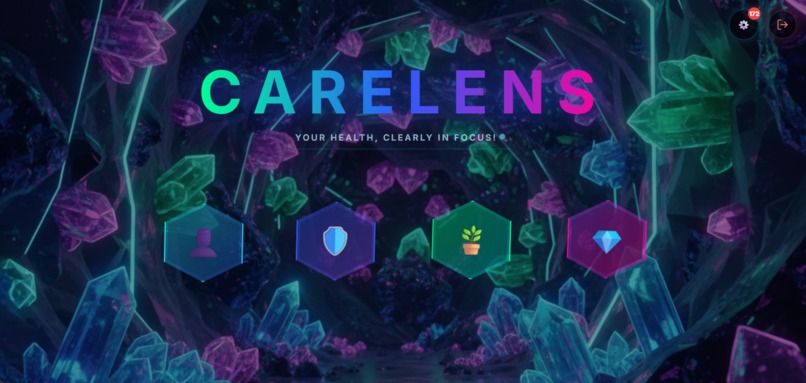
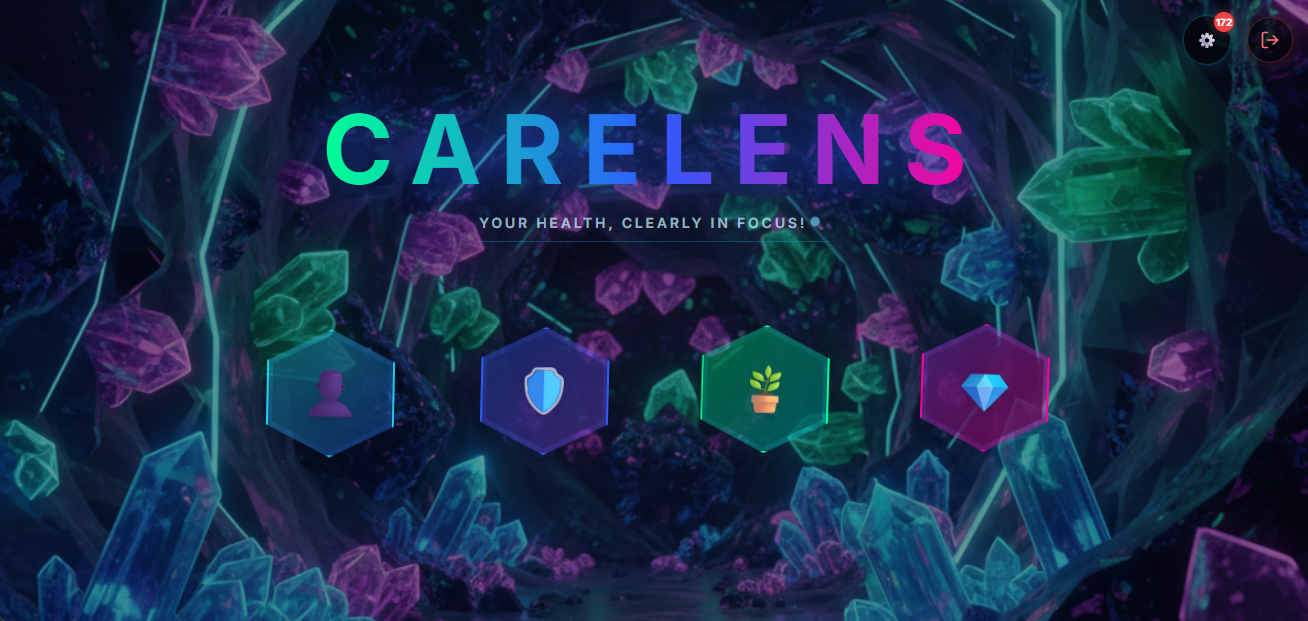
The Homepage
-
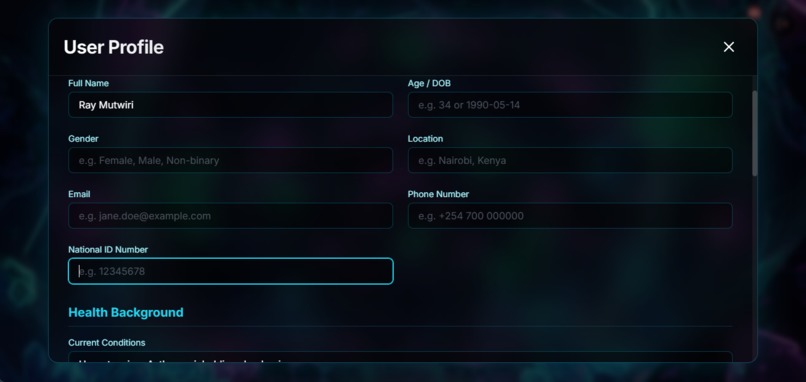
The User Profile Page
-
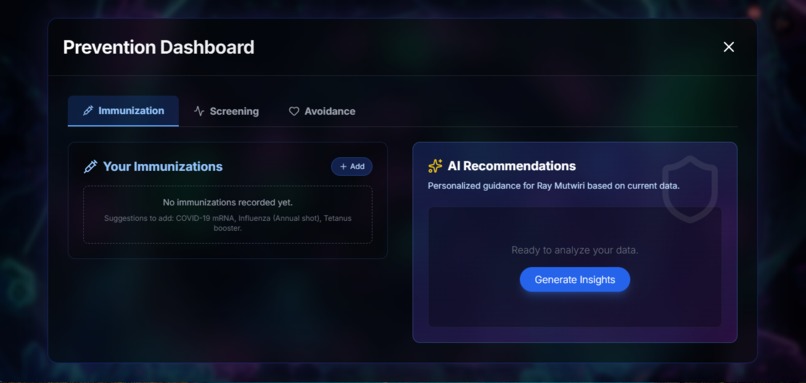
The Immunization Subfeature
-
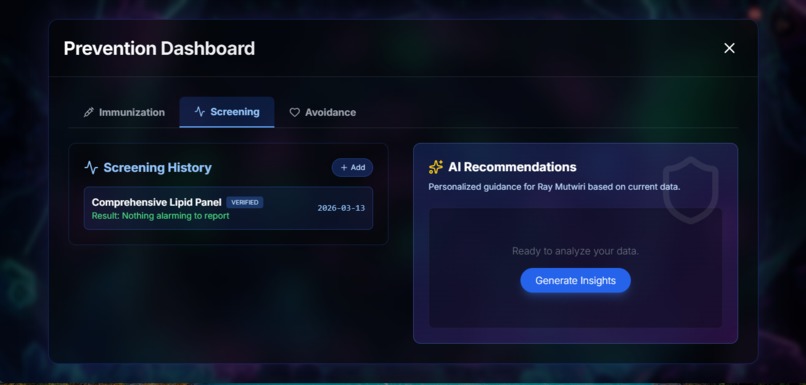
The Screening Subfeature
-
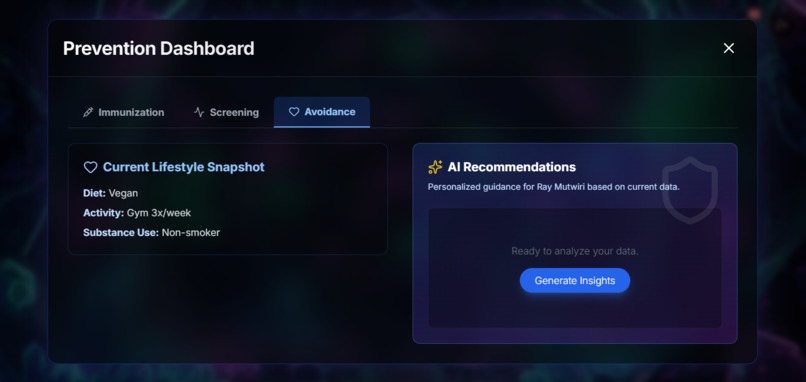
The Avoidance Subfeature
-
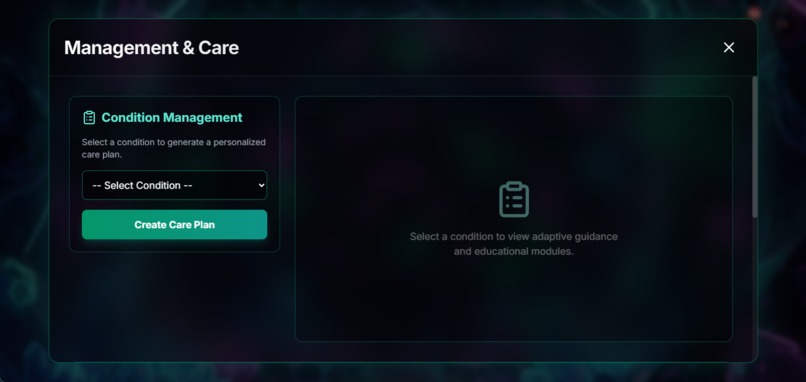
The Management & Care Feature
-
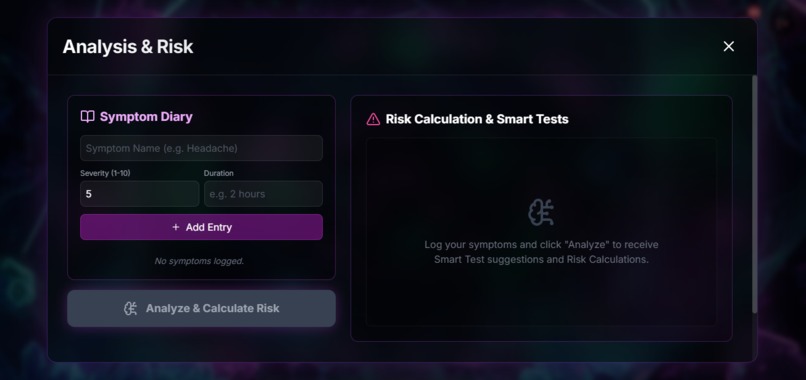
The Analysis & Risk Feature
Inspiration
Around a year ago, I lost a friend to a disease that might have had a very different outcome if it had been detected and treated earlier.
That experience changed how I thought about healthcare. During cancer awareness month, I began listening to patients and physicians describe what happens when serious diseases are discovered late. A pattern kept emerging: by the time many conditions become severe, treatment is often more difficult, more expensive, and more disruptive to a person's life.
I started researching preventive care and discovered a problem that extends far beyond cancer: healthcare systems spend enormous resources treating conditions after they become serious, while people often lack simple, personalized guidance on what they could do before that point.
Prevention is not simply about telling people to "eat healthy" or "get checked." It means knowing which vaccine you need, which screening is actually relevant to you, when it is due, which symptoms deserve attention, what risk factors you have, and what actions you can take today to reduce that risk.
That is why I built CareLens.
The idea is simple: what if healthcare could help people act earlier, rather than waiting for them to become patients?
CareLens is designed to make preventive and early-intervention healthcare more personalized, understandable, and accessible — particularly for people who may not have access to wearables, continuous monitoring, or expensive health technologies.
What it does
CareLens is an AI-powered preventive healthcare application that turns a person's health information into personalized, actionable guidance.
It combines user-provided health and lifestyle information, clinically anchored risk calculations, preventive-care guidelines, and explainable AI to help users:
a) Stay up to date with relevant vaccinations and immunizations b) Know which preventive screenings they may need and when c) Identify lifestyle changes that are relevant to their individual risk profile d) Log and understand recurring symptoms e) Identify potential red flags that may require medical attention f) Understand which tests or screenings may be appropriate to discuss with a healthcare professional g) Manage existing conditions through personalized education, habit guidance, and progress tracking
CareLens is not a diagnostic tool and does not replace a healthcare professional. It is designed as a decision-support and health-education layer that helps people understand their health and take appropriate next steps.
The person comes first
CareLens does not assume that everyone needs the same healthcare.
Instead of giving a generic checklist such as "exercise more" or "get screened," it uses a person's user data and other relevant information to make recommendations more contextual.
And because it does not depend on wearables or specialized hardware, the core experience can work from information a person can provide themselves within the app.
How we built it
1.Build a health profile
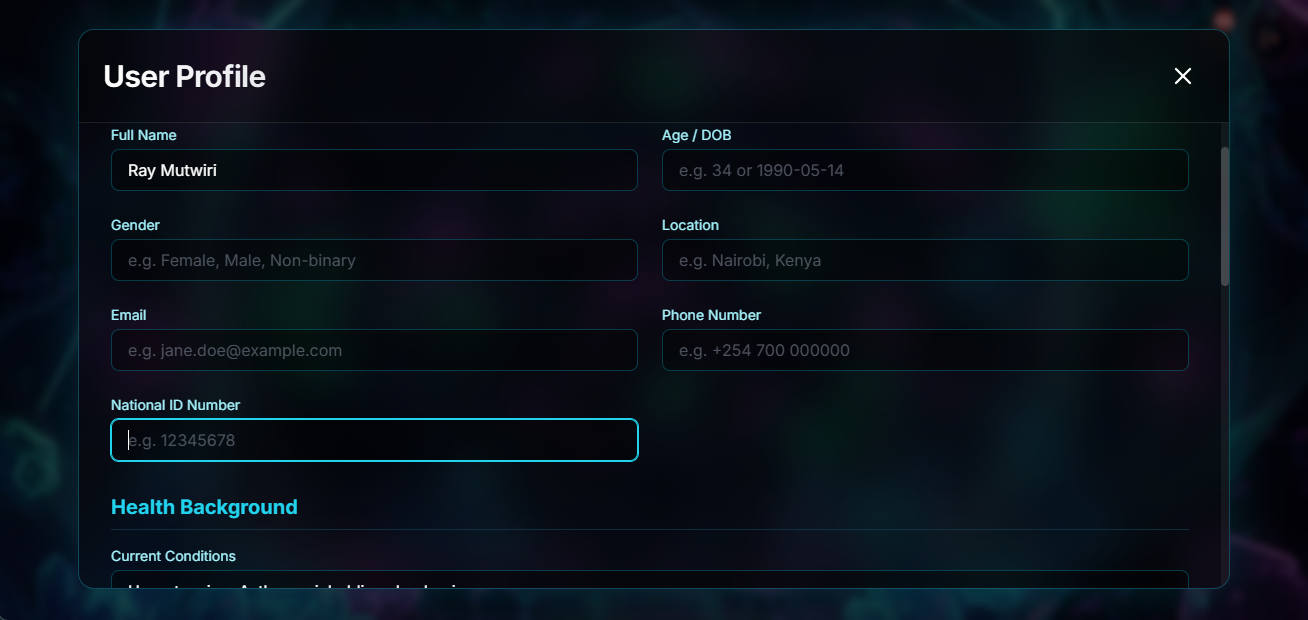
Users provide relevant information about their demographics, allergies, lifestyle, sleep, physical activity, diet, and other factors.
This creates the context used throughout CareLens.
2.Combine clinical rules with AI
CareLens processes this information through a service layer that combines clinically anchored risk calculators, red-flag rules, preventive guidelines, and AI.
The AI is not simply acting as a chatbot. It receives structured context and is instructed to produce prioritized, explainable recommendations with appropriate safety guidance.
3.Turn information into action
Instead of leaving users with a list of health facts, CareLens translates the analysis into practical next steps:
What should I do? Why does it matter? When should I do it? How urgent is it?
This is the core idea behind CareLens: turning preventive healthcare from passive information into actionable guidance.
Core Features A. Prevention Dashboard
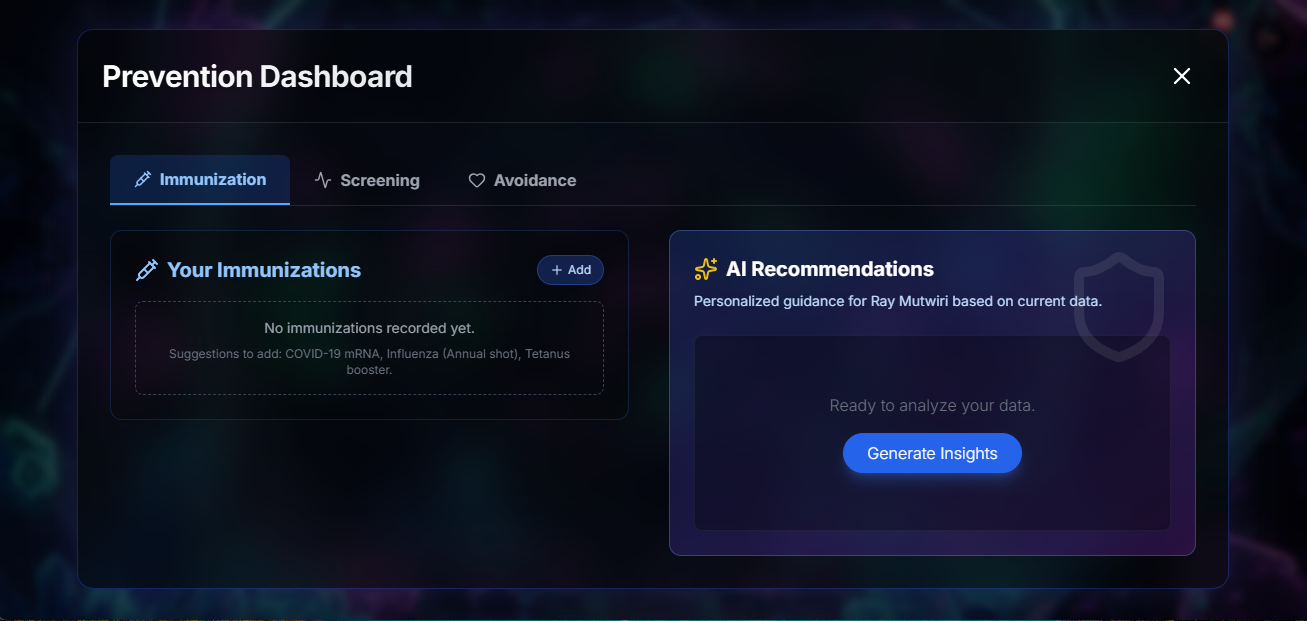
The Prevention Dashboard focuses on reducing preventable illness and catching potential problems earlier.
Immunization & Vaccines
Users record their vaccination history and receive personalized recommendations based on factors such as age, health conditions, location, and applicable clinical guidance.
Each recommendation explains why it matters and when it should be considered.
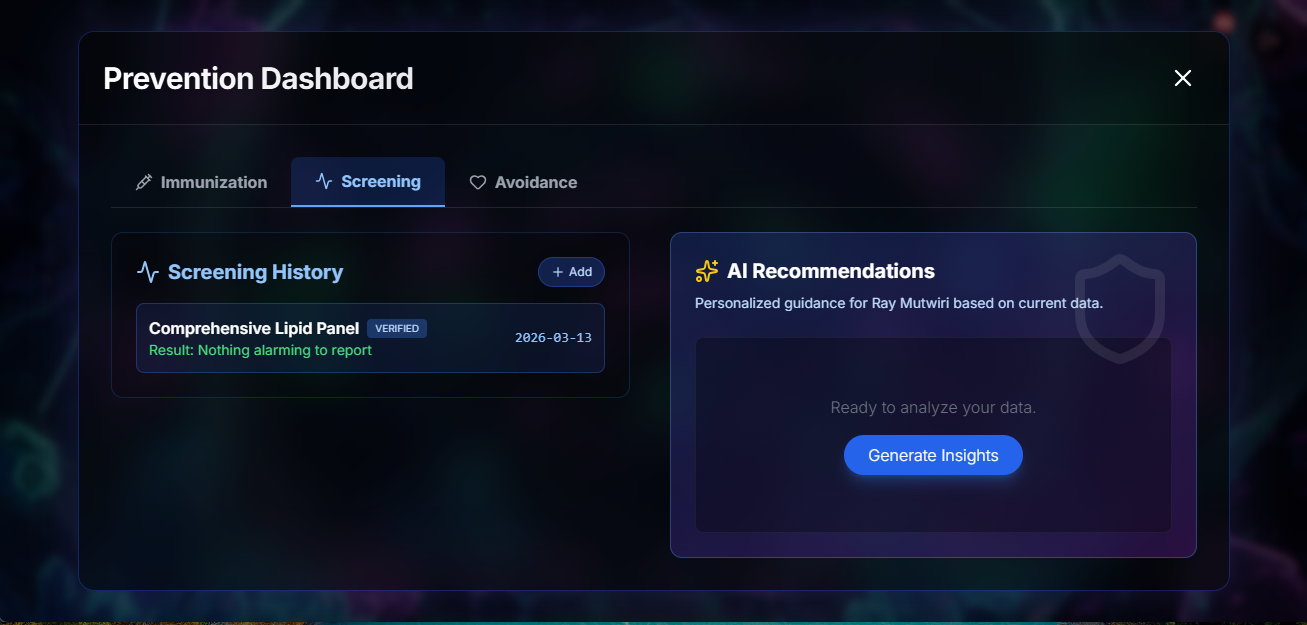
Preventive Screening
Users can record previous screenings and receive reminders about future screening needs.
Rather than treating every person identically, CareLens uses applicable guidelines and individual risk factors to help determine which screenings may be relevant and when they may be due.
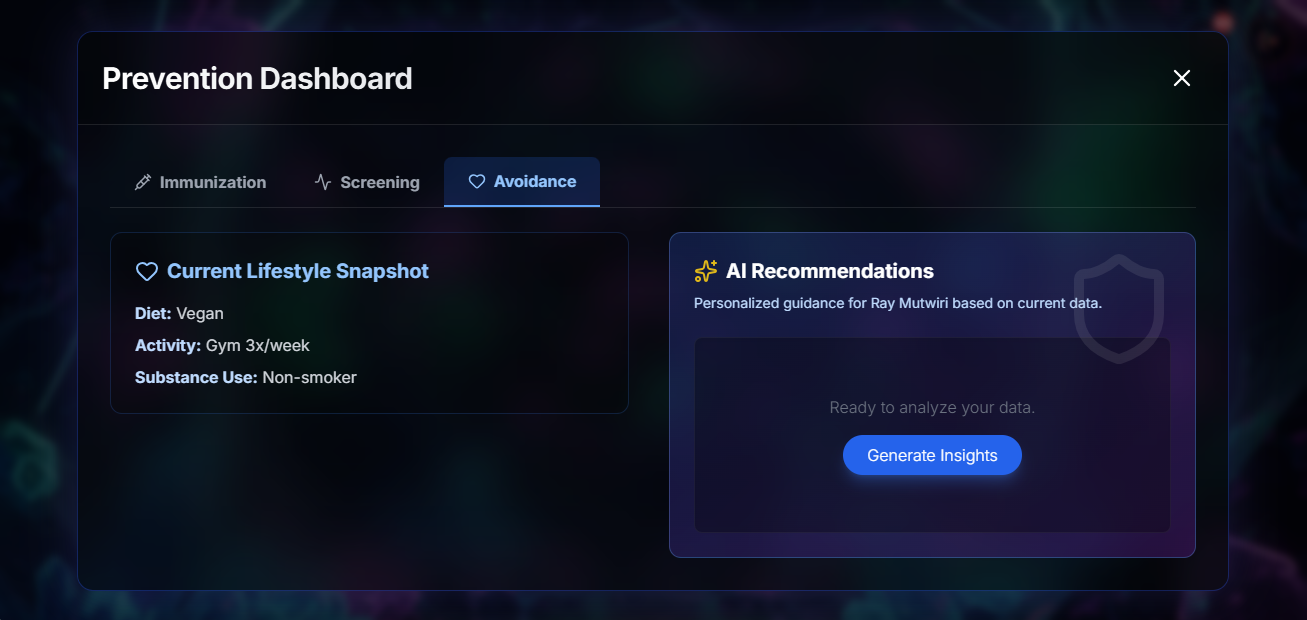
Avoidant Measures
CareLens generates adaptive lifestyle recommendations based on the person's individual circumstances.
For example, someone with elevated cardiovascular risk may receive different recommendations from someone whose primary concern is another health risk.
The objective is not to overwhelm users with generic wellness advice, but to identify the actions most relevant to them.
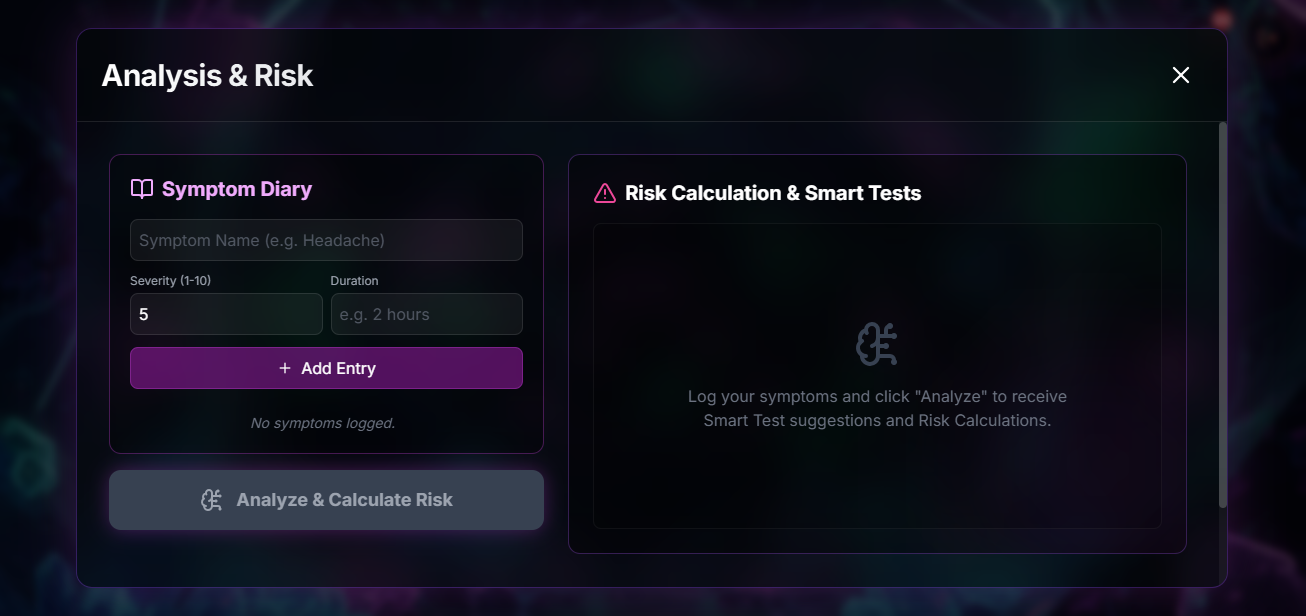
B. Analysis & Risk
This feature helps users understand symptoms and potential risks without presenting itself as a diagnostic service.
Symptom Diary
Users record symptoms including frequency, duration, and severity.
Over time, the diary creates a longitudinal view that can reveal patterns and changes that may otherwise be difficult to remember.
Risk Calculators & Red-Flag Triage
CareLens combines relevant profile information, symptom information, validated risk calculators, and red-flag rules.
It can then provide prioritized next steps, including when a user should seek professional care and what tests or screenings they may wish to discuss with a healthcare provider.
The goal is not to tell someone, "You have X."
It is to help them recognize:
"This may deserve attention. Here's why, and here's what you can do next."
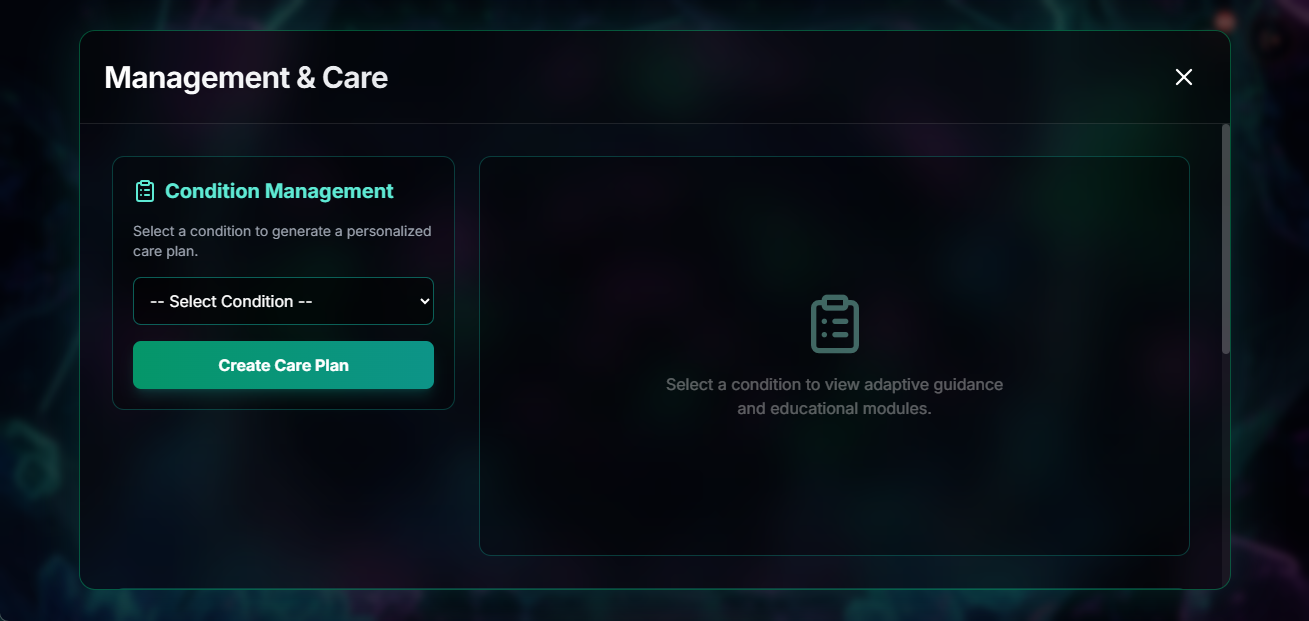
C. Management & Care
Prevention does not stop once someone develops a condition.
For users already living with health conditions, CareLens provides personalized education, management guidance, and progress tracking.
Users can record information such as symptoms, blood-pressure readings, exercise, medication adherence, and other relevant measures.
As that information changes, CareLens can adapt its guidance and help users maintain a clearer picture of their health over time.
Challenges we ran into
One of the biggest challenges was making symptom analysis useful without turning CareLens into an unsafe diagnostic system.
That required carefully separating risk identification and next-step guidance from diagnosis, while incorporating symptom duration, severity, frequency, medical history, and red-flag conditions.
Another challenge was personalization.
A useful preventive-care system cannot simply give everyone the same recommendations. CareLens therefore had to account for factors such as personal medical history, family history, lifestyle, demographics, and location when generating recommendations.
The third challenge was turning health information into something actionable.
The goal was not simply to give users more information — the internet already does that extremely well.
The goal was to answer:
"Given who I am and what I know about my health, what should I pay attention to and what can I do about it?"
Accomplishments that we're proud of
There are many health apps that track steps, calories, sleep, or individual symptoms.
CareLens approaches the problem from a different direction:
What if the central question wasn't "How healthy am I today?" but "What can I do now to avoid a worse health outcome later?"
CareLens brings several traditionally separate aspects of healthcare into one preventive-care layer:
Prevention → Early detection → Management
It is also designed around a reality that is particularly important in low-resource settings: meaningful preventive care should not require a wearable, expensive device, or constant clinical monitoring.
A smartphone and the information a person already knows about themselves can be enough to begin.
What we learned
Healthcare information can be intimidating. I wanted CareLens to feel less like a clinical database and more like a calm, understandable health companion.
The application is organized into modular functional areas — Prevention, Analysis & Risk, and Management & Care — so that the complexity of healthcare is presented as a set of understandable actions rather than one overwhelming interface.
What's next for CareLens
The long-term vision for CareLens is to become a preventive-care layer that can work alongside healthcare providers, insurers, employers, and healthcare systems rather than operating in isolation.
The opportunity is much bigger than an app that gives health recommendations.
If people can identify risks earlier, complete appropriate screenings, stay current with vaccinations, manage chronic conditions more effectively, and seek care before a problem becomes an emergency, the potential benefits extend beyond the individual.
It can mean fewer avoidable complications.
Earlier treatment.
More informed patients.
Better use of healthcare resources.
And potentially less financial pressure from preventable or late-stage healthcare needs.
For someone living on a limited income, avoiding one serious medical episode can mean more than avoiding a hospital bill. It can mean avoiding missed work, lost income, debt, interrupted education, or financial strain on an entire family.
That is ultimately why I built CareLens.
Healthcare should not begin only when someone becomes seriously ill.
CareLens is my attempt to move a small part of healthcare upstream — toward prevention, earlier action, and helping people understand what they can do before a problem becomes a crisis.
Built With
- html
- javascript
- kotlin
- typescript

Log in or sign up for Devpost to join the conversation.