Inspiration
Watching my sister navigate caregiving for our mom—she was overwhelmed, isolated, and had no quick way to check in on her own mental health or organize care tasks. I saw how caregivers prioritize everyone but themselves, so I set out to build a tool that meets them where they are: busy, stressed, and short on time, with no extra steps like logins.
What it does
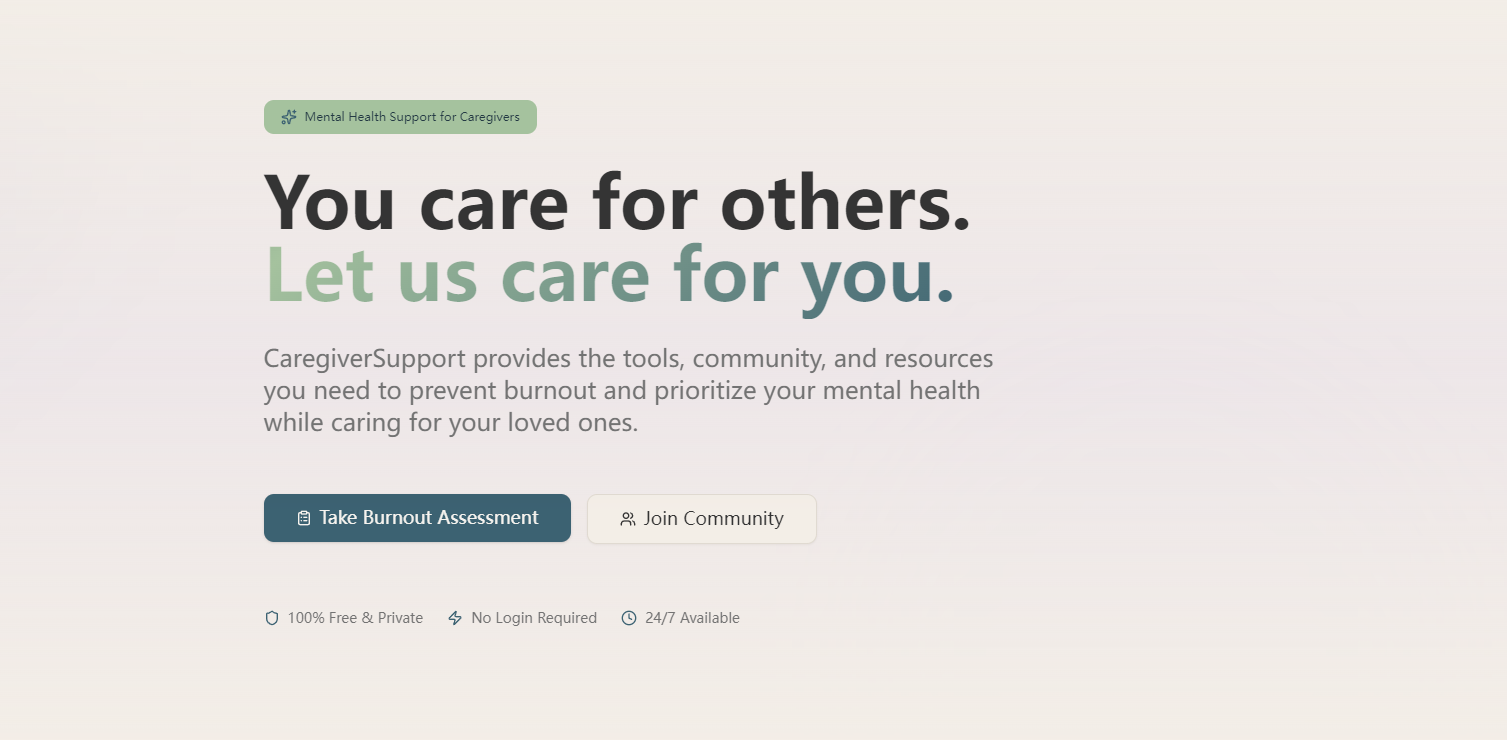
CaregiverSupport is a web app for family caregivers (30-65) caring for elderly, chronically ill, or disabled loved ones. It offers burnout assessments with personalized feedback, daily 5-minute self-care reminders, a peer support community, task management for care responsibilities, and a curated directory of professional support resources—all without needing to create an account.
How we built it
We started with mapping core caregiver pain points (stress, disorganization, isolation) to features, then designed a minimalist, empathetic UI with soft edges and a calming color palette. We built the front end with React and Bootstrap for responsiveness, used Node.js/Express for backend logic, and MongoDB to store task/resource data. We prioritized one-tap navigation to keep the flow simple for time-strapped users.
Challenges we ran into
The biggest hurdle was balancing simplicity with functionality—we needed to include robust tools (like burnout scoring) without overwhelming users. We also struggled to design a peer feed that felt authentic and empathetic, while ensuring the resource directory was comprehensive but easy to search.
Accomplishments that we're proud of
Creating a fully functional, no-login experience that puts caregivers’ needs first. The burnout assessment’s personalized feedback has resonated with beta users, and the task management tool has helped reduce cognitive load for early testers—we’re proud to build something that directly eases daily stress.
What we learned
We learned the value of centering user empathy in every design choice—caregivers don’t have bandwidth for complex tools, so every feature needed to serve a clear, immediate purpose. We also gained insight into the unique mental health challenges of family caregivers and how to design content that feels supportive, not clinical.
What's next for this project
We plan to expand the professional resource directory to include more local, regional services; add short, audio-based self-care activities for caregivers on the go; and refine the peer community features to foster more meaningful connections. We’re also exploring mobile optimization to make the app accessible on-the-go.

Log in or sign up for Devpost to join the conversation.