-
-
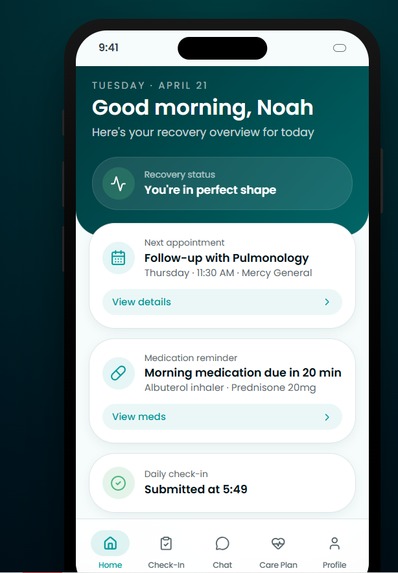
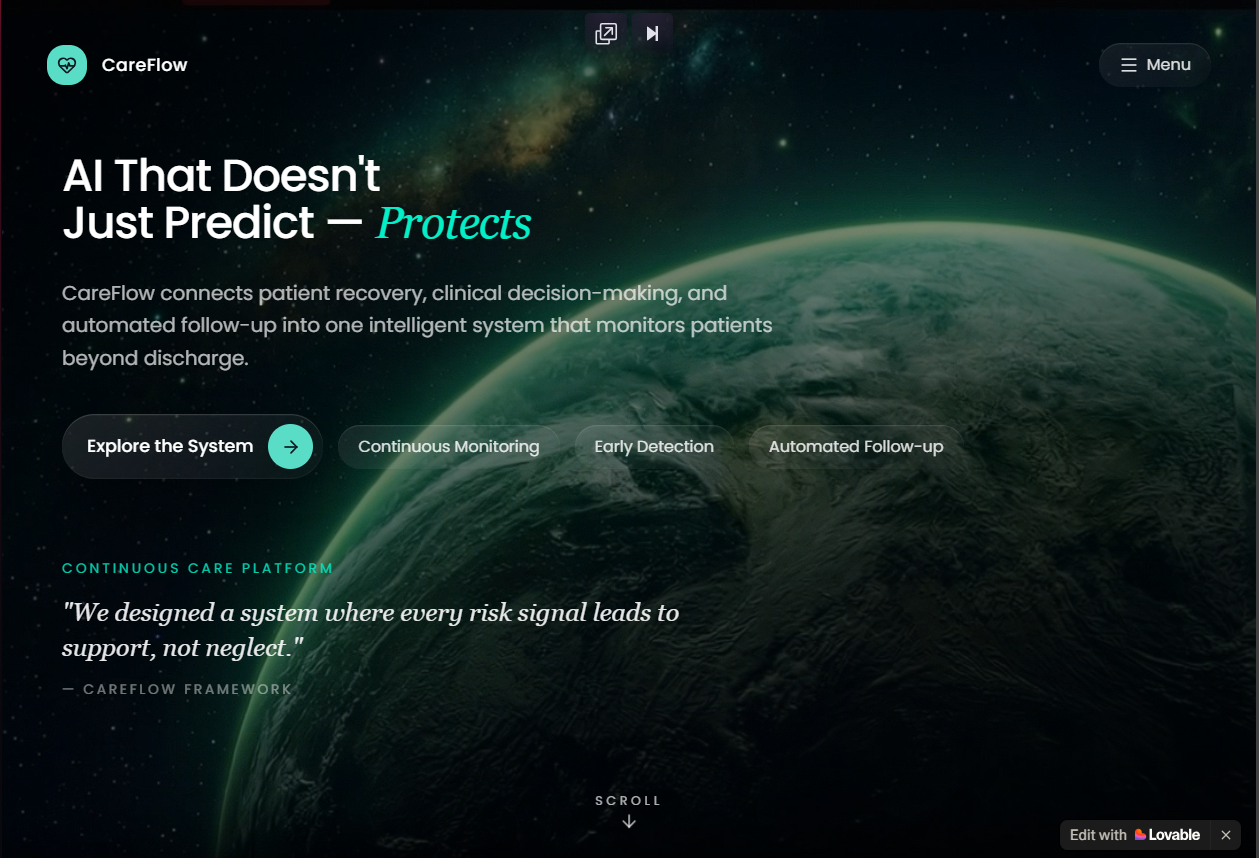
mobile interface
-
-
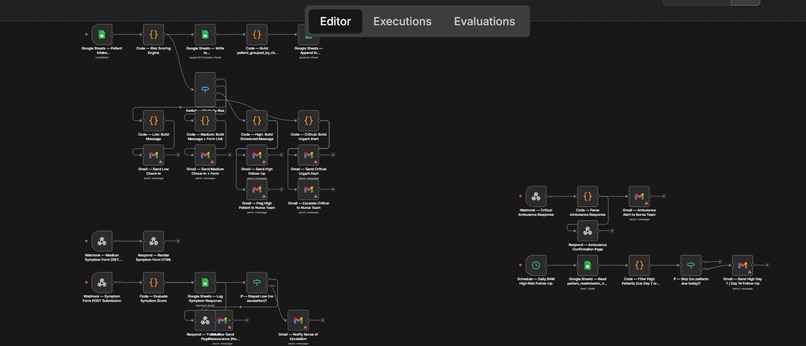
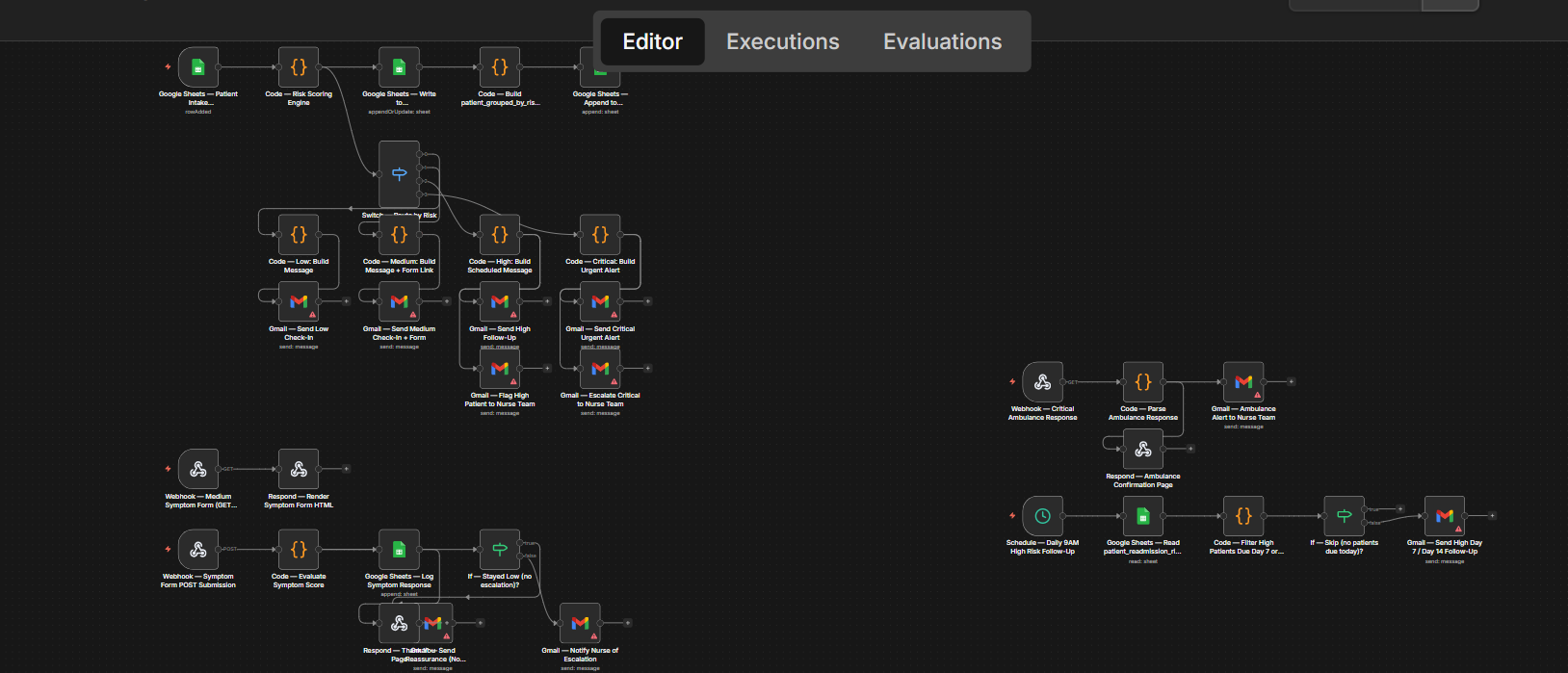
n8n automation system
Inspiration
Hospital readmissions are often not caused by sudden events, but by small warning signs that go unnoticed after discharge. Once patients leave the hospital, monitoring becomes limited, and healthcare teams lose visibility over their condition.
At the same time, clinicians are already under pressure, managing large numbers of patients with limited time and resources. We were inspired to build a system that not only reduces readmissions, but also supports healthcare teams instead of adding to their workload.
What it does
CareFlow is a patient monitoring and discharge coordination system designed to reduce readmission risk through continuous follow-up.
It allows hospitals to:
- identify high-risk patients early
- understand why they are at risk through clear criteria
- take immediate action through a centralized dashboard
At the same time, patients are supported through a mobile app where they can:
- submit daily health check-ins
- track medication and recovery progress
- access care instructions
- interact with a chatbot for guidance and support
All of this creates a continuous loop between patient input, system monitoring, and clinical action.
How we built it
We built CareFlow as a fully interactive prototype focusing on usability and system flow:
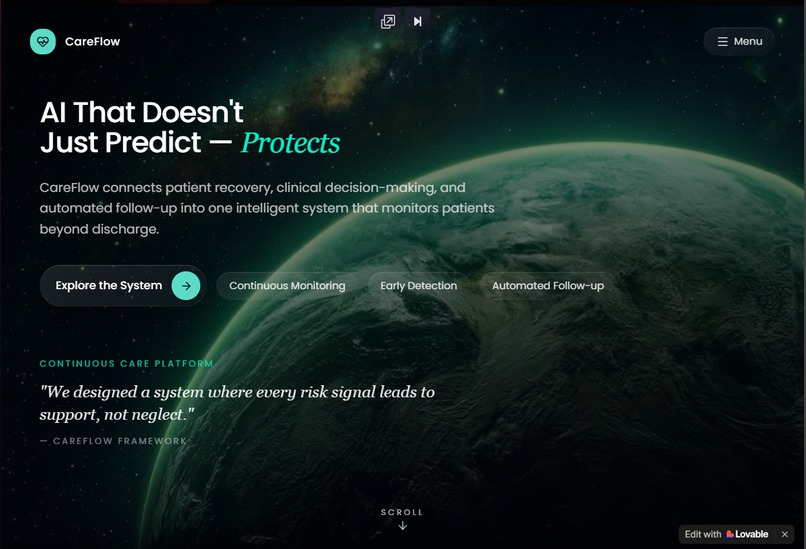
- Designed the hospital dashboard and patient app using Lovable, ensuring everything is clickable and easy to navigate
- Simulated system logic and workflows using n8n-style automation, connecting patient updates to alerts and actions
Created a structured risk assessment model based on four key factors:
- Clinical Stability
- Medication Complexity
- Follow-up Access
- Social Support
- Clinical Stability
Developed a complete end-to-end user journey, showing how a patient moves from discharge to recovery with system support
Challenges we ran into
One of the main challenges was simplifying a complex healthcare process into something that is both accurate and easy to use.
We had to:
- balance detailed medical logic with clear, understandable interfaces
- avoid overwhelming users with too much information
- ensure the system felt practical, not just conceptual
Another challenge was making all components feel connected:
- dashboard
- patient app
- automation
We focused on creating a continuous flow, rather than separate tools.
Accomplishments that we're proud of
- Designing a system that clearly connects risk detection to real action
- Creating a fully interactive prototype that feels like a real hospital tool
- Building a solution that supports both patients and clinicians simultaneously
- Successfully demonstrating how monitoring can continue beyond discharge
- Keeping the system simple, clear, and focused on real-world usability
What we learned
We learned that effective healthcare solutions are not about adding more complexity, but about connecting processes in a meaningful way.
We also realized that:
- early detection is only valuable if it leads to action
- patients need support after leaving the hospital, not just during treatment
- systems should assist healthcare professionals, not replace them
What's next for CareFlow
Next, we would focus on turning CareFlow into a real deployable system by:
- integrating with hospital electronic health records (EHR systems)
- implementing real-time data pipelines instead of simulated workflows
- enhancing the chatbot with more advanced, context-aware responses
- adding predictive analytics based on real patient datasets
- testing the system in a clinical setting to measure impact on readmission rates
Our long-term goal is to make CareFlow a reliable support system for both patients and healthcare providers, helping reduce readmissions while improving overall quality of care.
Built With
- lovable

Log in or sign up for Devpost to join the conversation.