-
-
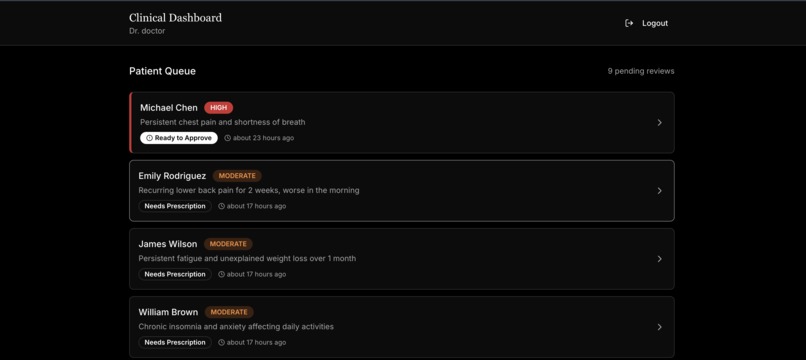
For the Clinical Dashboard
-
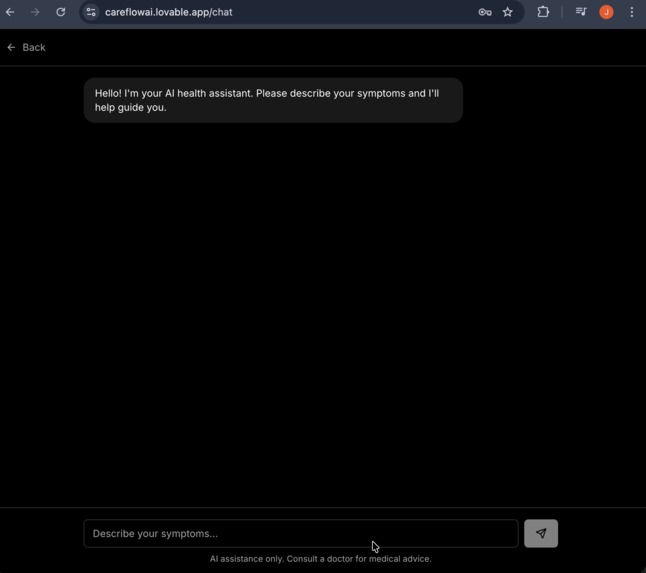
For the Patient Chat
-
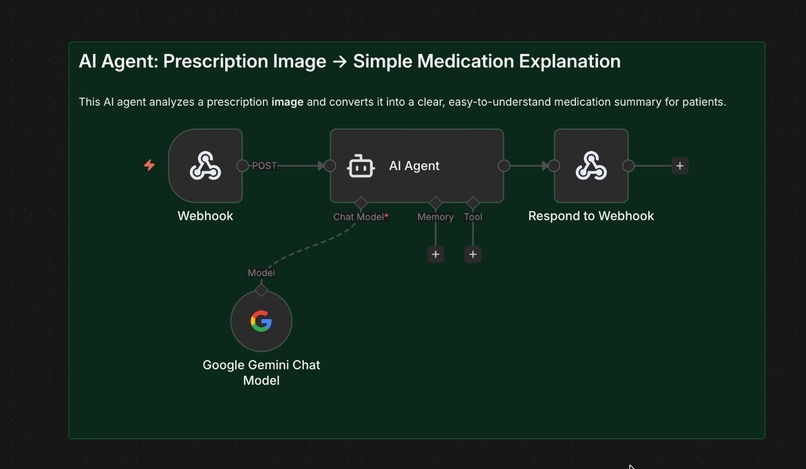
For the Prescription Image → Medication Explanation Agent
-
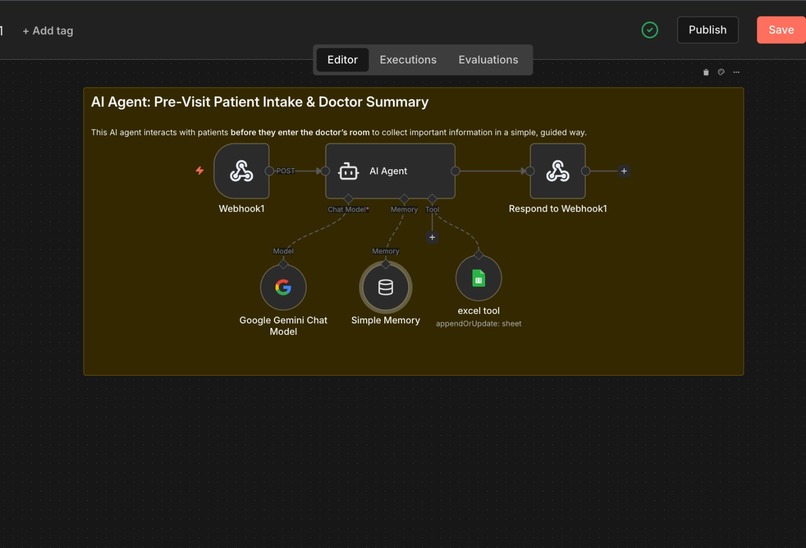
For the n8n AI Agent – Pre-Visit Intake & Doctor Summary
-
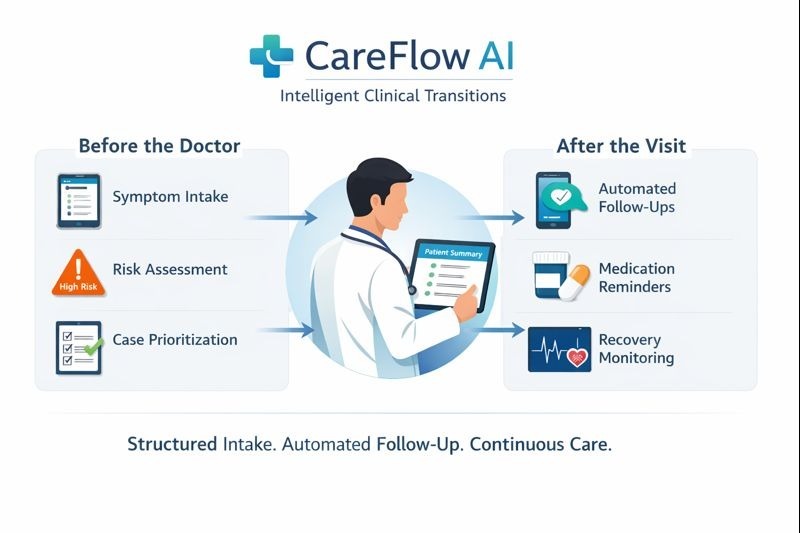
For the CareFlow AI flow diagram
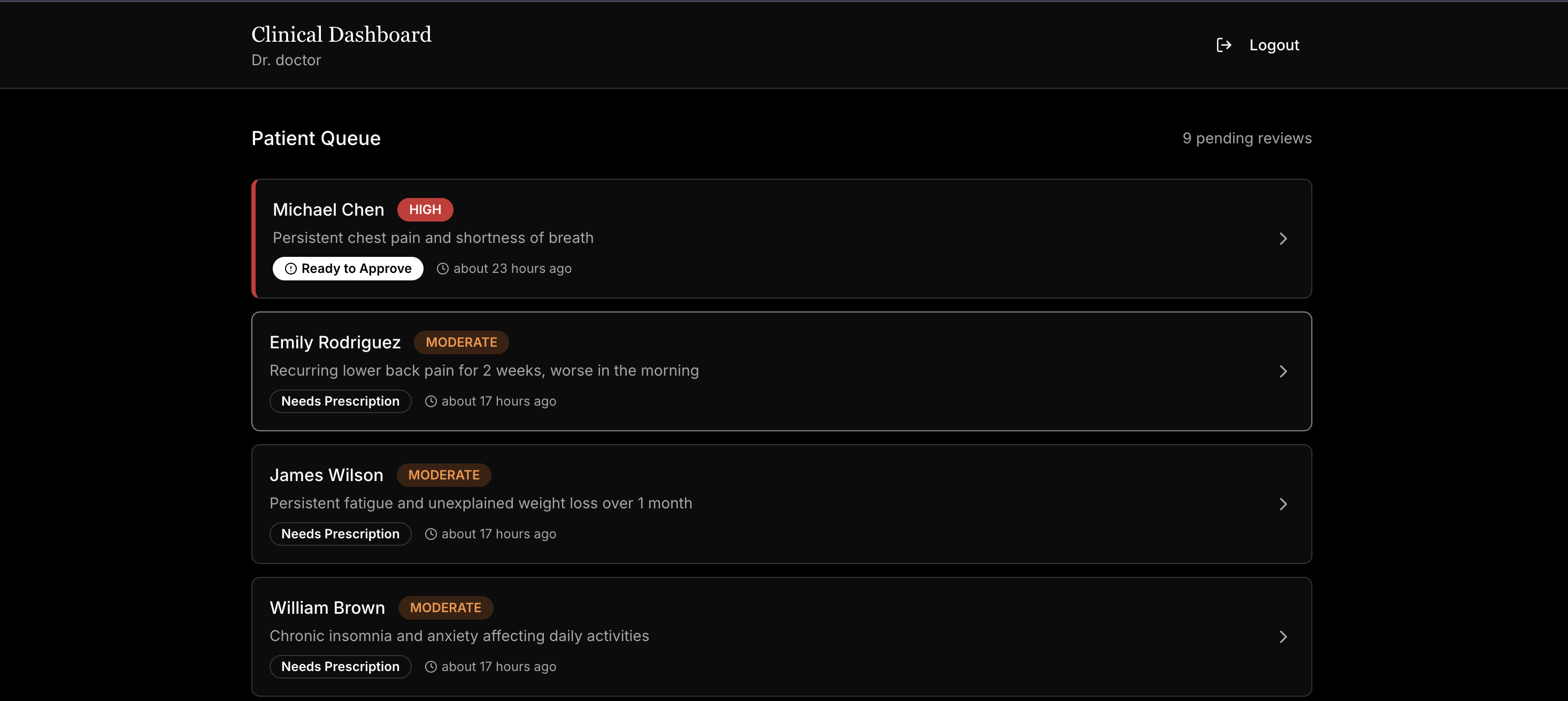
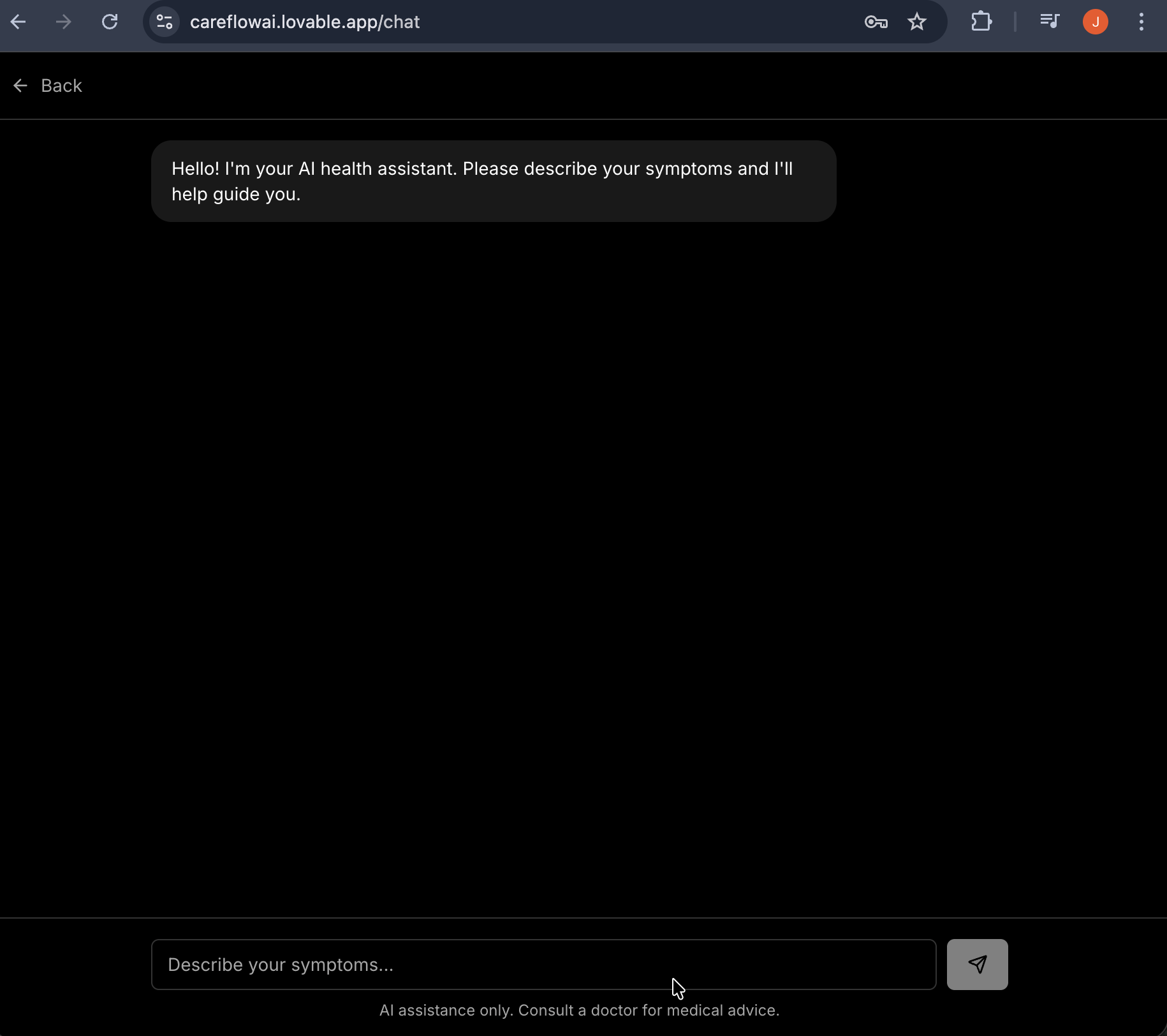
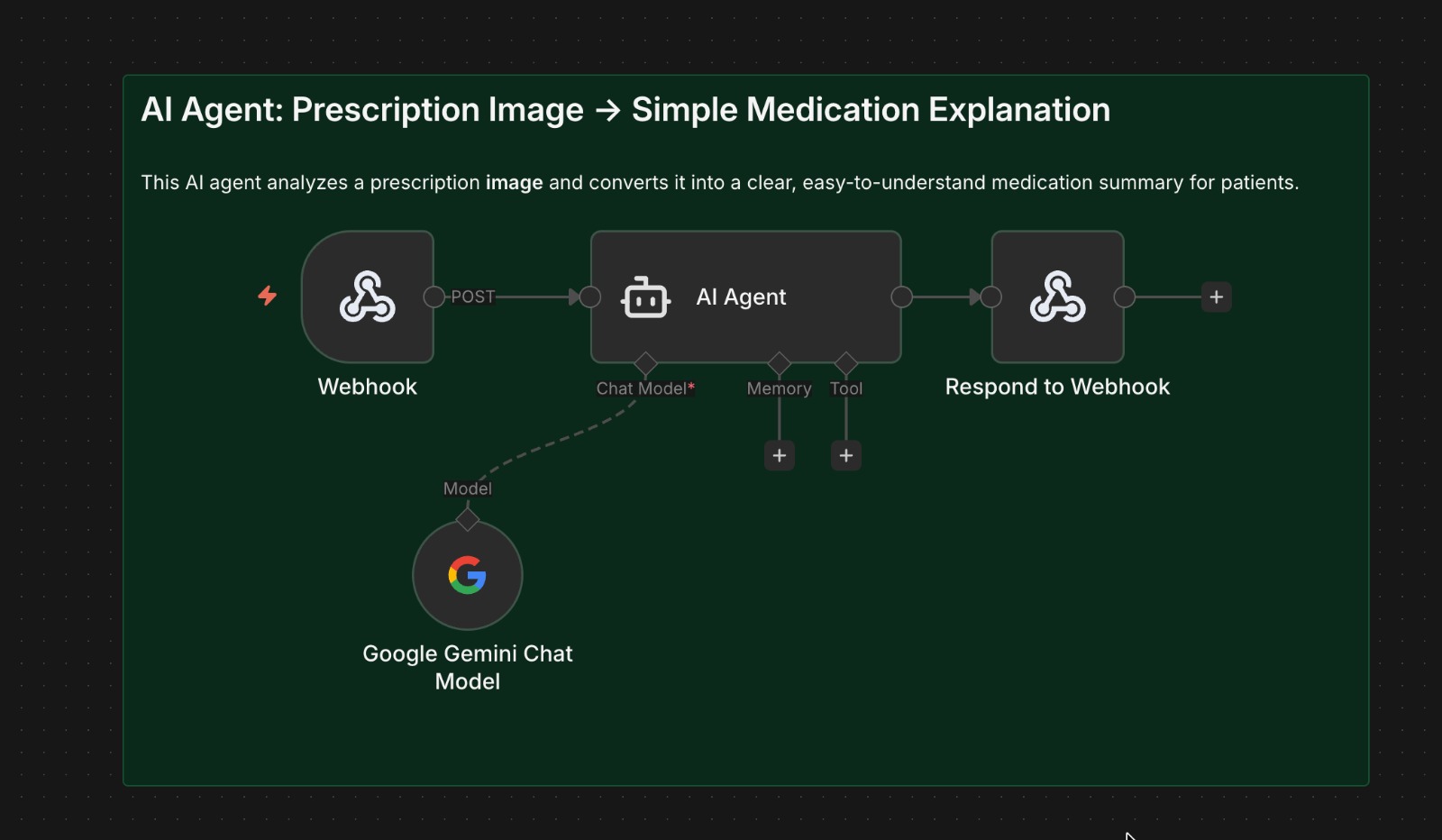
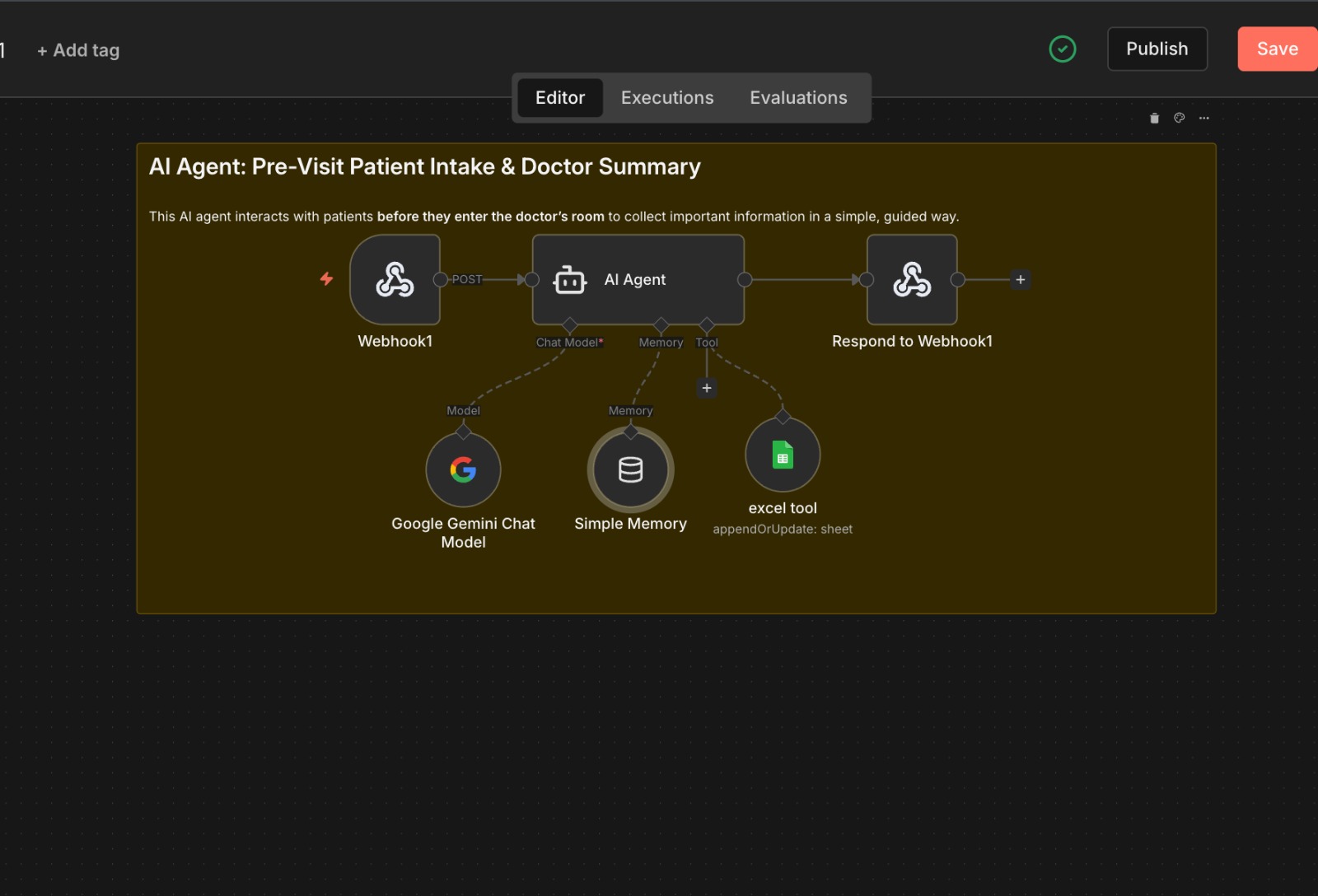
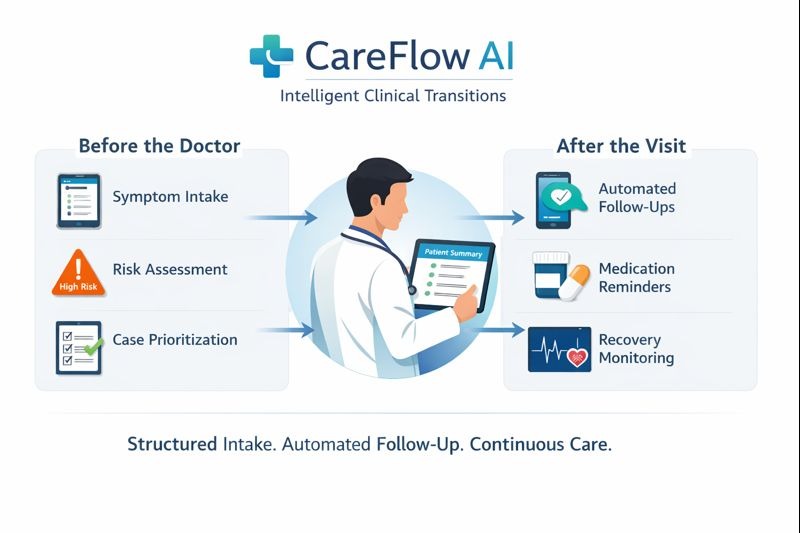
CareFlow AI — Intelligent Clinical Transitions
Inspiration
Healthcare rarely fails at diagnosis. It fails at transitions — before a patient meets the doctor and after they leave.
We observed that clinicians often start consultations with incomplete context, while post-visit follow-up is fragmented or manual. These gaps increase risk, overload doctors, and reduce care continuity. This insight inspired CareFlow AI.
The Problem
Clinical workflows rely on unstructured patient input and manual coordination.
Care quality depends on the ability of clinicians to make correct decisions despite information gaps and workflow friction. As these gaps increase, overall care quality drops — even when clinicians are highly skilled.
The Solution
CareFlow AI is a clinical workflow intelligence system focused on healthcare transitions.
- Before consultation: patient inputs are structured into concise, risk-aware summaries.
- After consultation: follow-ups such as medication adherence and recovery check-ins are automated.
CareFlow AI does not diagnose or replace doctors. It supports clinical decision-making and care continuity.
Target Group
- Doctors and clinicians
- Clinics and OPDs
- Telemedicine platforms
- Hospitals managing discharge workflows
Patients benefit indirectly through safer and more consistent care.
Features & Technology
- Structured digital patient intake
- AI-assisted risk scoring (non-diagnostic)
- Pre-consultation clinical summaries
- Automated post-visit follow-ups
- Human-in-the-loop oversight
Technology used: NLP for text structuring, rule-based logic, secure backend workflows, and automation tools.
Value Proposition & USP
Unlike diagnostic AI or symptom checkers, CareFlow AI focuses on workflow intelligence. It improves efficiency, reduces clinician cognitive load, and strengthens care continuity while remaining regulatory-safe and easy to adopt.
Visualization
A system flow visualization demonstrates:
- Intake → Structuring → Doctor Review → Follow-up Automation
(Mockup and flow diagram included on the project page.)
User Feedback
- Doctor: “Structured summaries before consultation save time.”
- Clinic staff: “Automated follow-ups reduce coordination work.”
- Healthcare student: “This approach feels realistic and safer than diagnosis-based AI.”
How We Built It
CareFlow AI was built as a modular system:
- Web-based patient intake
- Backend processing for structuring and risk logic
- Automation workflows for follow-ups
- Manual review points to ensure human oversight
This allows gradual integration into existing healthcare systems.
Challenges Faced
- Avoiding diagnostic claims while still delivering value
- Designing risk logic that supports, not replaces, clinicians
- Ensuring GDPR compliance from the start rather than retrofitting it
What We Learned
- Healthcare innovation is primarily a workflow problem, not an AI problem
- Human oversight is critical for trust and adoption
- GDPR-by-design leads to better system architecture
Business Model
CareFlow AI follows a B2B SaaS model:
- Subscription pricing for clinics and telemedicine providers
- Enterprise licensing for hospitals
- Future alignment with care coordination and reimbursement models
Data & GDPR Compliance
CareFlow AI processes limited patient-reported data only.
- Data minimization and purpose limitation
- Explicit consent-based processing
- No autonomous medical decision-making
- Encryption and role-based access control
- EU data residency compatibility
Aligned with GDPR Articles 5, 6, and 9.
Next Steps
- Build a working prototype
- Pilot with a small clinic or telehealth workflow
- Iterate based on clinician feedback
Final Note
CareFlow AI does not replace doctors.
It ensures the right information reaches the right person at the right time.
Built With
- gemini
- lovable
- n8n
- supabase


Log in or sign up for Devpost to join the conversation.