-
-
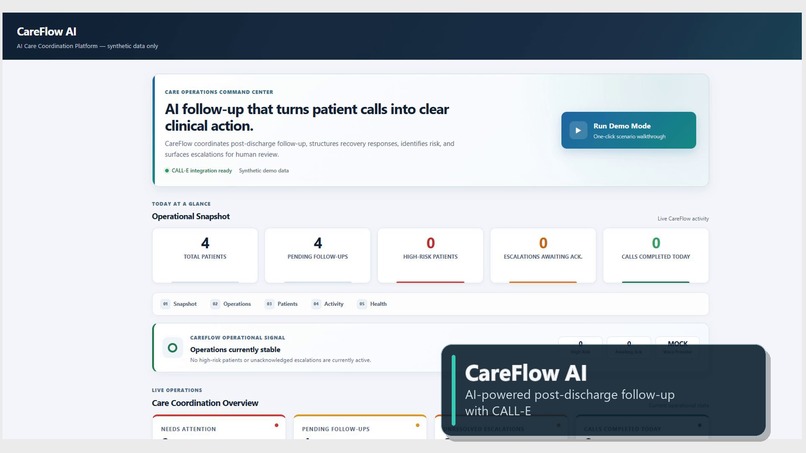
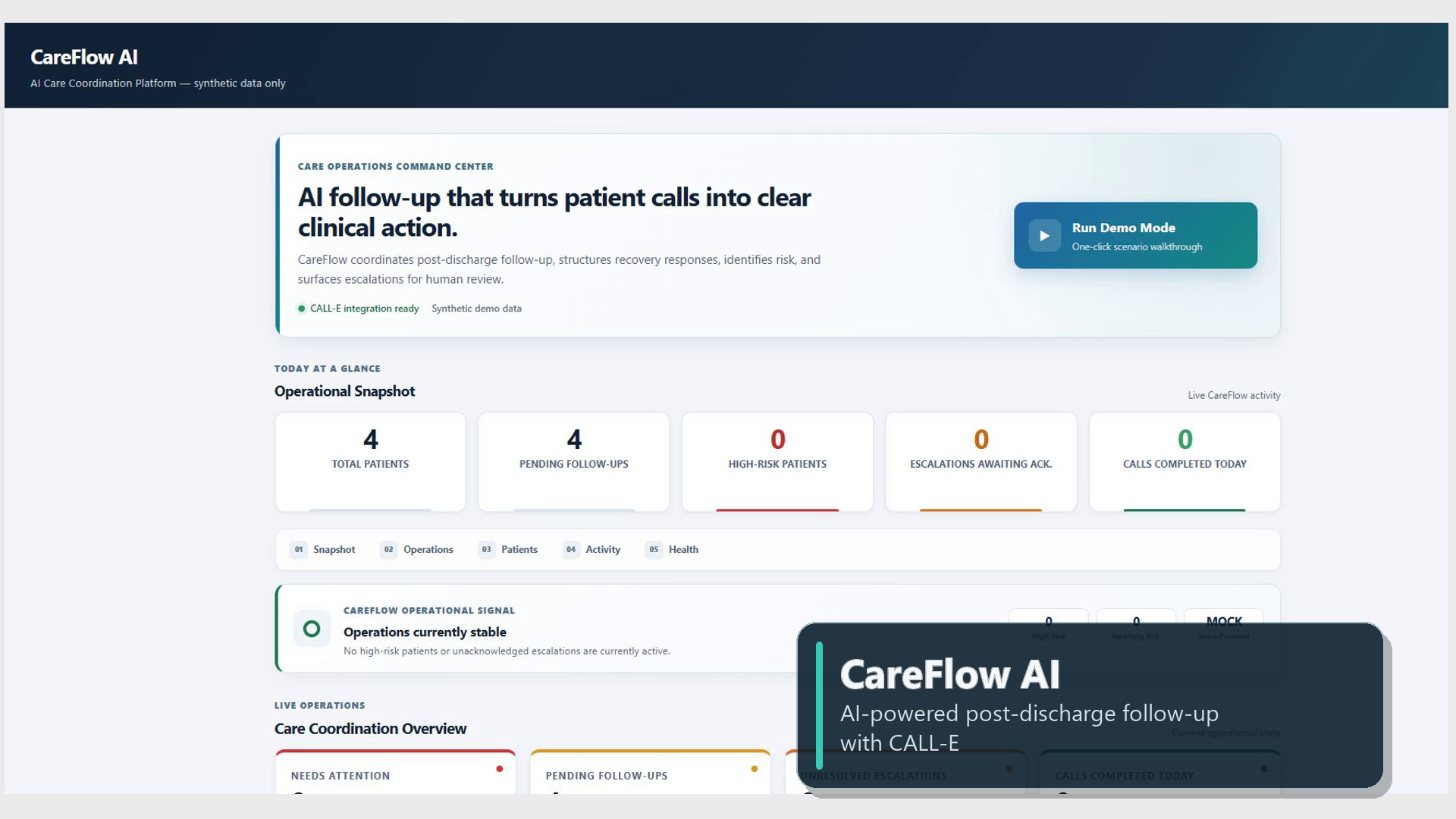
Operational dashboard and deterministic Demo Mode overview.
-
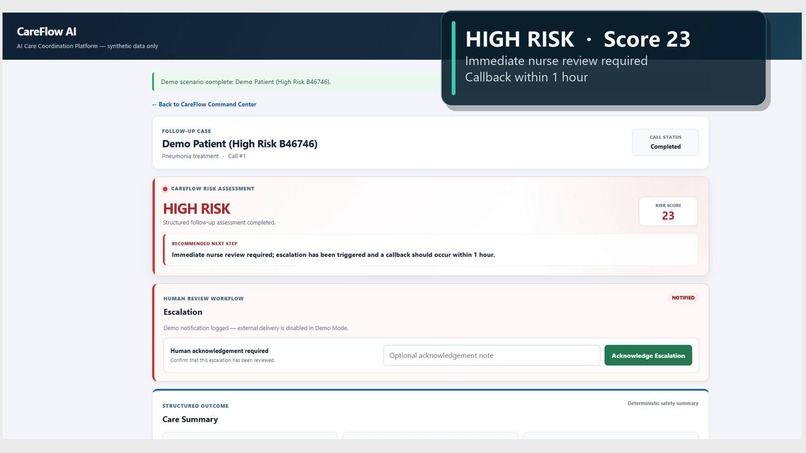
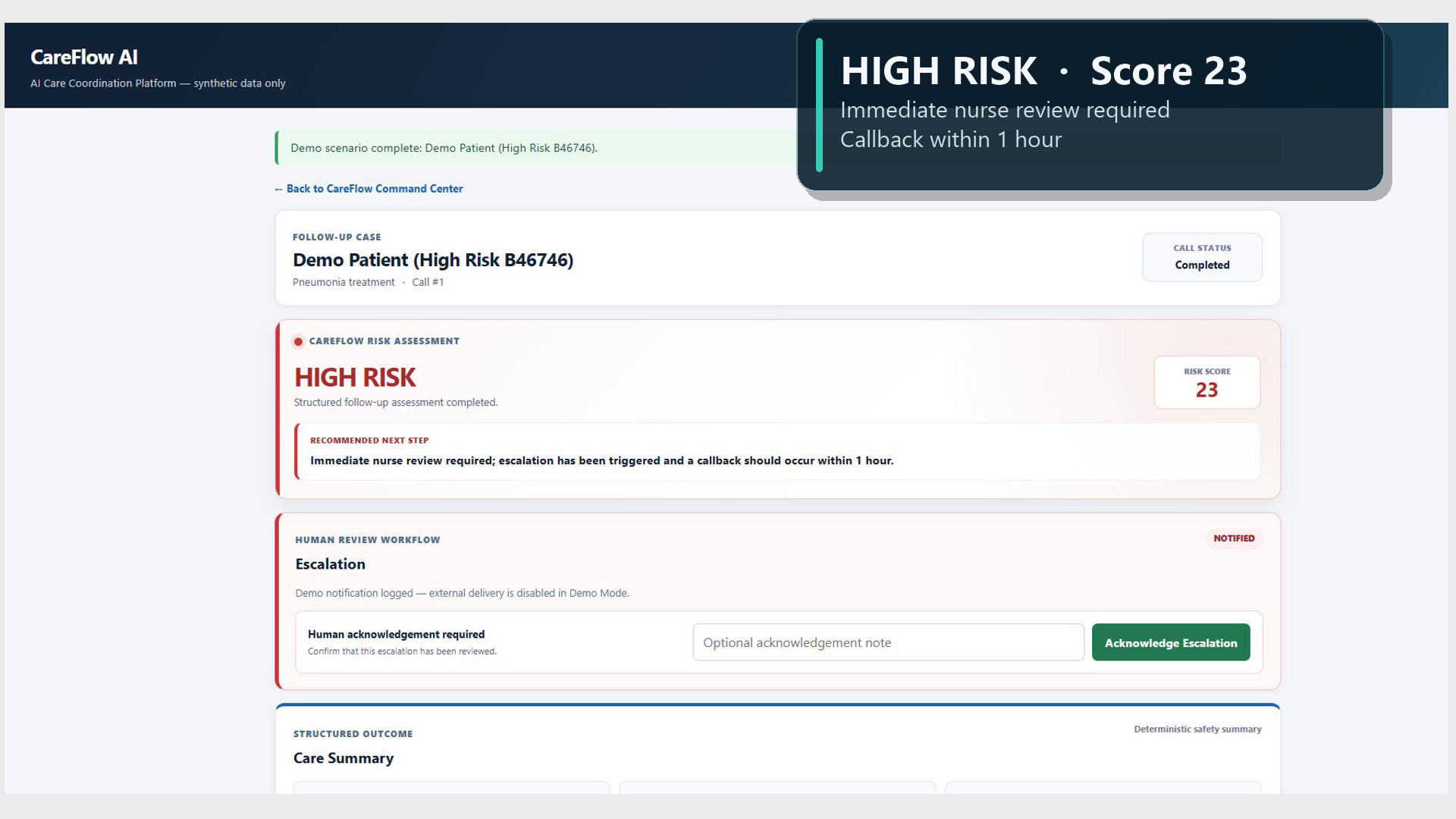
Explainable High Risk result with score, reasons, and escalation status.
-
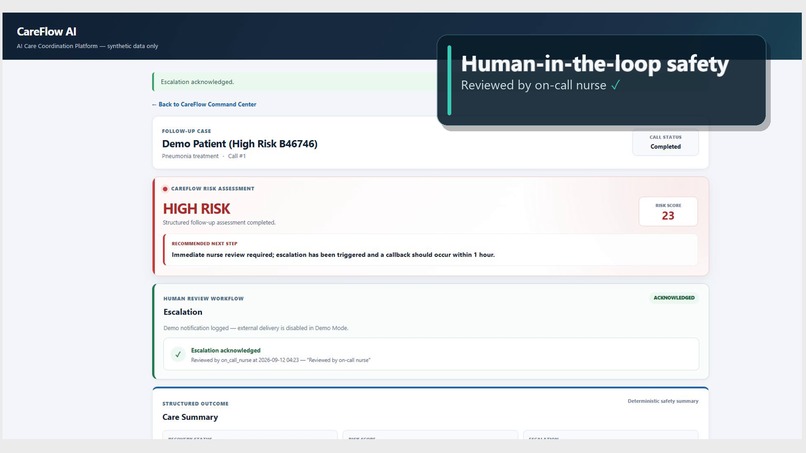
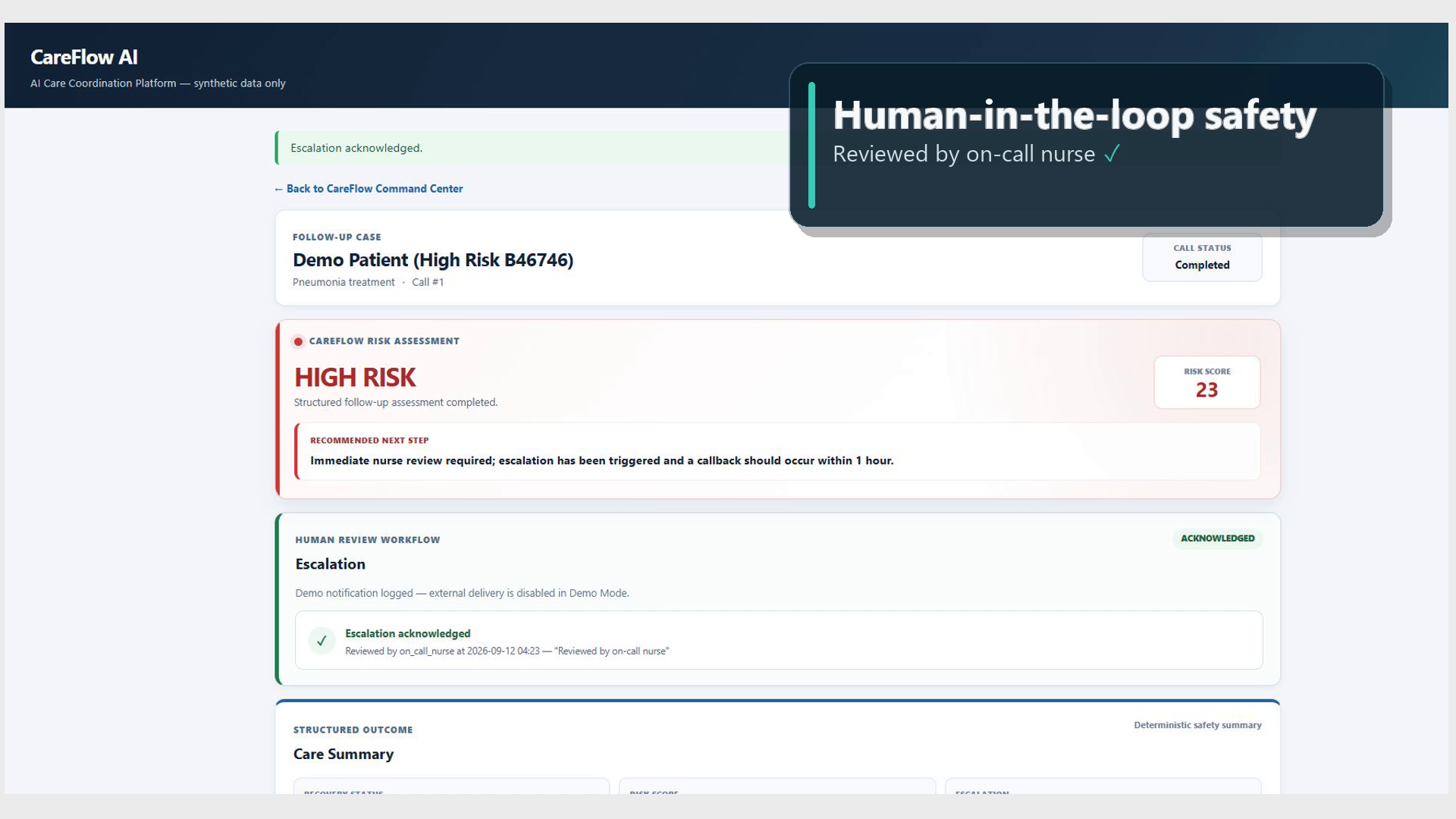
Human acknowledgment closes the escalation loop without hiding provenance.
-
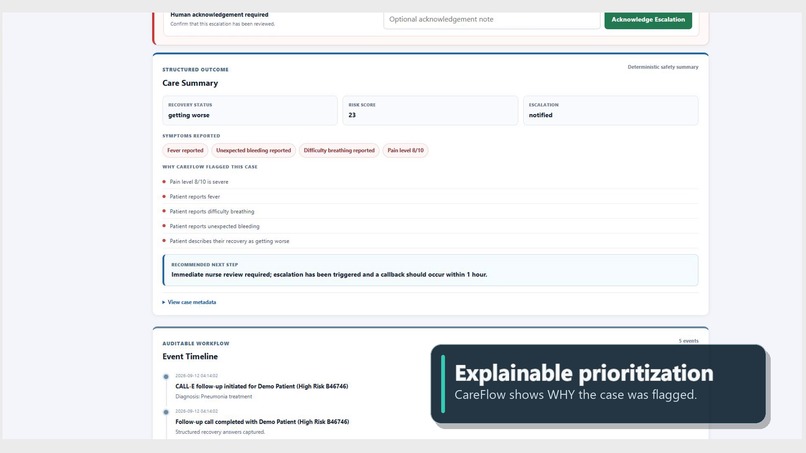
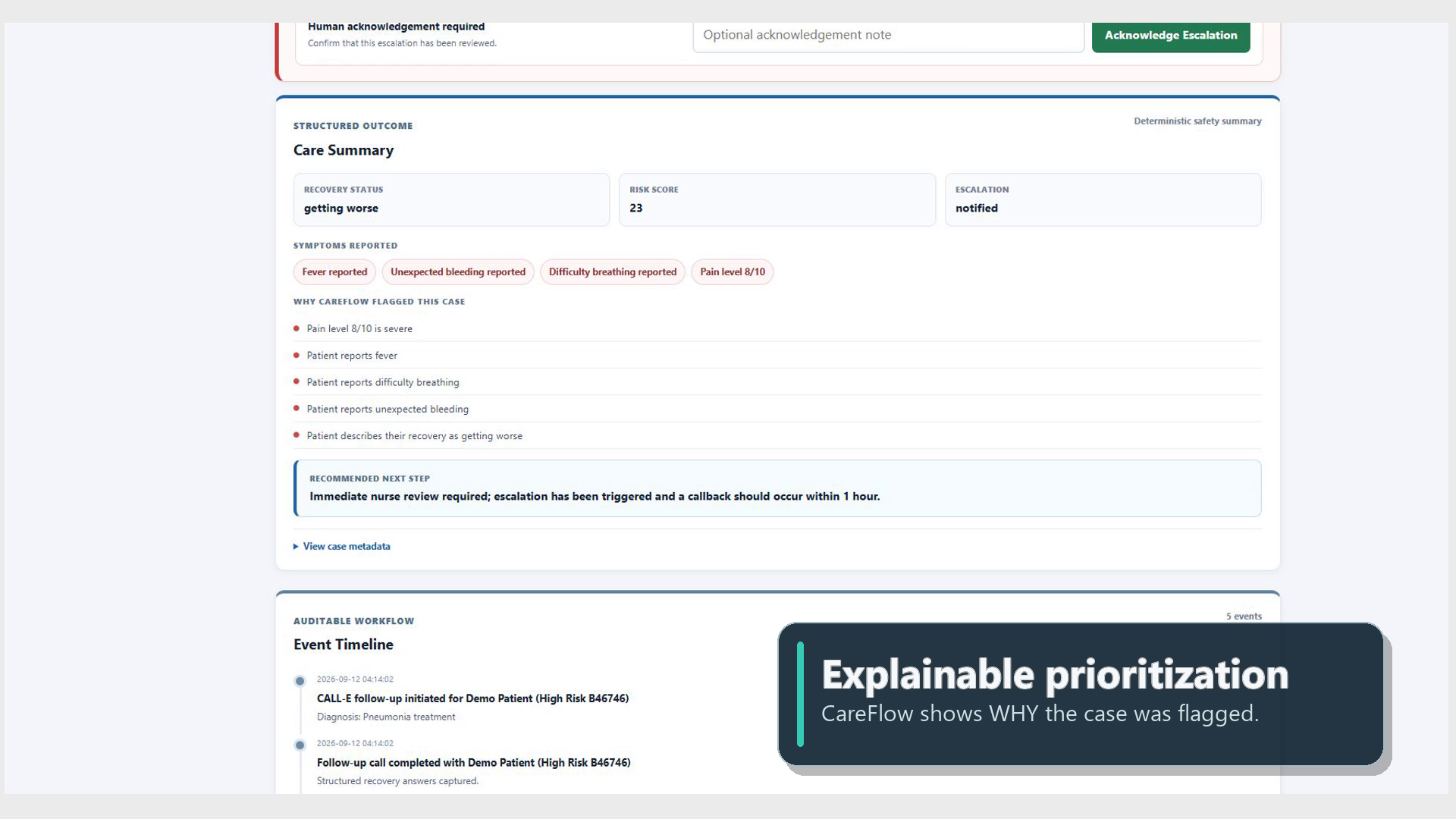
Generated Care Summary preserving structured recovery evidence.
-
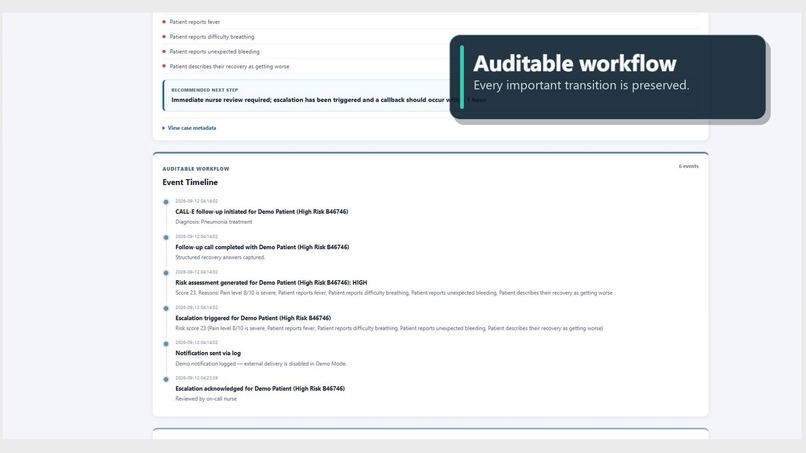
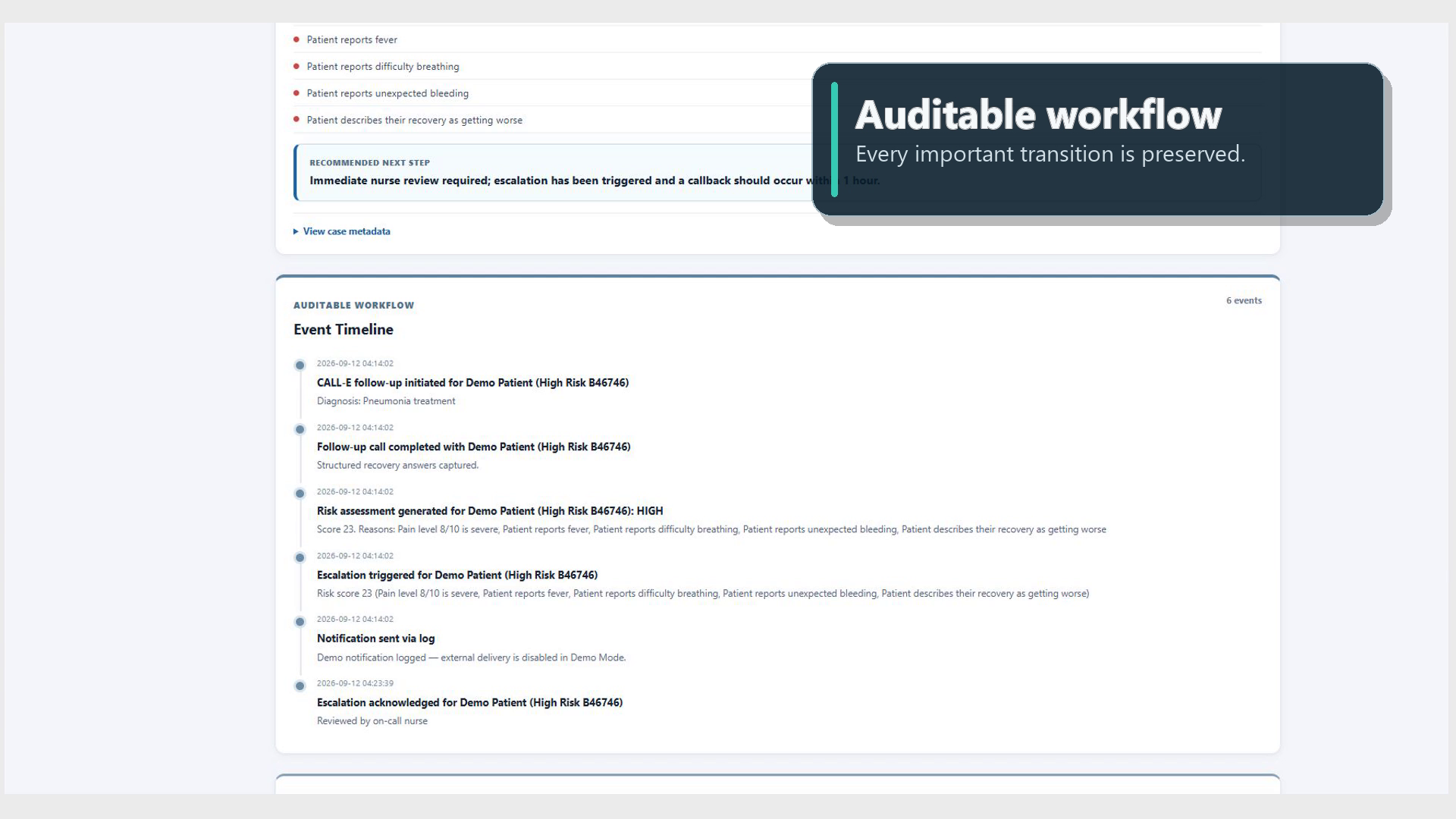
Chronological audit timeline from call evidence through human acknowledgment.
-
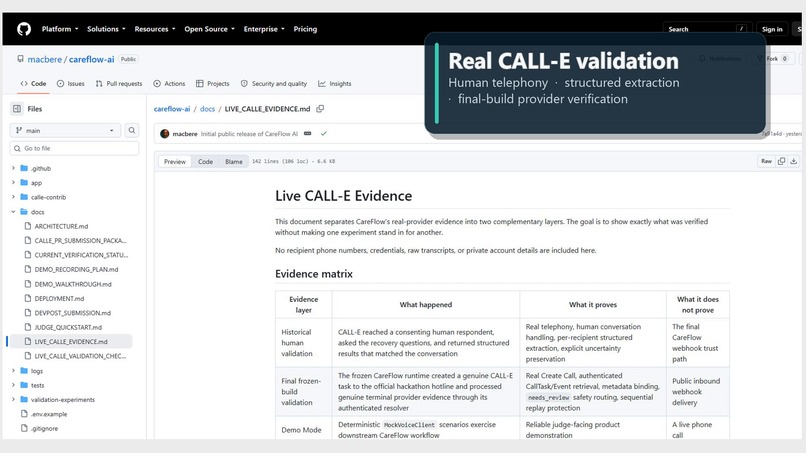
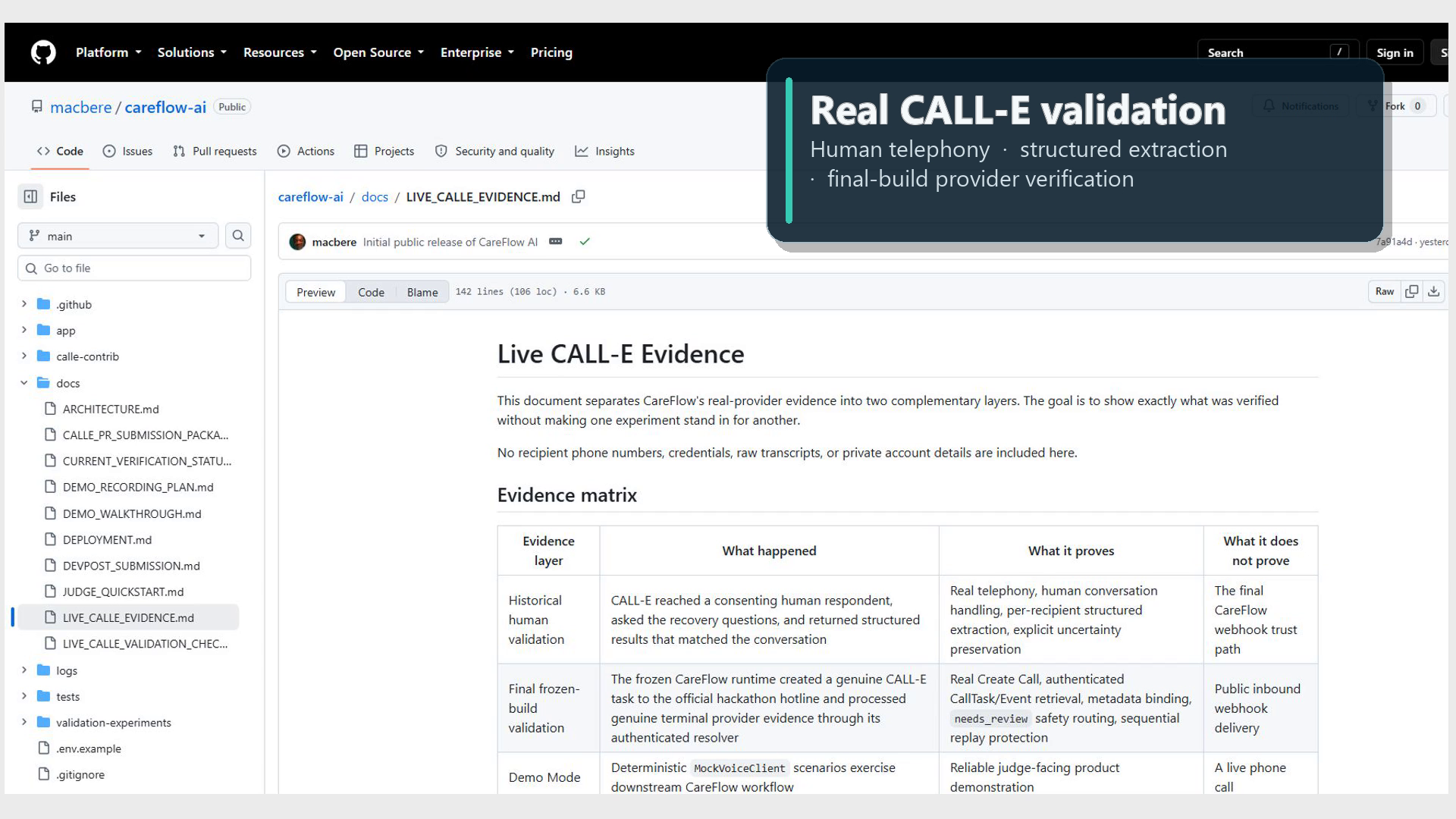
CALL-E contract, trust-boundary, and replay-safety verification evidence.
-
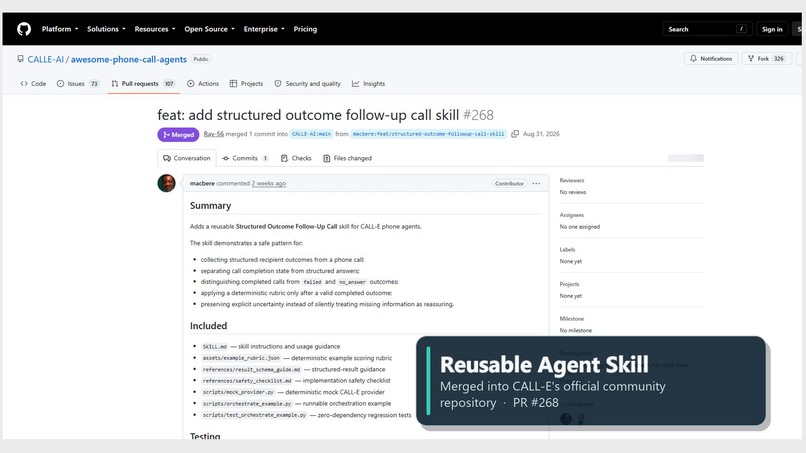
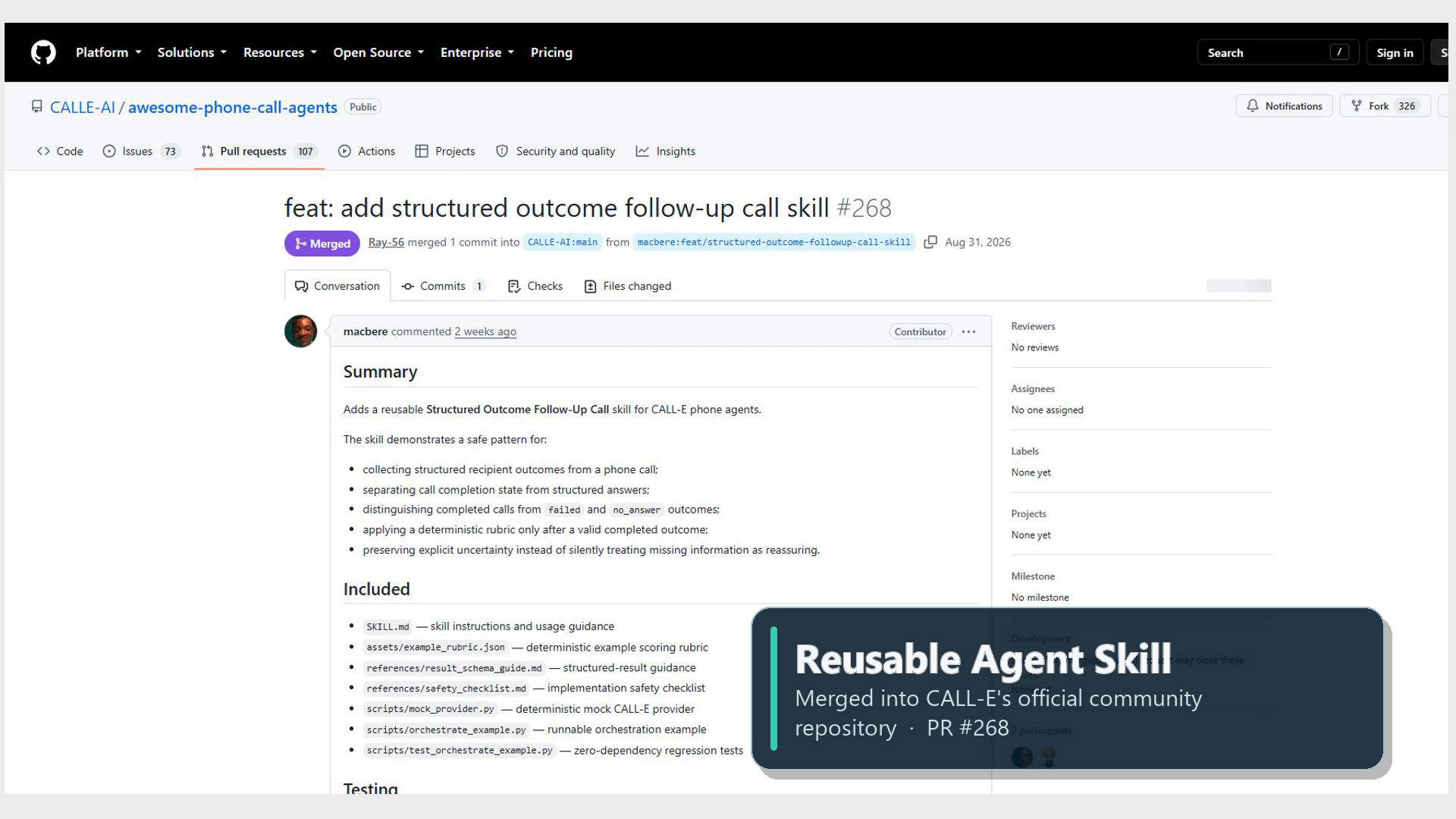
Merged CALL-E structured-outcomes Agent Skill contribution — PR #268.
Inspiration
The period after hospital discharge is a critical gap in care. Patients can develop worsening symptoms before their next appointment, while care teams often cannot manually follow up with everyone at the right time. CareFlow AI was inspired by this simple question: what if AI powered phone follow up could turn patient conversations into structured, explainable care priorities, while sending uncertain or high-risk cases to a human instead of guessing?
What it does
CareFlow AI transforms post-discharge follow-up calls into structured recovery evidence, explainable risk prioritization, and human escalation workflows. CALL-E collects structured information including pain, fever, medication access, medication use, bleeding, swelling, breathing difficulty, and overall recovery. CareFlow then:
- preserves the structured answers and explicit unknown values;
- detects incomplete, malformed, or unusable evidence;
- applies explainable low, medium, or high-risk scoring;
- routes invalid evidence to human review;
- creates escalation state for high-risk cases;
- generates a care summary;
- records a chronological audit timeline; and
- supports human acknowledgment of escalations. The dashboard exposes operational KPIs and gives judges a deterministic Demo Mode that exercises the complete downstream workflow without requiring credentials, a phone number, provider credits, or a real phone call.
How I built it
I built CareFlow AI as a Flask application with SQLAlchemy for workflow state and a provider-independent voice layer. I integrated CALL-E through its REST API for call creation, structured per-recipient results, metadata correlation, authenticated provider-state retrieval, and replay-safe processing.
I also validated the integration with genuine CALL-E calls. Controlled live calls demonstrated real telephony and structured answer extraction, while the frozen submission build successfully created and completed a genuine CALL-E call through the official hackathon testing route.
For reliable judging, I built a MockVoiceClient that powers Demo Mode using the same downstream CareFlow workflow contract. This lets judges safely demonstrate risk assessment, escalation, human acknowledgement, and auditability without placing another live call.
I deployed the judge-facing Demo Mode publicly on PythonAnywhere so CareFlow can be evaluated directly in a browser without local setup, CALL-E credentials, a phone number, or provider credits.
Challenges I ran into
One of the biggest challenges was making phone-call results safe to act on. Spoken answers can be incomplete, ambiguous, or unavailable, so I had to ensure CareFlow never treated uncertainty as a reassuring clinical result. I also worked through CALL-E calling restrictions, provider-state verification, replay protection, and the need to separate real telephony validation from a deterministic judge-facing Demo Mode. These challenges pushed me to design the workflow around authenticated evidence, explicit uncertainty, idempotency, and human review.
Accomplishments that I'm proud of
I am particularly proud that CareFlow AI:
- completed genuine CALL-E phone-call validation;
- preserves uncertainty and routes unusable evidence to human review instead of guessing;
- prevents invalid results from creating normal risk or care-summary artifacts;
- verifies authenticated provider state and terminal events before downstream decisions;
- handles sequential replay without creating duplicate workflow artifacts;
- demonstrates explainable high-risk escalation and human acknowledgement;
- maintains a complete chronological audit timeline;
- includes a deterministic, judge-friendly Demo Mode;
- contributed a reusable structured-outcome Agent Skill that was merged into CALL-E’s official community repository through PR #268; and
- passed a credential-free automated test suite and CI verification.
What I learned
I learned that building a reliable voice agent is not just about making the call, it is about deciding whether the returned evidence is trustworthy enough to act on. CareFlow reinforced the importance of preserving uncertainty, verifying provider state before making downstream decisions, designing replay-safe workflows, and keeping humans involved in high-risk or unclear cases. I also learned the value of separating real integration proof from deterministic demonstrations so that a product can be both technically credible and easy for judges to evaluate.
What’s next for CareFlow AI
Post-hackathon work will focus on production readiness, including:
- authentication and role-based access control;
- multi-tenant hospital support;
- durable background jobs and production webhook infrastructure;
- distributed idempotency and concurrency controls;
- real SMS or secure clinical-messaging providers;
- PostgreSQL and migration tooling;
- EHR/FHIR integration;
- configurable clinical protocols;
- richer operational analytics;
- formal security and compliance review; and
- prospective clinical validation before any real-world deployment.
These are future development goals, not current product claims.
Built With
- call-e-api
- css
- flask
- github
- github-actions
- html
- javascript
- json-schema
- pytest
- python
- python-dotenv
- requests
- rest-apis
- sqlalchemy
- sqlite
- webhooks
