-
-
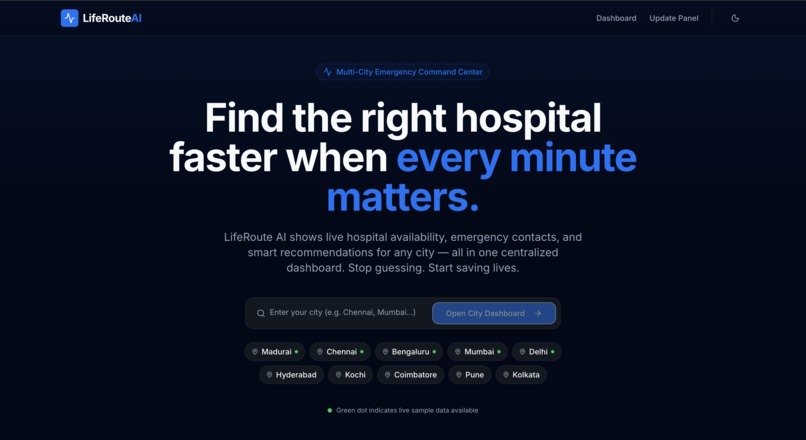
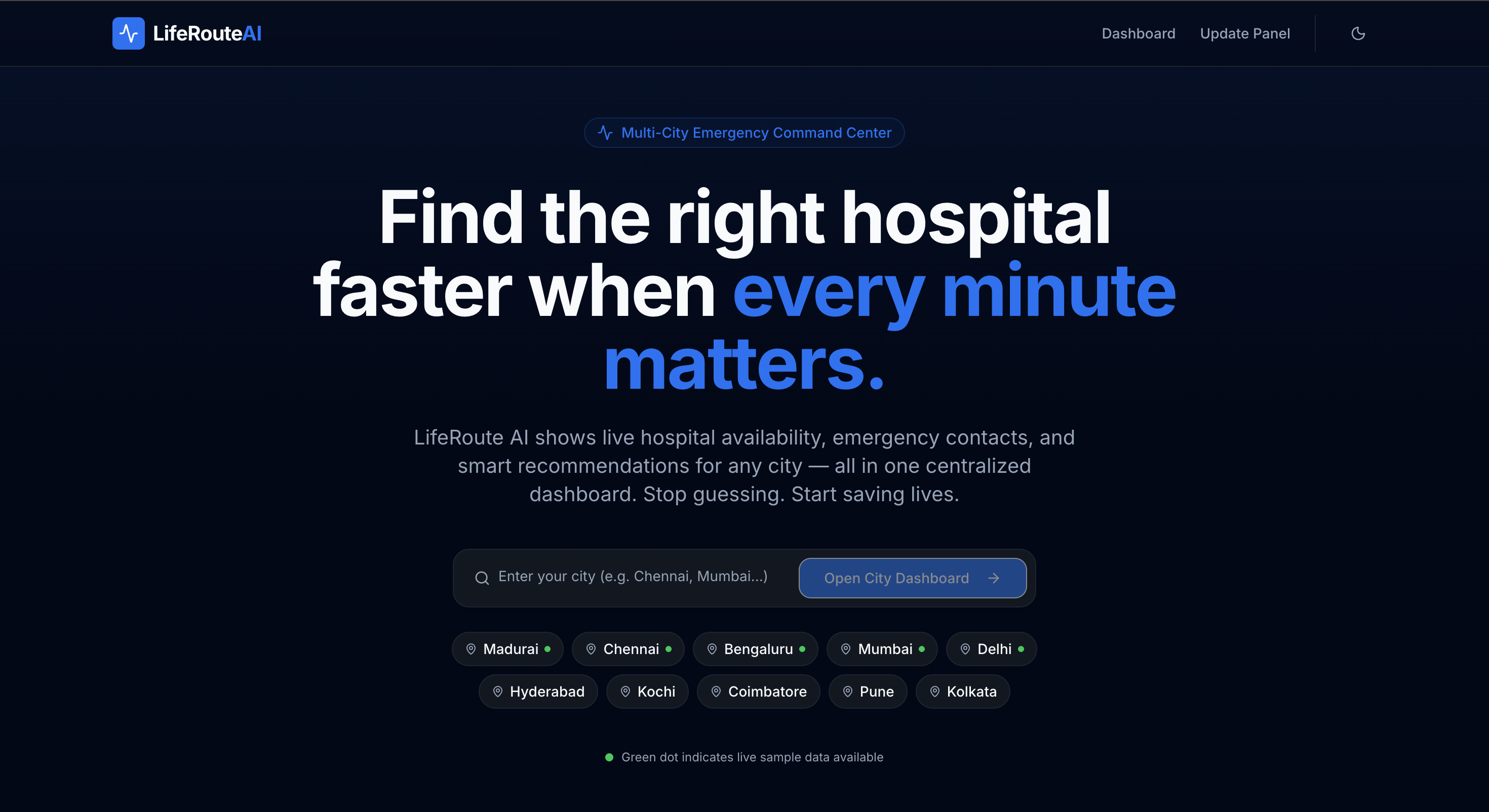
LifeRoute AI welcome page introducing the emergency hospital availability dashboard.
-
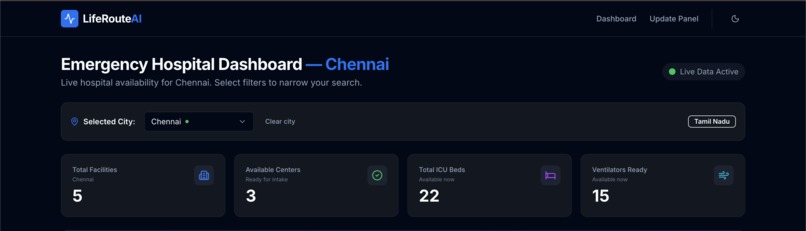
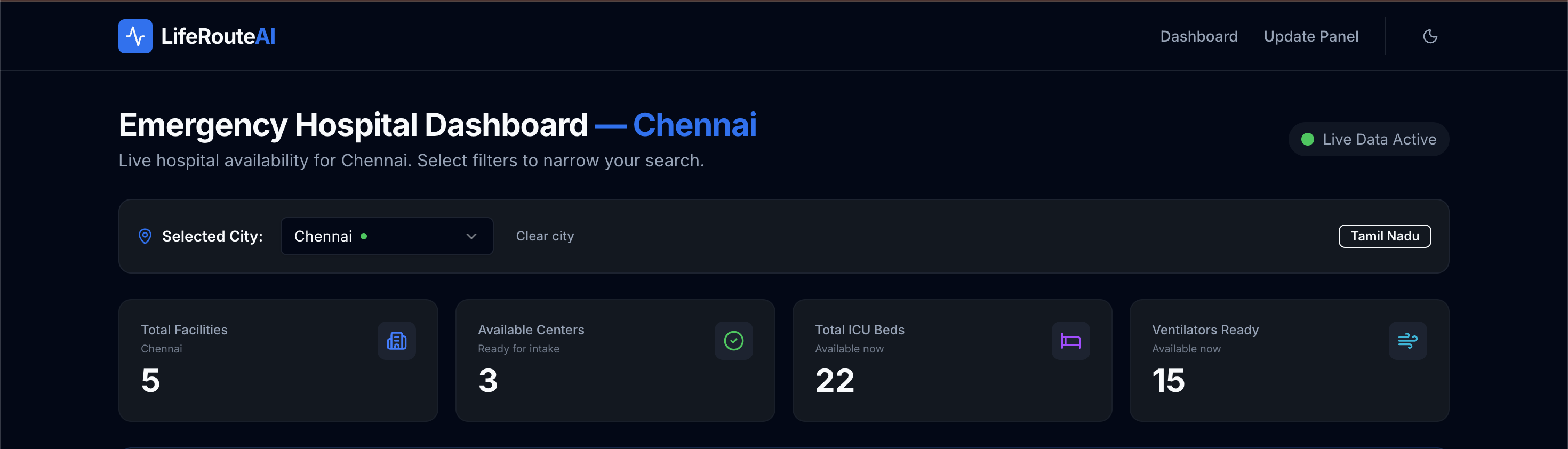
City-based dashboard showing hospital availability, emergency resources, and quick filters.
-
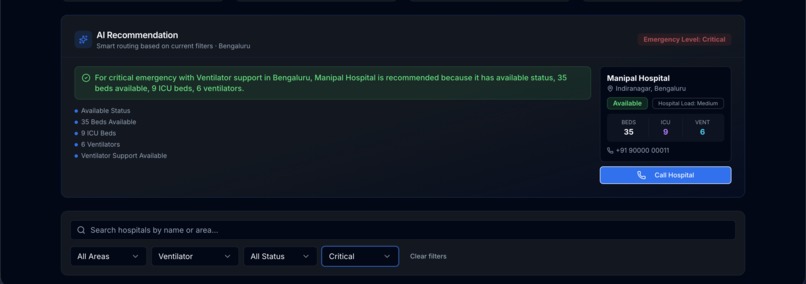
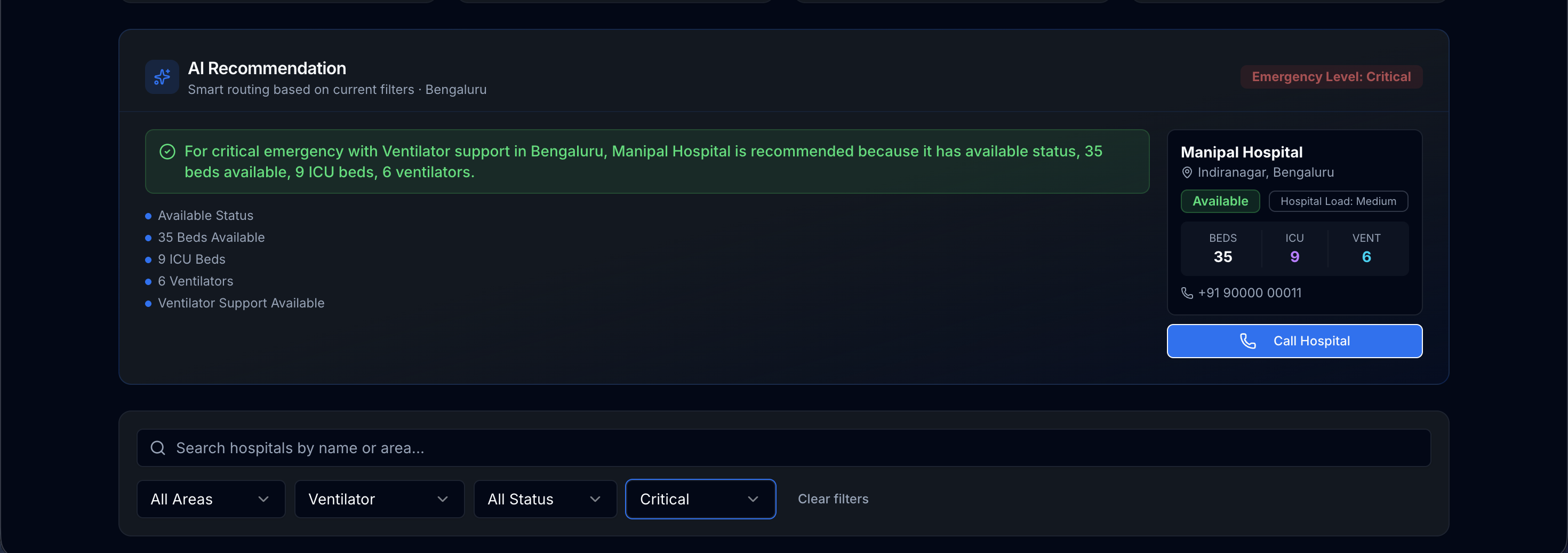
AI-style routing recommendation suggesting the best hospital based on emergency level, beds, ICU, ventilators, and specialty support.
-
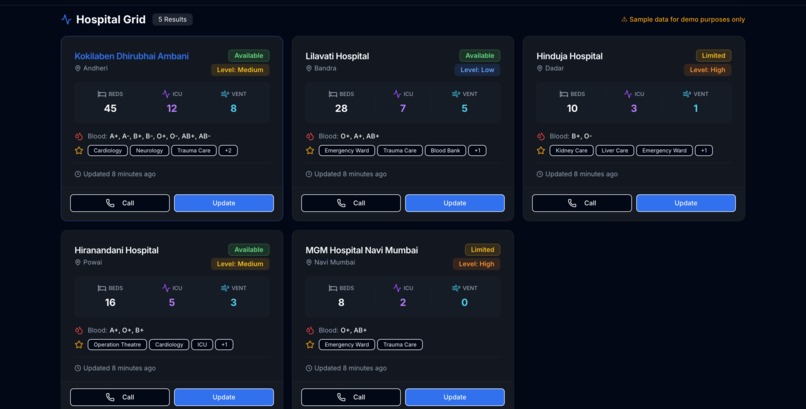
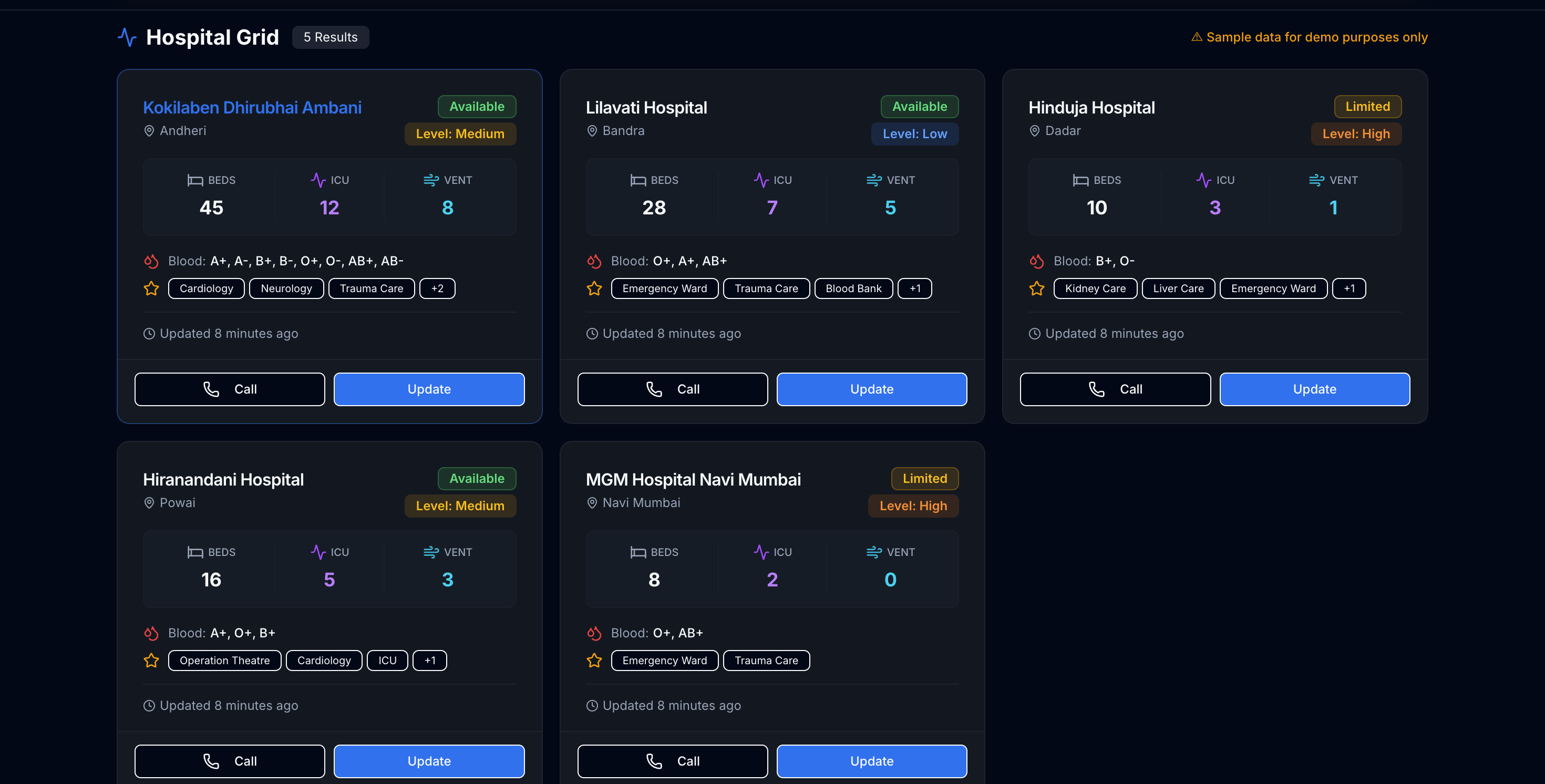
Hospital cards displaying bed availability, ICU capacity, ventilators, blood units, specialties, and hospital status.
-
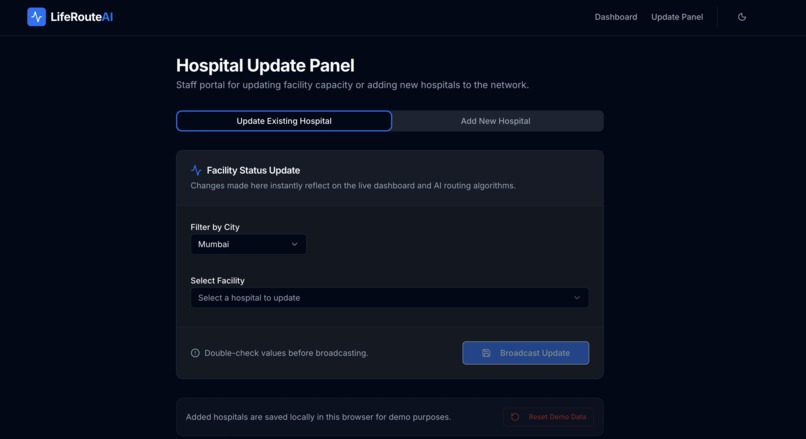
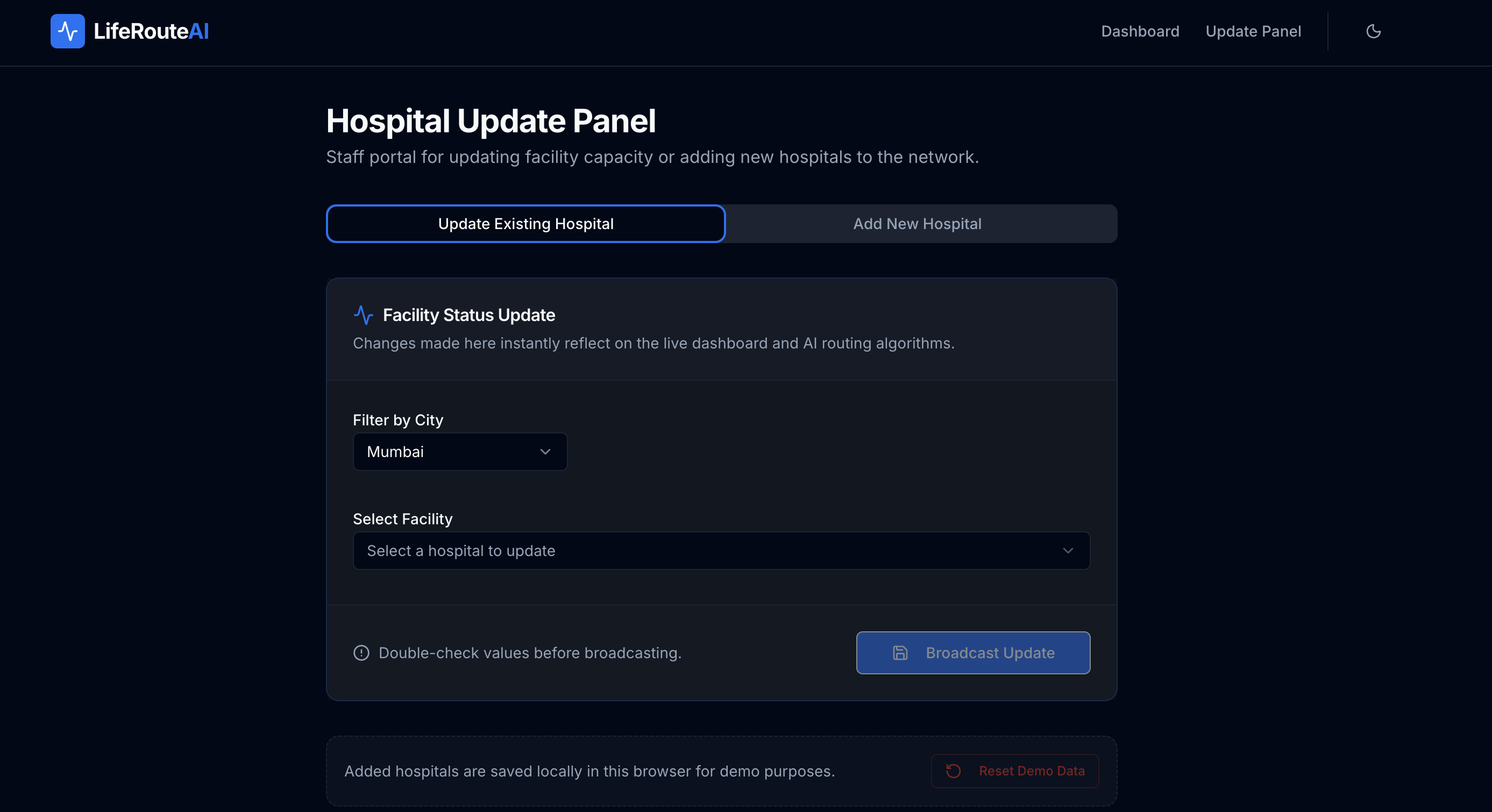
Hospital update panel for adding new hospitals and updating emergency resource availability for the demo.
Inspiration
During a medical emergency, the biggest problem is not only reaching a hospital — it is reaching the right hospital in time. Families and ambulance drivers often have to call multiple hospitals one by one to ask if ICU beds, ventilators, blood units, or specialists are available. Those few minutes can matter.
LifeRoute AI was inspired by this gap. I wanted to build a practical emergency healthcare tool that gives users a faster way to compare hospital availability and make a better decision during critical situations.
What it does
LifeRoute AI is a multi-city emergency hospital availability dashboard. Users can select a city and instantly view hospitals with available beds, ICU beds, ventilators, blood units, and specialty care.
The platform includes filters for area, facility, hospital status, and emergency level. It also includes an AI-style recommendation card that suggests the most suitable hospital based on the selected emergency level, required facility, available beds, ICU beds, ventilators, hospital status, and specialty match.
Hospital data can also be added or updated for demo purposes, making the project useful for showing how hospitals or emergency coordinators could keep availability information updated.
What makes it different
Many existing hospital search tools mainly show hospital names, addresses, ratings, or phone numbers. They do not usually answer the most urgent emergency question: "Which hospital can handle this case right now?"
LifeRoute AI stands out because it focuses on emergency readiness, not just hospital discovery. It combines city-based hospital search, resource availability, emergency-level filtering, hospital load/status, and a clear recommendation reason in one dashboard.
Instead of only listing hospitals, LifeRoute AI explains why a hospital is recommended. For example, it can recommend a hospital for a critical cardiology emergency because it has available status, ICU beds, general beds, ventilators, and matching specialty support.
Disclaimer
LifeRoute AI is a student hackathon prototype for demonstration purposes only. It is not a real emergency service, medical advice platform, hospital booking system, ambulance dispatch system, or official hospital availability source. All hospital data and hospital phone numbers shown in the demo are sample data. In a real emergency, users should call official emergency services such as 112 or 108, or contact a verified hospital directly.
This makes the project more useful for patients, families, ambulance drivers, and emergency coordinators who need fast and clear decision support.
How I built it
I built LifeRoute AI with the help of AI tools. I used AI assistance for coding support, debugging, UI improvements, feature planning, README writing, and submission preparation. I guided the project idea, requirements, feature decisions, testing, corrections, and final presentation.
The project was built using React, TypeScript, Tailwind CSS, Node.js, and Express. The frontend displays the dashboard, filters, hospital cards, emergency contacts, dark mode, and the AI recommendation section. The backend provides sample hospital data for the MVP.
For the demo, browser localStorage is used to save added or updated hospital data locally. This allows newly added hospitals to stay available even after refreshing the page in the same browser.
Challenges I faced
One challenge was making the AI recommendation card clear and easy to understand. I had to separate the user-selected emergency level from the hospital load/status so users would not see two confusing labels both called "Level".
Another challenge was hospital data persistence. Initially, newly added hospitals appeared immediately but disappeared later. This was fixed by storing hospital data in localStorage for the MVP demo.
I also worked on improving the layout, dark mode, demo-safe phone numbers, emergency contacts, and overall presentation so the project would be easier to explain during the hackathon demo.
Accomplishments that I am proud of
I am proud that I completed a working emergency healthcare dashboard with city-based hospital search, smart filters, emergency contacts, hospital update functionality, local data persistence, and an AI-style routing recommendation card.
I am also proud that the project solves a practical real-world problem and is simple enough to demo clearly, while still having strong future expansion potential.
What I learned
I learned how to plan and guide a full-stack project, test features carefully, identify UI and logic issues, and improve the product through iteration. I also learned how React state, localStorage persistence, frontend-backend flow, and demo-ready product presentation work together.
I also learned the importance of clear wording in healthcare-related interfaces. Small labels like "Emergency Level" and "Hospital Load" can make a big difference in avoiding confusion.
What's next for LifeRoute AI
Future improvements include GPS-based nearest hospital suggestions, verified hospital staff login, ambulance driver mode, blood bank integration, WhatsApp or SMS emergency alerts, real-time hospital data verification, government health dashboard integration, multi-language support, and a mobile app version.
Built With
- ai-assisted-development
- browser-localstorage
- express.js
- github
- node.js
- react
- replit
- tailwind-css
- typescript
