-
-
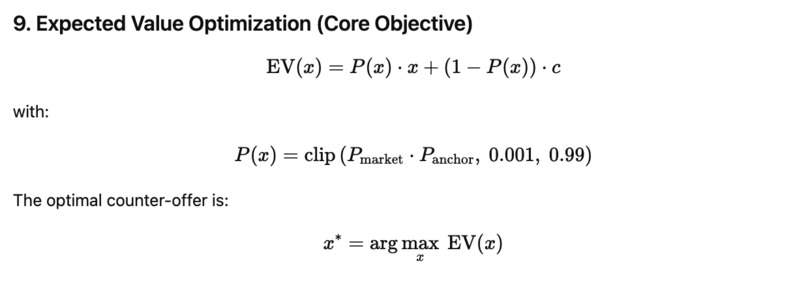
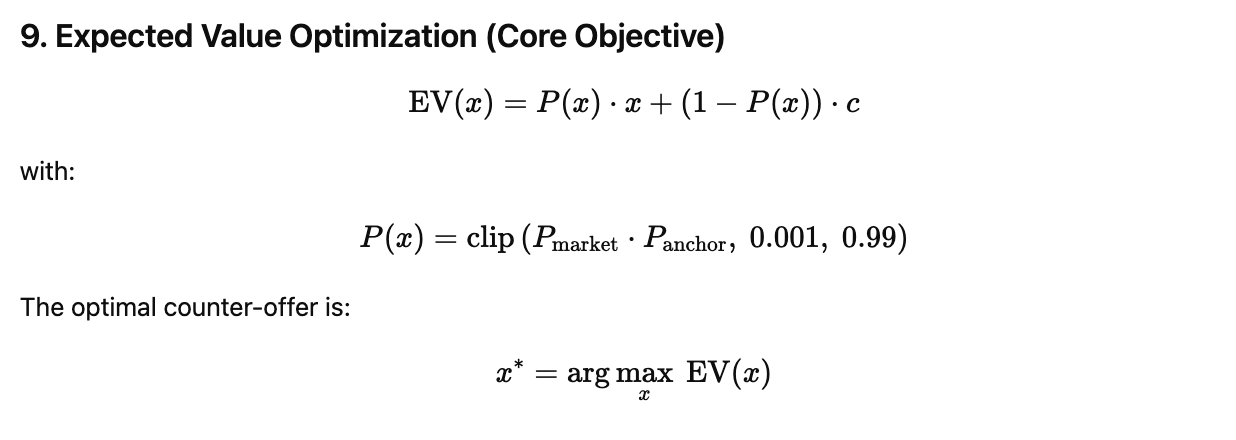
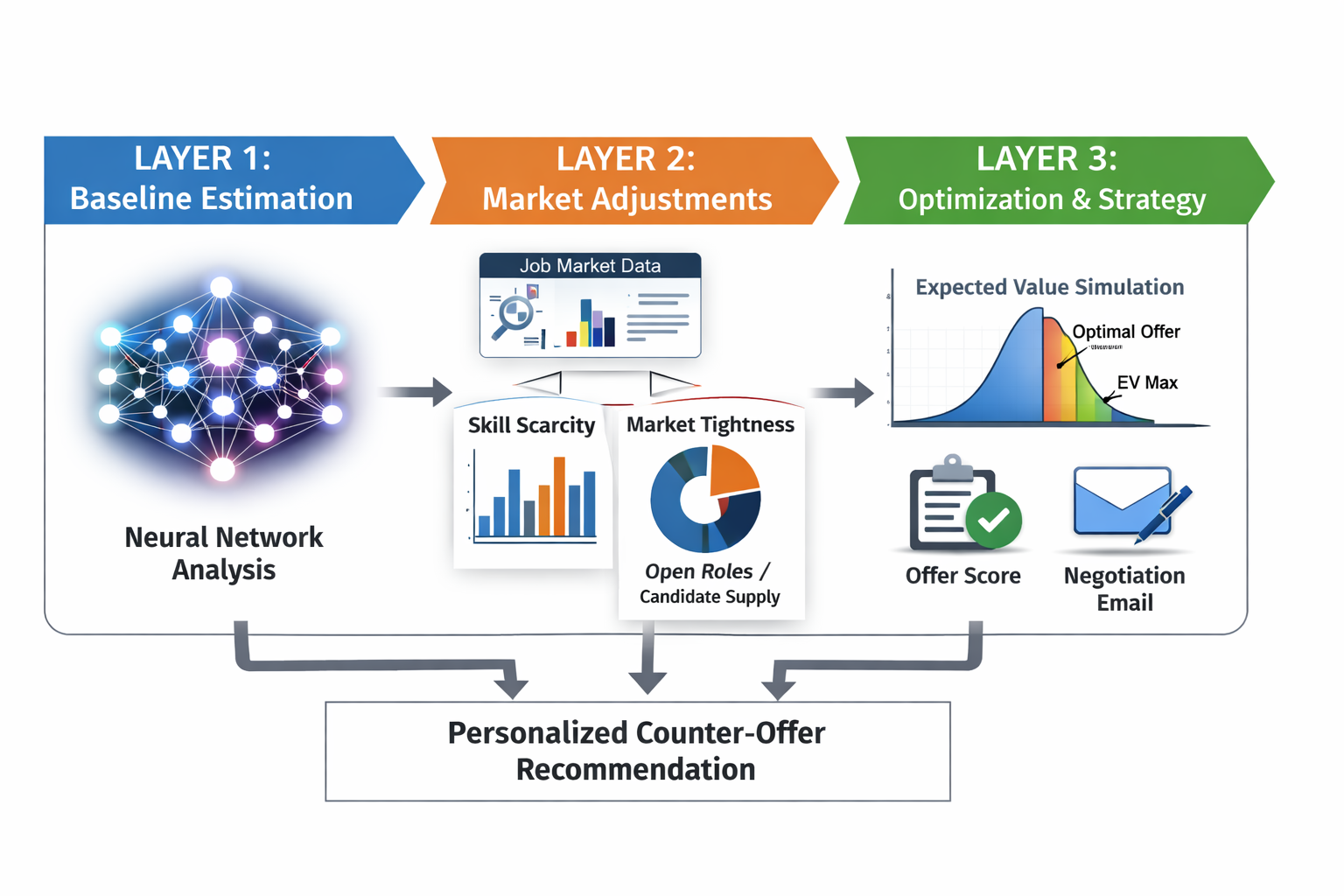
Expectation Maximisation Function (Negotiation Engine)
-

Market Acceptance Probability (Negotiation Engine)
-
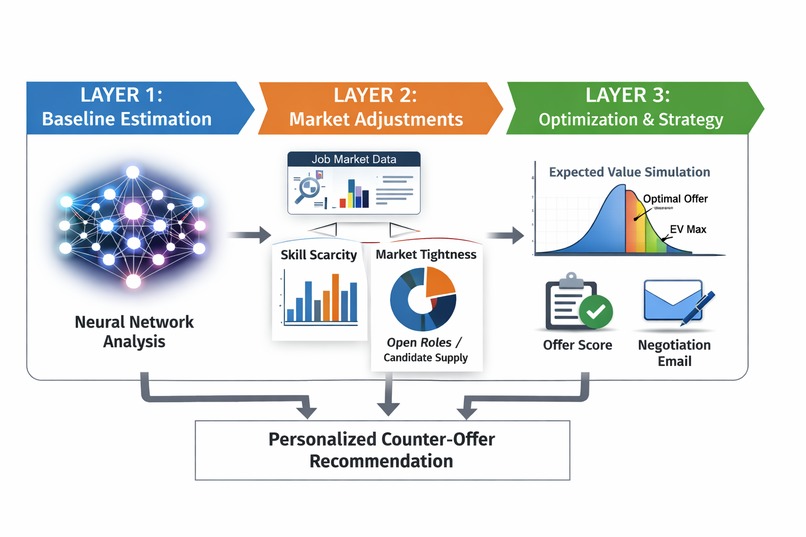
Flowchart of Negotiation Engine
-
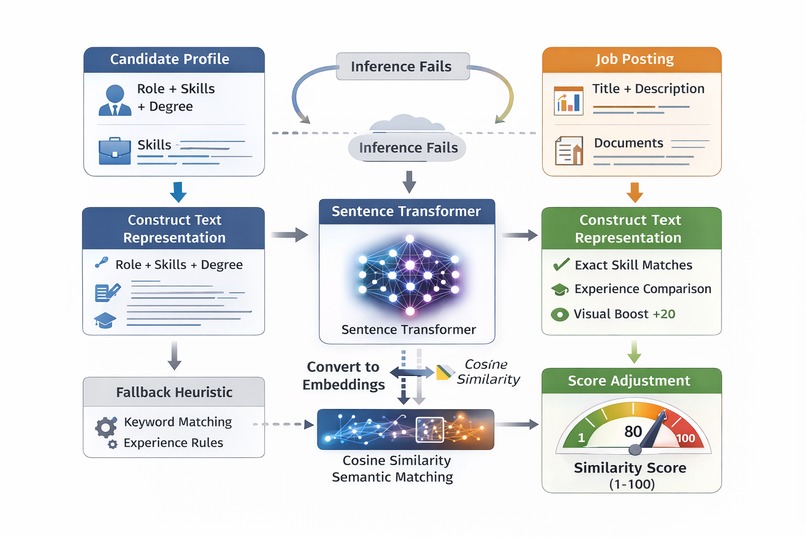
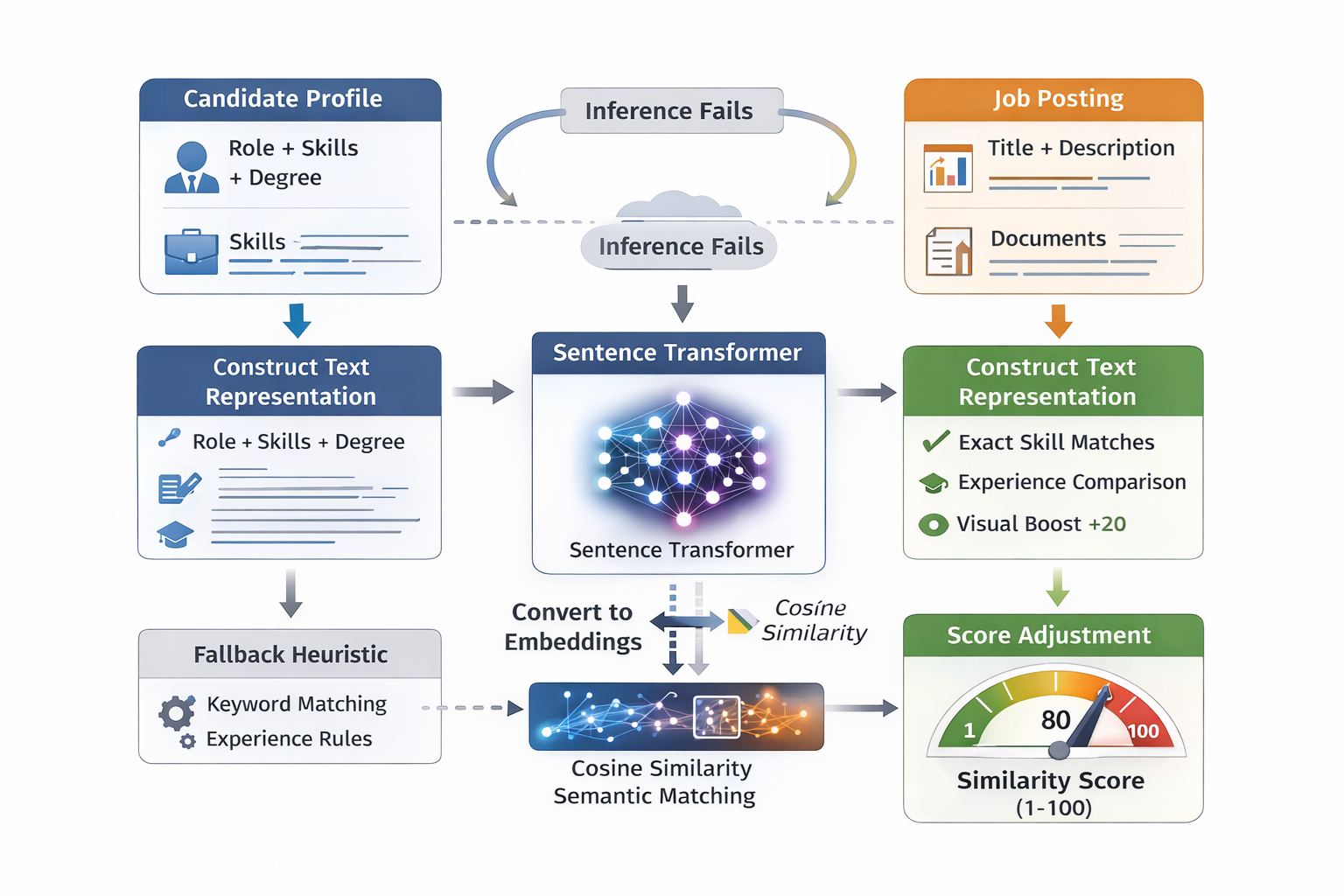
Recommendation System

Inspiration
Our journey began with a shared frustration during our own internship searches. We found ourselves navigating a chaotic landscape where information was scattered, and university curriculums often felt disconnected from industry demands. Even after securing offers, we noticed a troubling disparity: peers with similar backgrounds were receiving vastly different compensation packages, simply because they had access to better data or negotiation tactics. We realized there was no centralized "operating system" to guide a student from skill acquisition to that final signature on a contract. We built CareerOS to be that missing link—a standard benchmark and guide for the modern graduate.
What it does
CareerOS is a comprehensive, end-to-end career intelligence platform. It bridges the gap between pre-job preparation and post-offer decision making. On the front end, it generates personalized Strategic Roadmaps to help users acquire high-value skills and uses AI to discover relevant opportunities. On the back end, it features a sophisticated Negotiation Engine that evaluates job offers against real-time market benchmarks. It provides guidance on whether to accept, reject, or negotiate, ensuring that every user maximizes their career potential based on data, not guesswork.
How we built it
We engineered CareerOS as a modern full-stack application. The frontend is built on Next.js for responsiveness, integrated with Supabase for secure authentication and scalable data storage. The backend is a hybrid system: we utilize external APIs to scrape real-time market data from the existing job market and use this information to estimate what a candidate should reasonably have been offered, while still relying on our own custom PyTorch Deep Learning Model for the core intelligence. This neural network was trained on a rigorously calibrated synthetic dataset to predict salary baselines with high accuracy. We then layered Agentic AI on top to interpret these mathematical outputs into human-readable negotiation strategies.
Challenges we ran into
One of our biggest technical hurdles was the sheer complexity of the data integration. Because CareerOS connects so many domains—profiles, skills, roadmaps, and salary data—a single schema change could break the entire pipeline. Managing this fragile connectivity required strict data governance and rigorous testing of our flow. We also struggled with the mismatch of external API endpoints; harmonizing unstructured job descriptions from various sources into a unified skill taxonomy was a significant data engineering challenge. Additionally, resolving merge conflicts and aligning on the UI/UX design for such a data-heavy application took considerable iteration.
Accomplishments that we're proud of
We are incredibly proud of the Deep Learning Negotiation Model. Successfully integrating a neural network with a custom Expected Value Maximization algorithm allowed us to provide advice that is both probabilistically sound and mathematically optimal—a level of sophistication rarely seen in student apps. We also take great pride in the Roadmap Planning System, which successfully turns the abstract anxiety of "what should I learn?" into a concrete, week-by-week plan.
What we learned
Building CareerOS was a masterclass in System Architecture. We learned the hard way that calling external APIs for every request is unsustainable, leading us to implement aggressive caching strategies that improved performance by orders of magnitude. We also gained a deep appreciation for the fundamentals of Machine Learning—specifically, how to synthesize realistic training data when real-world datasets are sparse or expensive. Finally, implementing secure authentication taught us the critical importance of protecting user data in a career-centric application.
What's next for CareerOS
The next evolution of CareerOS is the Peer-to-Peer Recommendation Engine. We plan to leverage data from successful user profiles to recommend courses, projects, and paths to new users, creating a virtuous cycle of mentorship. We are also working on reinforcing our machine learning models with real-word data collected from the platform, creating a feedback loop that makes our predictions sharper and more personalized over time.

Log in or sign up for Devpost to join the conversation.