-
-
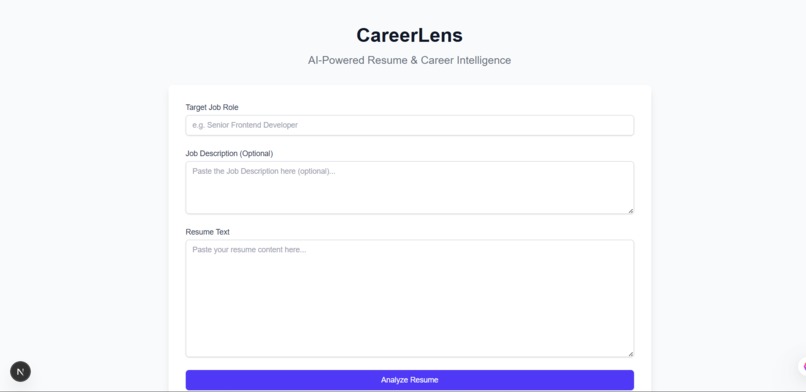
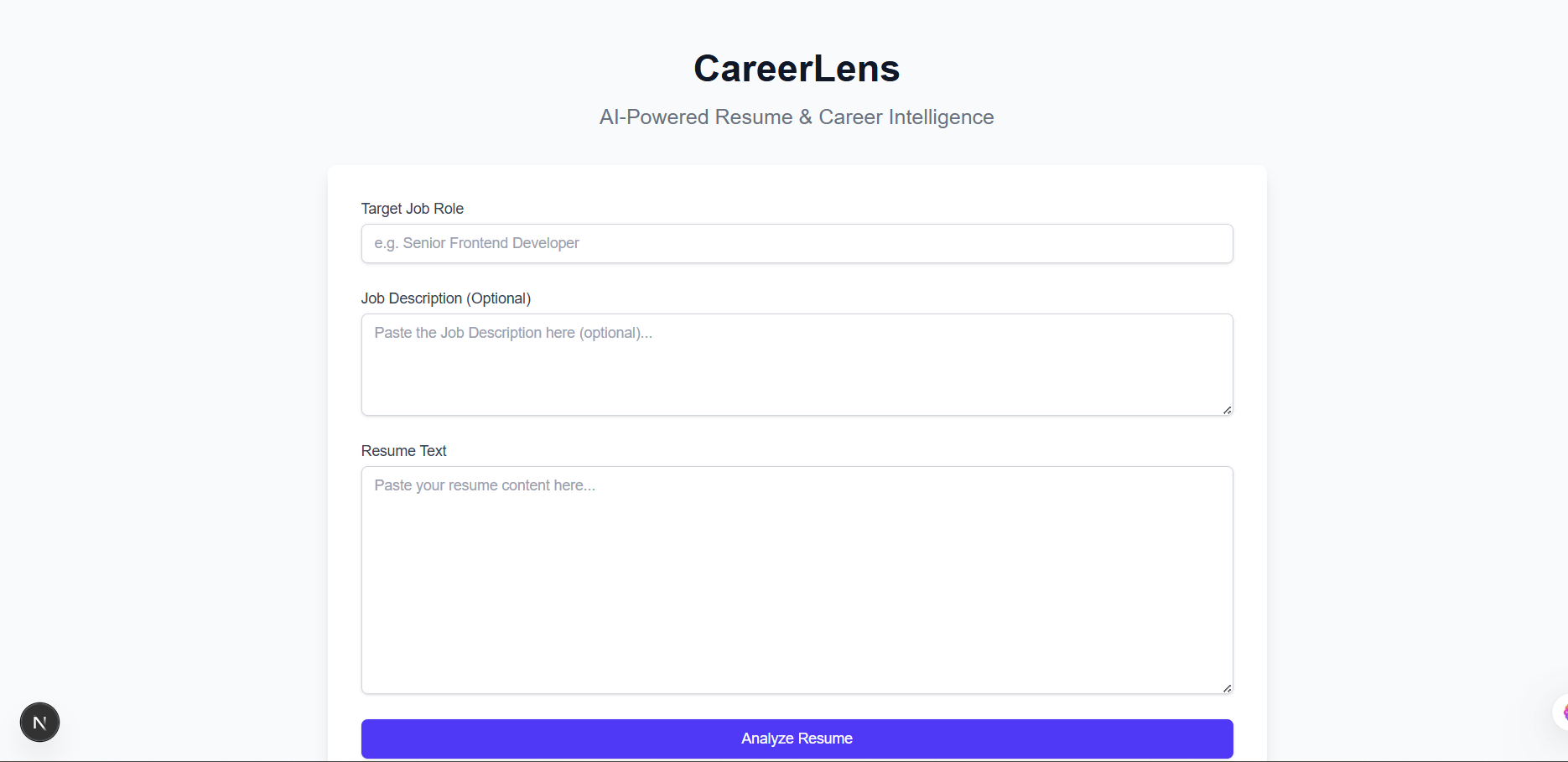
CareerLens , Enter your target role, job description, and resume to begin AI-powered hiring analysis.
-
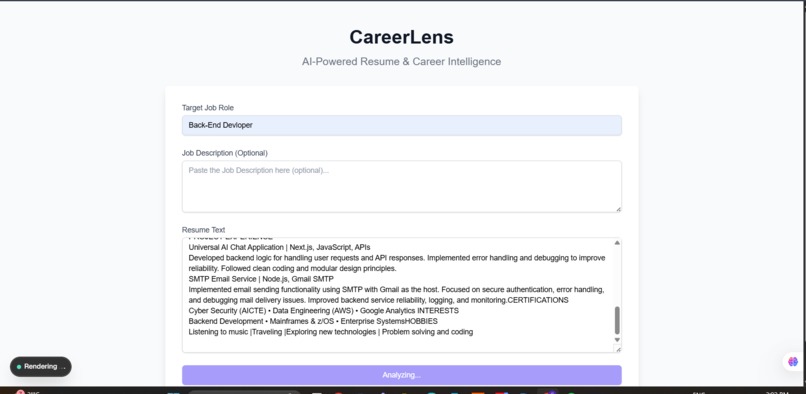
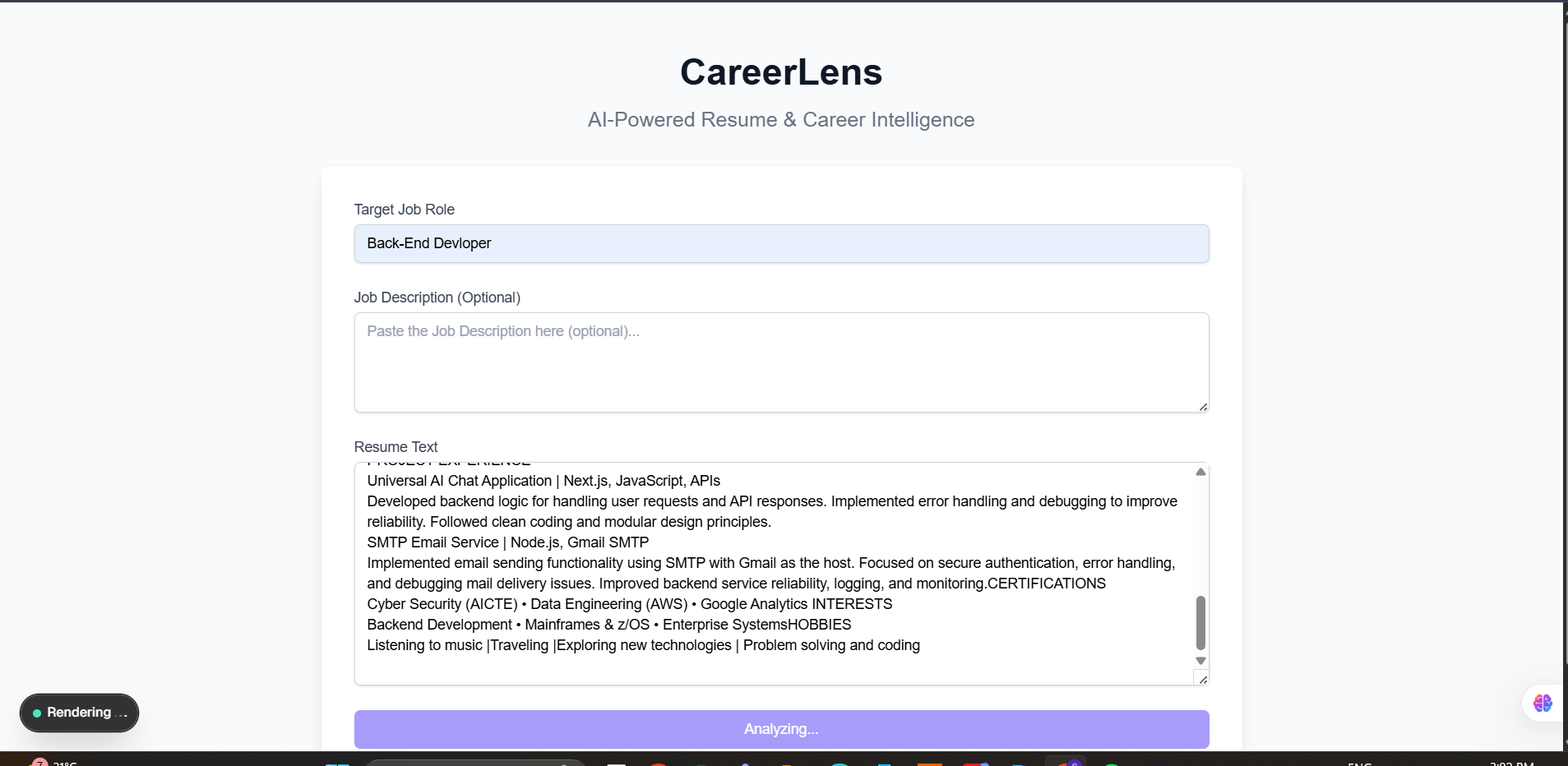
CareerLens analyzes the resume using Google Gemini to simulate ATS and real recruiter decision-making.
-
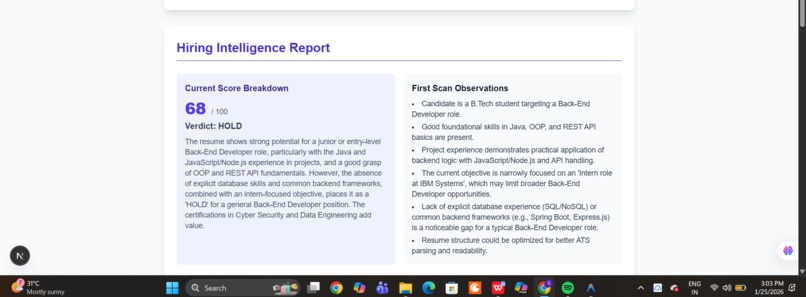
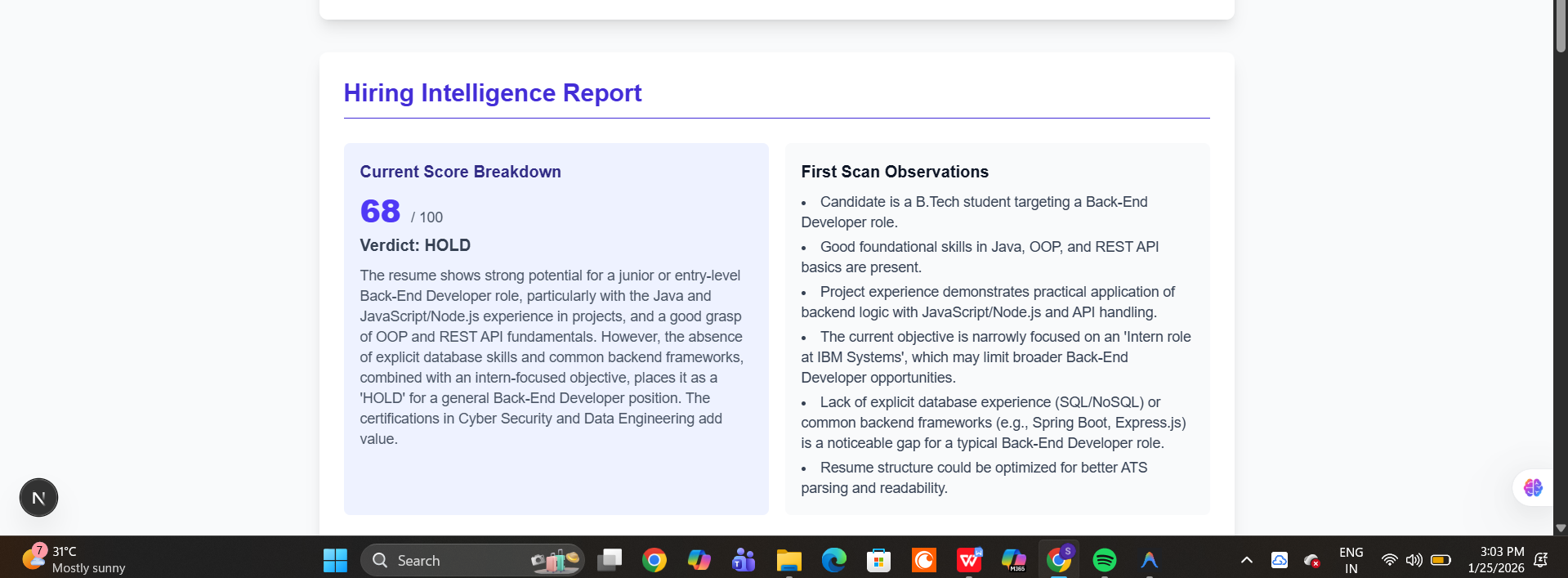
Google Gemini analyzes the resume, assigns an ATS score, and explain the recruiterlevel strengths and gaps.and first in 6 8 seconds first
-
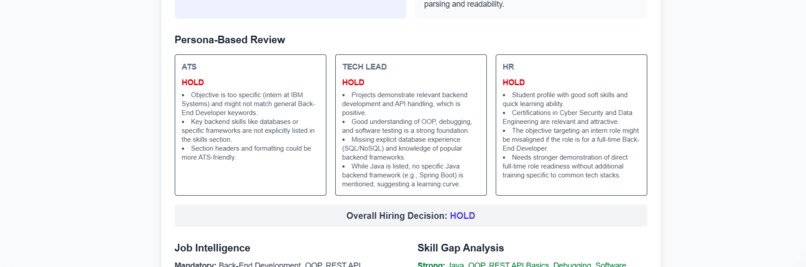
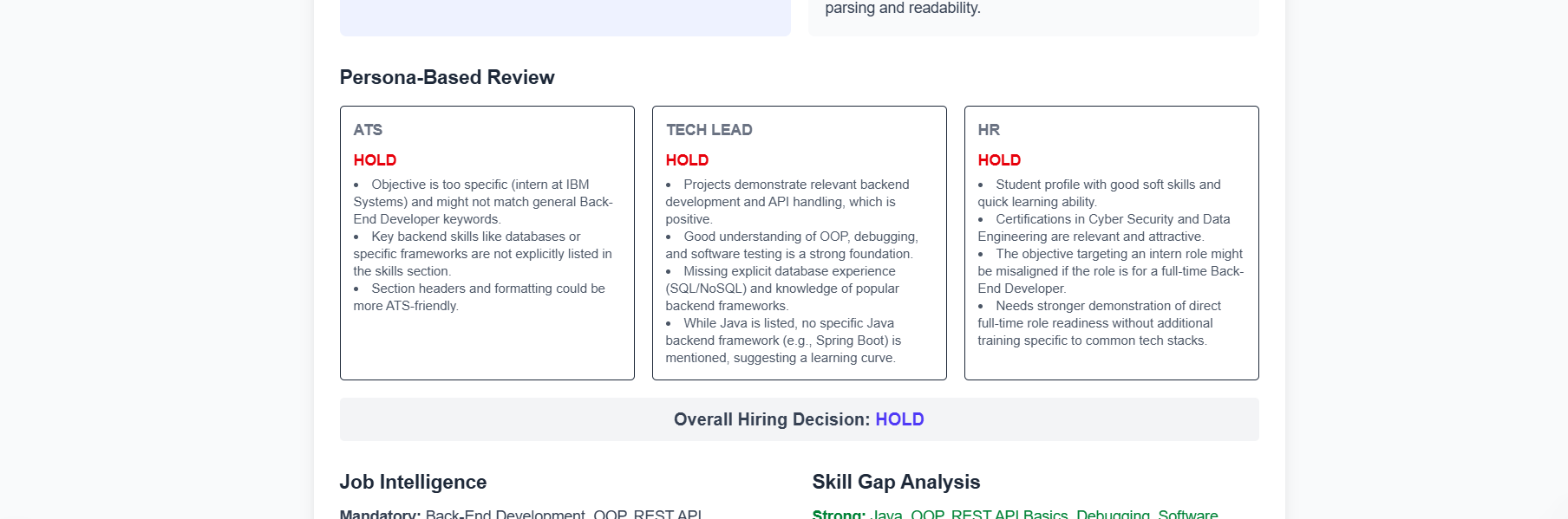
Using Google Gemini, CareerLens runs multi-persona hiring simulations and explains why the resume is marked HOLD.
-
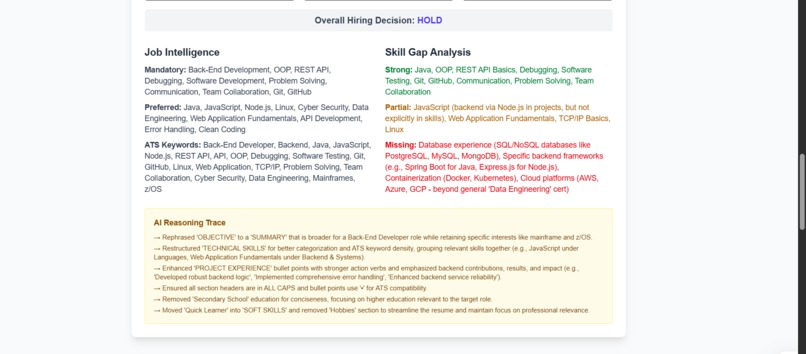
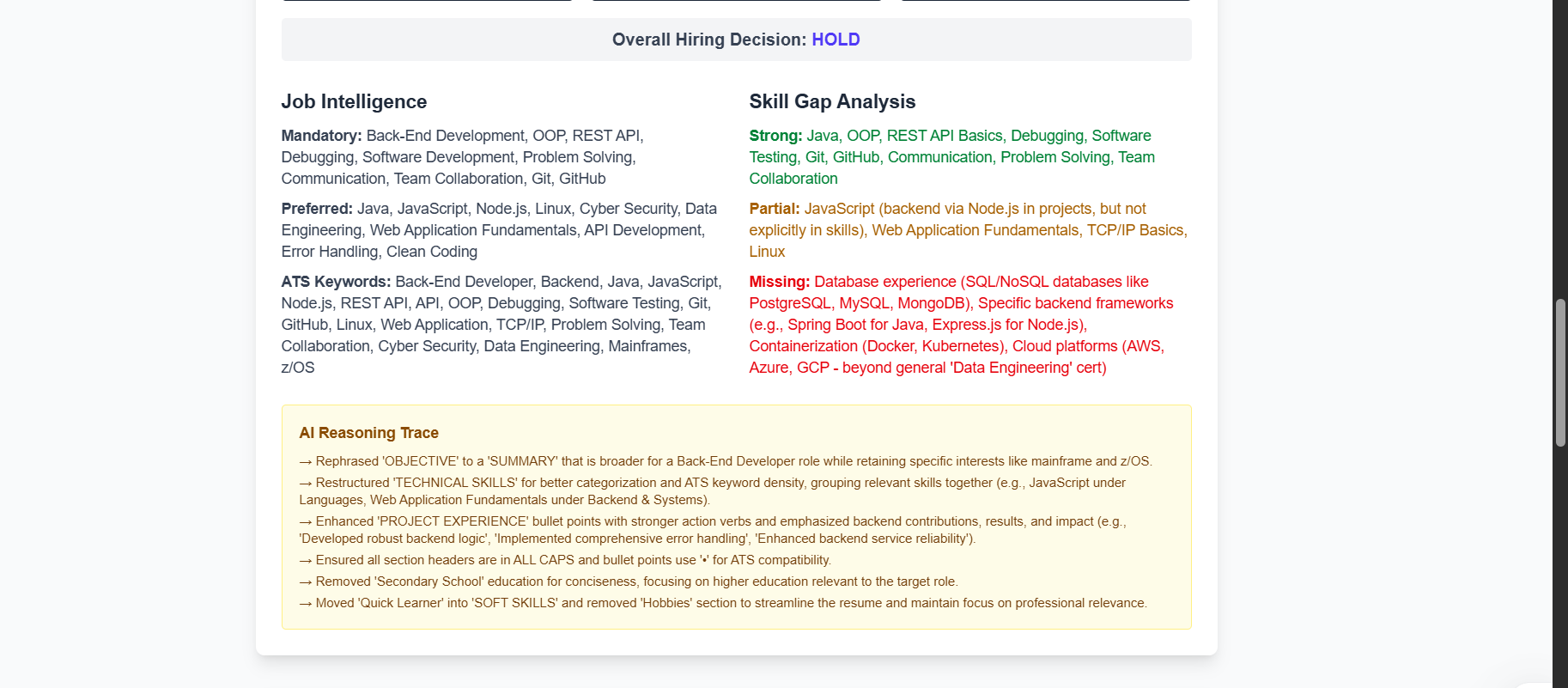
Gemini analyzes job requirements, maps skill gaps, and exposes its reasoning behind every resume change.
-
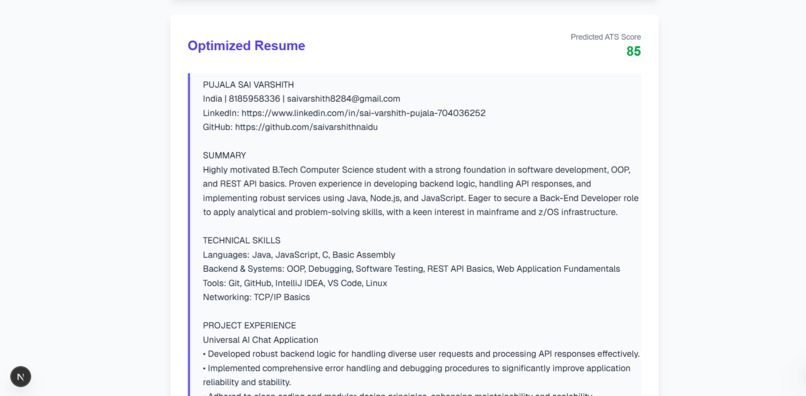
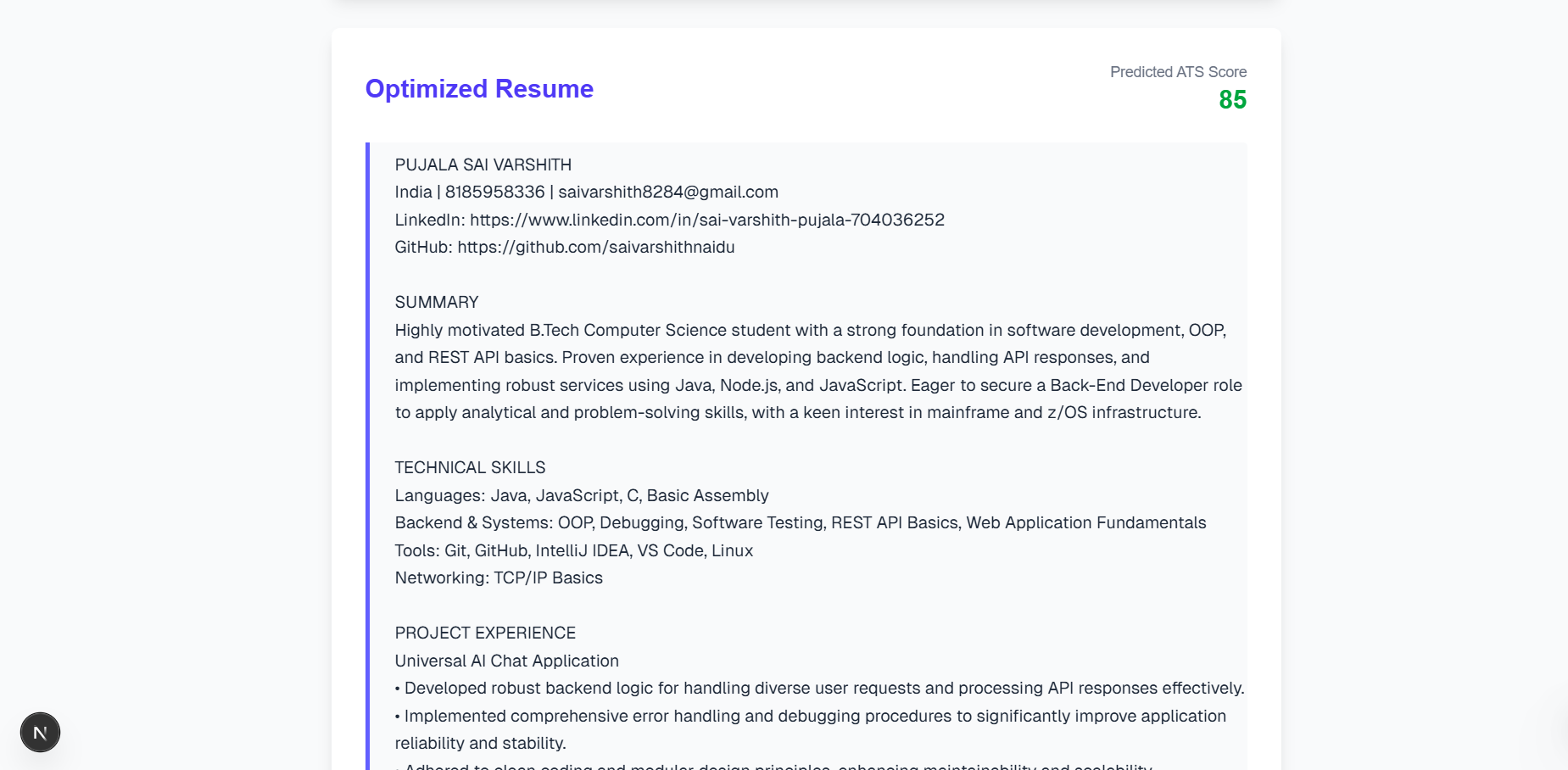
Gemini generates an ATSoptimized resume with a clean structure, improved wording, and a predicted ATS score of 85 ready and to apply jobs .
Inspiration
As a final-year B.Tech student actively applying for internships and entry-level roles, I repeatedly faced the same problem: resumes get rejected without any clear explanation. Traditional ATS tools only provide a score, while AI resume tools blindly rewrite content without understanding the target role, job description, or real recruiter expectations. Many students apply to the wrong roles or make random resume changes without knowing what actually improves their chances. This gap between how resumes are written and how hiring decisions are made inspired me to build CareerLens.
What it does
CareerLens is an AI-powered Resume Transformation and Hiring Simulation Platform built using Google Gemini. Instead of acting like a simple resume editor, CareerLens simulates how resumes are evaluated in real hiring pipelines.
The platform: Analyzes a resume for a specific target role Understands and extracts intelligence from a job description Simulates three hiring personas (ATS, Technical Lead, HR Recruiter) Transparently explains why a resume is accepted or rejected Ethically transforms the resume without adding fake skills Generates a clean, ATS-safe, PDF-ready resume for download This turns resume optimization from guesswork into a clear, explainable decision-making process.
How we built it
CareerLens is built using: Next.js for the frontend and server actions Google Gemini API as the core reasoning engine Structured prompt architecture with multi-layer reasoning A two-phase AI workflow: Internal analysis phase (ATS scoring, persona simulation, skill-gap analysis) Final output phase (only the optimized resume is rendered and downloadable) Special care was taken to ensure: The AI never invents skills or experience Candidate identity data is reused exactly as provided Resume output remains ATS-friendly and visually clean Analysis and resume rendering are clearly separated to avoid UI corruption
Challenges we ran into
The biggest challenge was controlling AI output. Early versions mixed analysis text with resume content, broke formatting, or generated placeholder names. Solving this required strict prompt constraints, clear phase separation, and careful output validation. Another challenge was API rate limits, which forced optimization of prompt size, caching logic, and reasoning efficiency to make the system usable during the hackathon timeframe.
Accomplishments that we're proud of
Built a complete hiring-intelligence system, not just a resume generator, by simulating real-world decision-making from ATS, technical leads, and HR recruiters using Gemini.
Successfully designed a multi-layer reasoning architecture where deep analysis happens internally while only a clean, ATS-safe resume is exposed to the user.
Solved complex AI output control issues, ensuring the model never invents skills, names, or experience and strictly transforms only user-provided resume data.
Implemented PDF-ready resume generation that preserves formatting, structure, and ATS compatibility across both UI rendering and downloadable output.
Overcame API rate limits and prompt instability by optimizing prompt structure, enforcing strict output rules, and improving reliability under free-tier constraints.
Delivered a production-ready prototype suitable for real users, with a clear path toward monetization as a paid AI resume and career platform.
What we learned
This project taught us how critical explainability and structure are when using large language models in real-world decision systems. We learned how to design prompts that guide Gemini to reason deeply internally while exposing only clean, user-safe outputs. We also learned how to align AI behavior with ethical constraints,especially important when dealing with career-impacting decisions.
What's next for CareerLens
After the hackathon, CareerLens can evolve into a paid AI career platform with:
Role-specific resume optimization
Job-description matching
Limited free credits for new users
Paid plans for advanced usage
Career guidance insights beyond resumes
The long-term goal is to help students and freshers understand hiring decisions, not just react to rejections.
Built With
- gemini-3-flash)
- google-ai-studio
- google-gemini-api-(gemini-2.5-flash
- javascript
- next.js
- node.js
- prompt-engineering
- react
- tailwind-css
- typescript


Log in or sign up for Devpost to join the conversation.