-
-
-
-
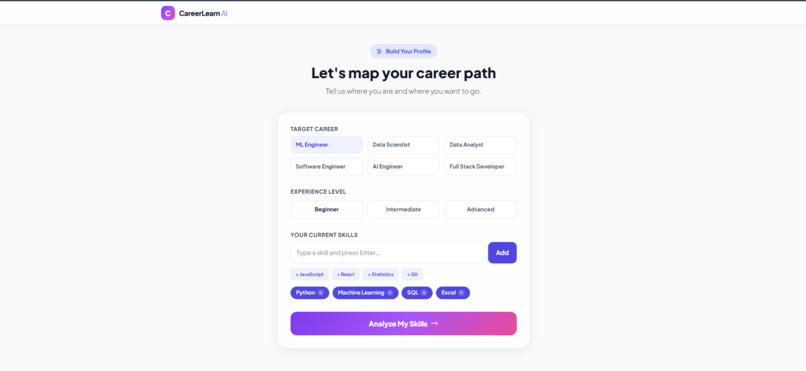
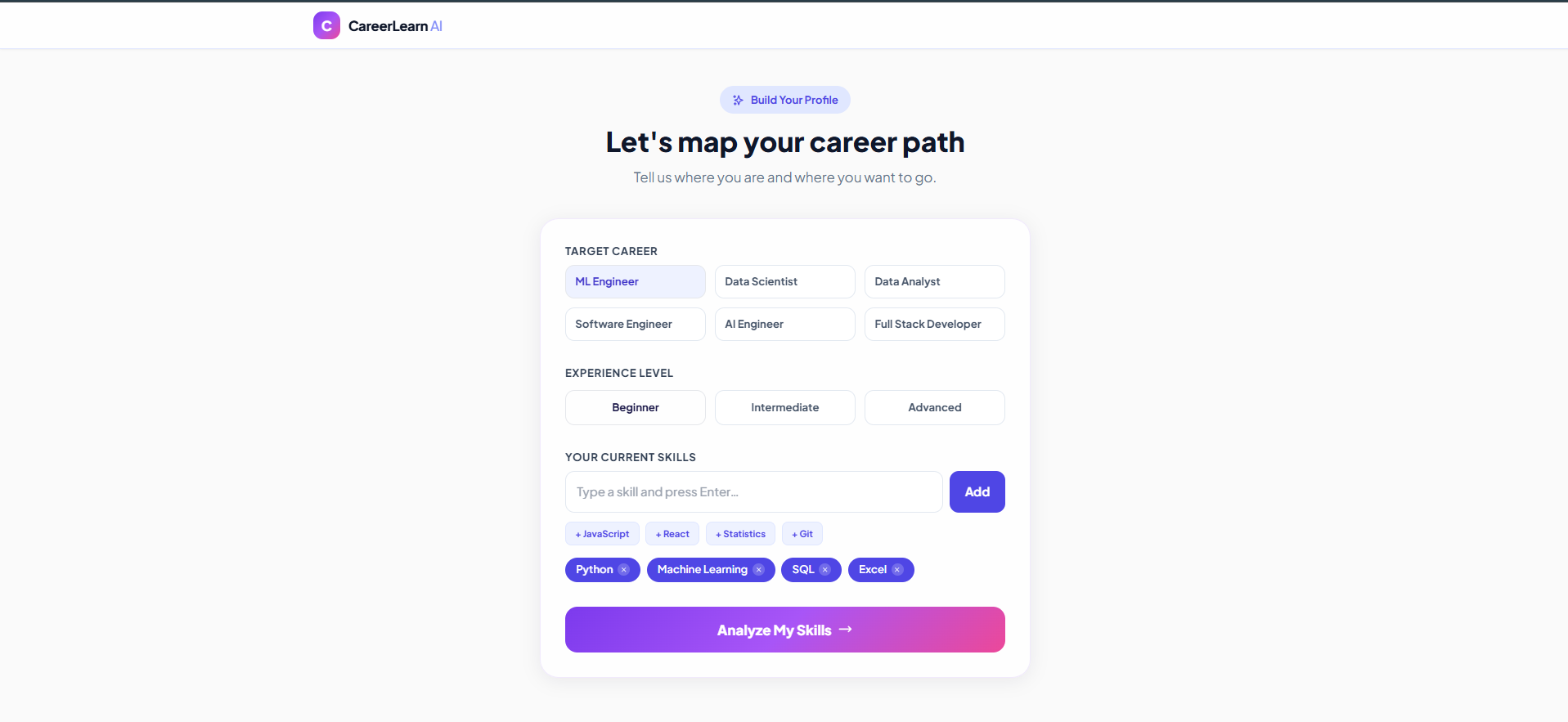
Profile
-
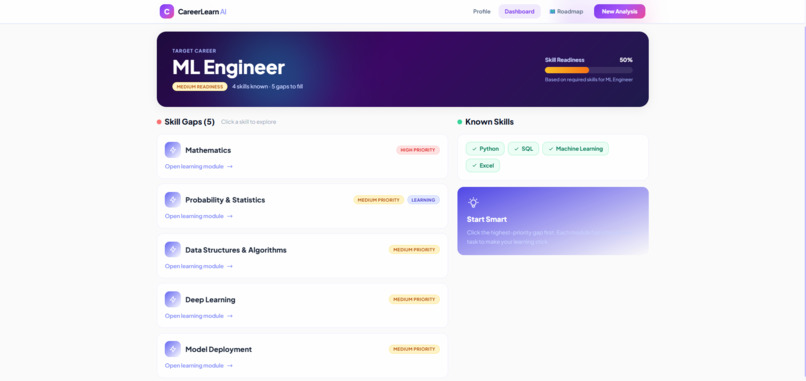
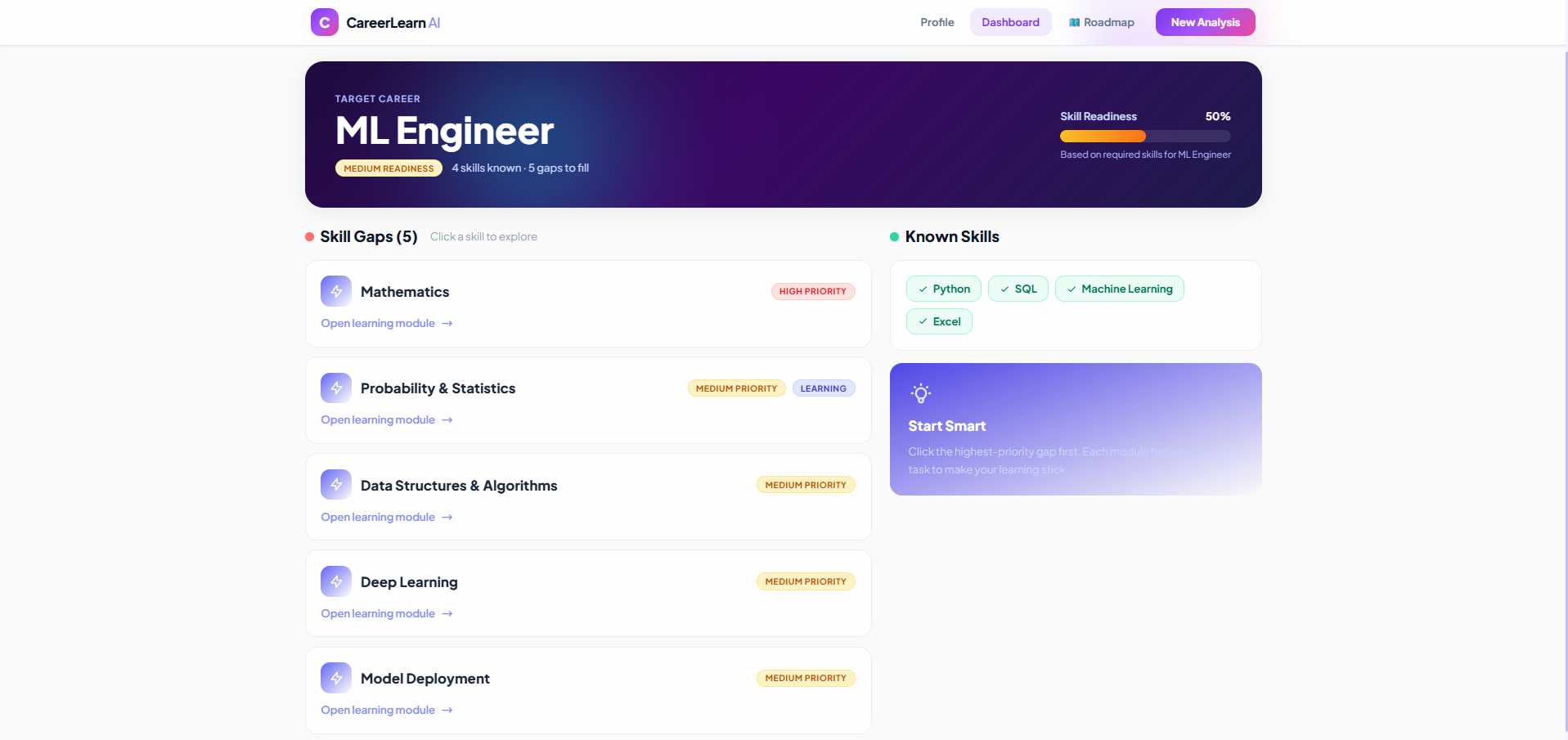
Dashboard
-
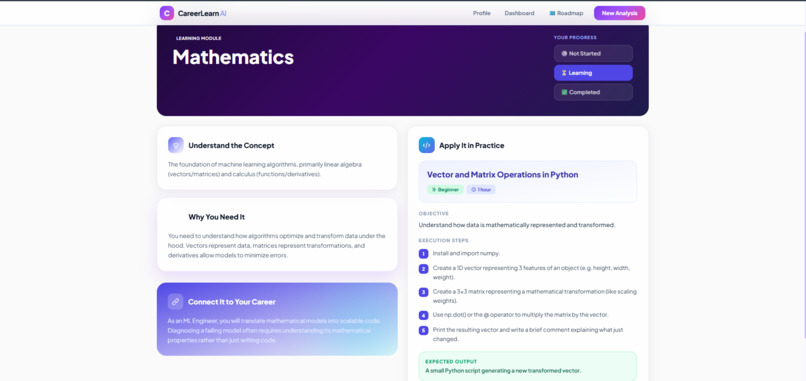
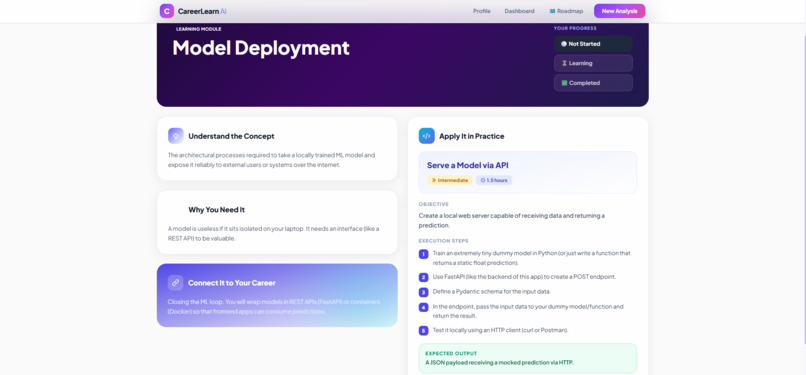
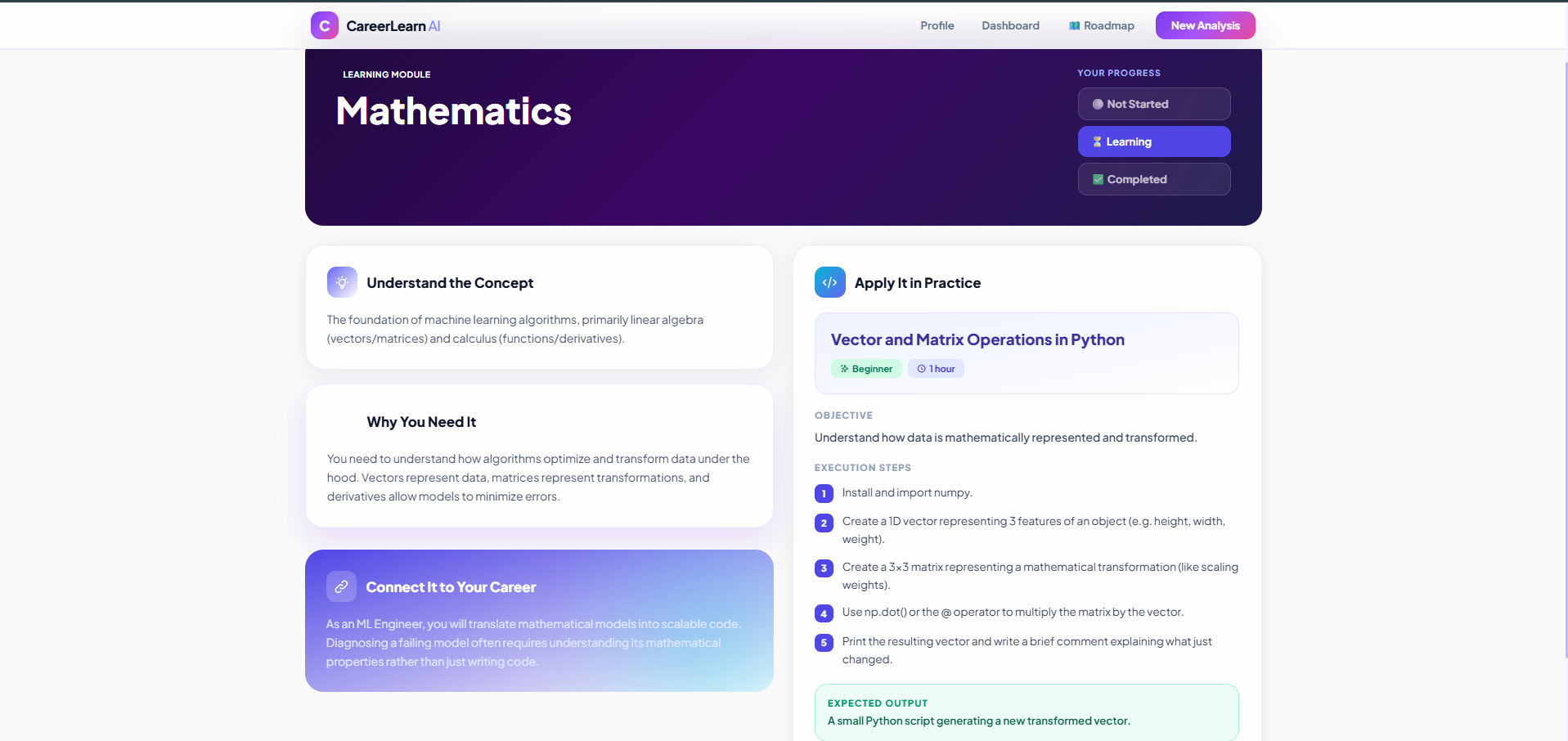
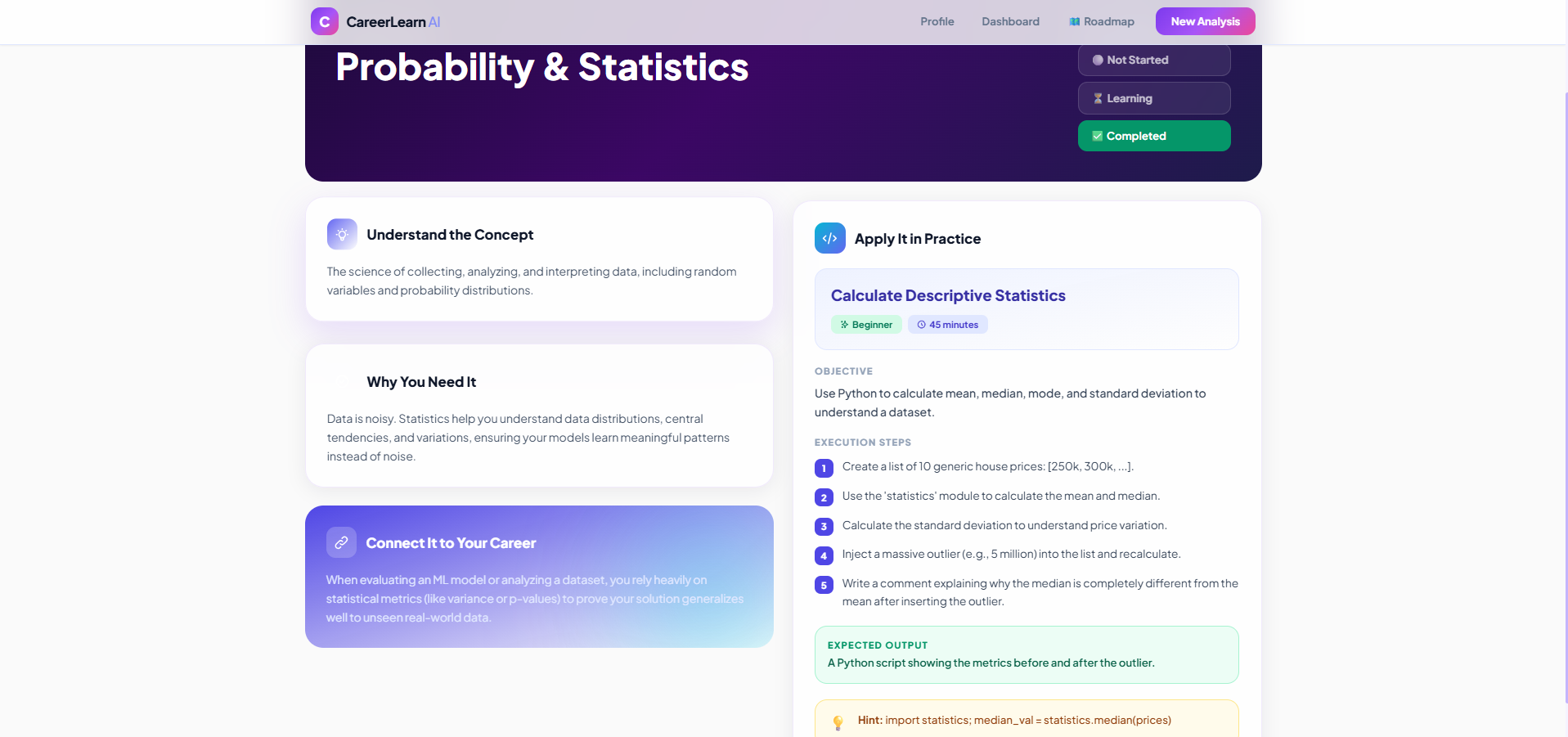
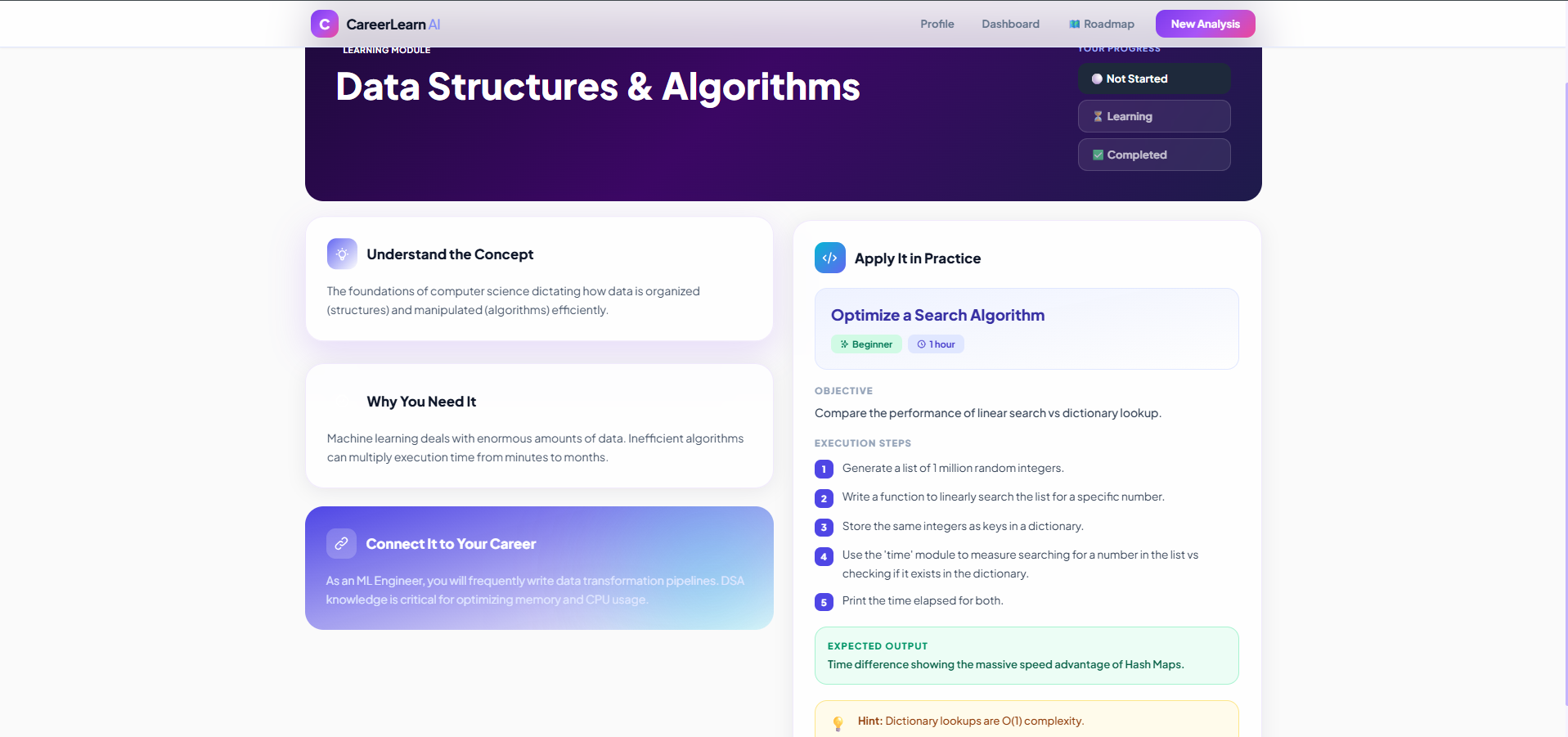
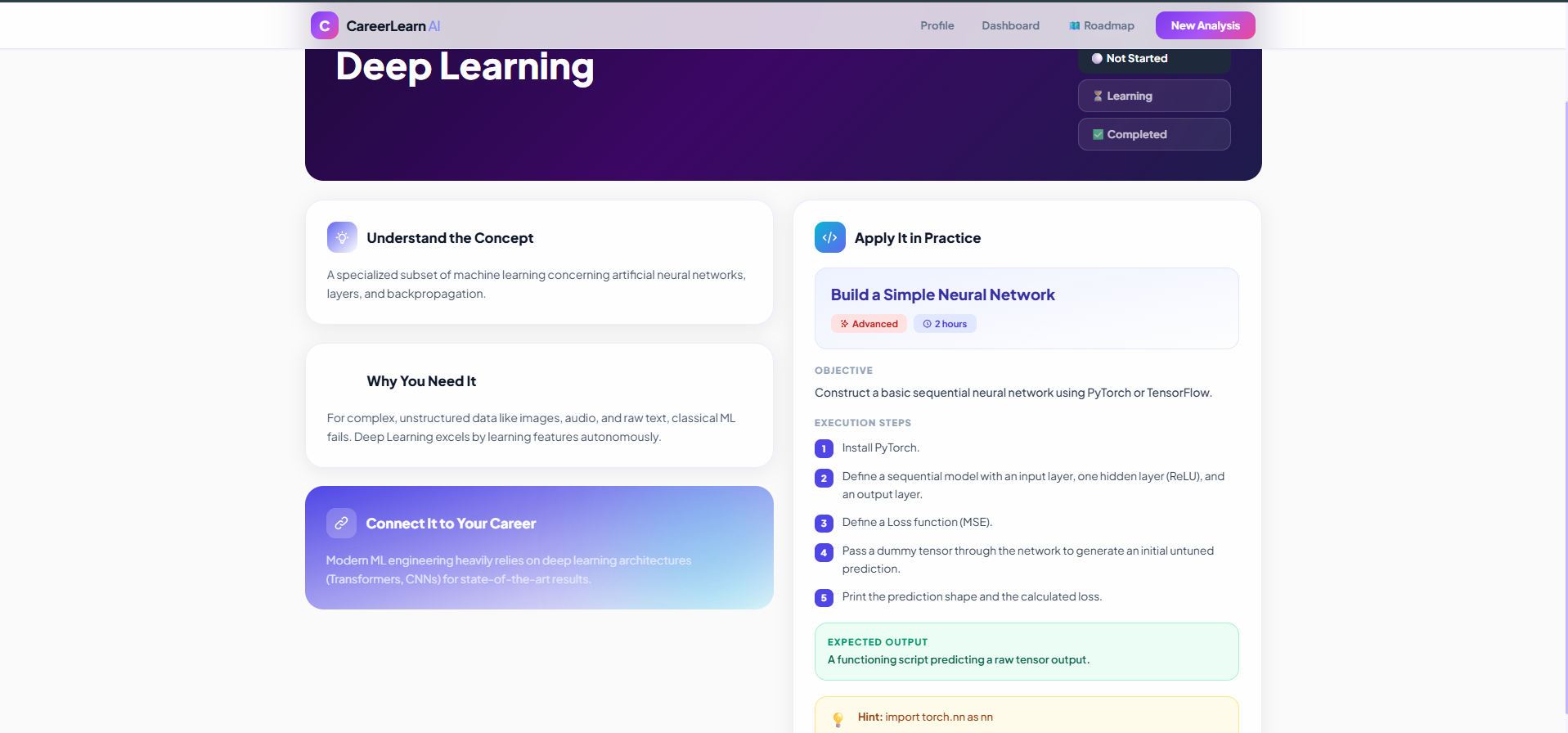
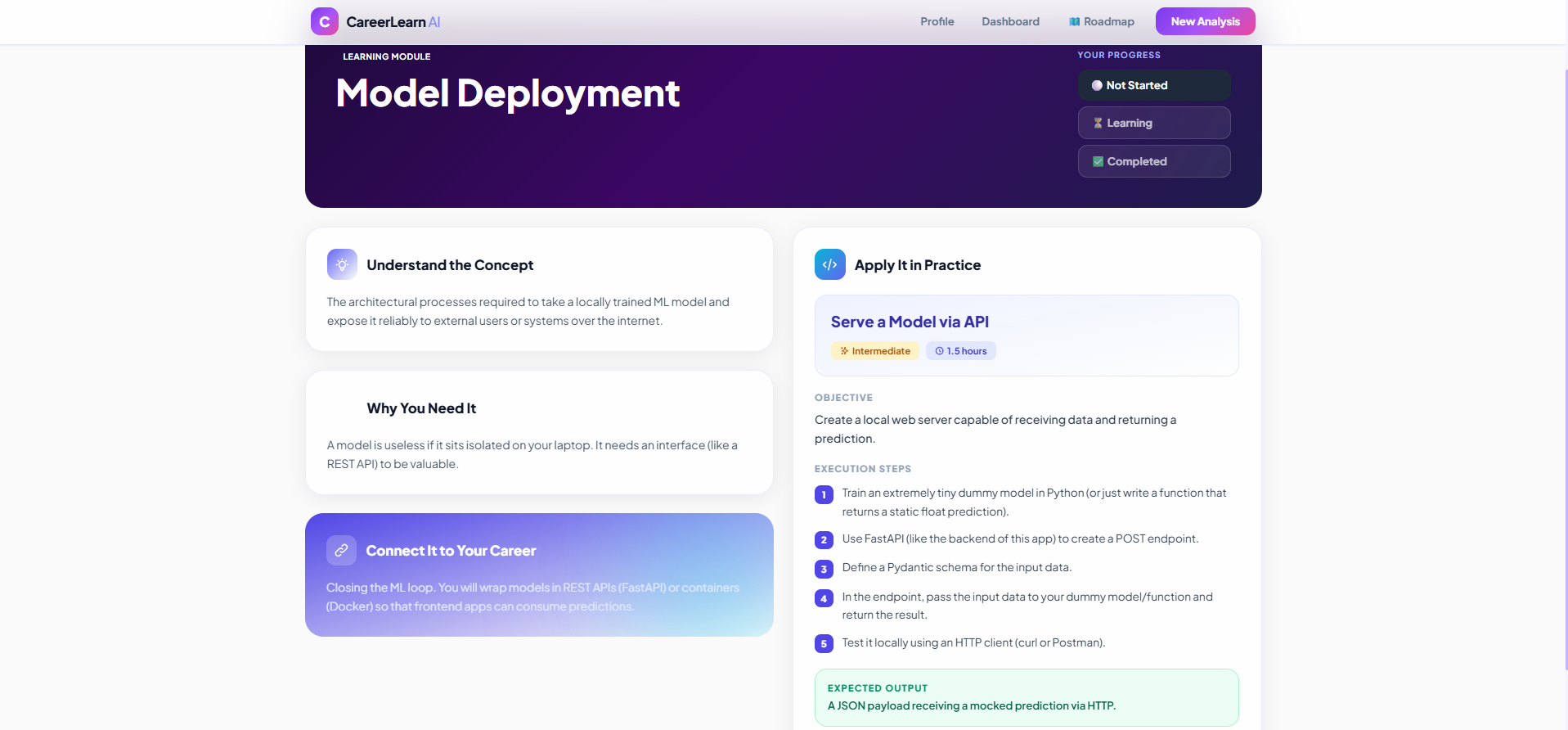
Opens a detailed learning page covering mathematical fundamentals, important formulas, worked examples, and practice problems.
-
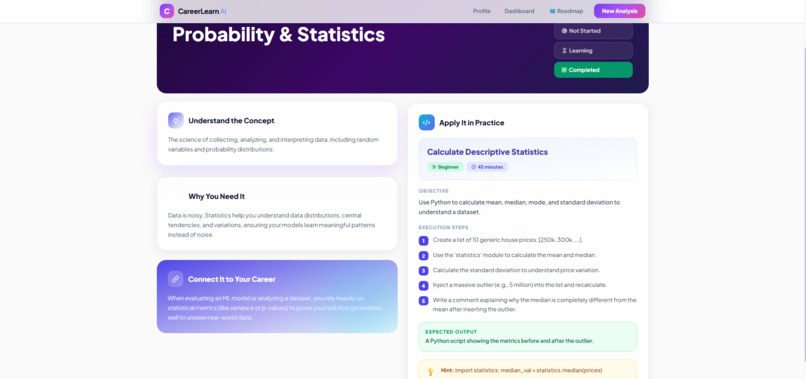
Customized for each module,can update learning progress
-
-
-
-
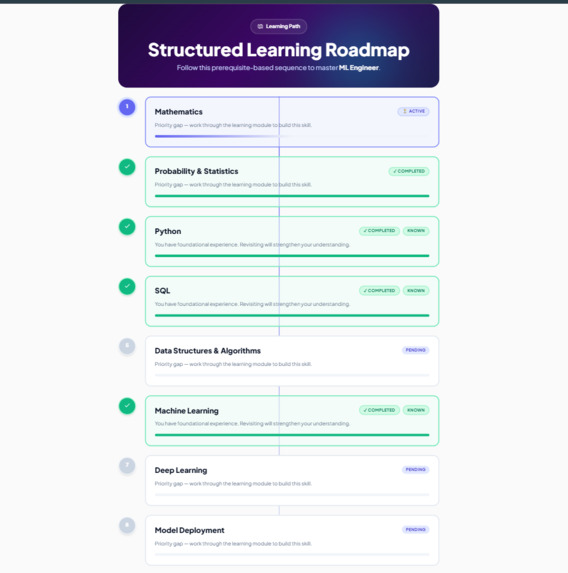
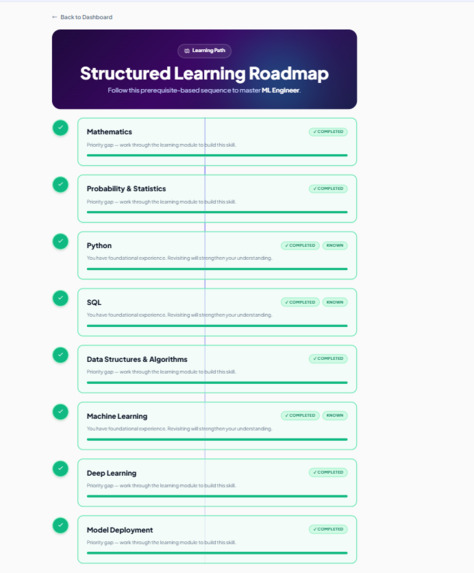
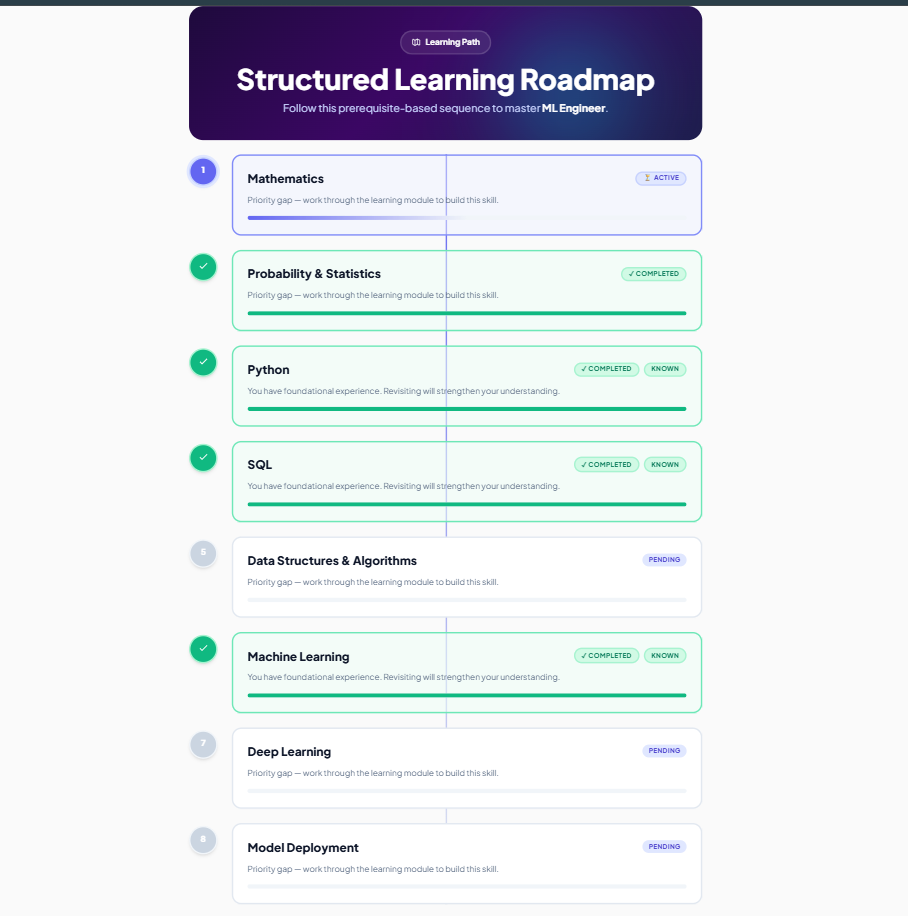
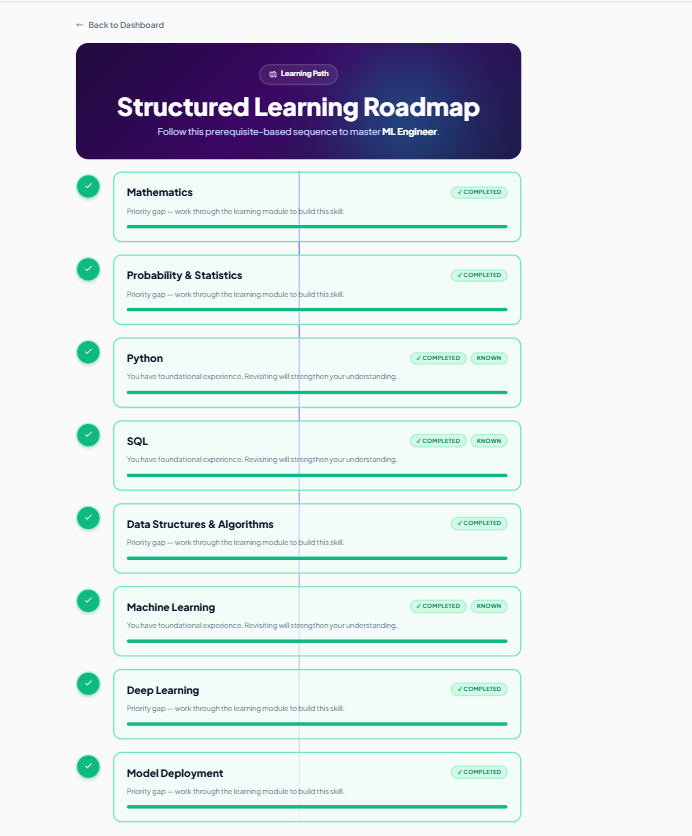
Displays roadmap
-
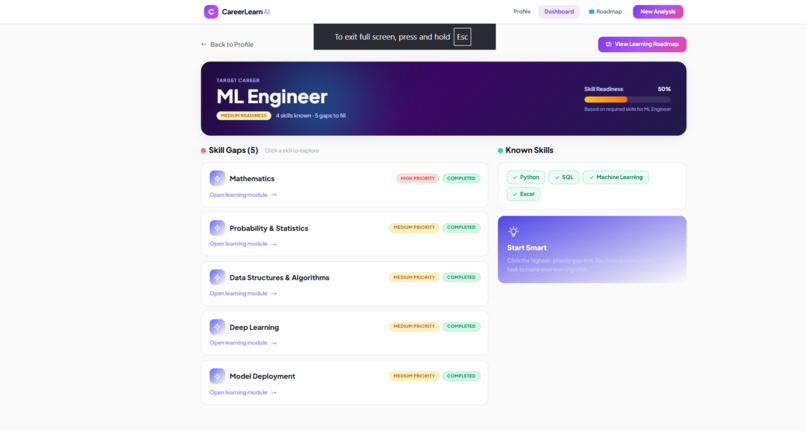
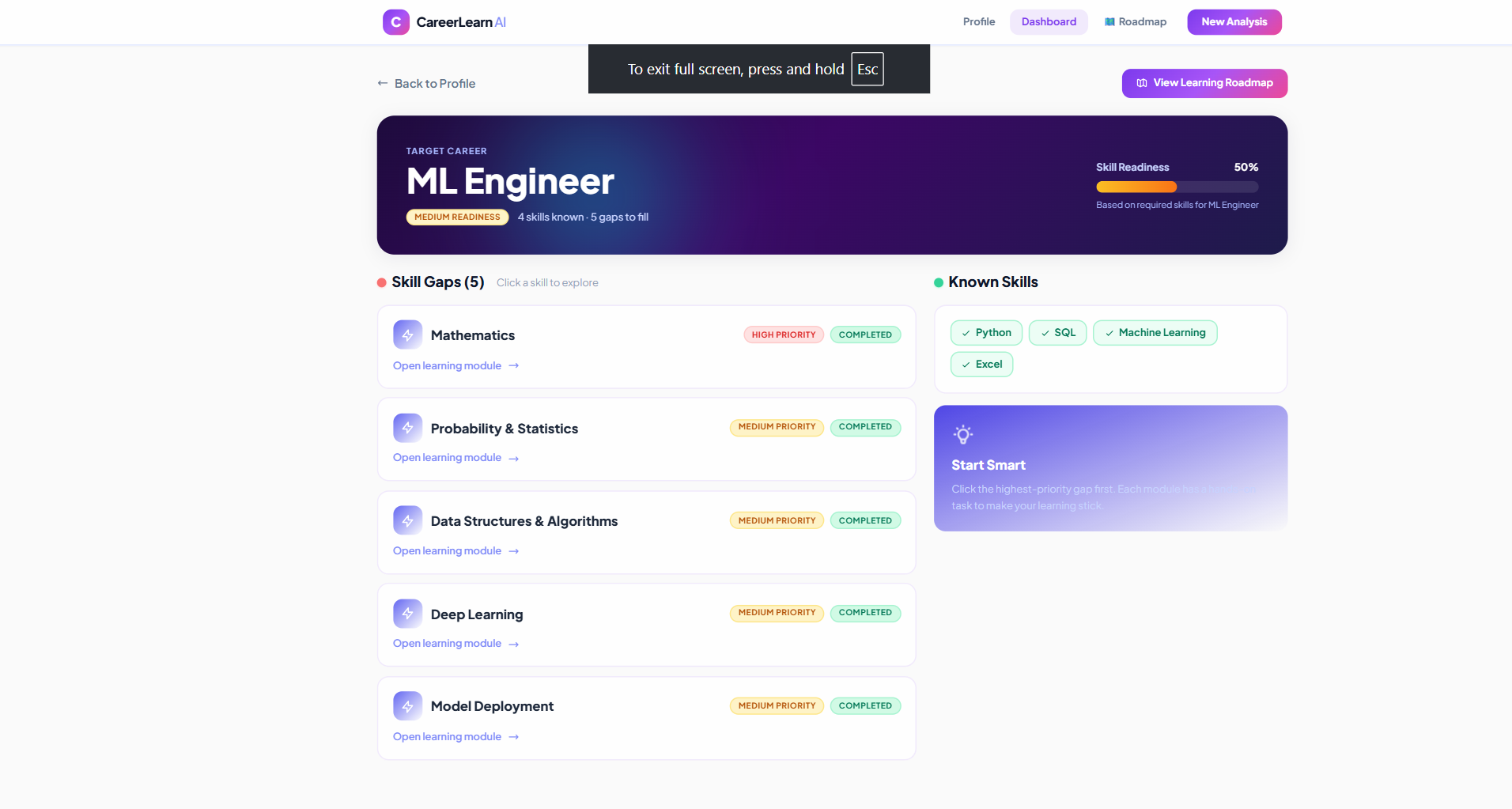
Dashboard display completed progress.
-
Inspiration
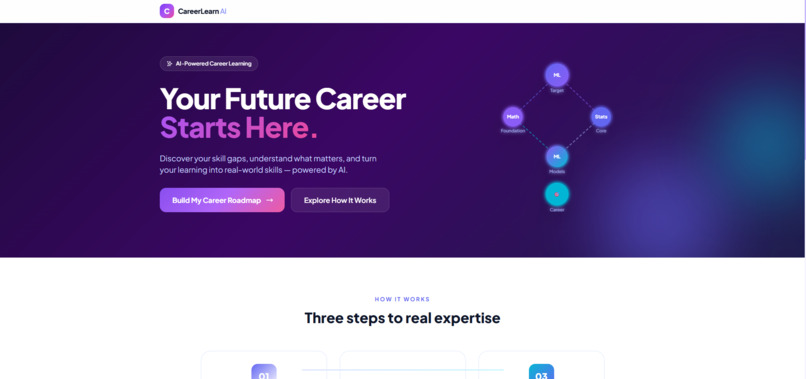
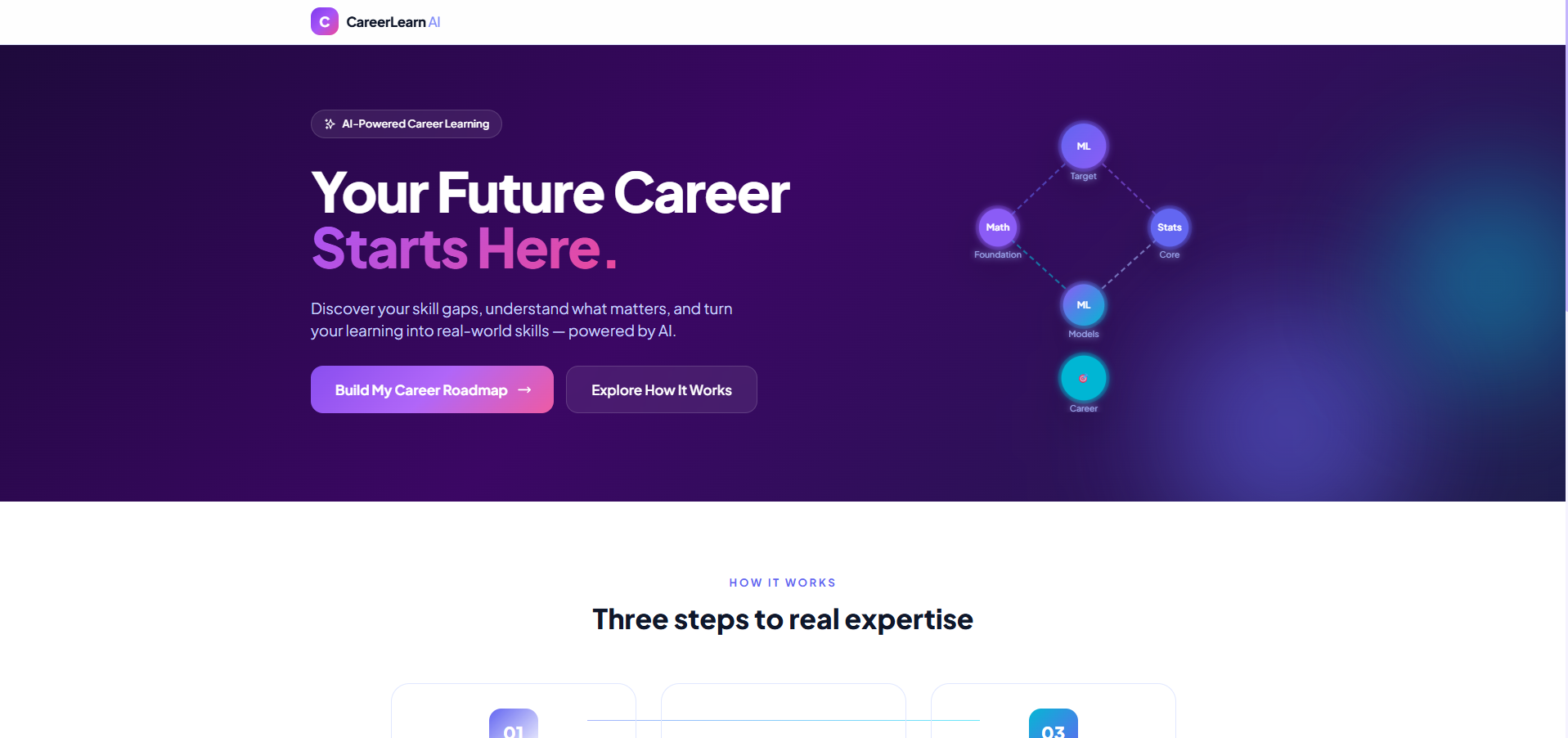
Students often know which career they want to pursue but struggle to understand the skills and concepts they need to learn to get there. Learning resources are scattered, and it can be difficult to connect theoretical knowledge with real-world career requirements.
We created CareerLearn AI to bridge this gap by helping learners identify missing skills, explore learning modules, and understand how each concept contributes to their career goals.
What it does
CareerLearn AI is an AI-powered career guidance and learning platform that helps students connect their current skills with their target careers.
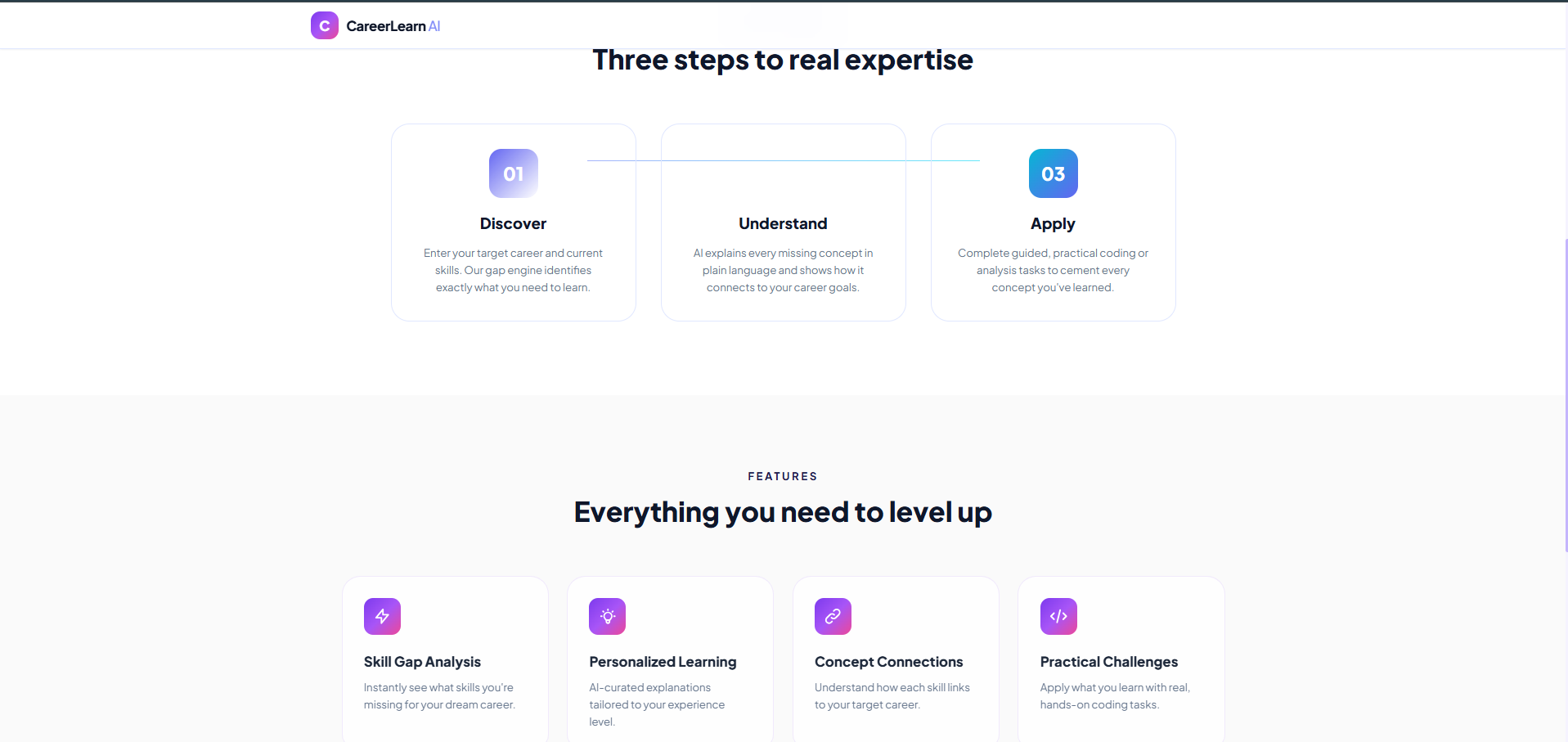
- Career Analysis: Explore the skills associated with a chosen career.
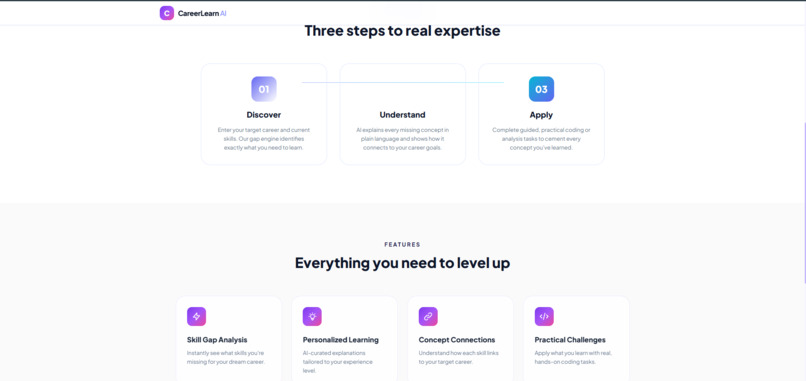
- Skill Gap Analysis: Identify knowledge areas that need further development and prioritize learning.
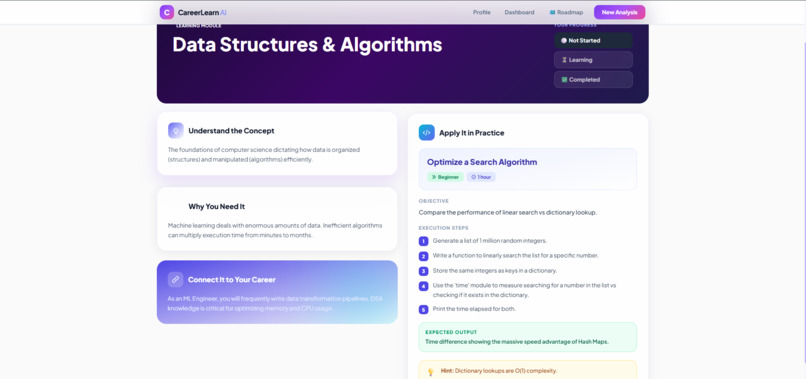
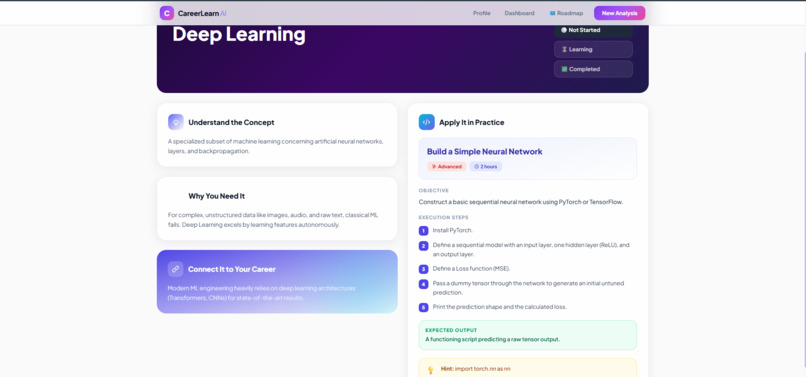
- Interactive Learning Modules: Open dedicated learning pages for topics such as Mathematics, Probability and Statistics, Data Structures and Algorithms, Deep Learning, and Model Deployment.
- Personalized Learning Direction: Understand what to learn next based on your target career and existing skills.
Our goal is to make career-oriented learning more structured, accessible, and practical.
How we built it
We built CareerLearn AI as a web application with a frontend and backend that communicate through an API.
- Frontend: React and Vite for the user interface and interactive experience.
- Backend: Python and FastAPI to handle application requests and analysis.
- API Integration: HTTP requests connect the frontend to the backend and return analysis results.
- AI and Learning Approach: The platform is designed to connect career goals, skill gaps, and relevant learning content to guide students toward their goals.
We focused on creating a straightforward workflow in which users can enter their target career and current skills, analyse their learning needs, and explore relevant learning modules.
Challenges we ran into
One of our main challenges was connecting the frontend and backend correctly. We encountered issues with API configuration, variable naming, and running the local development servers.
We addressed these issues by debugging the API calls, correcting the backend URL reference, and running the frontend and backend separately.
Another challenge was organizing skill gaps into learning priorities and presenting technical concepts in a way that students can understand and explore easily.
Accomplishments that we're proud of
- Built a working web application with a connected frontend and backend.
- Created a career-focused skill-gap analysis workflow.
- Organized learning topics into dedicated modules that users can explore.
- Developed a project concept that connects career planning with structured technical learning.
- Turned an idea into a functional prototype that we can demonstrate and improve further.
What we learned
Through this project, we gained practical experience in frontend and backend integration, API communication, debugging, and building a web-based application.
We also learned the importance of making technical learning more accessible by organizing concepts around real career goals instead of presenting them as disconnected topics.
Most importantly, we learned how to turn a student problem into a working prototype through collaboration, experimentation, and iterative improvement.
What's next for CareerLearn AI
We aim to improve CareerLearn AI by expanding its learning resources and making the learning experience more personalized.
Our future plans include:
- Adding more career paths and skill requirements.
- Improving the accuracy and relevance of skill-gap recommendations.
- Integrating an LLM-powered learning assistant for concept explanations and follow-up questions.
- Adding practical exercises, mini-projects, and progress tracking.
- Providing more real-world examples that connect technical concepts with industry applications.
Our long-term vision is to help every student understand not only what to learn, but also why it matters and how to apply it.
Built With
- css
- fastapi
- html
- javascript
- json
- python
- restapi
- tailwindcss
- vite

Log in or sign up for Devpost to join the conversation.