-
-
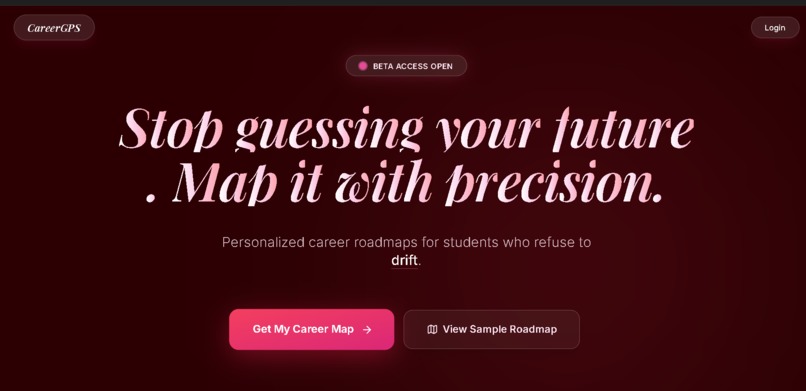
Landing Page
-
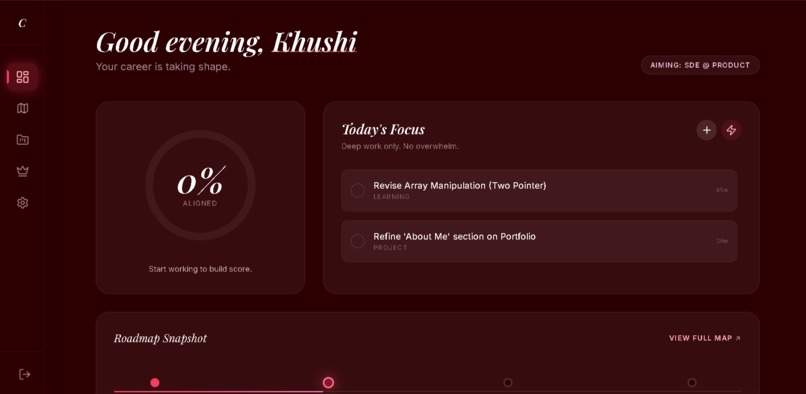
Dashboard
-
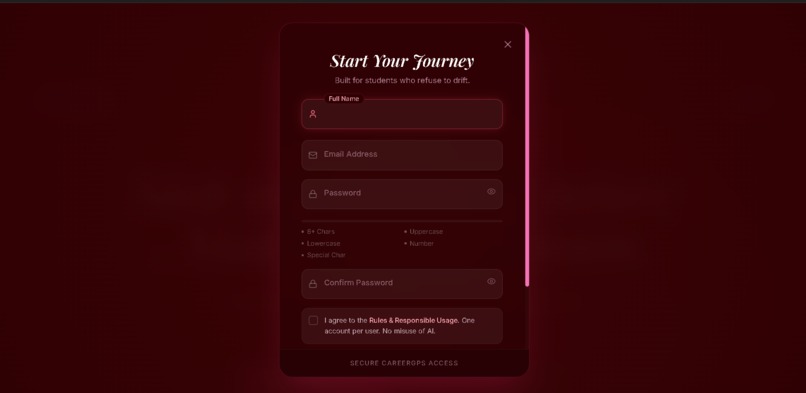
SignUp Page
-
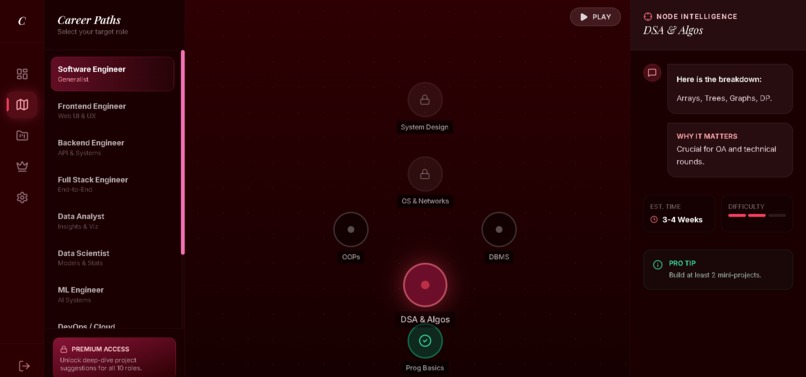
Roadmap
-
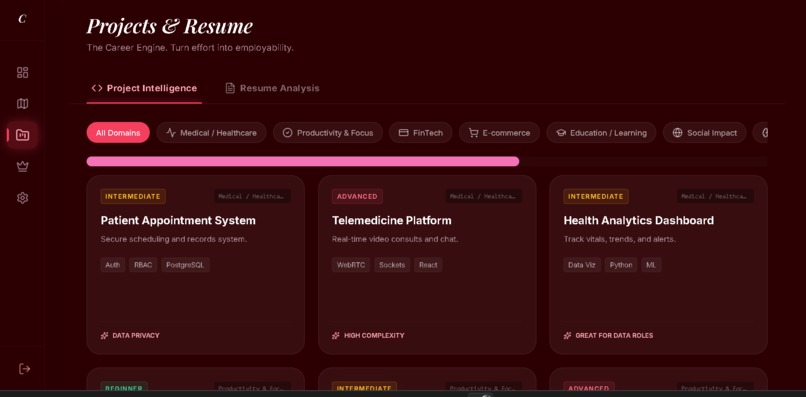
Projects
-
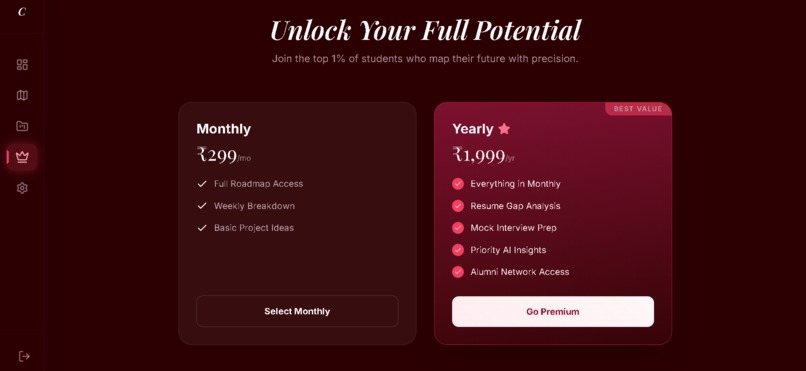
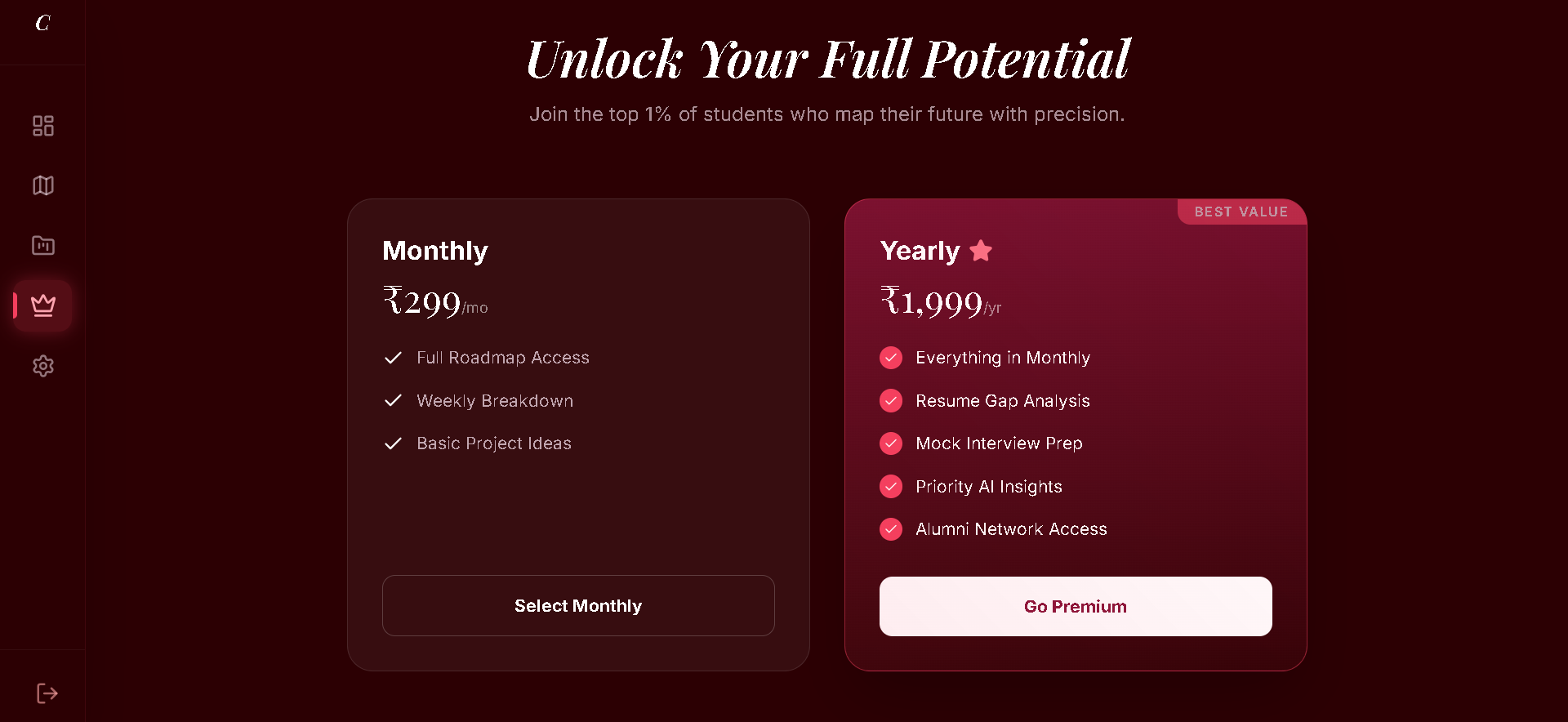
Pricing
-
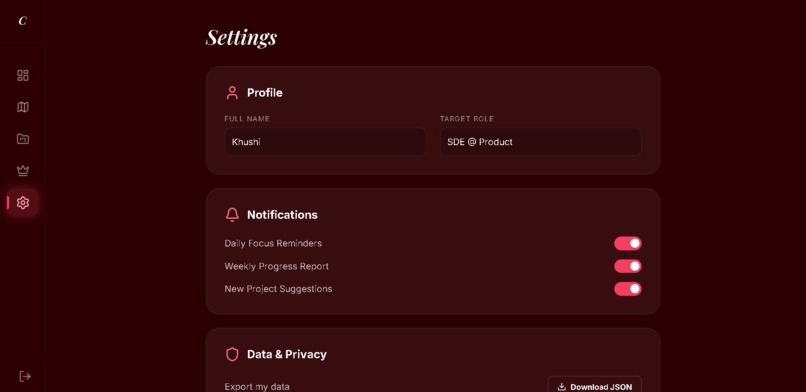
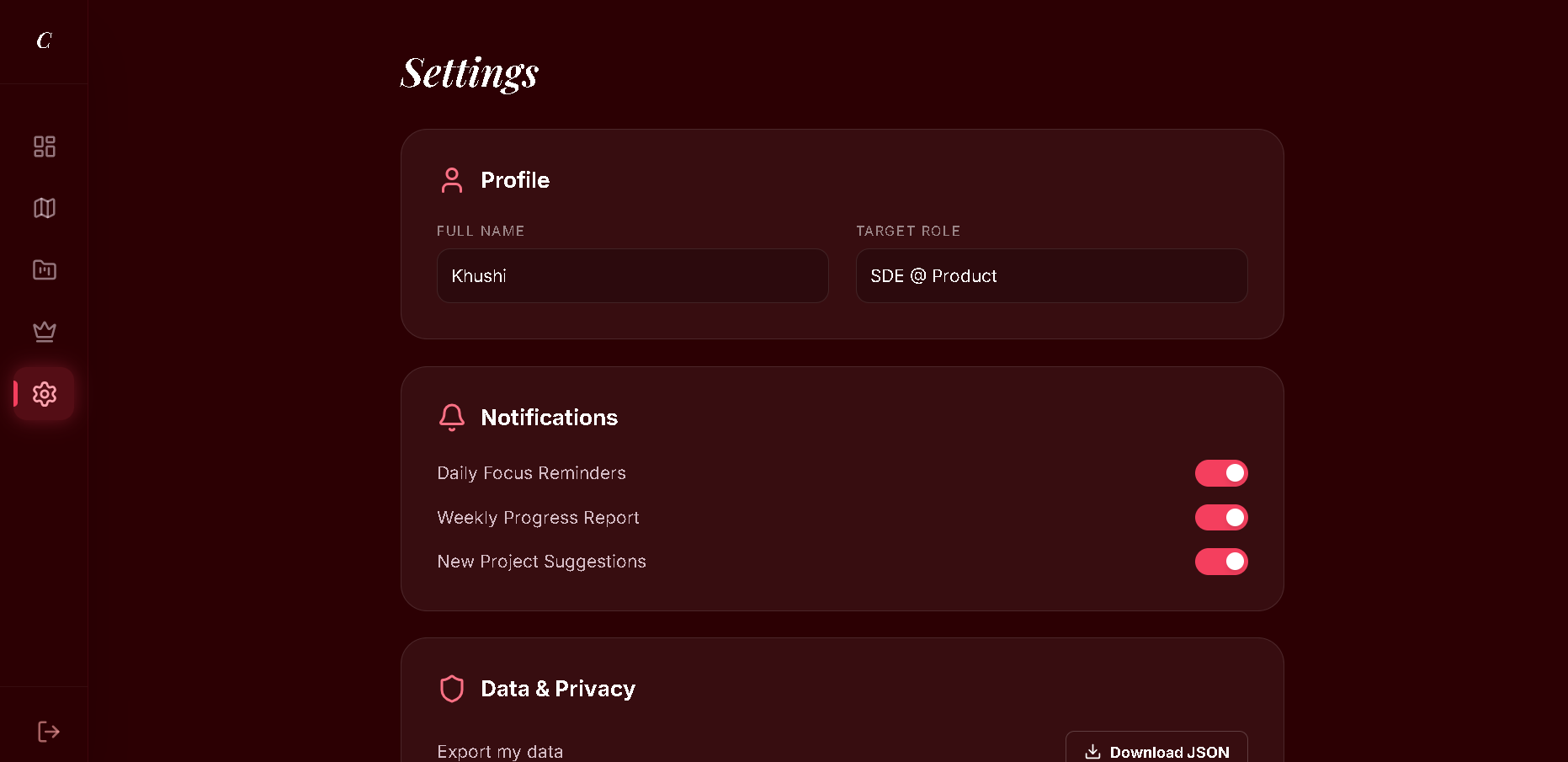
Settings
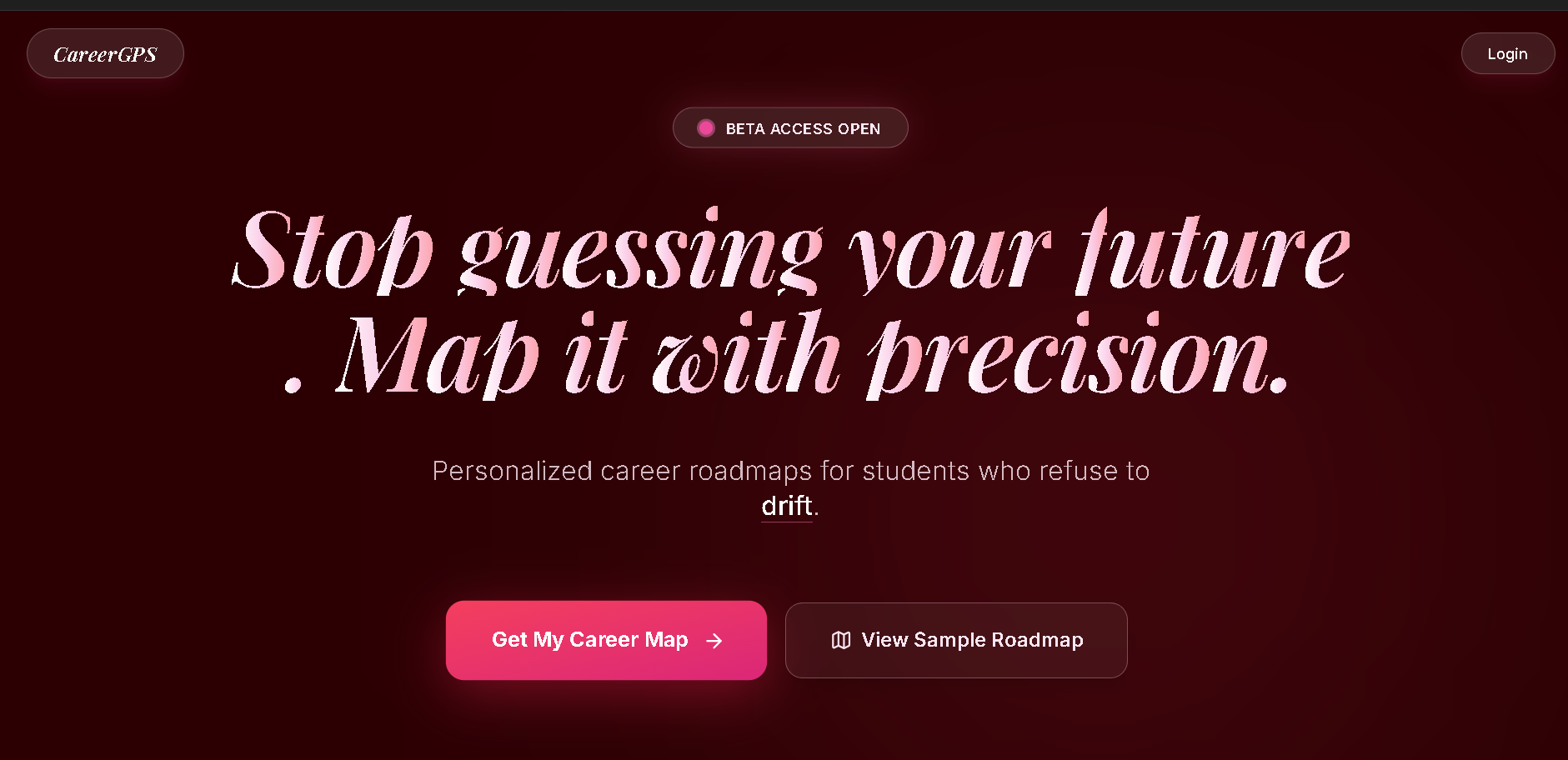
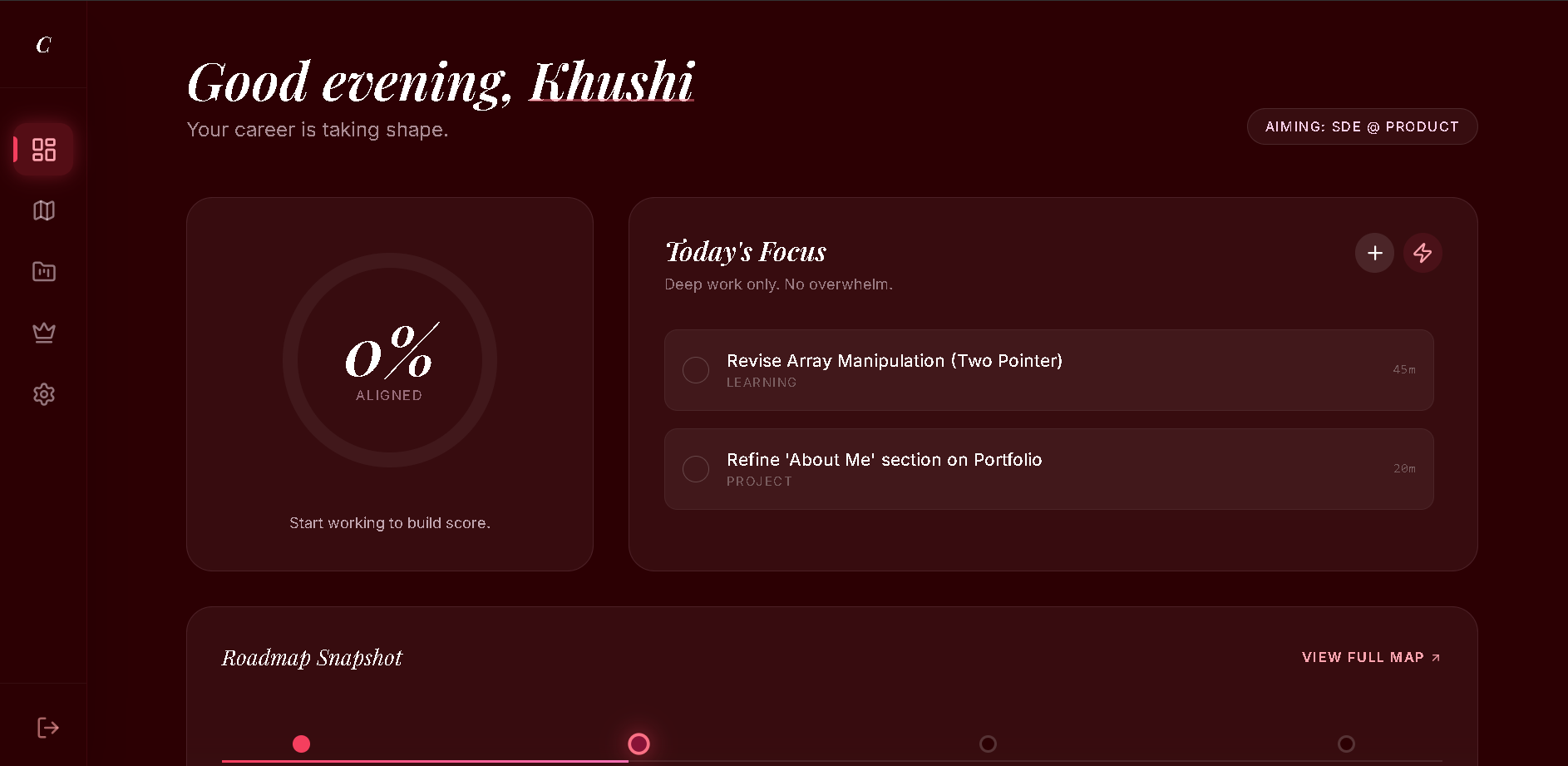
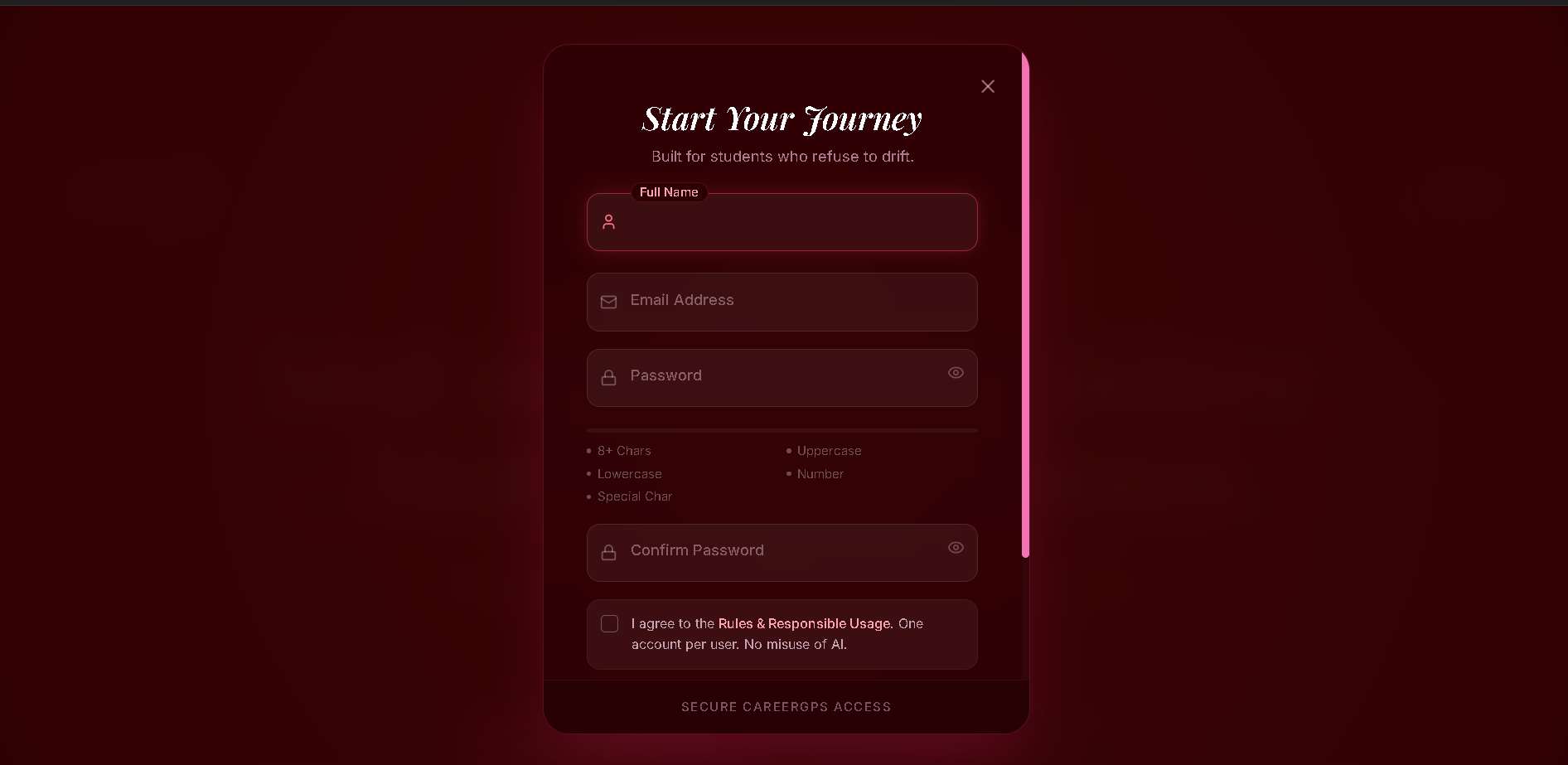
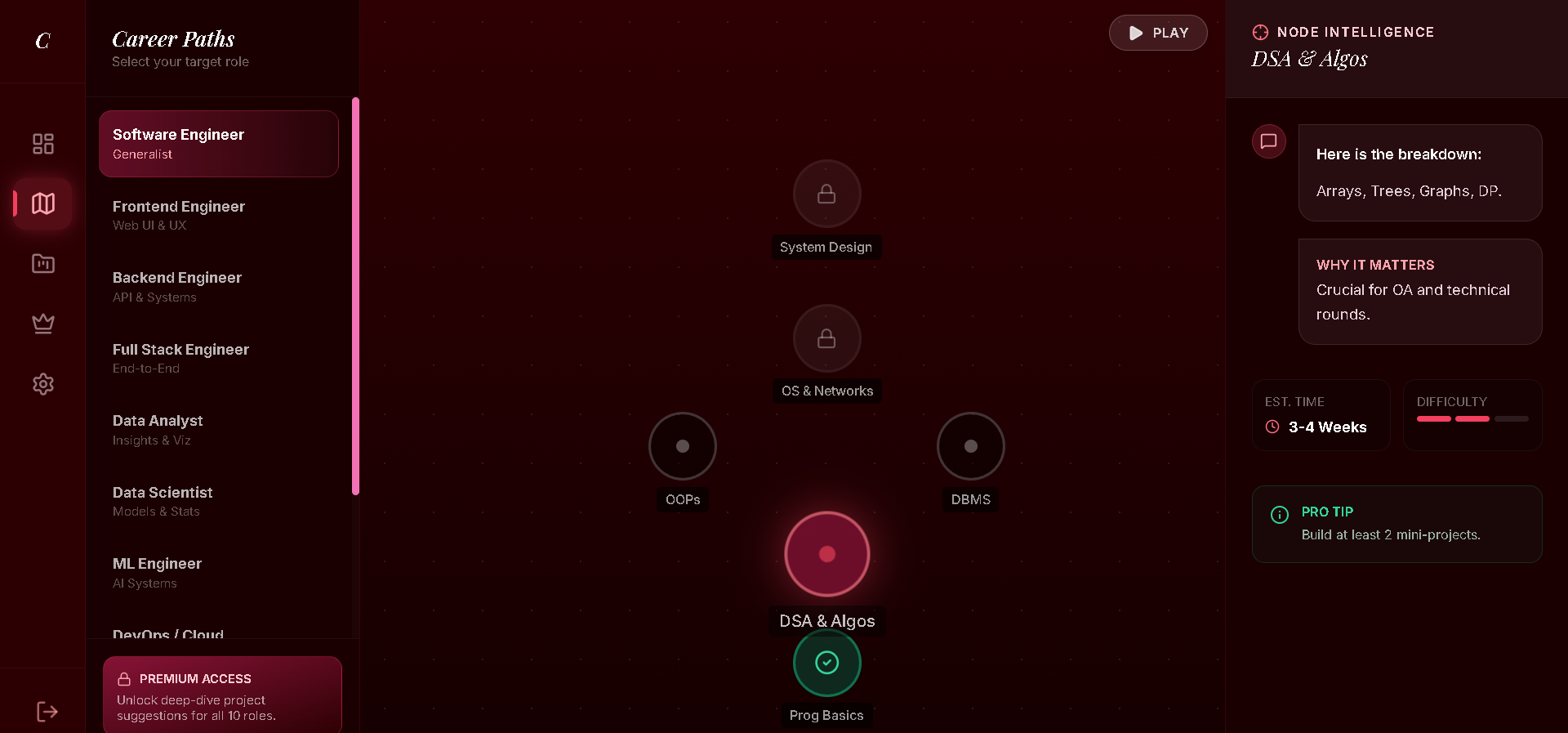
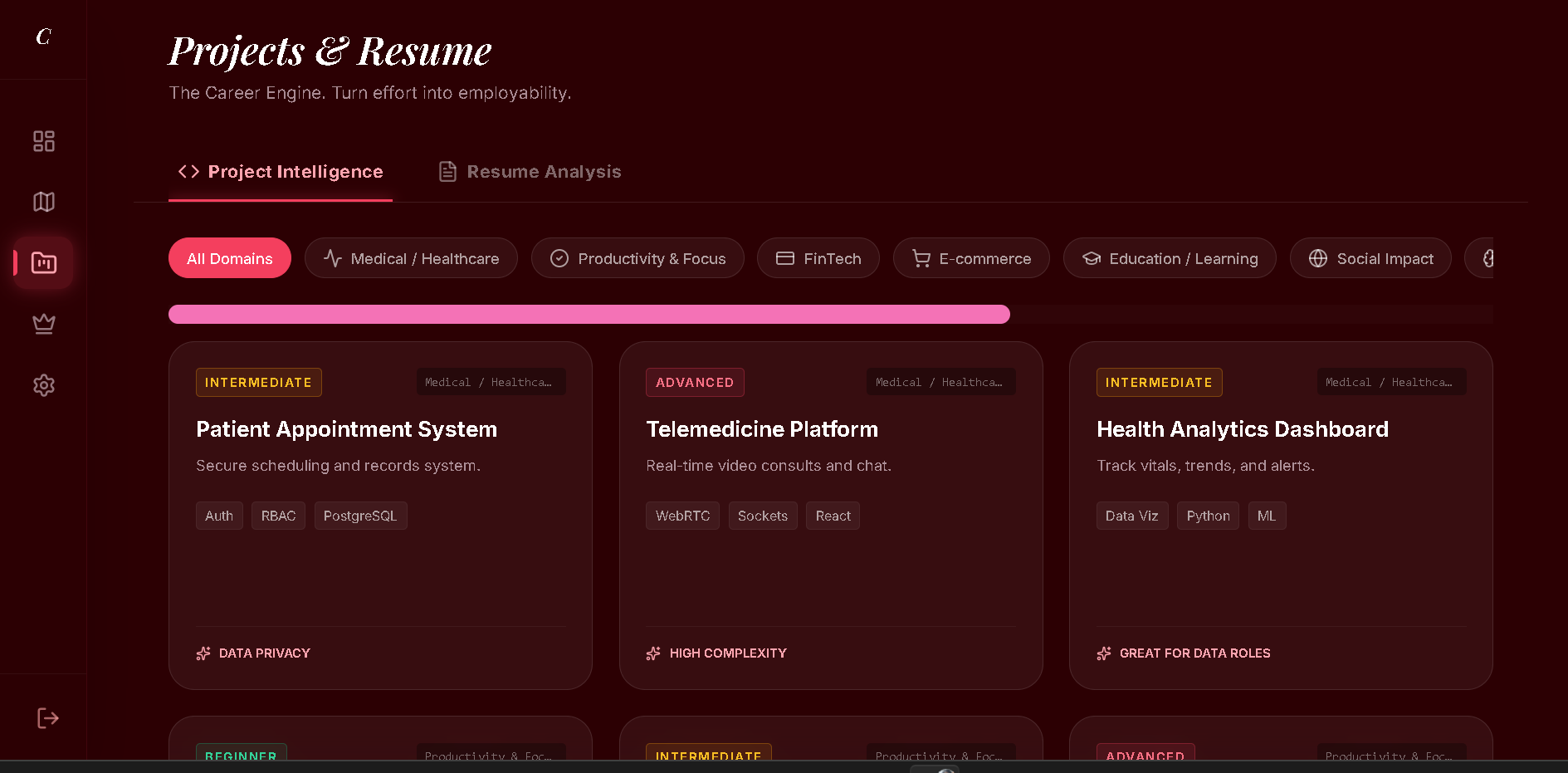
Inspiration
Most students don’t lack ambition. They lack clarity.
The internet is loud — advice is scattered, generic, and often unrealistic. Students are told “learn everything” or “just grind”, without being shown what actually matters next.
CareerGPS was inspired by one simple question students keep asking:
“What should I do right now so I don’t regret it later?”
Instead of motivation, CareerGPS offers navigation. Instead of hype, it provides structure. Instead of promises, it gives honest feedback and direction.
The goal isn’t to guarantee success — it’s to help students move forward with confidence, intention, and focus.
What it does
How we built it
CareerGPS was built with a systems-first mindset — every feature connects, nothing exists in isolation.
Architecture Thinking
We designed CareerGPS as a modular platform, not a single-page tool:
Roadmaps, projects, resume analysis, and alignment metrics all share a unified state
User actions (tasks, learning, projects) directly influence progress and alignment
Free and Premium paths are handled cleanly without feature duplication
Frontend
React + Tailwind CSS for fast iteration and consistent design
Framer Motion for calm, confidence-building animations
Glassmorphism, blur layers, and gradient depth to communicate luxury + safety
Fully responsive layouts for mobile, tablet, and laptop
The UI was designed to feel like:
“This knows what it’s doing.”
AI
AI is used only where it adds clarity, never to make promises.
Resume analysis reads real PDF/DOCX files
Job descriptions are parsed before feedback is generated
Feedback is role-aware, specific, and practical
Outputs explain why something is weak, not just that it is
AI assists — it does not decide.
Backend & Data Flow
Secure authentication with email/password and OAuth
User state (goals, tasks, roadmap progress, saved projects) is persisted cleanly
Resume uploads are handled securely and processed only for analysis
Exportable user data (JSON) for transparency and control
Premium Logic
Premium flows are simulated transparently
No hidden payments, no dark patterns
Email confirmations via EmailJS
Clear disclaimers for recruiter and portfolio safety
CareerGPS was built to guide, not overwhelm — and to reward real effort with real direction.
Challenges we ran into
1️⃣ Turning Ambiguity into Structure
Careers aren’t linear — advice online is scattered and contradictory. The challenge was designing roadmaps that felt flexible, yet structured enough to guide real action.
What we learned: Structure doesn’t mean rigidity. Clear phases + optional depth works better than one “perfect” path.
2️⃣ Using AI Without Overpromising
Most career tools misuse AI by making bold claims. We had to carefully design prompts and outputs so AI:
explains gaps
highlights risks
suggests next steps without guaranteeing outcomes.
What we learned: Responsible AI builds trust faster than flashy results.
3️⃣ Making Feedback Feel Honest, Not Harsh
Resume analysis and “reality checks” can easily discourage users. The challenge was balancing truthfulness with psychological safety.
What we learned: Clear explanations reduce fear more than soft language.
4️⃣ Designing Motion That Reassures
Animations can quickly become distracting or “startup flashy.” We intentionally avoided bounce-heavy motion and focused on:
opacity
blur
timing
easing
What we learned: Slow, confident motion signals reliability.
5️⃣ Keeping the System Responsive at Scale
CareerGPS has many interactive layers — dashboards, modals, roadmaps, overlays. Ensuring smooth performance across mobile, tablet, and laptop was a real challenge.
What we learned: Good UX isn’t about more features — it’s about controlled complexity.
6️⃣ Aligning Free and Premium Fairly
We didn’t want Premium to feel like a paywall trap. Designing meaningful free value while keeping Premium desirable required careful thought.
What we learned: Transparency converts better than pressure.
Accomplishments that we're proud of
Built a Complete Career System — Not Just a Tool
CareerGPS isn’t a single feature app. It’s an end-to-end system that connects:
career goals
structured roadmaps
real projects
resume analysis
daily actions
into one cohesive flow that actually guides progress.
Used AI Responsibly and Meaningfully
Instead of hype-driven AI:
resumes are analyzed from real PDFs/DOCX files
job descriptions are read before feedback is generated
insights are role-aware and specific
AI explains why something matters — it never promises outcomes.
Designed for Trust, Not Distraction
Every interaction was intentionally crafted:
slow, confident motion
calm glassmorphism
subtle micro-interactions
The UI consistently communicates clarity, safety, and control, even during complex flows.
Turned Career Chaos into Clear Roadmaps
We translated real industry learning paths into:
visual, interactive roadmap canvases
role-specific flows (SWE, Data, ML, DevOps, UI/UX, Mobile)
guided auto-play demos for effortless understanding
This helps users instantly answer:
“What should I do next?”
Made Progress Measurable
Career alignment isn’t a static number.
It starts at 0%
Increases only through real actions
Rewards consistency, not clicks
This shifts focus from motivation to execution.
Prioritized Transparency and User Control
Exportable user data (JSON)
Clear premium disclaimers
No dark patterns or fake urgency
Trust was treated as a feature, not an afterthought.
Delivered a Fully Responsive Experience
Despite heavy interaction layers, CareerGPS works smoothly across:
mobile
tablet
laptop
Without breaking flow or overwhelming the user.
Biggest Win
CareerGPS helps students feel less anxious and more intentional about their future — and that’s the outcome we’re most proud of.
What we learned
1️⃣ Clarity Beats Motivation
Students don’t need louder encouragement — they need clear next steps. When structure is visible, confidence follows naturally.
2️⃣ Responsible AI Builds Trust
AI is most powerful when it explains, not when it predicts. By grounding feedback in real resumes, real job descriptions, and real roles, users trust the system more — and act on it.
3️⃣ UX Is a Psychological Tool
Motion, spacing, color, and timing directly affect how safe and confident users feel. Calm, intentional design reduces anxiety in high-stakes decisions like careers.
4️⃣ Progress Must Be Earned
When alignment scores only improve through real effort, users stay honest with themselves. This turns CareerGPS into a mirror — not a motivator.
5️⃣ Systems Thinking Scales Better Than Features
Designing CareerGPS as connected modules made it easier to:
add new roles
expand roadmaps
evolve insights
without breaking the experience.
What's next for CareerGPS
Deeper Personalization
Adaptive roadmaps based on user behavior
Smarter alignment scoring tied to consistency, not streaks
Role switching without losing progress history
Real-World Outcome Tracking
Internship application tracking
Placement readiness indicators
Project → resume → roadmap linkage
Mentor & Recruiter Signals
Mentor-reviewed roadmaps
Recruiter-aligned skill checkpoints
Interview preparation paths
Expansion Across Domains
Non-tech roles (Product, Design, Analytics)
Cross-disciplinary career paths
University-specific roadmaps
Even Stronger Trust & Transparency
More granular data controls
Explainable AI outputs everywhere
Open roadmap logic for user inspection
Long-Term Vision
CareerGPS aims to become the most honest career companion — not telling students what they want to hear, but what they need to know to move forward confidently.
Built With
- email.js
- firebase
- framer-motion
- geminiapi
- javascript
- react
- tailwindcss
- typescript


Log in or sign up for Devpost to join the conversation.