Inspiration
Generative AI made polished resumes cheap, but it also intensified a trust problem: candidates can receive persuasive claims they cannot prove or defend. CareerForge AI began with a stricter premise—career assistance should be grounded in inspectable evidence before a model is allowed to recommend what a person should say or do.
What it does
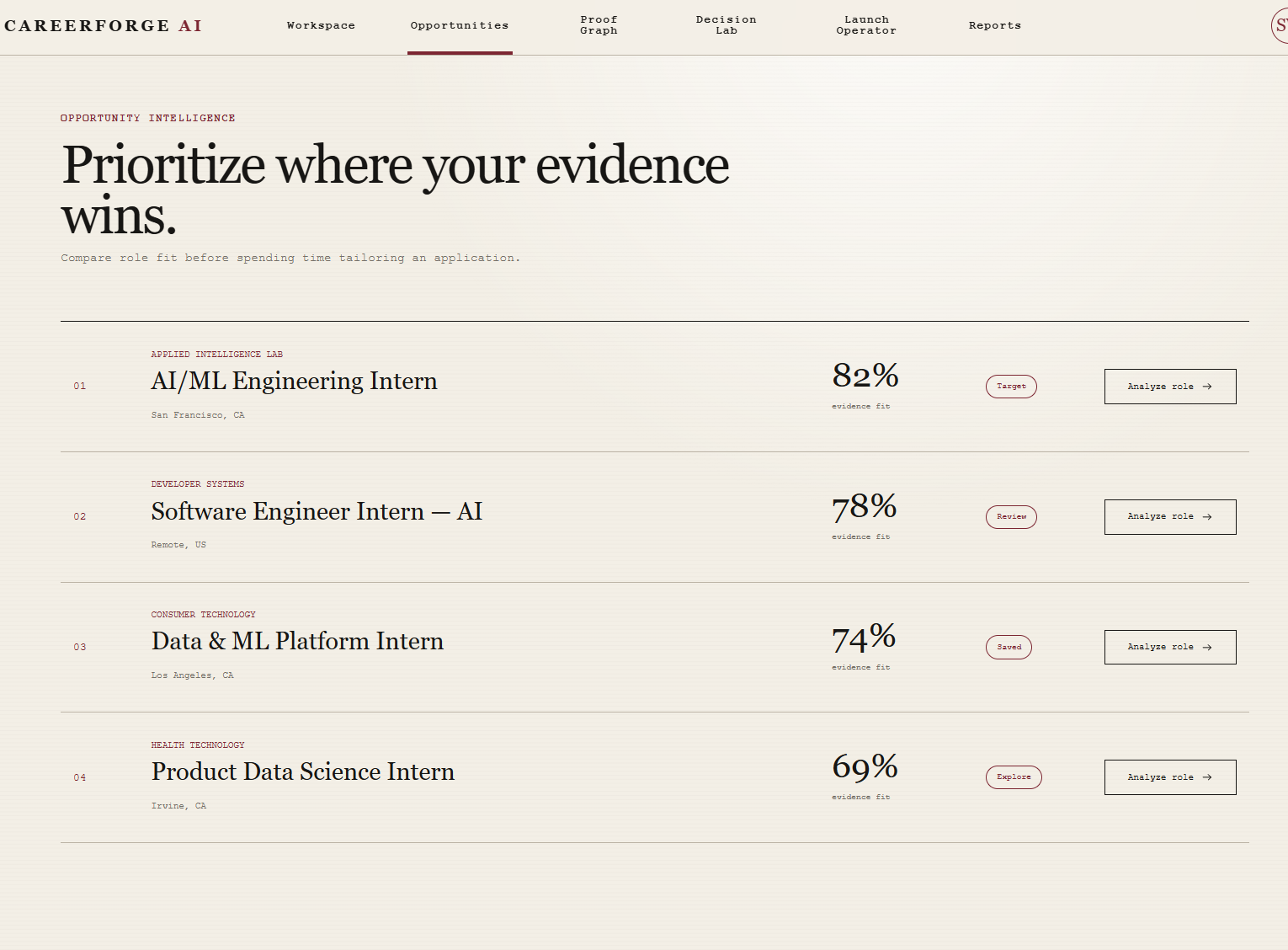
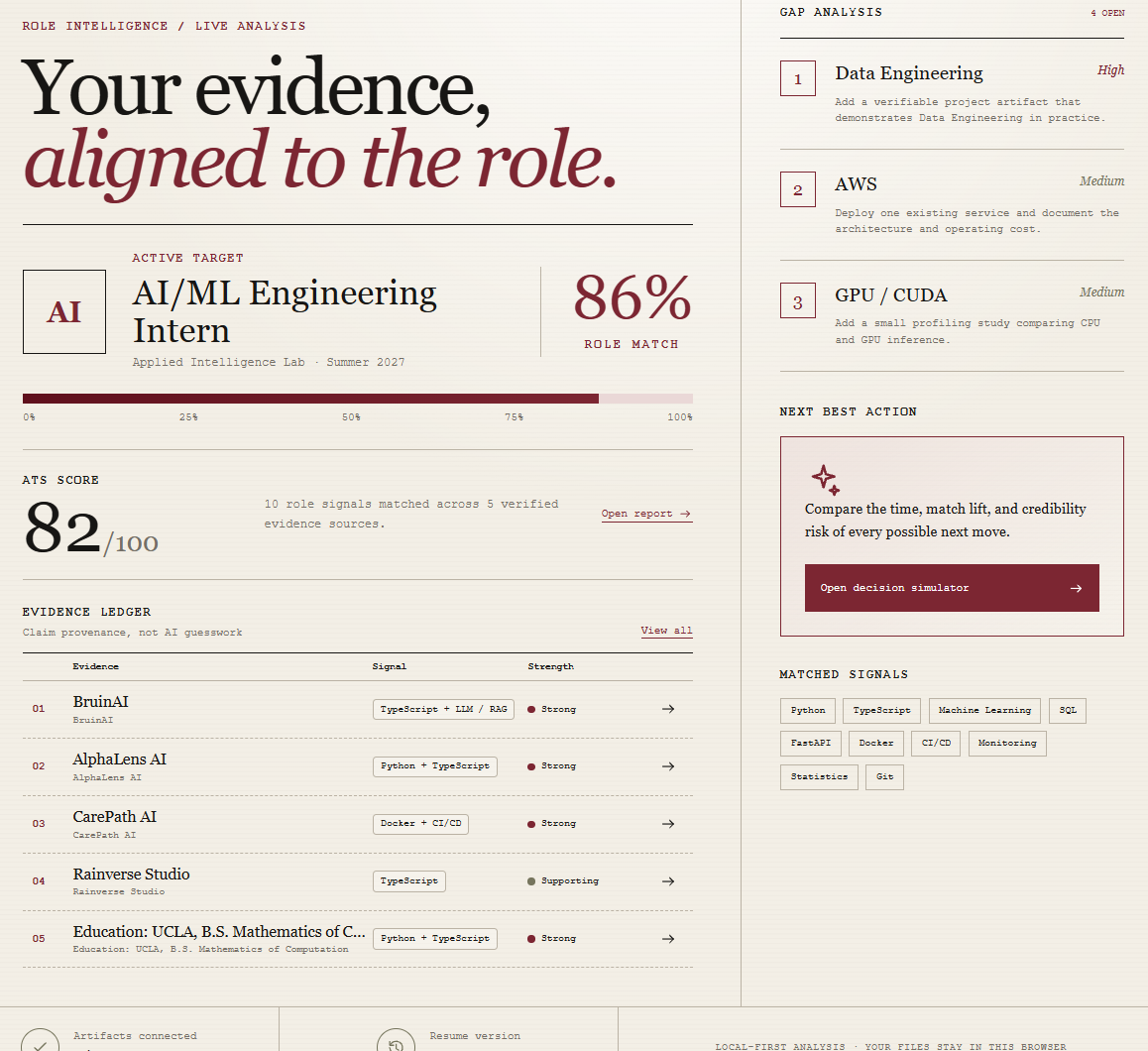
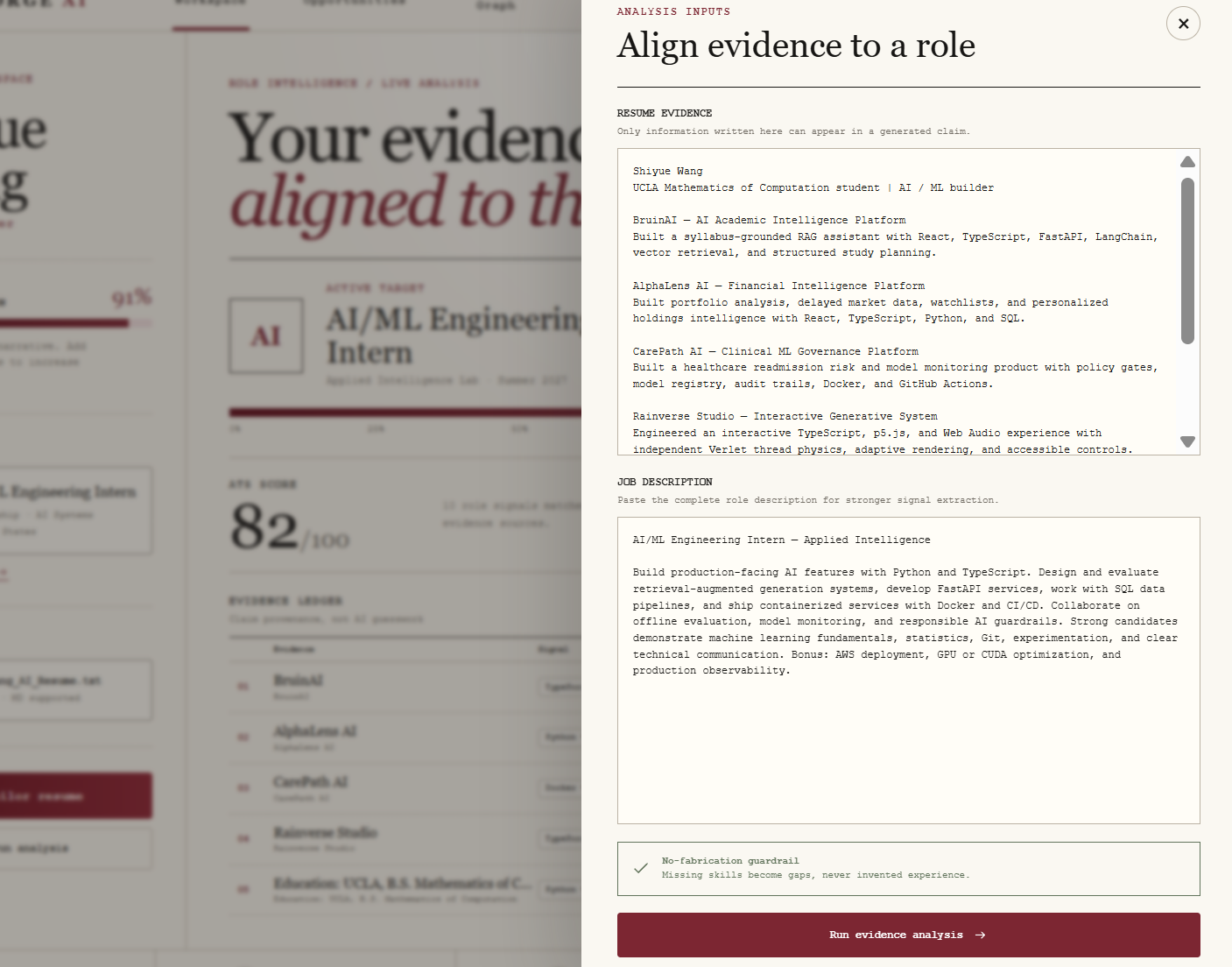
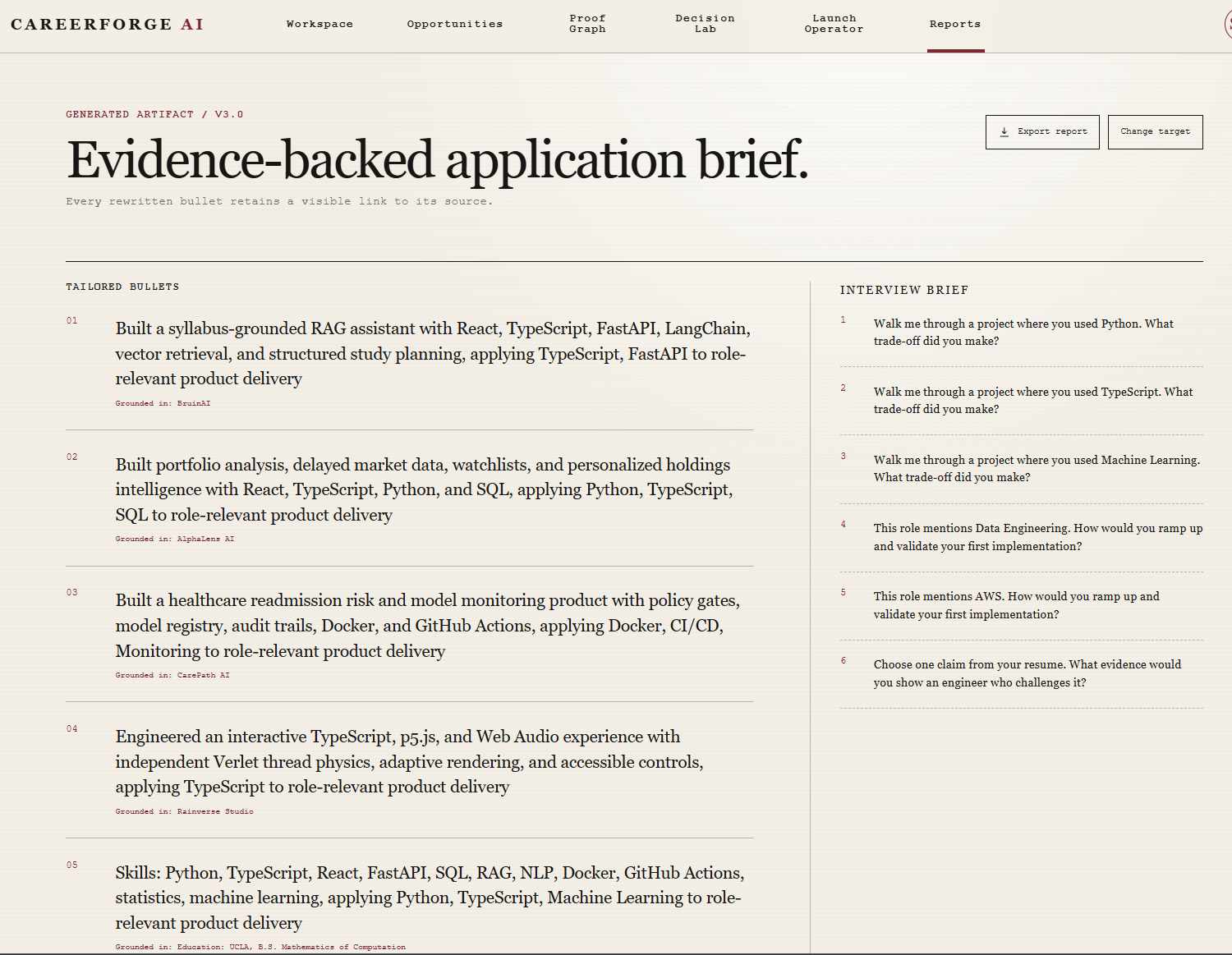
CareerForge maps a candidate’s resume to a target role through a deterministic evidence engine. It produces an explainable role-match score, an ATS diagnostic, an evidence ledger, and explicit skill gaps. Missing skills remain gaps; they are never silently rewritten as experience.
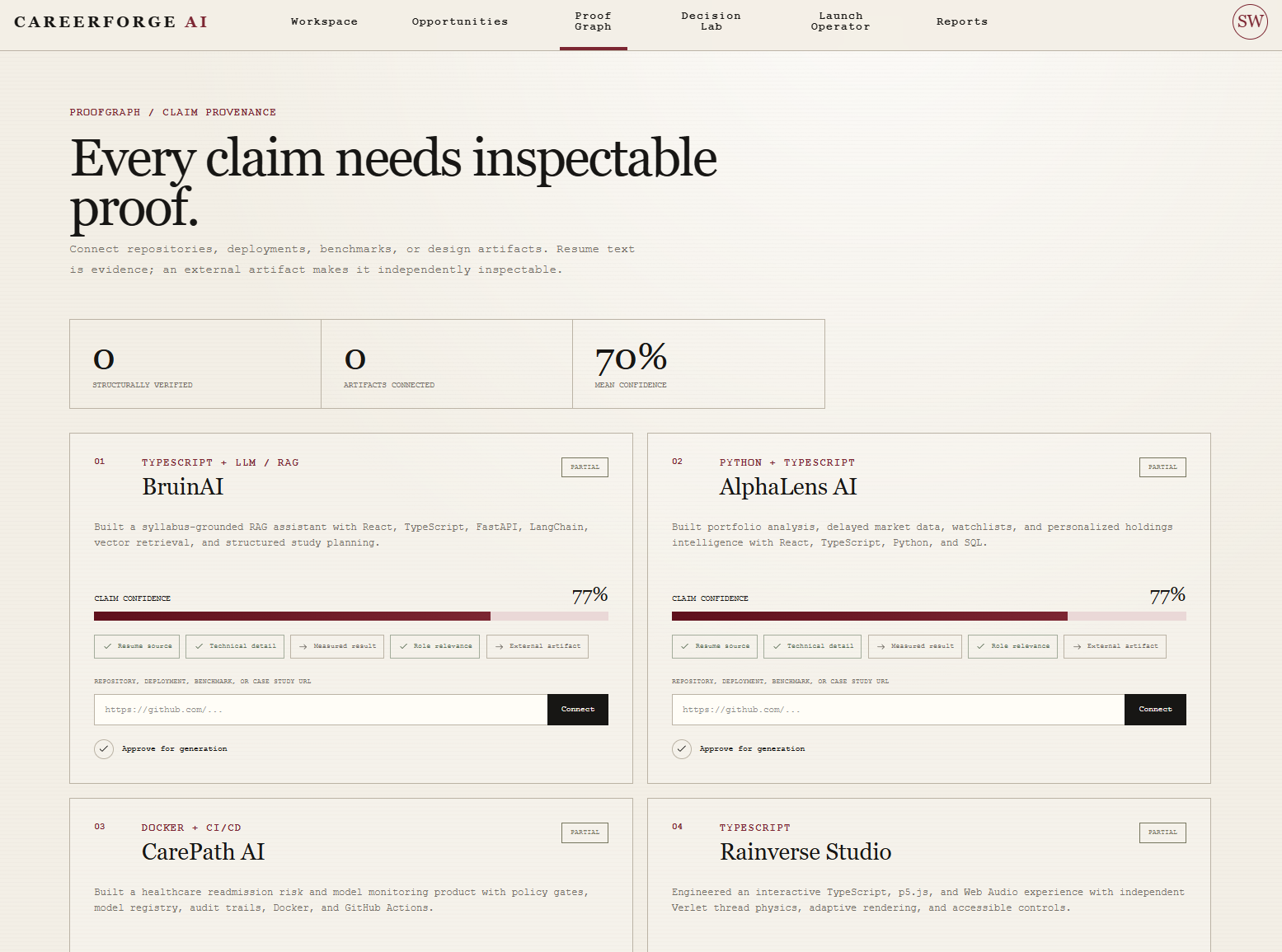
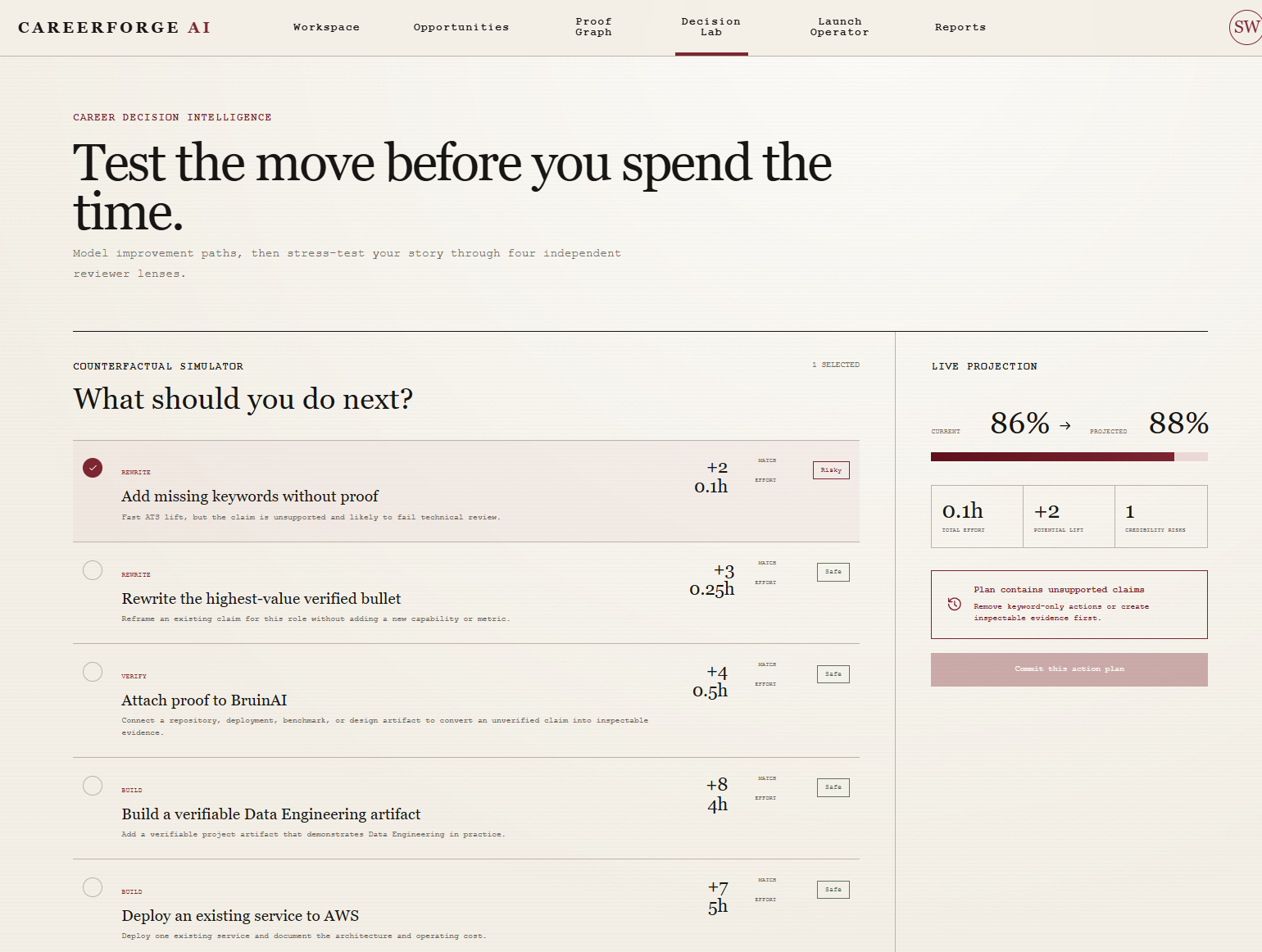
ProofGraph connects claims to repositories, deployments, benchmarks, and case studies. Decision Lab compares potential match lift, effort, and credibility risk. It can block an apparently useful keyword shortcut when that action would create an unsupported claim.
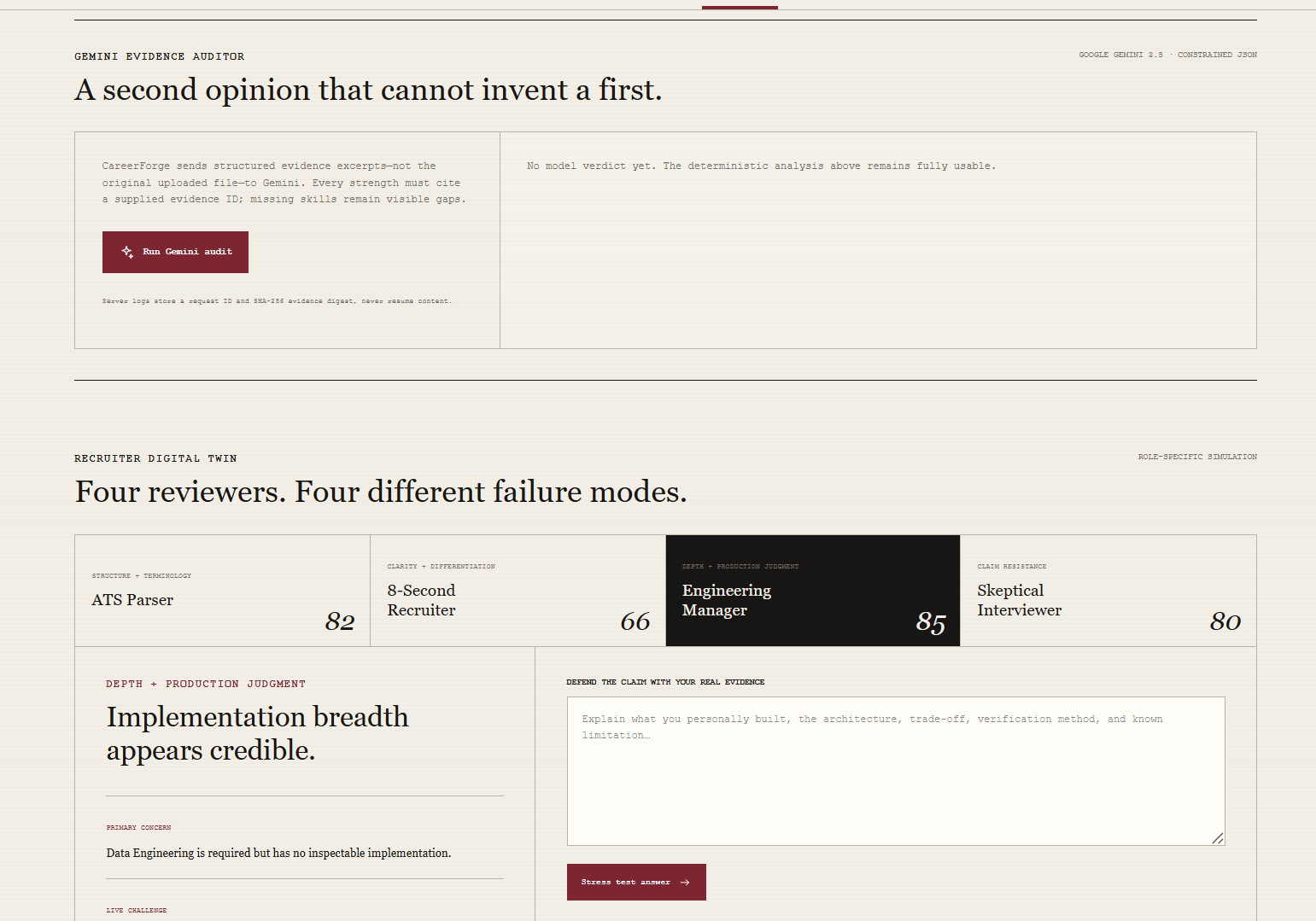
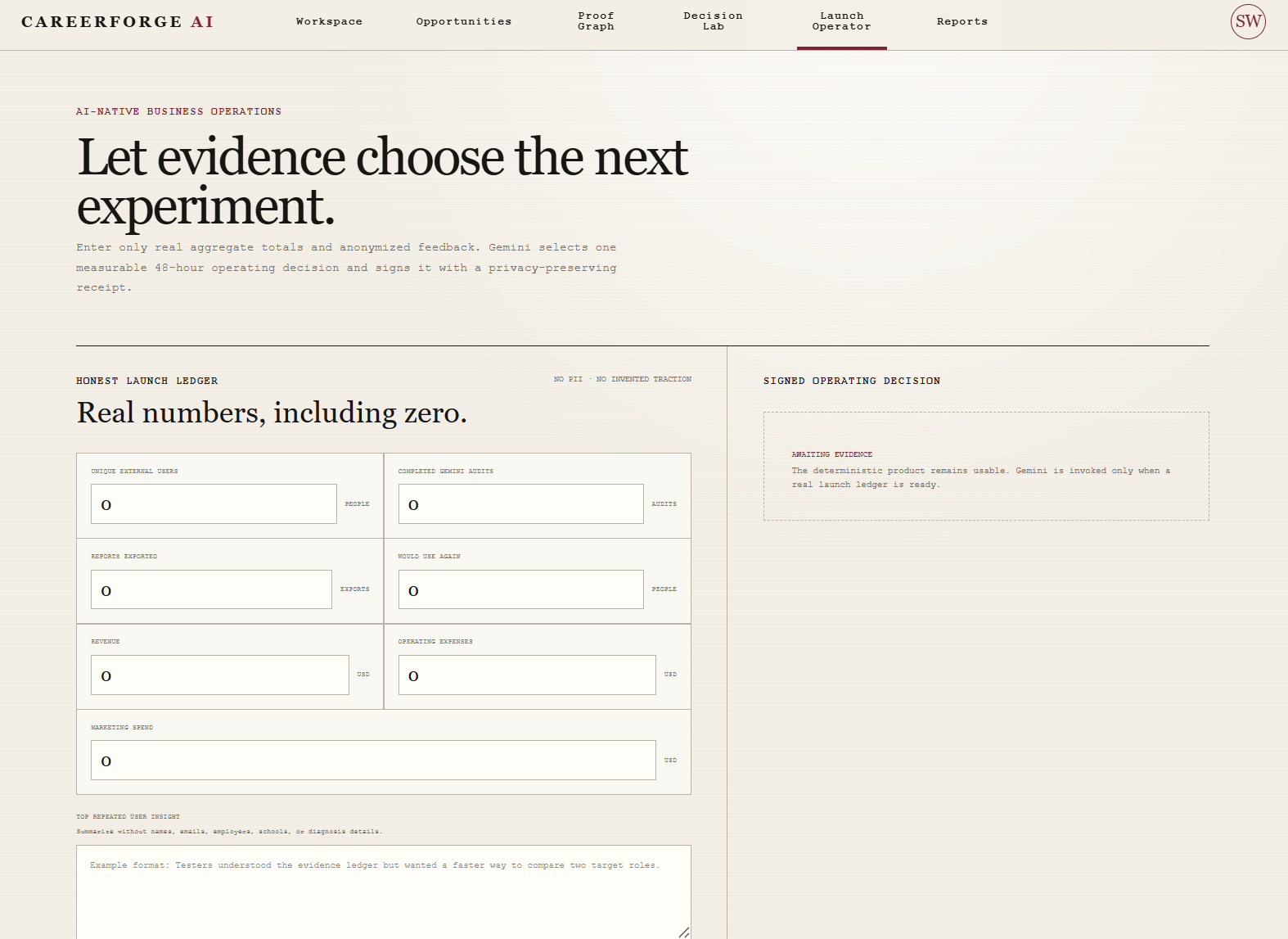
Gemini 3.5 Flash adds two deliberately separated decision layers. The candidate-facing Evidence Auditor reviews bounded evidence excerpts, cites supplied evidence IDs behind its conclusions, and returns a privacy-preserving receipt containing a request ID and SHA-256 evidence digest. The business-facing Launch Operator reviews only aggregate metrics and anonymized feedback, selects exactly one falsifiable 48-hour experiment, cites the source IDs that caused its decision, and returns hashed input and output receipts.
How we built it
The interface uses React, TypeScript, a Next.js-compatible runtime, and PDF.js. A deterministic local analyzer performs skill normalization, evidence extraction, scoring, simulations, and reviewer-lens evaluation. Gemini is invoked only through bounded server routes using structured JSON schemas, low-temperature generation, request-size limits, per-caller rate limits, prompt-injection defenses, strict citation validation, and short digest-based caches.
The production application runs publicly on Google Cloud Run. Gemini credentials are stored in Google Secret Manager rather than the client. The service uses zero minimum instances and one maximum instance to control cost. Production logs store request IDs, model identifiers, counts, and cryptographic digests—not resume excerpts, feedback text, or API keys.
AI-native operations
CareerForge uses AI inside the product and to operate the product. A real production Evidence Auditor invocation correctly identified external validation as the critical gap instead of producing generic praise. After one external tester completed a hands-on walkthrough, the tester said the most valuable capability was “Let evidence choose the next experiment” and that CareerForge felt more targeted and complete than general-purpose AI. The same tester also reported initial overwhelm because many functions appeared at once.
That anonymized feedback and the honest aggregate count of one tester were passed to the Launch Operator. Gemini cited the supplied feedback and selected a lightweight three-step progressive-disclosure onboarding experiment. It defined a measurable success metric—four of five new testers understanding the value proposition within two minutes with overwhelm rated two or below—and a stop condition if development exceeded twelve hours or the first two testers found the tour obstructive. This creates an auditable operating chain: user evidence → aggregate signal → Gemini decision → falsifiable experiment.
Validation and business model
Current traction is intentionally disclosed without inflation: one external tester, zero revenue, ten dollars in prepaid Gemini infrastructure, and zero marketing or acquisition spend. The project is pre-revenue. The planned model is a free evidence audit with paid application workspaces and team or university career-center licensing. The near-term validation question is whether job seekers return for multiple applications because inspectable evidence is more valuable than one-off generated prose.
Challenges
The hardest challenge was resisting the easiest demo—letting a model rewrite a resume freely. We instead built provenance boundaries and explicit failure tests. Gemini output is rejected if it cites an evidence or business source ID that was never supplied. We also designed the system so deterministic analysis remains usable if Gemini is unavailable.
Category impact
CareerForge fits Entrepreneurship & Job Creation because it changes the unit of career assistance from generated text to defensible evidence. At scale, it can help job seekers make faster and more honest application decisions while giving recruiters a clearer signal about what a candidate actually built.
What we learned
Trustworthy AI is not created by adding a disclaimer after generation. Evidence must exist in the data model, citations must be validated in code, privacy boundaries must be visible, and AI decisions must be measured against real outcomes.
Built With
- docker
- gemini-3.5-flash
- google-cloud-run
- google-secret-manager
- json-schema
- node.js
- react
- rest-apis
- sha-256
- typescript


Log in or sign up for Devpost to join the conversation.