-
-
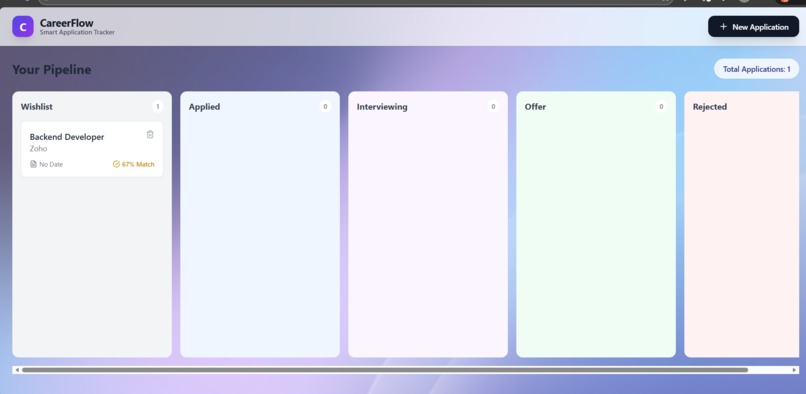
Dashboard
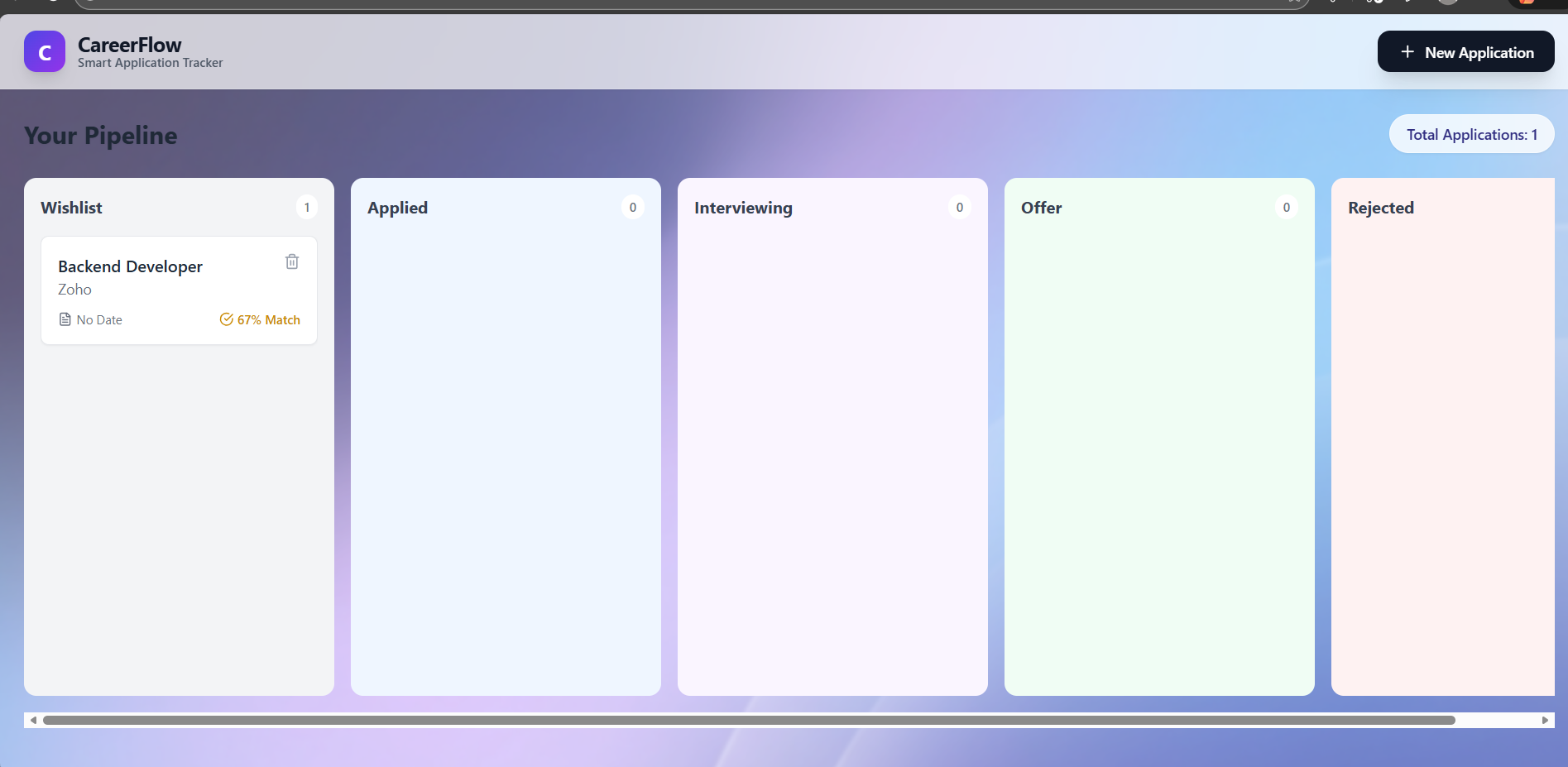
🚀 About CareerFlow 💡 Inspiration
CareerFlow was born out of a common struggle faced by students and job seekers: managing dozens of applications while trying to understand why responses are so rare. Many applicants don’t realize that their resumes are often filtered by Applicant Tracking Systems (ATS) before a recruiter ever sees them.
I wanted to build a platform that doesn’t just track applications, but actively helps users improve their chances by analyzing how well their resume matches a job description.
🧠 What I Learned
Working on CareerFlow helped me grow as both a developer and a problem solver. I learned:
How to design and build a full-stack application using React, Spring Boot, and PostgreSQL
How to structure a backend using clean architecture principles like Controller → Service → Repository
How basic text processing and NLP concepts (tokenization, stop-word removal) can power intelligent features without complex ML models
How to turn user data into meaningful metrics like response rate and application trends
How important it is to build systems that don’t just store data, but create actionable insights
🏗️ How I Built It
CareerFlow uses a client–server architecture:
The frontend (React + Tailwind CSS) provides a Kanban-style job tracking board and interactive dashboards.
The backend (Java 17 + Spring Boot) exposes REST APIs and handles business logic, especially the resume analysis engine.
The database (PostgreSQL) stores users, job applications, and notes in a structured relational model.
The core intelligence of the platform is the Resume–Job Match Engine. The system processes both the resume and job description by cleaning the text, removing stop words, and extracting meaningful keywords. It then computes a similarity score using set operations:
Match Score
∣ Resume Keywords ∩ Job Keywords ∣ ∣ Job Keywords ∣ × 100 Match Score= ∣Job Keywords∣ ∣Resume Keywords∩Job Keywords∣
×100
This score helps users understand how well their resume aligns with a job posting. The system also identifies missing keywords, which are used to suggest targeted improvements.
⚔️ Challenges I Faced
Building an “Intelligent” Feature Without Heavy AI I wanted the system to be smart but still understandable and efficient. Designing a rule-based keyword matching system that felt useful — without relying on large ML libraries — required careful text preprocessing and algorithm design.
Backend Structure & Scalability Initially, I placed too much logic inside controllers. Refactoring into a proper service layer improved code clarity, maintainability, and scalability.
Real-Time UI Updates Keeping the Kanban board synchronized with backend updates during drag-and-drop operations required thoughtful state management on the frontend.
Turning Raw Data into Insights Deciding which metrics actually help users — like response rate and weekly application trends — pushed me to think beyond CRUD operations and focus on decision-support features.
🌟 What Makes CareerFlow Unique
Most job tracking tools are passive organizers. CareerFlow goes further by acting as a career optimization assistant. It not only tracks where you applied, but helps you understand how to improve your resume for specific roles.
By combining structured tracking with resume intelligence, CareerFlow turns job hunting from a guessing game into a data-driven process.
Built With
- javascript
- tsx

Log in or sign up for Devpost to join the conversation.