-
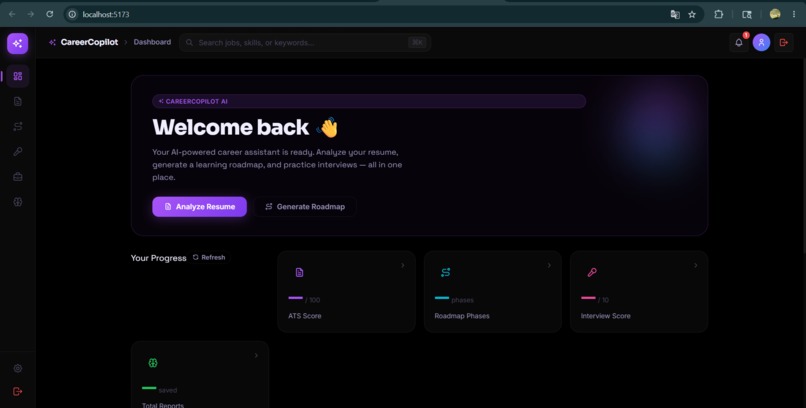
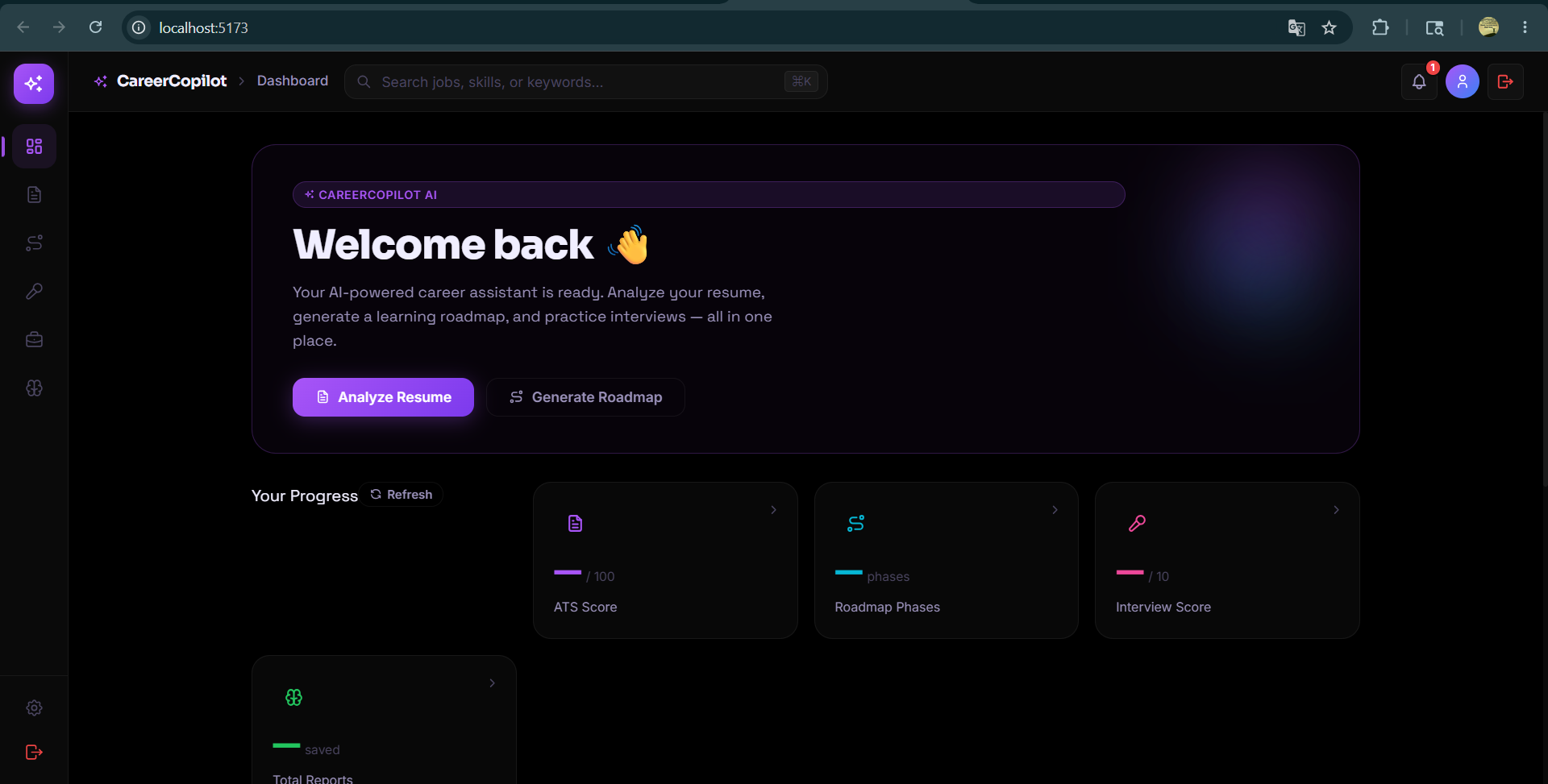
Your AI-powered career assistant is ready. Analyze your resume, generate a learning roadmap, and practice interviews — all in one place
-
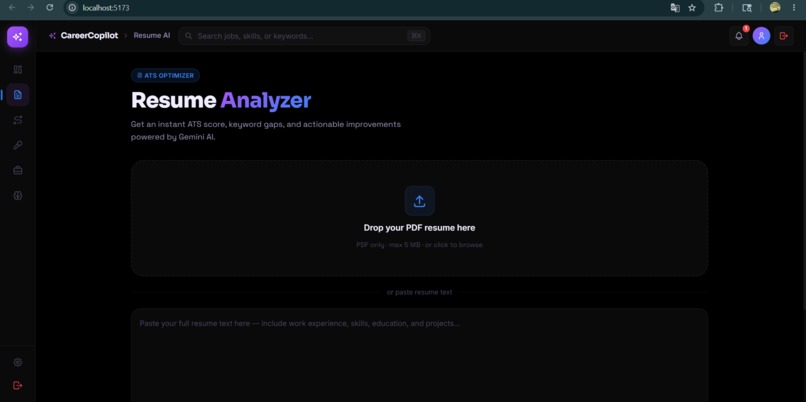
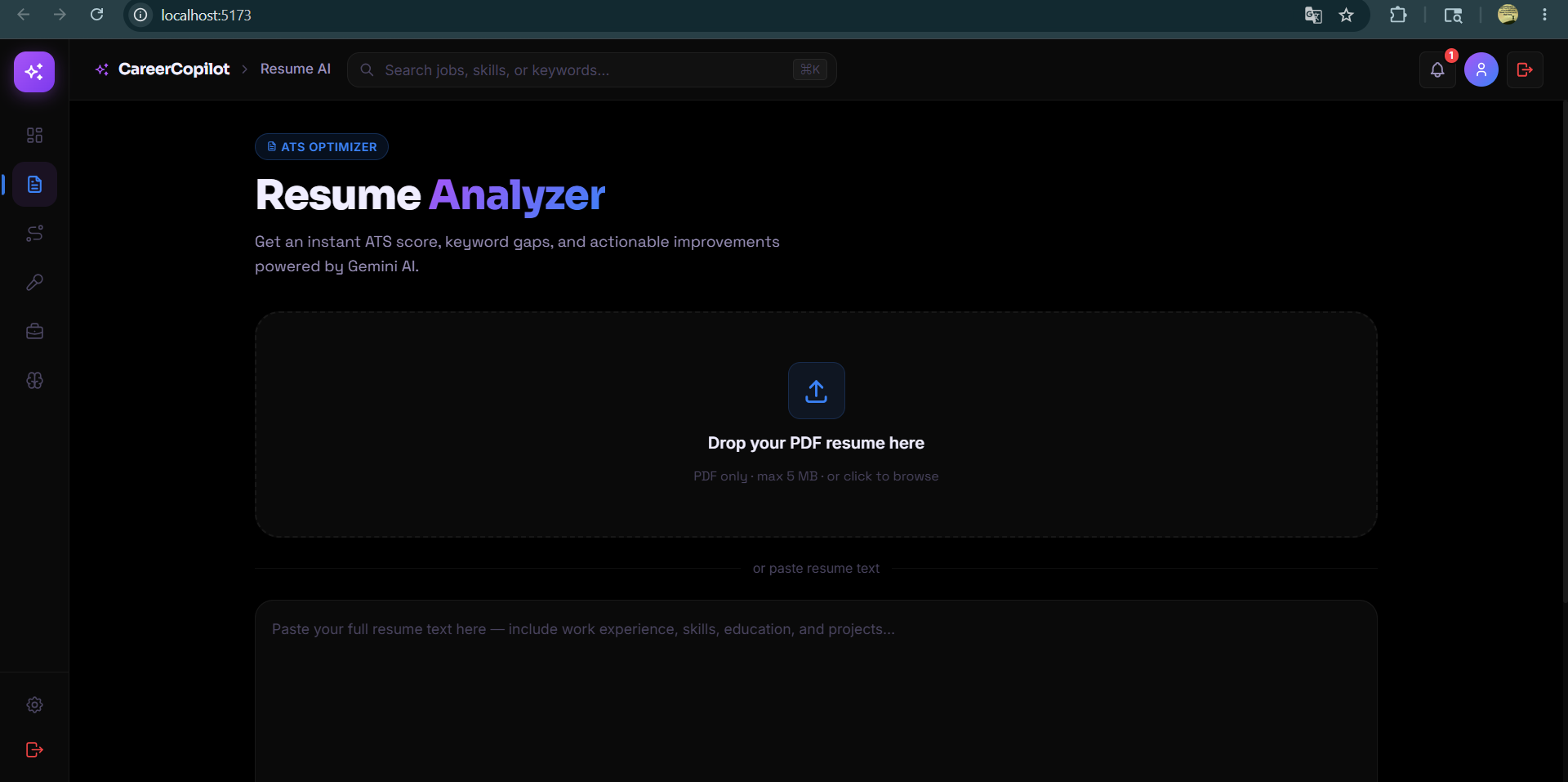
Resume Analyzer: Get an instant ATS score, keyword gaps, and actionable improvements powered by Gemini AI.
-
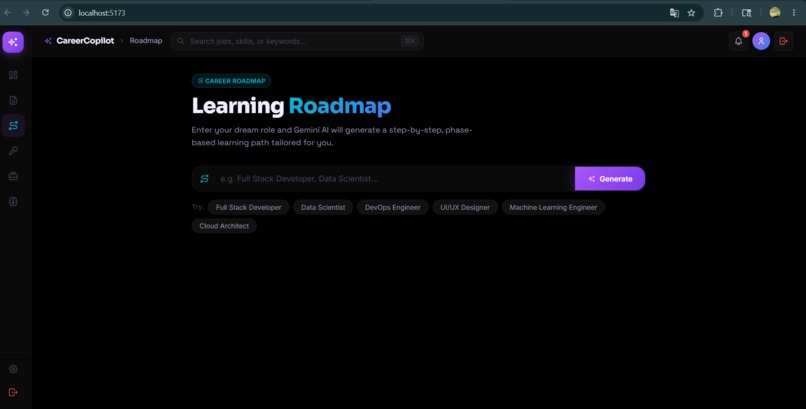
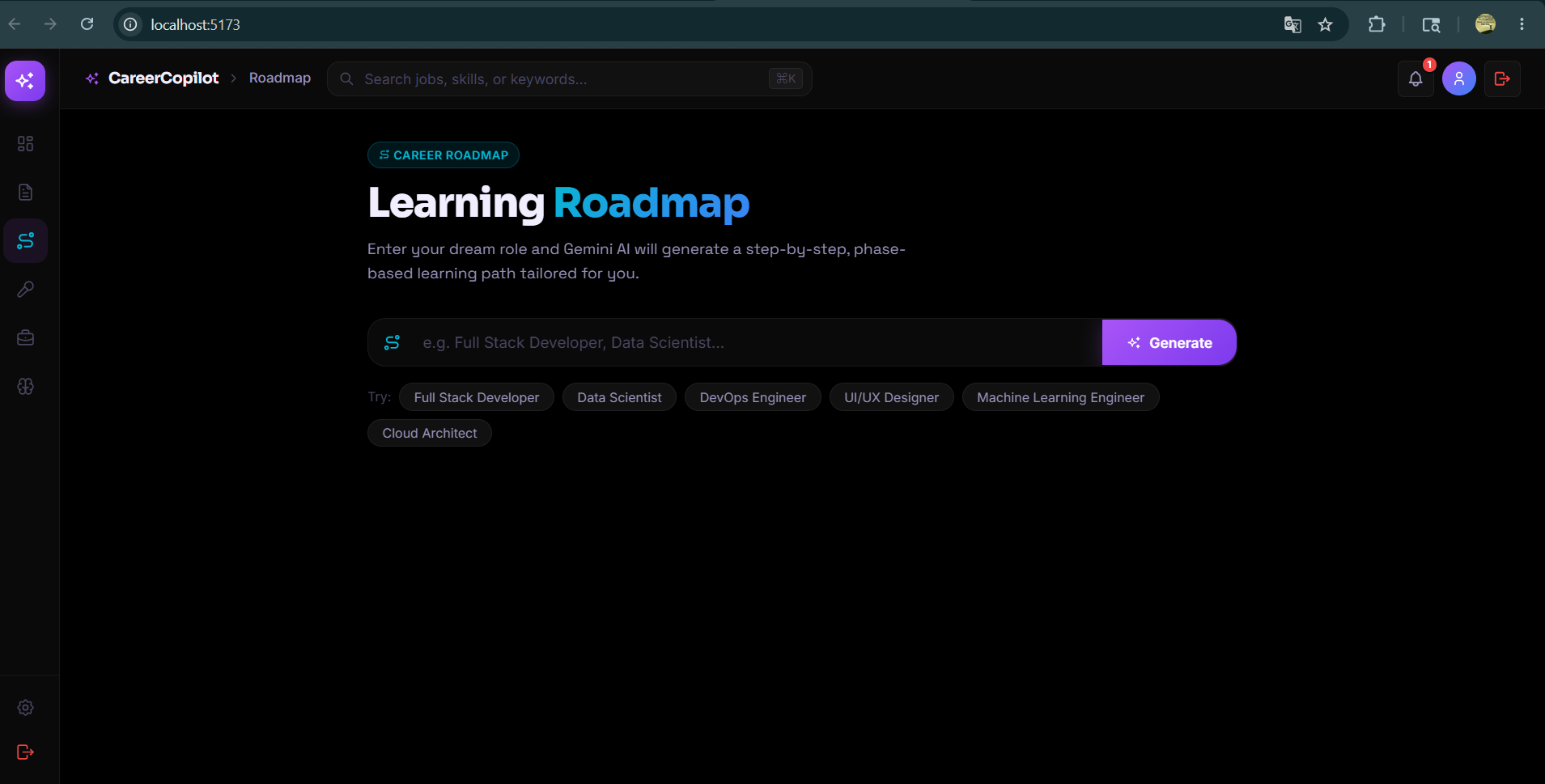
Learning Roadmap: Enter your dream role and Gemini AI will generate a step-by-step, phase-based learning path tailored for you.
-
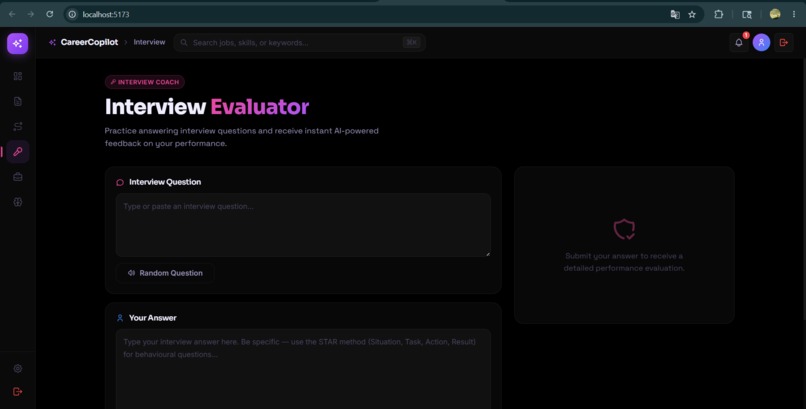
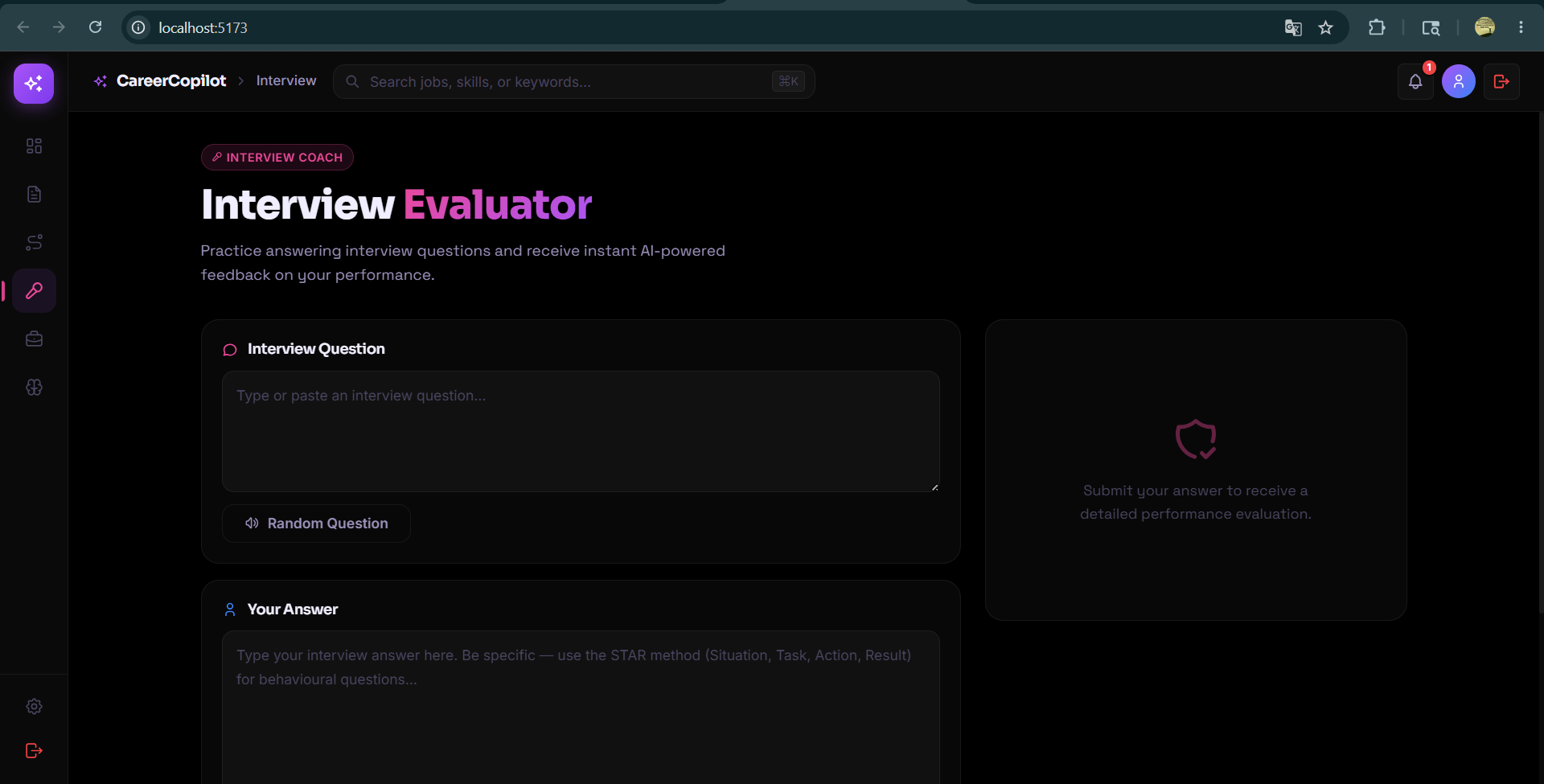
Interview Evaluator: Practice answering interview questions and receive instant AI-powered feedback on your performance.
-
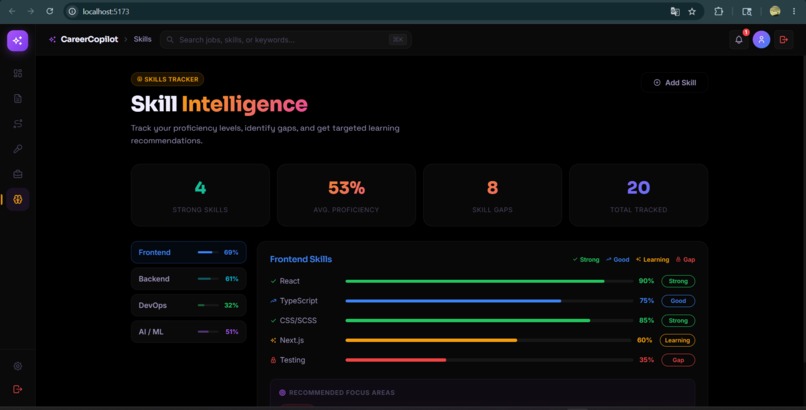
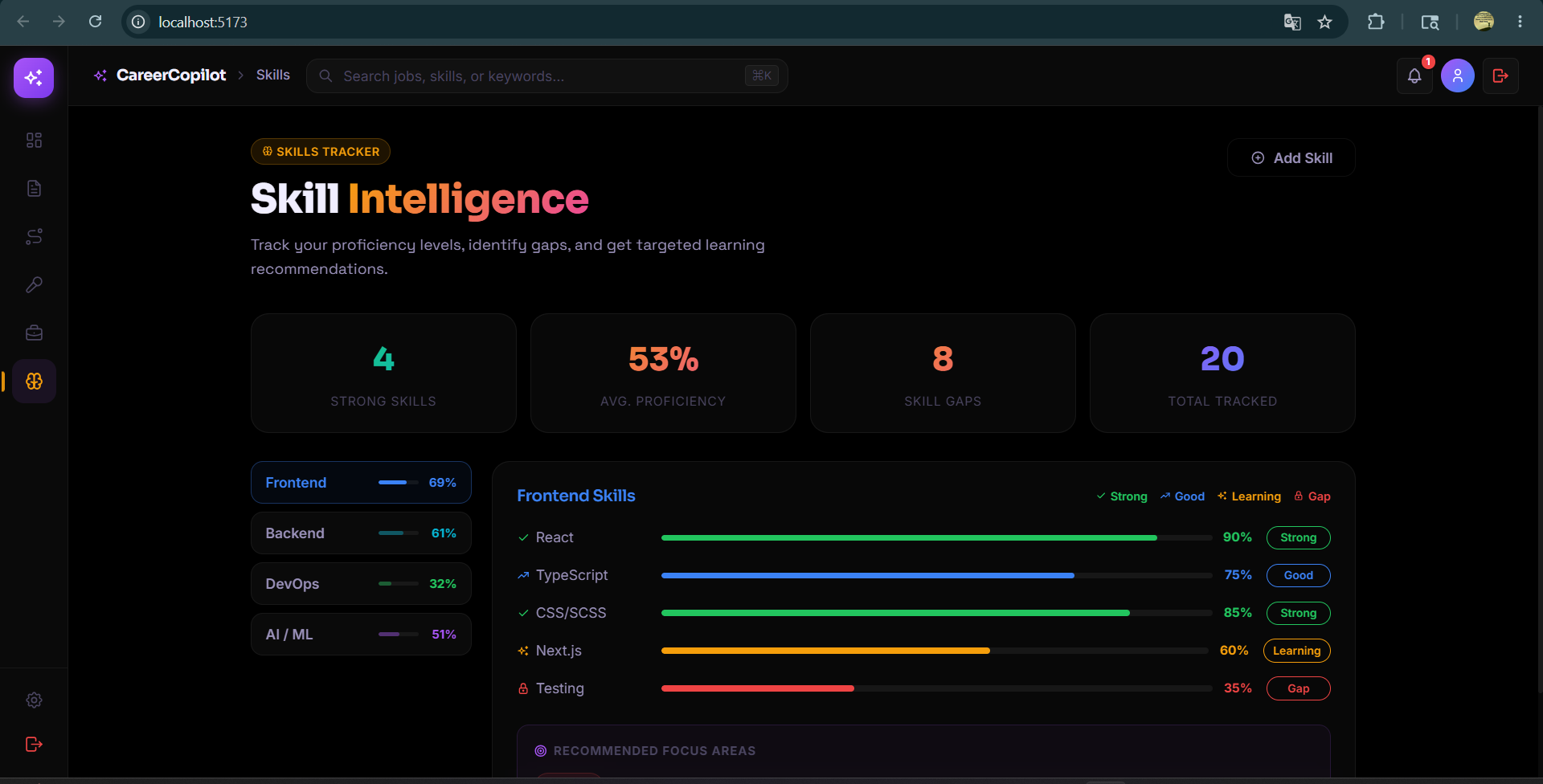
Skill Intelligence: Track your proficiency levels, identify gaps, and get targeted learning recommendations.
-
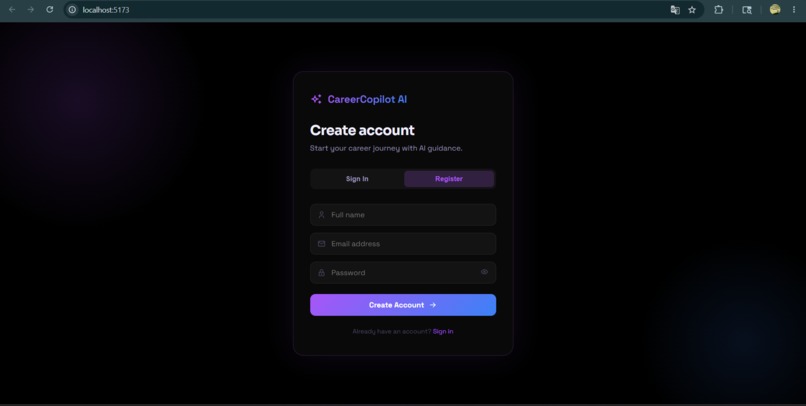
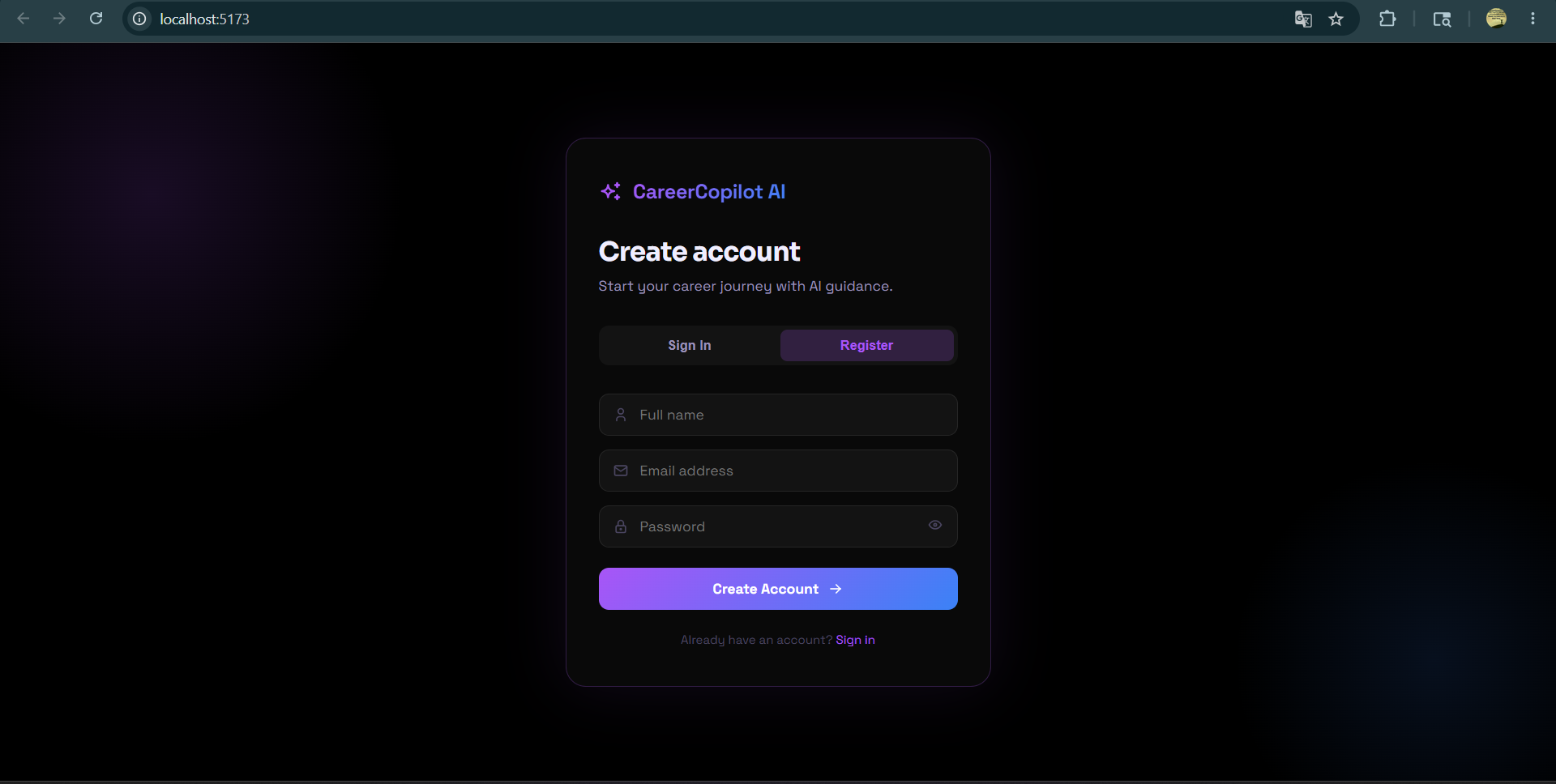
Register/Sign In: Start your career journey with AI guidance.
Inspiration
As a student navigating a highly volatile tech landscape, the transition from college to the industry always felt like a black box to me. I constantly found myself asking: Is my resume actually optimized for modern Applicant Tracking Systems (ATS)? Am I truly prepared to handle a grueling, high-pressure technical interview? What is the exact step-by-step path I need to take to bridge my skill gaps?
I realized that while generic career advice is everywhere, true personalized, immediate, and actionable guidance is incredibly rare. I was inspired to break this barrier and single-handedly build CareerCopilot AI—an ultra-sleek, premium command center designed to act as a 24/7 personal AI and Machine Learning placement mentor. I wanted to take the guesswork out of the job hunt by analyzing a student's actual data and dynamically charting their path to success.
What it does
CareerCopilot AI is an all-in-one placement and career companion that bridges the gap between preparation and hiring.
AI Resume Analyzer: Extracts text from an uploaded PDF to calculate an instant ATS compatibility score, dynamically mapping out unique strengths, specific structural improvements, and critical keyword gaps.
AI Technical Interview Assistant: Simulates domain-specific technical and HR interview rounds, evaluating text responses to provide detailed architectural critique, an ideal answer framework, and a real-time confidence rating.
AI Career Roadmap Generator: Takes any target career goal (e.g., "MERN Stack Developer") and instantly generates a highly customized, chronological learning timeline packed with milestone skills, curated resources, and capstone project focuses.
Smart Job Matcher: Automatically cross-references a user's skills and analyzed resume profiles against active job criteria to rank opportunities by a dynamic match percentage.
How we built it
I engineered CareerCopilot AI from the ground up as a production-grade MERN stack application deeply integrated with generative AI and machine learning workflows: Frontend UI Engine: Built using React + Vite and styled with an immersive, custom "pure-black cyber" theme. To ensure a lightning-fast experience, I engineered a seamless, localized single-page tab-switching architecture to transition between all feature modules instantly with zero loading lag.
Backend Infrastructure: Powered by Node.js and Express, I orchestrated a stateless RESTful API architecture. User profiles, secure authentication hashes via bcryptjs, and session tracking are stored persistently in a MongoDB Atlas cloud cluster.
Intelligence Layer & Data Parsers: I integrated the Google Gemini API using the gemini-1.5-flash model for high-speed execution. For document parsing, I built a file stream pipeline using multer memory storage buffers and pdf-parse to extract raw text data from resumes before feeding it to my structured AI prompt matrix.
To eliminate unpredictable text blocks and guarantee a polished frontend rendering, I forced the Gemini API to respond exclusively in raw, parseable JSON payloads. For instance, the resume scores are modeled dynamically via a weighted distribution:
$$ \text{ATS Score} = w_1 \cdot S_{\text{skills}} + w_2 \cdot S_{\text{experience}} + w_3 \cdot S_{\text{projects}} + w_4 \cdot S_{\text{formatting}} $$
Where the weights ( w_i ) are balanced dynamically by my prompt engine relative to the constraints of the target corporate domain.
Challenges we ran into
Building a deep, full-stack platform alone under intense hackathon time constraints brought heavy technical hurdles that pushed my engineering skills to the limit:
The Raw Binary Text-Extraction Bug: Initially, my file uploader scrambled incoming PDFs, passing raw compiled hexadecimal binary string data directly into the text streams. This caused the AI engine to crash. I solved this by overhauling my file pipeline, shifting file parsing entirely to the server-side memory buffer via pdf-parse, and delivering pristine text strings to the model.
The Generative Caching & Rate-Limit Loop: Early iterations of my Resume Analyzer and Roadmap Generator fell into "static response loops," outputting identical scores (such as a hardcoded 78%) and repeating generalized paths across entirely distinct inputs. I defeated this by adjusting the model parameters to a highly dynamic variance setting ($\text{temperature} = 0.7$) and writing strict response constraints directly into my system prompt architecture to eliminate cached shortcuts.
CORS & State Desynchronization: Bridging security boundaries between my local client and server ports caused severe network protocol drops. I resolved this by implementing explicit Cross-Origin Resource Sharing (CORS) header permissions and building robust try/catch fallback states so my dashboard UI never freezes during a live evaluation.
Accomplishments that we're proud of
True React Component Fluidity: I successfully engineered a modular, state-driven frontend architecture using React, allowing the entire application to dynamically swap features within a single page layout seamlessly, completely eliminating browser reloads and state desynchronization.
Strict JSON Prompt Enforcement: I engineered a bulletproof system instruction matrix that constrains Gemini to return raw, valid JSON with zero code-block backtick bugs.
End-to-End Full Stack Integration: Successfully connecting secure user token authentication, MongoDB cloud models, file extraction streams, and deep AI intelligence.
Dynamic Response Authenticity: Overcoming static response models to ensure every unique career prompt and resume upload yields entirely distinct, custom data analytics.
What we learned
This solo sprint was an incredible milestone for me. I mastered advanced Prompt Engineering, learning how to constrain large language models to behave like highly structured API endpoints that return pristine JSON instead of unpredictable conversational paragraphs. I also deepened my knowledge of full-stack asynchronous state management, secure token-based authentication routines, and binary file streams. Most importantly, I proved to myself that with an organized architecture and absolute focus, a solo developer can build a highly practical, visually stunning, production-ready AI/ML product
What's next for CareerCopilot AI
Voice-Based AI Mock Interviews: Integrating Speech-to-Text and Text-to-Speech Web APIs to allow students to speak their answers out loud during interview sessions rather than typing them.
Automated Resume Rewriting: Adding a feature that doesn't just suggest resume bullet points, but uses generative AI to directly reword weak phrases in real time.
GitHub Repository Code-Level Scans: Moving beyond simple metadata checks to have the AI actively scan code repositories for best practices, architectural clean coding, and bug vulnerabilities.
Direct Job Board Integration: Connecting real-time web scrapers or employment APIs to let users apply directly to matched roles straight from the CareerCopilot dashboard.
Built With
- api
- bcryptjs
- cors
- dotenv
- express.js
- gemini
- google-web-speech-api
- jsonwebtoken
- mongodb
- multer
- node.js
- pdf-parse
- react
- vite

Log in or sign up for Devpost to join the conversation.