-
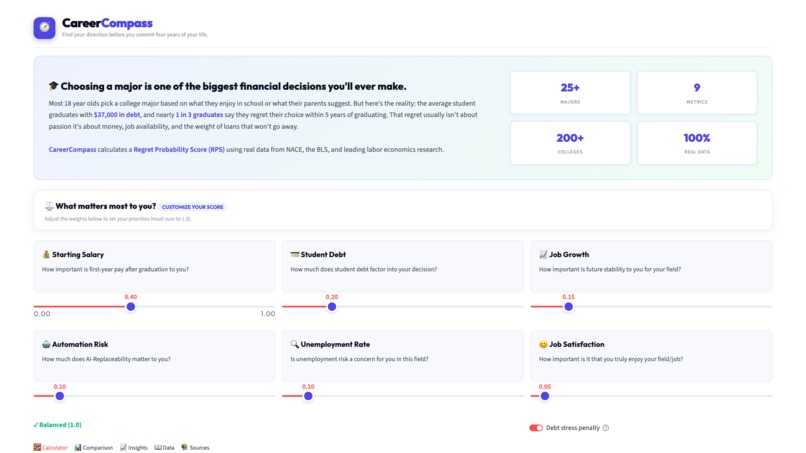
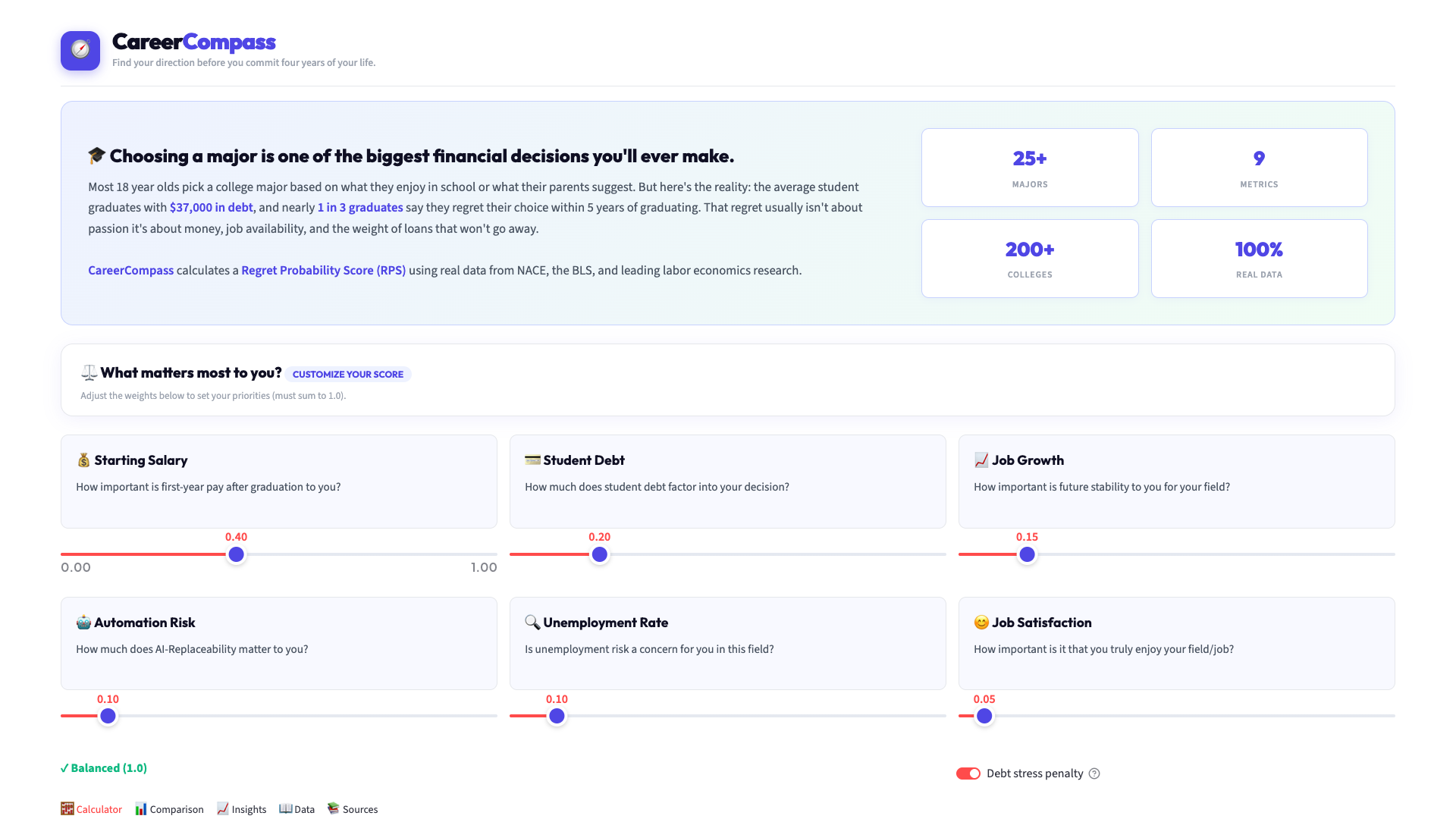
CareerCompass homepage, where users customize priorities
-
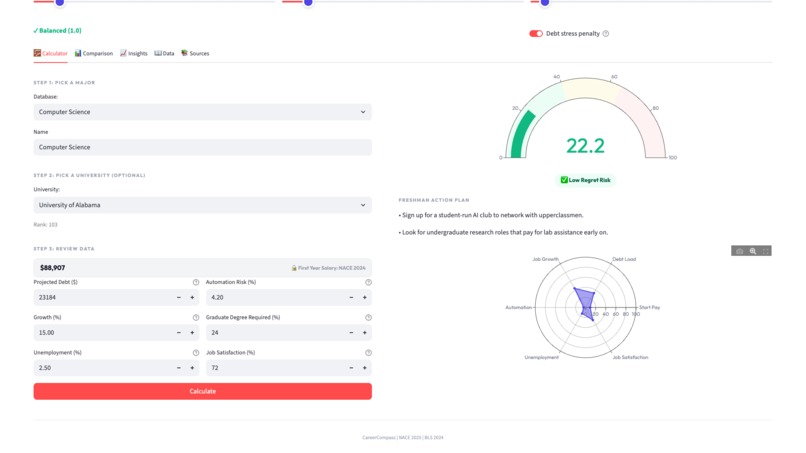
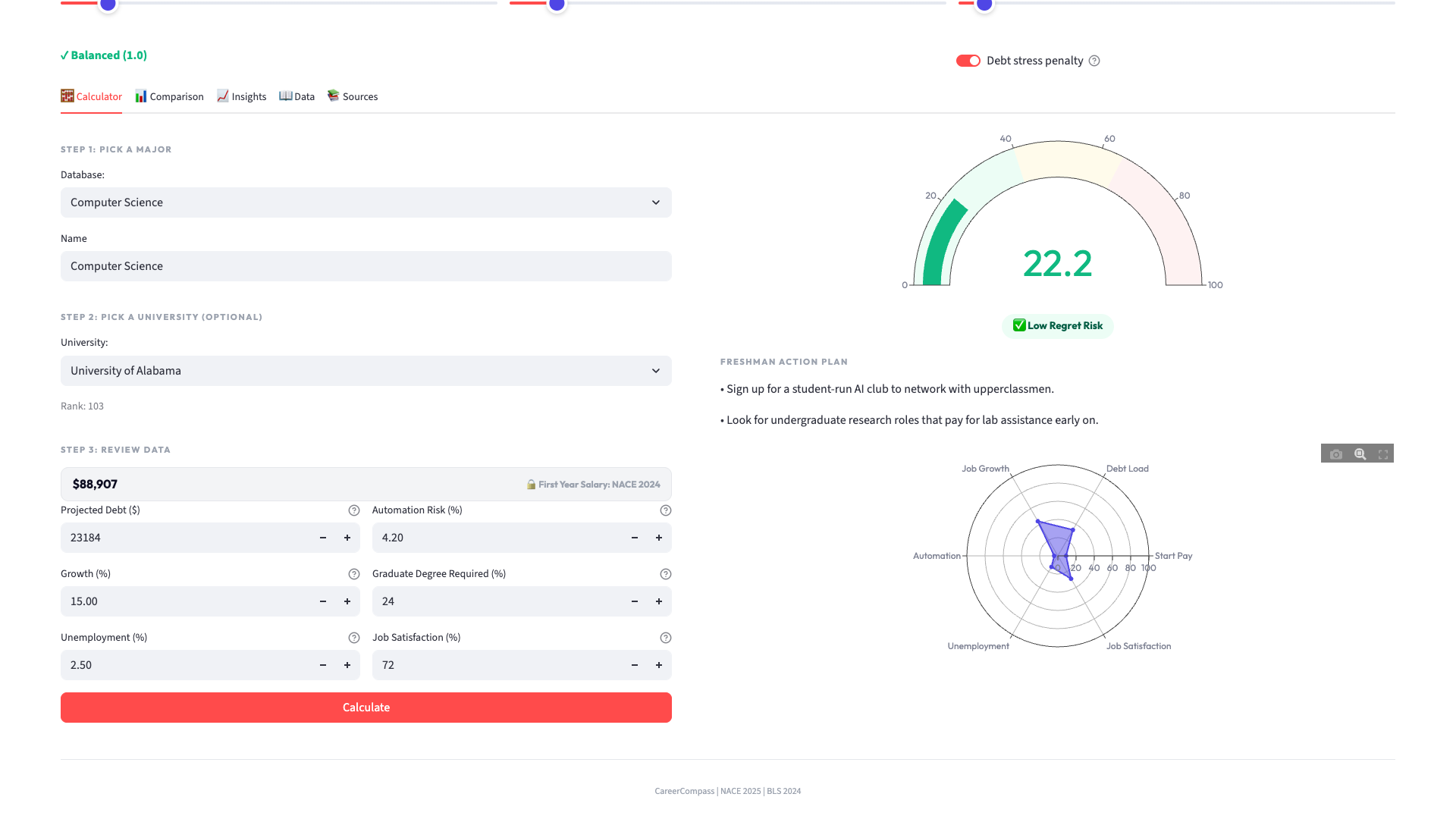
CareerCompass result calculator score
-
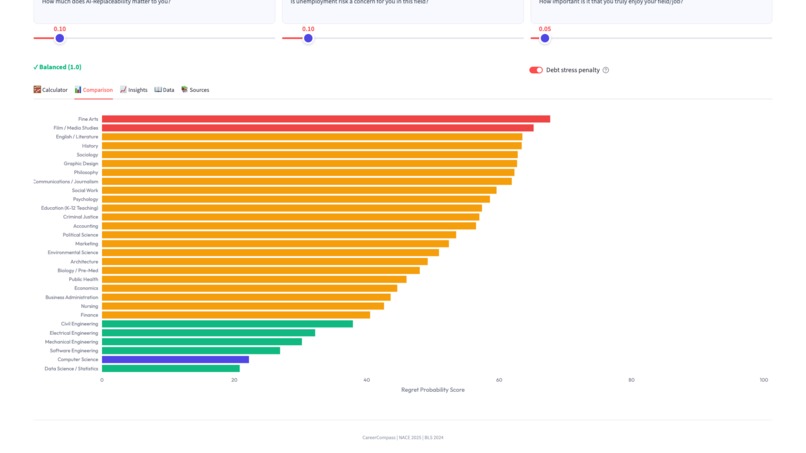
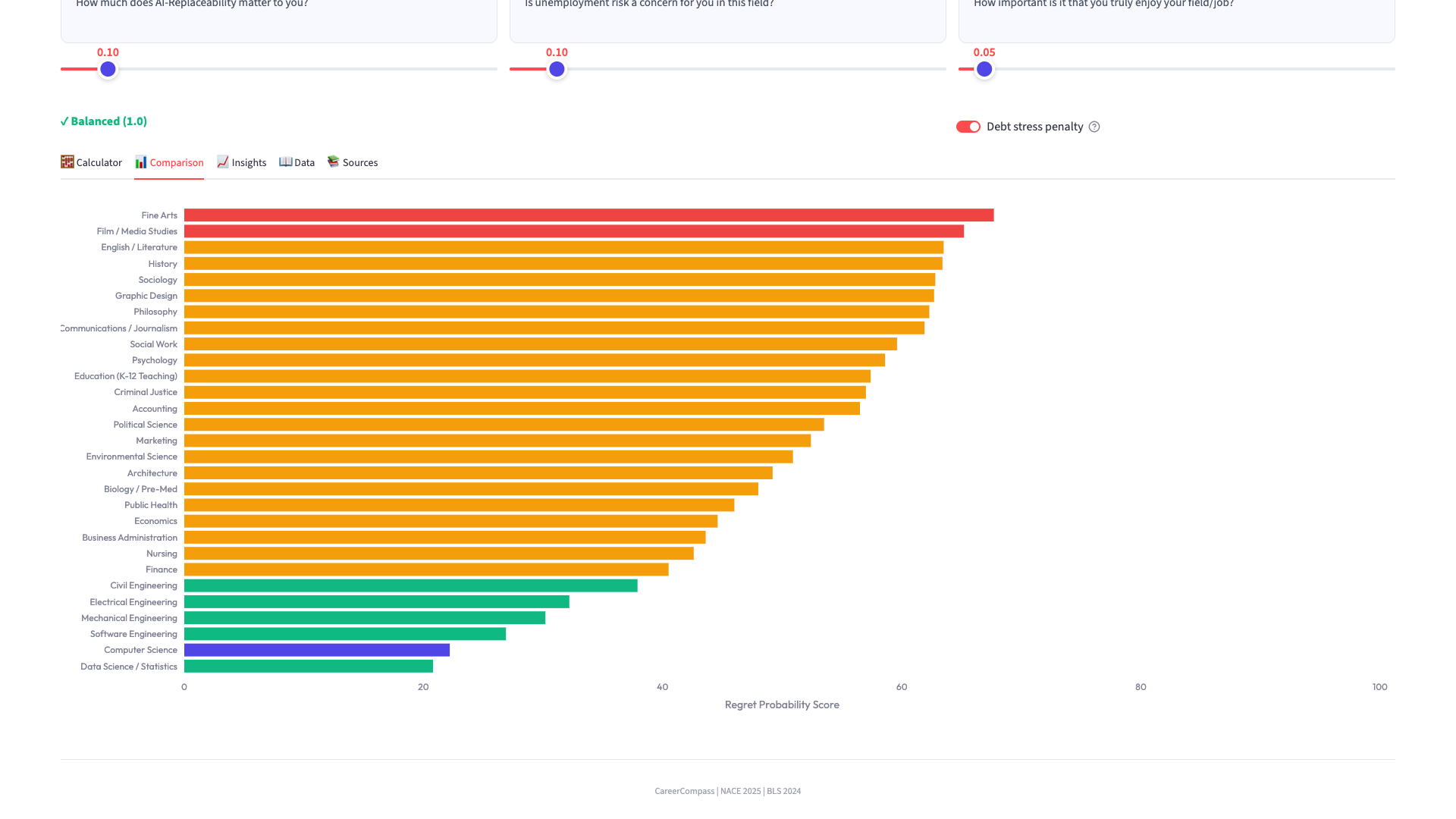
Regret probability bar chart average by major
-
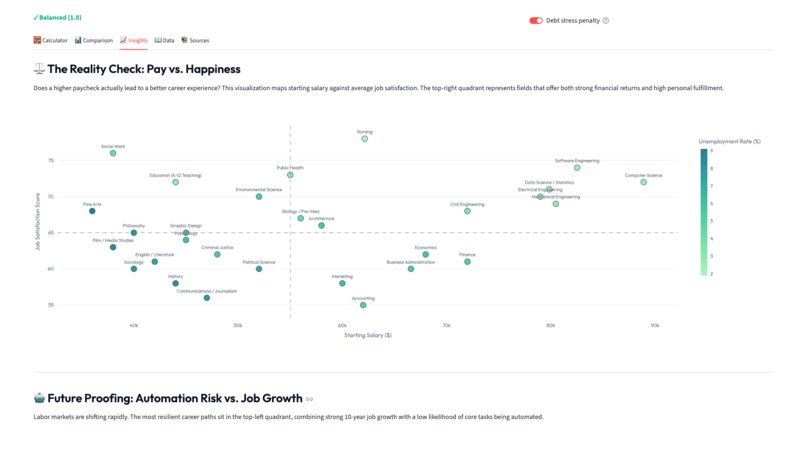
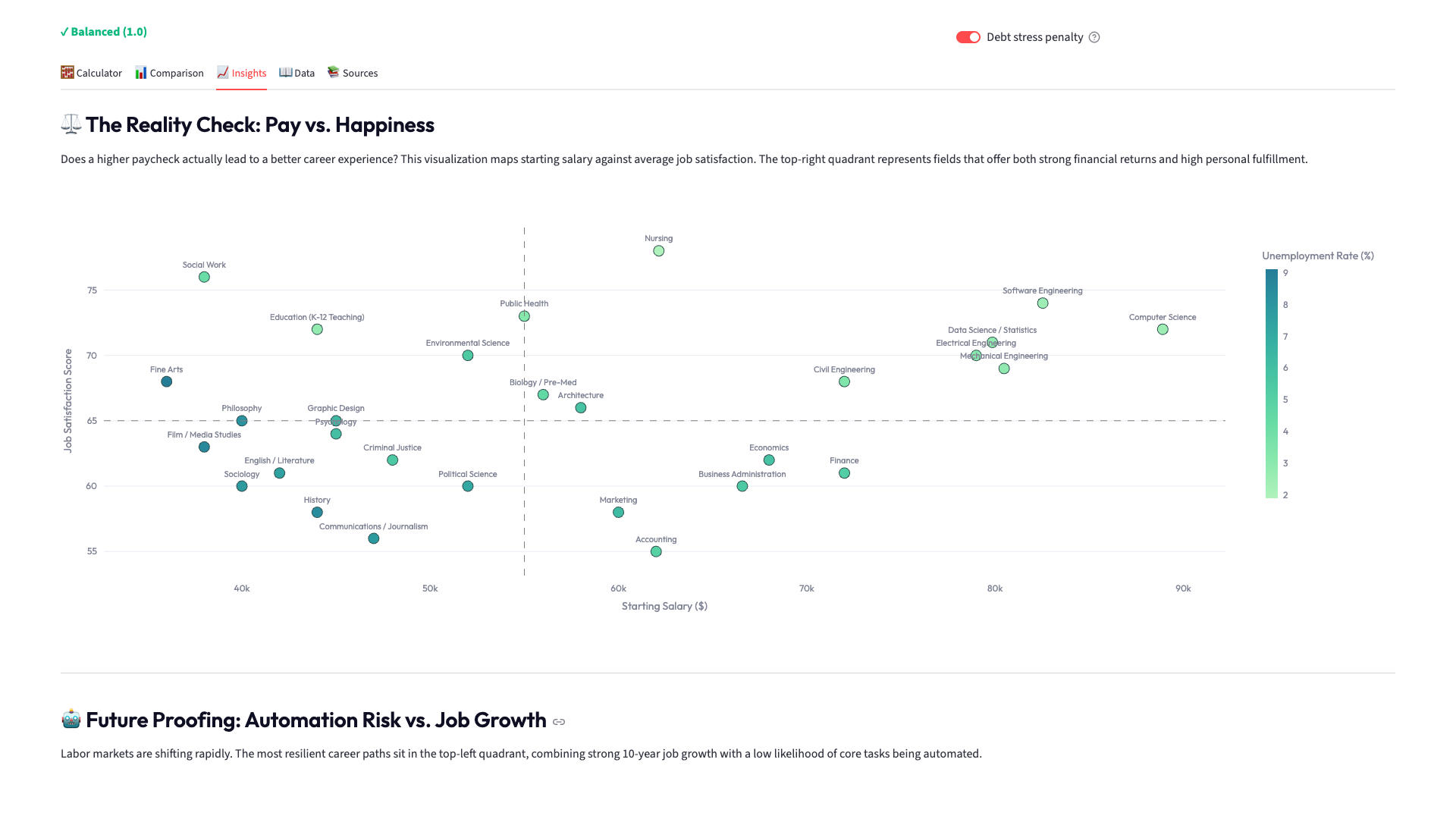
Scatter plot comparing starting salaries against job satisfaction scores
Inspiration
Choosing a college major is one of the largest financial decisions most people make when they are 18 years old, yet it’s often based on passion, pressure, or incomplete information.
The reality:
- The average student graduates with ~$37,000 in debt
- Nearly 1 in 3 graduates regret their major within 5 years
- AI and automation are reshaping entire industries
We wanted to build a tool that combines:
- Major choice
- Financial risk
- Labor market data
- AI disruption
- College choice impact
CareerCompass was created to answer one powerful question:
“Will I regret this major at this school?”
What It Does
CareerCompass calculates a Regret Probability Score (RPS) for 25+ college majors using real economic and institutional data.
The RPS factors in:
- Starting Salary
- Average Student Debt
- 10-Year Job Growth
- Automation Risk
- Unemployment Rate
- Job Satisfaction
- Graduate Degree Requirement
- College Choice
- Debt-to-Income Stress Penalty
Users can:
- Customize how much each factor matters to them
- Select their university
- Visualize salary vs happiness
- Analyze automation risk vs job growth
- Receive a personalized Freshman Action Plan
CareerCompass reframes choosing a major as a strategic decision, not just an emotional one.
How We Built It
Frontend & Framework
- Built using Streamlit
- Custom CSS design system for a clean, modern UI
- Multi-tab layout for calculator, comparison, insights, and data transparency
Data & Sources
- National Association of Colleges and Employers (NACE) – 2024 Salary Survey
- U.S. Bureau of Labor Statistics (BLS)
- U.S. News & World Report - Best National Universities Rankings 2026
We integrated university ranking data to apply a tiered prestige modifier, allowing the same major to yield different regret scores depending on institutional strength.
Scoring Engine
We designed a normalized scoring system that:
- Scales each metric between 0–1 using reference ranges
- Applies user-defined weights (must sum to 1.0)
- Calculates a weighted regret baseline
- Outputs a final 0–100 Regret Probability Score
All recalculations occur in real time when users adjust weights or switch schools.
Challenges We Ran Into
Quantifying “College Choice” Without Overpowering the Model
We had to ensure university prestige influenced outcomes realistically without dominating the entire score. We built tier-based modifiers instead of linear scaling.
Normalizing Mixed Data Types
Economic, satisfaction, and automation metrics all operate on different scales. We carefully designed normalization logic to preserve fairness.
Weight Customization Edge Cases
Allowing users to fully control weights introduced extreme configurations that distorted scores. We implemented balancing checks and guardrails.
Designing a Regret Framework
Regret is psychological — but we had to model it mathematically using economic risk signals.
Accomplishments We're Proud Of
- Built a fully custom regret probability algorithm
- Successfully integrated college choice impact into the scoring model
- Enabled real-time personalization through adjustable weights
- Designed clear economic visualizations for complex data
- Created actionable freshman-level guidance
Most importantly:
We transformed an abstract life decision into a structured, data-driven risk model.
What We Learned
- Major choice alone doesn’t tell the whole story, school choice materially changes outcomes.
- Students undervalue debt-to-income risk.
- Personalization increases engagement dramatically.
- Data transparency builds trust.
- Visual storytelling is critical when communicating financial risk.
We also learned that regret isn’t binary — it’s probabilistic, contextual, and deeply tied to both what you study and where you study it.
What's Next For CareerCompass
- Expand to 100+ majors with more granular labor data
- Add school-specific salary and outcomes data (beyond ranking tiers)
- Integrate live BLS and economic APIs for real-time updates
- Launch an AI-powered “Major + College Match” recommendation system
- Build a loan repayment and ROI simulation tool


Log in or sign up for Devpost to join the conversation.