CareerCompass AI Get placed. Not luck.
Inspiration:- It started with a simple assignment: "build 2-3 agents, look into RAG." No roadmap, no clear idea of what that even meant in practice just a professor's nudge to go figure it out. While researching, the real inspiration hit closer to home. Every final-year ECE student around me was stuck in the same loop: 14 browser tabs open at 11 PM, a Prep Insta page here, a YouTube playlist there, a WhatsApp group forwarding "important PDF" screenshots, and a syllabus nobody had touched since 2nd year. Nobody knew if their target company HCL, TCS, whoever actually tested flip-flops or SQL joins. Nobody knew what to study tonight. That's not a knowledge problem. It's a direction problem. And nobody had built a compass for it. So we built one.
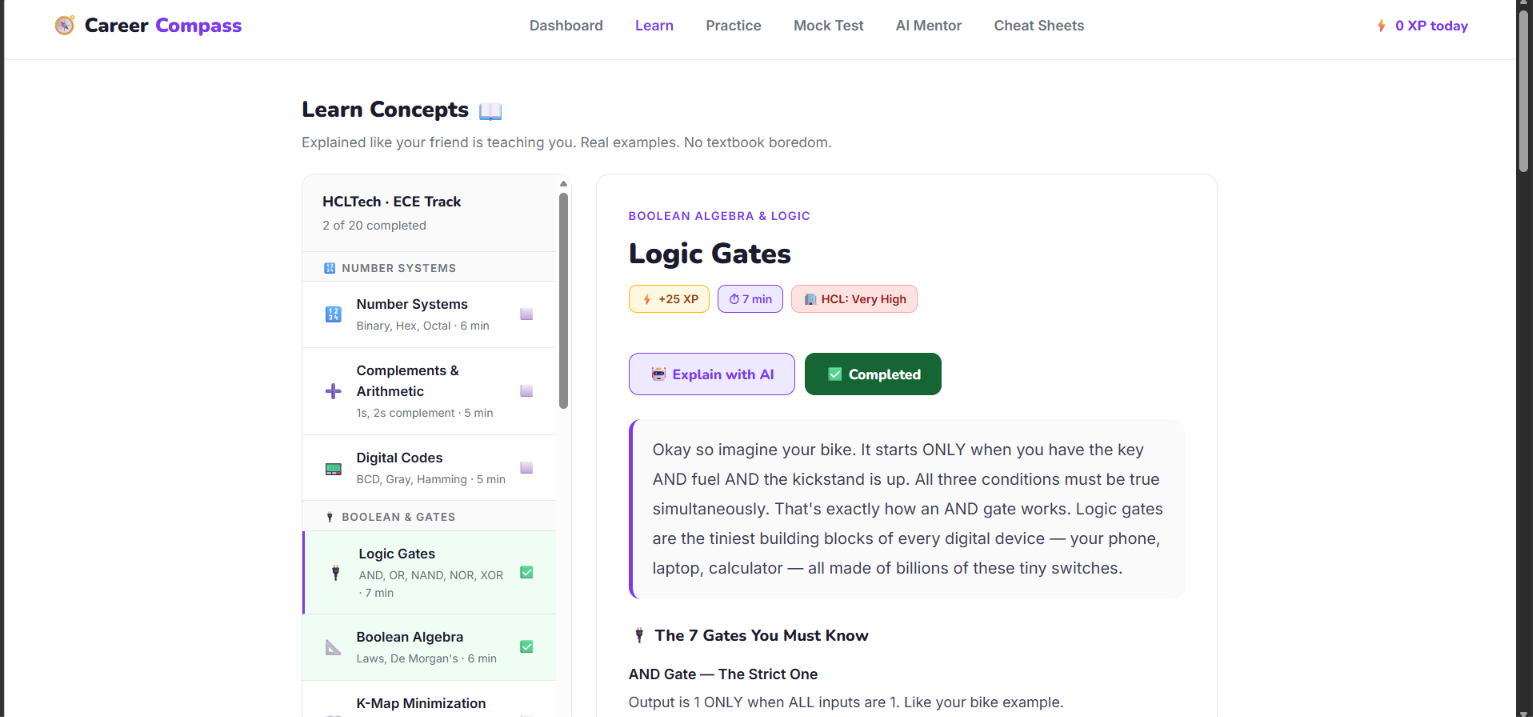
What it does:- CareerCompass is a personalized, AI-powered placement coach for ECE students:
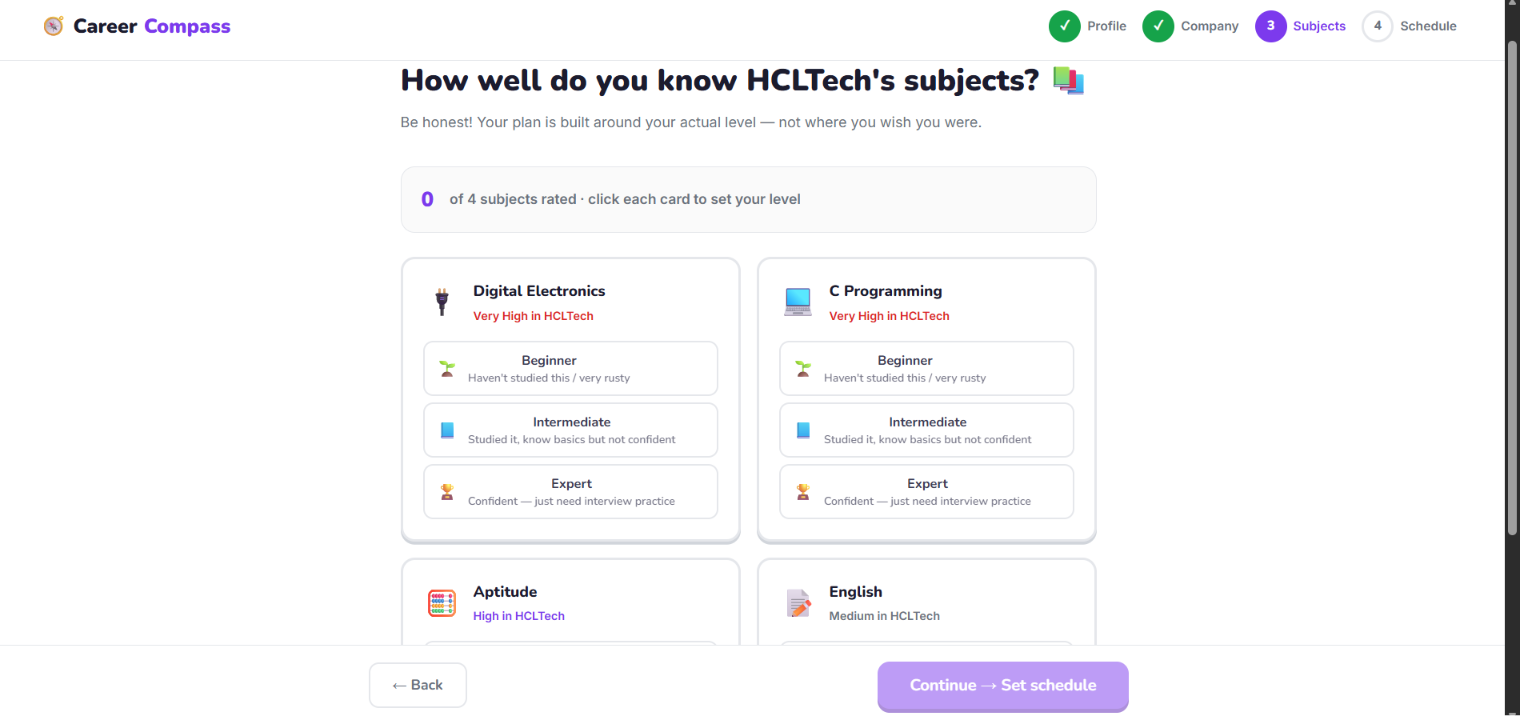
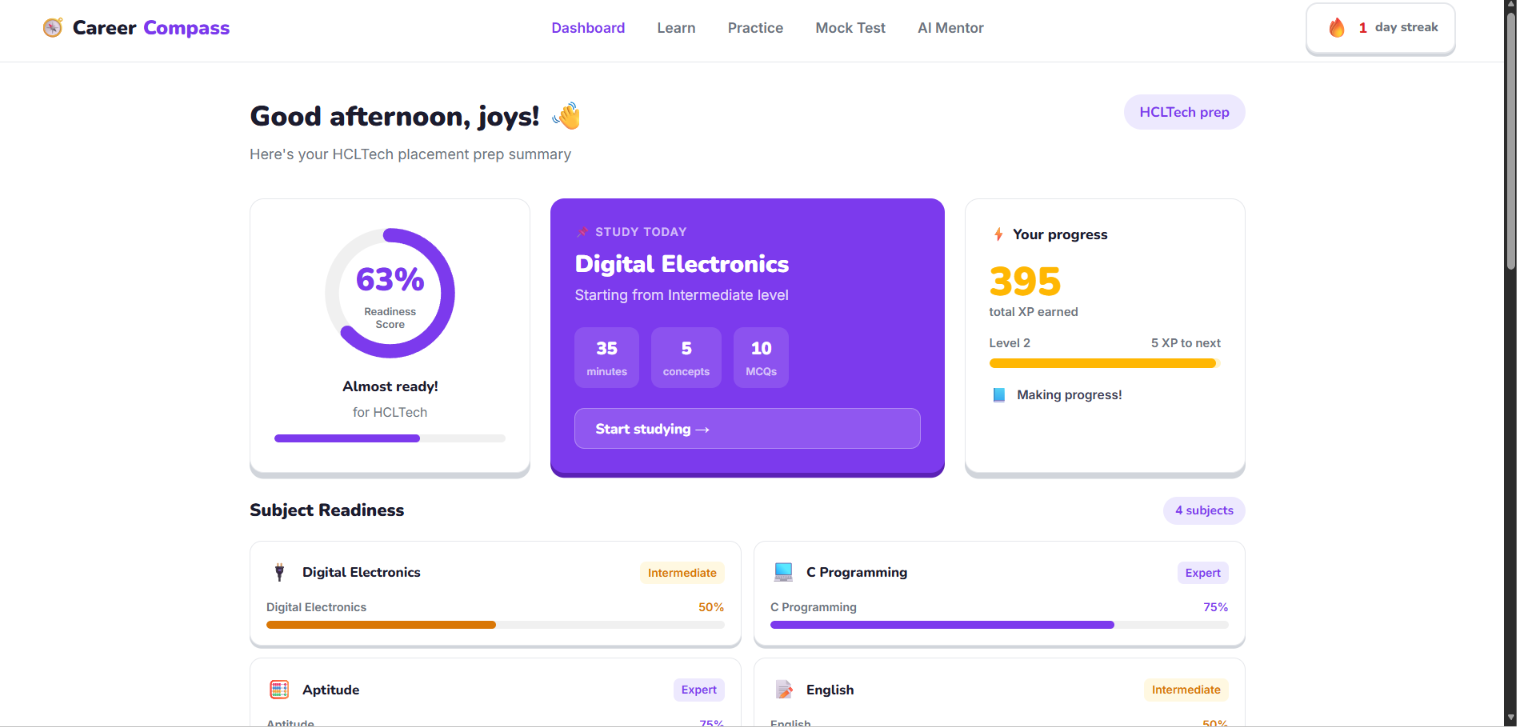
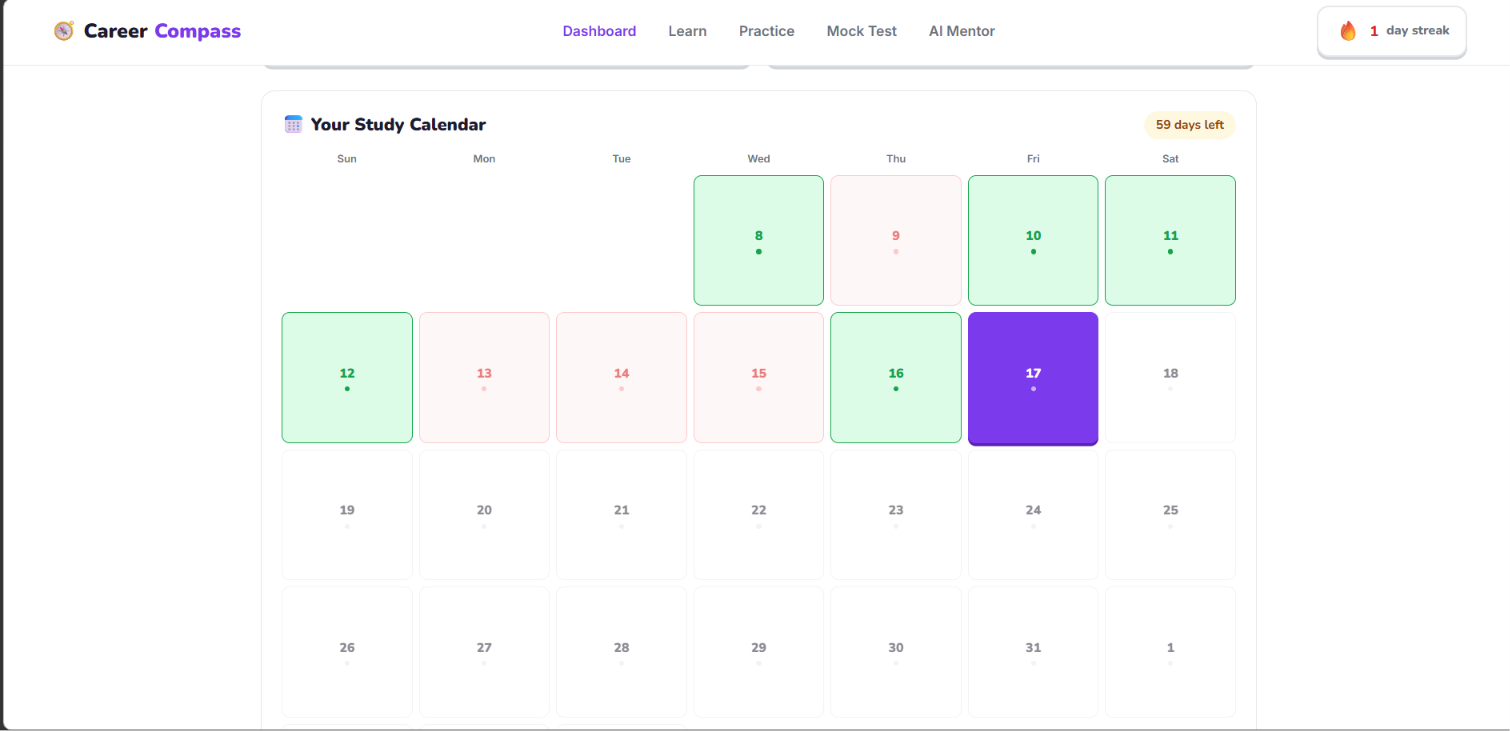
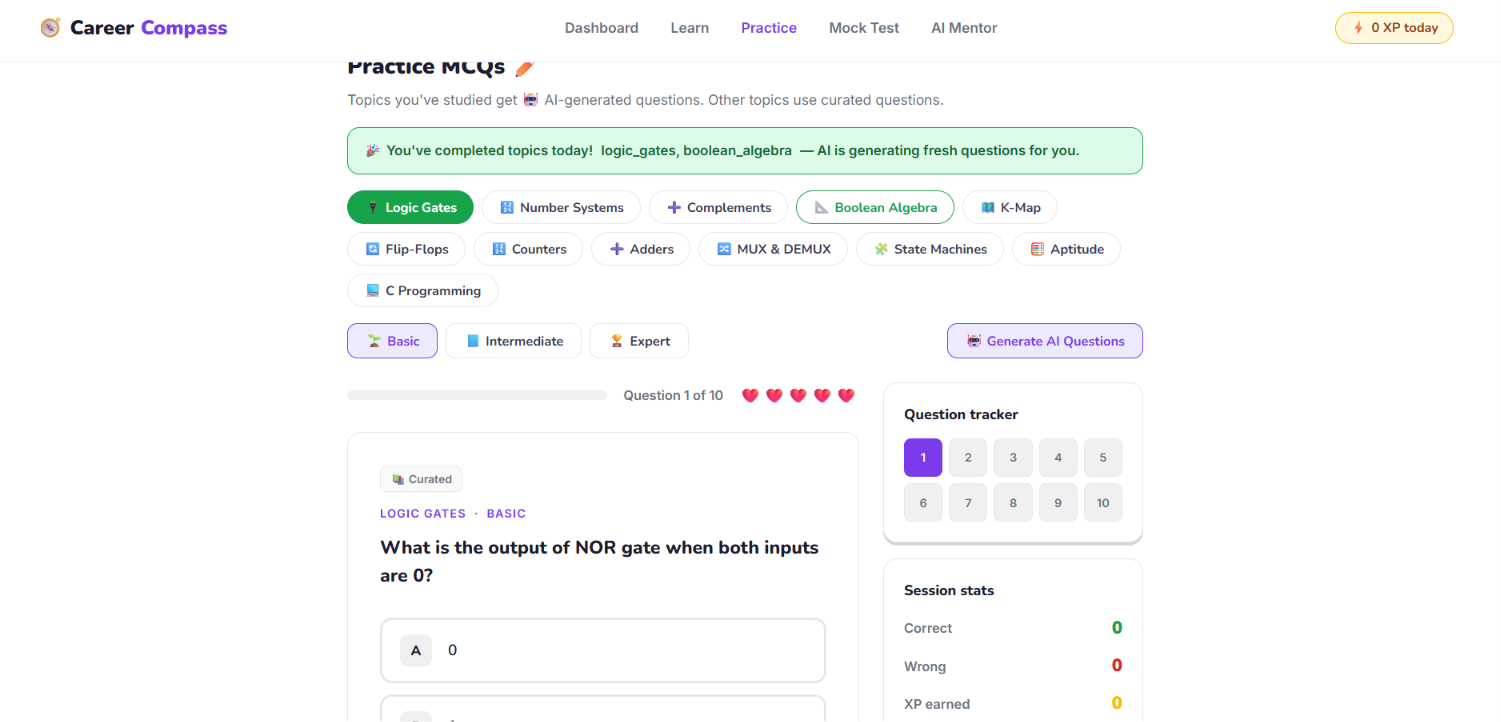
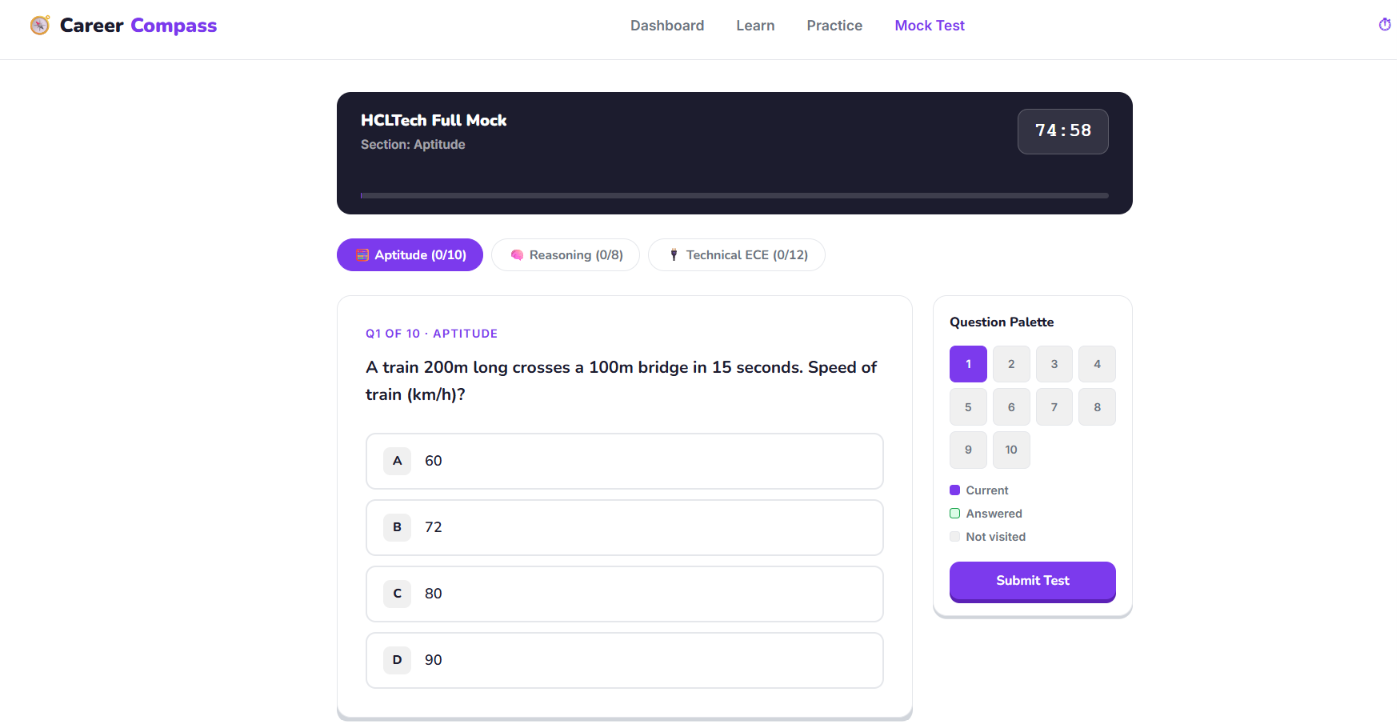
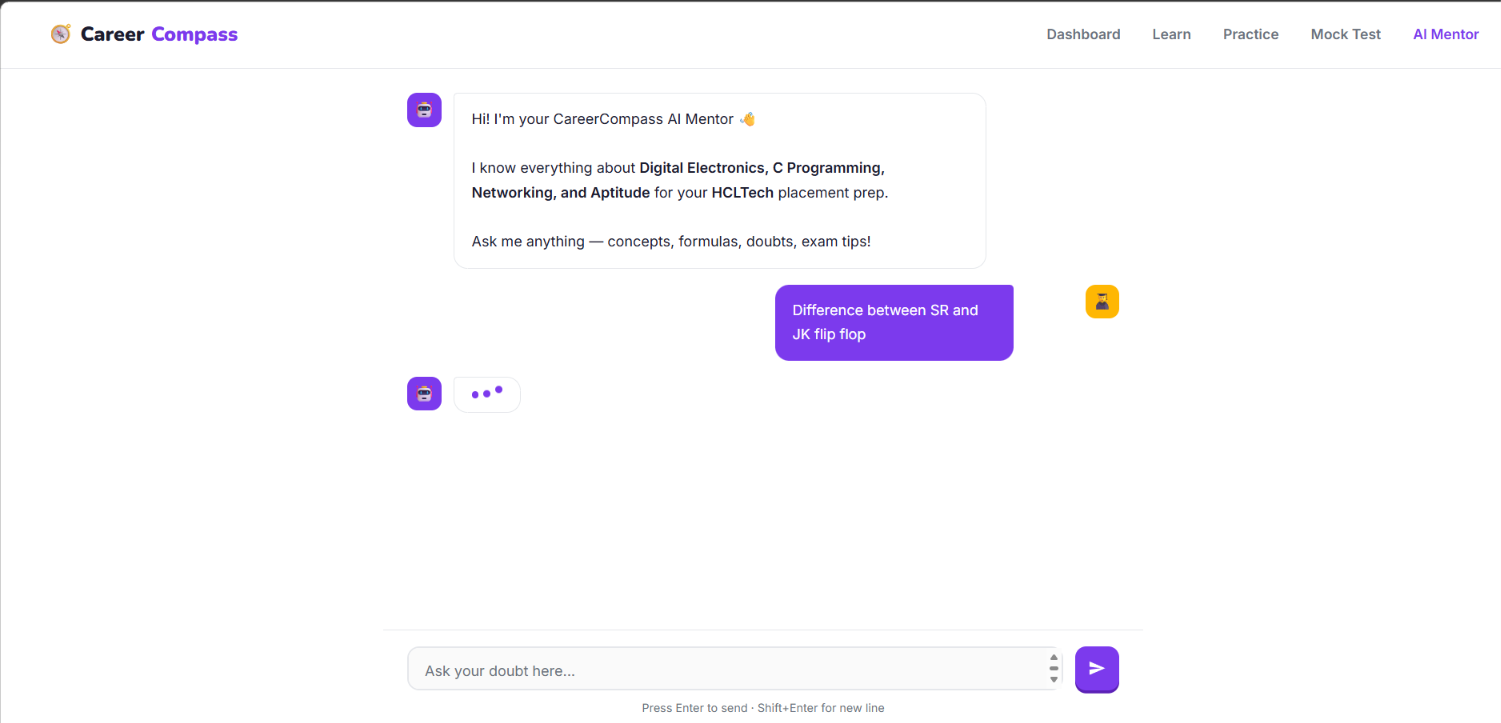
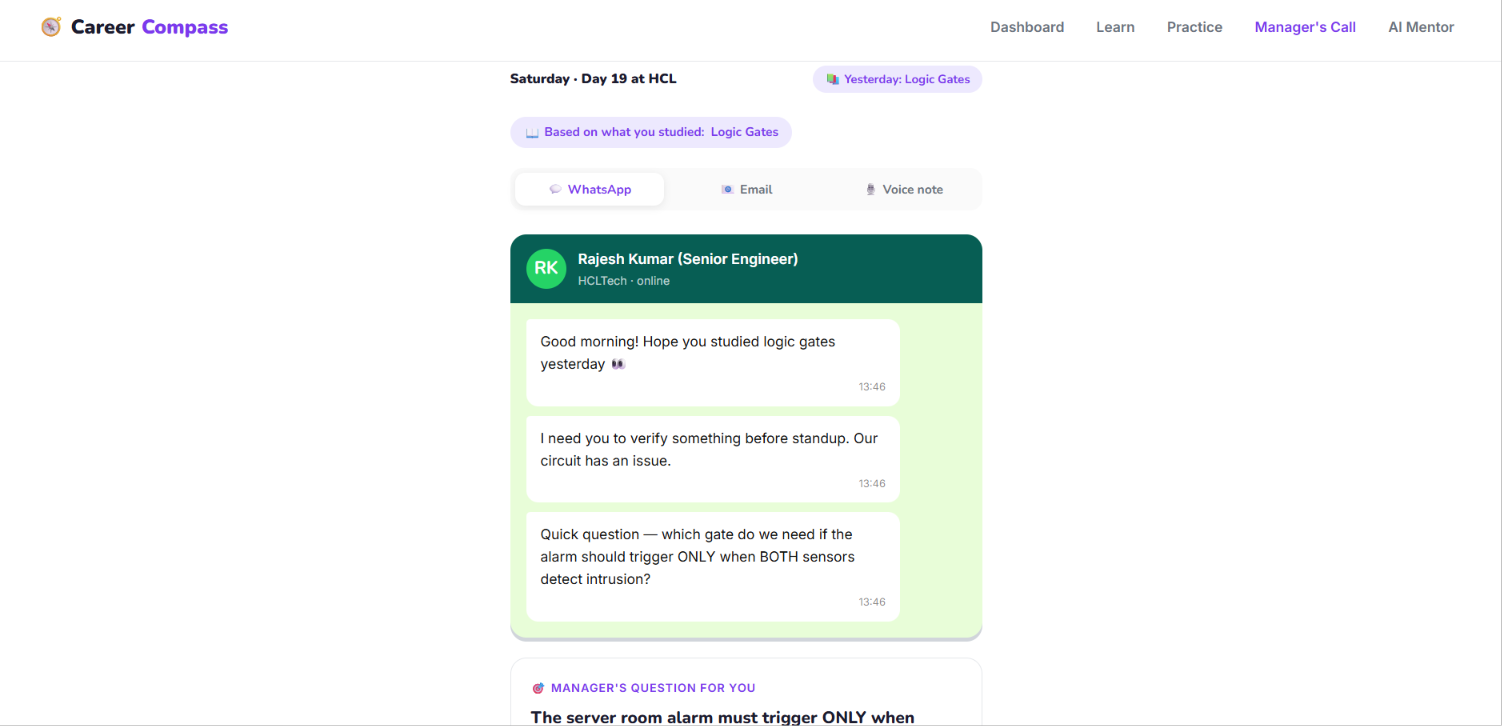
Company-specific roadmaps -> pick HCL, TCS, Qualcomm, etc., and get exactly the subjects and weightage that company actually tests Self-assessed learning paths -> rate yourself Beginner to Expert per subject; the roadmap adapts to where you actually are RAG-powered AI Mentor -> ask any doubt and get answers grounded in a curated ECE knowledge base (Digital Electronics, C, OS, DBMS, Networking), not random internet results Gamified practice -> streaks, XP, a 3-heart system, and a live "readiness score" that climbs after every session "Manager's Call" -> our signature feature. Every morning, the app delivers a workplace scenario built from what you studied yesterday, disguised as a WhatsApp text, an email, or a voice note from a fictional HCL manager. Same concept you learned, real workplace stakes — turning revision into a habit instead of a chore.
How we built it:- We went from zero to a working prototype in stages:
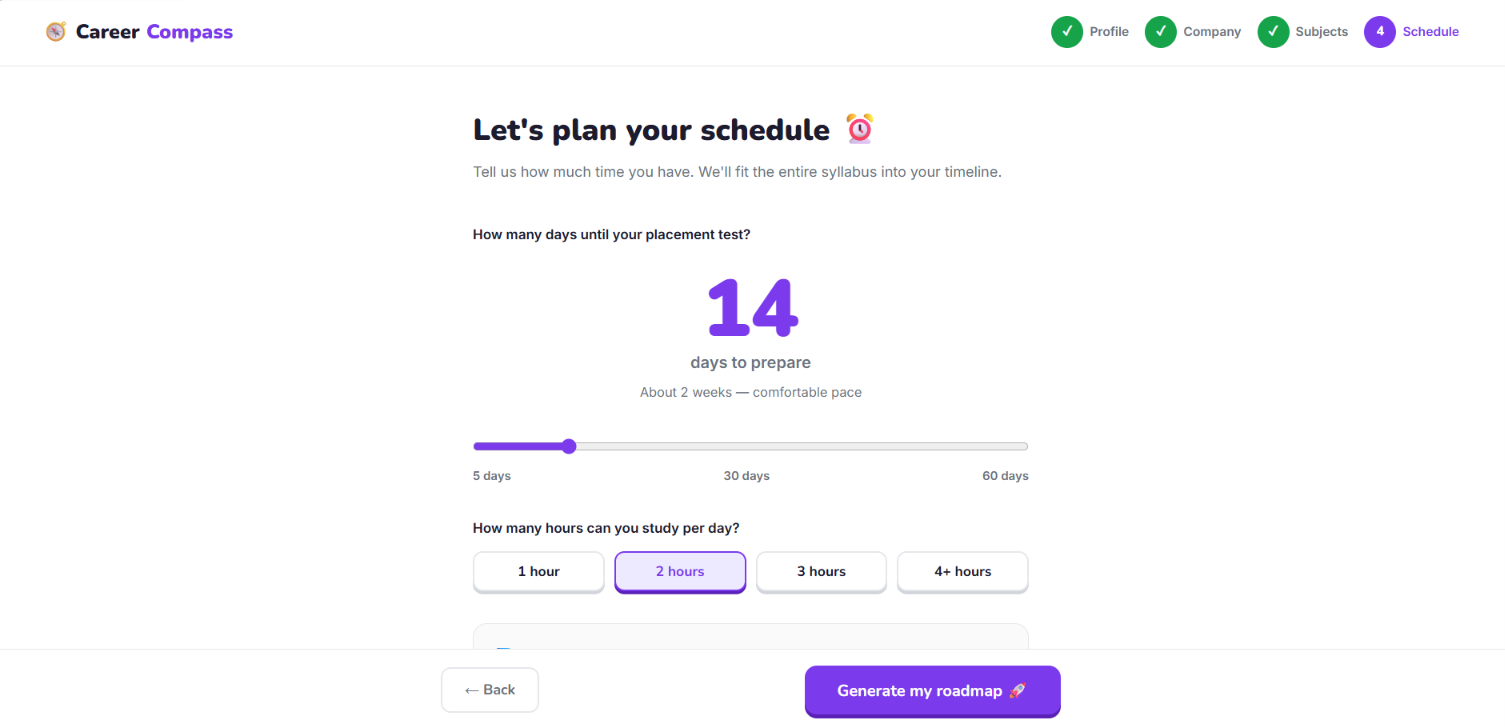
Understanding RAG itself before writing code, we had to genuinely understand what Retrieval-Augmented Generation is: an LLM answering from a vectorstore of your own documents instead of guessing from general training data. Backend first, data-heavy Flask + SQLite for users, progress, XP, and streaks. We deliberately built the data layer (JSON syllabus files, MCQ banks, Morris Mano-level concept notes) before touching the frontend, so every screen had real content to render instead of placeholder text. The RAG pipeline knowledge base .txt files chunked with LangChain's RecursiveCharacterTextSplitter, embedded with HuggingFace's all-MiniLM-L6-v2, and stored in ChromaDB. Queries retrieve the top-k relevant chunks, which get passed to Groq's Llama 3.1 for fast, grounded responses. The frontend a Duolingo-inspired, Odoo-inspired multi-page flow (sign up → pick company → rate subjects → set schedule → dashboard → learn → practice → AI mentor → Manager's Call), styled to feel alive rather than like a static exam portal. The gamification layer hearts that break with animation on wrong answers, XP that pops on correct ones, streaks that reset if you skip a day all engineered to make studying feel like play.
Challenges we ran into:-
Learning RAG from scratch going from "what even is an agent" to a working retrieval pipeline in a short timeframe meant a lot of trial, error, and re-reading. Environment pain on Windows PowerShell not behaving like curl, a leaked API key that had to be rotated immediately, Flask's auto-reloader crashing mid-request and killing chat responses, and a slow first response caused by re-loading the embedding model on every call. Each of these took real debugging, not just code we had to learn to read stack traces, isolate whether the problem was frontend, backend, or the model itself. Making AI-generated content trustworthy a generic LLM answer isn't good enough for exam prep. We had to constrain every response to our curated knowledge base and explicitly prompt for HCL-style exam tips, not textbook paragraphs. Designing "Manager's Call" without it feeling gimmicky the challenge wasn't generating a scenario, it was making the same underlying MCQ feel like a real workplace stake instead of a reskinned quiz.
What we learned:-
RAG isn't magic it's a librarian. It searches your own documents for the most relevant paragraph and hands that to the LLM, instead of letting the model guess from the entire internet. Once that clicked, everything else (chunking, embeddings, top-k retrieval) made sense. Data comes before UI. We learned the hard way that building beautiful screens with no real content behind them just means redesigning everything twice. Small engineering fires teach you more than smooth deploys. Debugging a Flask reloader wiping out an in-flight request taught us more about how the framework actually works than any tutorial would have. The feature that makes a product feel different is rarely the most technically complex one. Manager's Call reuses the exact same RAG pipeline as the AI Mentor the difference is entirely in framing and emotional stakes, and that's what people remember.
What's next:- Expanding beyond HCL to TCS, Infosys, and Qualcomm; adding a full mock-interview simulator; and piloting with our own college's placement cell to validate the readiness-score model against real placement outcomes.
Built With
- css3
- github
- html5
- javascript
- langchain
- machine-learning
- python
- rag
- sql
- vectordb
- vs

Log in or sign up for Devpost to join the conversation.