-
-
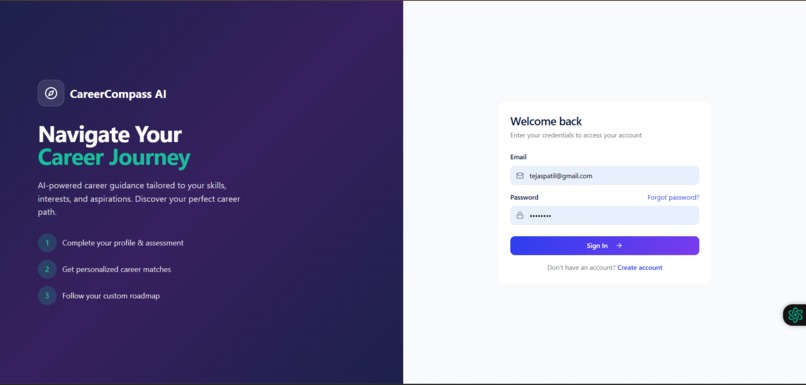
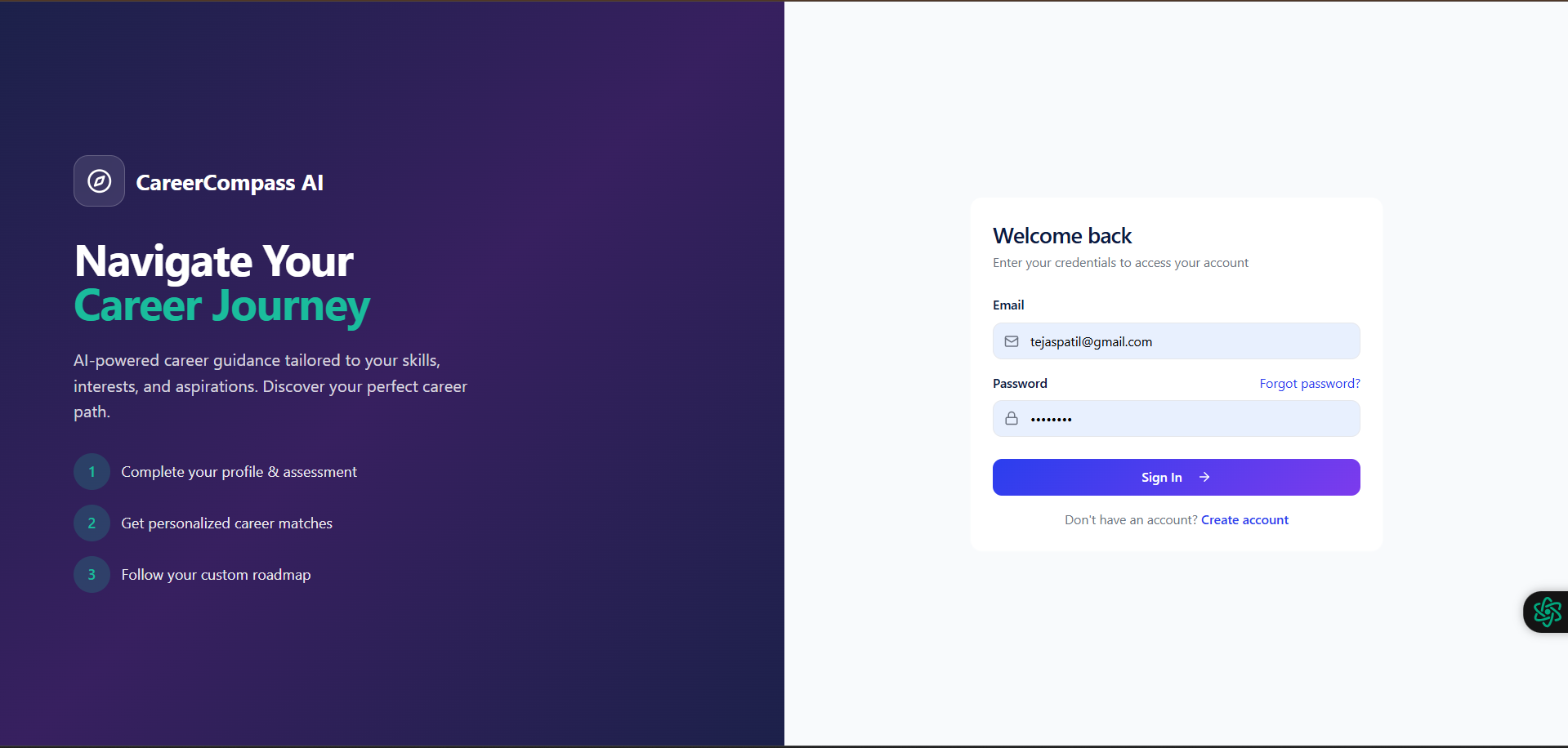
Login page with proper authentication
-
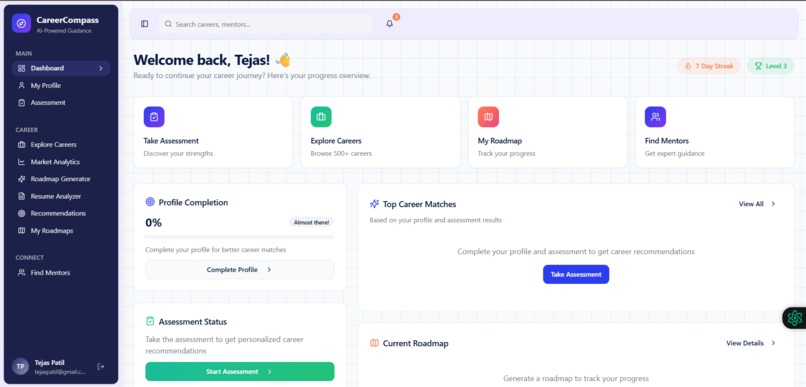
home page
-
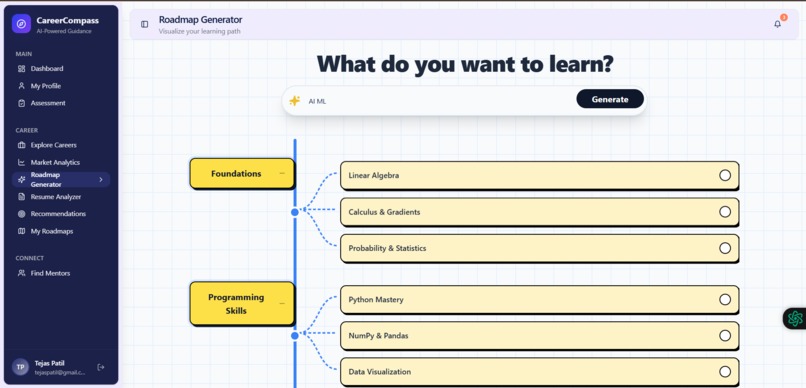
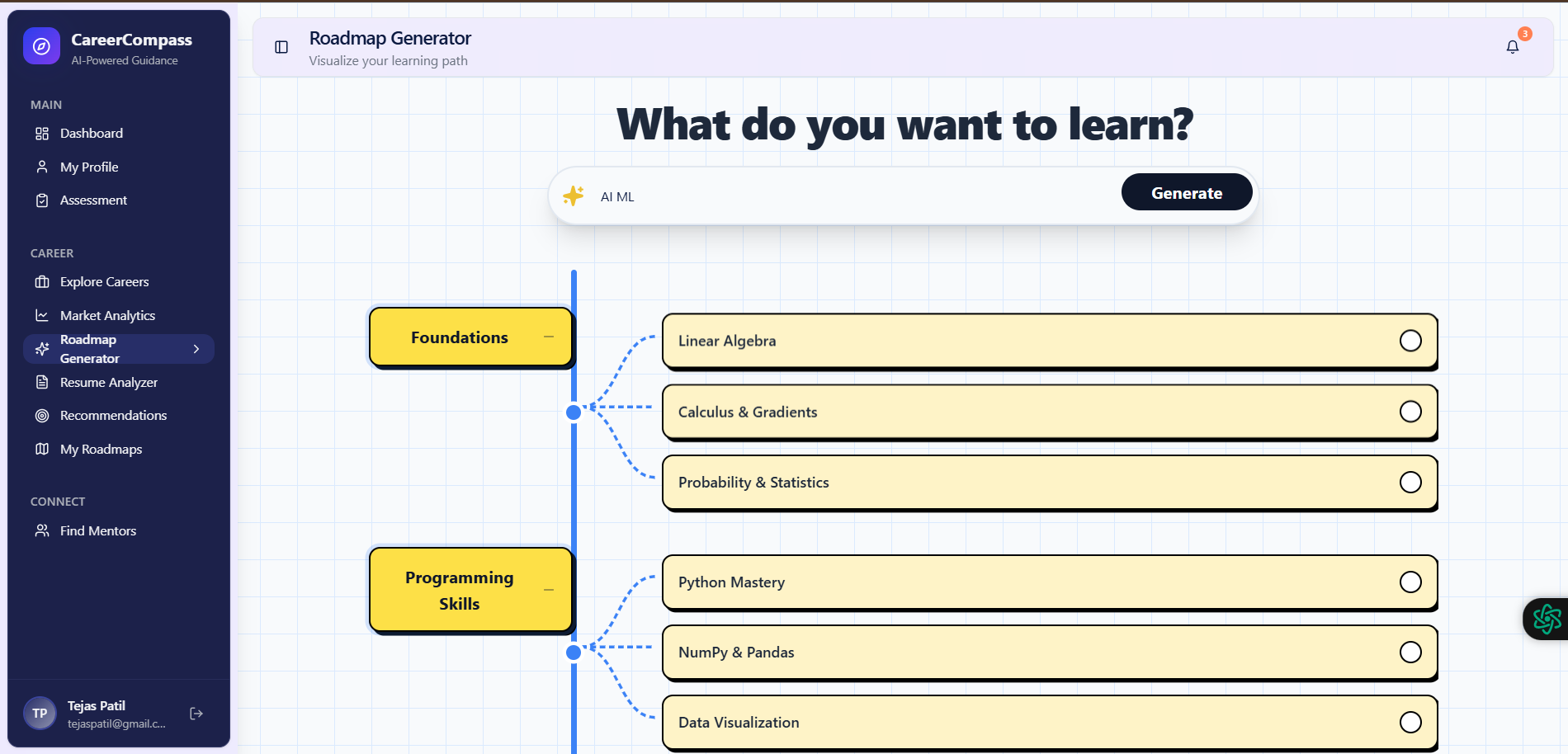
AI roadmap generator with personalized data
-
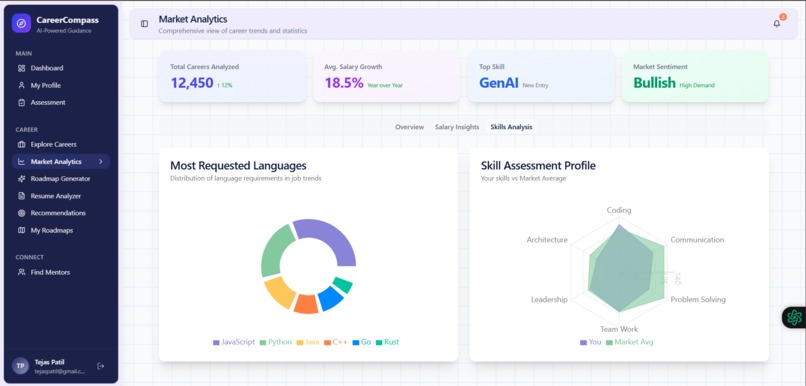
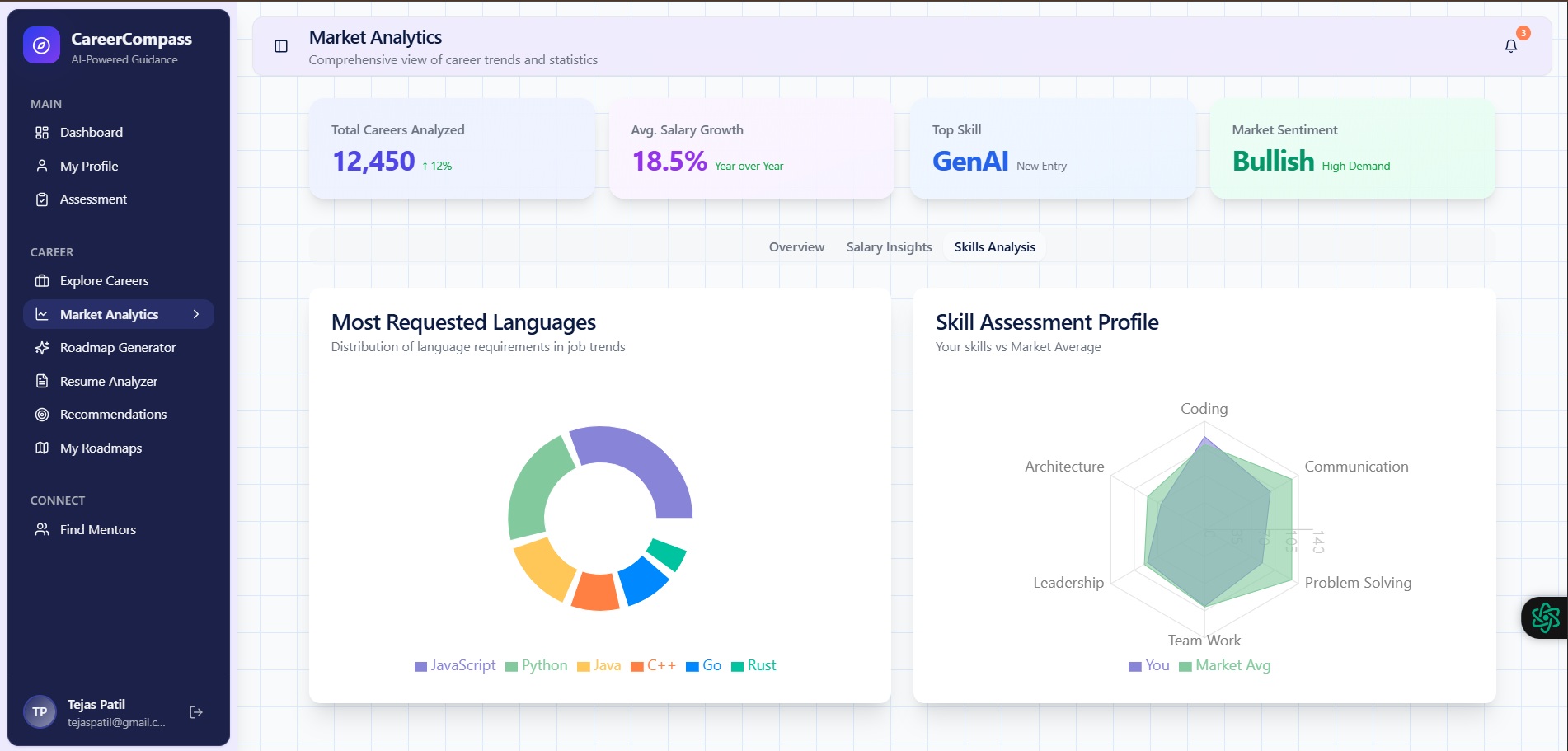
grasps with authenticated data
-
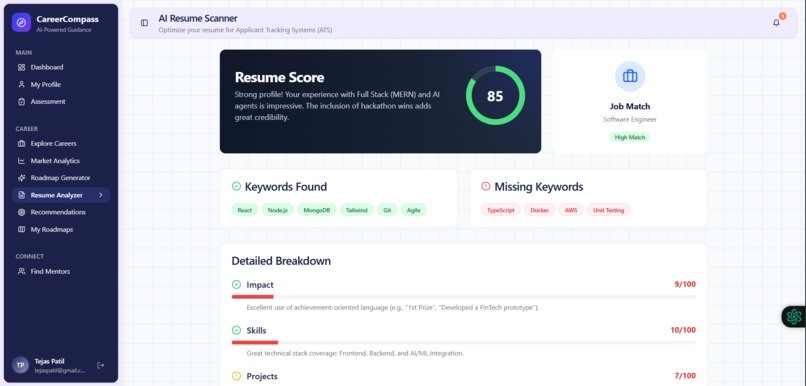
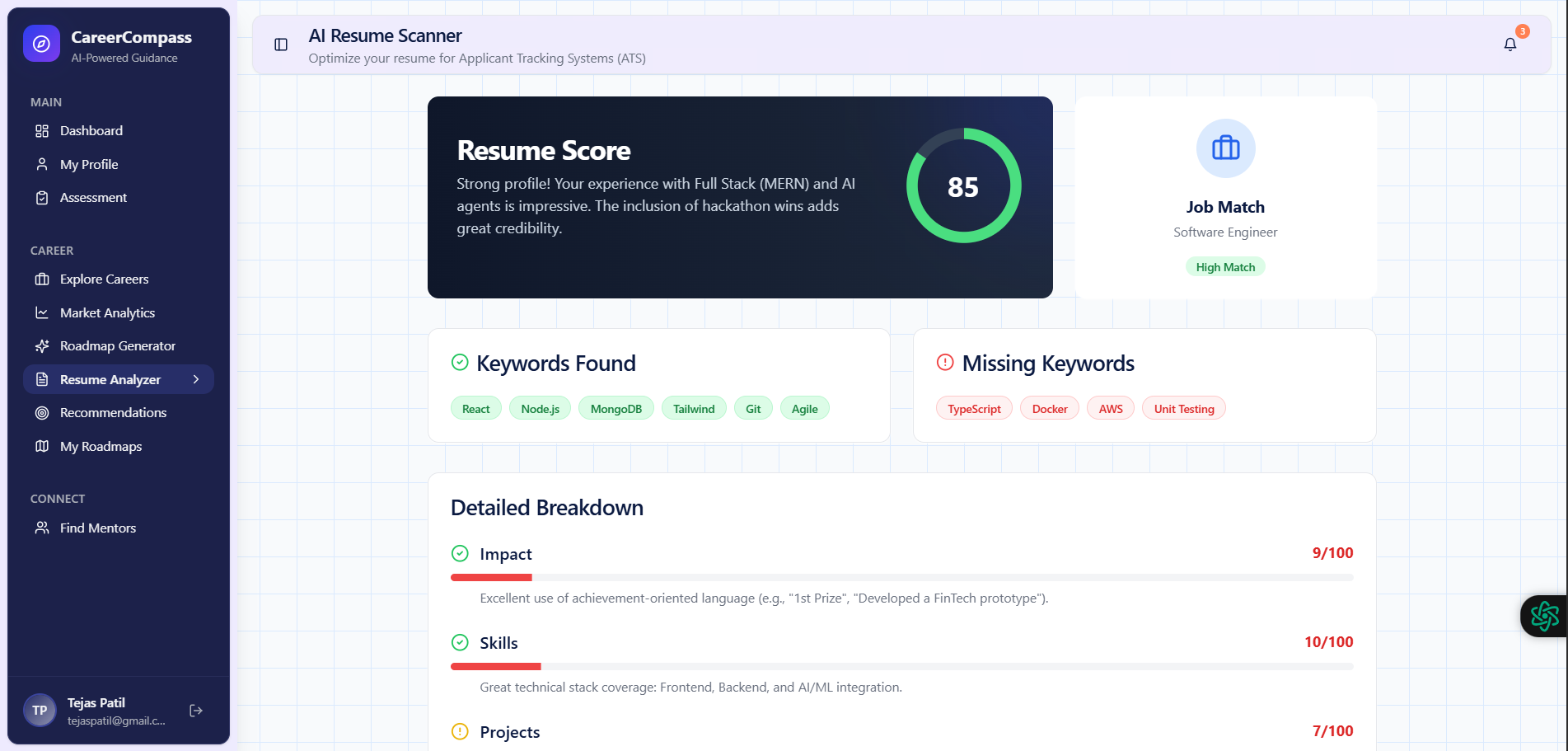
resume compressor
-
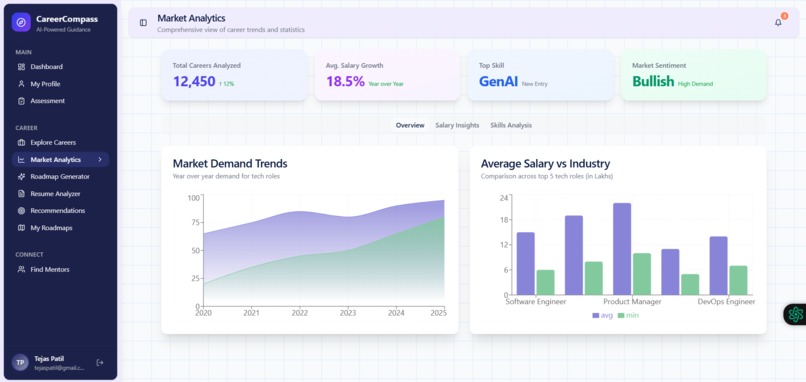
graps
-
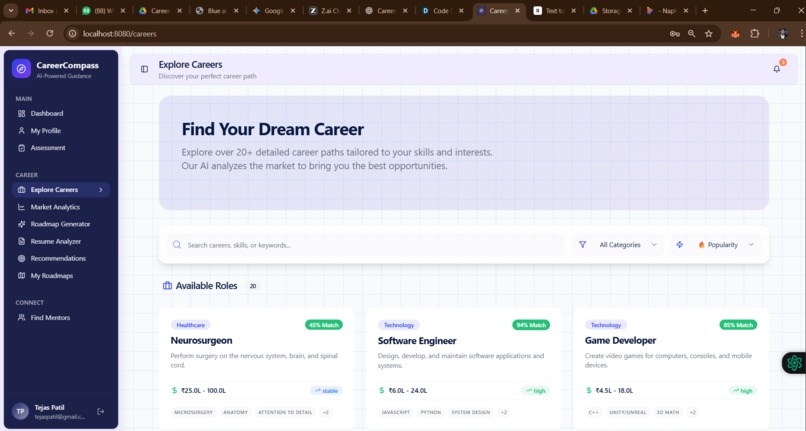
Find companies sorted by profile.
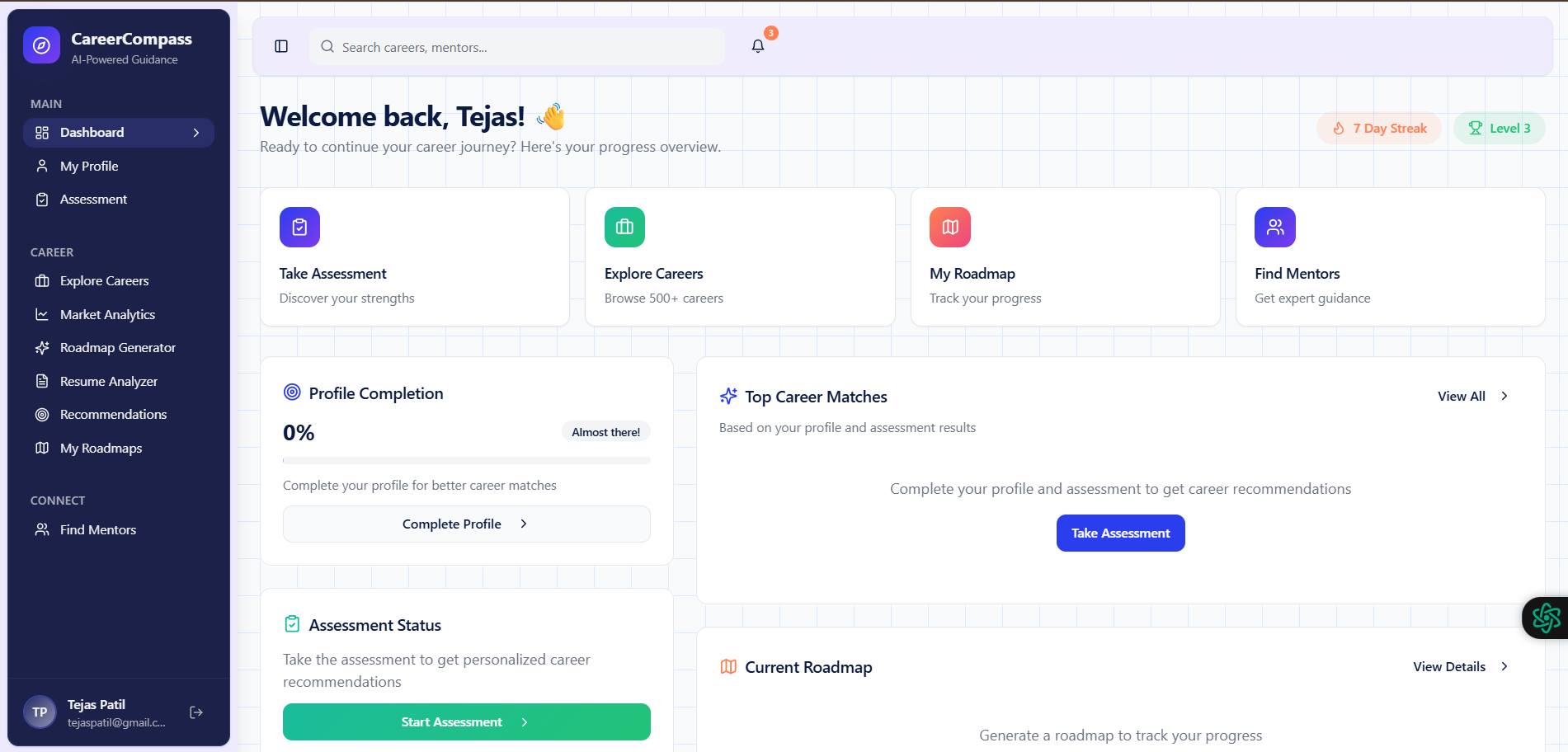
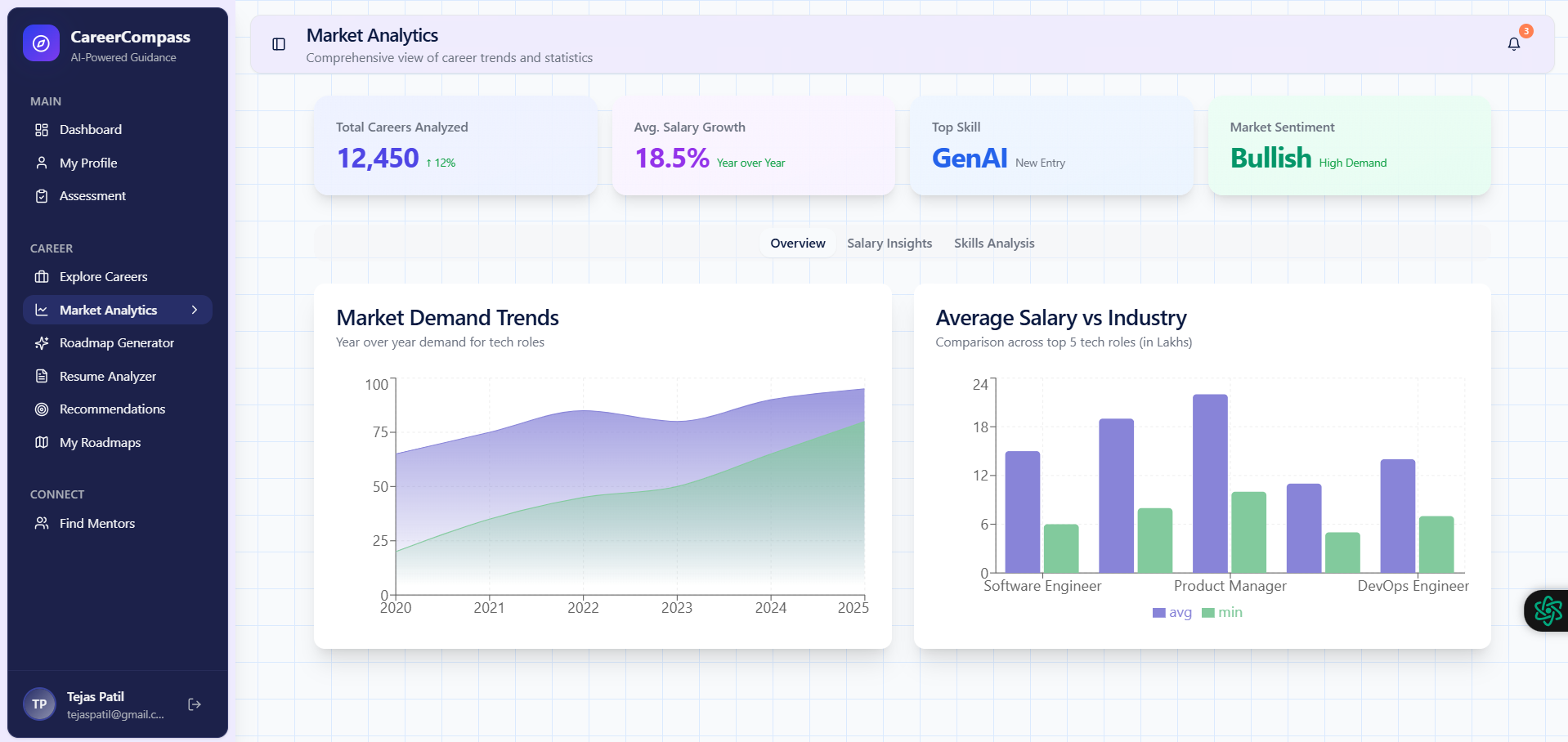
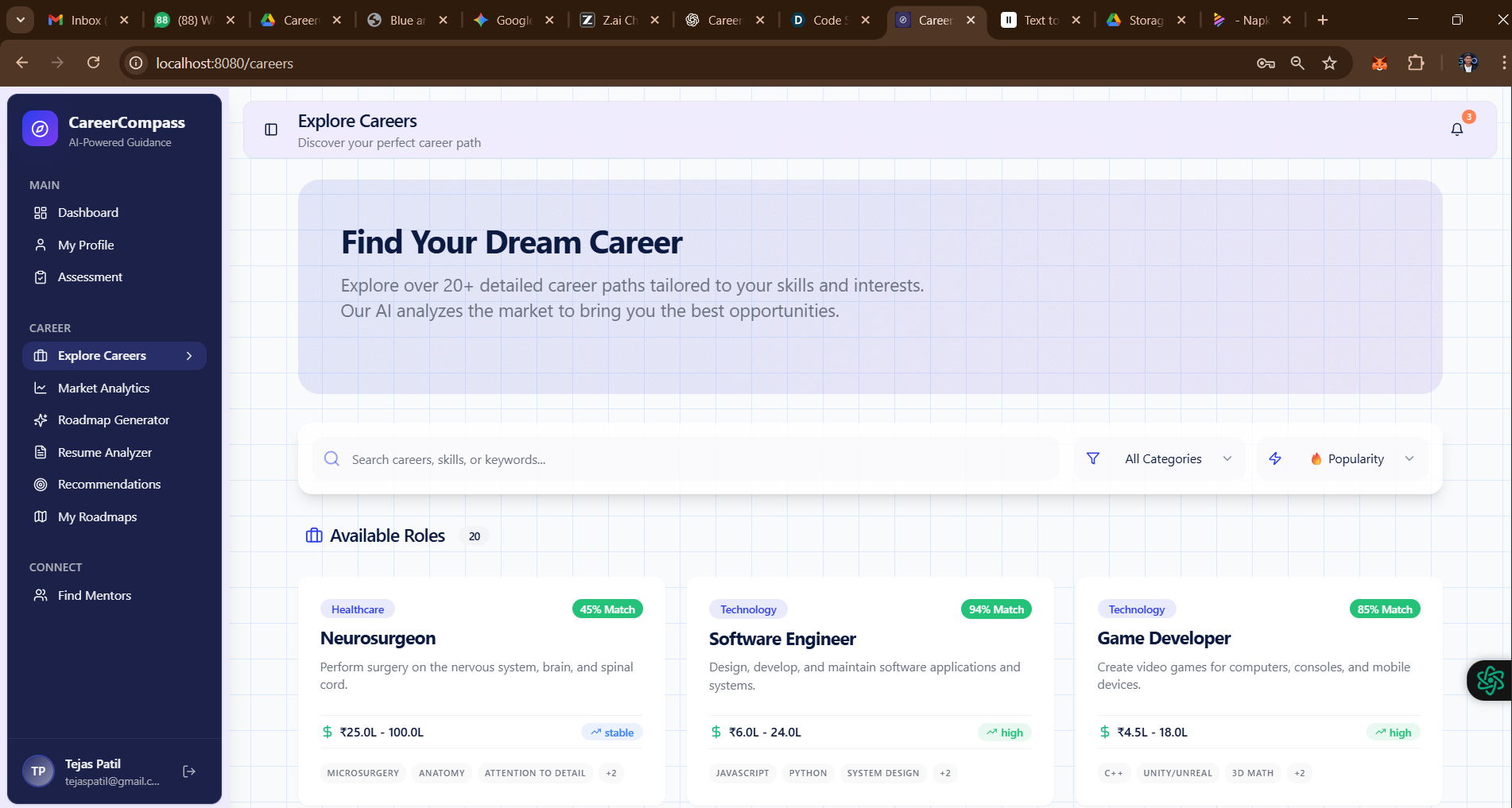
Inspiration We've all been there: staring at a blank screen, wondering, "What career is actually right for me?" or "Why aren't I getting callbacks?"
The inspiration for CareerCompass came from the "Career Clarity Crisis". We noticed a massive disconnect between academic curriculums and industry demands. Students graduate with degrees but lack the specific roadmaps to land their dream roles. We realized that while job boards exist, true guidance was missing. We wanted to democratize access to elite career counseling by building an intelligent agent that doesn't just list jobs, but actively helps you prepare for them.
What it does CareerCompass is an intelligent career guidance platform that serves as a GPS for your professional journey.
Smart Resume Analysis: Users upload their resumes, and our NLP engine parses them to extract skills, experience, and education. AI-Powered Recommendations: Using brain.js and ml-kmeans, the system matches user profiles against comprehensive career datasets to suggest the most suitable career paths. Skill Gap Detection: It doesn't just tell you where to go; it tells you how to get there. The system identifies exactly which skills a user is missing for their target role. Interactive Roadmap: Users get a visual, step-by-step roadmap to bridge those gaps, effectively turning career planning into a manageable, data-driven checklist. How we built it We built CareerCompass as a modern MERN Stack application with a heavy emphasis on AI integration within Node.js.
Frontend: We used React (Vite) for a blazing fast UI, styled with Tailwind CSS and Shadcn UI to ensure the design felt premium and accessible. Recharts was used to visualize the career data. Backend: The core logic lives in an Express.js server. The AI Engine: This was the most exciting part. Instead of relying standard APIs, we implemented lightweight ML models directly in our backend: natural: Used for tokenization and stemming to process text from resumes. brain.js: We experimented with neural networks to classify user profiles. ml-kmeans: Used for clustering similar career profiles to generate recommendations. pdf-parse: To extract raw text user uploads. Database: MongoDB stores our user profiles and the complex relationship data between skills and career paths. Challenges we ran into Messy Data: Parsing PDF resumes is notoriously difficult. Text often comes out unstructured or garbled. We had to write robust cleaning functions to sanitize the input before feeding it to our NLP models. The "Cold Start" Problem: How do you recommend a career to a user with no data? We had to design an onboarding flow that collects just enough initial data (interests, education level) to kickstart the ML recommendation engine. Model Tuning: Balancing the weights between a user's interest vs. their actual skills was tricky. Initially, the system would suggest "Senior Architect" to a freshman because they liked "Design". We had to implement constraints and logic to ensure recommendations were realistic. Accomplishments that we're proud of Functioning NLP Pipeline: Successfully converting a raw PDF upload into structured JSON data (Skills, Education, Experience) was a huge win. The UI/UX: We are really proud of the "Premium" feel of the dashboard. It doesn't look like a hackathon project; it looks like a SaaS product. Speed: By keeping the ML models lightweight and local to the Node server, our recommendation engine is incredibly fast compared to calling external heavy AI APIs. What we learned AI is powerful, but Logic is King: We learned that AI models need strong heuristic guardrails. Pure ML can sometimes give wild results without business logic to ground it. The Power of Ecosystems: Integrating libraries like brain.js showed us that JavaScript is more than capable of handling machine learning tasks for web applications. User Empathy: Building this tool forced us to think deeply about the anxieties students face, shaping our features to be supportive rather than judgmental. What's next for CareerCompass Marketplace Integration: Adding a feature where users can book 1:1 sessions with human mentors for the specific gaps the AI identified. Real-time Job Matching: Scraping live job listings that specifically match the user's "Skills Gained" so far. Gamification: Adding badges and progress streaks to encourage users to keep learning new skills.
Built With
- brain.js
- express.js
- javascript
- ml-kmeans
- mongodb
- natural-nlp
- node.js
- react
- tailwindcss
- vite

Log in or sign up for Devpost to join the conversation.