-
-
THUMBNAIL
-
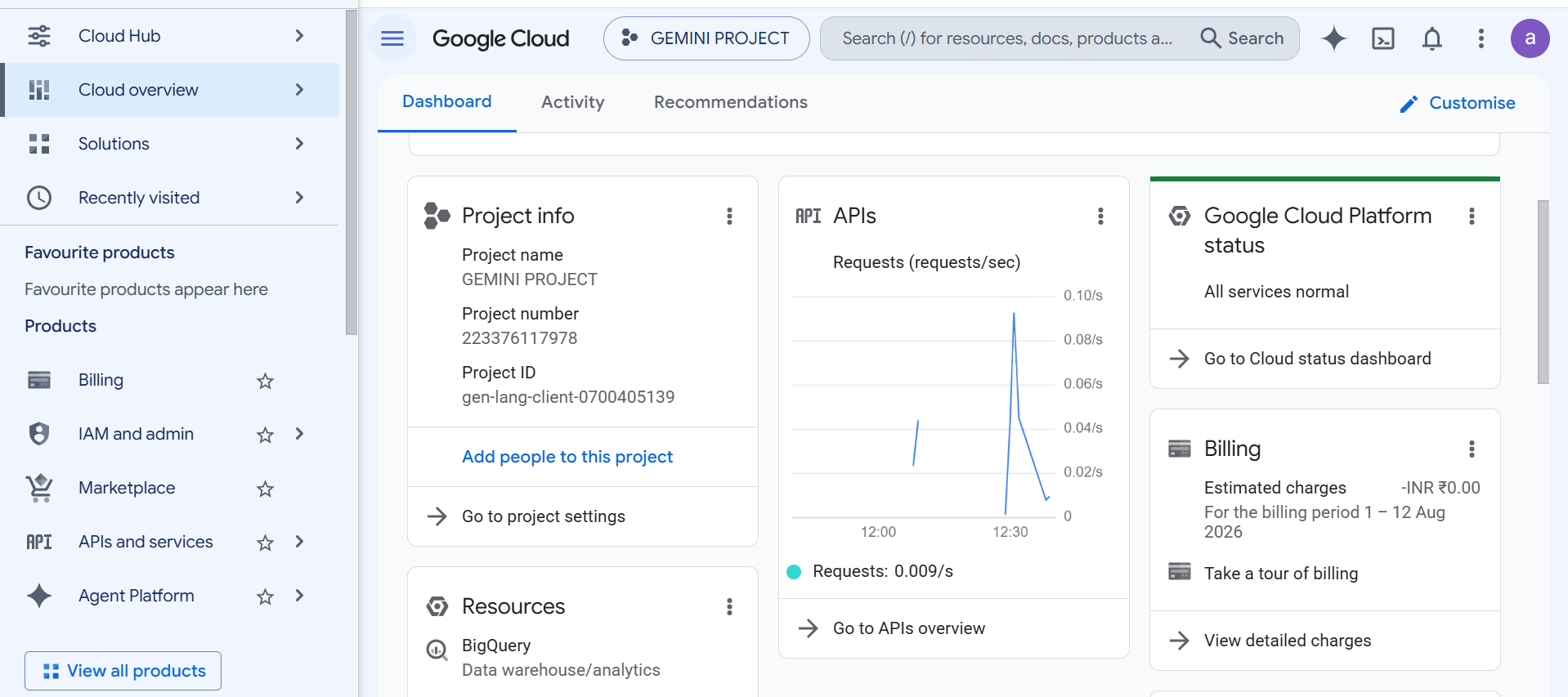
Project overview
-
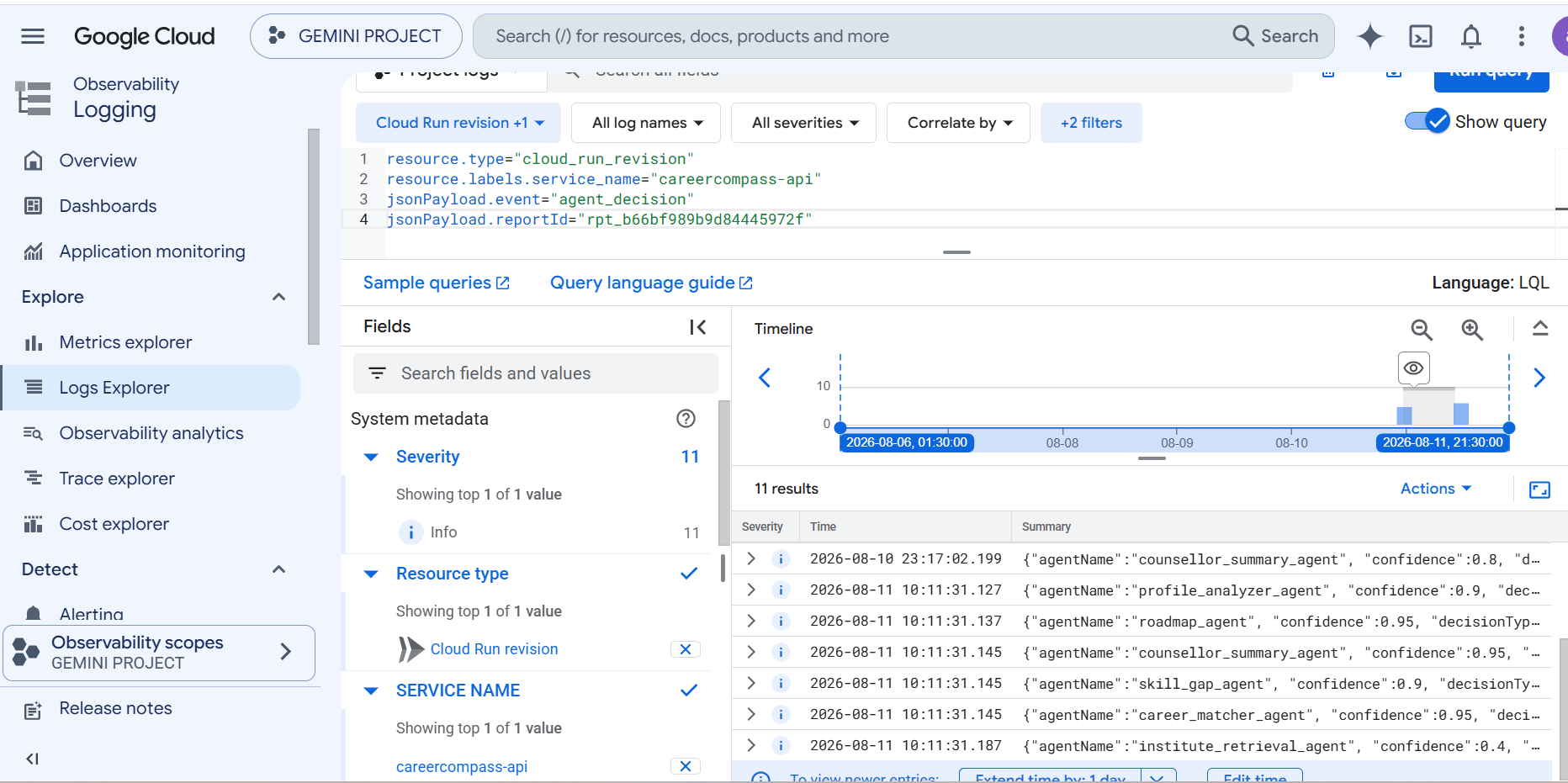
agent logs
-
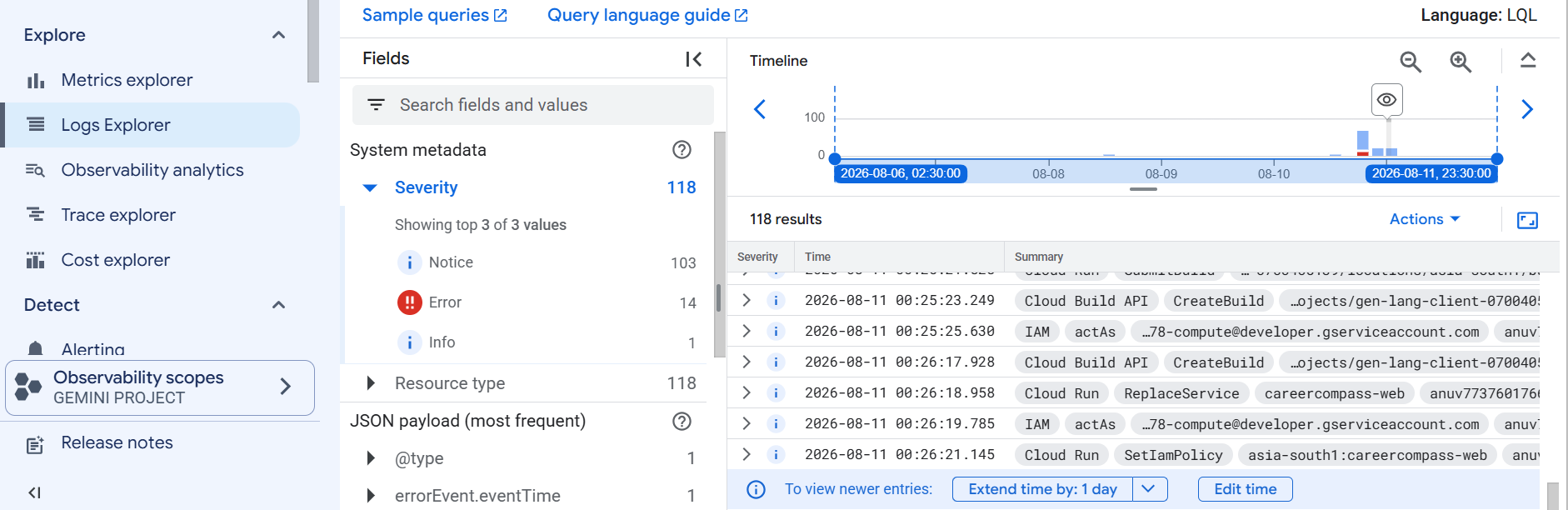
logs
-
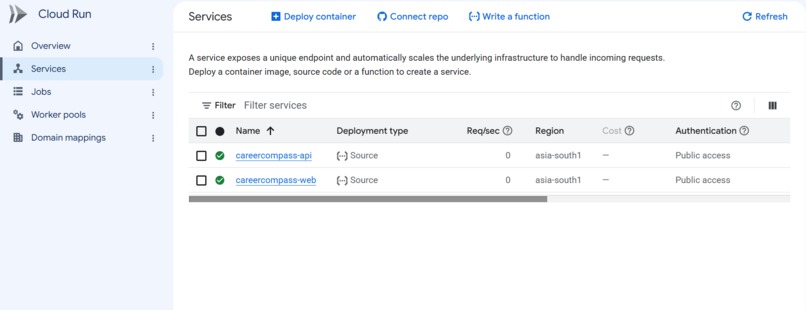
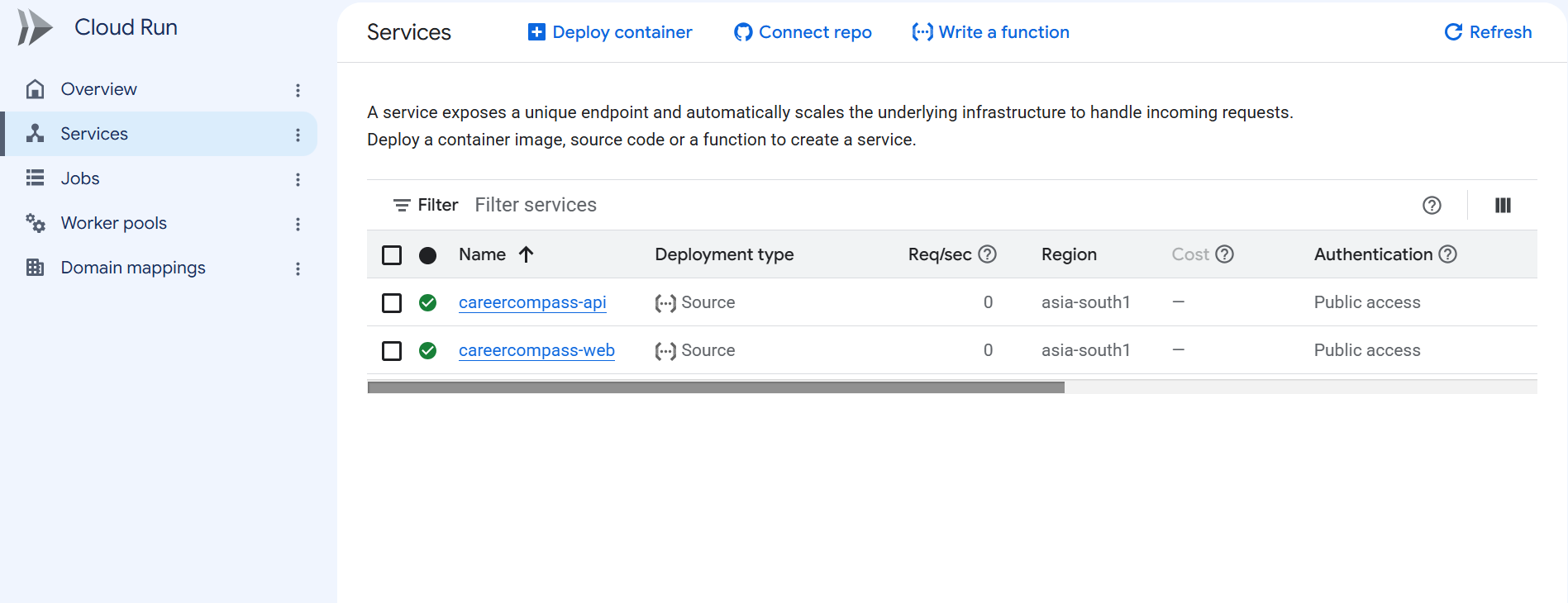
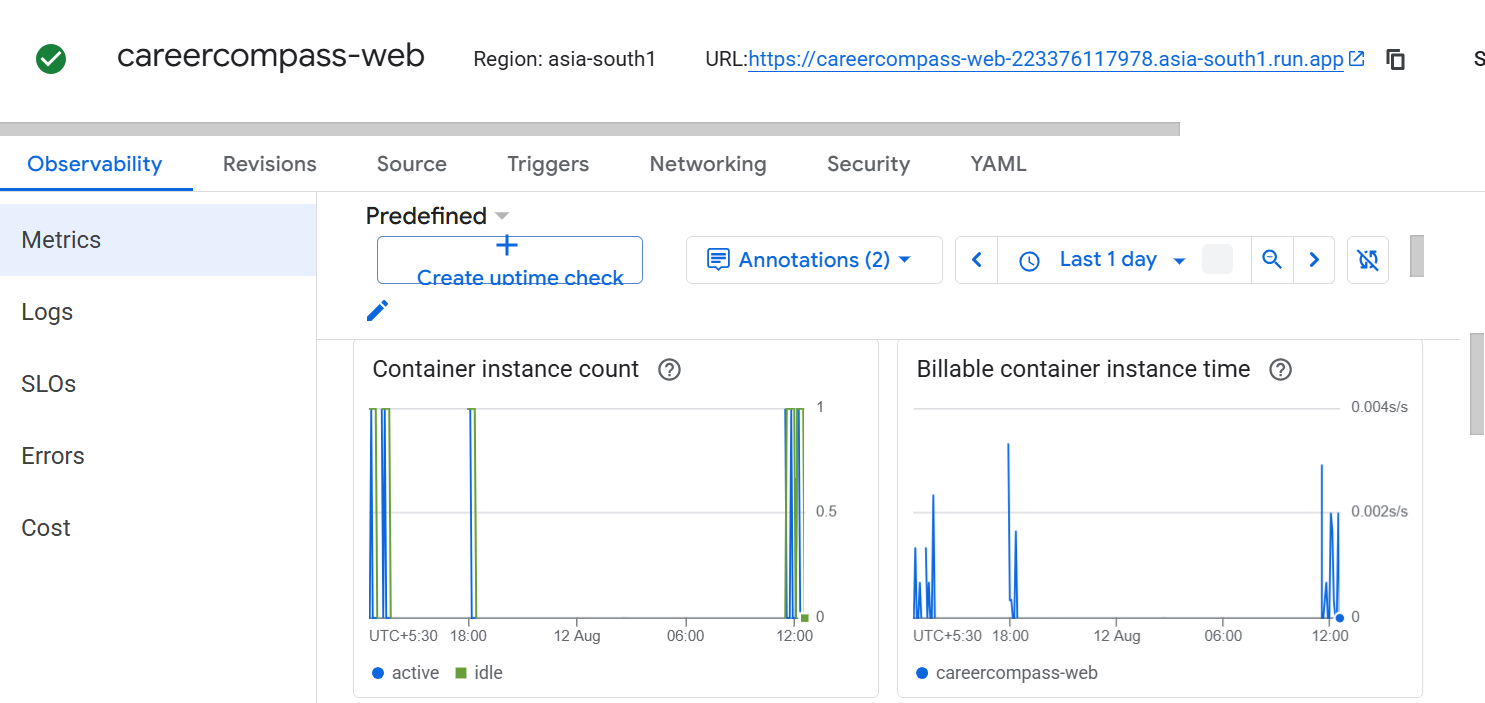
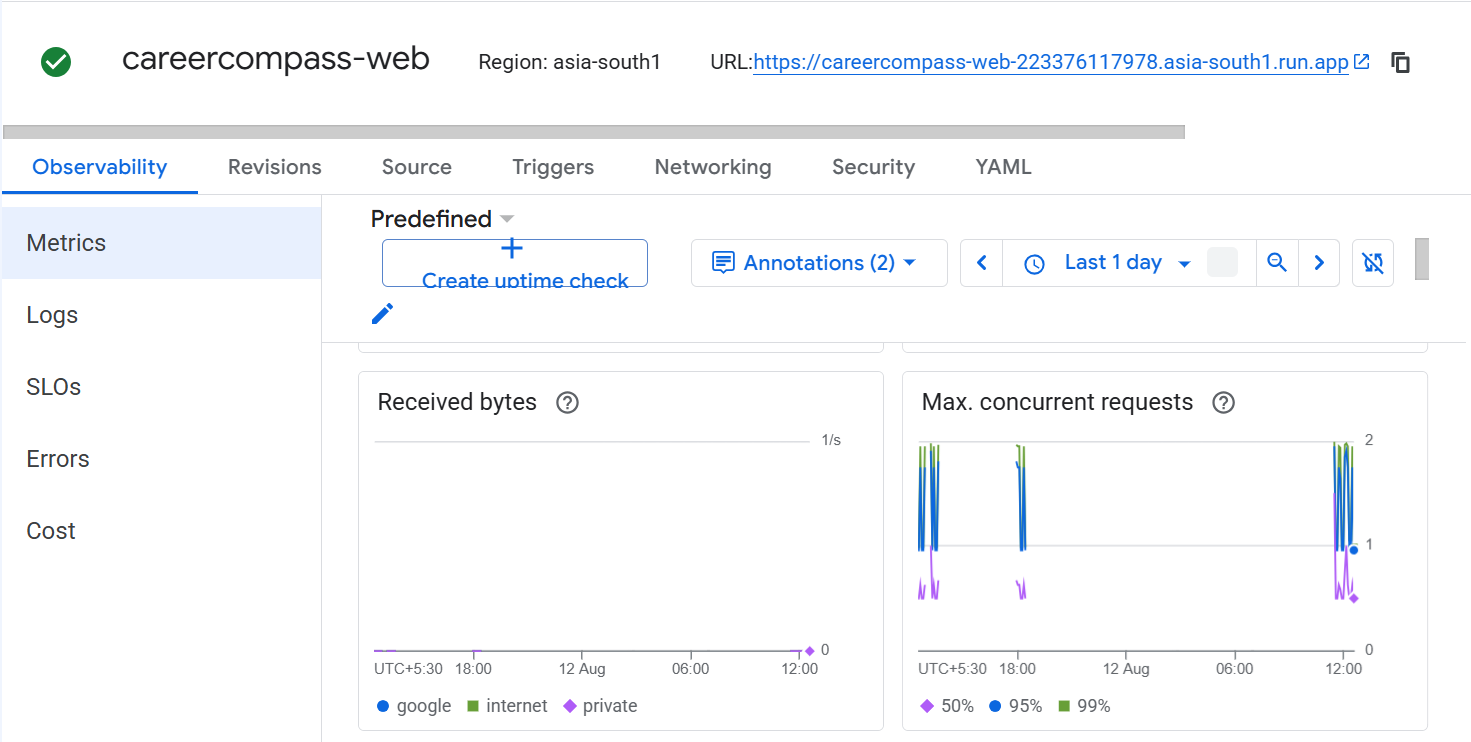
google cloud run
-
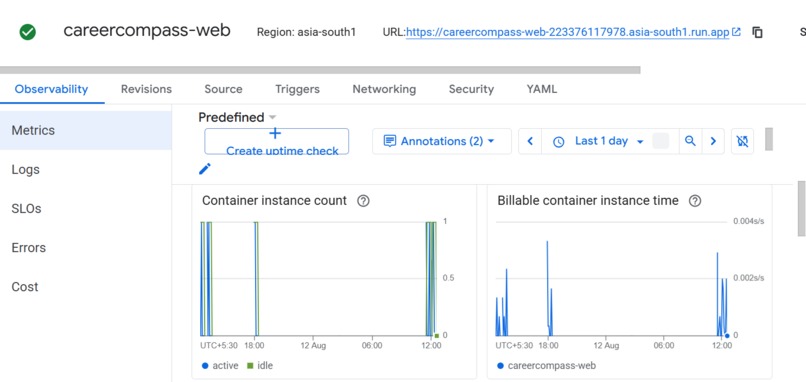
metric
-
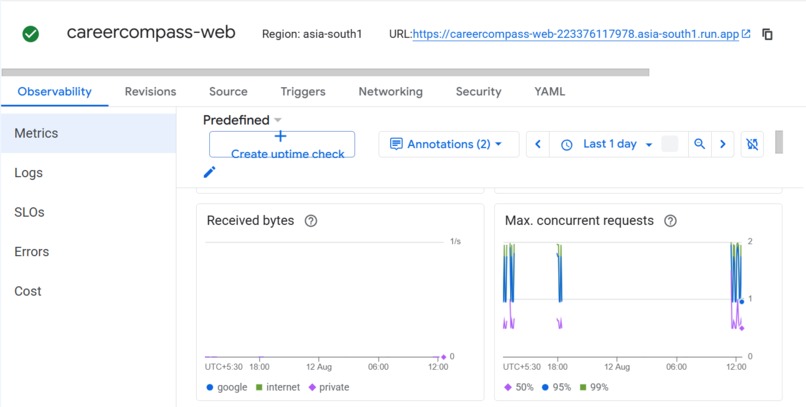
metrics
CareerCompass AI
Category: Education & Human Potential — Transforming how we learn, grow, and achieve our best
Inspiration
A student can spend years preparing for a career that was never right for them. The problem is rarely a lack of ambition; it is a lack of accessible, personalised, and practical guidance when important choices must be made.
International evidence shows the scale of this guidance gap. The latest comparable OECD Survey of Adult Skills reports that approximately 38% of workers have a field-of-study mismatch. In other words, roughly four in ten work in another field. Across participating economies, mismatch ranges from approximately 29% to 49%. This is not a complete worldwide census: the measure covers employed adults aged 25-65 in participating countries and economies and excludes self-employed workers. Nevertheless, it provides a credible international indicator of how often education and employment pathways diverge. Source: OECD Survey of Adult Skills
CareerCompass AI does not assume that everyone should remain in the field they originally studied. Career changes can be deliberate, valuable, and successful. Our motivation is to reduce preventable mismatch caused by limited career awareness, social pressure, generic recommendations, or a lack of accessible information about personal fit, learning pathways, and real-world opportunities. We want learners to make informed choices before committing significant time and money to a direction that may not suit them.
We were especially concerned by how generic career tools treat every learner in almost the same way. Someone interested in Bharatanatyam might be shown accounting or software careers simply because those options are common in a limited catalogue. Learners exploring performing arts, vocational work, biotechnology, design, law, entrepreneurship, or other specialised paths are often pushed toward what is popular rather than what is relevant.
CareerCompass AI was inspired by a simple question: what if every learner could receive an affordable starting point that considers the whole person—their education, interests, skills, work preferences, constraints, ambitions, and location—and then turns those signals into actions they can test?
What it does
CareerCompass AI is a production AI career-exploration platform for students and early-career professionals. A learner completes a structured seven-step assessment without creating an account or providing an email address or phone number. The system evaluates their academic background, favourite subjects, skills, interests, hobbies, preferred working style, goals, constraints, available learning time, budget, and location.
Before Gemini is invoked, a catalogue-coverage layer compares those answers with 249 careers across 15 domains. Careers with no supporting match are removed, ensuring that an unrelated but popular career cannot be recommended merely because it exists in the catalogue.
One structured Gemini 2.5 Flash call then produces five coordinated logical-agent outputs:
- A Profile Analyser identifies strengths, interest clusters, work preferences, and constraints.
- A Career Matcher ranks five evidence-supported career directions.
- A Skill-Gap Agent identifies current evidence, missing capabilities, and the first skill to develop.
- A Roadmap Agent creates a domain-specific 30-day plan, projects, portfolio activities, or audition preparation.
- A Counsellor Agent explains the result to the learner and a trusted adult in clear, supportive language.
A separate institute-retrieval agent uses the learner’s preferred location and Google Places to return current institute options, addresses, official websites, and Google Maps links. Gemini is not allowed to invent institute names.
Every user receives a free on-screen preview that can be downloaded as a PDF. A verified INR 499 (USD 5) Razorpay payment unlocks the full report and two future reports. If Gemini is temporarily unavailable and only a deterministic fallback can be produced, payment is disabled, regeneration is retried automatically, and no paid use is consumed.
How we built it
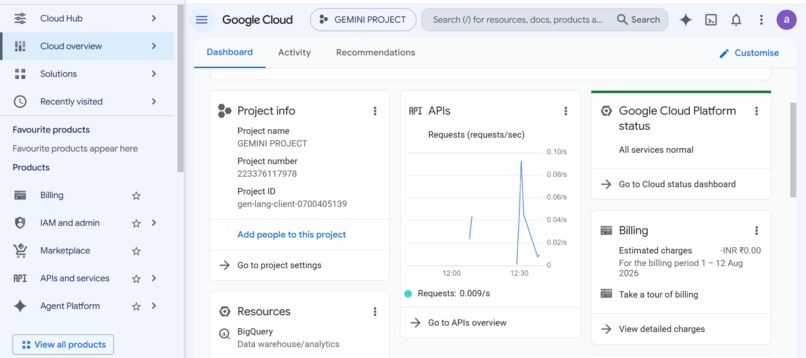
CareerCompass AI is a TypeScript monorepo containing a React and Vite frontend and an Express API. The frontend and API are deployed as separate Google Cloud Run services.
Gemini 2.5 Flash runs through Vertex AI using the Google Gen AI SDK. The API sends one bundled structured-output request instead of five sequential model calls, reducing latency, token usage, and quota pressure while retaining five independently logged logical decisions. Zod schemas validate the response, and the server replaces model-provided career IDs and fit scores with canonical catalogue-backed values.
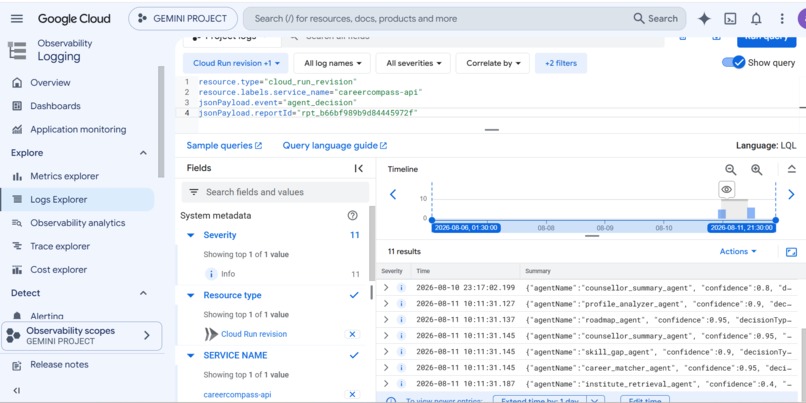
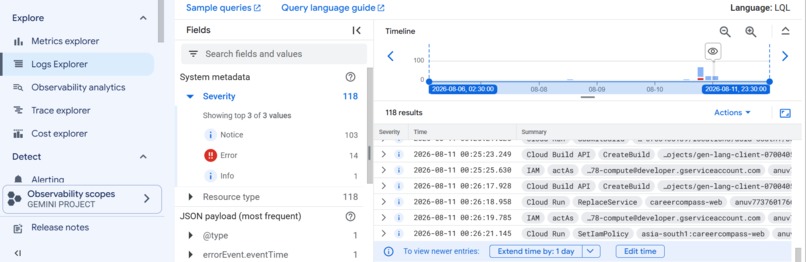
Firestore stores assessments, reports, anonymous access passes, payments, feedback, and agent logs. Secret Manager protects production credentials, while Cloud Logging captures the model, decision type, confidence, latency, review status, and report ID for every logical agent execution. Google Places provides verified, location-specific institute retrieval. Razorpay Standard Checkout handles Indian payments, with server-side order verification and signature validation.
The product includes a free-preview/full-report flow, downloadable reports, public report counter, feedback forms, an admin dashboard, anonymous three-report access passes, automatic fallback regeneration, and payment-quality safeguards.
We used standard open-source frameworks including React, Vite, Express, TypeScript, Tailwind CSS, and Zod. These supplied generic application infrastructure, while the career taxonomy, agent orchestration, coverage checks, report schemas, payment entitlements, fallback recovery, institute retrieval, and user experience were created specifically during the hackathon.
Challenges we ran into
Our first major challenge was relevance. The initial small career catalogue did not include enough creative and specialist careers. When a learner selected dance, the fallback system could still recommend accounting or technology. We solved this by expanding the catalogue to 249 careers, organising it into domains and specialisations, introducing weighted evidence matching, and enforcing a zero-match coverage gate.
The second challenge was Gemini rate limiting. Five sequential calls multiplied quota usage and increased the chance of partial reports. We redesigned the orchestration into one coordinated structured call, added provider-aware retry delays, and moved production inference to Vertex AI through the Cloud Run service identity.
Structured model output was another challenge. A valid JSON object can still contain invalid career IDs, inflated scores, or unrelated skills. We added server-side schema validation, canonical career resolution, deterministic fit-score calculation, shortlist enforcement, and domain-specific sanitisation.
We also had to make payment failure-safe. A user should never pay for a report generated entirely by a fallback. Payment creation and unlock now require verified AI quality. Fallback reports automatically retry Gemini, and any pass use consumed by an invalid report is restored.
Finally, institute recommendations needed current external evidence. Rather than asking Gemini to recall names, we built a separate Google Places retrieval service and clearly remind learners to verify accreditation, eligibility, fees, and admissions with official sources.
Accomplishments that we're proud of
- Deployed a working, publicly accessible AI product on Google Cloud.
- Built a catalogue of 249 unique careers across 15 domains, including detailed Performing Arts specialisations.
- Reduced five sequential model requests to one coordinated Gemini call.
- Prevented careers with zero supporting evidence from being recommended.
- Removed the artificial minimum fit score and recalculated scores from actual learner signals.
- Added domain-specific courses, projects, auditions, and portfolio preparation.
- Integrated verified location-based institute retrieval through Google Places.
- Implemented a complete Razorpay production payment and three-report entitlement flow.
- Protected customers from paying for fallback-only or invalid AI results.
- Added automatic regeneration and paid-use restoration for temporary model failures.
- Logged every logical agent’s model, confidence, latency, and decision for operational evidence.
- Added downloadable free previews, full reports, feedback collection, a public report counter, and a “Generate another report” journey.
What we learned
We learned that a powerful language model does not automatically create a trustworthy decision system. Generative reasoning must be surrounded by deterministic safeguards, verified data sources, strict schemas, observability, and clear boundaries on what the model may decide.
We also learned that an agentic system does not need one expensive model call per role. One coordinated response can represent several specialised agents while reducing cost and rate-limit exposure. The important distinction is responsibility, validation, and traceability—not simply the number of API calls.
Most importantly, we learned that responsible AI design must affect the business model. If the system cannot verify report quality, the correct response is not only to show a warning; it is to prevent payment and protect the customer’s entitlement. Humans still provide judgement, safeguarding, emotional understanding, and final approval for consequential education and career decisions.
What's next for CareerCompass AI
The next phase will add secure user accounts or recovery codes so customers can access their remaining report uses across devices. We plan to introduce multilingual assessments, progress tracking, 30- and 90-day outcome follow-ups, improved accessibility, richer career-market data, and escalation to qualified human counsellors for complex or low-confidence cases.
CareerCompass AI will expand from B2C reports into B2B partnerships with schools, colleges, counsellors, coaching centres, vocational academies, and performing-arts institutes. Institutions may pay for licences, workshops, dashboards, verified profiles, or qualified learner enquiries. Sponsored relationships will always be labelled, and institute payments will never influence a learner’s career ranking.
We also plan to build a verified provider network connecting learners with counsellors, teachers, portfolio mentors, tutors, and training organisations. Over time, CareerCompass AI can become more than a report generator: it can become a measurable bridge from self-understanding to learning, mentorship, and real economic opportunity.
Built With
- css
- firebase
- firestore
- gemini
- google-cloud
- google-gen-ai-sdk
- node.js
- razorpay
- tailwind
- typescript
- vite


Log in or sign up for Devpost to join the conversation.