-
-
-
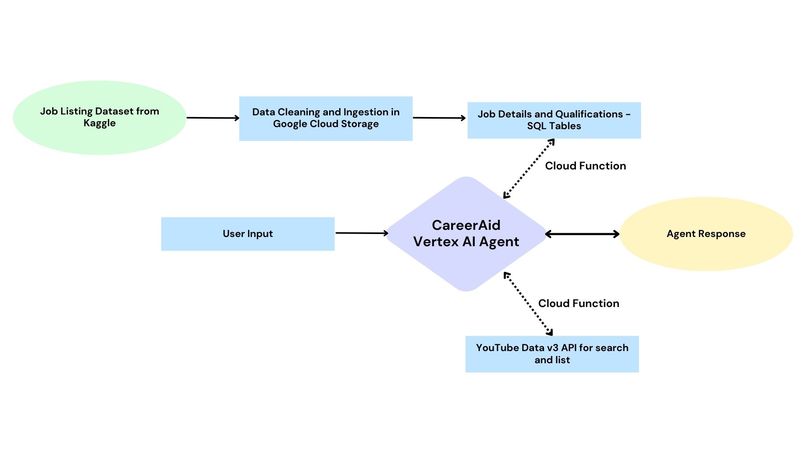
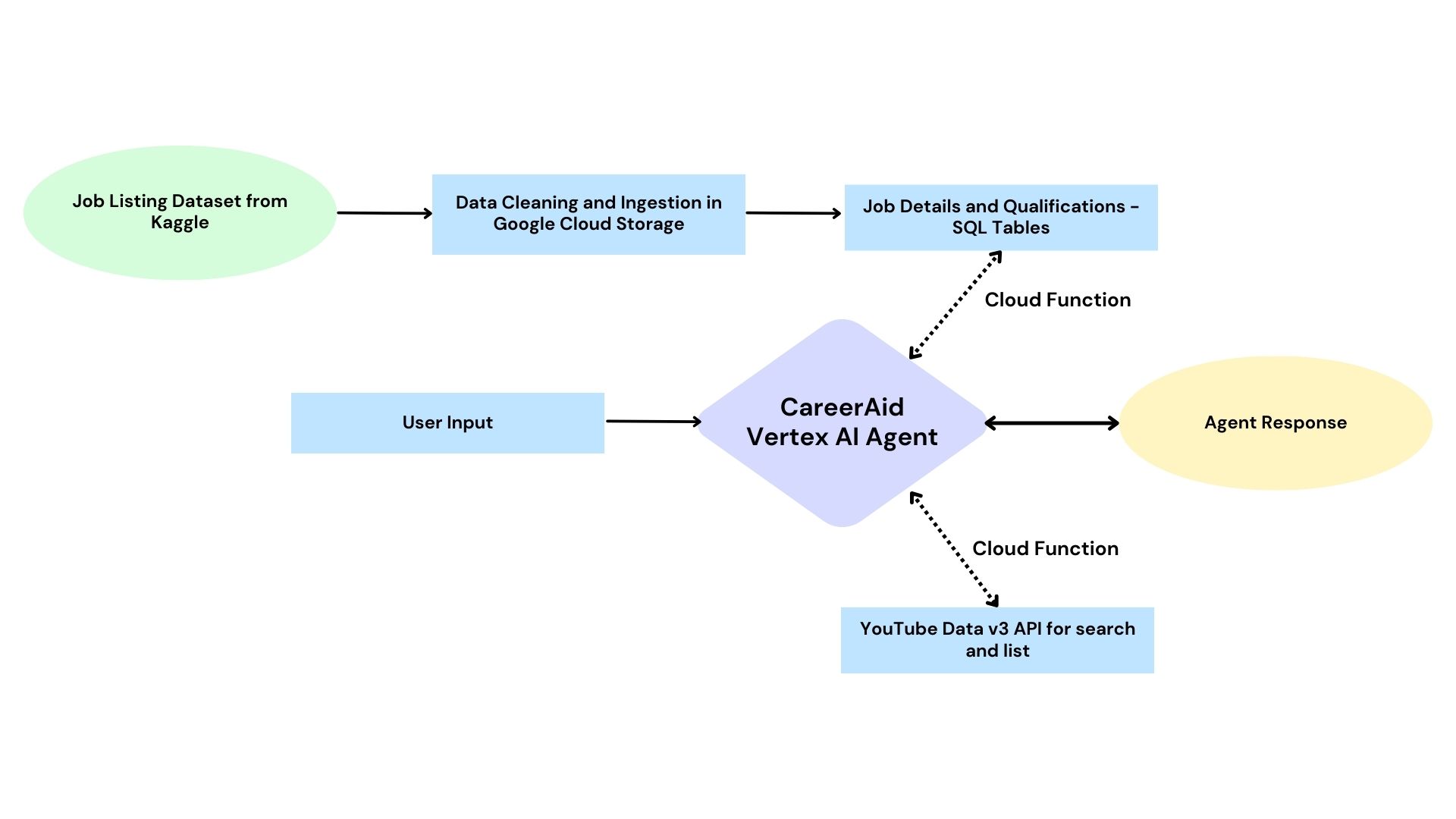
Agent Flow
-
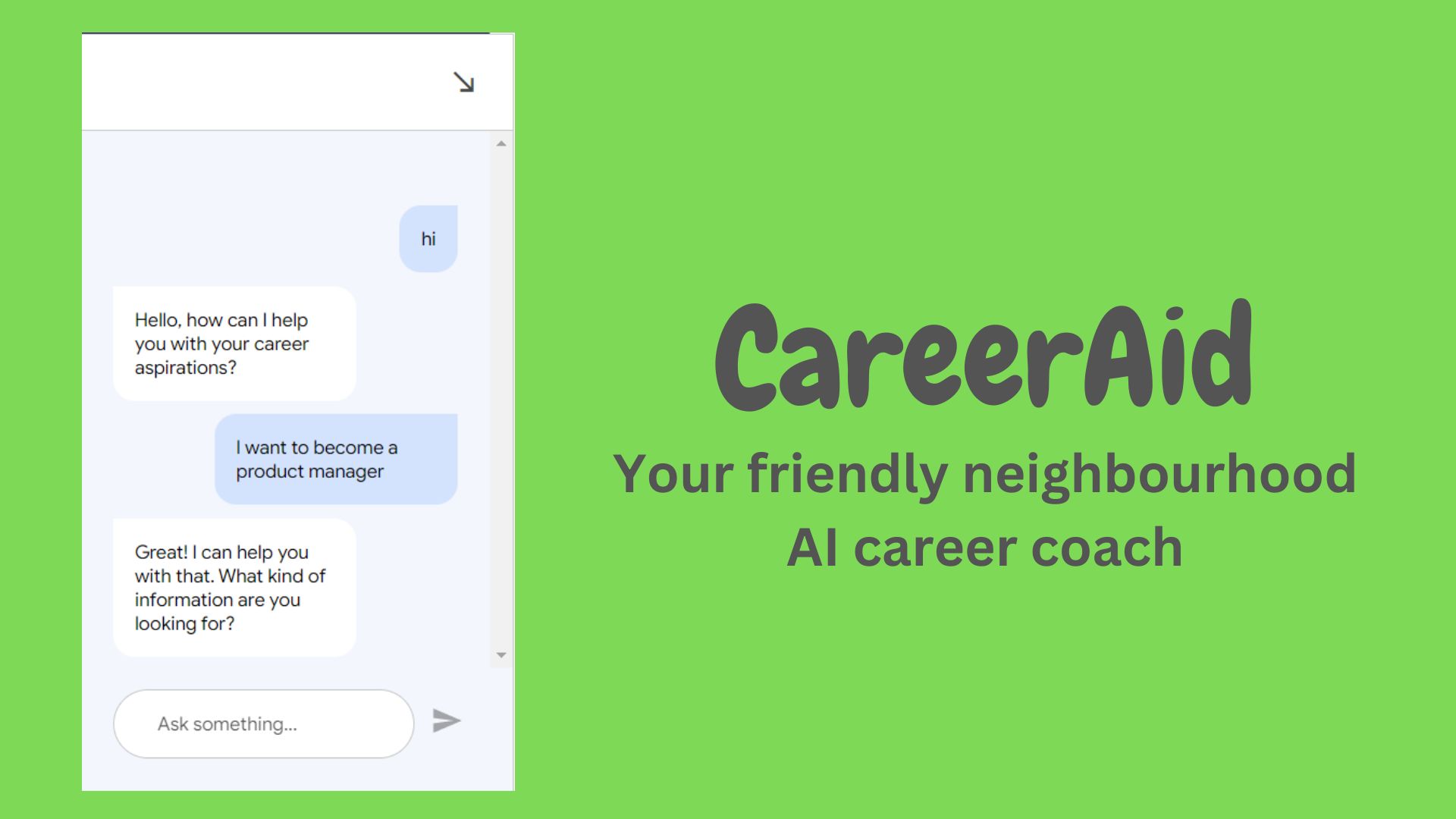
WebApp Integration 1
-
WebApp Integration 2
-
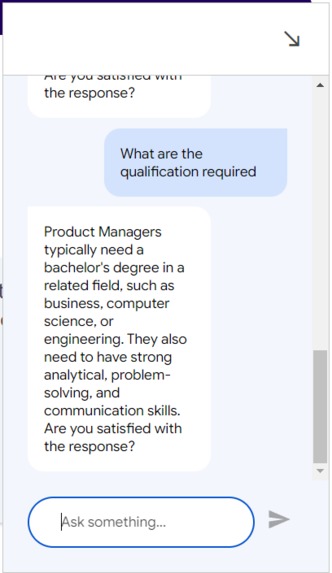
WebApp Integration 3
-
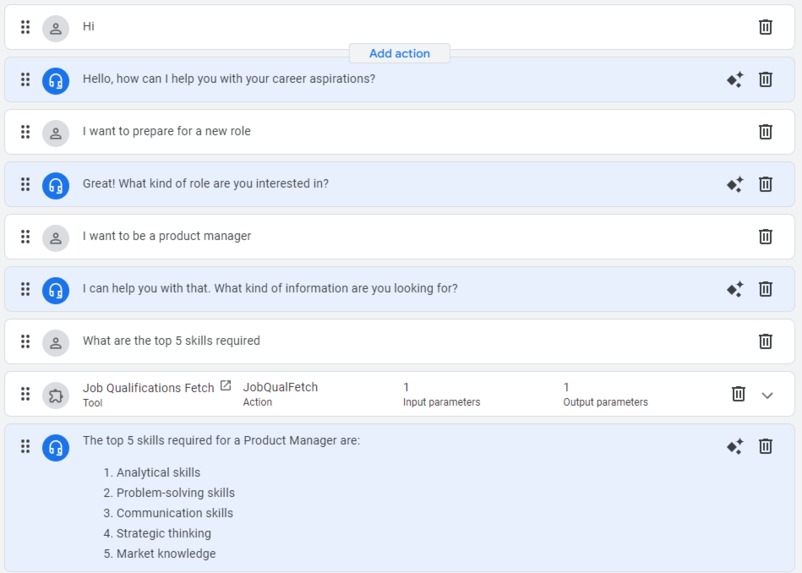
Test Script Demo 1
-
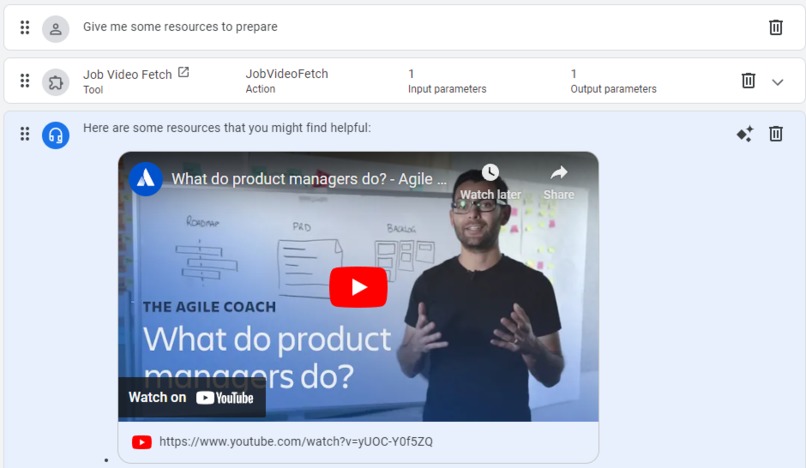
Test Script Demo 2
-
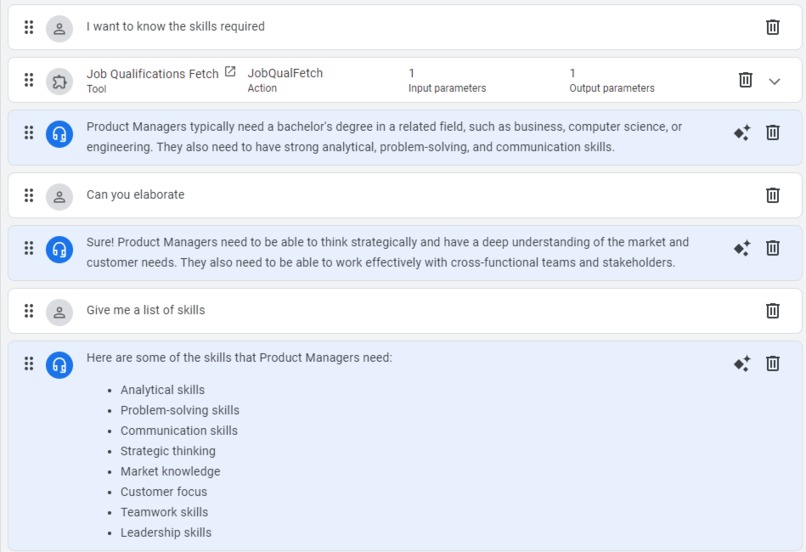
Test Script Demo 3
Inspiration
The growing need for career guidance: The job market constantly evolves, and people frequently change careers. Chatbots offer a convenient and accessible way to get personalized career advice.
The rise of conversational AI: Advancements in artificial intelligence have made it possible to create chatbots that can hold natural conversations and understand user intent.
The limitations of traditional career counseling: These services can be expensive and time-consuming. Chatbots offer a more scalable and affordable solution.
The educational potential of chatbots: Chatbots can be a fun and engaging way to learn new information. CareerAid leverages this aspect by integrating educational content from platforms like YouTube.
Scenario-based guidance: CareerAid's focus on helping users navigate career transitions aligns with the growing demand for personalized career coaching.
Gathering user information: By prompting users about their goals and existing skills, CareerAid customizes the learning journey.
Content aggregation: The ability to fetch relevant learning resources enables affordable educational solutions that can be personalized to individual needs
What it does
Career Exploration:
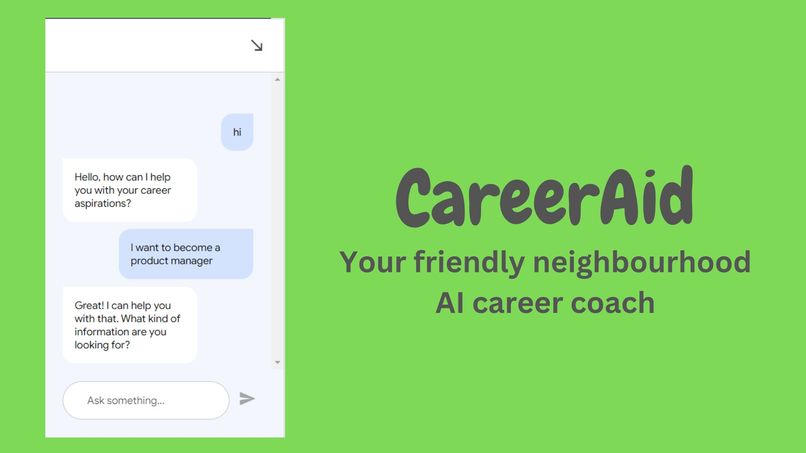
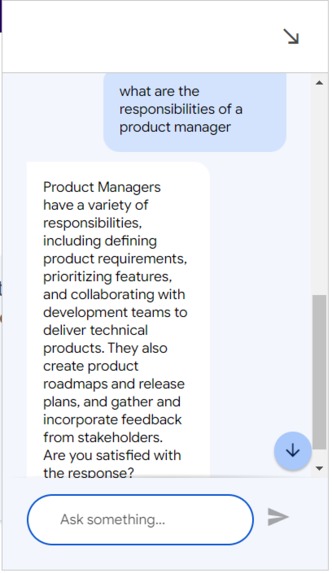
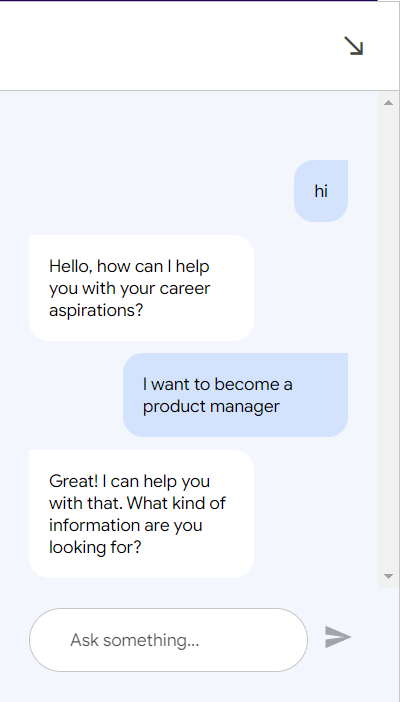
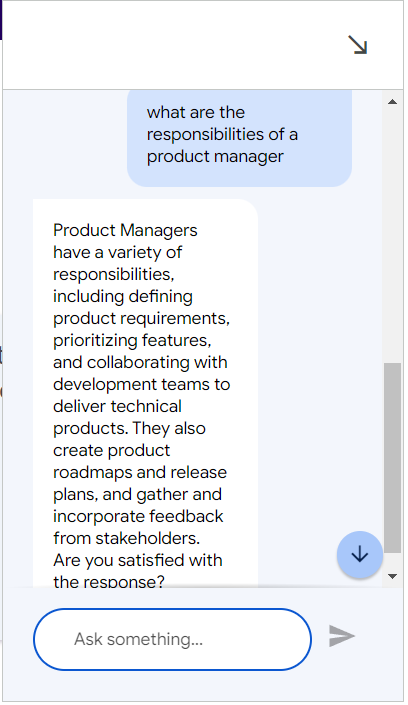
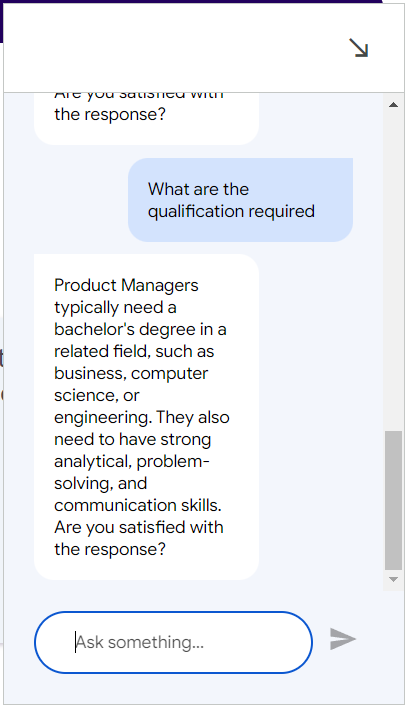
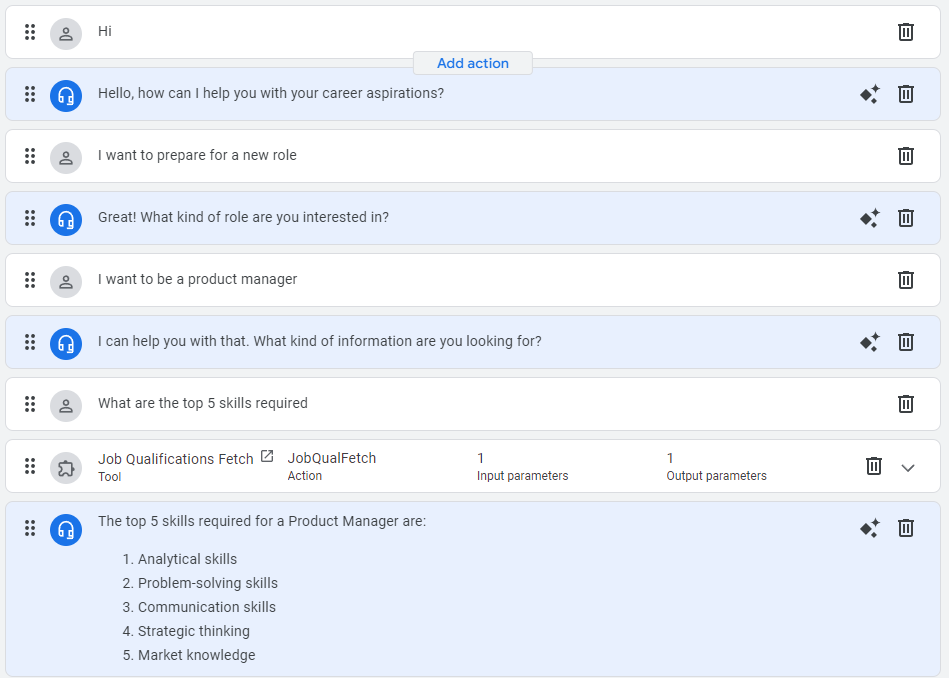
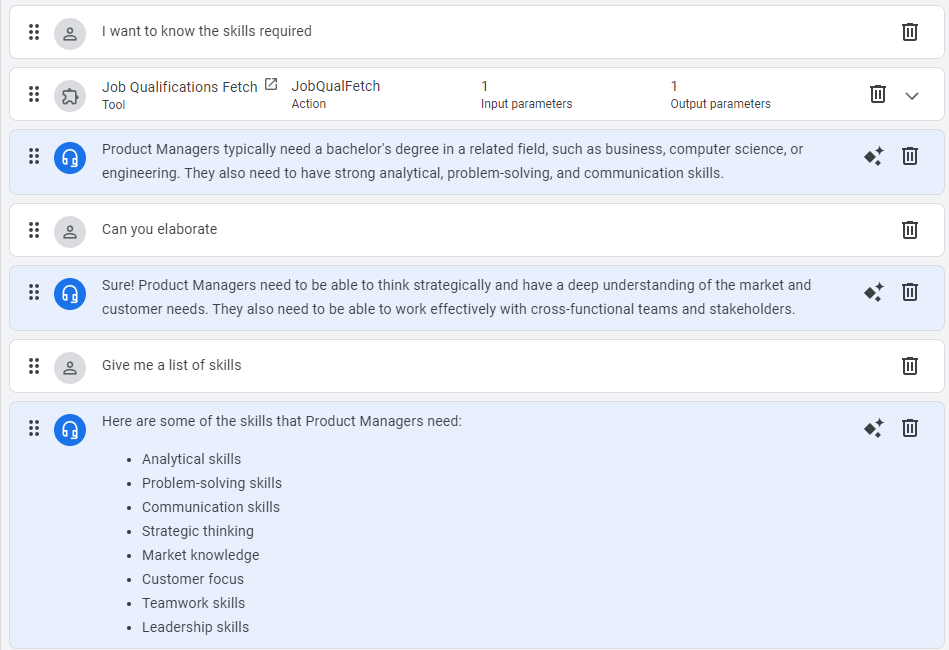
CareerAid allows you to explore hypothetical career paths. For example, you can tell CareerAid you want to become a product manager, and it will guide you through that specific journey. It can explain the typical duties and responsibilities associated with different career paths. This helps you understand the day-to-day realities of a given role. Further, it helps you identify the skills required for your desired career. This can include both technical skills and soft skills. Based on your self-reported skills and experience, it can provide a basic assessment of your eligibility for a particular career path. This is a starting point for your learning journey.
Personalized Learning Roadmap:
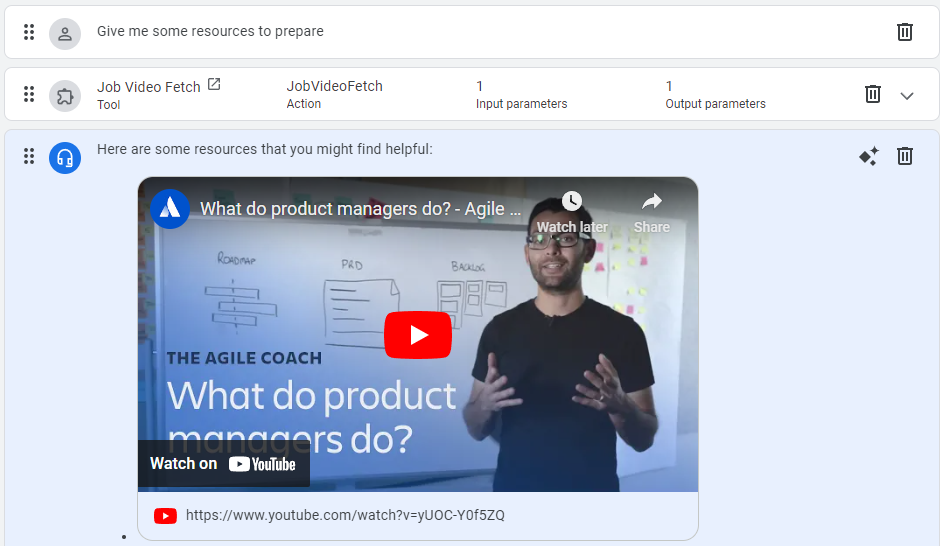
CareerAid can search and recommend relevant learning resources like online courses, tutorials, and informational content based on your chosen career path. It leverages YouTube for educational content. It could potentially analyze and compare your skill set to the desired career requirements. This would highlight areas where you need to focus your learning.
Accessibility and Convenience
CareerAid interacts with you through a chat interface, making it easy to use and accessible anytime, anywhere. You can naturally ask questions and receive clear responses. It breaks down the learning journey into manageable steps, providing a clear path towards your career goals.
How I built it
RAG using BigQuery and Cloud Functions
This AI Agent was grounded using a job listing dataset available on kaggle. The initial dataset contained 23 columns, out of which the following columns were chosen:
- Job Title
- Role
- Job Description
- Skills
- Responsibilities
- Qualifications
Data cleaning and removal of unwanted columns were done using BigQuery. The job listing dataset was split into two tables for ease of querying:
- role details table
- role qualifications table
These tables were queried from 2 cloud functions in NodeJs. The cloud functions queried the tables using the BigQuery library for NodeJs.
I created two OpenAPI tools in Vertex AI Agent Builder to call these cloud functions and fetch the required information:
- Job Details Fetch Tool
- Job Qualifications Fetch Tool
Fetching Informational Content from YouTube
I used the YouTube Data v3 API to search for informational videos related to the user's chosen career path. A cloud function was used to call this API and search for videos related to the user's chosen career path.
The Job Video Fetch Tool was created in Vertex AI Agent Builder to call the cloud function and fetch the videos when required.
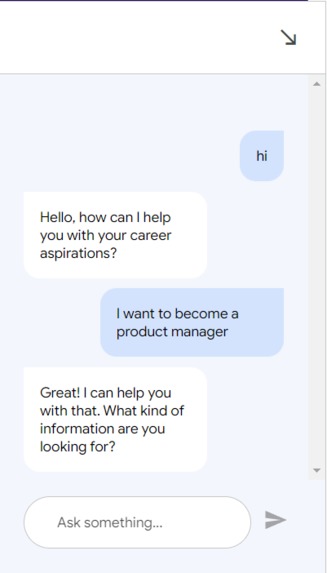
Integration with Angular App using DialogFlow CX
Using the publish option on the DialogFlow CX Dashboard, I could integrate the chatbot with my angular project without enabling user authentication.
Customization and Examples
11 examples were created in Vertex AI Agent Builder to train the agent in the overall conversation flow. These were used to customize the chatbot specifically for career guidance and personalize the conversation for each user.
Challenges I ran into
I wanted to use unstructured documents (descriptions of each role and job title from Wikipedia, which I saved and compiled to create a master PDF document) to increase the accuracy of responses. However, my project's quota for the Discover Engine API reached its limit, and I could not create any data stores. So, I decided to go ahead with just the data from the dataset.
Accomplishments that we're proud of
I integrated this chatbot into my educational app built on Angular and deployed it using GitHub Pages.
What I learned
This was my first time using tools like Vertex AI Agent Builder, Google Cloud Storage, Cloud Functions, BigQuery, and DialogFlow. So, this was an educative experience for me.
I also learned to monitor my consumption of Google services and the associated quotas.
What's next for CareerAid
UI Improvements: Exploring the DialogFlow CX customizations to improve the UI of the chatbot
Improve Grounding Using unstructured documents and updated data from Google search results to give more context to the chat agent
Fetching Multi-Media Content Fetching more types of informational content to curate the learning journey of the user
User Authentication Integrating OAuth to the application to create users and save chatbot conversations and learning paths that the users can revisit
Other Integrations Apart from a web application, I am planning on creating a telegram bot, a bot in Google chat, and a discord bot to extend the usability of this chatbot
Screen-Reader for Accessibility I plan to implement a screen reader feature to improve the accessibility of this chatbot
Built With
- agent-builder
- big-query
- cloud-functions
- google-cloud
- vertex-ai
- youtube


Log in or sign up for Devpost to join the conversation.