Inspiration
While brainstorming ideas, we recognized a common challenge faced by students and recruiters alike during career fairs: long wait times. Students often spend their valuable time waiting in line as opposed to talking to potential employers while recruiters may miss the opportunity to make meaningful connections with qualified students. After discussing potential solutions, we decided to create a platform to streamline the waiting process by creating a digital queue. This allows students to take their time into their own hands and get the most out of their career fair experience.
What it does
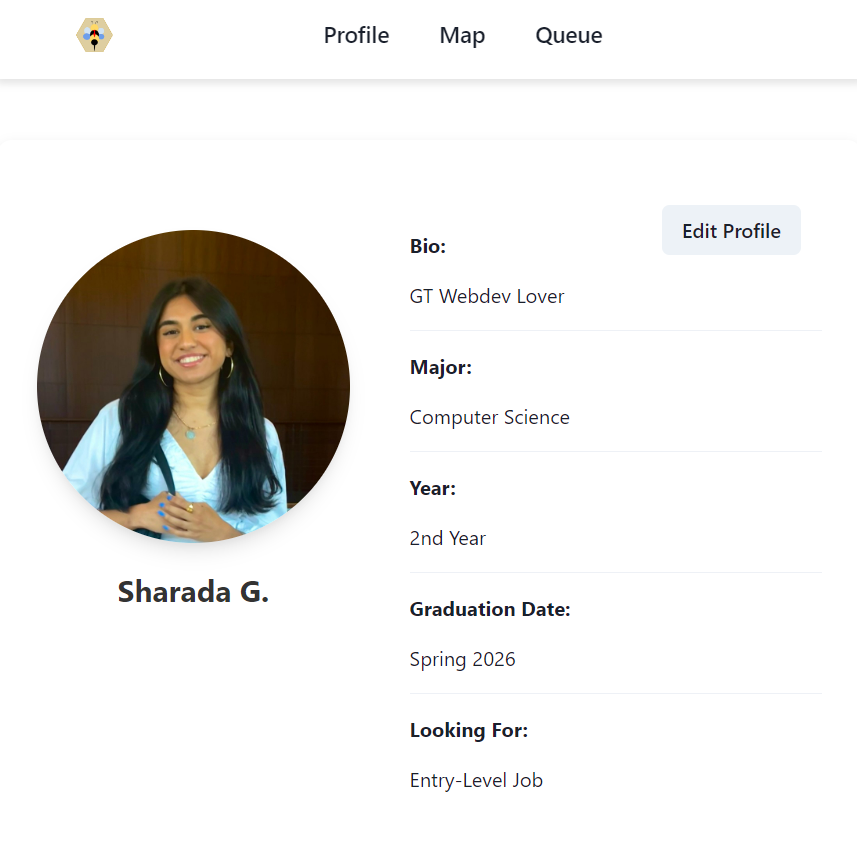
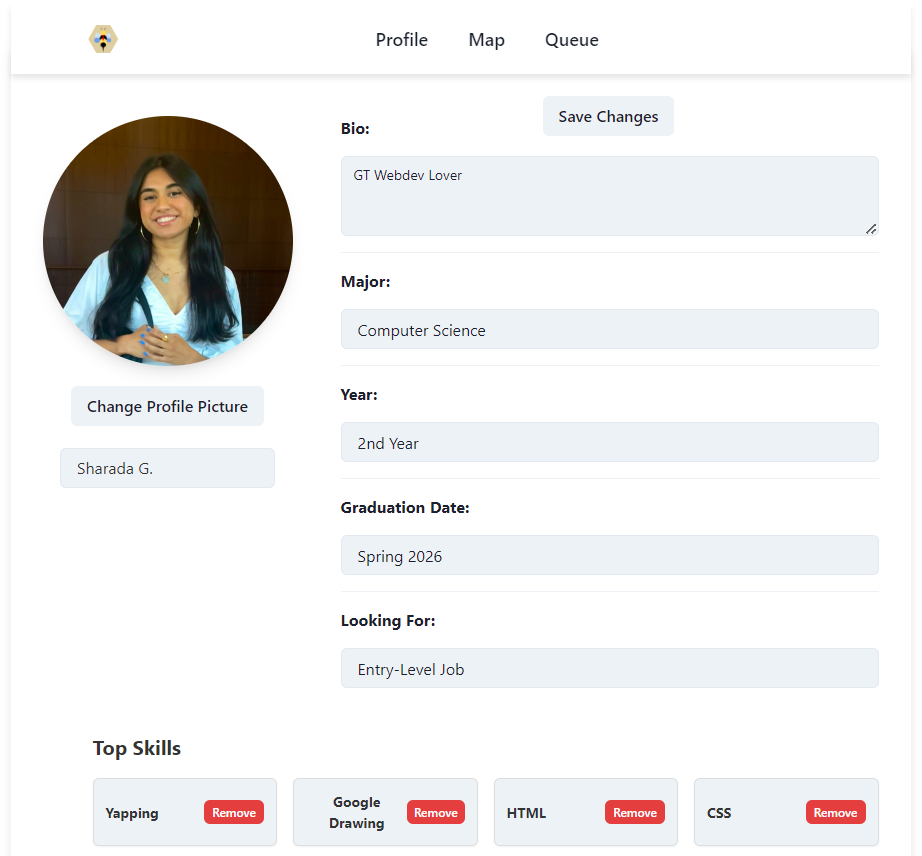
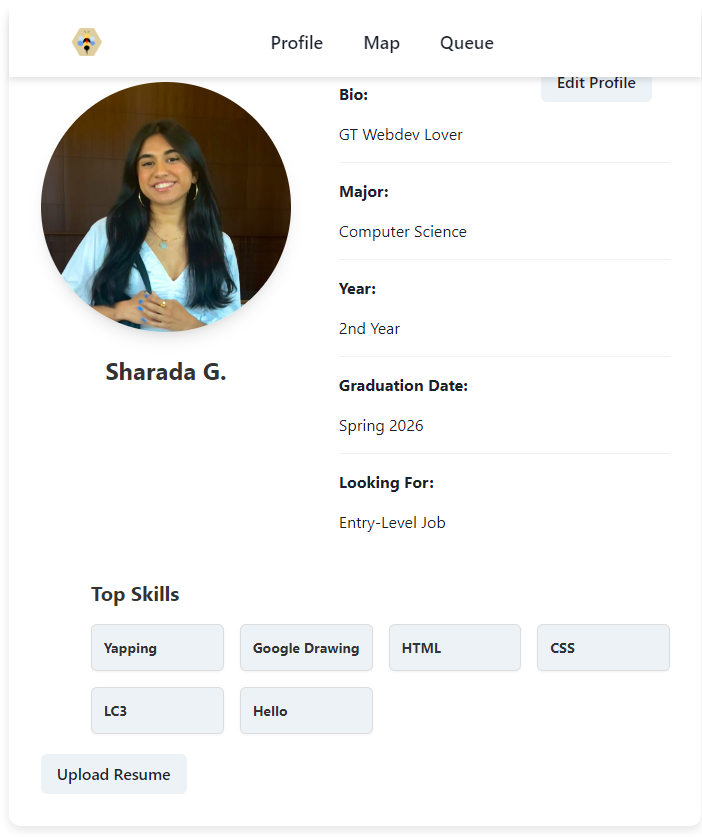
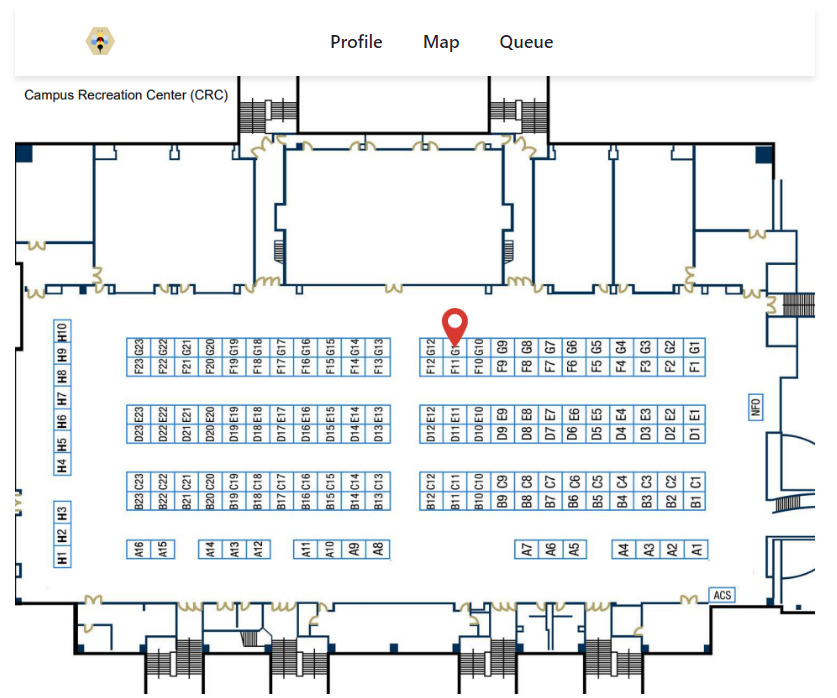
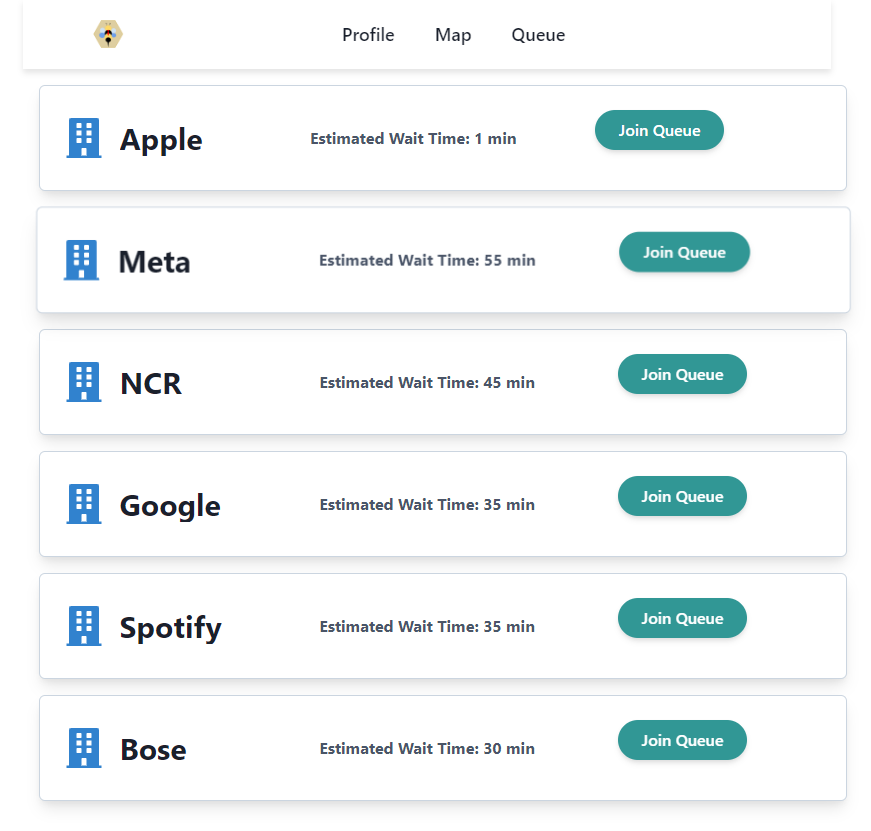
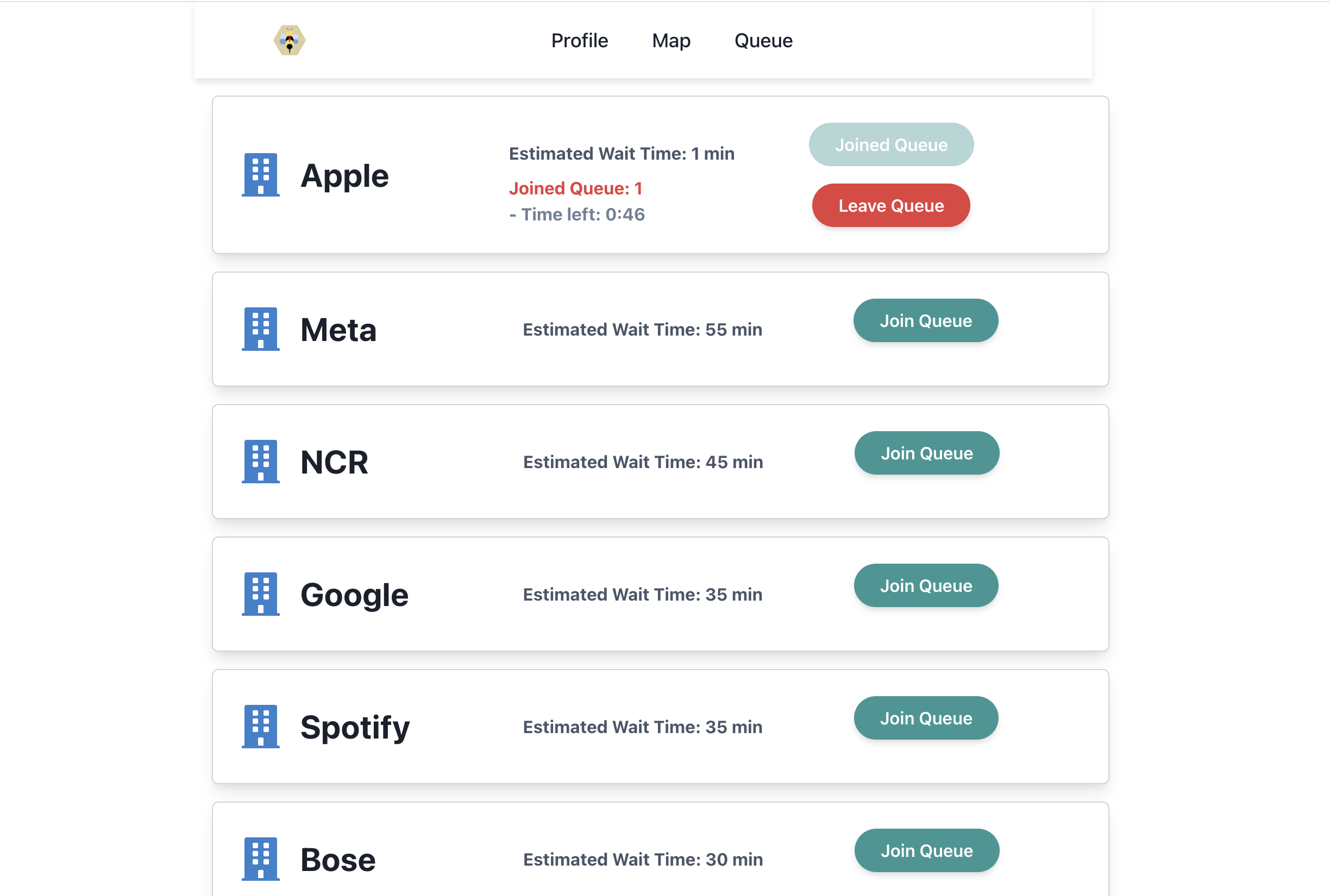
Career Queue is a digital queue web application designed to optimize the college career fair experience. Users can edit their profiles, creating a candidate page to display their skills and experience that is visible to recruiters. Students can also view available recruiters, see estimated wait times for each company booth, and join or leave queues for specific companies. Additionally, it features an interactive map that shows users their location in the fair and displays pins for recruiters they are queued to speak with.
When a student reaches the front of the queue, they can be prompted to discuss with recruiters. This allows students to take into account the length of the lines at each booth and optimize which companies they want to visit. As a result, they can visit more companies of their interest at once, increasing turnover time for the line and reducing in-person foot traffic.
How we built it
The platform is built using the MERN stack (MongoDB, Express.js, React, Node.js), allowing for a seamless and interactive user experience across systems. The webpage, which students and recruiters interact with, is built using React. Users create profiles and upload their resumes on a profile page, and can navigate to another page which lists companies, their locations, and with the estimated wait times and the option to join their queues. React is also used to display the map component to enhance navigation by visually representing the layout of the career fair and the locations of recruiters. Express is used to communicate between the UI and the backend, and MongoDB will be used to connect the collections of Users: Students, Recruiters, and Companies.
Challenges we ran into
One of the challenges we faced in making a robust experience was making a platform that not only addressed the needs of students, but those of recruiters. Understanding the challenges recruiters encounter requires more extensive research. Another challenge to that end was balancing functionality with an intuitive design, which was a continuous effort to ensure that both students and recruiters found the platform easy to navigate.
Finally, ensuring data persistence for user profiles and queue statuses proved challenging. We needed to implement effective state management strategies to handle dynamic data—especially as part of an effort to make the system usable across schools and for a wide variety of users.
Accomplishments that we're proud of
Successfully implementing a user-friendly interface that allows students to manage their career fair experience. Creating a system to allow users to enqueue and dequeue themselves dynamically, as well as track the waiting times of each company in real time based on the number and movement of people in line. Creating a map that provides valuable context about the recruiters.
What we learned
We gained insights into the specific challenges faced by students at career fairs and how technology can help alleviate these issues. We learned the importance of user feedback in refining our features and understanding the needs of both students and recruiters. Our team deepened our knowledge of the MERN stack and improved our skills in web development, particularly in building responsive applications.
What's next for Career Queue
In the short term, we plan to enhance the interactivity of the map to allow users to learn more about company booths and job postings directly through the interface.
Going forward, we seek to enhance our data-driven approach. We plan on implementing natural language processing algorithms to analyze resume data and generate best matches for students, suggesting optimal companies to join the line to talk to based on their experience. Further, we want to harness more analytics in real time about the average discussion time with individual recruiters
In the long-term, we hope to implement more robust features that enhance accessibility and improve the experience for both students and recruiters, including an in-app chat feature.

Log in or sign up for Devpost to join the conversation.