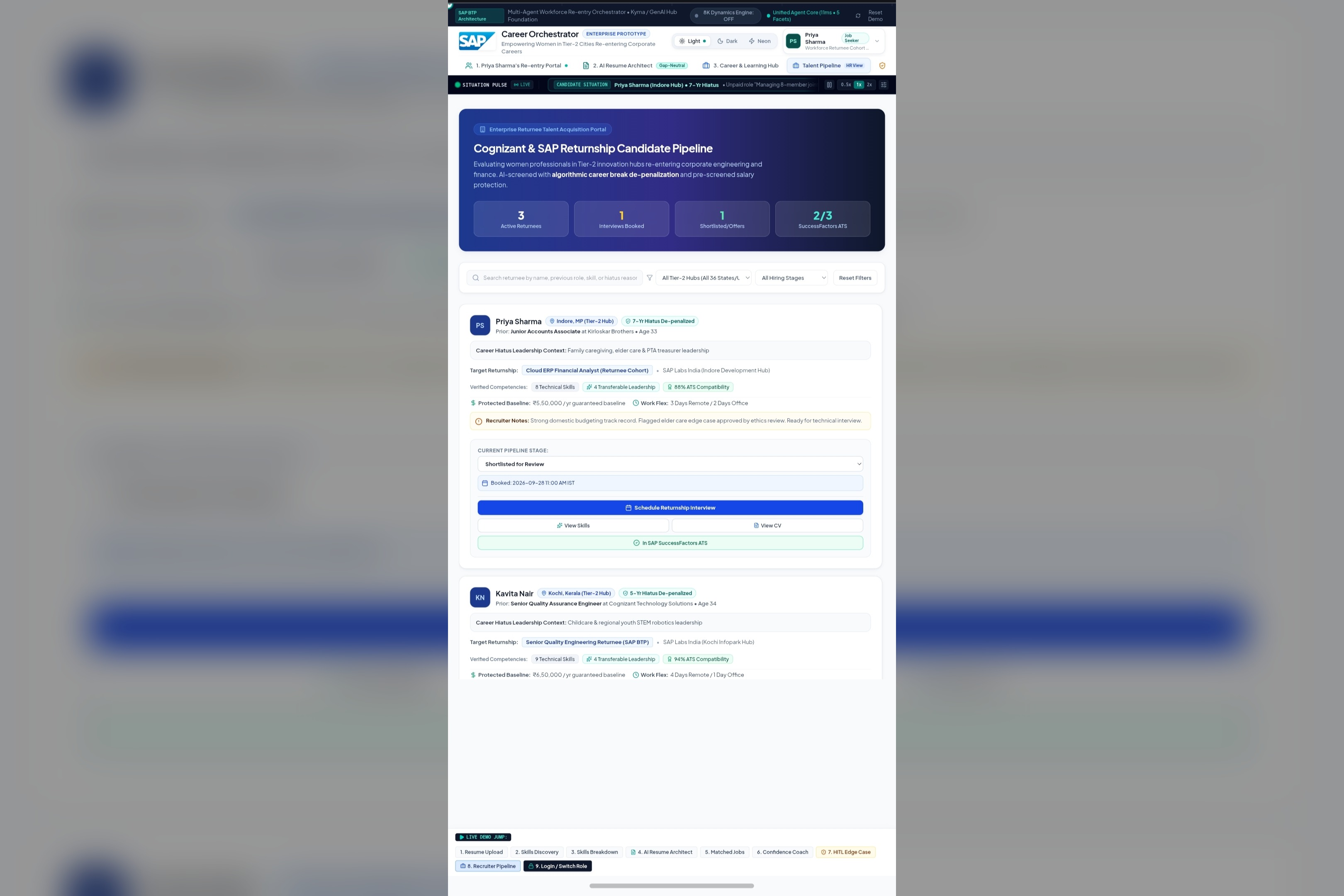
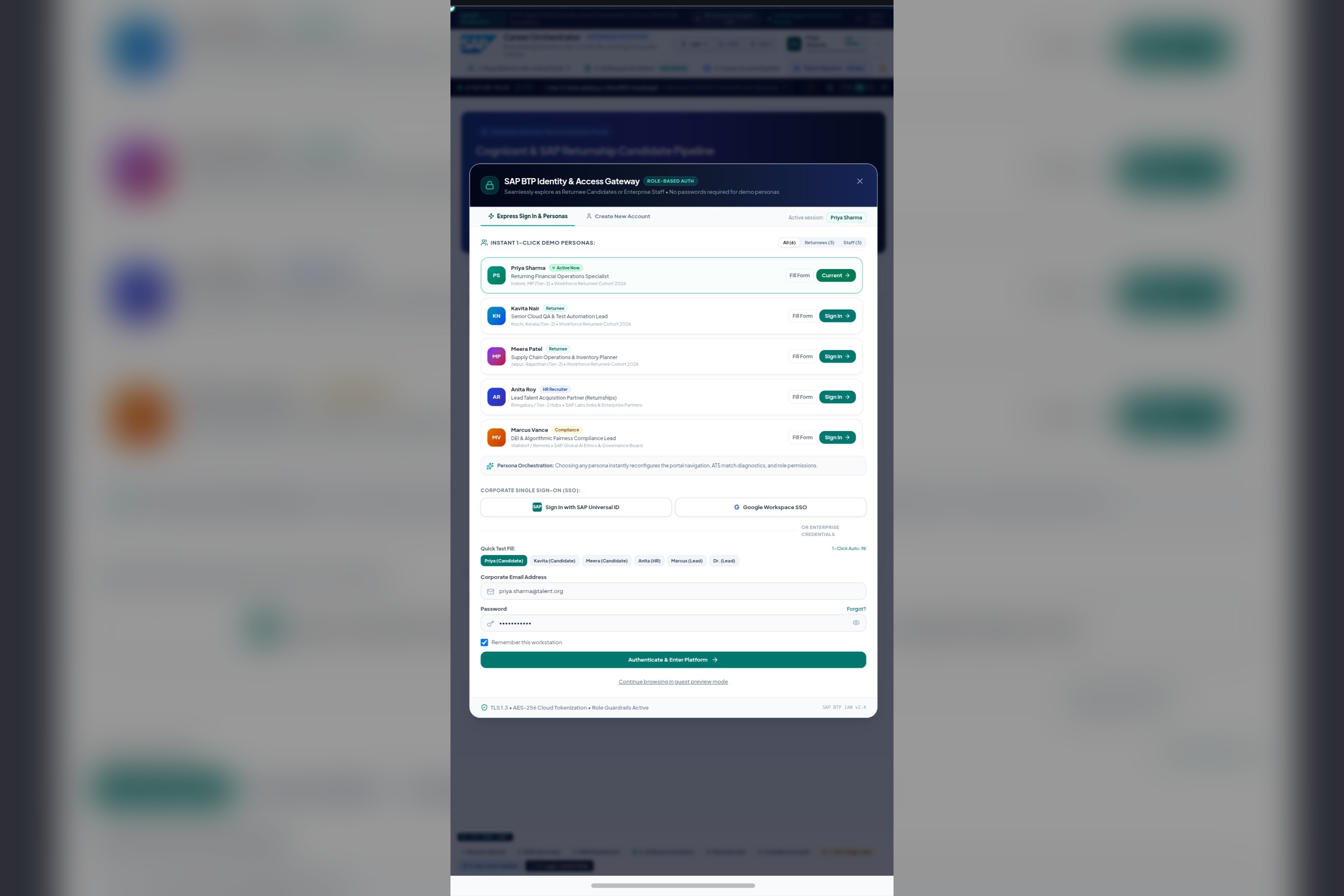
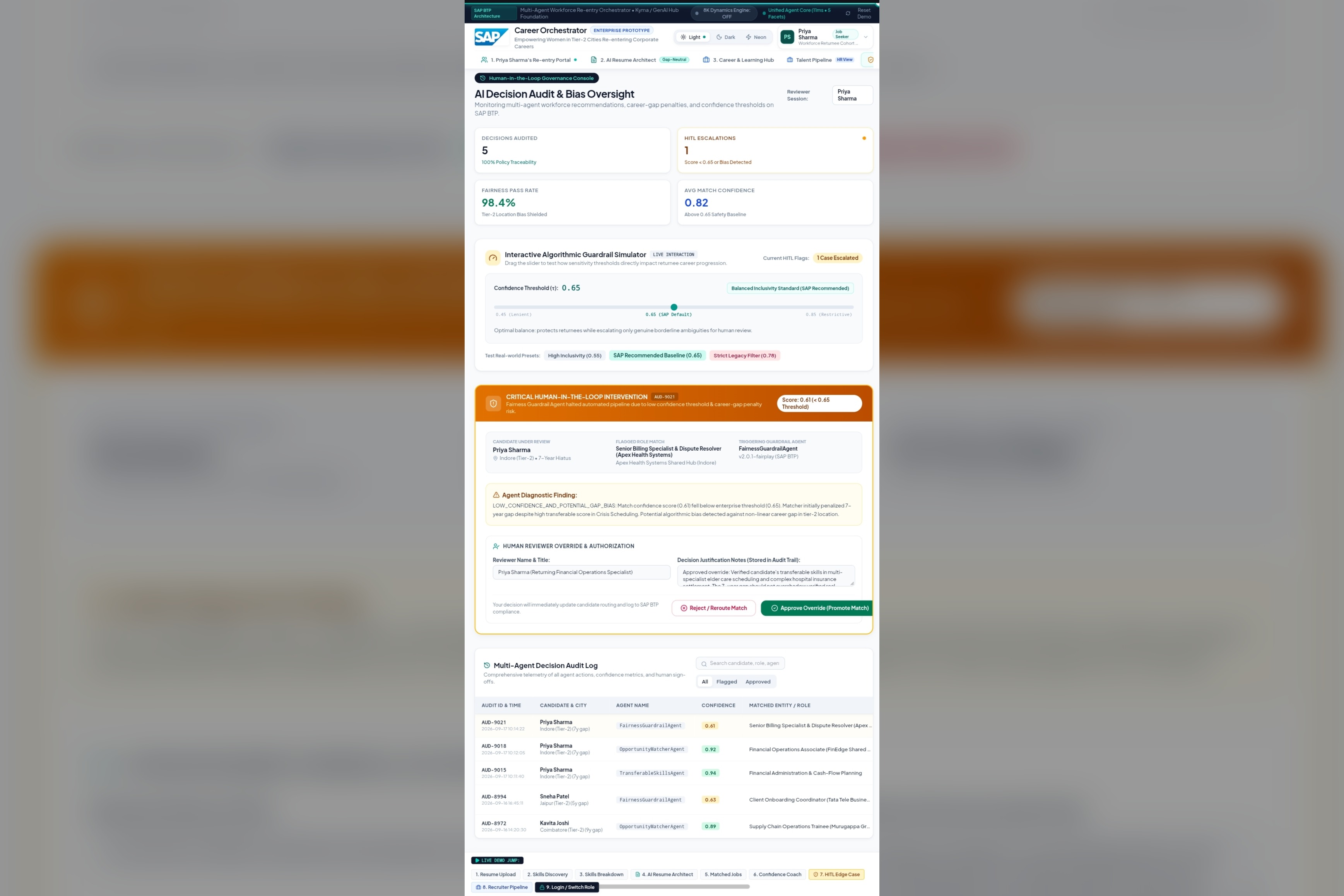
Inspiration
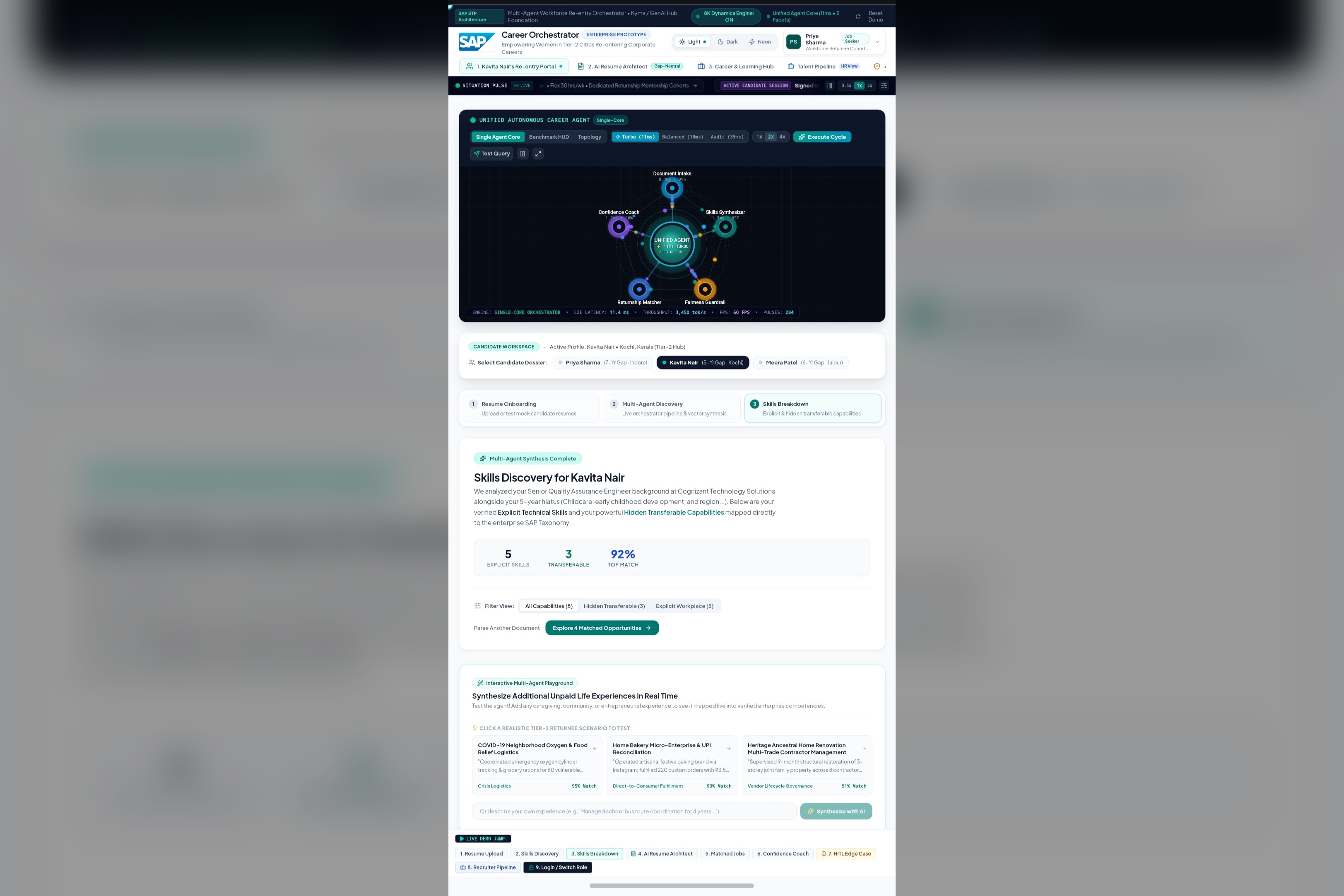
Managing professional growth, skill building, and job hunting often feels like navigating a fragmented maze. I noticed that most professionals struggle to connect their current skills with their long-term career goals in a structured, data-driven way. I built Career Orchestrator to solve this problem—acting as a centralized, intelligent platform that helps users choreograph their professional journeys, bridge skills gaps, and optimize their career trajectories.
What it does
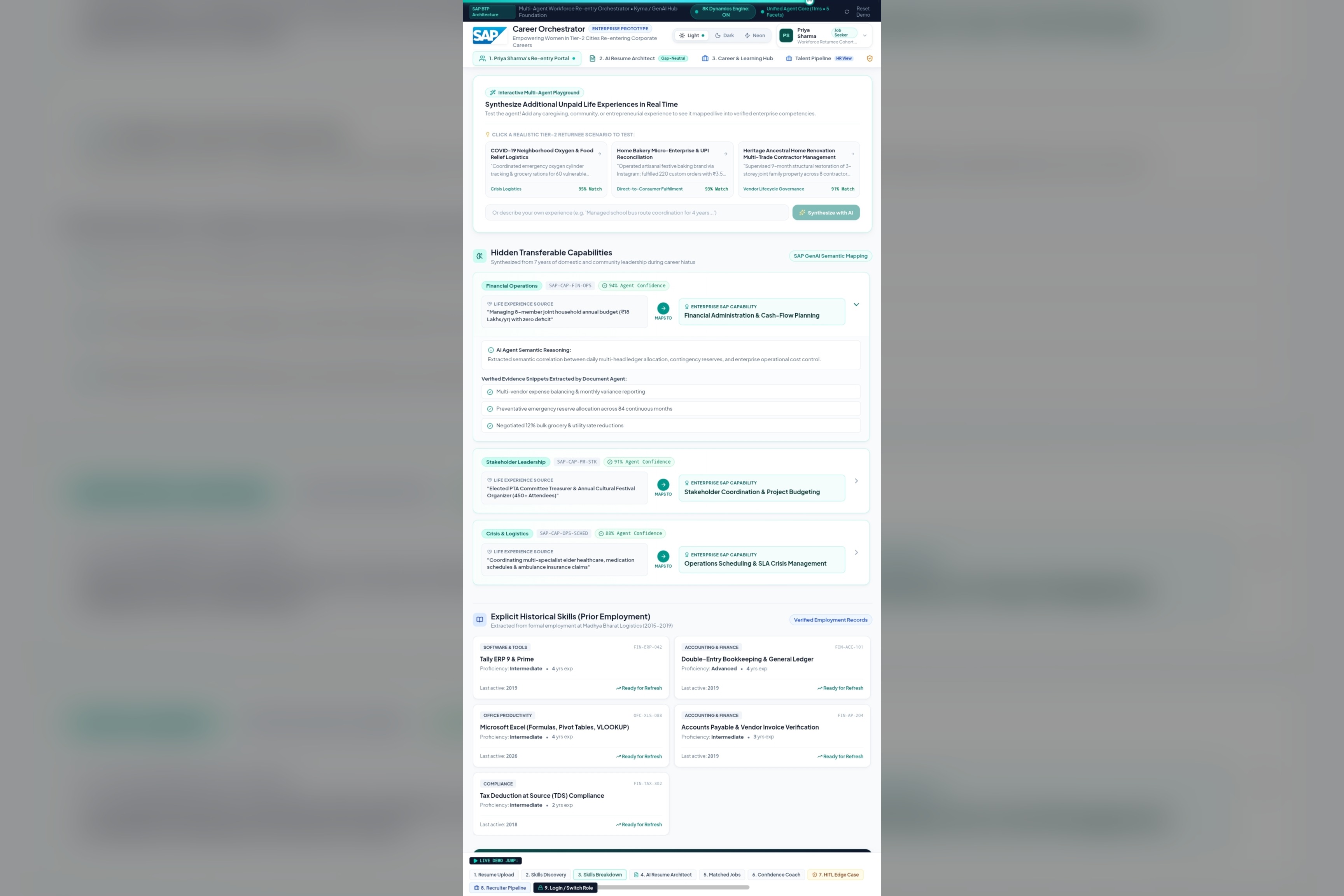
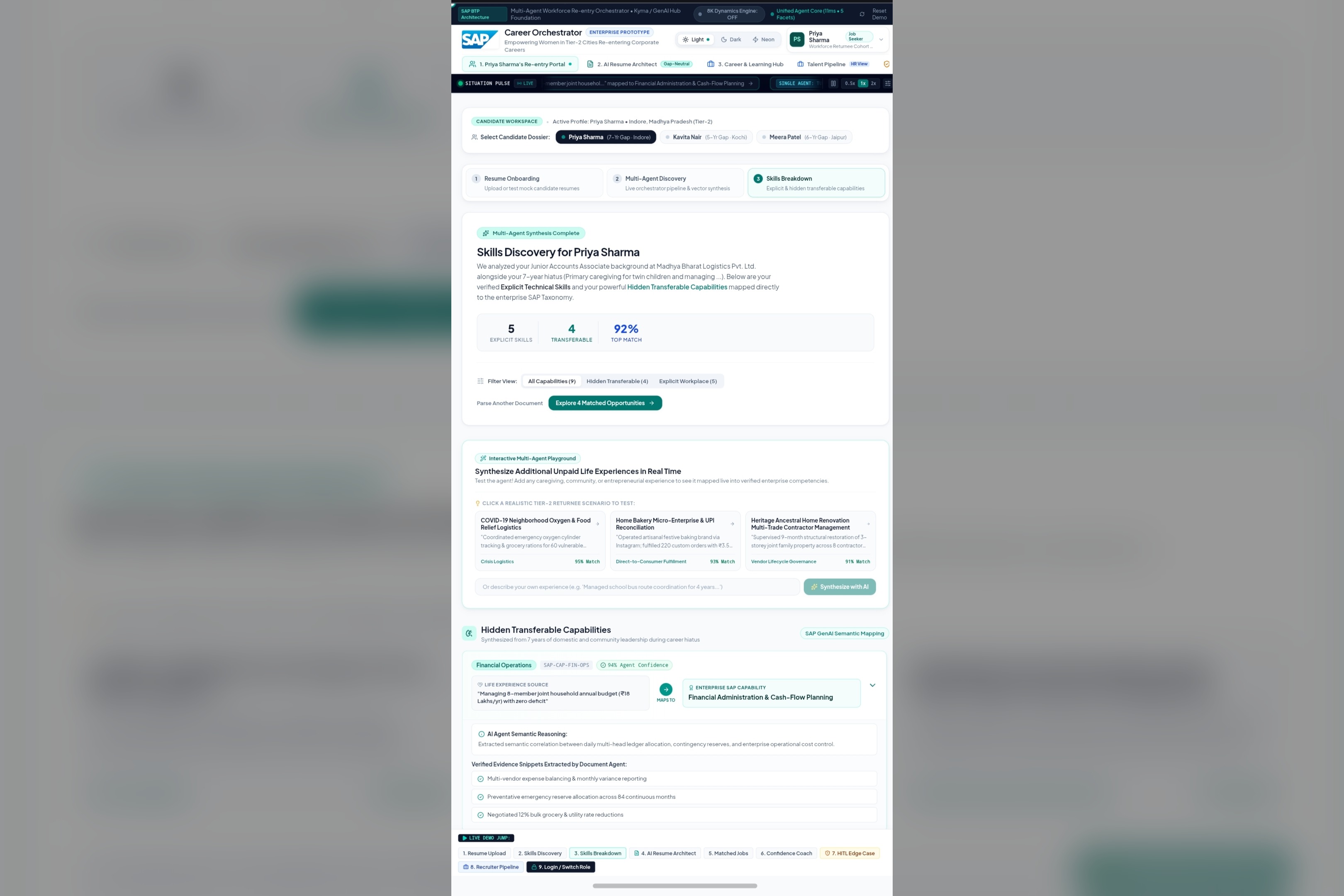
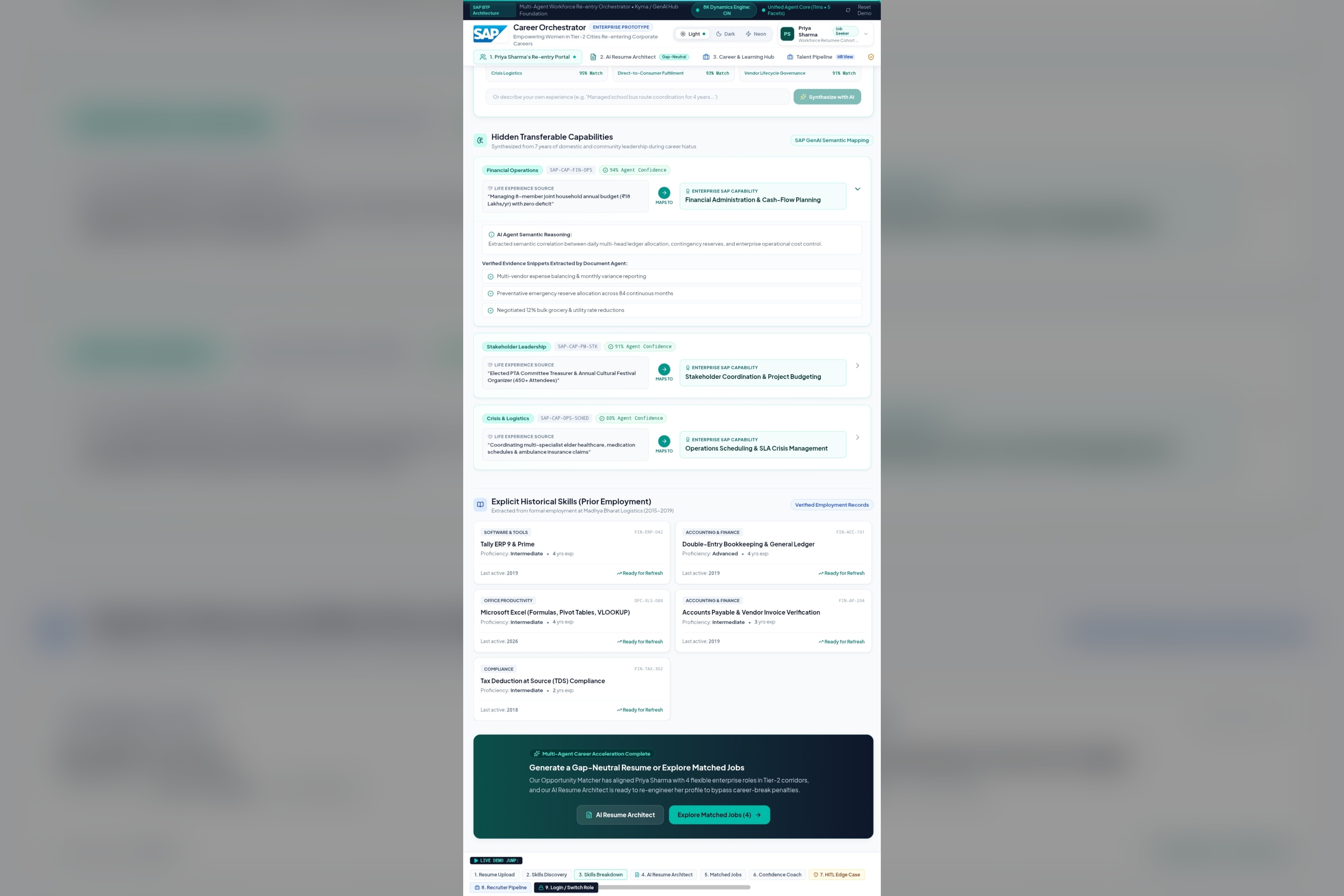
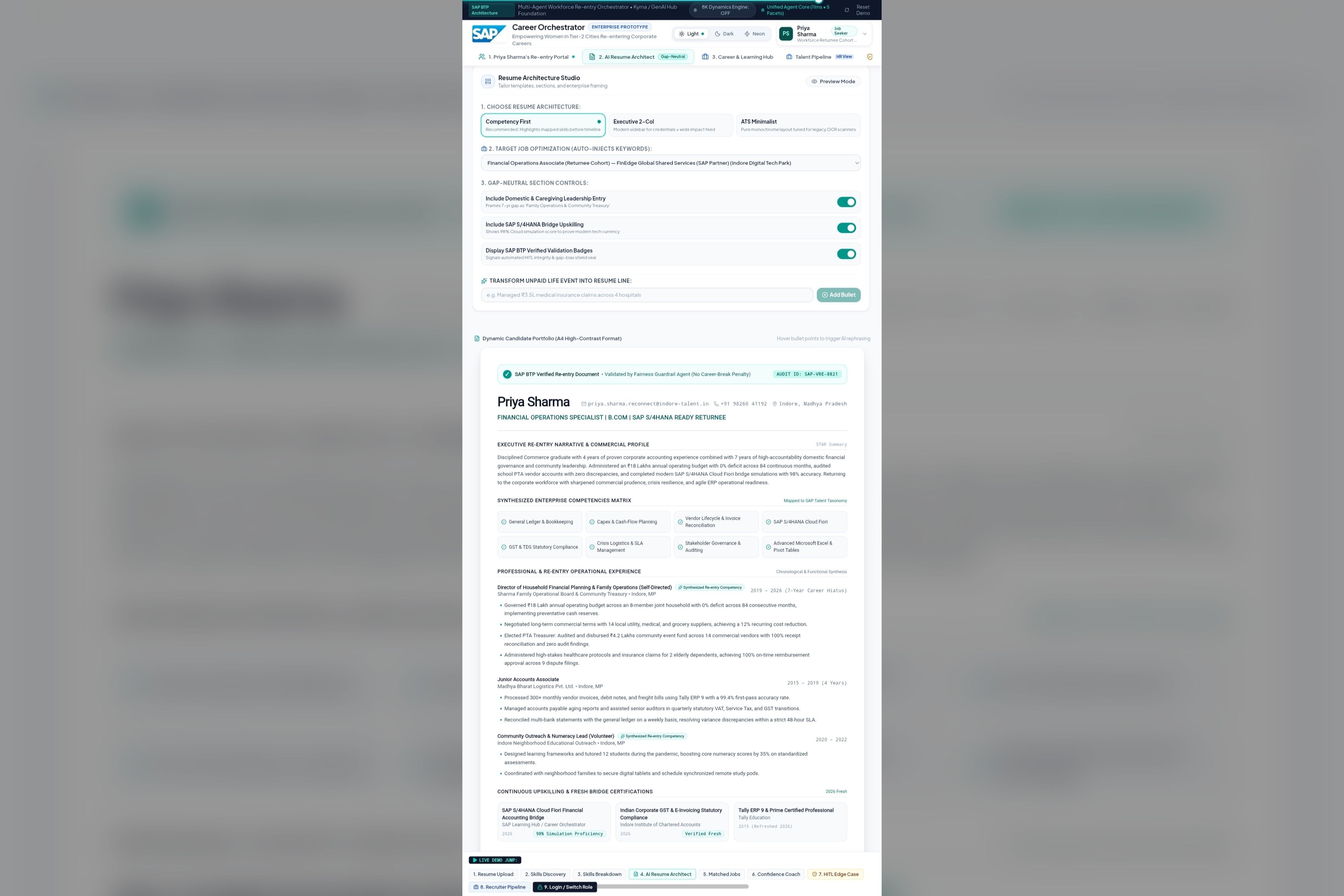
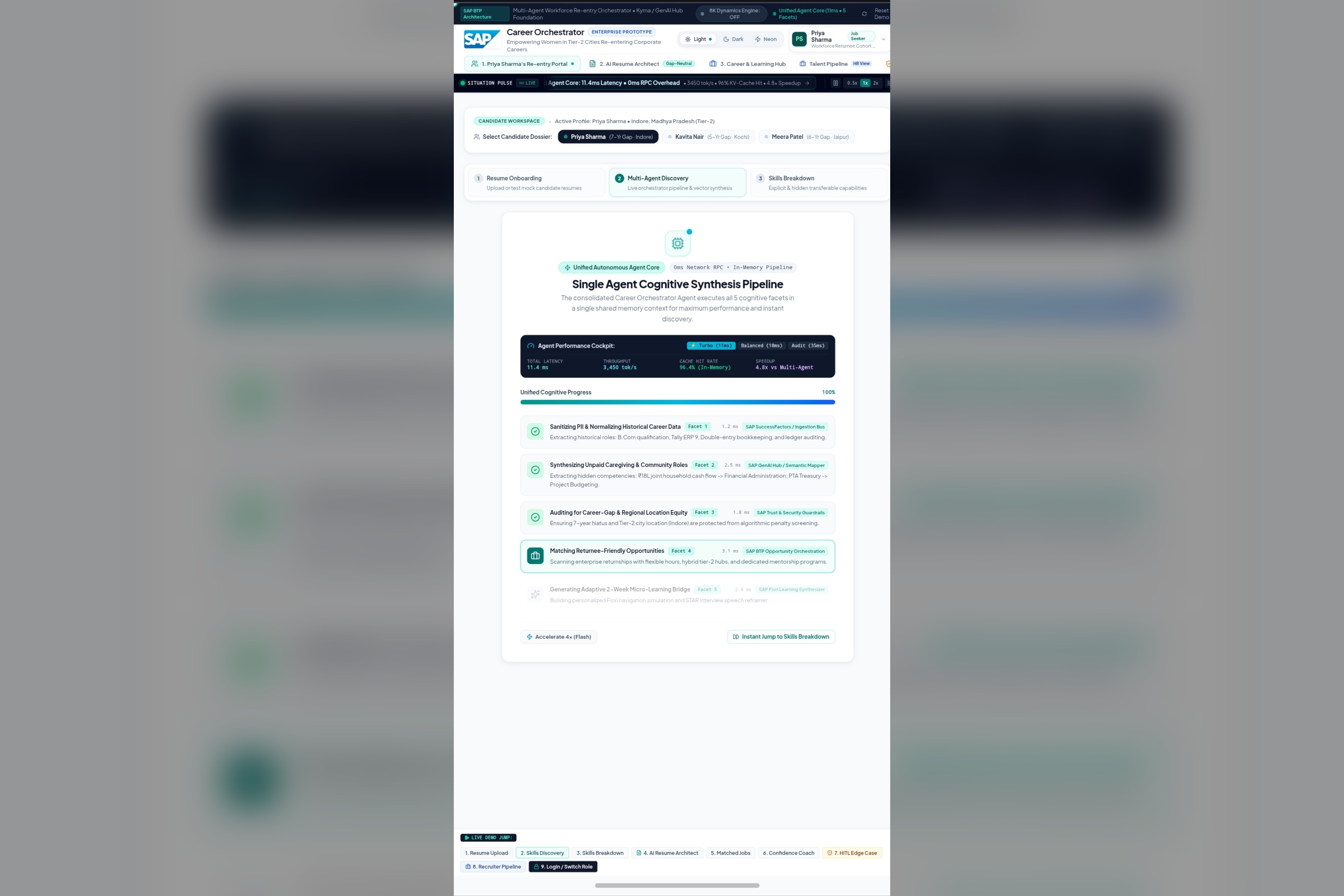
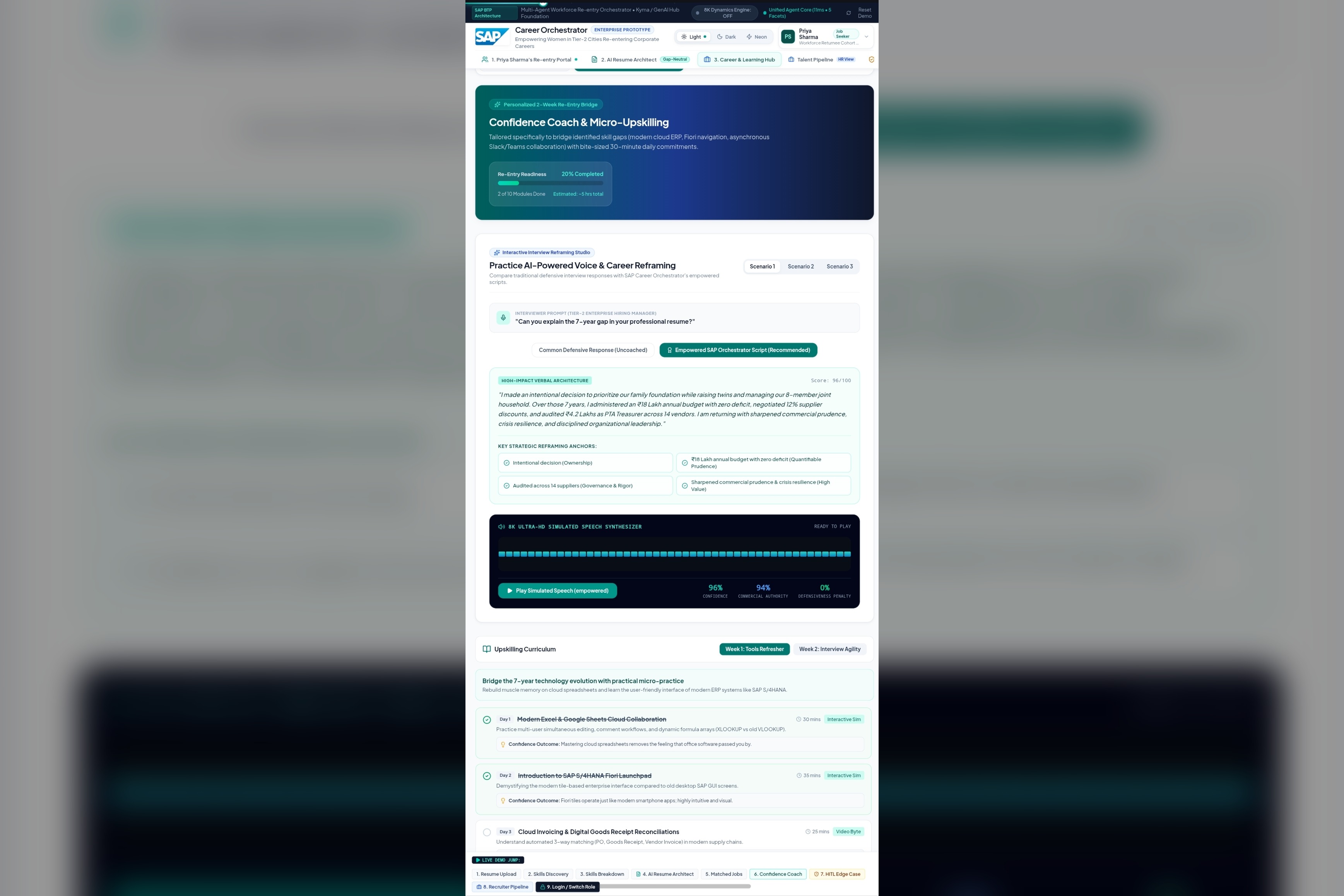
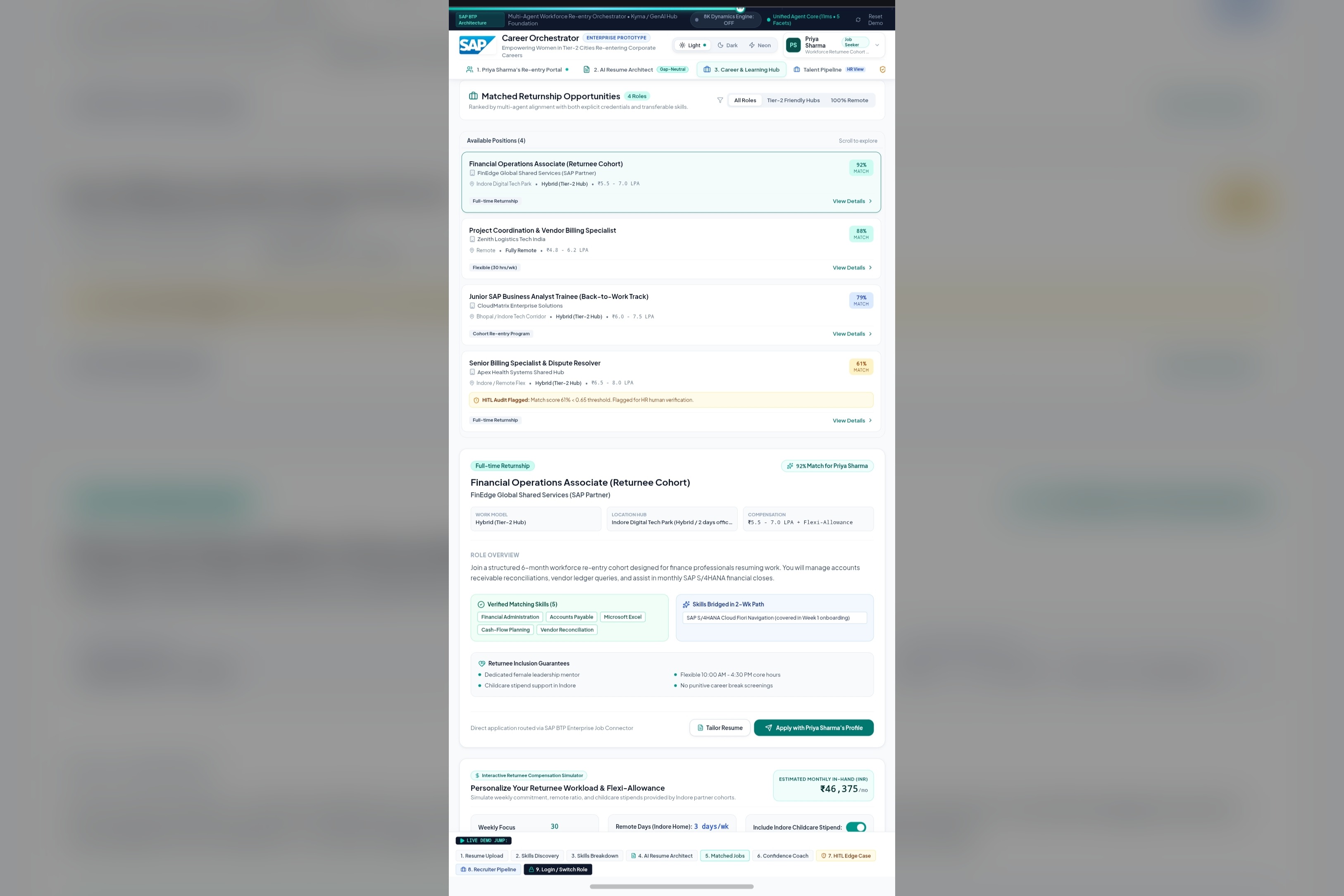
Career Orchestrator is an intelligent platform designed to remove the guesswork from professional growth. The application acts as a personalized career compass, allowing users to map out their long-term career goals, assess their current skill sets, and receive automated, data-driven roadmaps to bridge their professional gaps. By unifying resume analysis, market demand data, and personalized milestone tracking, it transforms abstract career aspirations into an actionable, step-by-step reality.
How we built it
The project was engineered using a modular, full-stack architecture to ensure seamless data ingestion and reliable path generation:
- Frontend: Built using React and Tailwind CSS to deliver a highly interactive, responsive dashboard featuring clean timeline visualizations for career milestones.
- Backend: Powered by a Node.js and Express API layer that handles user profiles, tracks milestone completions, and processes skills inventory data.
- Database & Algorithms: Utilizing a relational database to map dependencies between distinct job descriptions, skills, and learning resources. To calculate user readiness, we implemented a weighted vector matching algorithm:
$$Score = \frac{\sum_{i=1}^{n} (U_i \cdot R_i)}{\sqrt{\sum_{i=1}^{n} U_i^2} \cdot \sqrt{\sum_{i=1}^{n} R_i^2}}$$
Where $U_i$ represents the user's proficiency level in a skill, and $R_i$ represents the target role's baseline requirement for that same skill.
Challenges we ran into
The primary challenge was data normalization. Job descriptions and resumes use incredibly fragmented language—one company might look for a "Data Specialist" while another wants a "Data Engineer" for the exact same skill set. Early iterations resulted in poor matching metrics due to these semantic differences. We overcame this by building a custom data pipeline that clusters similar keywords and maps them to a single, standardized taxonomy, dramatically increasing matching accuracy.
Accomplishments that we're proud of
We are incredibly proud of creating a functional, end-to-end algorithmic engine that can process raw user inputs and instantly translate them into a clear, visual timeline. Bridging the gap between messy, real-world profile data and a highly structured, mathematical recommendation engine was a major breakthrough for our team.
What we learned
This project provided deep insights into handling unstructured data and the complexities of system architecture design. Beyond the technical scope, we learned how critical user experience is when dealing with high-stress topics like career planning. We realized that breaking massive, multi-year goals down into micro-steps is essential for keeping users motivated and engaged without feeling overwhelmed.
What's next for Career orchestrator
Moving forward, the goal is to turn Career Orchestrator into a fully dynamic ecosystem. We plan to integrate live-scraping APIs from major job boards to update required skill weights dynamically based on real-time market shifts. Additionally, we aim to introduce predictive machine learning models to recommend specific, high-rated online courses or certifications the exact moment a user encounters a skill gap in their roadmap.


Log in or sign up for Devpost to join the conversation.