-
-
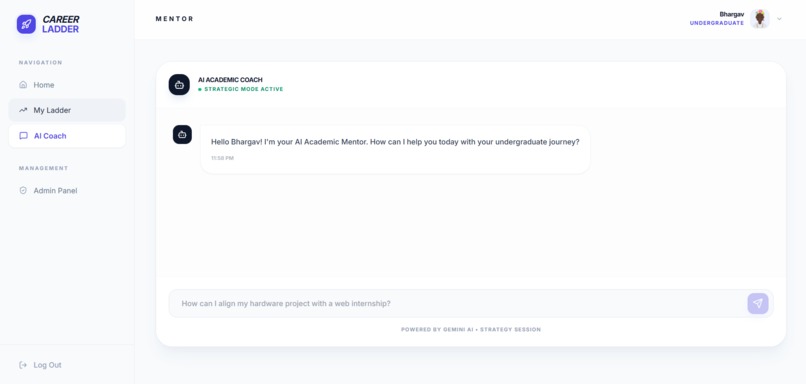
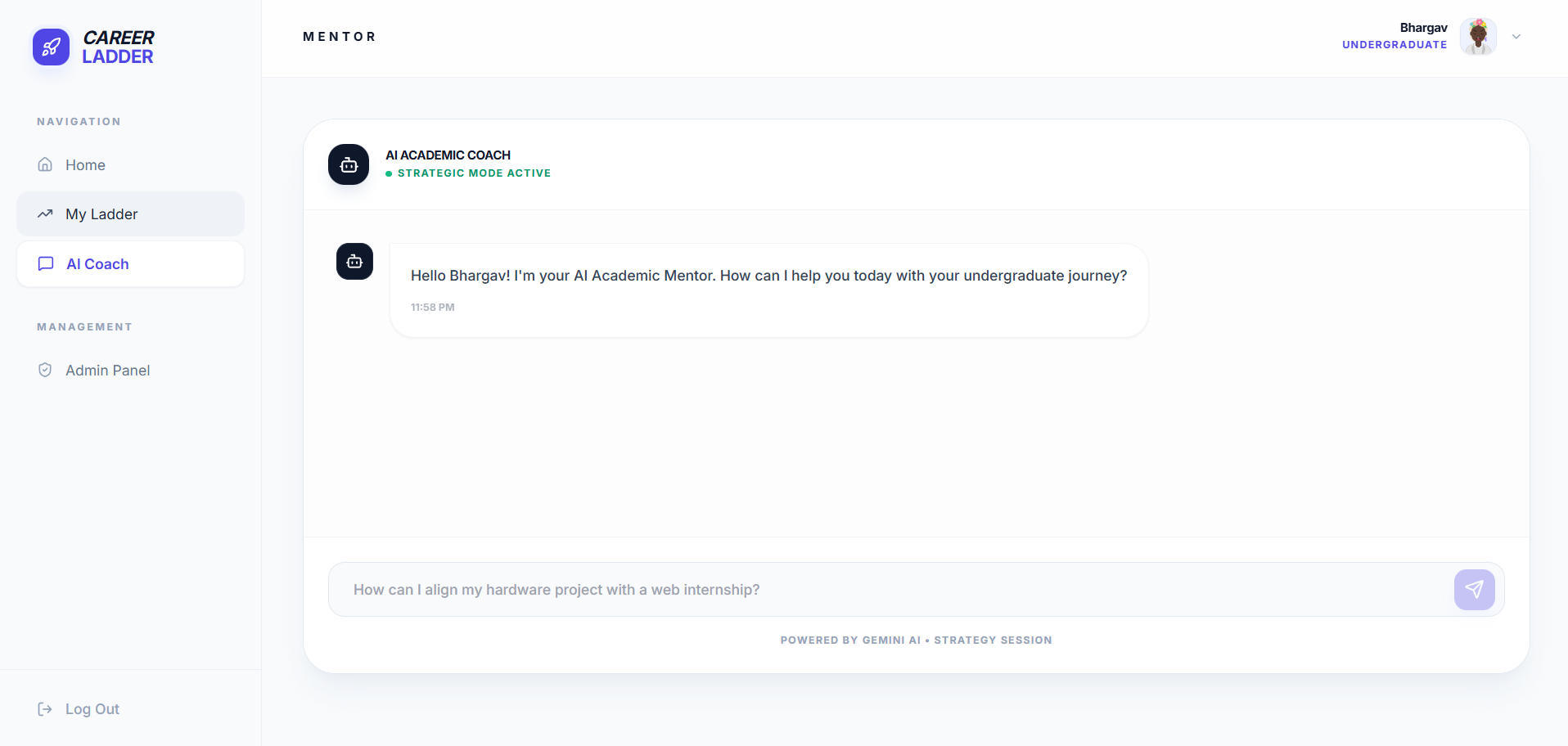
AI coach
-
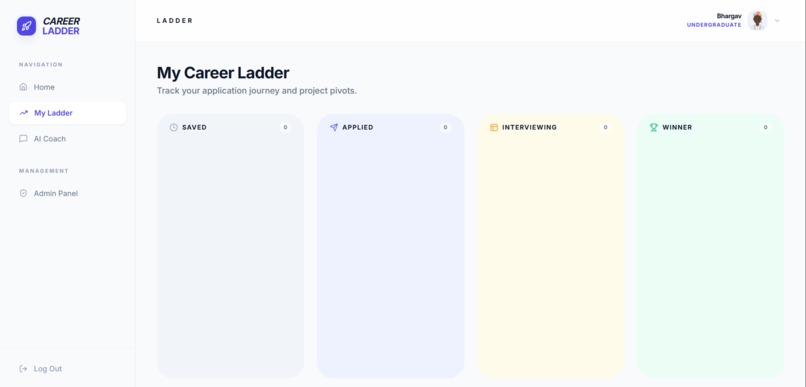
The Ladder page
-
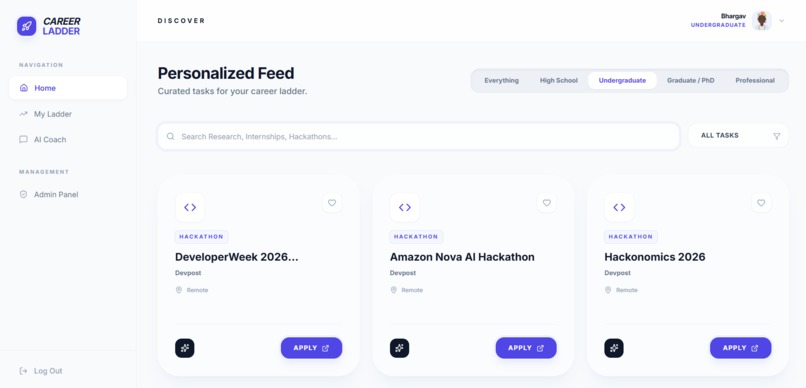
Home page
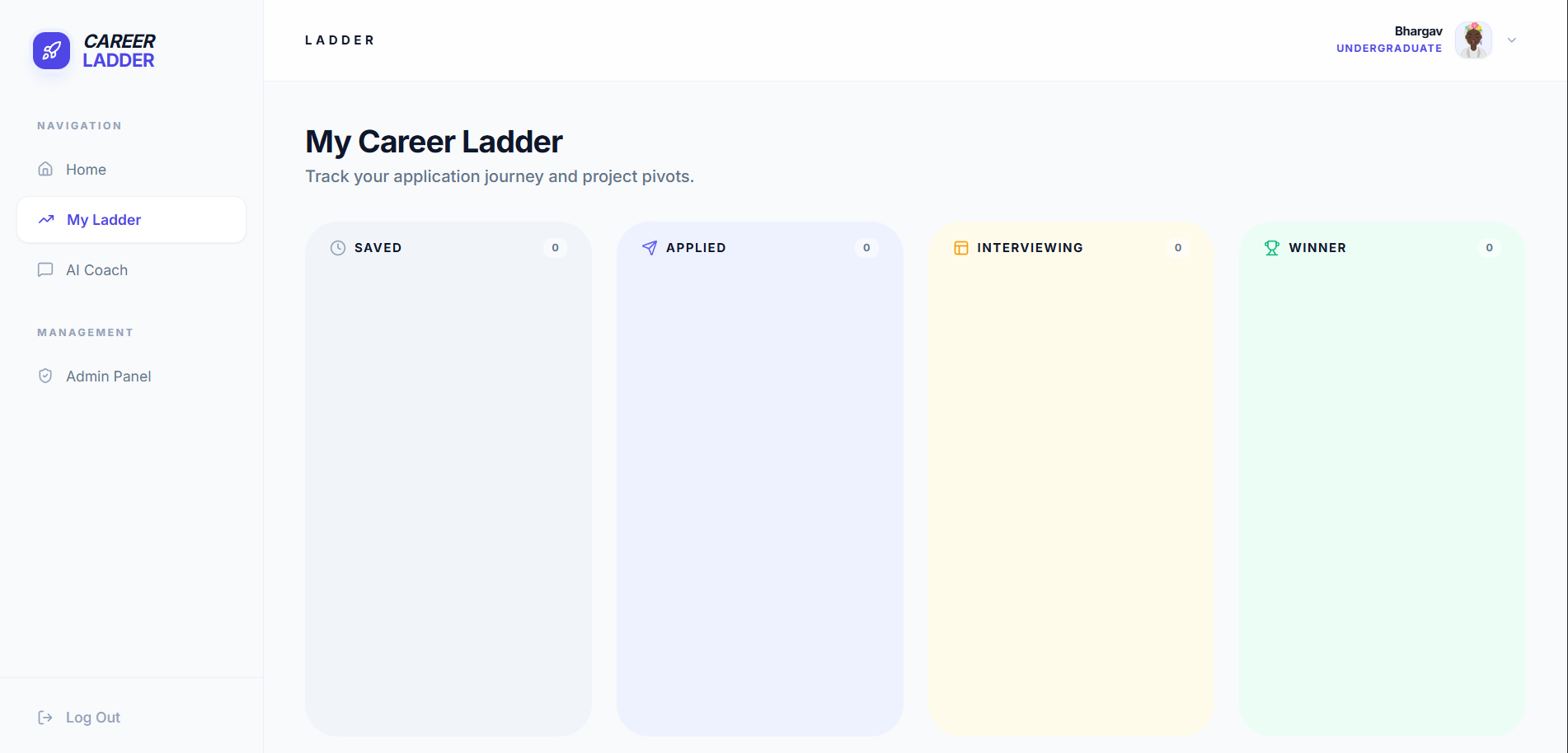
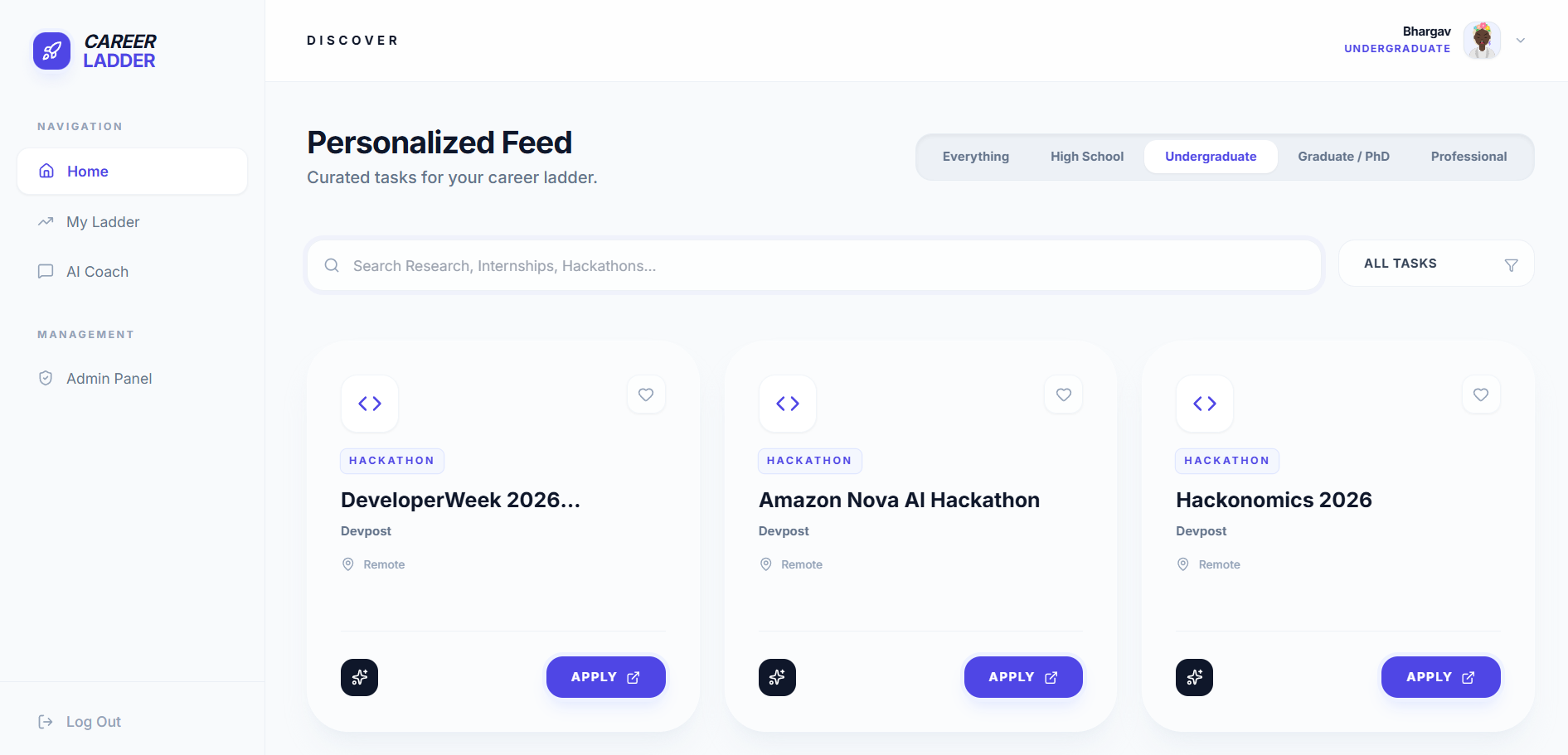
Inspiration
We noticed that career opportunities are often scattered across disparate sources, making it difficult for job seekers to get a clear, consolidated view of the landscape. We wanted to bridge this gap by creating Career-ladder, a centralized web platform designed to streamline the search for career-related opportunities. The goal was to build a unified hub that simplifies discovery and helps users navigate their professional growth without the noise of fragmented information.
What it does
Career-ladder acts as a centralized aggregator for career opportunities. It provides a clean, user-friendly interface where users can browse, filter, and access various professional listings in one place. By normalizing data from different sources, it offers a consistent viewing experience, allowing users to focus on the content of the opportunity rather than navigating different UI patterns across the web.
How we built it
We adopted a modern, high-performance tech stack to ensure scalability and a smooth user experience all using Gemini: Frontend: We built the interface using React, focusing on a responsive design that handles dynamic data efficiently. Backend: We utilized FastAPI for our server-side logic. Its asynchronous capabilities allow for fast data retrieval and efficient API endpoint management. Database & Auth: We integrated Supabase to handle our database needs and authentication. This allowed us to rapidly set up a secure backend infrastructure and focus on the core application logic.
Challenges we ran into
One of the main hurdles was ensuring seamless communication between the React frontend and the FastAPI backend, particularly when handling real-time data states. Additionally, designing a schema in Supabase that could flexibly accommodate different types of career opportunity data required several iterations to get right. Normalizing the data structure so that it displayed uniformly on the frontend was also a complex task that required careful planning.
Accomplishments that we're proud of
We are proud of successfully integrating FastAPI with Supabase to create a robust backend that serves data instantly to our React client. Seeing the platform actually centralize data and render it cleanly was a major milestone. We are also proud of the modular architecture we established, which paves the way for easy feature expansion in the future.
What we learned
Building Career-ladder deepened our understanding of full-stack development, specifically the synergy between Python-based backends and JavaScript frontends. We learned a great deal about:
Efficient state management in React.
Structuring RESTful APIs with FastAPI.
Leveraging Supabase for rapid backend development and row-level security.
What's next for Career-ladder
The current version is just the beginning. We plan to expand Career-ladder by:
AI Integration: Implementing AI-driven recommendations to match users with opportunities based on their skills and interests.
Community Features: Adding a social layer where users can discuss specific opportunities or share advice.
Advanced Filtering: Introducing more granular filters to help users find niche roles that match their exact criteria.


Log in or sign up for Devpost to join the conversation.