Inspiration
Numerous students complete their education without a solid grasp of which profession aligns with their preferences and capabilities. I personally faced this dilemma while investigating areas such as web development, graphic design, UI/UX, and various technology sectors. Career Compass was established to assist students in transitioning from uncertainty to a clear and actionable path.
What it does
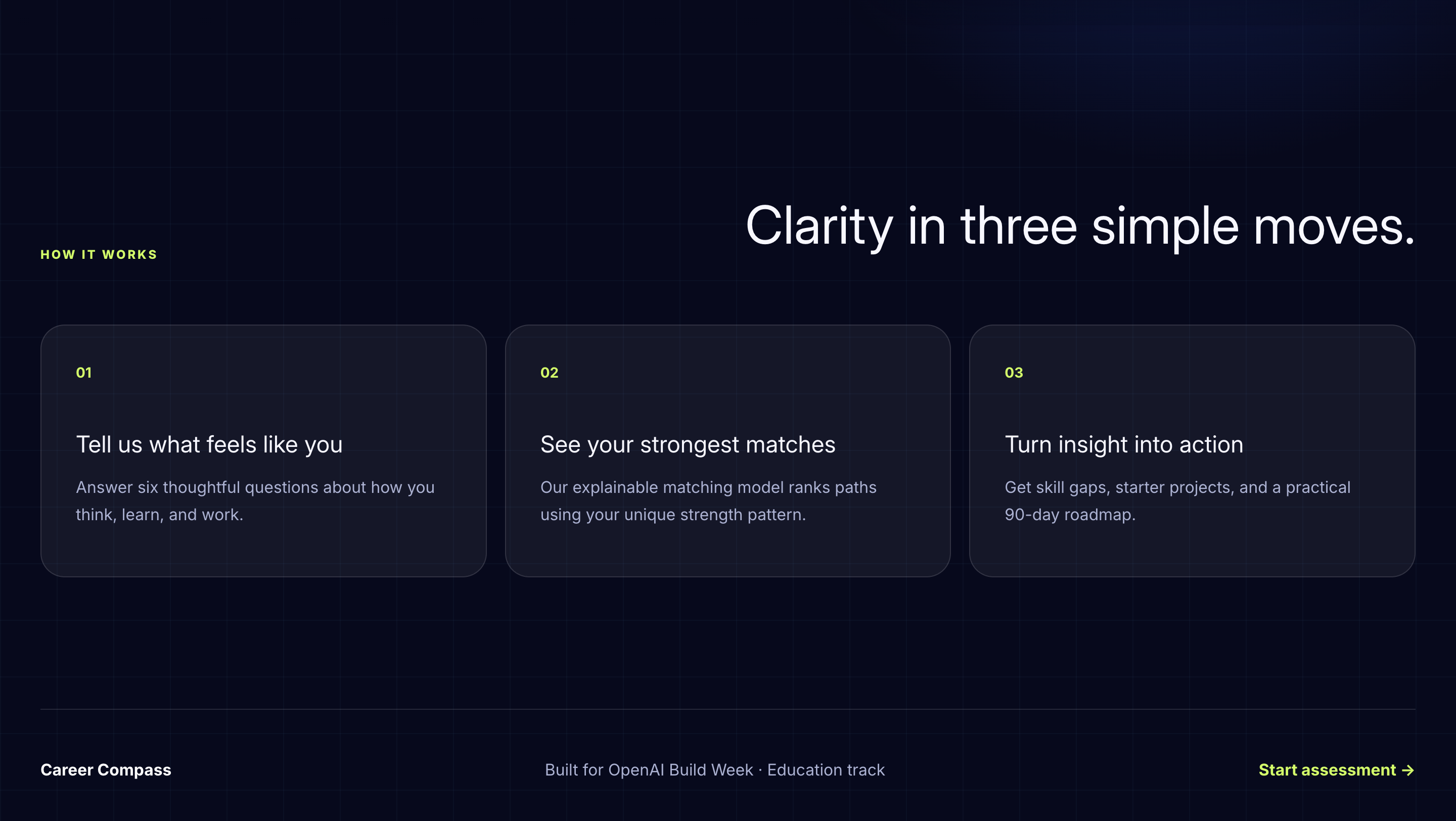
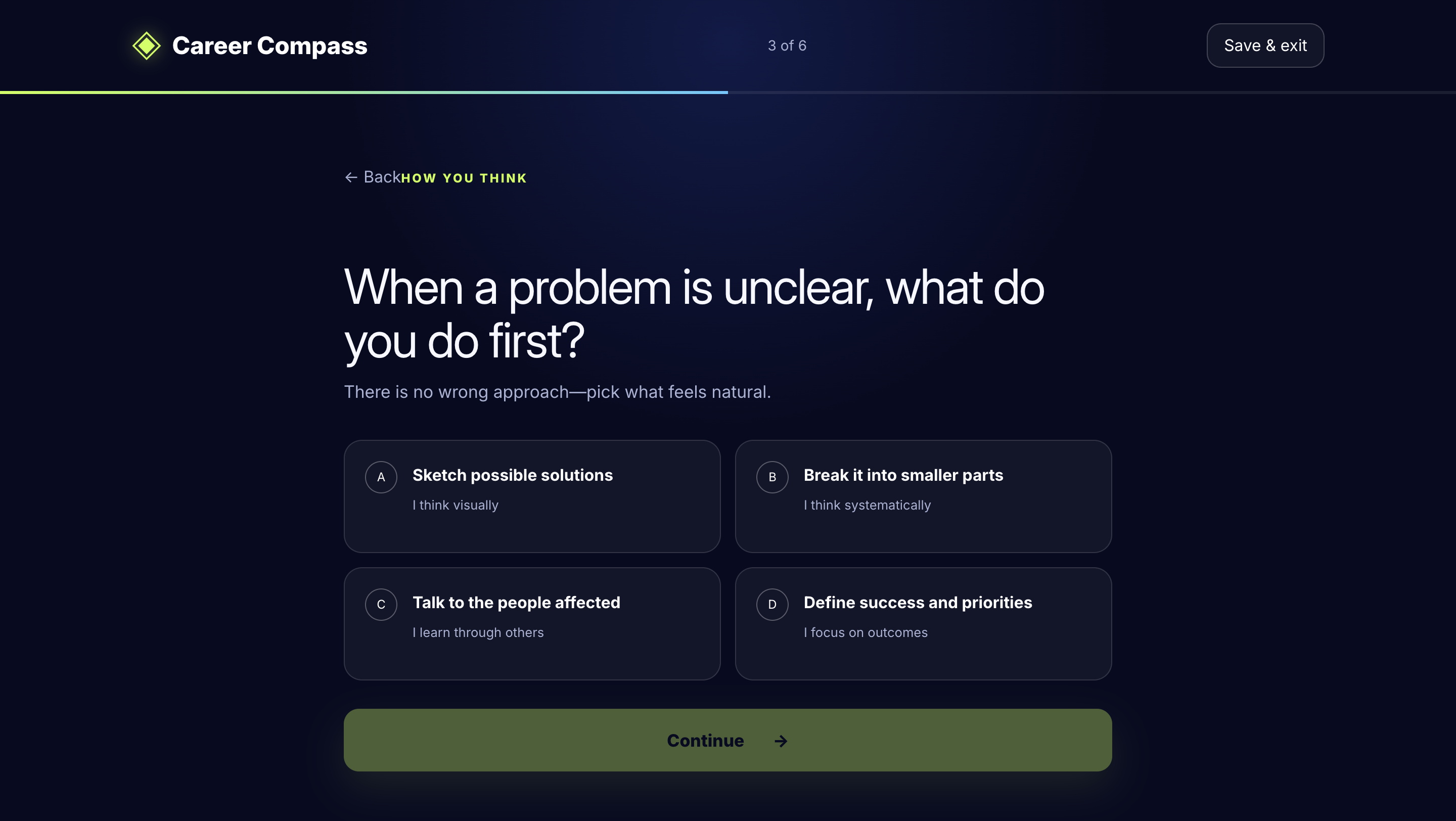
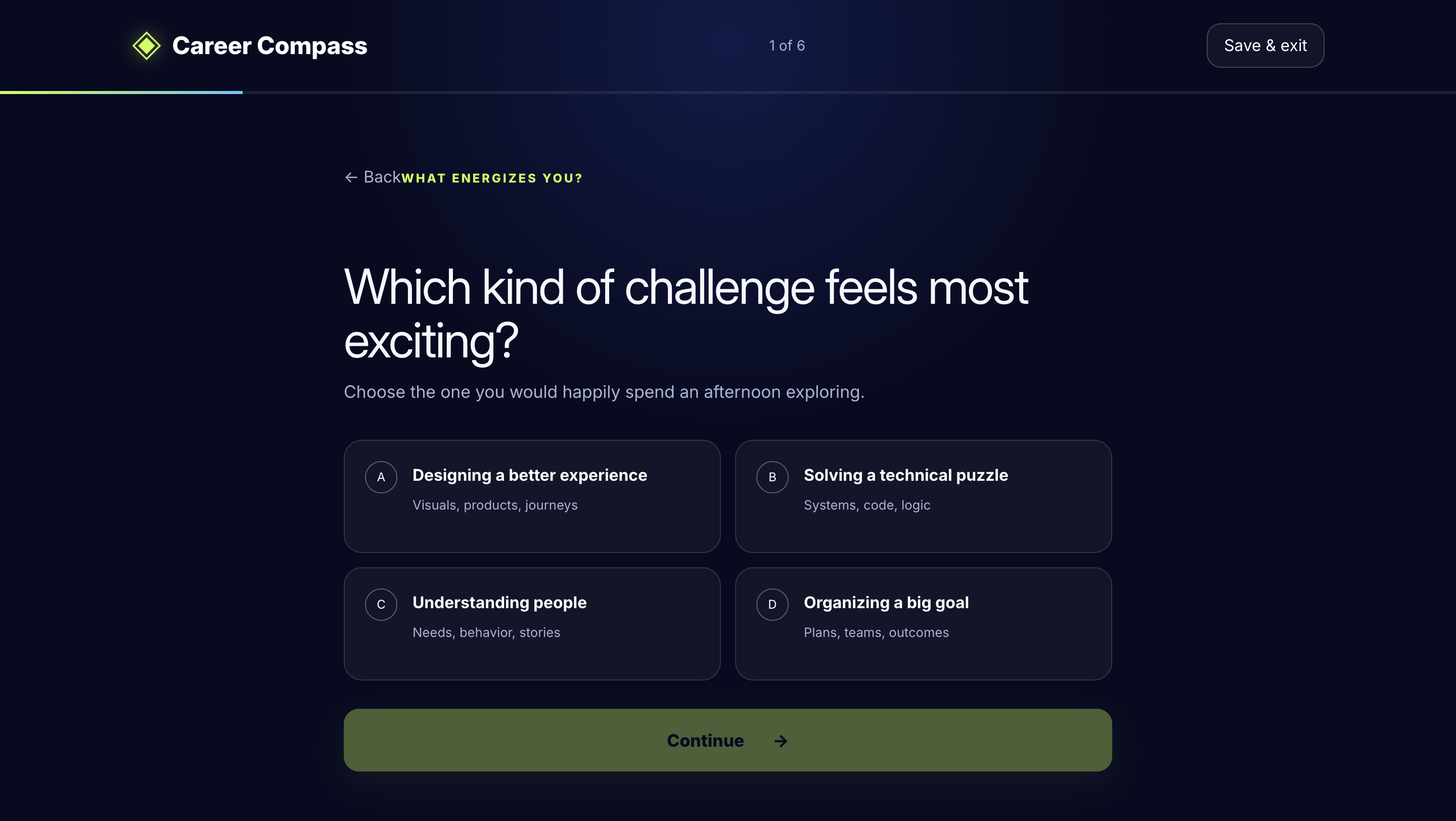
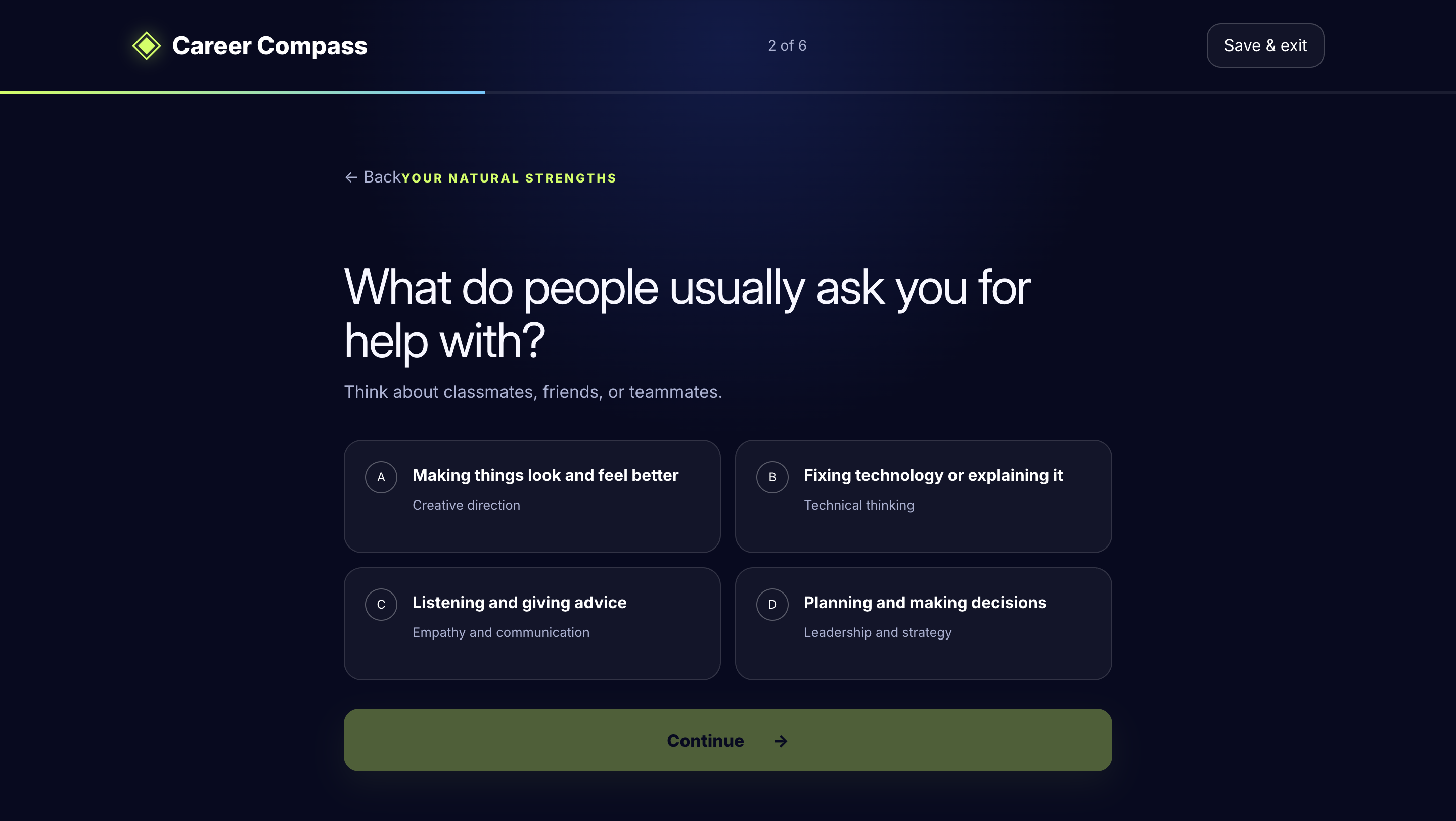
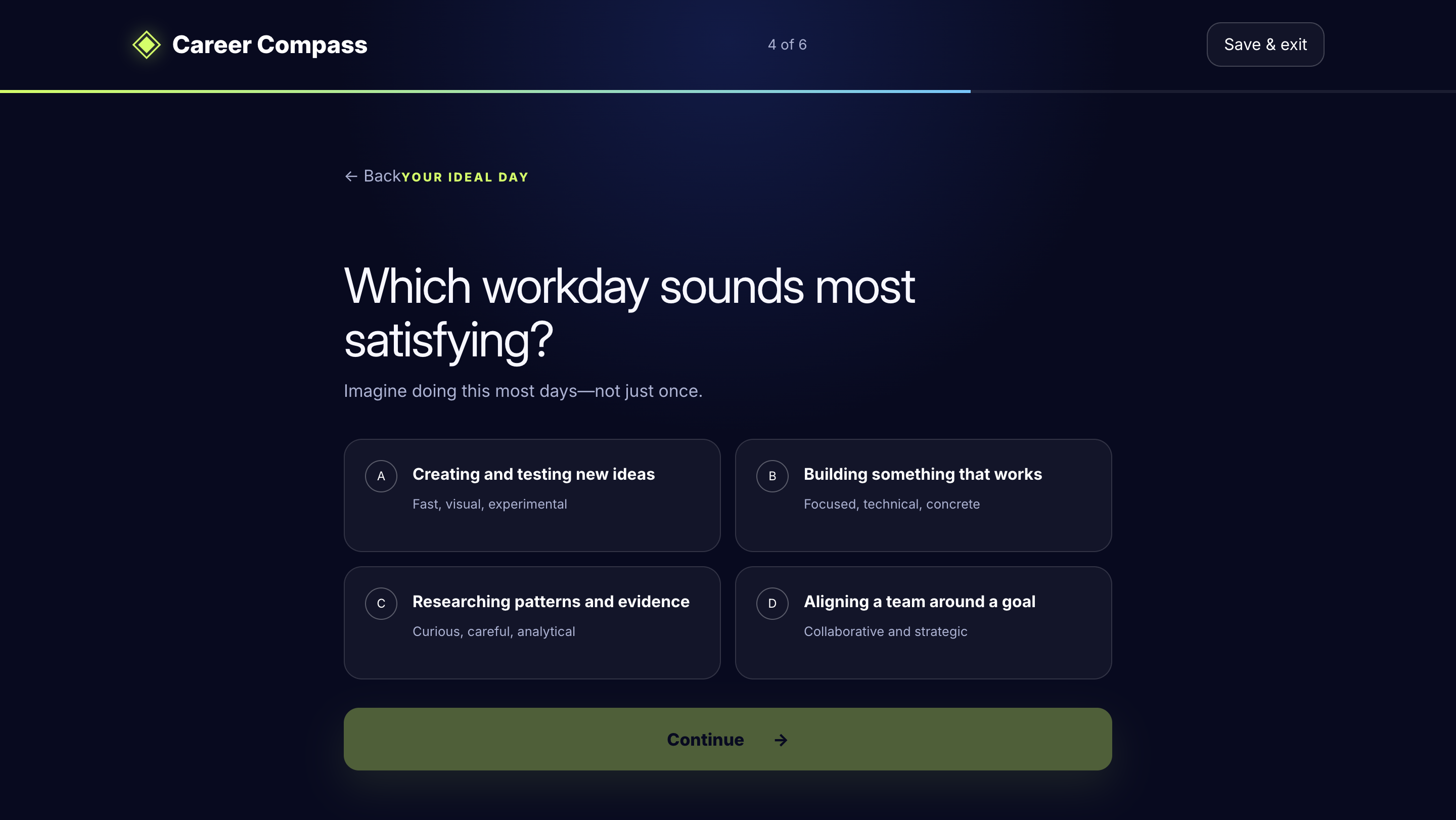
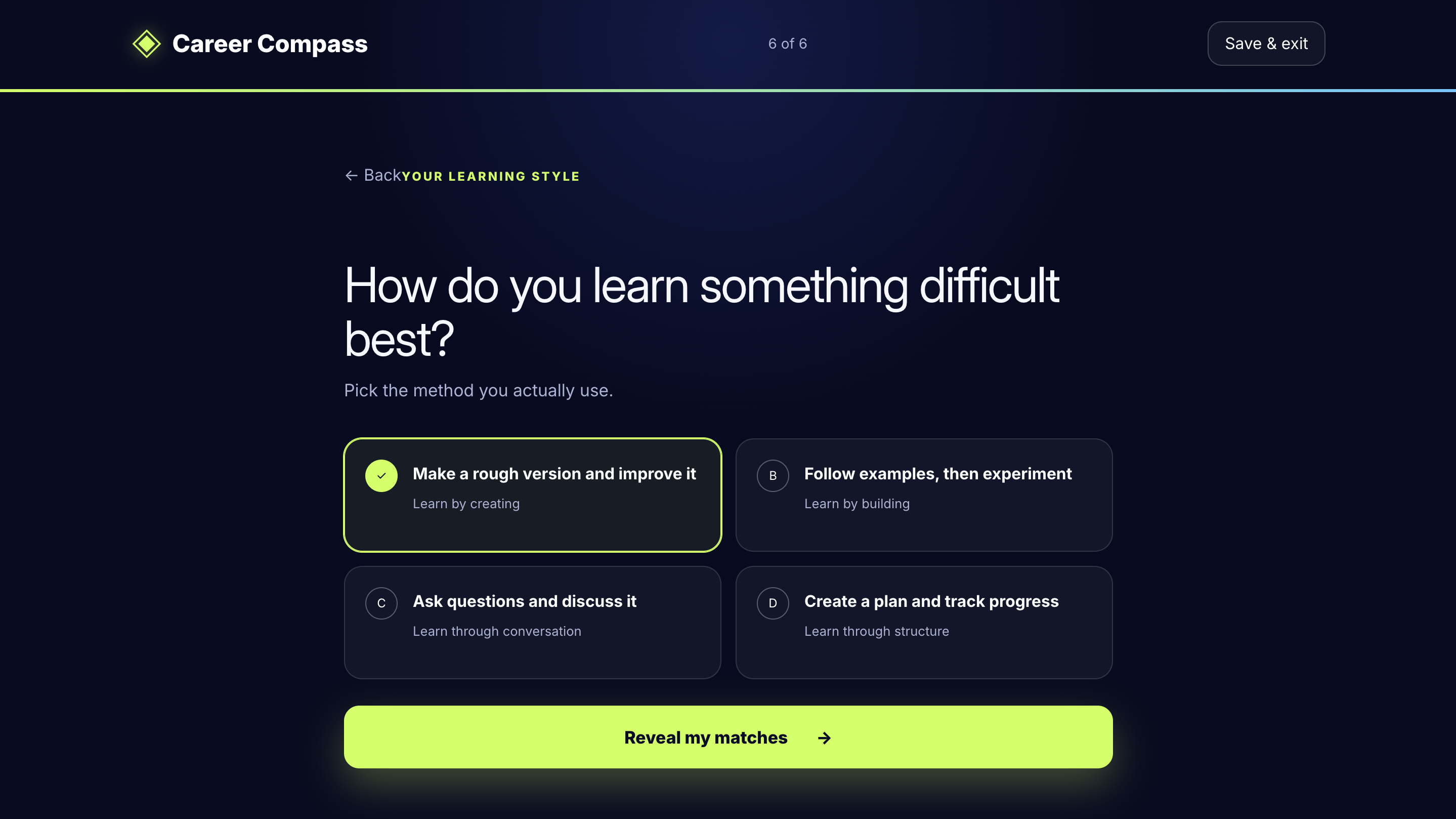
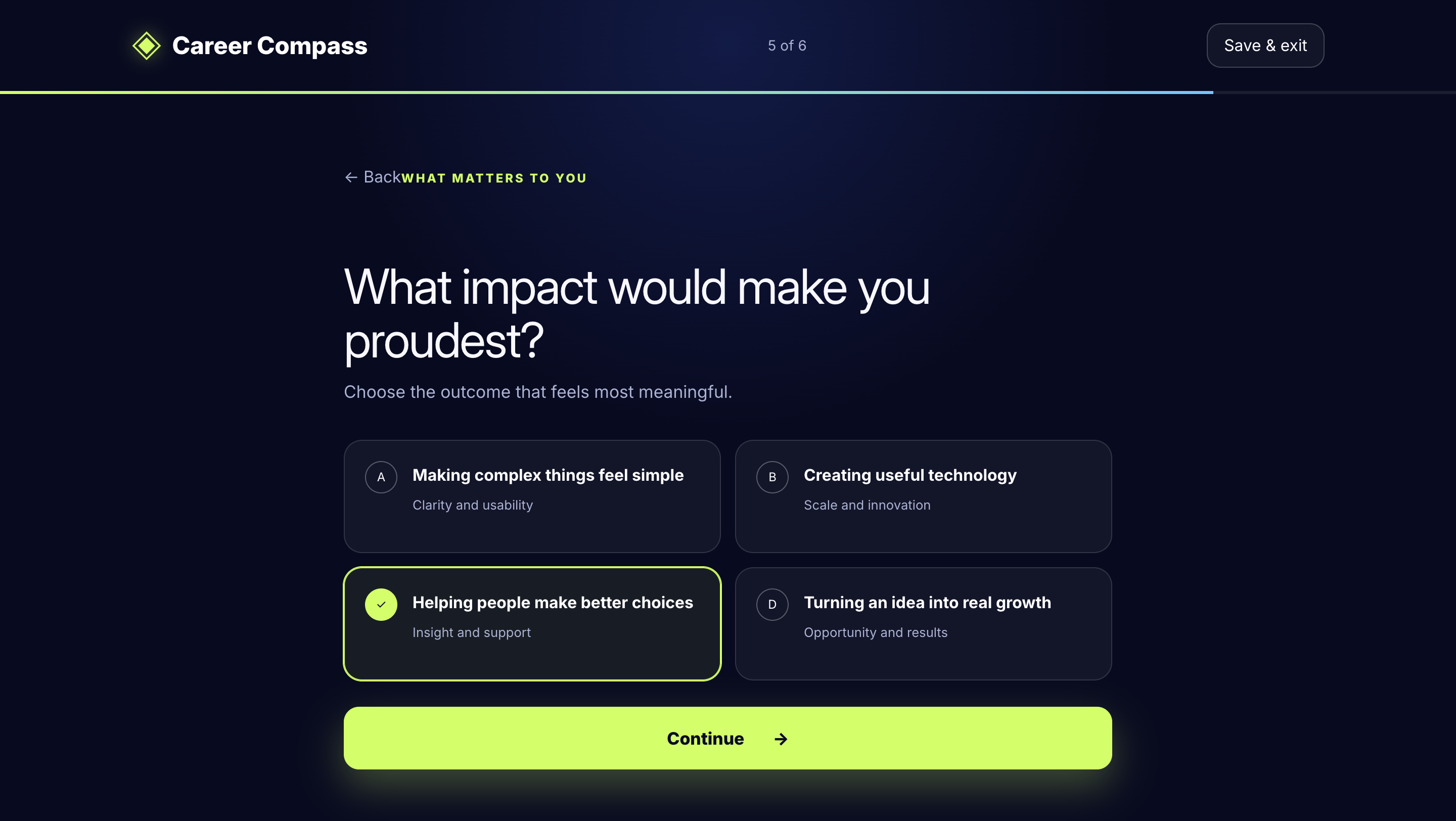
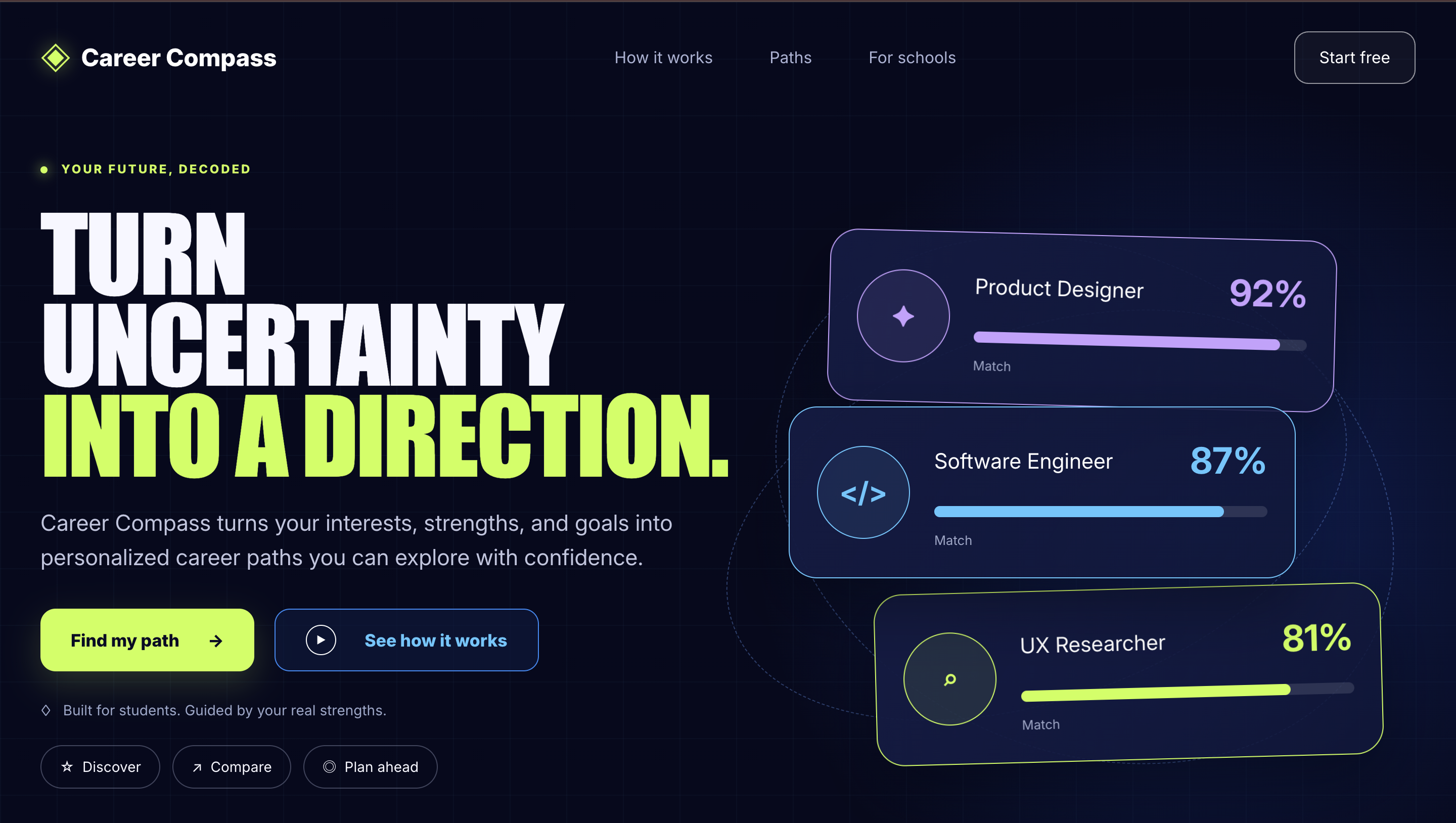
Career Compass assists students by providing a concise six-question assessment that focuses on their interests, strengths, cognitive approach, ideal work settings, the impact they wish to create, and their learning preferences.
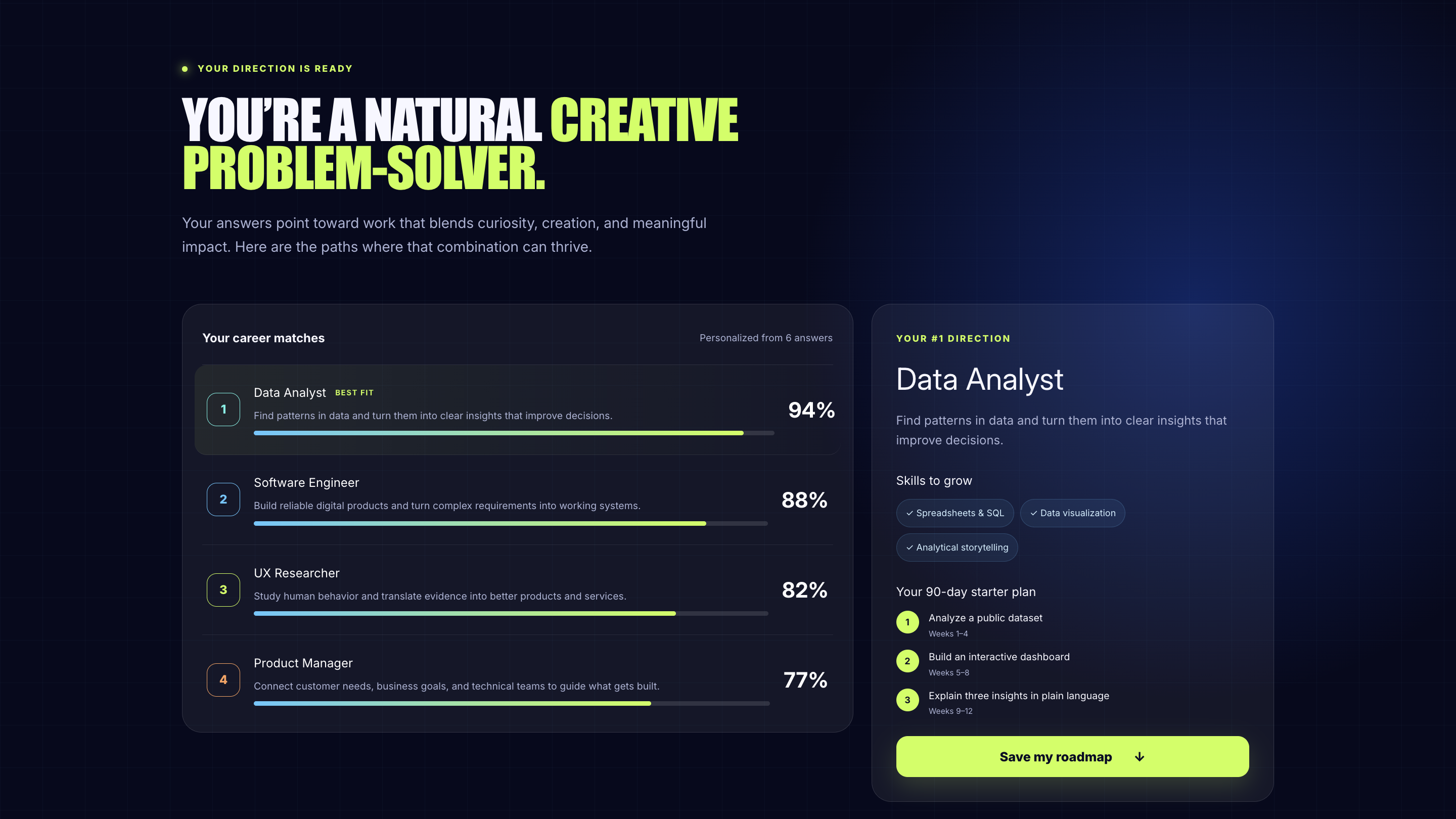
Upon finishing the assessment, students obtain:
- Ranked suggestions for careers along with customized percentages
- A detailed description of their most suitable career pathway
- Essential skills they ought to cultivate
- A realistic 90-day introductory roadmap
- Results that can be printed and saved for later use
Current professional tracks offered include Product Designer, Software Engineer, UX Researcher, Product Manager, and Data Analyst.
How I built it
I created Career Compass using React, TypeScript, Vinext, Vite, and Tailwind CSS. The matching algorithm assesses responses across five categories: design, technology, interpersonal skills, business acumen, and analytical abilities.
Every response adds weighted points to these categories. Each career profile features its own strength weights, enabling the application to evaluate the student's responses against each career path and rank the most applicable outcomes.
Throughout the project, I utilized Codex with GPT-5. 6 to facilitate the transition from the initial problem to a functioning product. Codex aided in product conceptualization, visual design, React and TypeScript coding, responsive design, assessment logic formulation, testing, debugging, and deployment.
Challenges I faced
The primary challenge lay in ensuring the results appeared personalized while maintaining clarity and transparency in the scoring system. I aimed to avoid presenting career recommendations without explanation. Consequently, I developed a deterministic weighted-matching framework that aligns each response with well-defined career dimensions.
Another obstacle involved transforming a serious educational concern into an experience that feels straightforward, contemporary, and motivating, rather than daunting.
What I learned
I discovered how to convert a broad student issue into a focused product with a distinct user pathway. Additionally, I learned to design an understandable recommendation model, create engaging assessment interactions, and collaborate effectively with Codex during rapid development phases.
What’s next
The upcoming iteration of Career Compass may feature:
- An expanded selection of career paths and sectors
- Education and salary data specific to different countries
- AI-driven tailored explanations
- Recommendations for courses, scholarships, and universities
- Options for student accounts and progress monitoring
- Dashboards for counselors and schools
- Support for multiple languages, including Urdu
- Insights from professional career counselors
Career Compass does not aim to make a long-term choice for students. Instead, it provides them with a well-informed and actionable starting point for their exploration.
Built With
- cloudflare
- codex
- css
- css3
- gpt-5.6
- html5
- javascript
- react
- tailwind
- typescript
- vinext
- vite


Log in or sign up for Devpost to join the conversation.