-
-
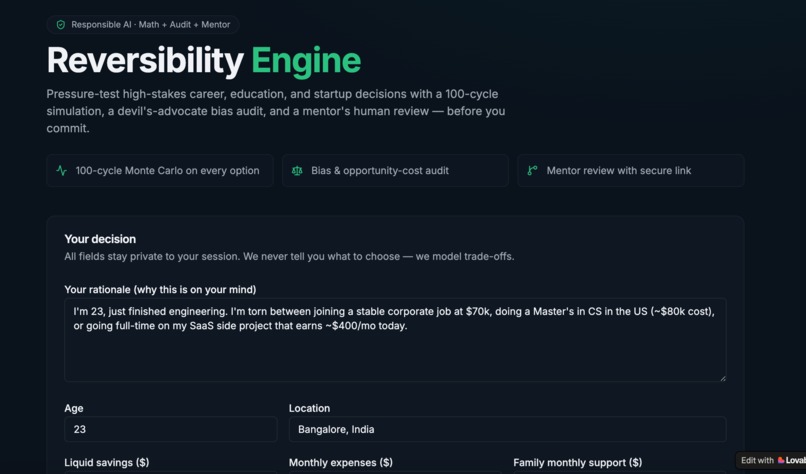
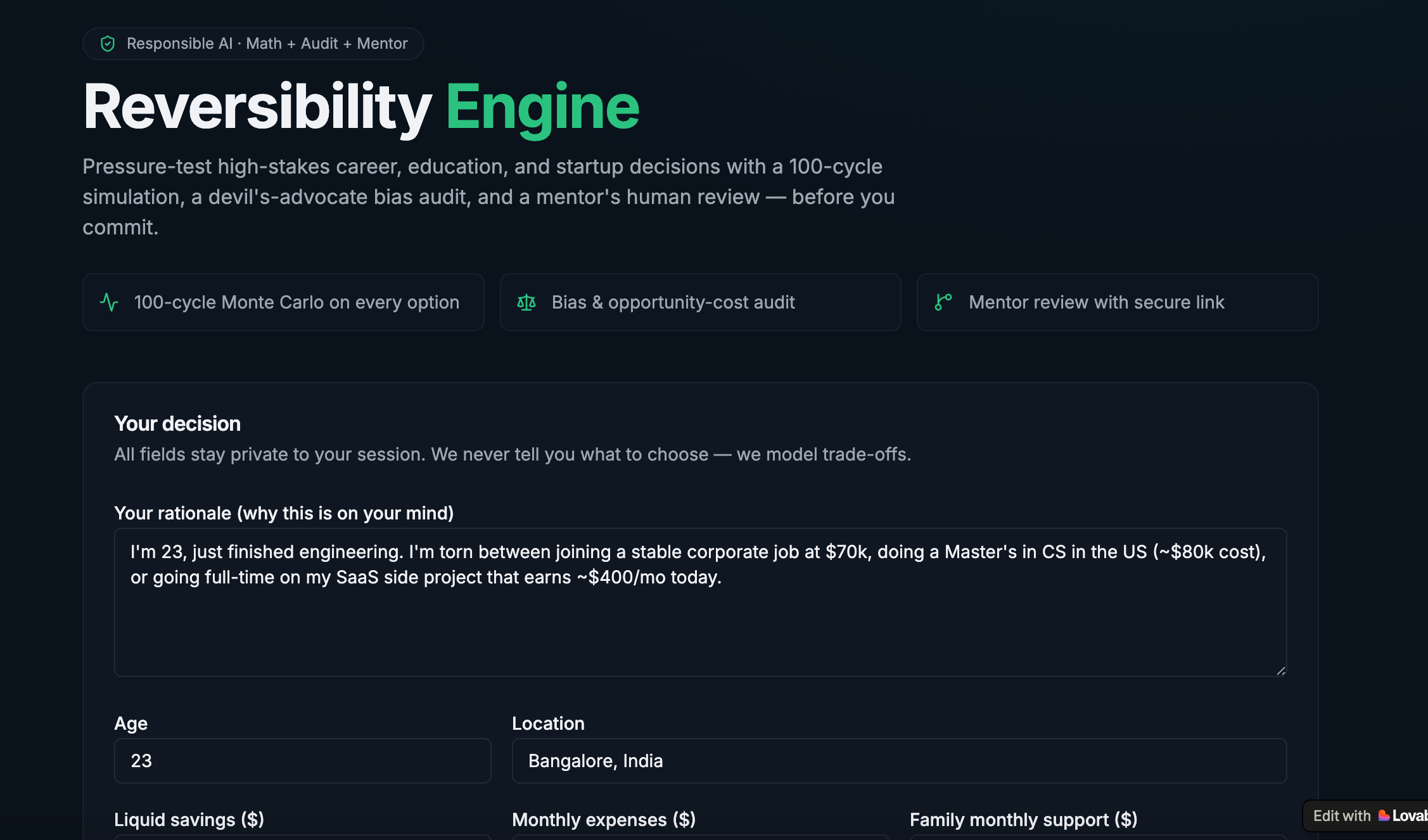
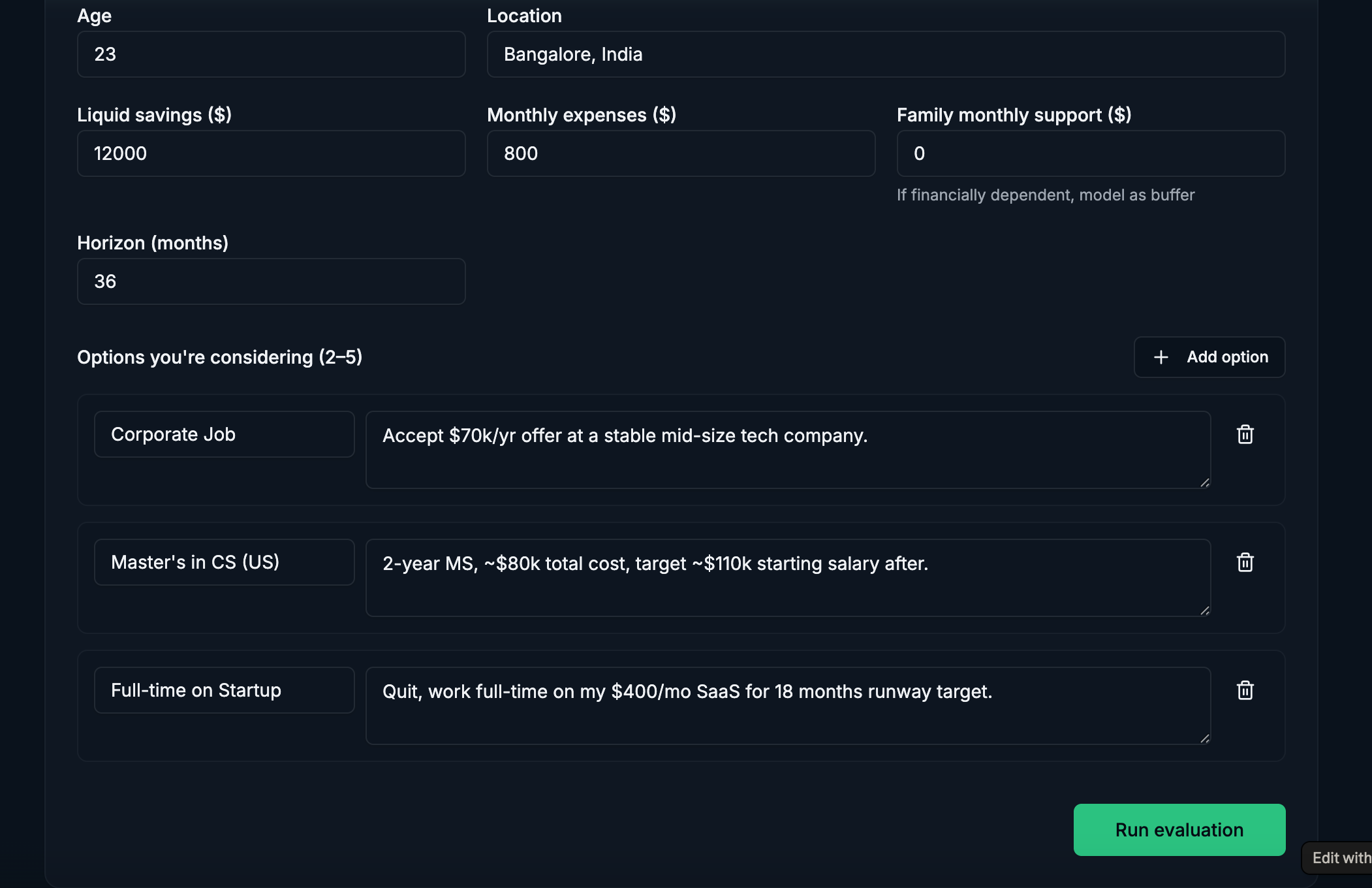
input/profile of user
-
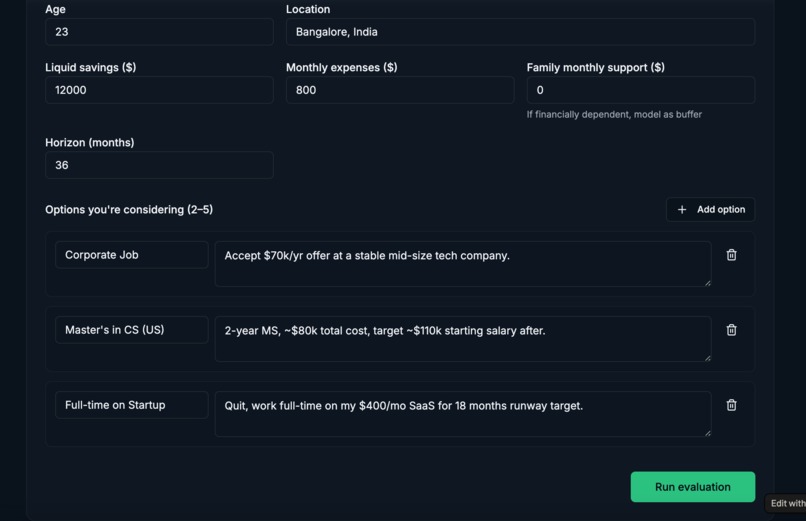
input/profile of user
-
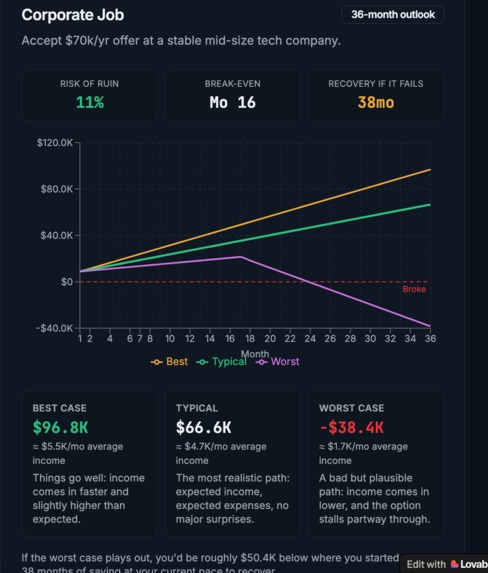
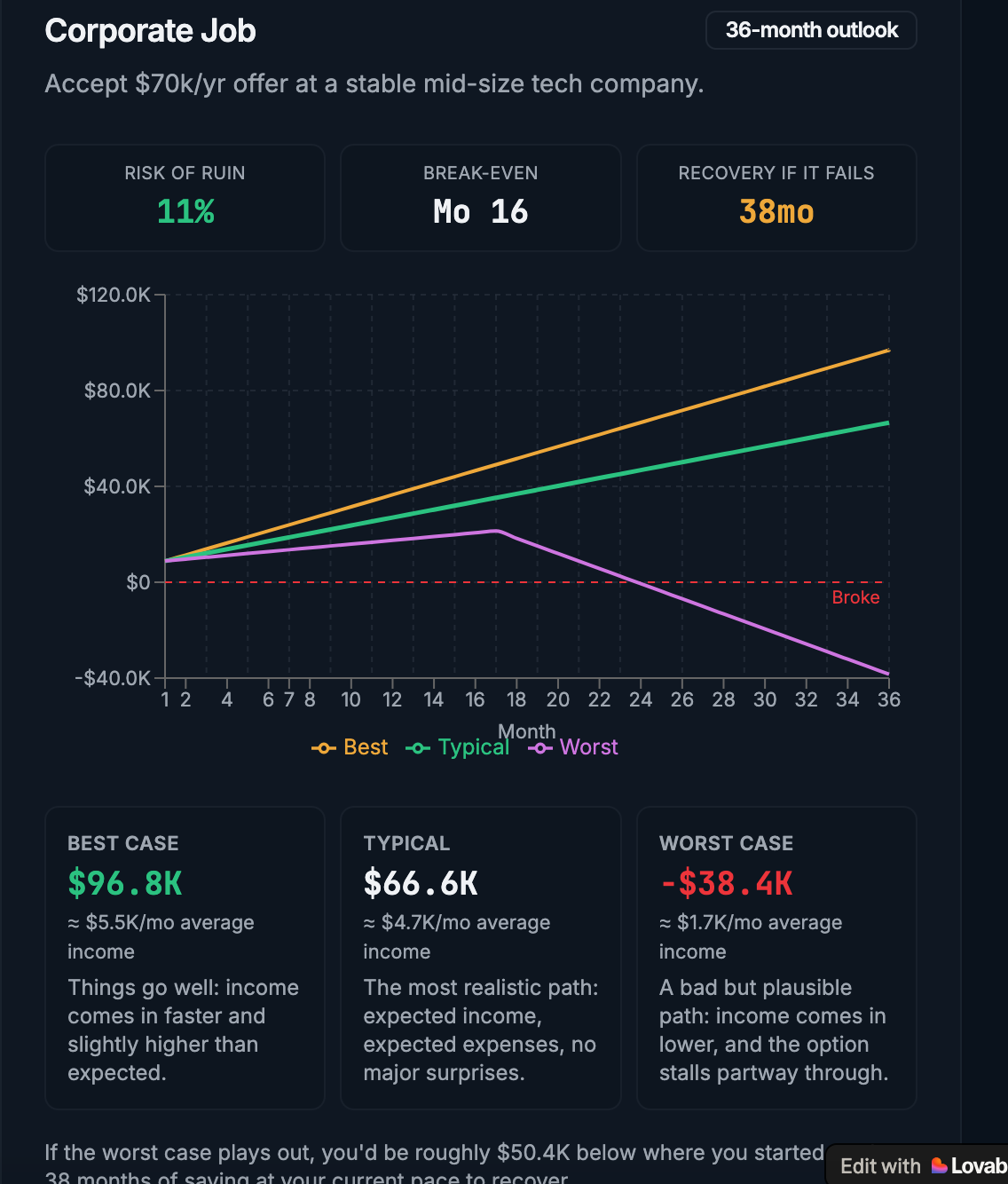
analysis example for each career choice
-
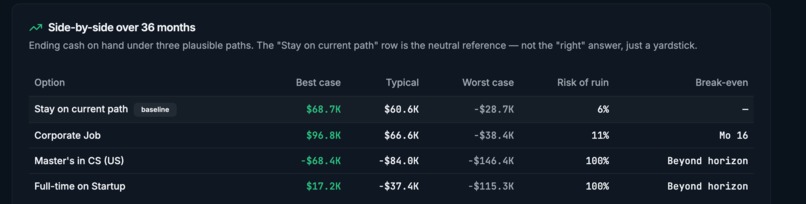
worst case, typical, best case scenerio
-
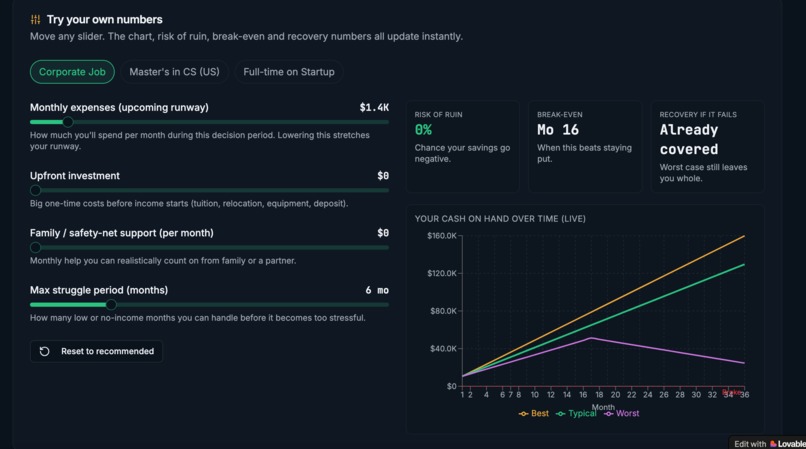
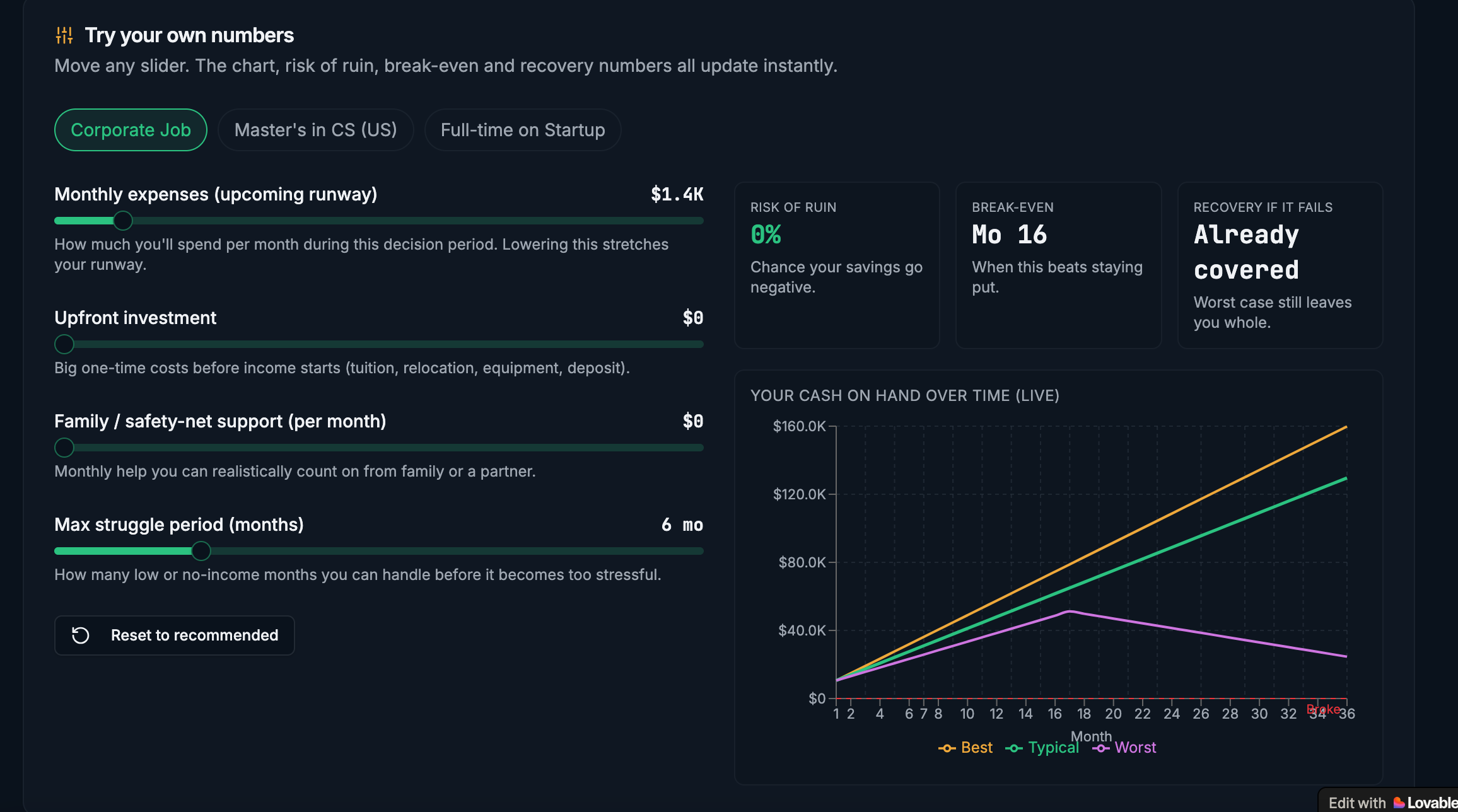
try your own numbers
-
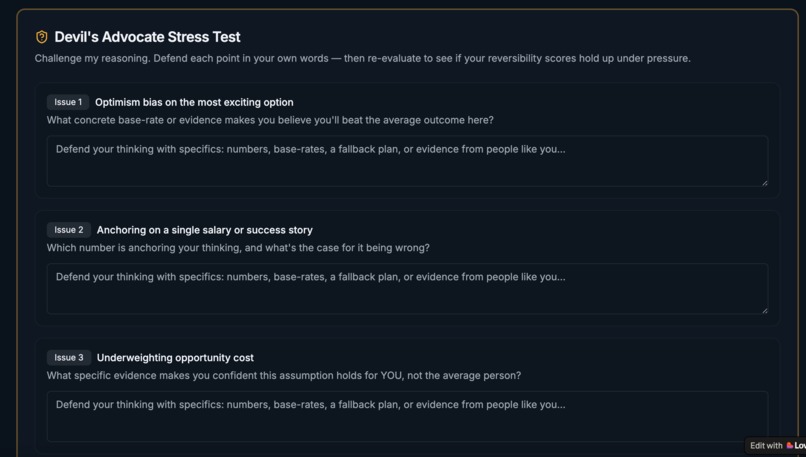
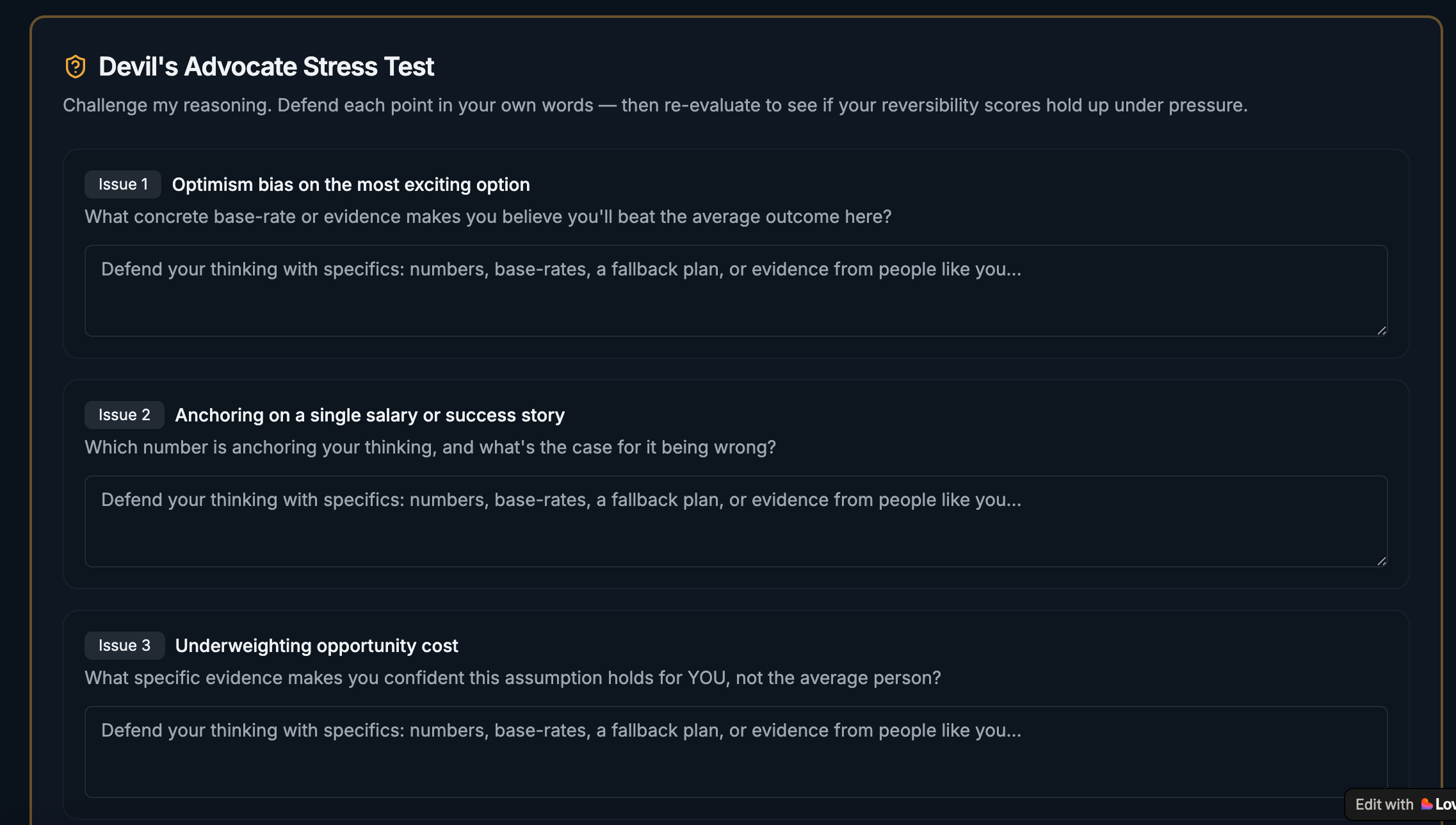
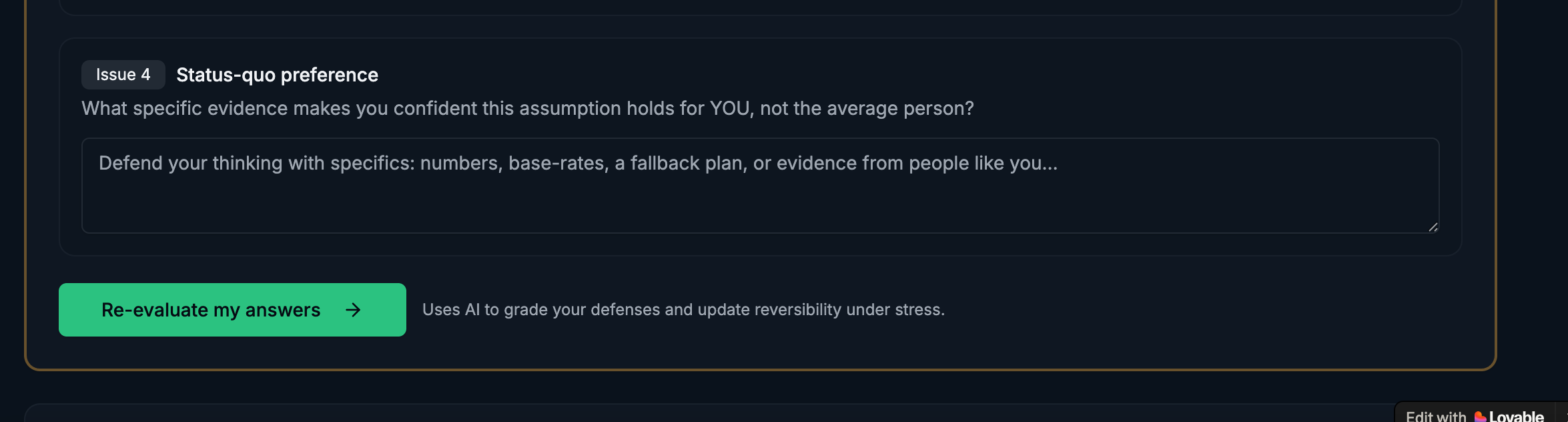
devils advocate
-
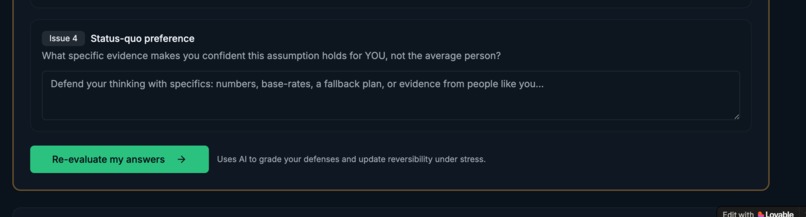
devils advocate
-
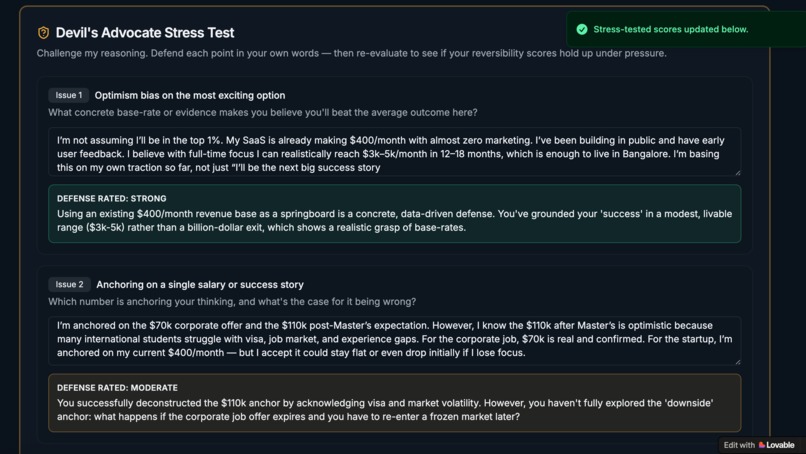
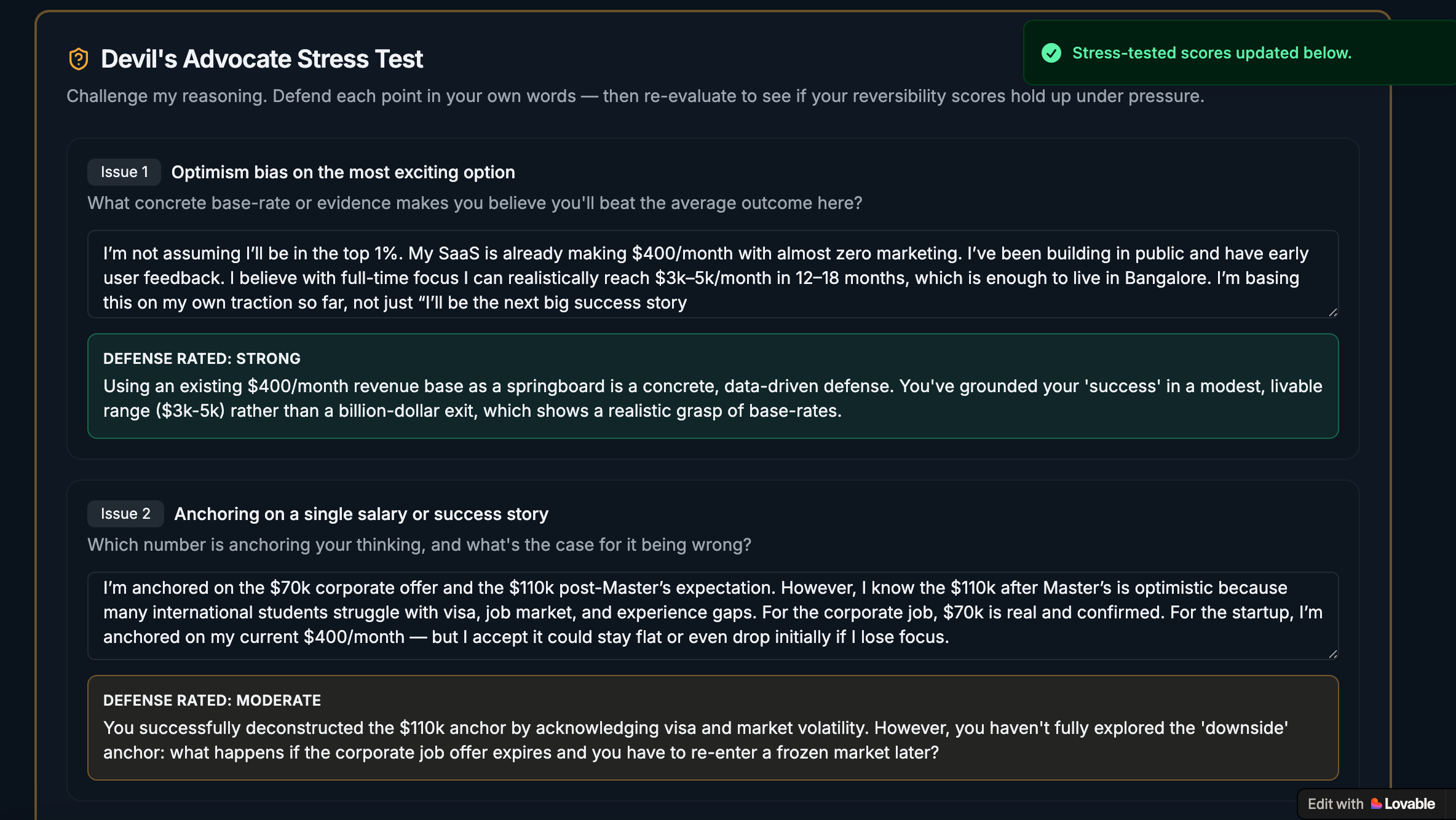
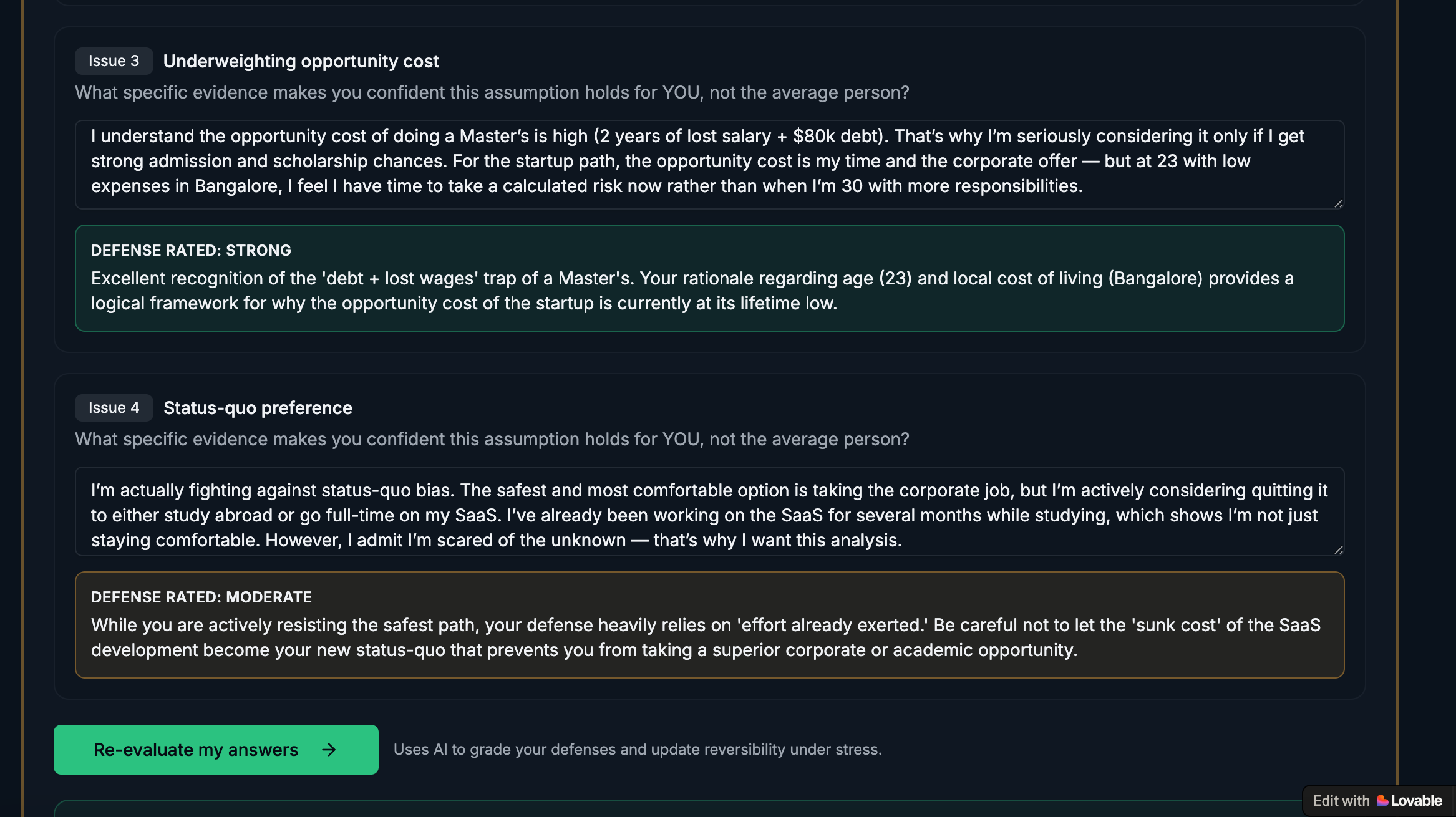
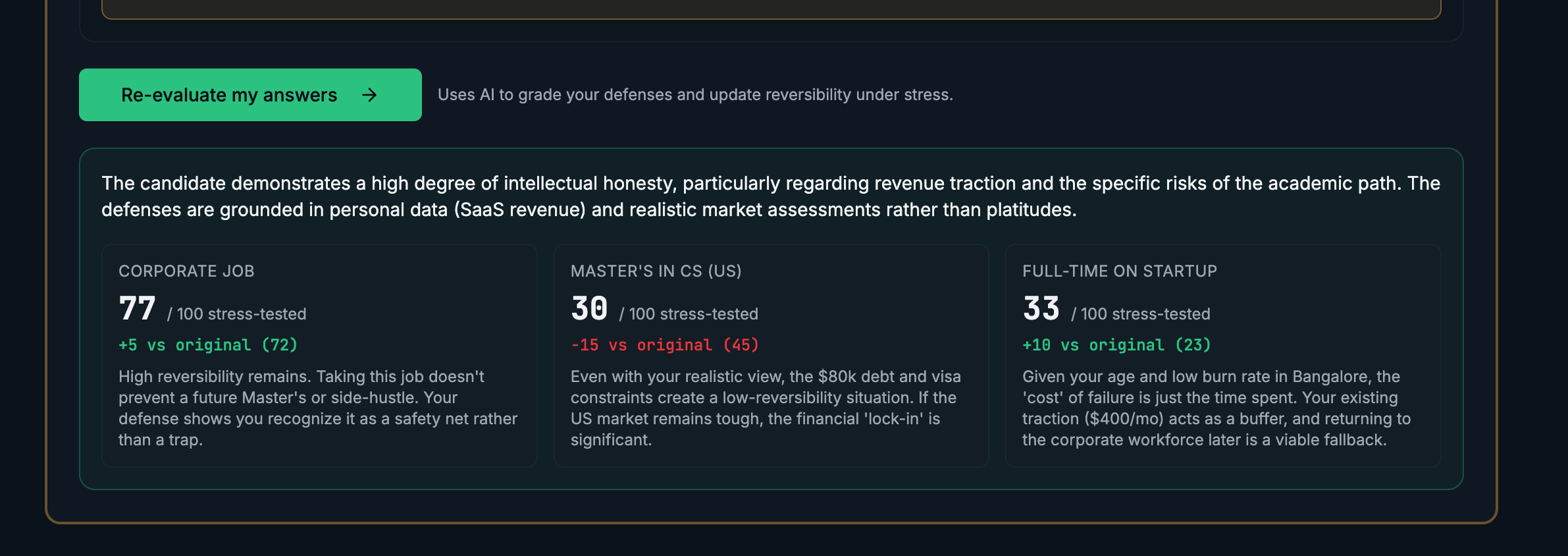
devils advocate sample result
-
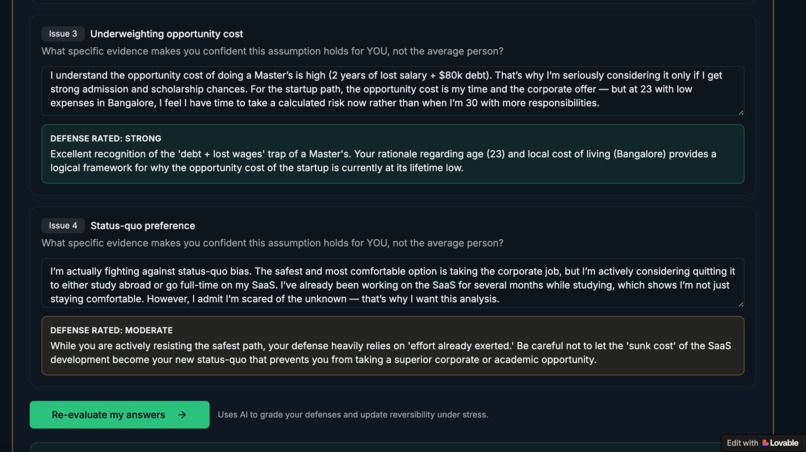
devils advocate sample result
-
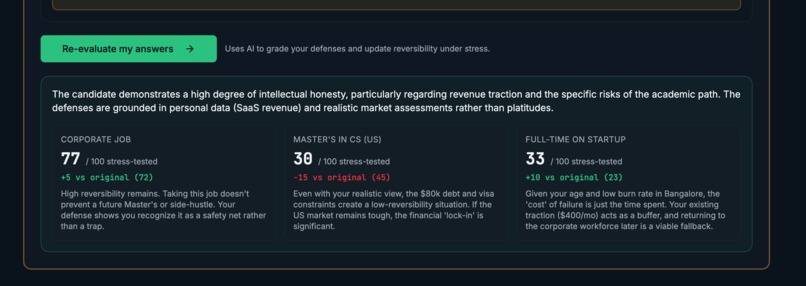
devils advocate sample result
-
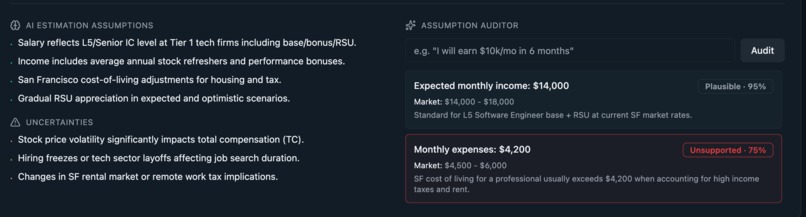
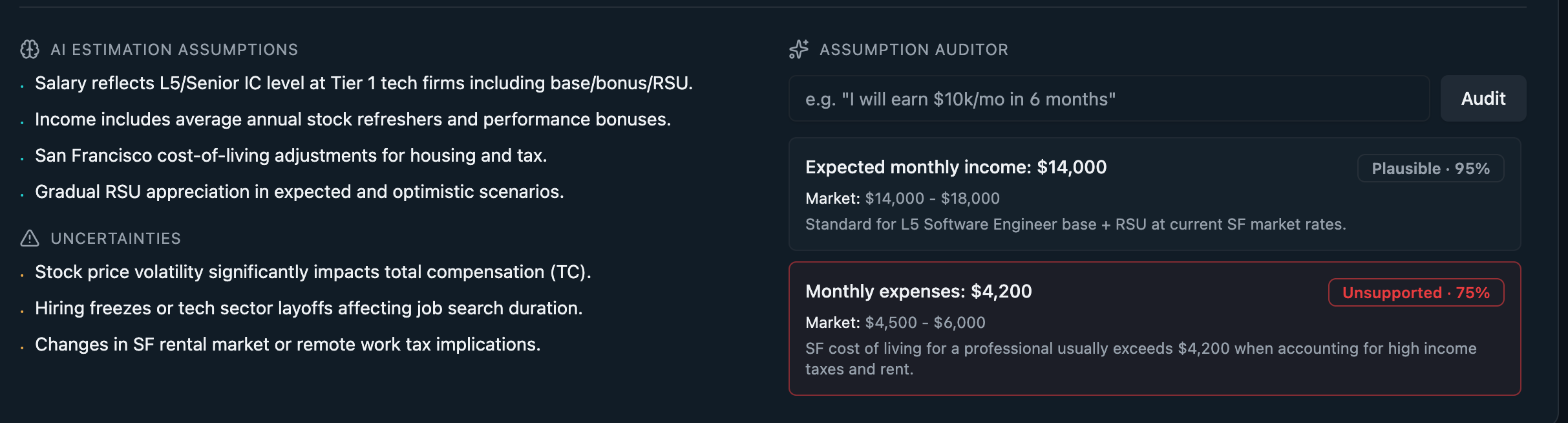
some other features, ai gives situation specific output
Inspiration
People often make major life decisions based on hope, fear, or a few success stories they have heard online. Someone considering a master's degree may focus on high graduate salaries while ignoring debt. Someone starting a company may focus on success stories while underestimating how long it takes to generate income.
We wanted to build a tool that forces people to examine the downside of their decisions before committing. Instead of asking "What if everything goes right?", the system asks "What happens if things take longer, cost more, or fail completely?" and whether the user can realistically recover.
What it does
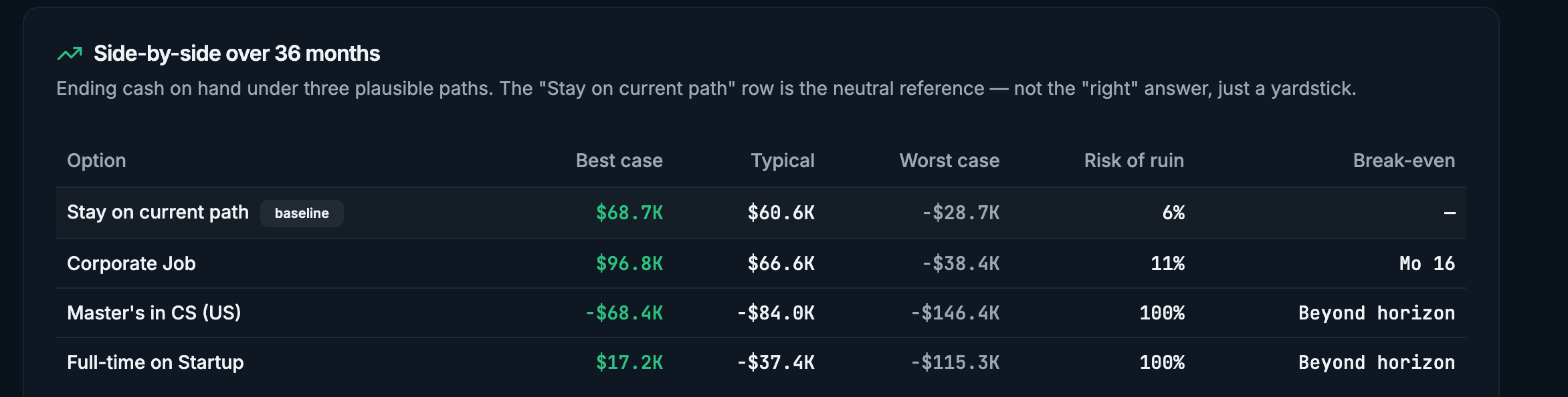
The platform compares multiple life or career paths side-by-side.
the user enters their rationale/situation. expected income, upfront costs, monthly expenses, available savings, and financial support from family or other sources. Then for each option, they enter additional details.
The system then generates best-case, typical, and worst-case projections over a chosen time period. It calculates:
-Risk of ruin Percentage chance your savings go negative within the time period. -recovery time How long (and how much money) it would take to get back to where you started if the path fails. -Break-even time How long until this path is financially better than the safest option.
also Cash position over time Opportunity cost of choosing one path over another
under "try your own numbers" Users can also modify factors such as monthly spending(during upcoming runway),upfront investment, available support, or how long they are willing to endure low income. These are factors that arent just assumptions but compromises the user is willing to make for example: reducing and compromising on their monthly expenses The projections update immediately so users can see how sensitive their decision is to changes in circumstances.
The platform then performs a Devil's Advocate stress test. Instead of accepting assumptions at face value, it challenges them. For example:
Why do you believe your startup will outperform the average startup? What evidence supports your expected salary? What happens if your income arrives six months later than expected? What is your backup plan if the decision fails?
Finally, a mentor can review both the analysis and the user's reasoning before any decision is made.
How we built it
the development of the web-application was no-code/low-code.We developed two separate demo software applications due to the limitations of free vibe-coding platforms. As freshmen and beginners in programming, we were not yet able to integrate the features of both into a single system.
The modelling engine takes user inputs. an llm takes care of the natural language processing and situation based estimation when it comes to instances where income is not determined for sure (ie, startups). the inputs are then taken from this stage to a mathematical module where Risk of ruin,Break-even time,Worst-case recovery time the results are displayed to the user using graphs aswell.
then we created interactive controls that allow users to adjust variables such as:
Monthly spending Upfront investment Financial support Length of time they can tolerate uncertainty
The system recalculates outcomes instantly whenever these assumptions change.
To address cognitive biases, we built a Devil's Advocate module that generates challenges based on common mistakes such as optimism bias, anchoring on a single success story, underestimating opportunity costs, and overconfidence in future outcomes.
The results are displayed through scenario comparisons, timeline projections, and plain-language summaries that can be reviewed by a human mentor.
Challenges we ran into
A key challenge was balancing two AI roles—one that generates realistic estimates and another that challenges them—without turning the system into a conversational chatbot. We also had to ensure that all final outputs remained grounded in deterministic simulation to avoid hallucinated financial conclusions. Structuring highly uncertain career paths like startups and freelancing into consistent numerical models was another major difficulty. also uncertainity about mathematical calculations and graphs that still need working on. we realize that our prototype is not perfect but the have its strengths aswell.
Accomplishments that we're proud of
We built a system that goes beyond traditional AI tools by combining AI-based scenario generation with structured adversarial stress-testing. Instead of giving advice, the system models outcomes and exposes weak assumptions. We successfully separated AI reasoning from deterministic computation, ensuring transparency, consistency, and no decision bias. The platform turns subjective career decisions into measurable financial simulations.
What we learned
We learned that AI is most powerful when it is structured into clear roles rather than used as a general-purpose advisor. Most uncertainty in career decisions comes from unchecked assumptions, not lack of data. Combining estimation with adversarial validation significantly improves reliability. We also learned that deterministic simulation is essential for building trust in high-stakes decision systems.
What’s next
Next, we plan to strengthen the assumption auditing layer with real-world labor market and salary datasets to improve accuracy. We also aim to make the “devil’s advocate” system more adaptive to different industries and career paths. Future versions will include mentor-in-the-loop validation
Built With
- lovable

Log in or sign up for Devpost to join the conversation.