CareerAI
CareerAI is an AI-powered career analysis platform that turns a resume into a personalized job-search and career strategy.
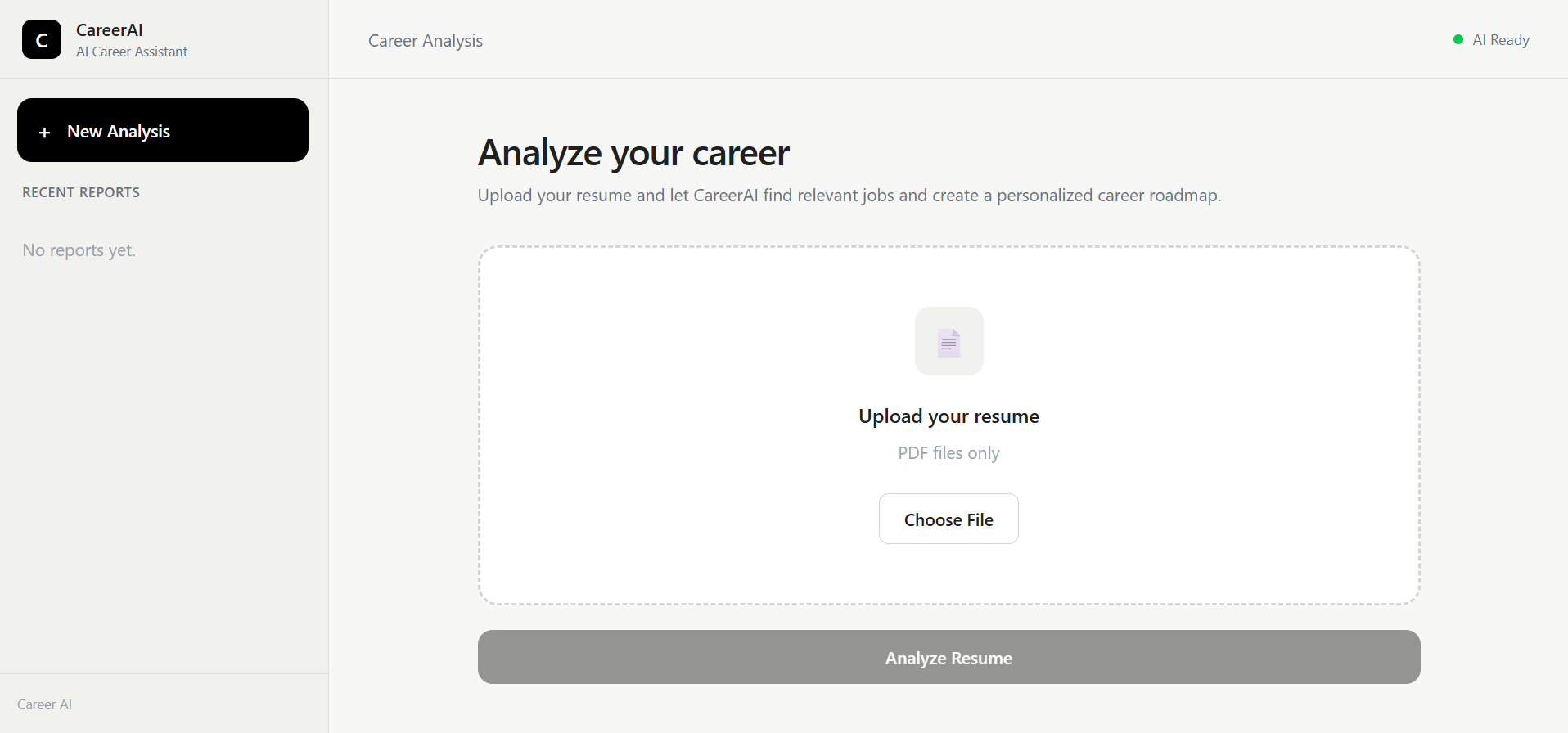
A user uploads a PDF resume, and CareerAI extracts their profile, finds relevant jobs, scores the matches, identifies skill gaps, creates a learning roadmap, and generates a 30-day action plan.
Inspiration
Finding the right job is more than searching for job listings. Candidates often struggle to understand:
- Which jobs match their current skills?
- What skills are they missing?
- Should they apply now or learn first?
- What should they focus on next?
I wanted to combine these tasks into one intelligent system.
My core idea is:
Resume → Jobs → Matching → Skill Gaps → Learning → Career Plan
Instead of simply showing jobs, CareerAI helps answer:
"Which jobs should I apply to, what am I missing, and what should I do next?"
What it does
CareerAI provides an end-to-end career analysis workflow:
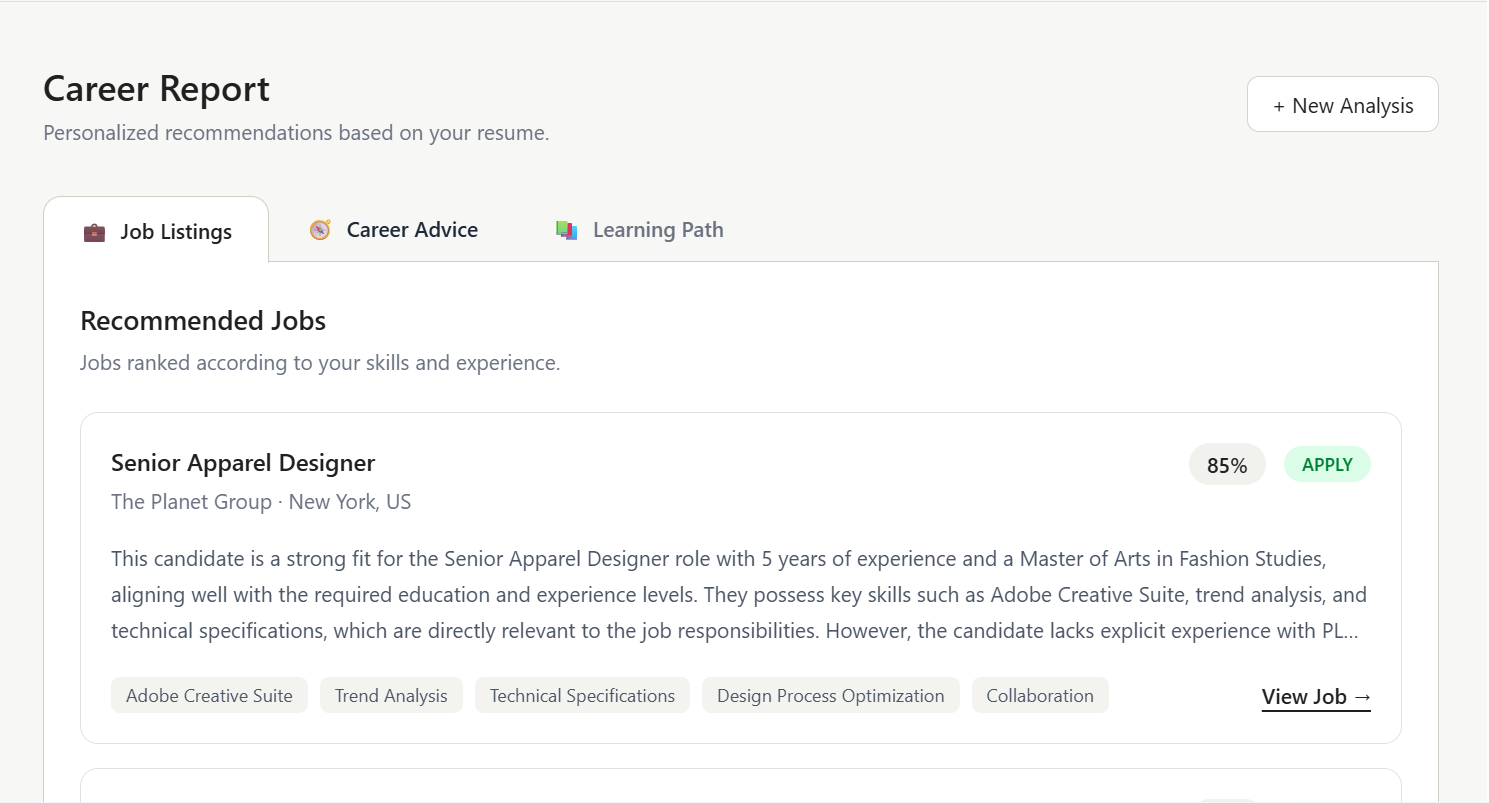
- Resume Analysis — Extracts skills, roles, experience, education, and projects from a PDF resume.
- Job Discovery — Generates five AI-powered search queries and searches JSearch through RapidAPI.
- Job Matching — Scores jobs from 0–100 based on skills, experience, role relevance, and education.
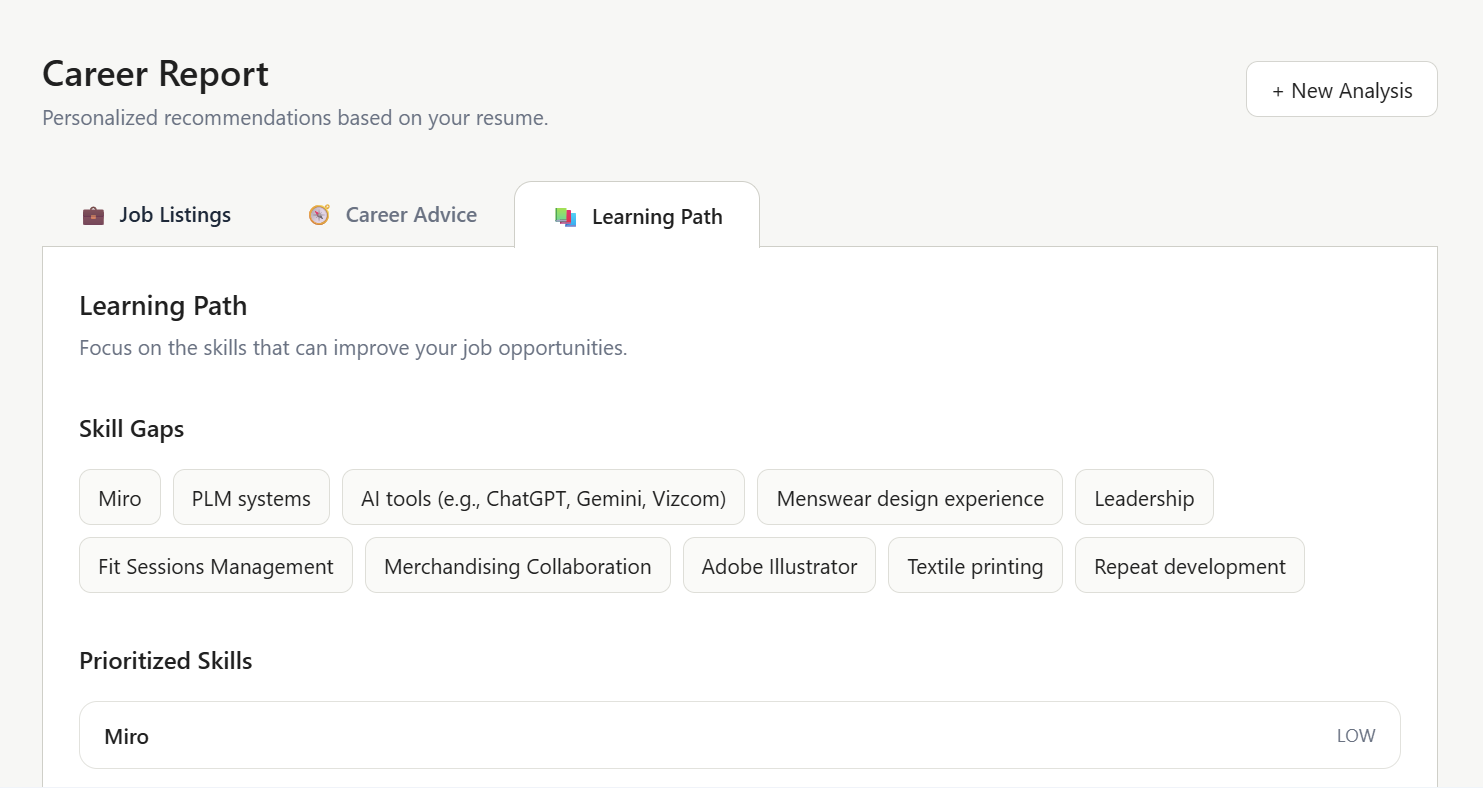
- Skill Gap Analysis — Identifies missing skills and prioritizes them based on job frequency.
- Learning Roadmap — Creates a focused day-by-day roadmap for important skill gaps.
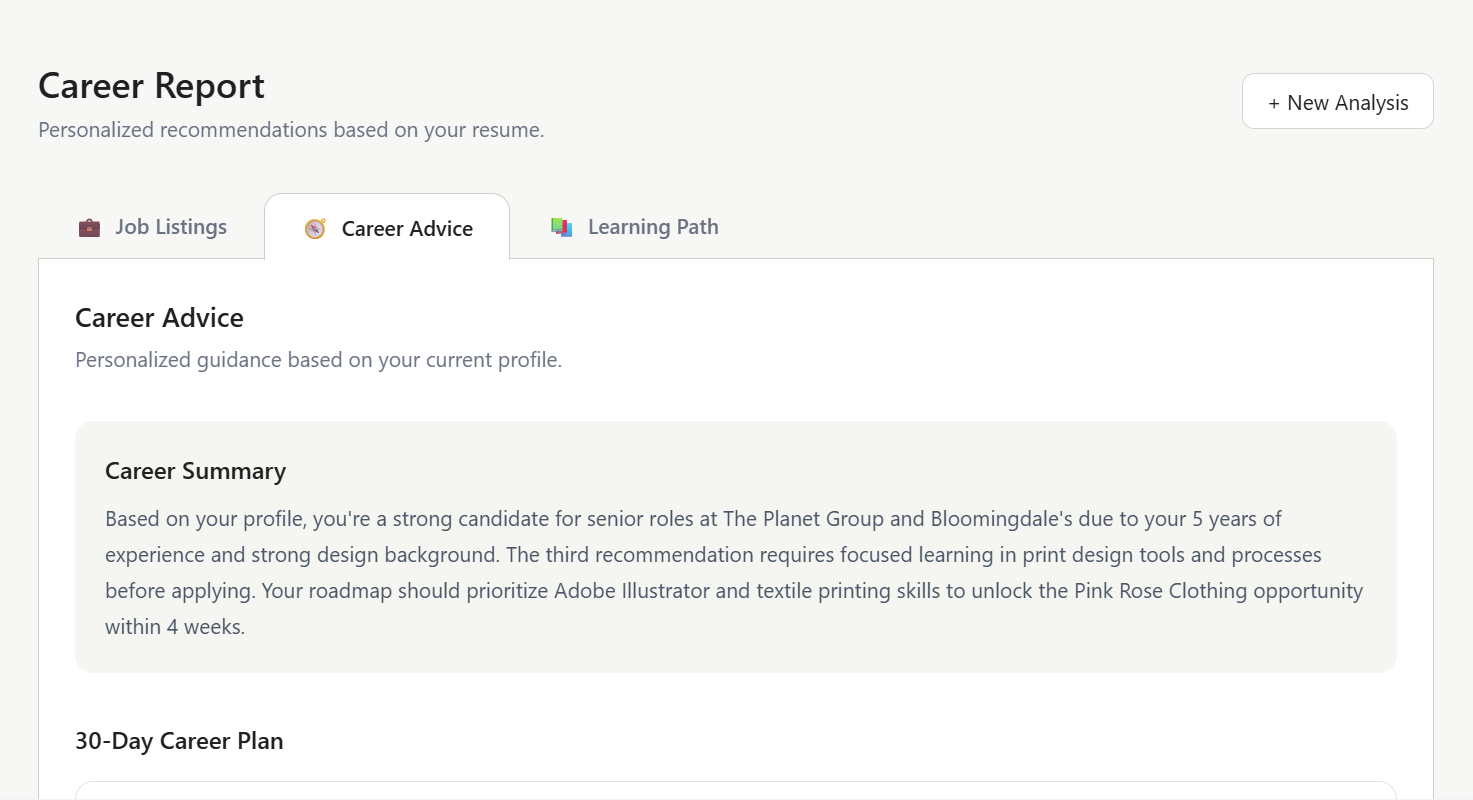
- Career Strategy — Generates top job recommendations and a personalized 30-day action plan.
Match Scoring
Skills          40%
Experience      25%
Role Relevance  25%
Education       10%
How i built it
Tech Stack
- React 19, Vite, Tailwind CSS
- Node.js, Express
- LangChain + LangGraph
- Amazon Bedrock Converse
- Amazon Nova 2 Lite
- MongoDB + Mongoose
- JSearch through RapidAPI
- Docker Compose
Agent Workflow
flowchart LR
    A([START]) --> B[Resume Agent]
    B --> C[Job Search Agent]
    C --> D[Job Matching Agent]
    D --> E[Learning Agent]
    E --> F[Career Advisor Agent]
    F --> G([END])
Data Flow
flowchart TD
    A[PDF Resume] --> B[Resume Agent]
    B --> C[Candidate Profile]
    C --> D[Job Search Agent]
    D --> E[JSearch API]
    E --> F[Unique Jobs]
    F --> G[Job Matching Agent]
    G --> H[Match Scores + Skill Gaps]
    H --> I[Learning Agent]
    I --> J[Learning Roadmap]
    J --> K[Career Advisor]
    K --> L[30-Day Career Strategy]
Agents
| Agent | Responsibility |
|---|---|
| Resume Agent | Creates structured candidate profile |
| Job Search Agent | Generates queries and finds jobs |
| Job Matching Agent | Scores jobs and identifies gaps |
| Learning Agent | Creates prioritized learning roadmap |
| Career Advisor | Produces final career strategy |
Challenges i ran into
The biggest challenge was extracting consistent information from resumes because every resume has a different structure.
Job search was another challenge. A single query cannot represent an entire candidate profile, so i generate five queries and remove duplicate listings.
I also needed consistent job scoring. I solved this by defining explicit scoring categories and weights rather than relying on a simple AI recommendation.
Managing AI context and cost was important as well. I designed each agent to receive only the information it needs instead of passing unnecessary data through the entire workflow.
Finally, integrating AWS Bedrock, RapidAPI, MongoDB, Docker, CORS, and file uploads introduced several infrastructure and deployment challenges.
Accomplishments that i am proud of
I built a complete multi-agent workflow that automatically transforms an unstructured resume into an actionable career strategy.
The complete pipeline is:
Resume
  ↓
Candidate Profile
  ↓
Real Job Opportunities
  ↓
Match Scores
  ↓
Skill Gaps
  ↓
Learning Roadmap
  ↓
30-Day Career Plan
I am especially proud of combining real job data with AI reasoning instead of building only a conversational chatbot.
What i learned
CareerAI taught us that building AI applications requires more than prompt engineering.
I learned the importance of:
- Structured AI outputs
- Specialized agents
- LangGraph state management
- External API data normalization
- Context and token management
- Explainable scoring
- Modular architecture
- Secure environment-variable management
I also learned that AI becomes much more useful when connected to real-world data. Combining a candidate's resume with current job requirements creates much more actionable recommendations.
What's next for Career AI
Future versions could include:
- AI-powered resume optimization
- Job-specific resume tailoring
- Interview preparation
- Application tracking
- Continuous job alerts
- Interactive AI career coach
- Learning progress tracking
- More job sources
- User accounts and career history
My long-term goal is to turn CareerAI from a one-time resume analyzer into a continuous AI career companion that helps users discover opportunities, improve their skills, prepare for interviews, and make better career decisions.
CareerAI starts with a resume and turns it into a roadmap for what to apply for, what to learn, and what to do next.
Built With
- amazon-web-services
- bedrock
- crypto
- langchain
- langgraph
- mongodb
- node.js
- rapidapi
- react


Log in or sign up for Devpost to join the conversation.