-
-
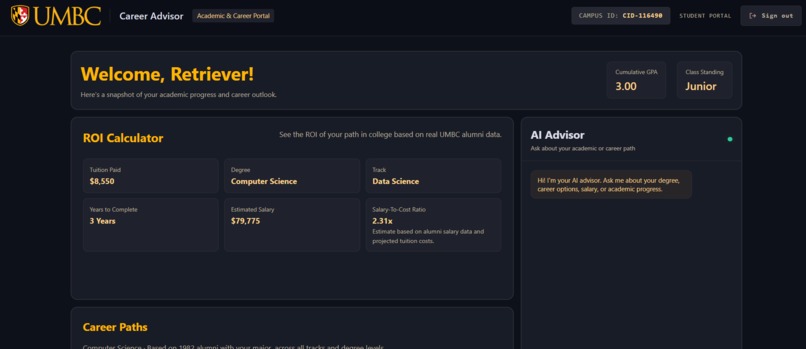
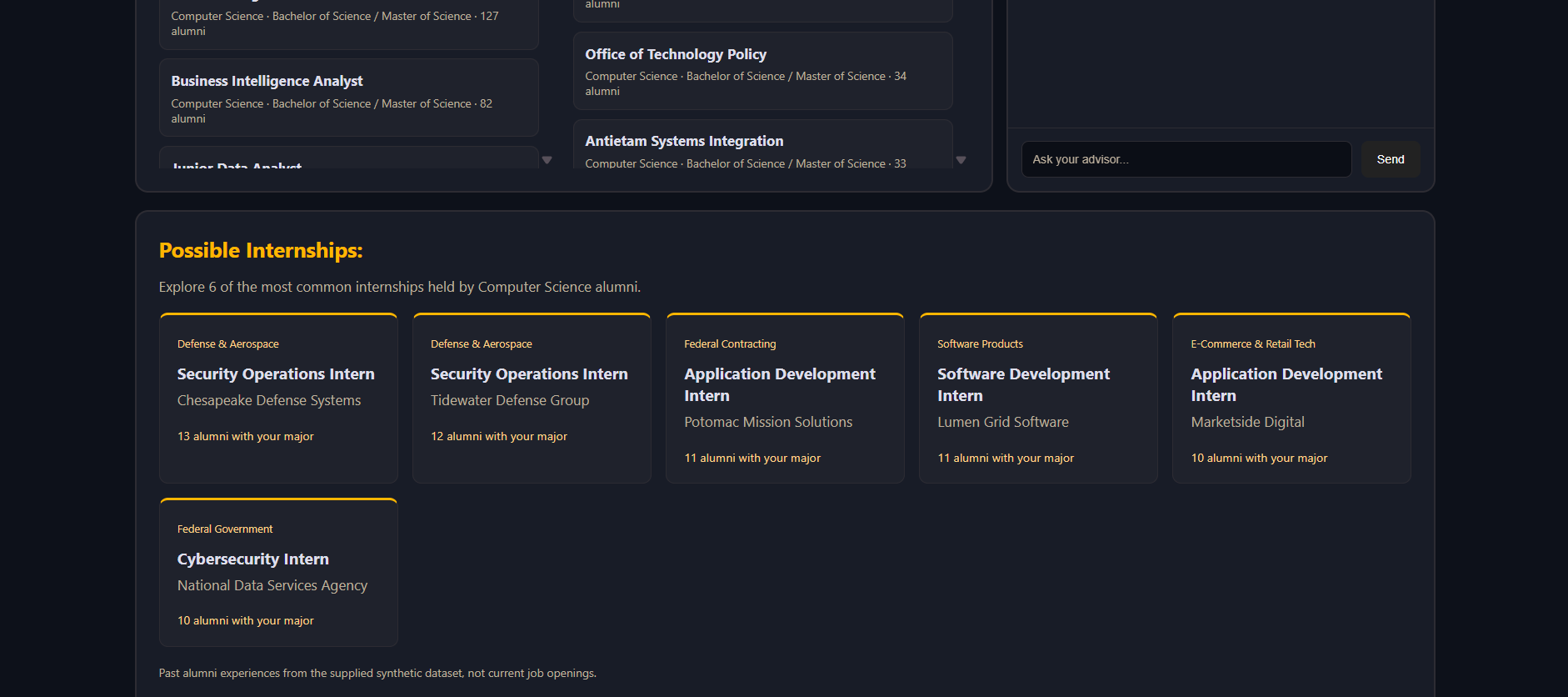
home dashboard top
-
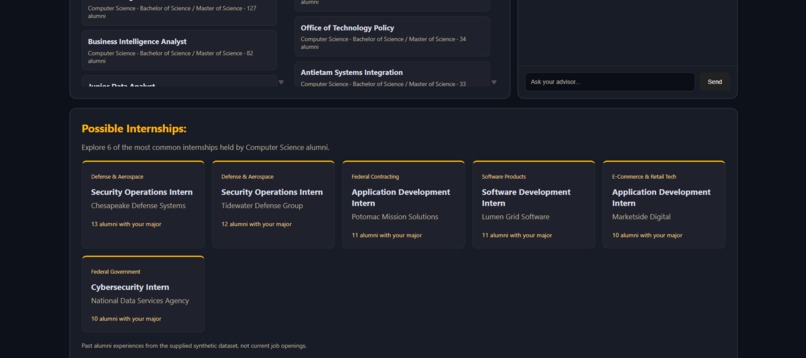
home dashboard bottome
-
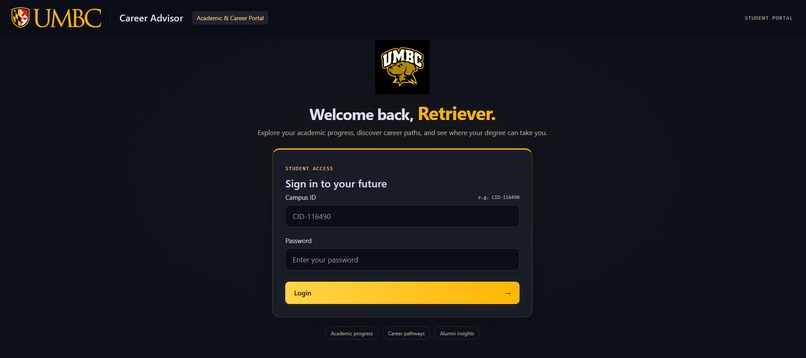
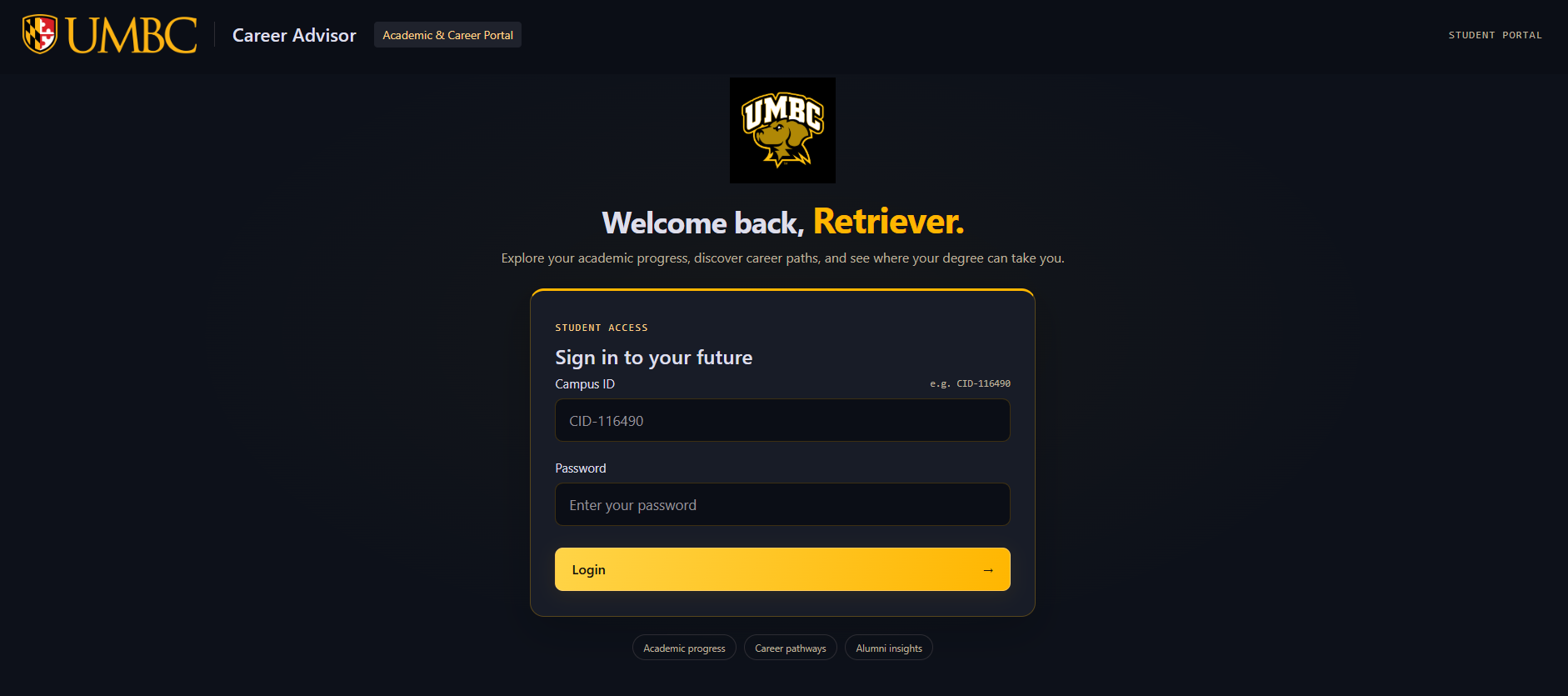
login page
Inspiration
We were inspired by a simple problem: students have access to a lot of academic information, but it can be difficult to understand how that information connects to their future careers.
We wanted to build something that could take a student's courses, skills, experiences, and career interests and turn them into something useful. Instead of giving students generic career advice, we wanted an AI advisor that could understand their academic profile and help them figure out what to do next.
That led us to build UMBC Career Intelligence.
What We Built
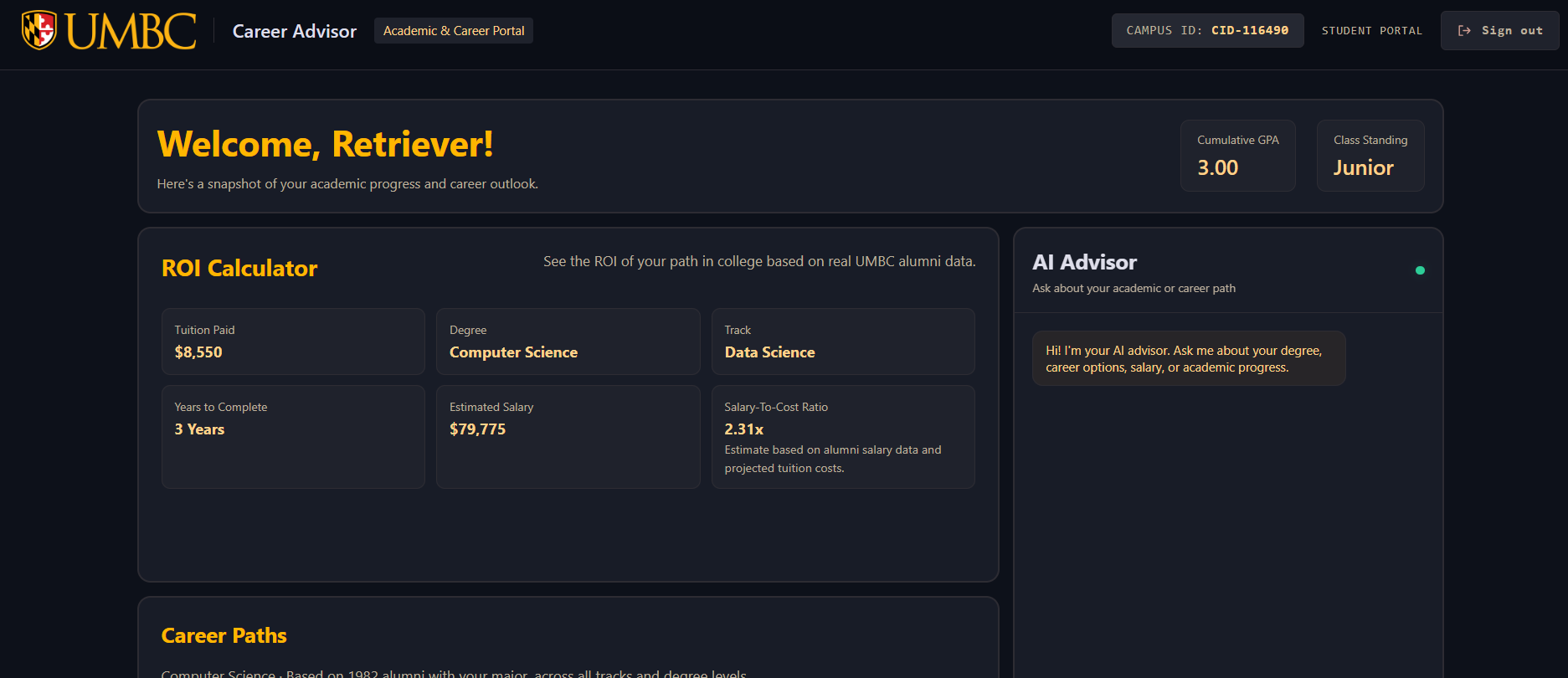
UMBC Career Intelligence combines a student's academic data with career and alumni information to create a personalized career experience.
The platform can identify skills from completed courses, compare those skills against different career paths, identify skill gaps, recommend relevant courses, and show career and salary outcomes from the provided alumni dataset.
The main feature is our AI Career Advisor. Students can ask questions about their career path, courses, skills, or goals and receive responses based on their actual academic information.
We connected the Gemini API to generate AI responses and the Backboard API to give the advisor conversational memory. This allows the advisor to remember useful information such as a student's interests, goals, and preferences while keeping official academic information tied to the actual dataset.
How We Built It
We built the backend using Python, FastAPI, Pandas, and Pydantic.
The provided CSV datasets contain information about students, courses, transcripts, experiences, alumni, and employment history. We learned how to filter and process this data to extract information that is actually useful to students.
For example, we calculate skills from completed courses and compare those skills with the skills associated with different careers. We then use those results to identify skill gaps and create potential course pathways.
The frontend communicates with our FastAPI backend through API endpoints. This allowed us to build multiple pages that share information and update based on the selected student and career.
We also connected Gemini and Backboard to the backend so the AI advisor can use the structured information generated by our Python analytics.
What We Learned
One of the biggest things we learned was how different parts of a full-stack application communicate with each other.
Before this project, we had limited experience connecting a frontend and backend together. During the hackathon, we learned how information can flow between multiple pages, how API requests and responses work, and how to pass user-selected information from one part of the application to another.
We also learned how to take a large dataset, filter it, process it, and present only the information that is relevant to the user.
On the AI side, we learned how to connect and work with both the Gemini API and Backboard API, including sending structured information to an AI model and maintaining useful conversational memory.
We also learned more about frontend development, including how to style multiple pages and create a consistent experience while moving information between them.
Challenges We Faced
One of our biggest challenges was figuring out how to connect everything together.
We had multiple pieces working independently—the dataset, backend calculations, frontend pages, Gemini, and Backboard—but getting them to communicate correctly required a lot of debugging and testing.
Another challenge was figuring out how to turn raw data into information that is actually useful. It wasn't enough to simply display rows from a CSV. We needed to filter and calculate information such as skills, career matches, salary statistics, and recommended pathways.
We also had to make sure the AI didn't simply invent information. We designed the system so that factual academic and career information comes from our dataset and Python calculations, while Gemini focuses on explaining that information conversationally.
What's Next
Our goal is to continue improving the experience so that students can use UMBC Career Intelligence as a starting point for exploring their future.
Ultimately, we want to make career planning feel less like searching through disconnected information and more like having a personalized advisor who understands where you are and can help you figure out where to go next.
Built With
- backboard.io
- css
- fastapi
- gemini.api
- html5
- javascript
- python

Log in or sign up for Devpost to join the conversation.