-
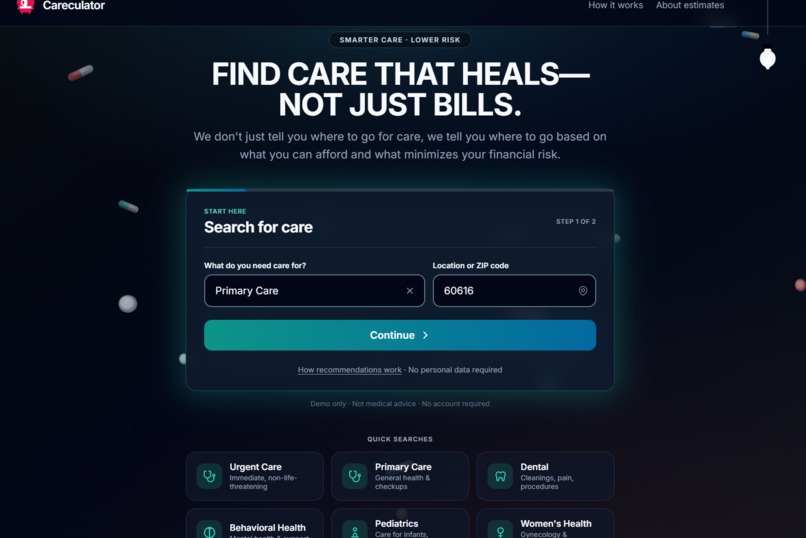
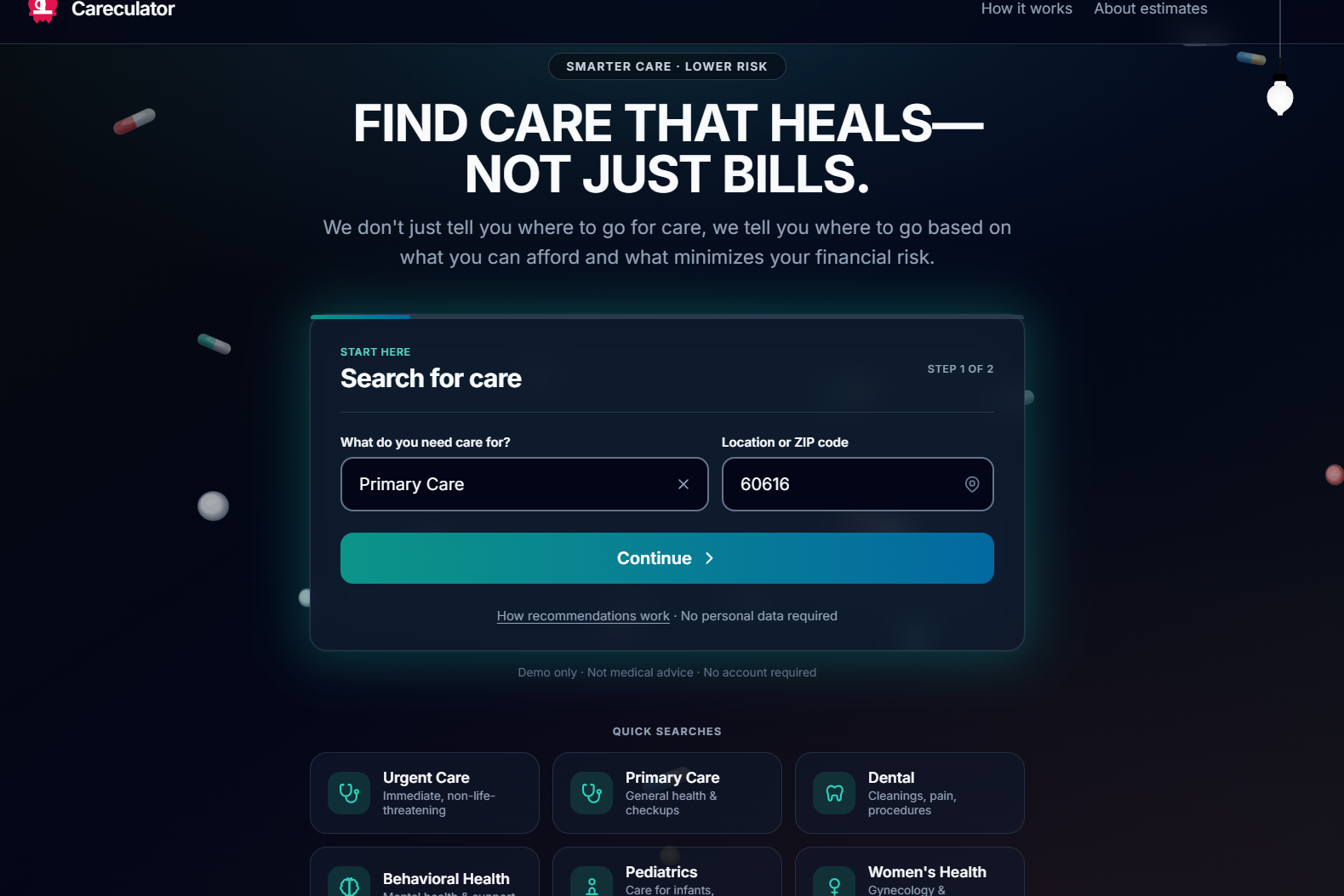
Fill in the Box the care you need and the location you are located in.
-
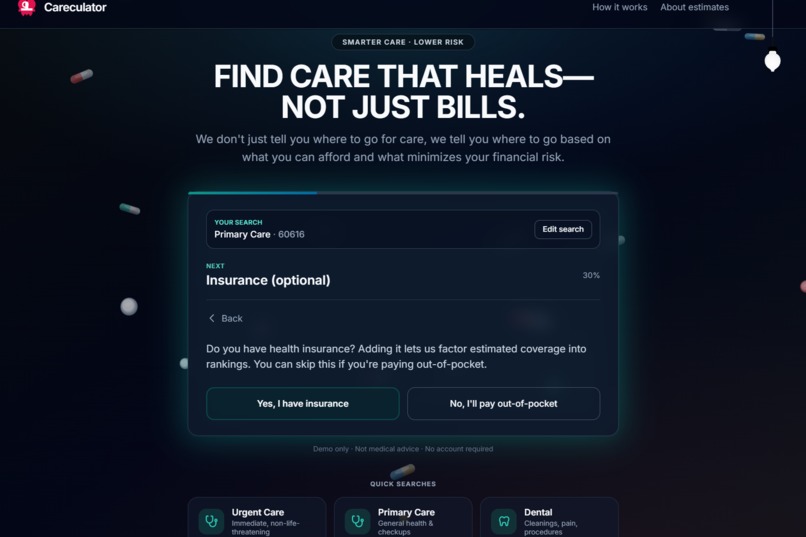
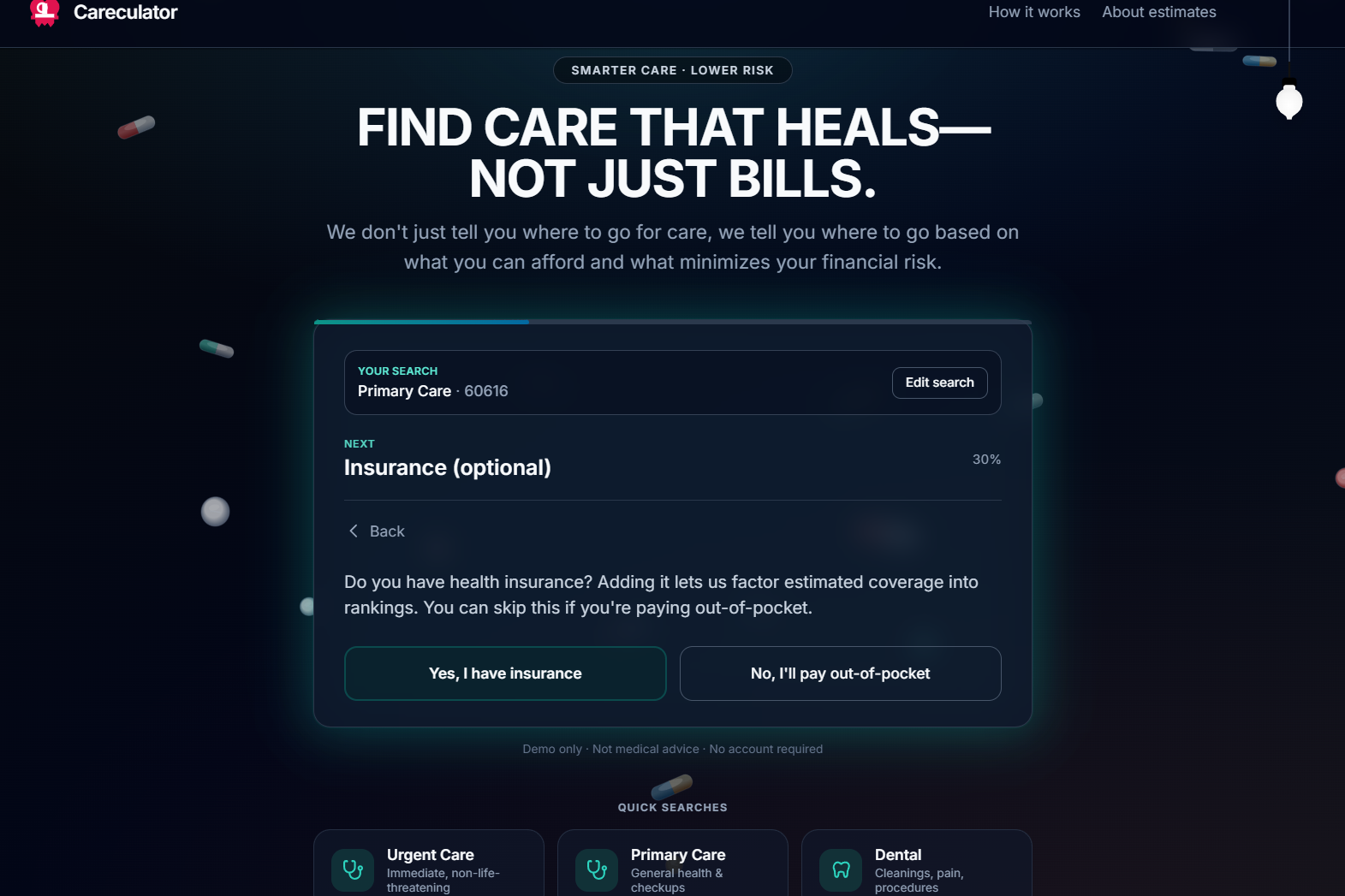
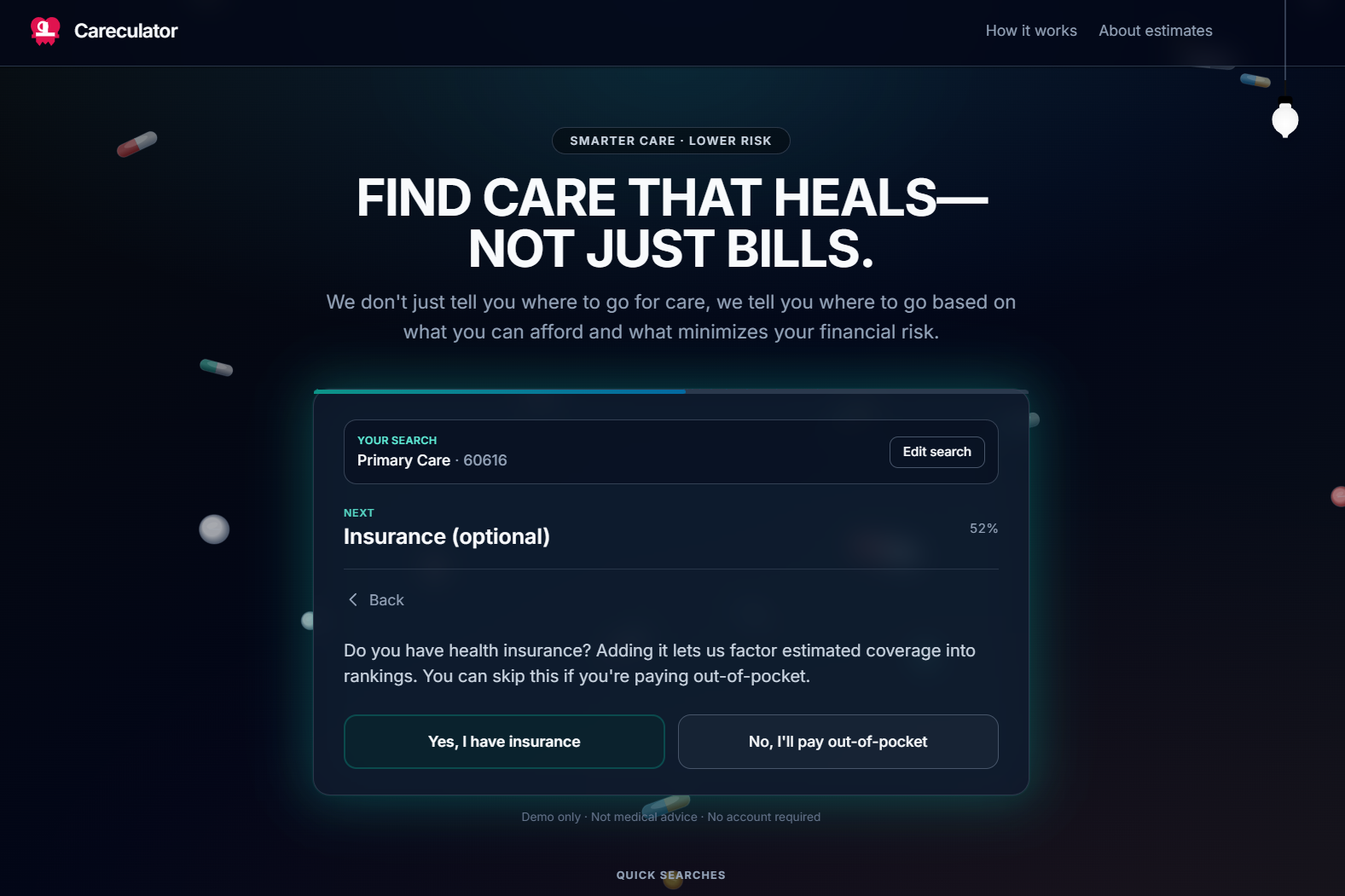
If you have Health Insurance please select Yes.
-
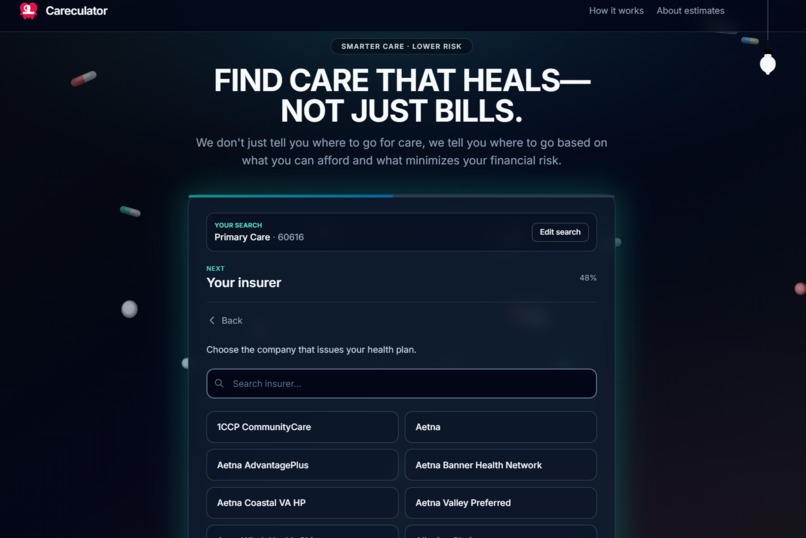
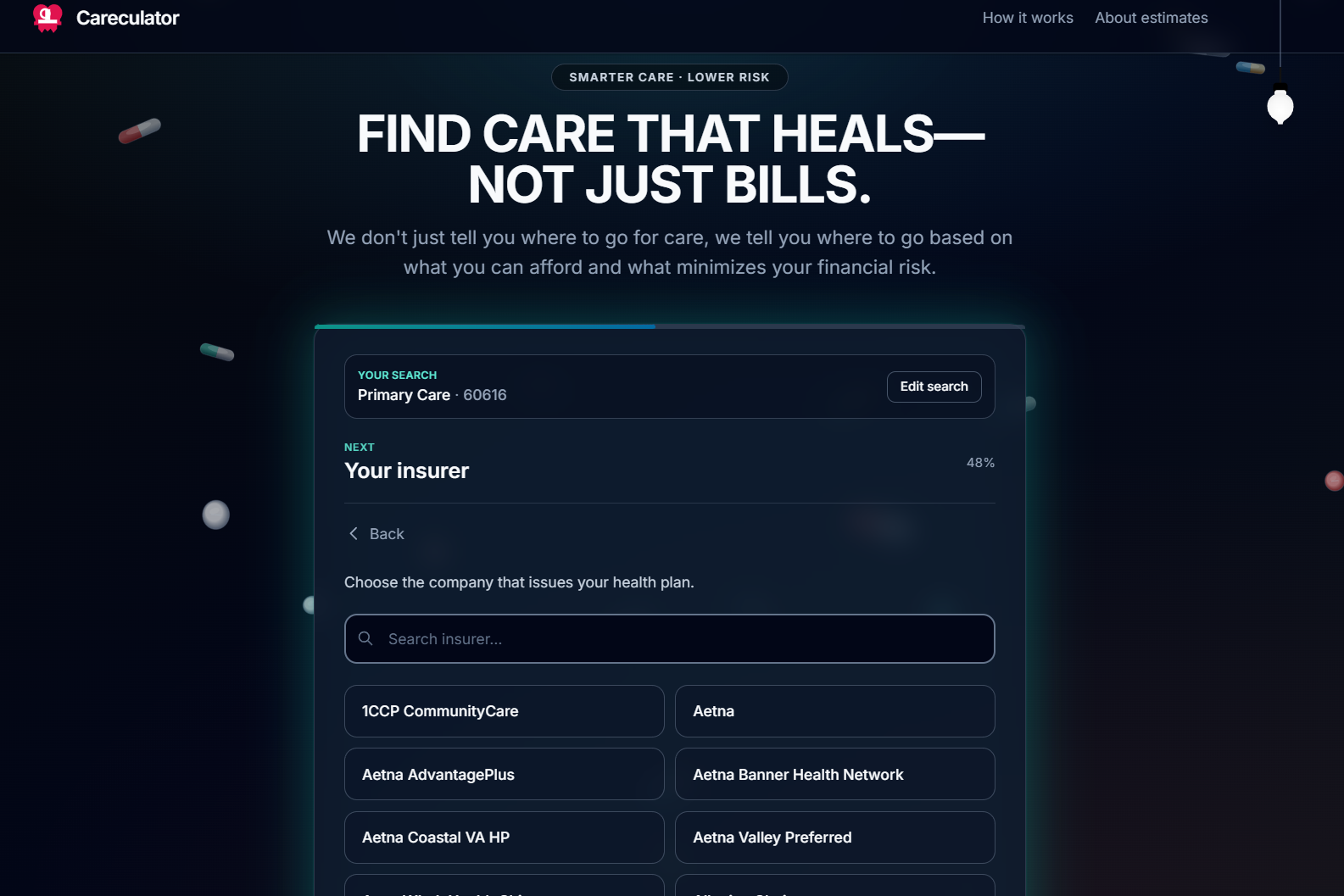
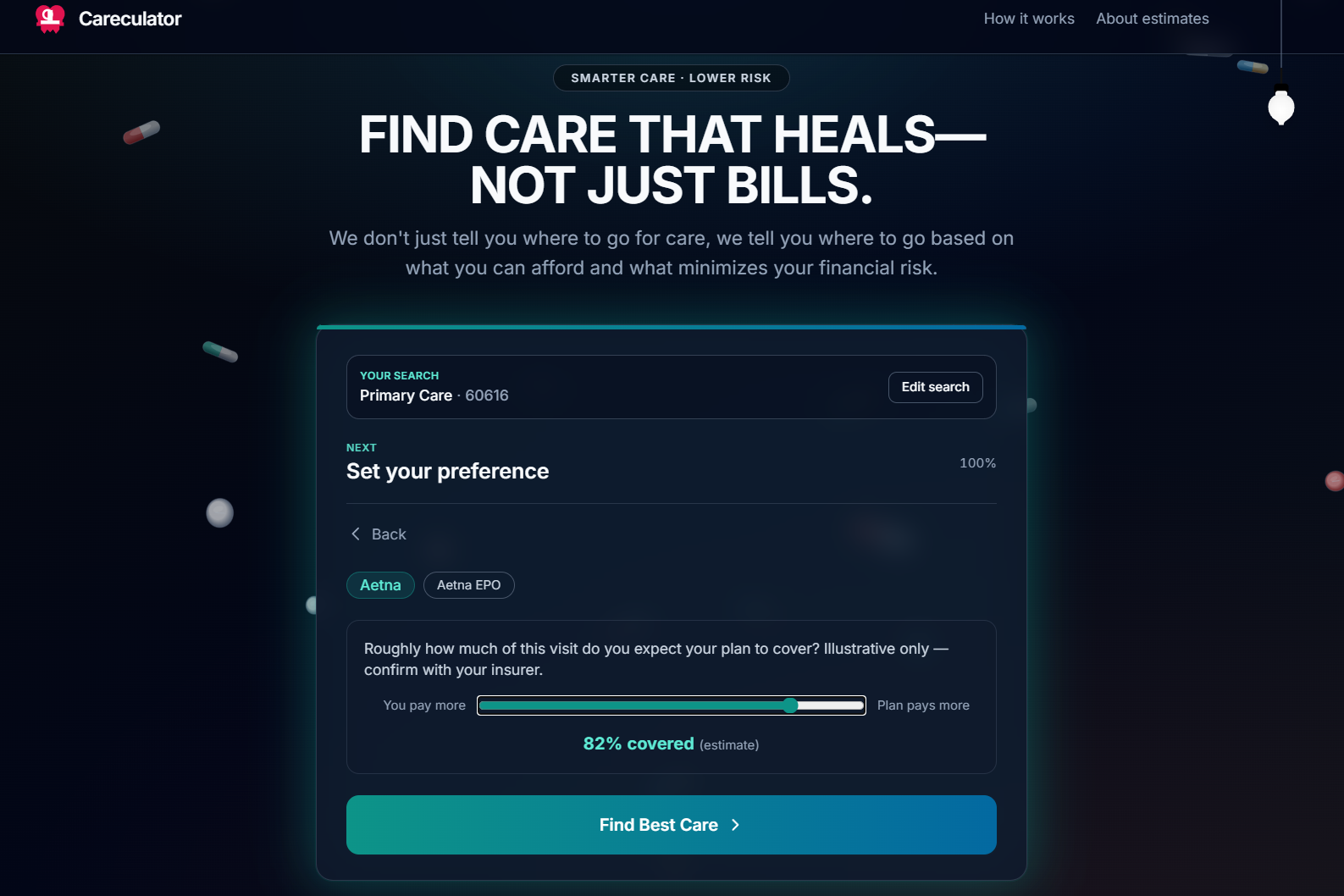
Select the Insurance Provider
-
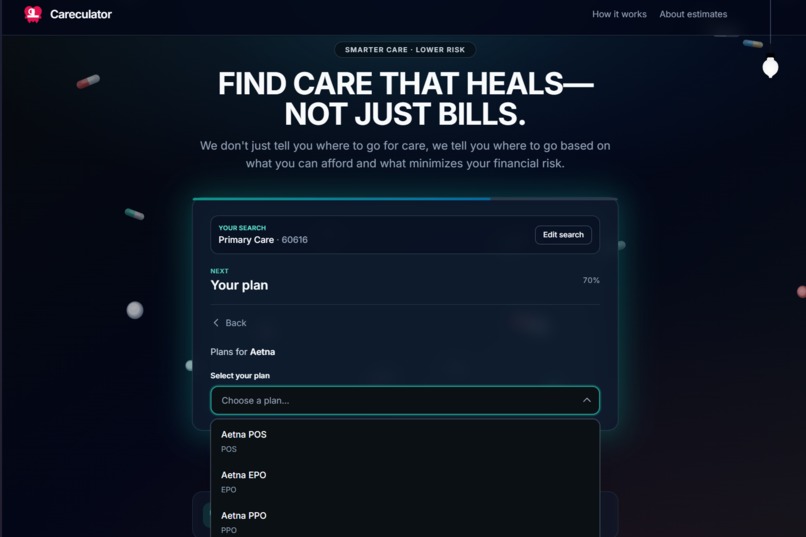
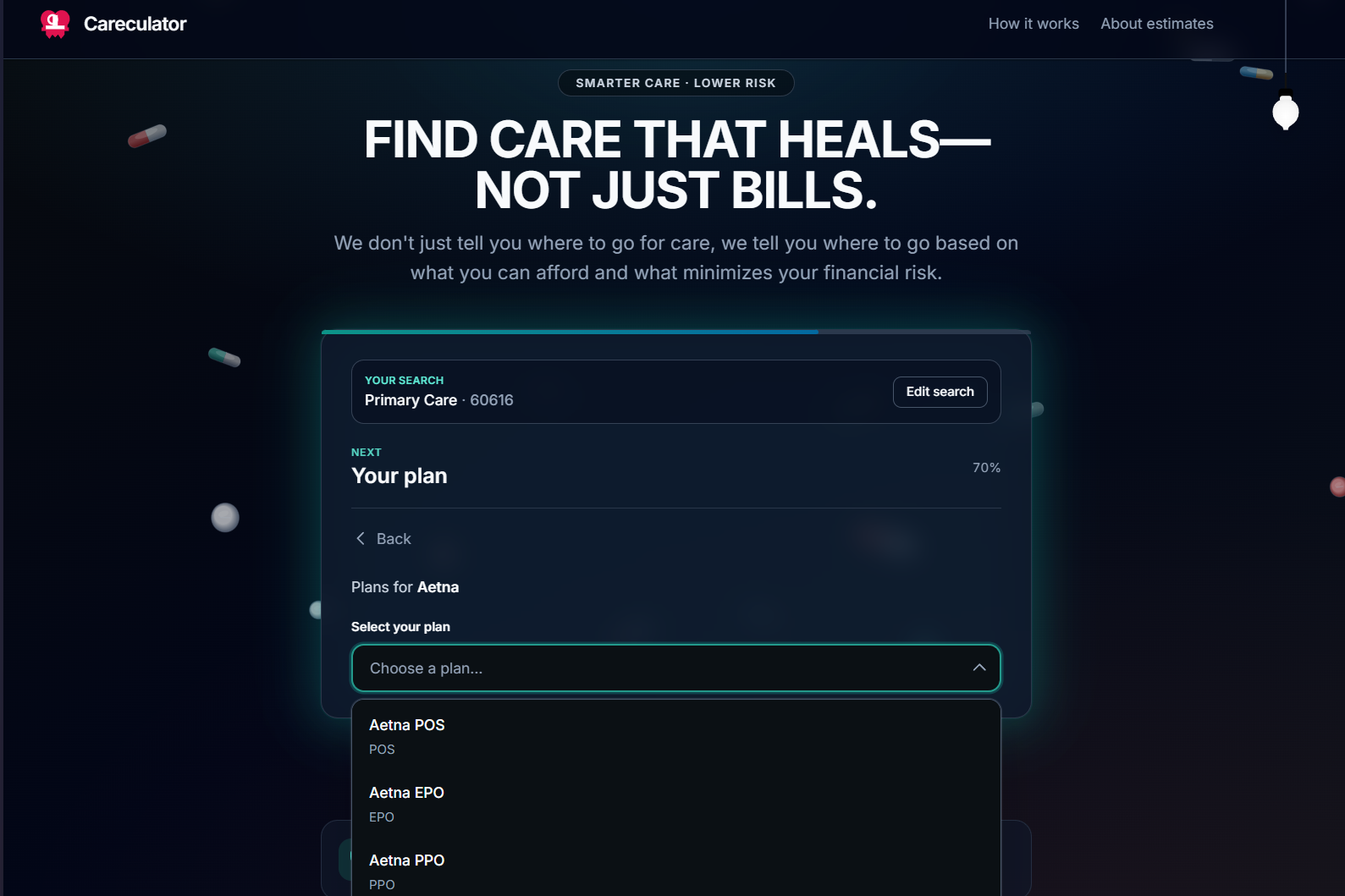
Select the Insurance policy you have opted for
-
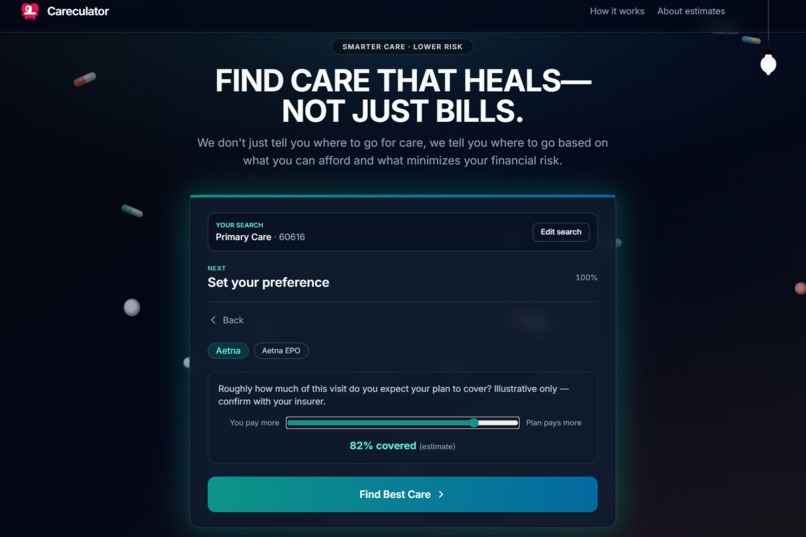
Adjust the Bar based on how much your insurance need to cover accordingly
-
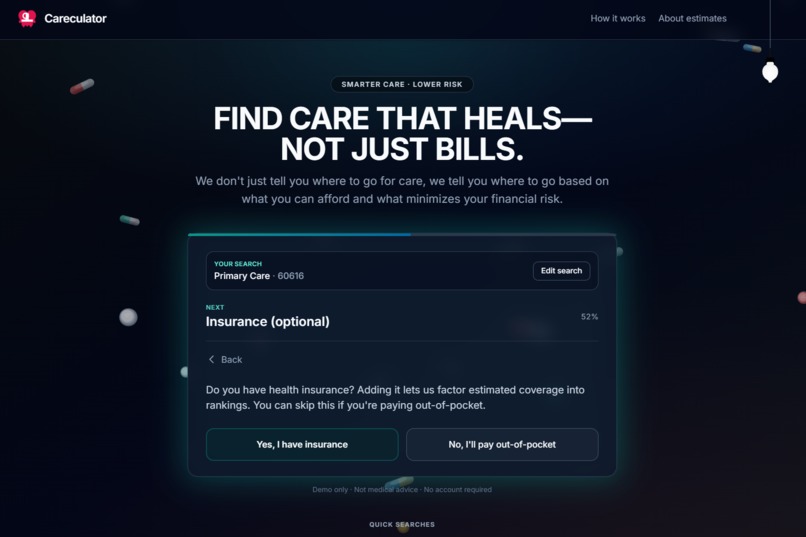
In case if you don't have Insurance please select no insurance
-
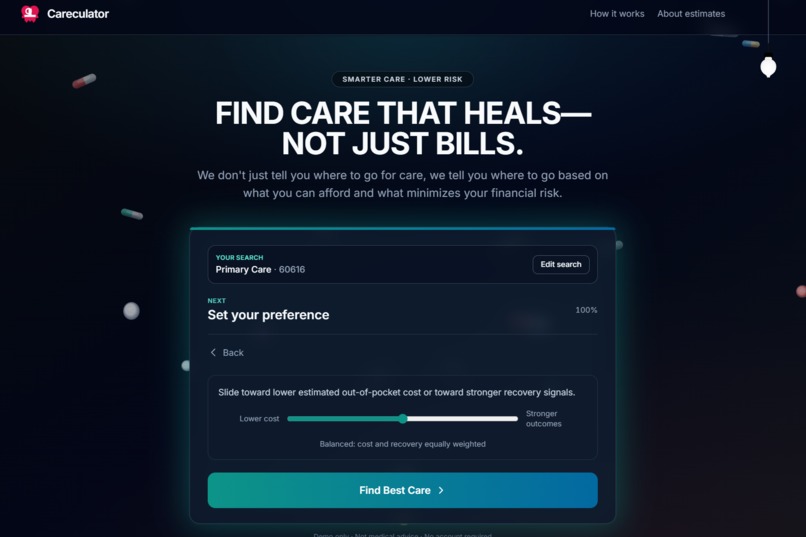
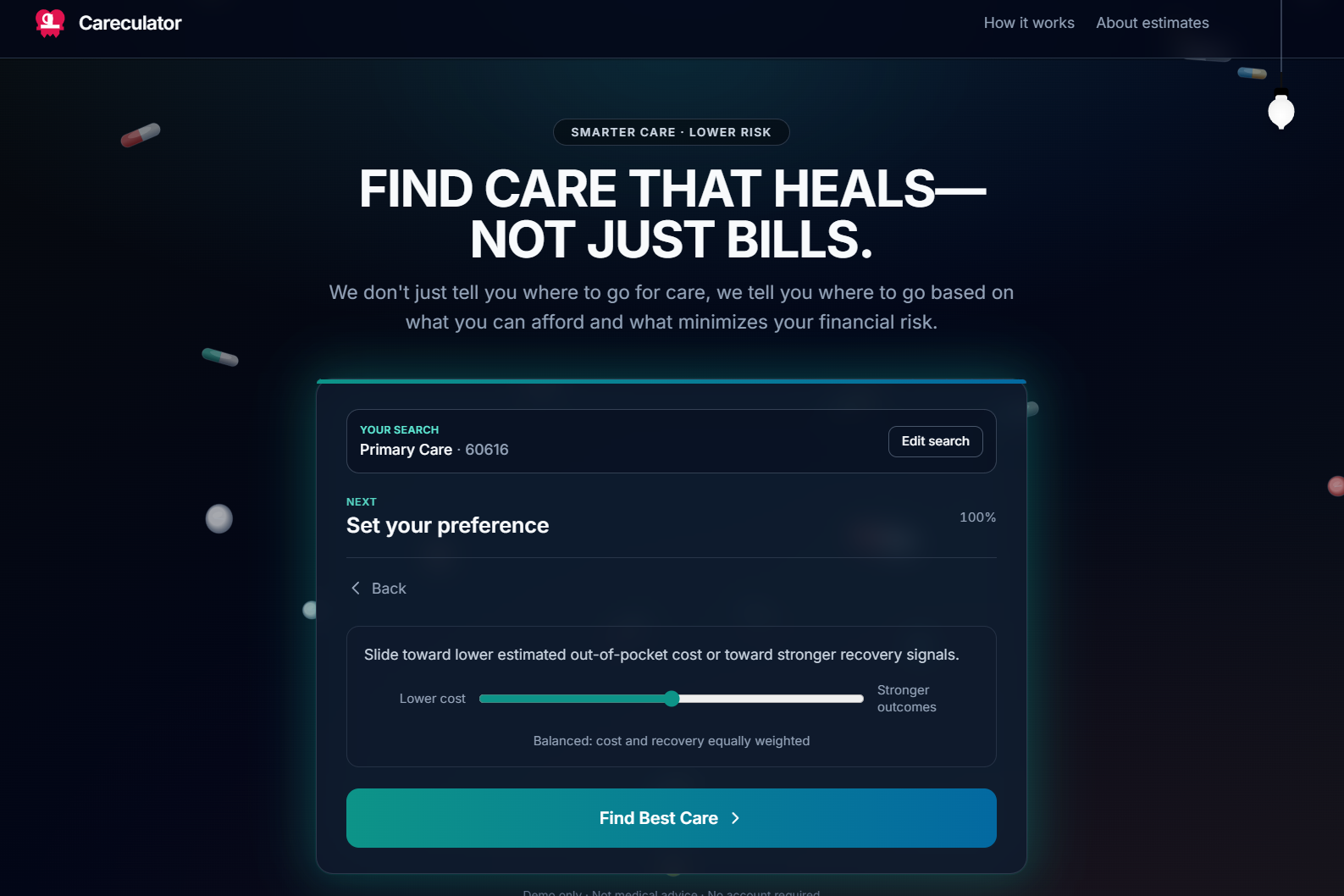
Adjust the bar accordingly depending on your budget
-
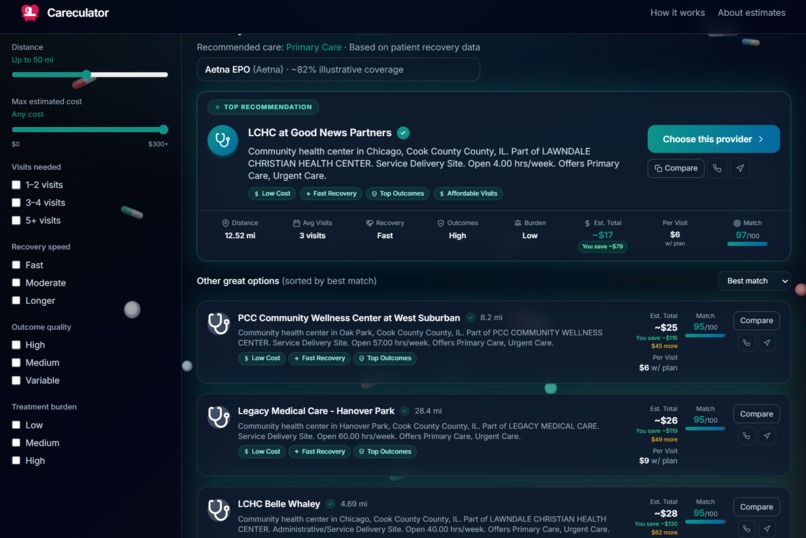
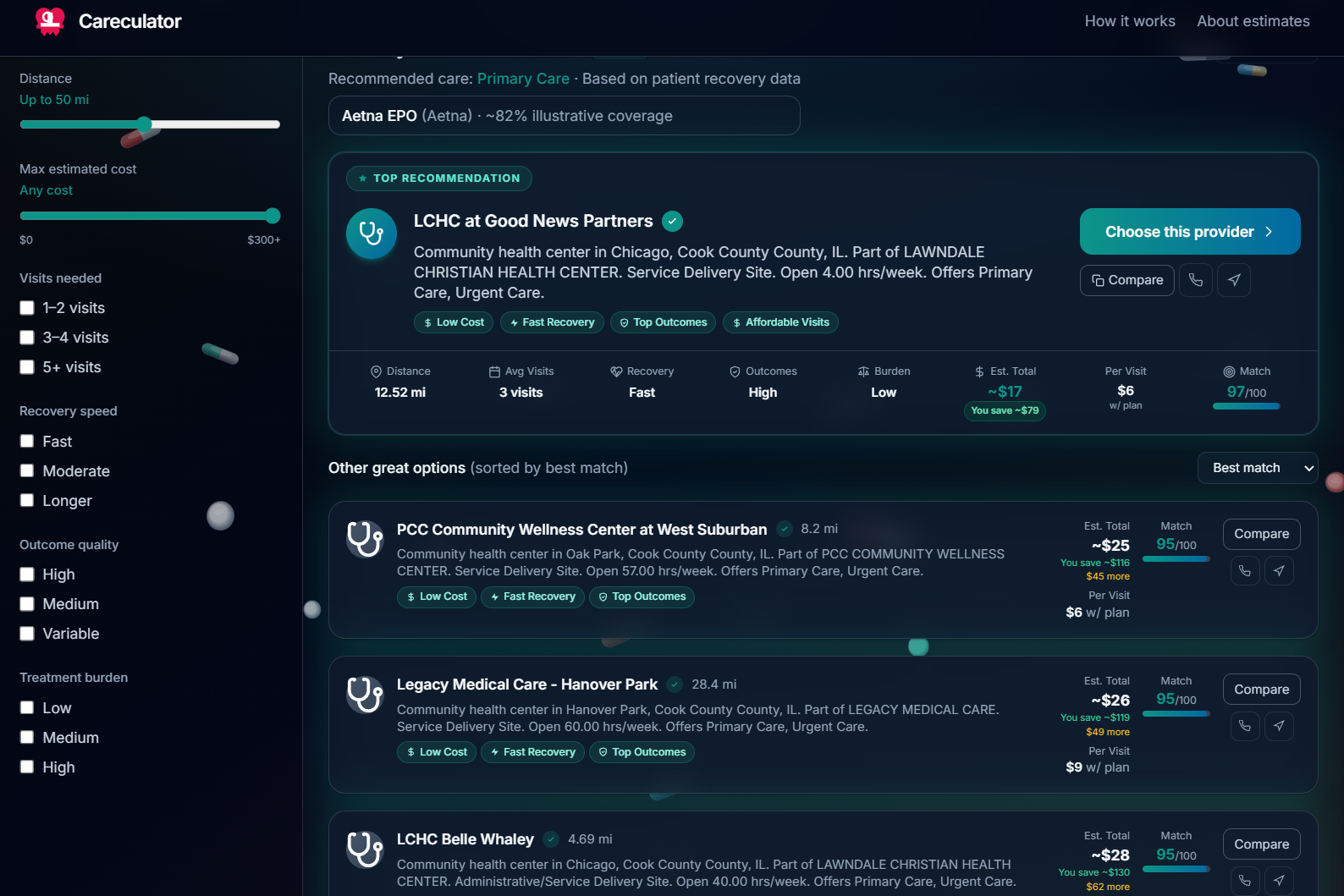
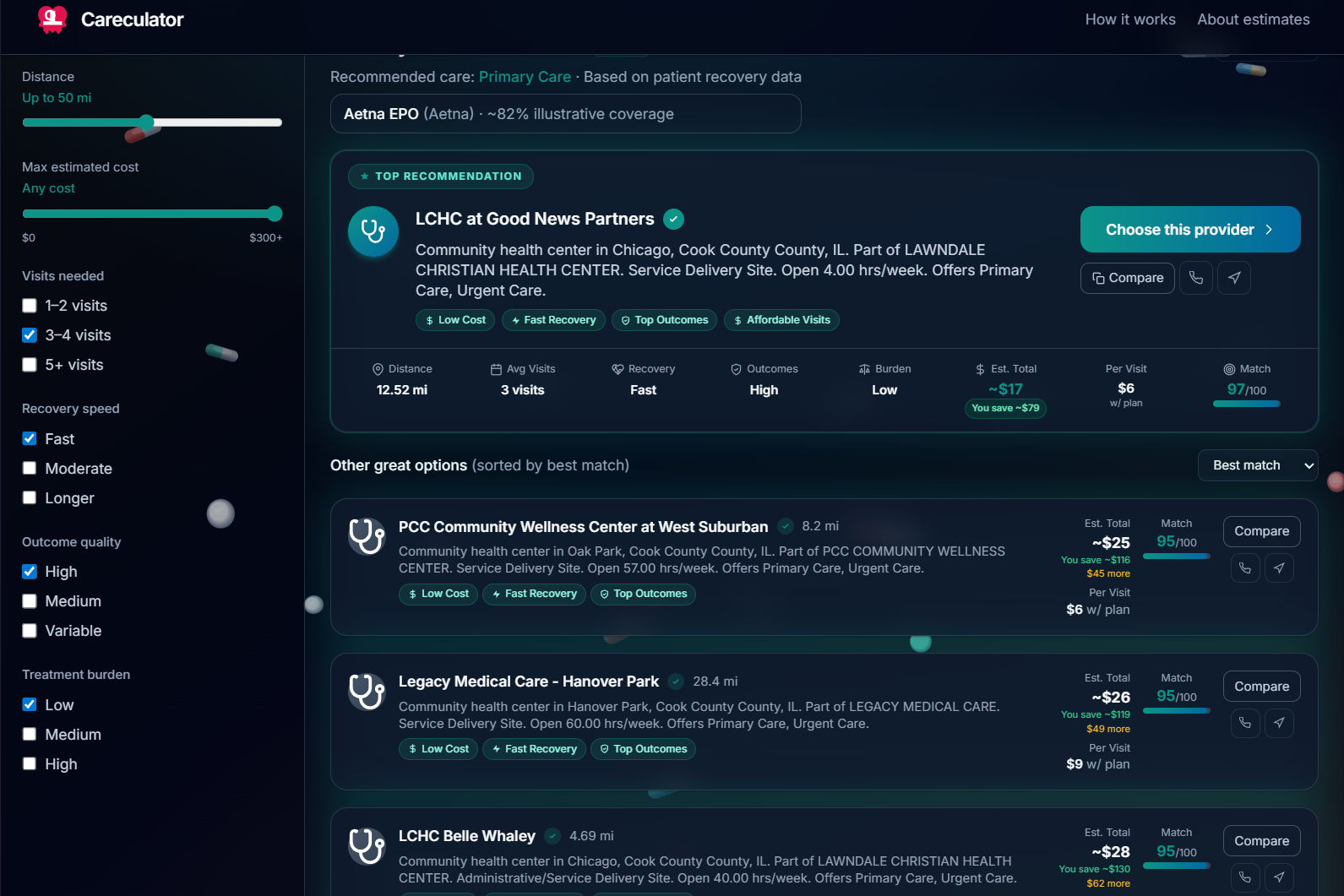
Displays the list of Health care's near you as per your preferences
-
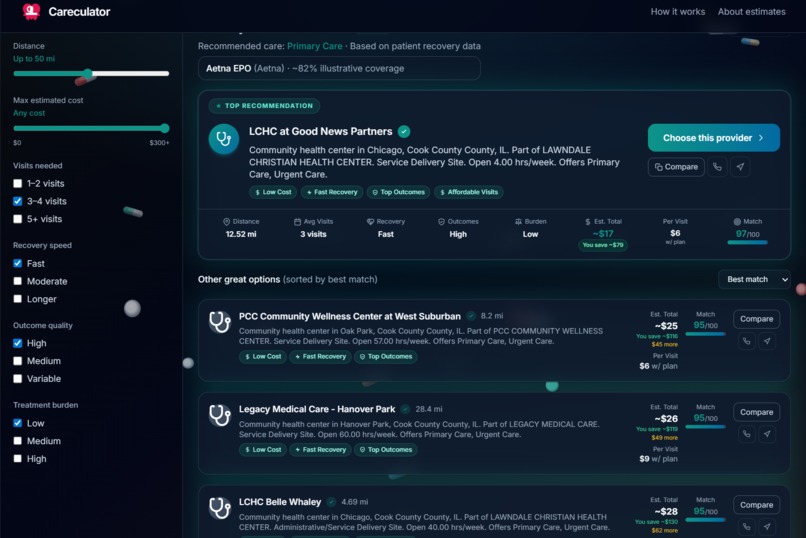
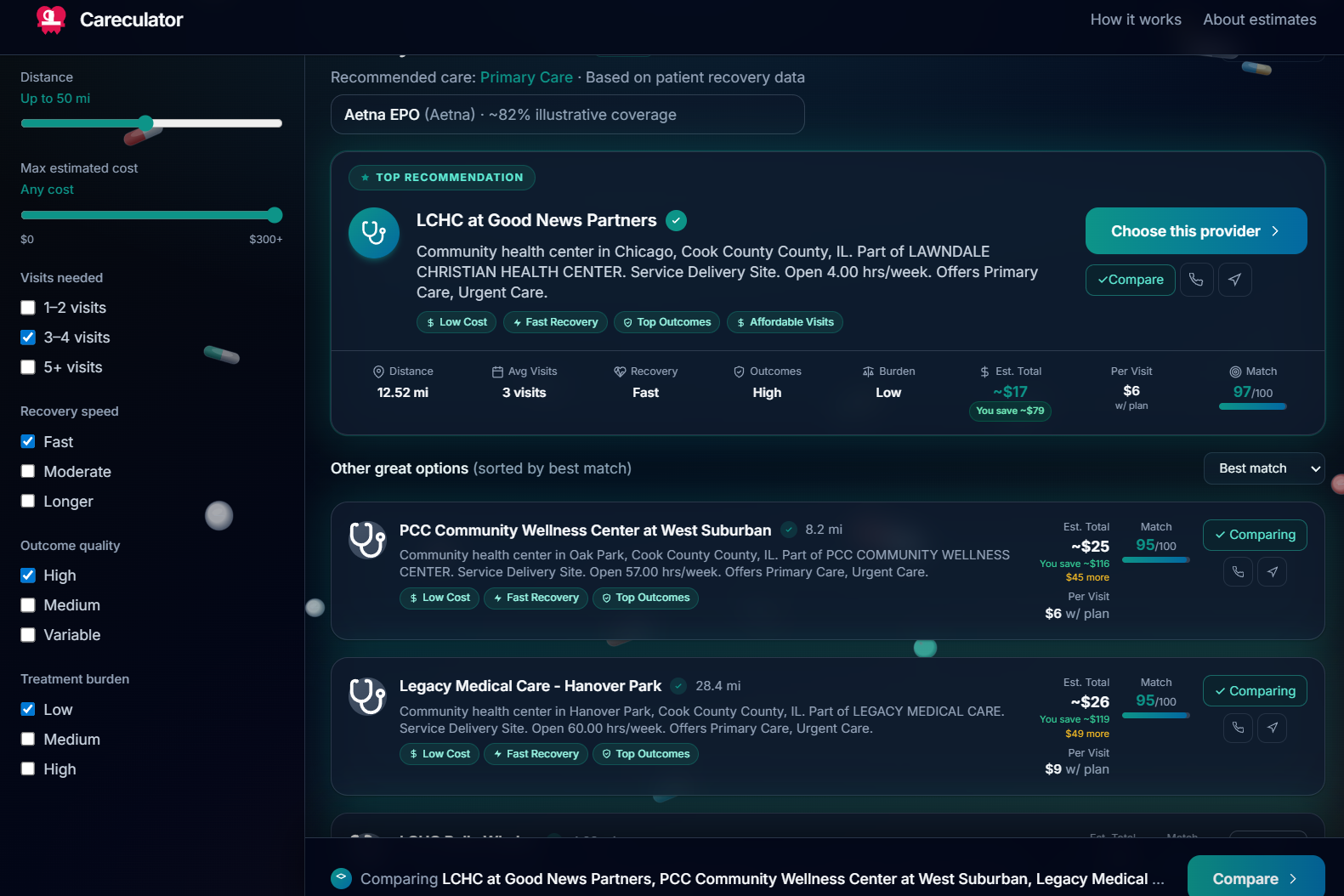
Review the list by changing the filters
-
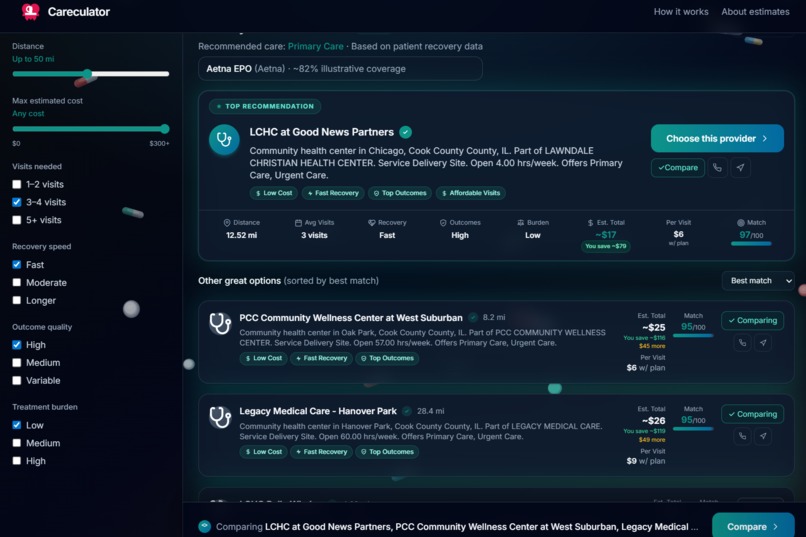
To compare select the health care facilities and click on compare
-
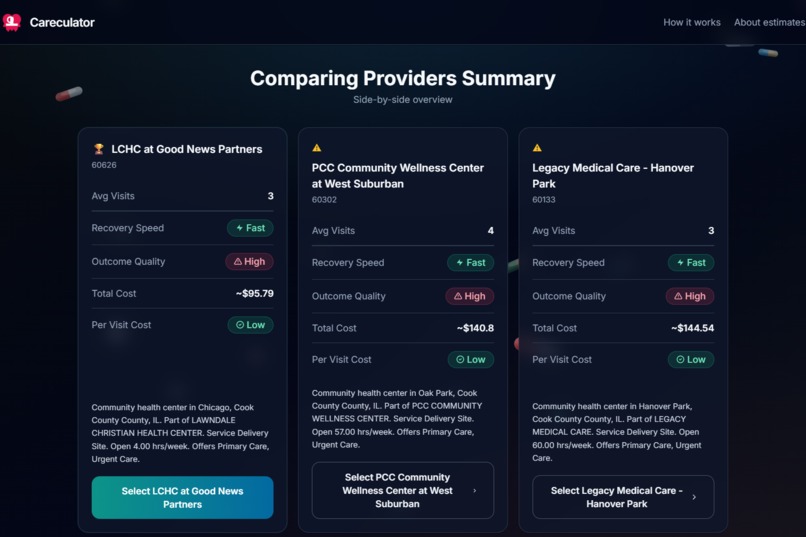
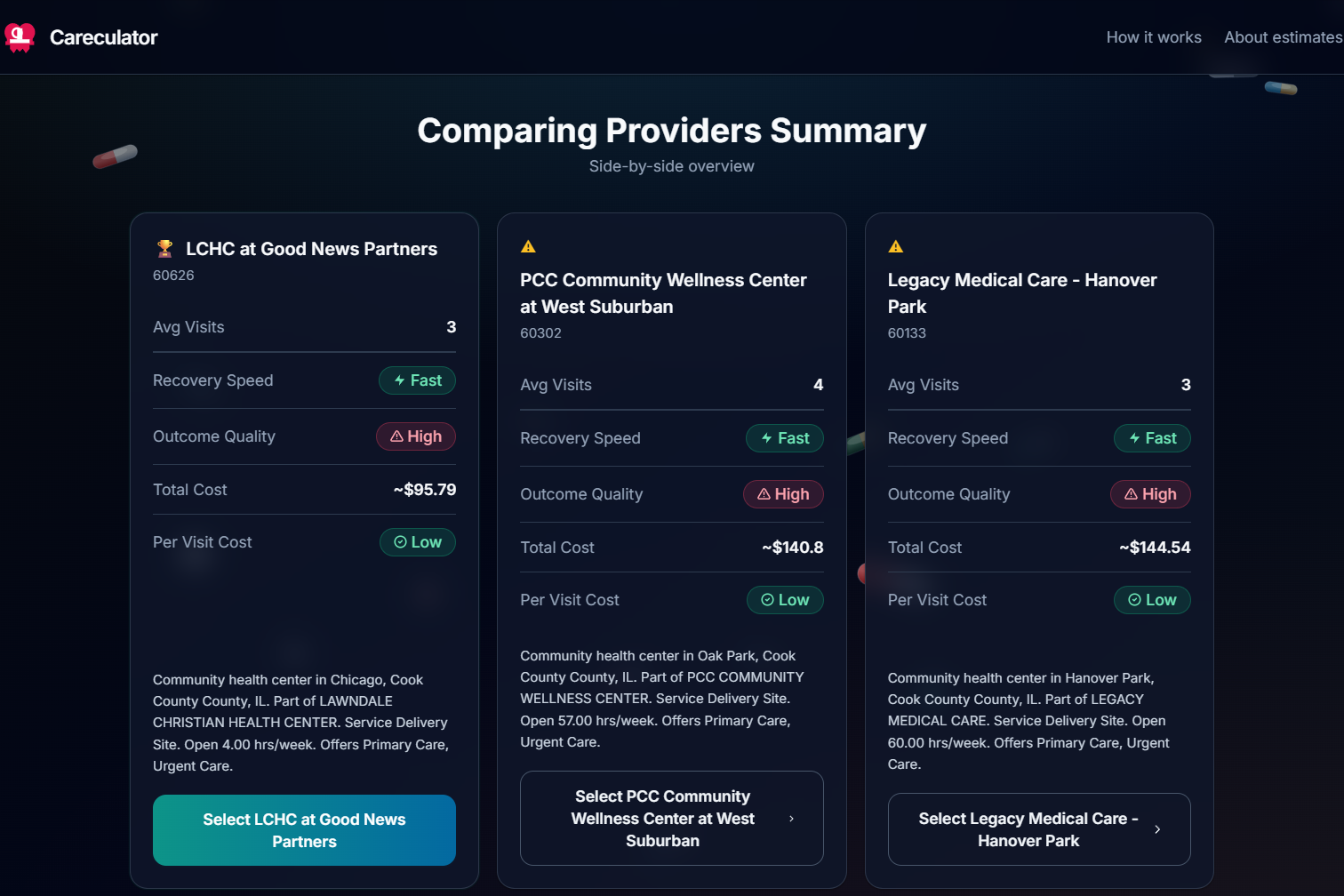
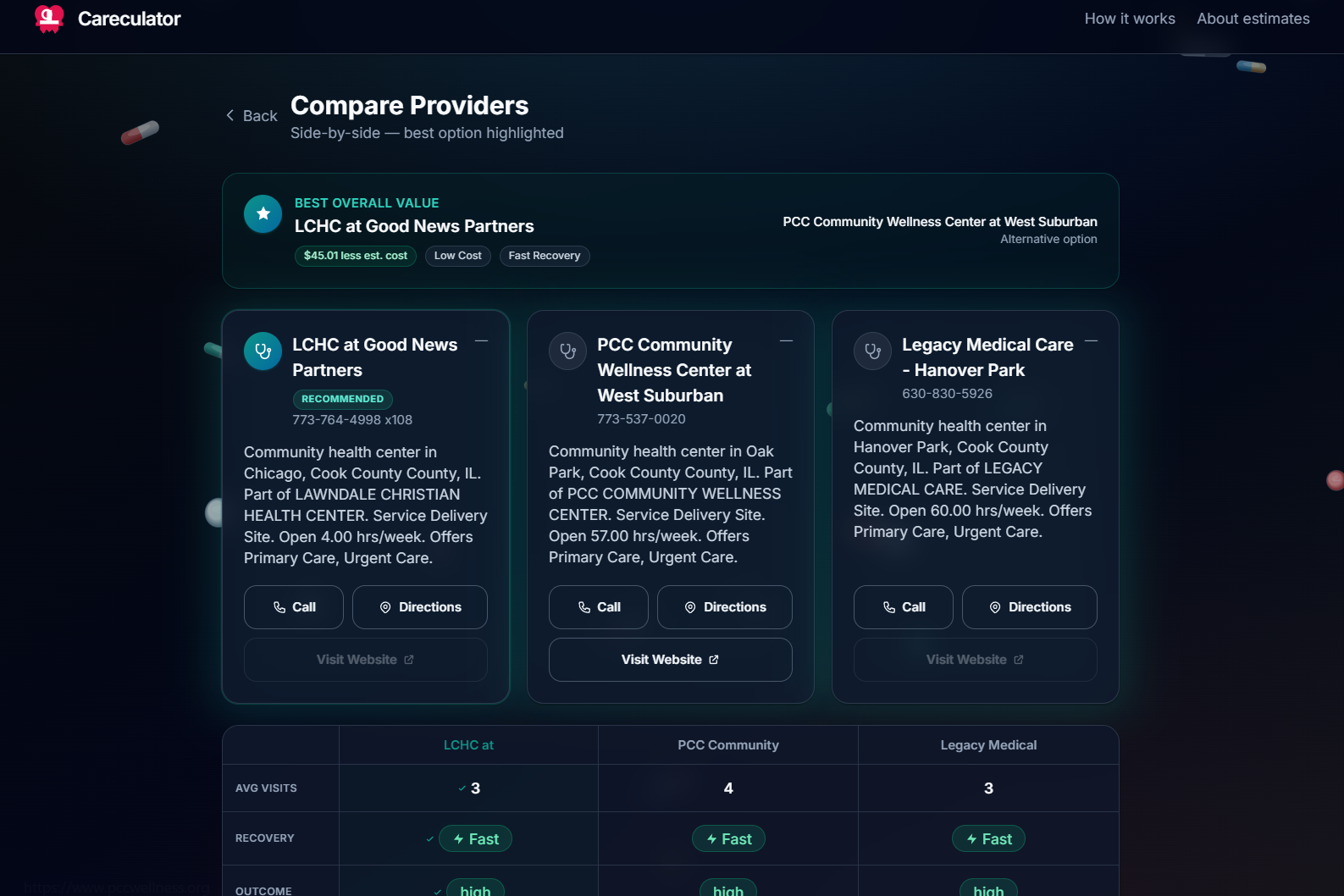
The comparison between health care providers selected is displayed
-
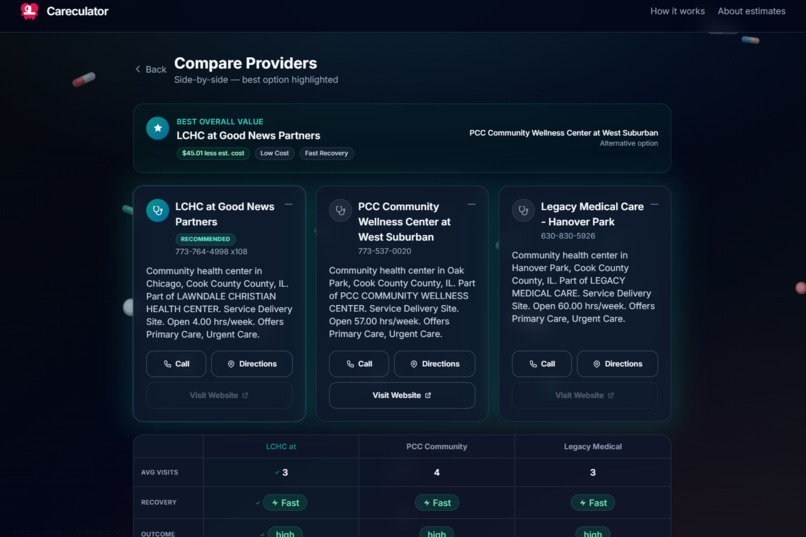
In the summary , you can choose the facility to visit physically, call or visit their website for more information
Inspiration:
Healthcare is often treated as a medical decision, but in reality, it is one of the largest and least transparent financial decisions people make.
Patients are expected to choose providers without knowing the true cost, how insurance will apply, or whether the outcome justifies the expense. This lack of transparency leads to unexpected bills, poor financial planning, and inefficient care choices.
We realized that what’s missing isn’t just better healthcare search, it’s a financial decision layer for healthcare. That insight led to Careculator.
What it does:
Careculator is a health-fintech decision platform that helps users make smarter healthcare choices by combining cost, outcomes, and location into one financial view.
Users search by condition and location, and optionally add insurance details to unlock deeper personalization. The platform then delivers ranked provider recommendations based on:
Estimated out-of-pocket costs (insurance-aware when available) Clinical outcomes and recovery signals Treatment burden and efficiency Side-by-side financial and care comparisons
Instead of navigating fragmented systems, users get a clear, comparable, and financially informed decision framework.
How we built it:
We started by asking a simple question: how do you turn fragmented healthcare data into a clear financial decision?
The first step was bringing together two massive federal datasets: HRSA for provider-level outcomes and CMS for insurance and cost structures. These datasets were never meant to work together, so we designed a unified data layer that could map providers, plans, and service areas into a single, queryable system.
From there, we focused on the core problem: decision-making. Instead of just returning search results, we built a scoring engine that evaluates each provider based on cost, outcomes, and effort, then ranks them in a way that reflects real-world tradeoffs patients care about.
We also intentionally designed the system to work even with incomplete inputs. Users can start with just a condition and location, and optionally add insurance to unlock deeper financial insights. This required building flexible logic that adapts to different levels of available information without breaking the experience.
Finally, we focused on translating complexity into clarity. Healthcare and financial data can be overwhelming, so we designed the interface to present everything through simple comparisons, visual cues, and structured summaries so users can move from confusion to confidence in just a few steps.
Challenges we ran into:
Building a financial layer on top of healthcare data introduced several challenges:
Fragmented and large-scale datasets: Millions of records across HRSA and CMS needed to be unified into a single queryable system Insurance complexity: Modeling real-world coverage variability while supporting users who may not provide insurance details Performance constraints: Delivering fast, real-time results on a large dataset Data interpretation: Translating clinical and financial data into intuitive, decision-ready insights
The hardest challenge was bridging technical accuracy with user trust and clarity.
Accomplishments that we're proud of:
Built a working health-fintech platform using real federal datasets (no synthetic data) Created a unified decision engine combining cost, outcomes, and location Designed a system that works with or without insurance input, ensuring accessibility Delivered a clean, intuitive interface for financially informed healthcare decisions Established a scalable foundation for expanding into broader health-financial tools
What we learned:
We learned that healthcare decisions are fundamentally financial decisions under uncertainty.
This project taught us how to:
Transform complex datasets into actionable financial insights Balance data accuracy with user simplicity Design systems that handle incomplete user inputs gracefully Build products that prioritize trust, transparency, and clarity
What's next for CARECULATOR:
Careculator is evolving into a full financial intelligence layer for healthcare.
Next steps include:
Real-time insurance verification and cost estimation APIs Predictive models for expected treatment costs and financial risk Budgeting and planning tools for healthcare expenses Integration with fintech ecosystems (spending, savings, HSAs) Scalable cloud infrastructure for nationwide deployment
Our vision is to make Careculator the default platform for financially intelligent healthcare decisions, where every patient understands the cost before the care.
Built With
- api-design
- better-sqlite3
- big-data
- comparative-analytics
- data-engineering
- data-integration
- data-visualization
- decision-engine
- express.js
- fintech
- framer-motion
- full-stack
- geospatial
- haversine
- health-tech
- node.js
- openapi
- opendata
- ranking-algorithm
- react
- rest-api
- sql
- sqlite
- swagger
- system-design
- tailwind-css
- typescript
- user-experience
- vite

Log in or sign up for Devpost to join the conversation.