-
-
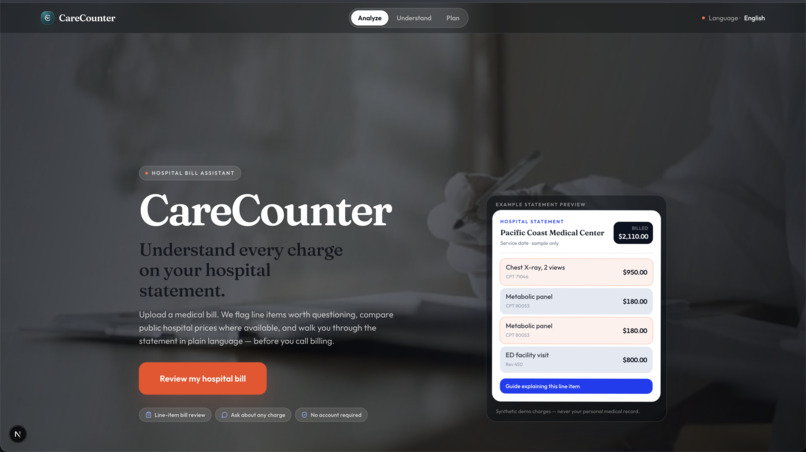
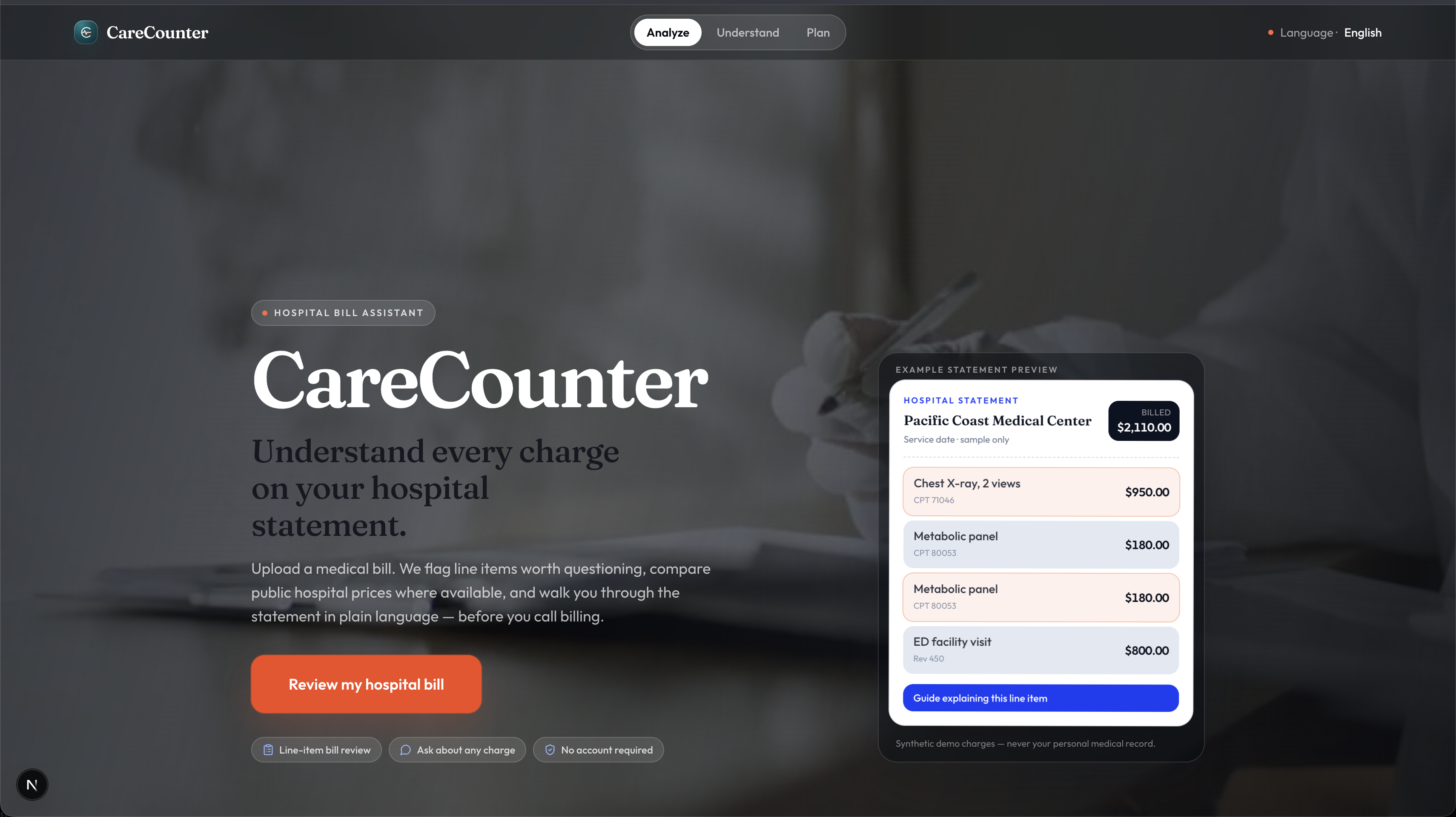
Home Page
-
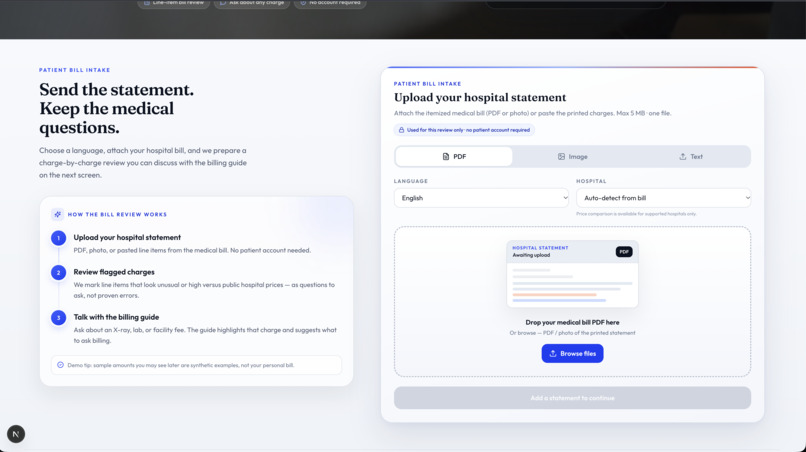
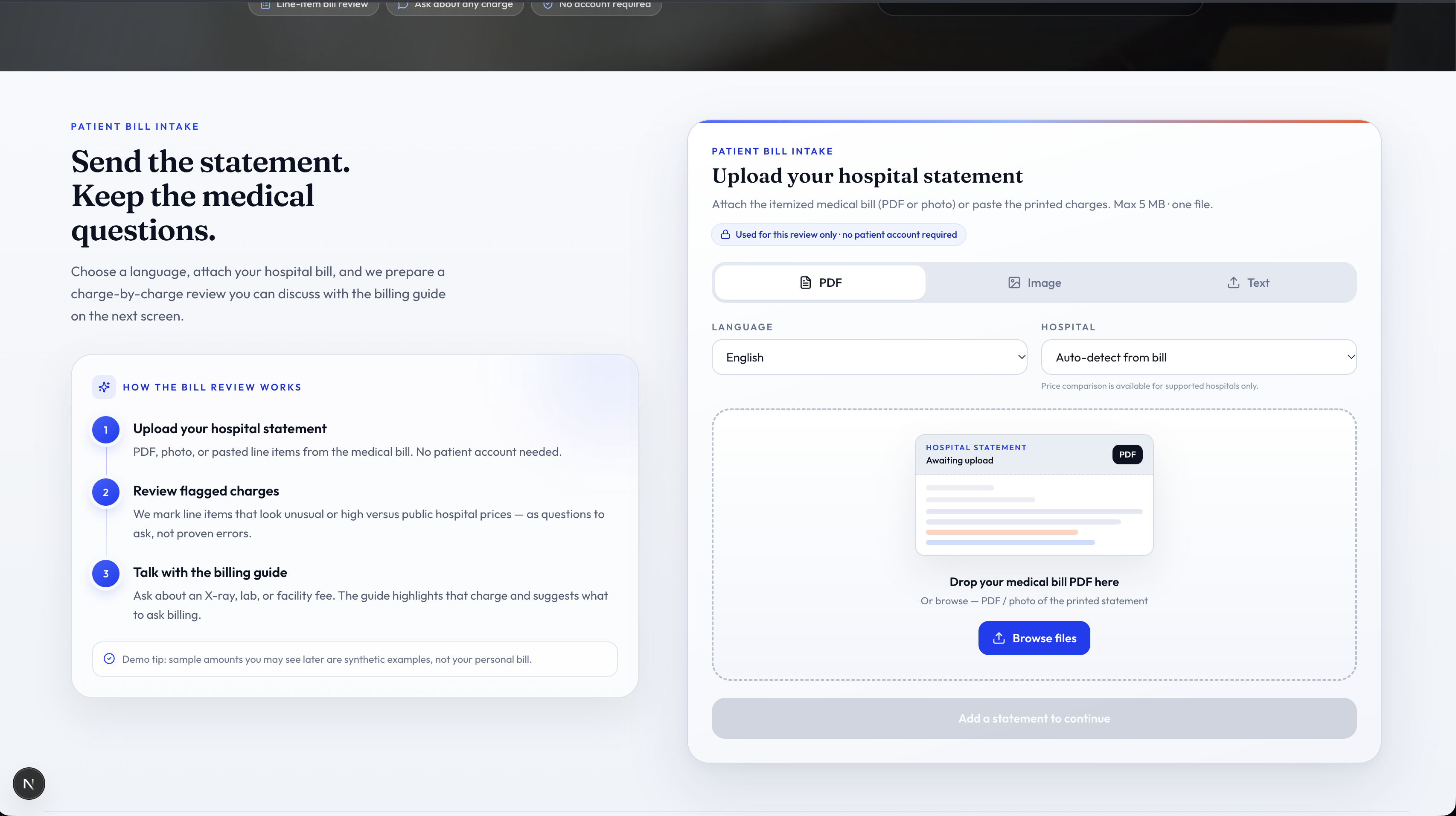
Medical Bill Upload Page
-
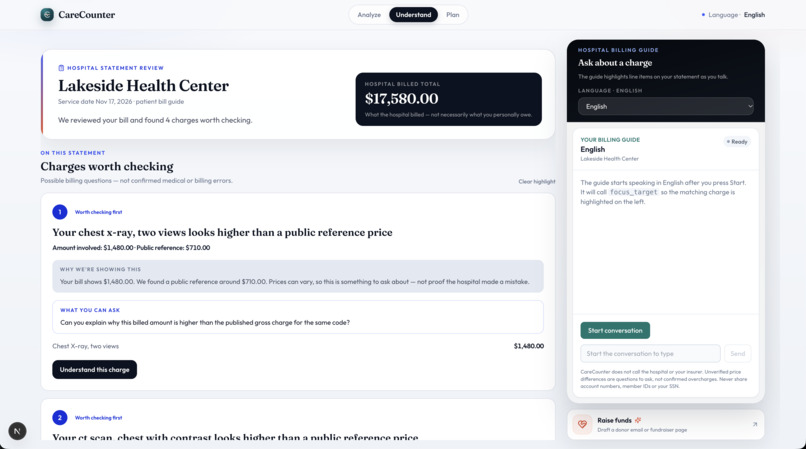
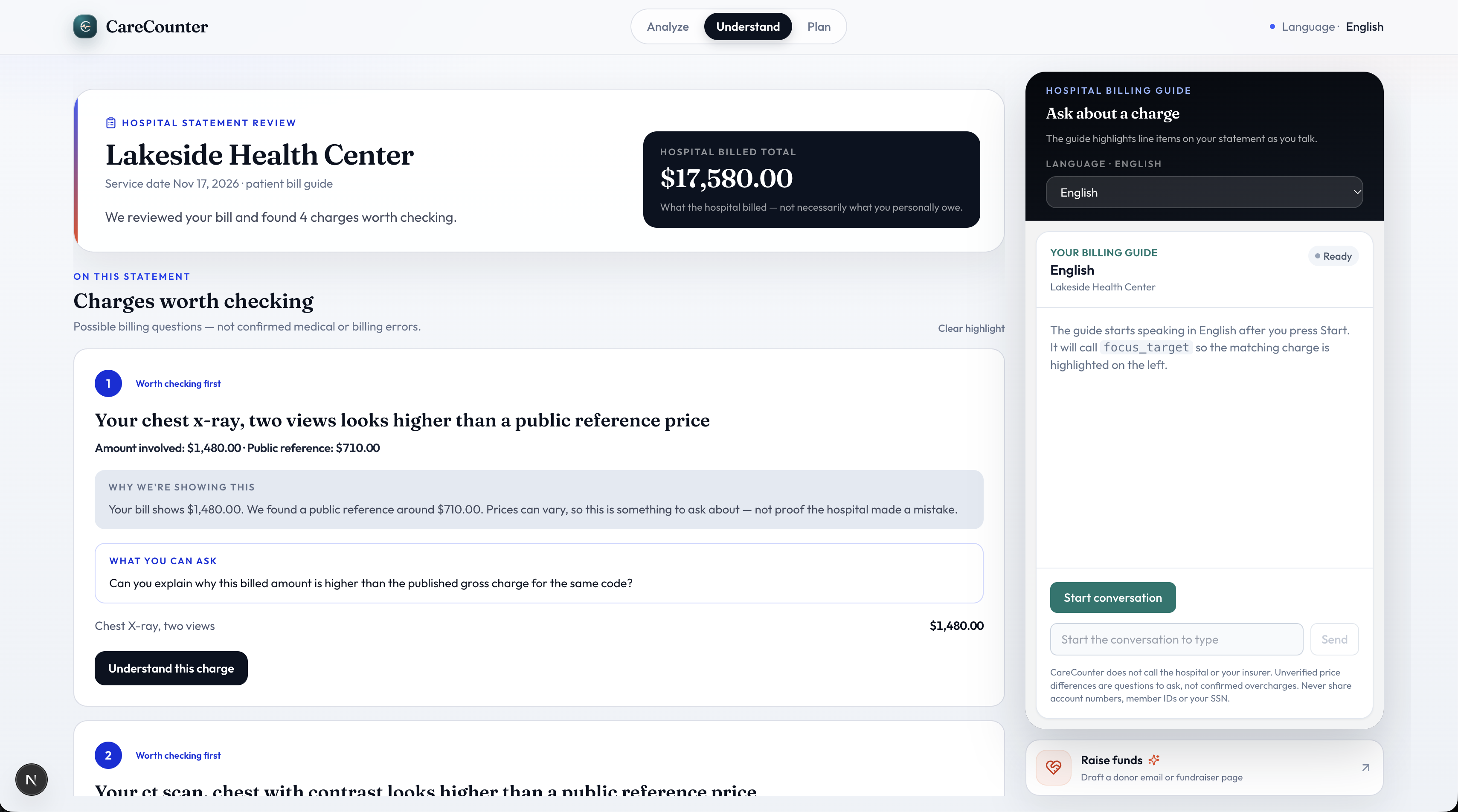
AI Agent Help Page
-
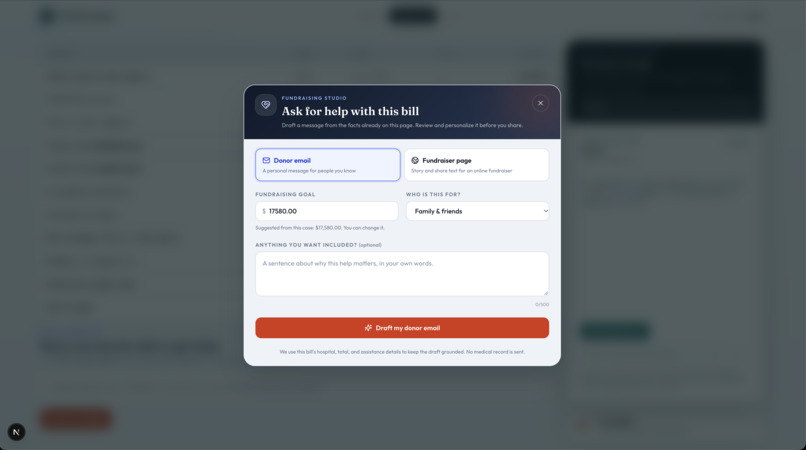
FundRaiser Page
-
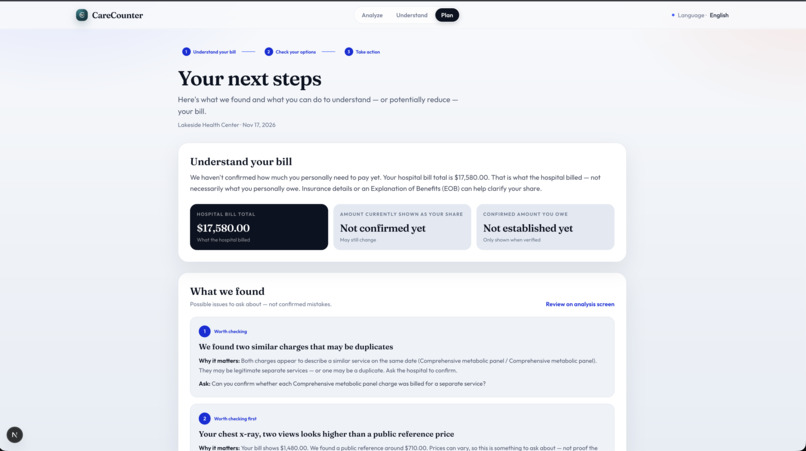
Action Plan Page
Inspiration
Medical bills can be overwhelming. You receive a statement filled with unfamiliar procedure codes, expensive tests, and charges you don't fully understand. Sometimes, the same procedure appears twice, and you have no idea whether that's normal or a billing mistake.
For people without insurance, or those unfamiliar with the American healthcare system, figuring out what to do next can be even harder.
We realized that hospitals already publish pricing information, and financial assistance programs exist, but finding and understanding these resources takes a lot of effort.
That's what inspired CareCounter.Ai. We wanted to make medical bills easier to understand while helping people find practical ways to reduce their financial burden.
What it does
CareCounter.Ai is an AI-powered medical billing assistant that helps patients understand their bills, identify potential overcharges, and explore financial assistance.
Users can upload a hospital bill as a PDF, image, or text. CareCounter extracts the individual charges and compares them with available hospital pricing data to flag possible duplicates and unusually high charges.
Our ElevenLabs-powered multilingual voice assistant then walks users through their bills, answering questions in their preferred language. As the agent explains a particular charge, the corresponding item is highlighted on the screen, making it easier to follow along.
The assistant also asks about insurance and helps users understand their coverage, claims, and possible next steps. For uninsured patients, it explores hospital discounts, government assistance, and nonprofit support.
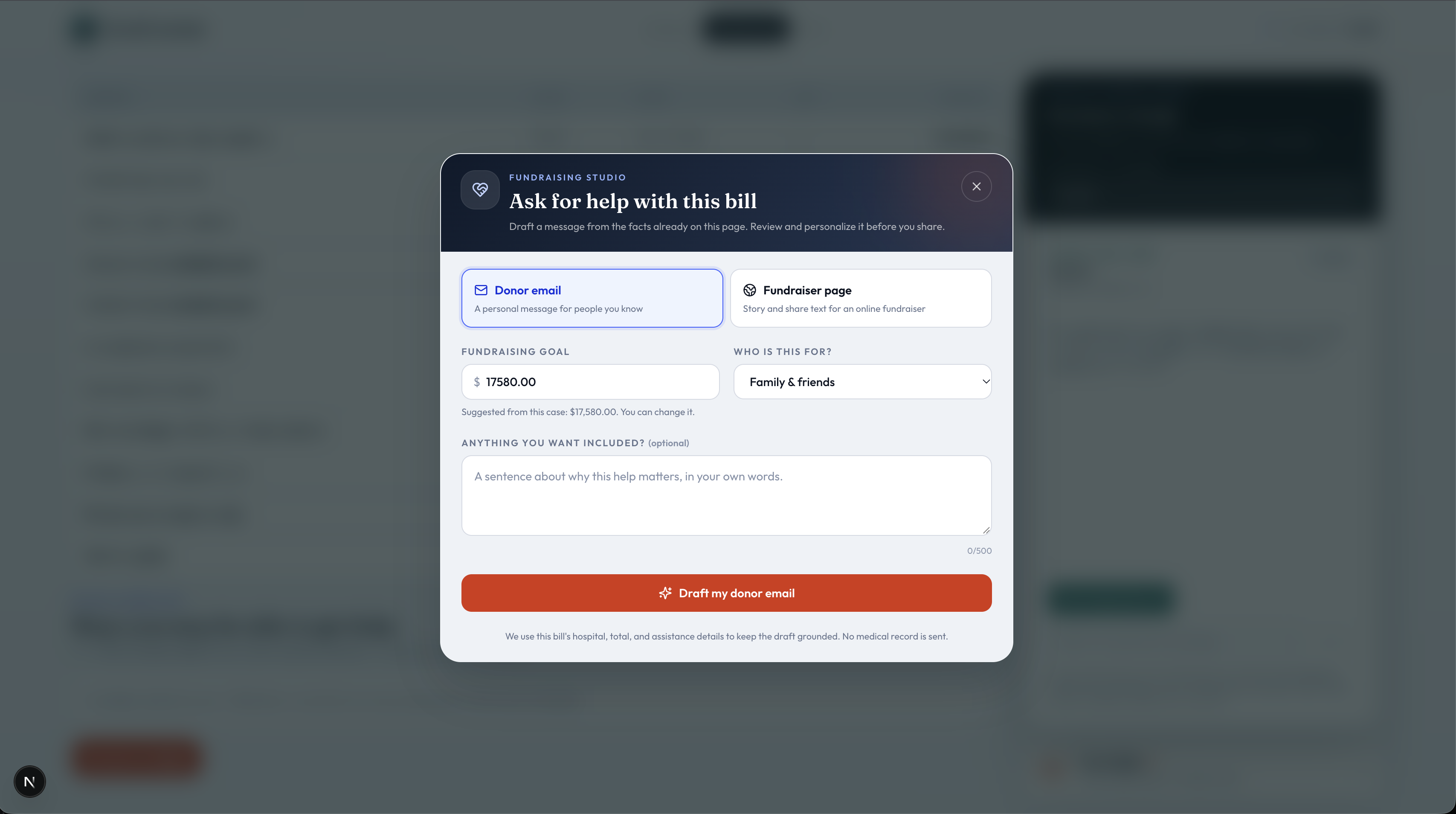
We've also added fundraising support for patients who are struggling to afford their bills. Users can seek help through email-based fundraising outreach or website-based support, giving them another way to connect with people who may be willing to contribute toward their medical expenses.
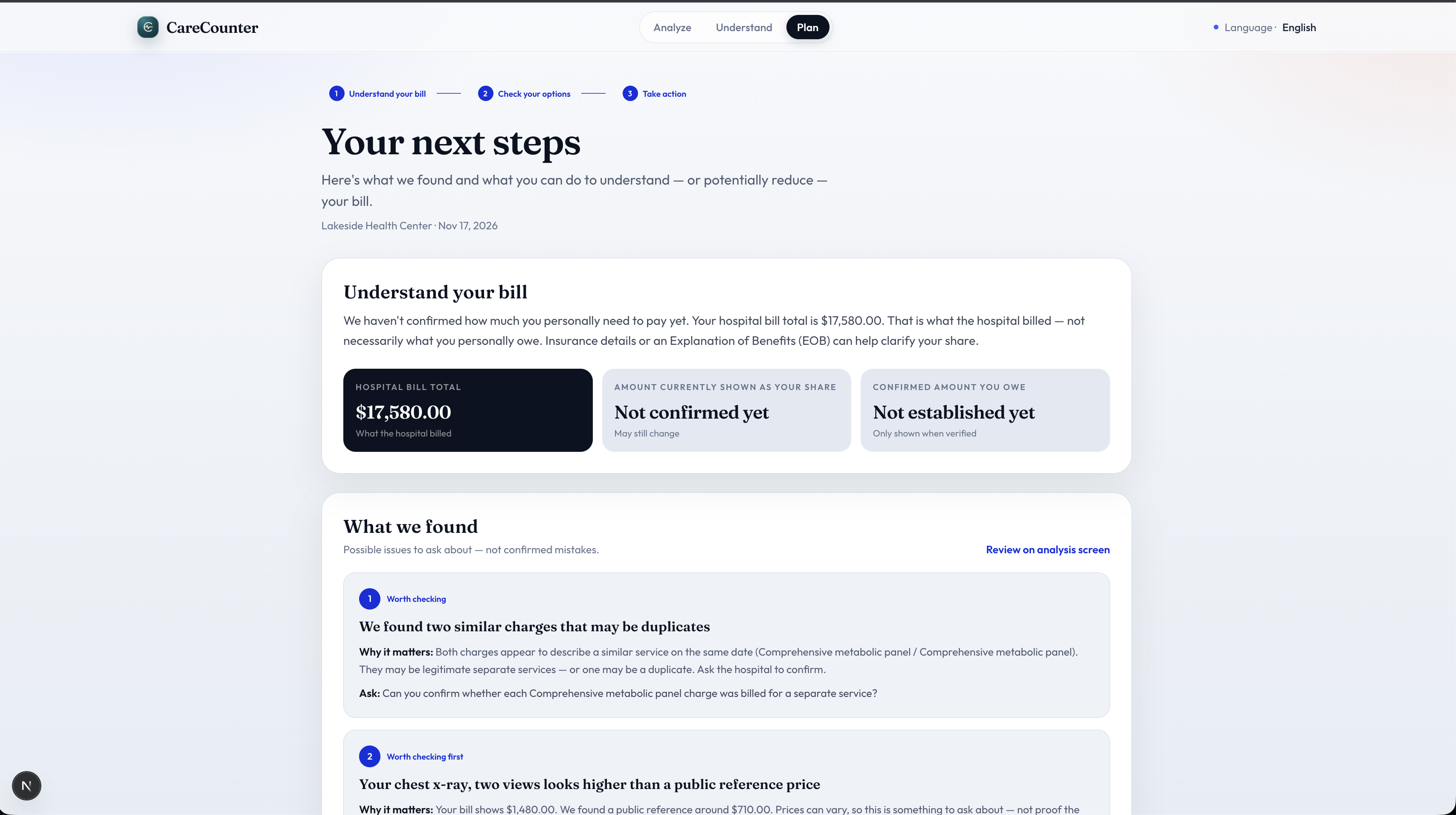
At the end, CareCounter provides a personalized action plan with relevant resources, contacts, and steps the patient can take.
How we built it
We built CareCounter.Ai using Next.js, React, TypeScript, and Tailwind CSS, connecting four major technologies to turn complicated medical bills into useful information and personalized financial guidance.
Google Gemini handles the document intelligence. Its multimodal capabilities allow users to upload PDFs, photographs, or scanned hospital bills. Gemini extracts procedure codes, charges, and other billing details into structured data, helping us identify potential duplicates and unusually expensive procedures through our comparison engine.
Bright Data powers our public healthcare data collection. We use it to discover and retrieve hospital price-transparency information, insurance resources, and financial assistance programs. This is a crucial part of CareCounter because it lets us compare actual billed charges with publicly available pricing information and connect patients with potential cost-saving opportunities.
Neon PostgreSQL forms the backbone of our application. It stores structured billing records, hospital reference prices, detected discrepancies, and supporting evidence. This allows different parts of CareCounter to access consistent information quickly, from price comparisons to the AI agent's explanations.
ElevenLabs Agents brings everything together through natural, multilingual conversations. Instead of leaving users with a complicated analysis report, our proactive AI guide explains their charges, answers questions, asks about insurance, and walks them through possible financial assistance options. We also integrated the agent with our frontend so that the exact charge being discussed is highlighted on screen in real time, making the experience easier to follow.
The real challenge was connecting these technologies into a single workflow: Gemini understands the bill, Bright Data brings in external evidence, Neon organizes the information, and ElevenLabs helps the patient understand and act on it.
Our three-person team worked in parallel across the frontend, backend data processing, and conversational AI to bring the application together within the hackathon's 24-hour development window.
Challenges we ran into
One of our biggest challenges was handling different hospital bill formats. Some bills contain detailed procedure codes, while others have incomplete descriptions or missing information.
Hospital pricing data was another challenge. Even when hospitals publish their prices, the files can be enormous and difficult to compare with individual bills.
Integrating ElevenLabs with our frontend also took some work. We wanted the agent to do more than speak; it needed to explain the correct charges, respond to questions, and keep the visual interface synchronized with the conversation.
Connecting all these systems into a working application within a 24-hour hackathon made prioritization especially important.
Accomplishments that we're proud of
We're proud of building an experience that combines medical bill analysis with conversational guidance.
Our favorite feature is the real-time connection between the voice assistant and the bill. Users can listen to an explanation while seeing exactly which charge is being discussed.
We're also happy that CareCounter goes beyond finding billing discrepancies. By combining financial assistance discovery, insurance guidance, and fundraising support, we're trying to help users find realistic ways to manage their medical expenses.
What we learned
We learned how important it is to combine AI with reliable data and traditional programming.
Gemini helps interpret complicated documents, while our backend performs price comparisons and calculations. ElevenLabs makes that information accessible through natural conversations.
We also learned a lot about connecting different AI services, designing shared data structures, and building features in parallel as a team.
Most importantly, we realized that helping someone understand a medical bill is only the beginning. The information becomes much more useful when it helps them decide what to do next.
What's next for CareCounter.Ai
We'd like to expand CareCounter to support more hospitals and insurance providers across the United States.
We also want to add insurance Explanation of Benefits (EOB) comparisons, improve financial assistance matching, and make our fundraising features more useful by helping patients create and share requests for support.
In the long run, we hope CareCounter can help people manage the entire process, from understanding their initial bill to exploring discounts, requesting assistance, and resolving outstanding charges.
Our goal is to make medical billing easier to understand, financial support easier to find, and healthcare costs less overwhelming for the people dealing with them.
Built With
- bright-data
- css3
- cursor
- deepseek
- elevenlabs
- elevenlabs-agents
- figma
- gemini-api
- git
- github
- godaddy
- google-gemini
- html5
- javascript
- neon
- next.js
- node.js
- openai-codex
- postgresql
- react
- rest-apis
- shadcn/ui
- tailwind-css
- typescript
- zod
