-
-
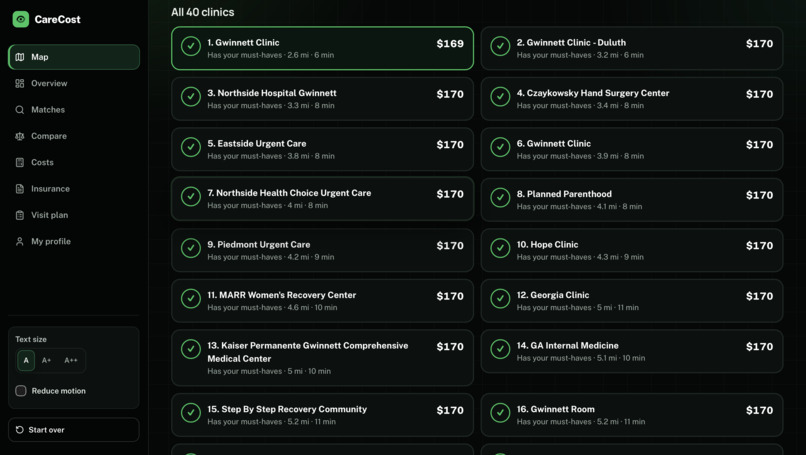
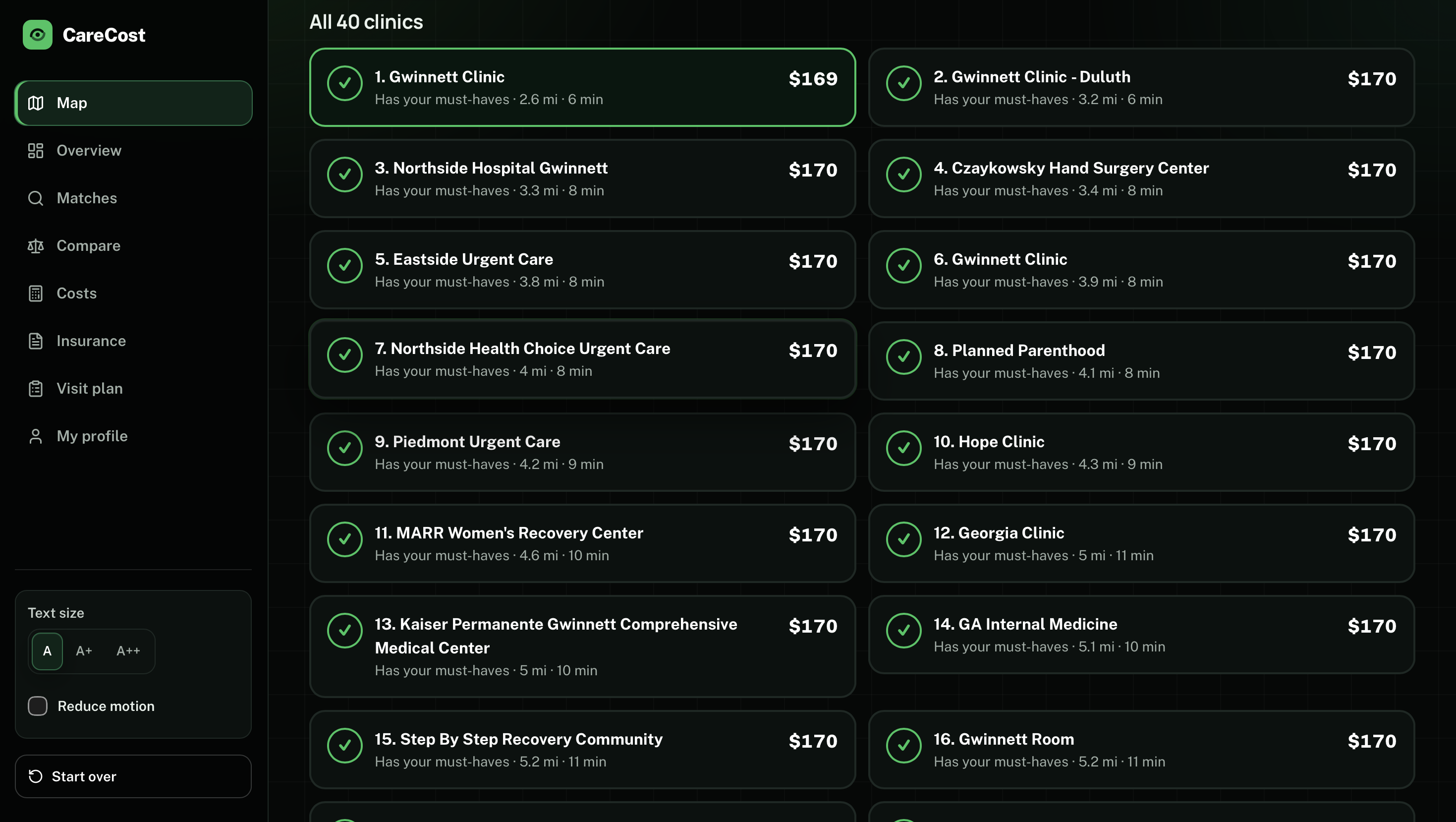
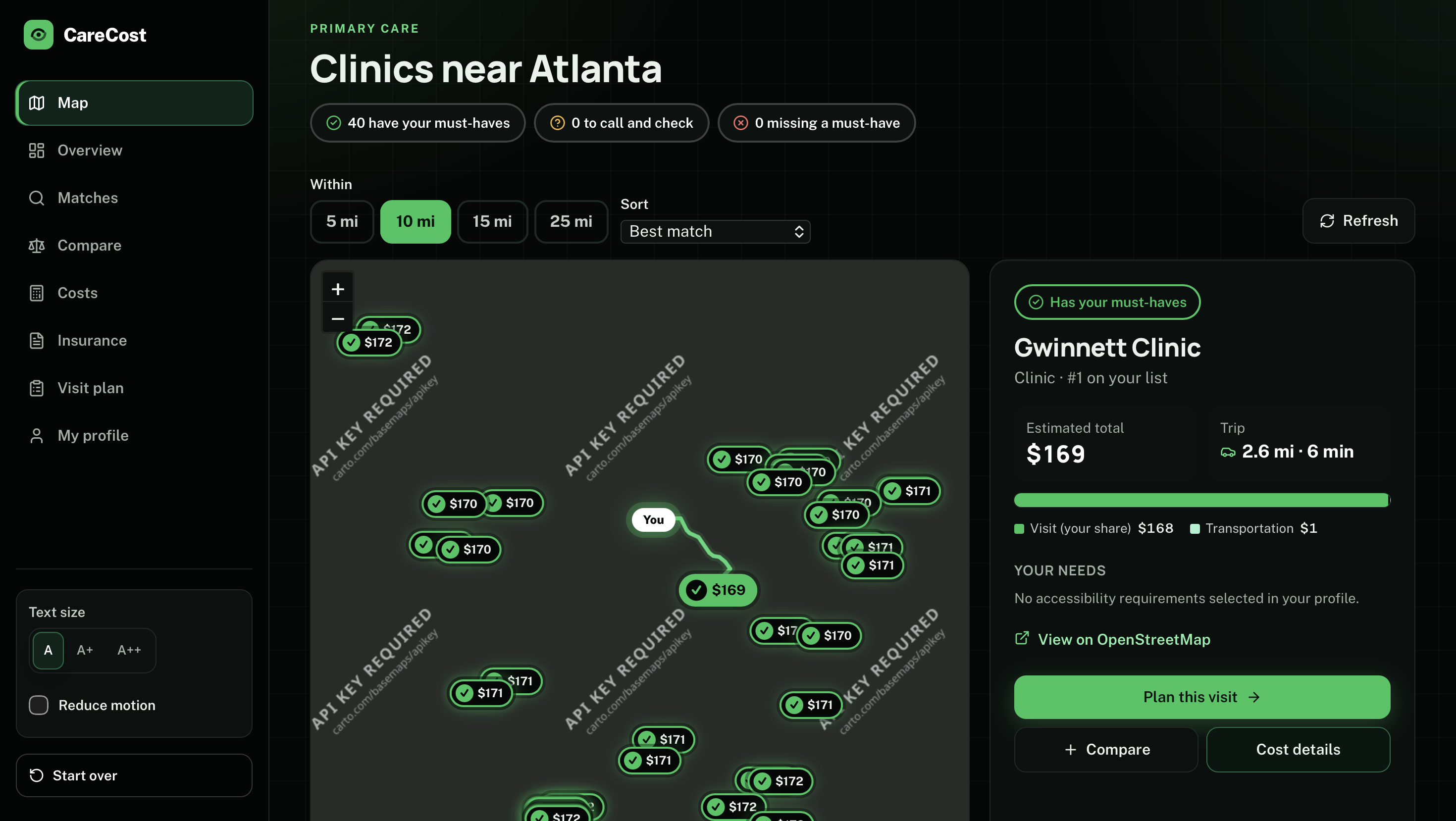
Map, list of clinics
-
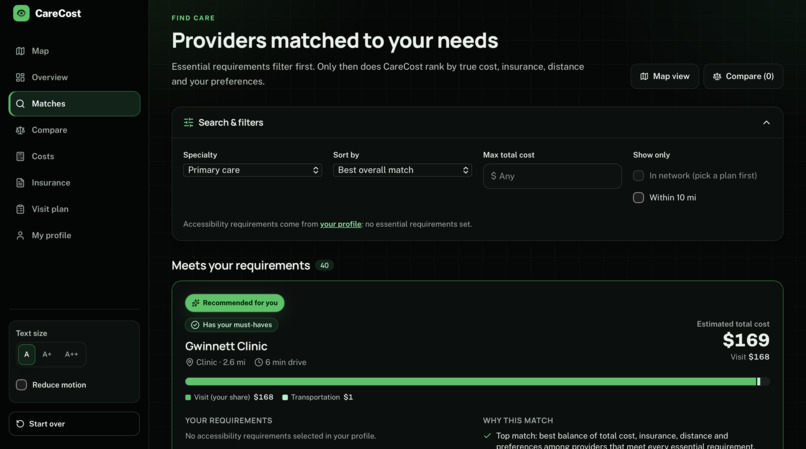
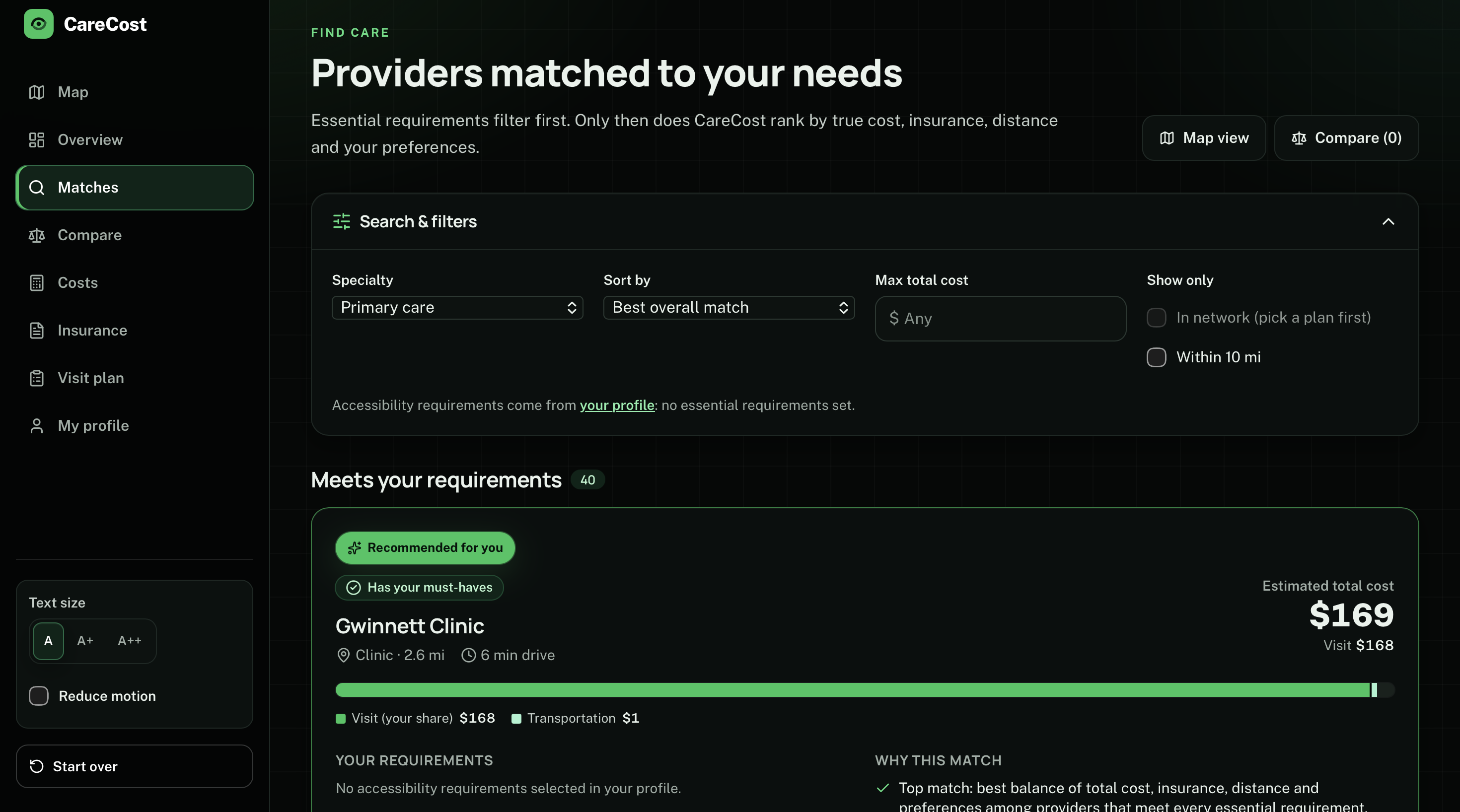
Matches to your needs
-
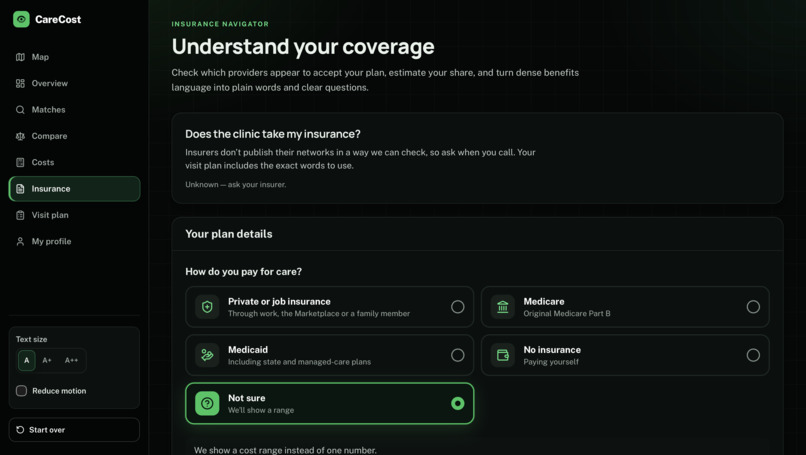
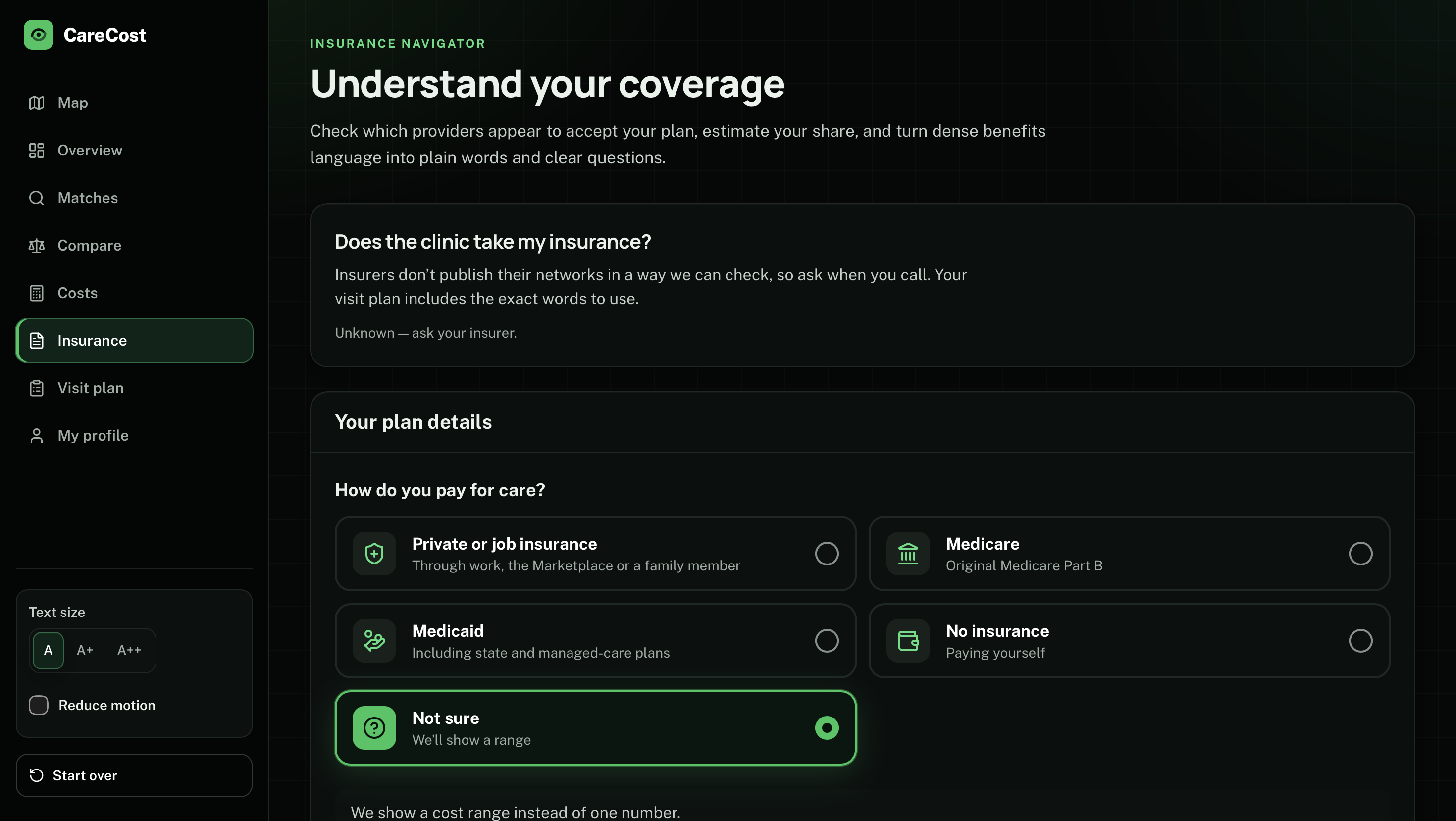
Insurance (Yes/No)
-
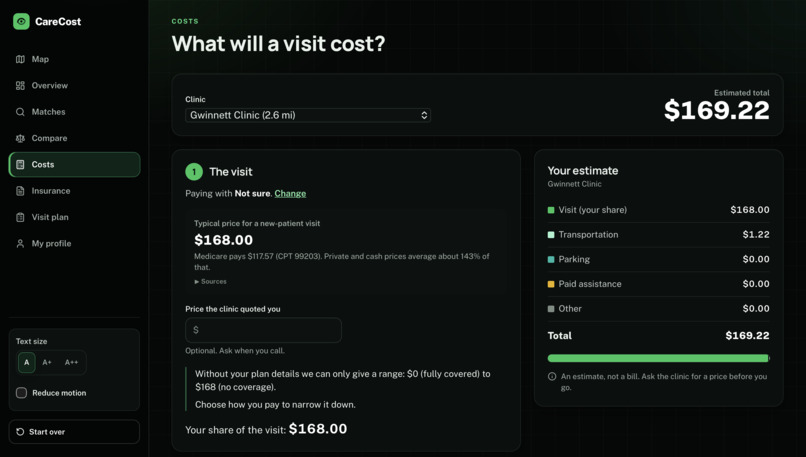
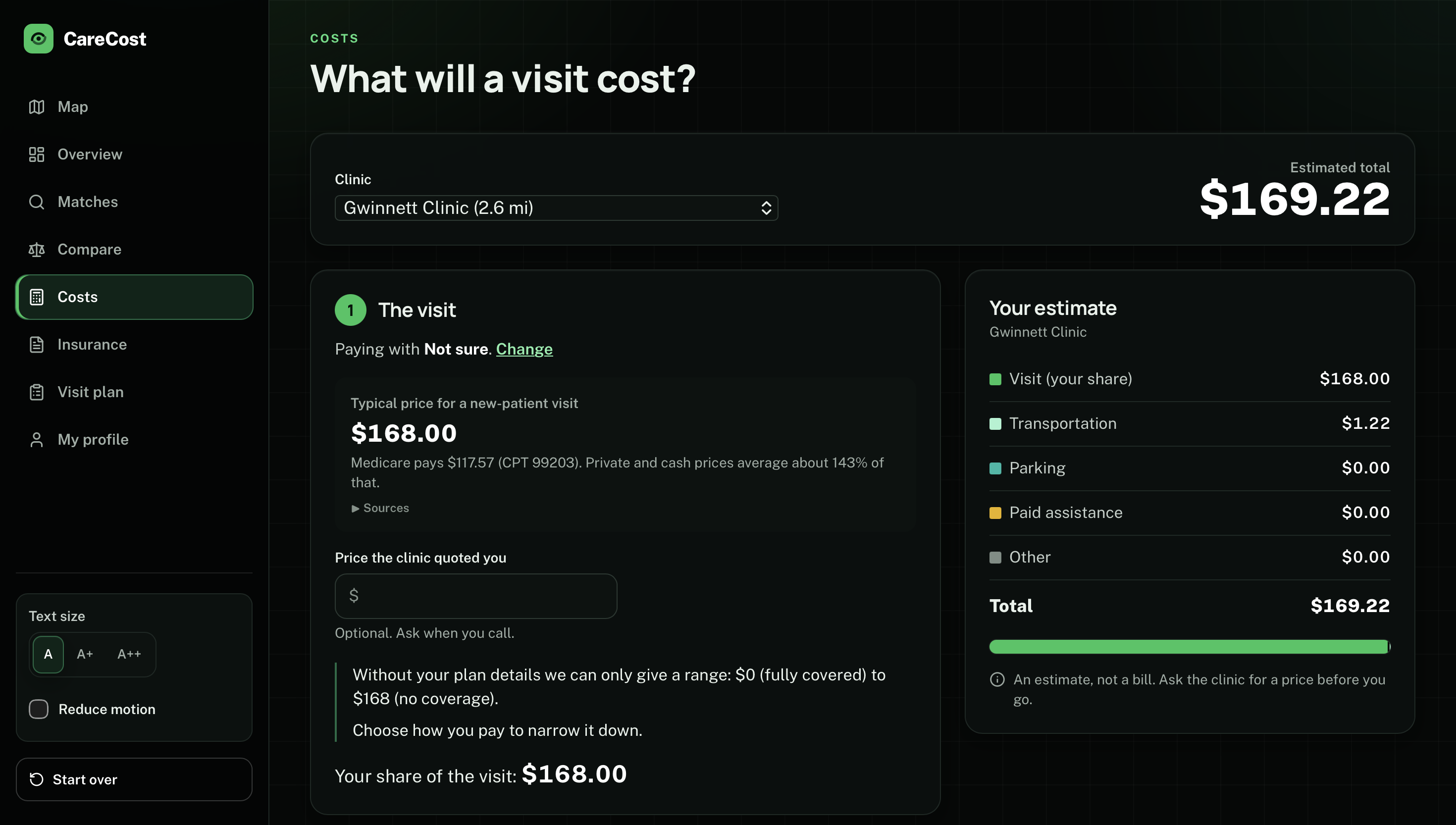
Costs of a clinic
-
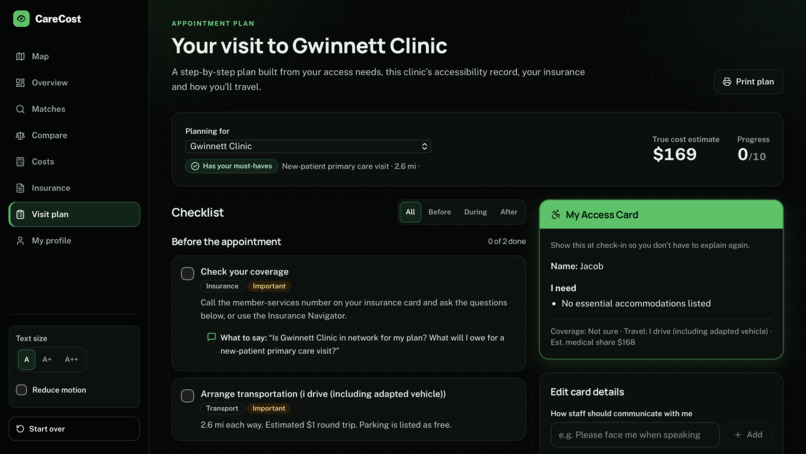
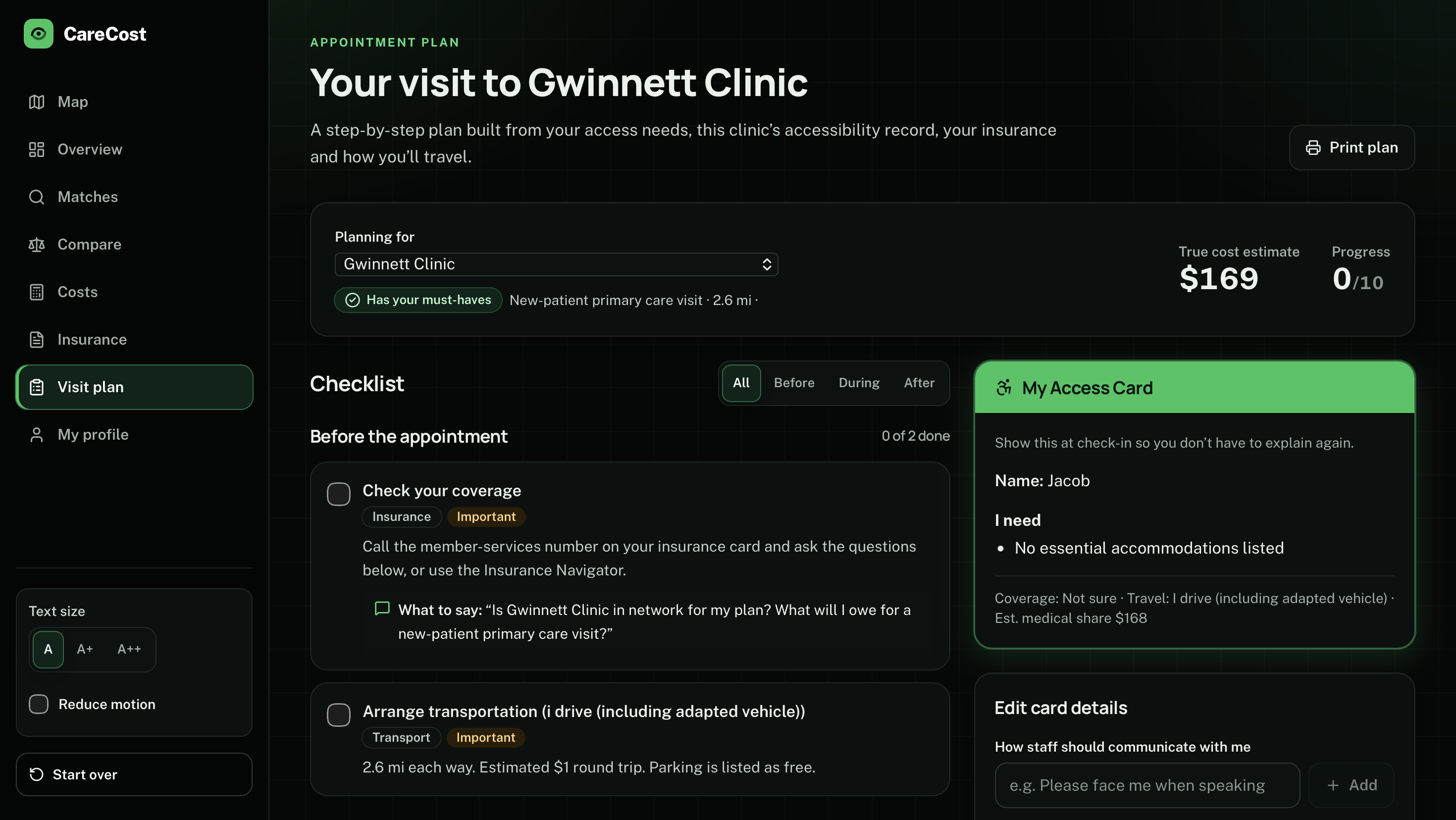
Planning a Visit
-
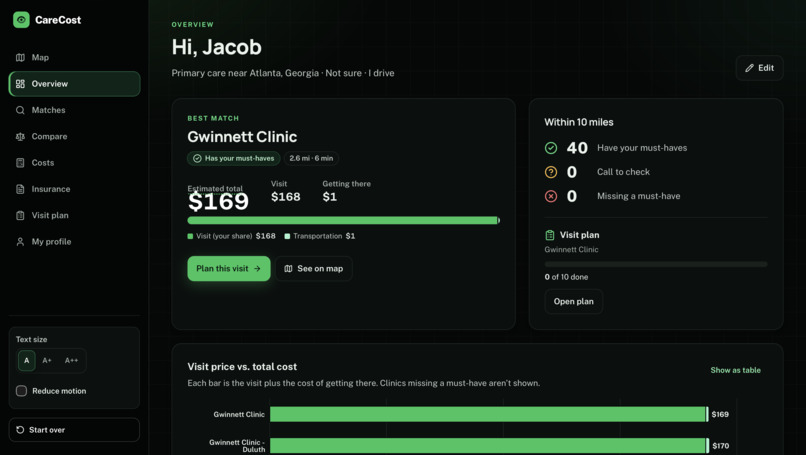
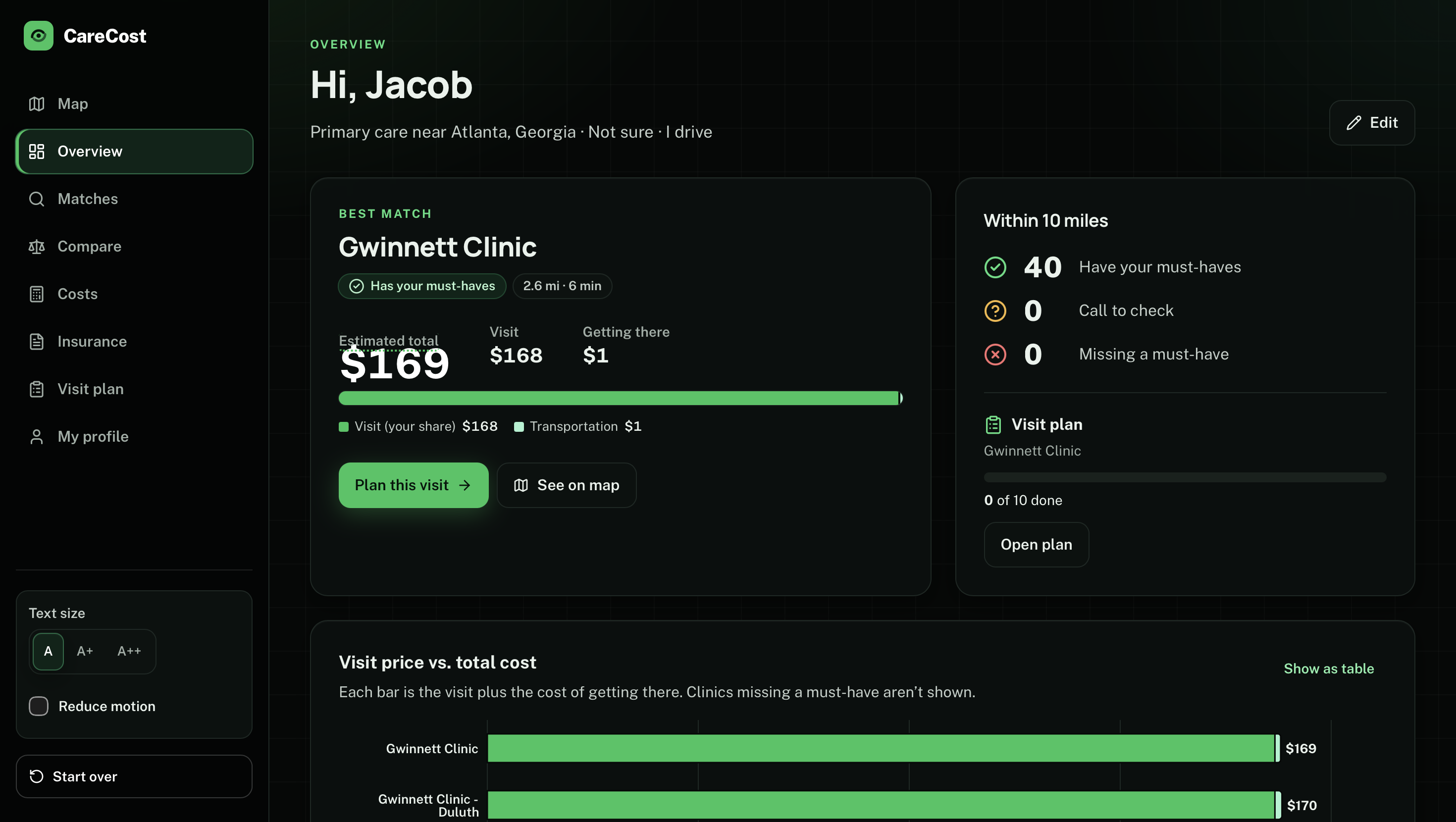
Overview of Clinics
-
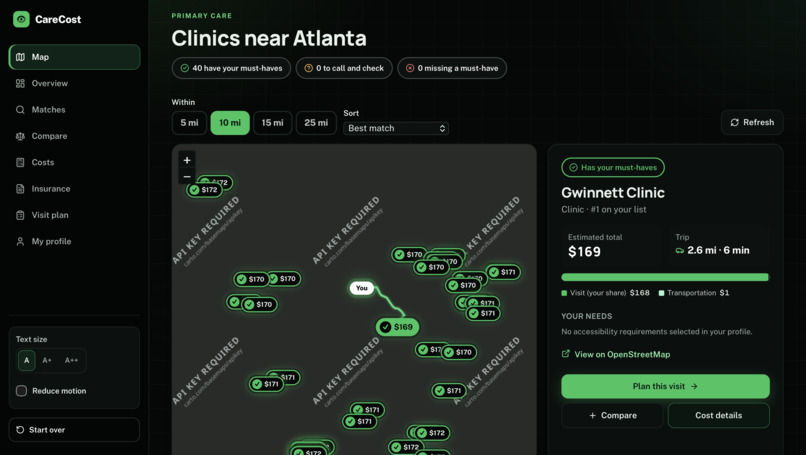
Map of Clinics
-
Opening screen
As I started exploring healthcare accessibility, I became interested in the challenges people with disabilities encounter when trying to find a provider who can accommodate their needs.
Finding a doctor involves comparing prices, insurance, location, and availability. But for someone with a disability, there's even more to consider. Is the building wheelchair-accessible? Does the exam room have the necessary equipment? Are communication accommodations available? These questions can limit someone's options and sometimes force them to travel farther or spend more money to receive care.
That got me thinking about the financial side of accessibility. We usually measure healthcare costs by looking at the medical bill, but that's only part of the expense. Transportation, parking, and additional assistance can all contribute to the cost of receiving care. A provider with a lower appointment price isn't necessarily the most affordable option.
Thats why we made... CareCost.
I wanted to create a platform that considers accessibility and affordability together. Users can enter their individual accessibility requirements, identify which accommodations are essential, and find providers that best match their needs. Rather than simply recommending the cheapest option, CareCost considers whether a provider can actually accommodate the patient.
One of the main features I developed was the True Cost Calculator. It goes beyond the medical bill to estimate the additional expenses associated with accessing care. I also incorporated clinic costs, insurance analysis, and geographic accessibility into this personalized decision making process.
I built CareCost using React, TypeScript, Vite, and Tailwind CSS. One of the biggest challenges was bringing all these features together while making sure the recommendations were meaningful. Accessibility information isn't always complete. For example, a provider might have a wheelchair-accessible entrance but not an accessible examination room. I wanted CareCost to recognize when information was missing rather than automatically assuming a provider met someone's requirements.
Through this project, I learned how closely healthcare accessibility and economics are connected. A barrier that might seem small on paper can have a real financial impact on someone's ability to receive care. I also learned that building a useful recommendation system requires more than producing an answer. It means understanding the user's needs, accounting for different constraints, and being transparent about what the system does and doesn't know.
I'm proud of what I've built with CareCost, and I hope it helps people approach healthcare decisions with more information and fewer barriers.
Ultimately, I believe people shouldn't have to choose between healthcare that accommodates their needs and healthcare they can afford. CareCost is my attempt to help make both possible!
Built With
- ai
- css
- healthcare
- healthcareaccessibility
- healthcareeconomics
- healthtech
- html
- javascript
- react
- tailwindcss
- typescript
- vite

Log in or sign up for Devpost to join the conversation.