-
-
CareCompanion
-
Problem
-
Solution
-
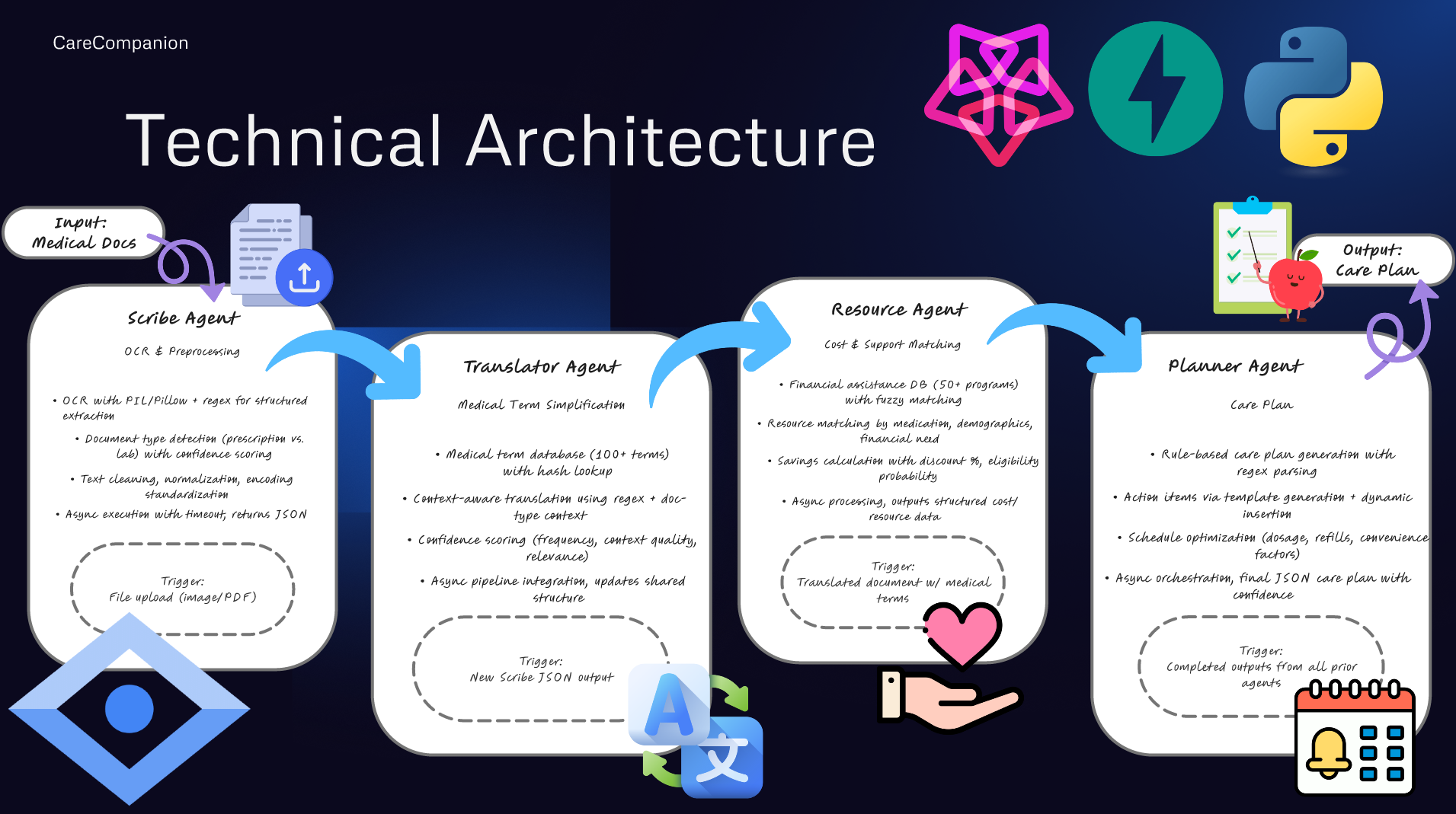
Technical Architecture
-
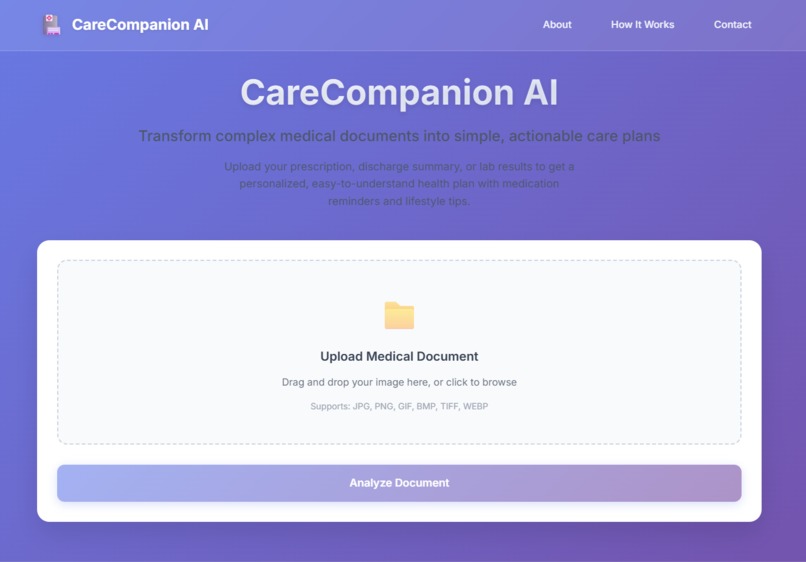
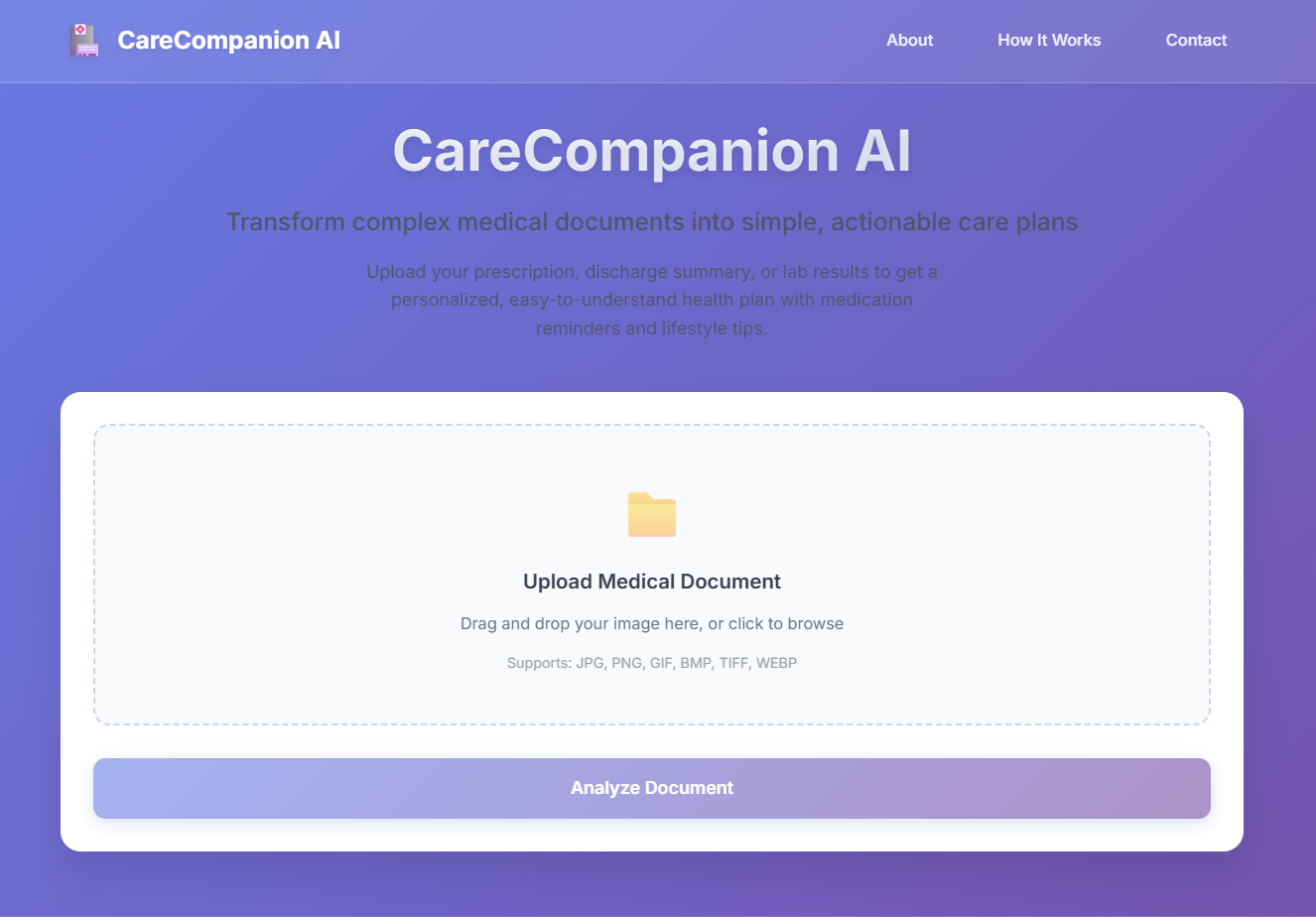
Landing Page
Inspiration
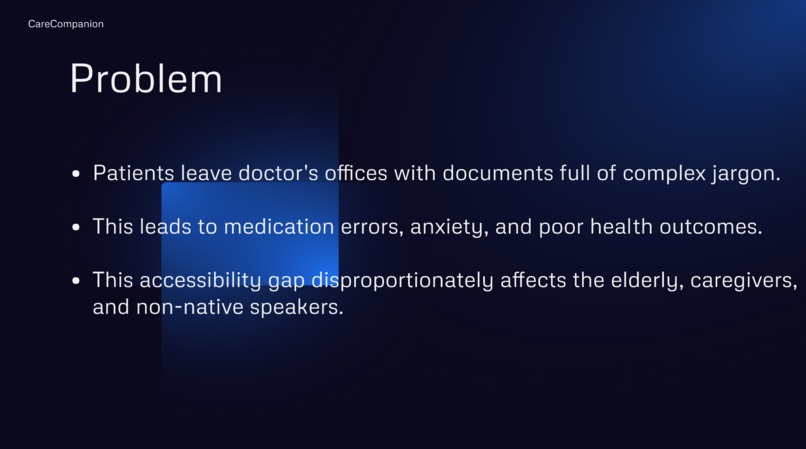
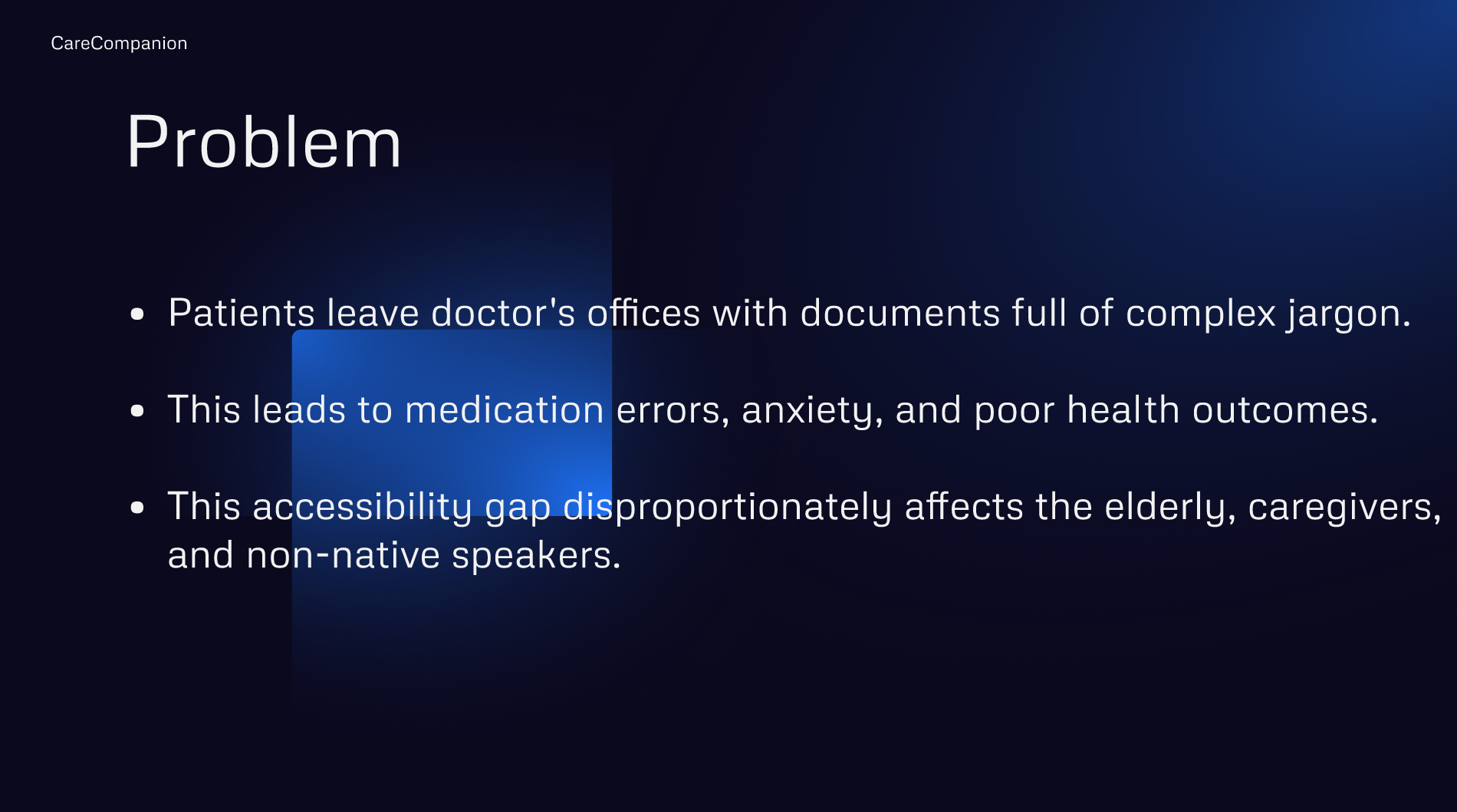
The inspiration for CareCompanion came from witnessing a critical accessibility gap in healthcare that affects millions. Having seen family members struggle to understand complex medical prescriptions and discharge instructions, I recognized that the barrier isn't just medical knowledge—it's the overwhelming nature of documents filled with jargon and complex instructions. This communication gap between professionals and patients can lead to confusion, medication errors, and anxiety. I was inspired to leverage modern AI to bridge this gap, empowering every patient to confidently manage their health.
What it does
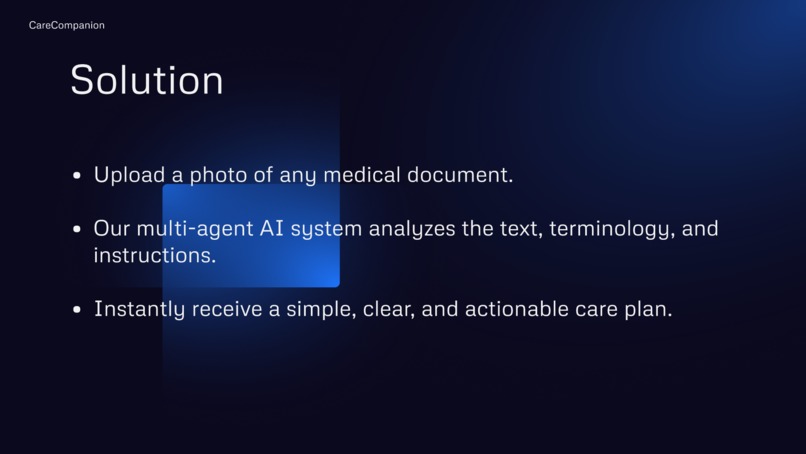
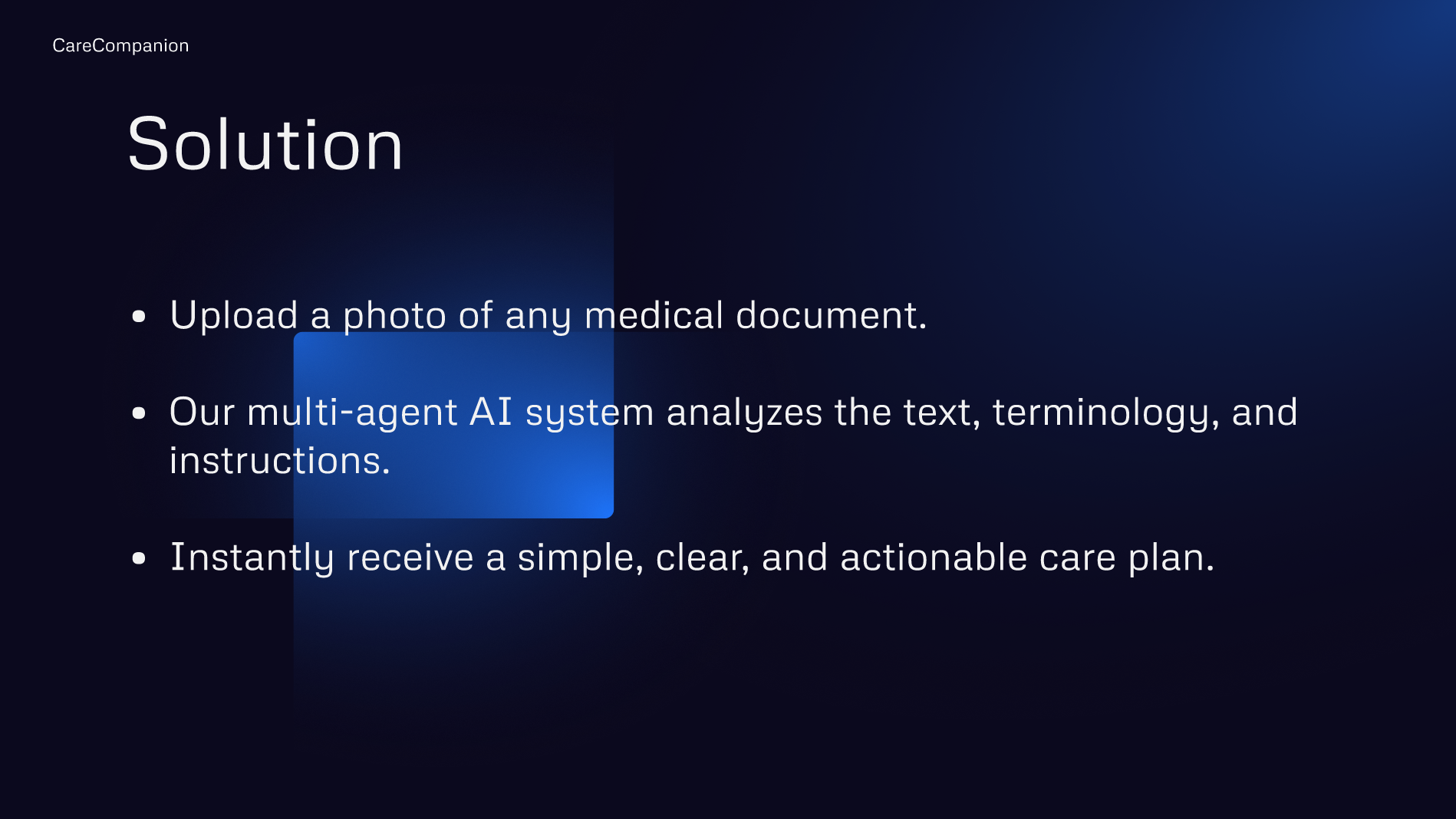
CareCompanion transforms dense medical documents into simple, actionable care plans. A user uploads an image of a prescription, discharge summary, or lab result, and our sophisticated multi-agent AI system gets to work:
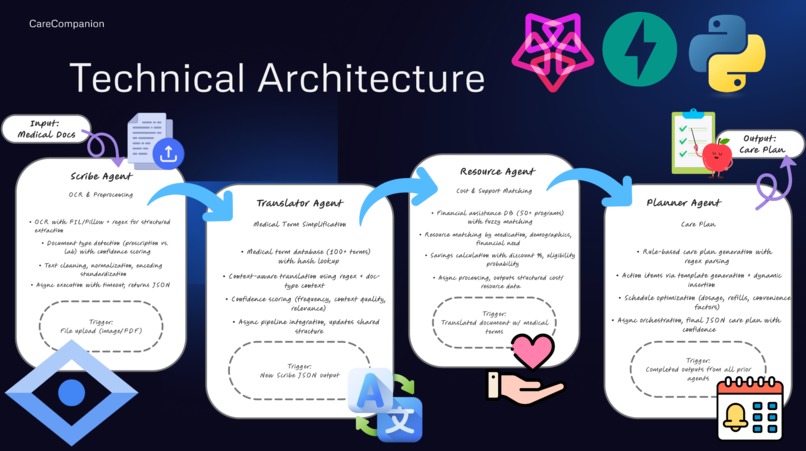
Scribe Agent: Extracts all relevant text from the image using advanced text recognition.
Translator Agent: Identifies and explains complex medical terms in plain, understandable language.
Resource Agent: Scans for opportunities to connect the user with cost-saving programs and relevant support resources.
Planner Agent: Synthesizes all the information into a personalized daily care plan with clear action items, medication schedules, and helpful lifestyle recommendations.
The result is a comprehensive, easy-to-understand guide that empowers users with clear medication instructions, simplified medical knowledge, and prioritized daily tasks, making their healthcare journey more manageable and affordable.
How I built it
CareCompanion is built on a modern, scalable architecture. The backend is powered by FastAPI for its high performance and asynchronous capabilities, with Pydantic ensuring robust data validation. The heart of the application is the multi-agent AI system, where each agent is an independent module designed for reliability and future enhancements.
The frontend is built with React 19 and Vite, creating a responsive and intuitive user experience. The modular component architecture and modern CSS ensure the application is accessible and visually polished on any device. The entire system is containerized with Docker for consistent deployment, and we maintain high code quality through a comprehensive testing suite using pytest and Vitest, alongside automated linting and formatting.
Challenges I ran into
One of the biggest challenges was designing an AI system that could reliably process the vast diversity of medical documents. Variations in formatting, handwriting, and terminology required an iterative approach to build flexible and resilient processing agents. Integrating with external APIs, such as those for optical character recognition and natural language processing, also required careful management of rate limits, error handling, and data flow to ensure a seamless user experience.
Another challenge was presenting complex medical information in a way that felt simple and empowering, not overwhelming. We focused heavily on information hierarchy and UI design, using a clean, tabbed interface and progressive disclosure to guide the user through their care plan. Ensuring data privacy was paramount; we architected the system to process all sensitive information in memory without persistent storage, prioritizing user security from the ground up.
Accomplishments that I'm proud of
We are incredibly proud of creating a fully functional multi-agent AI system that processes medical documents end-to-end in seconds. The application successfully extracts text, translates medical terms, finds relevant resources, and generates a comprehensive care plan with high accuracy.
The user experience is another point of pride. The application feels professional, trustworthy, and is accessible across all devices, complete with screen reader support and keyboard navigation. The technical architecture is robust, scalable, and follows industry best practices, creating a solid foundation for future growth. Most importantly, the care plans generated provide real value, offering clarity and support that can make a tangible difference in a patient's life.
What I learned
This project provided deep insights into the intersection of healthcare, technology, and user experience. We learned that making medical information accessible isn't just about translating jargon—it's about understanding the user's context and emotional state. From a technical perspective, we learned the importance of building a resilient, testable system, especially when orchestrating multiple AI agents.
We also gained a profound appreciation for the privacy and security considerations in healthcare technology. Every design decision was made with patient data protection in mind, influencing everything from our architecture to our error-handling strategies. Ultimately, we learned that successful health tech requires a dual focus: sophisticated technology combined with a deep sense of empathy for the user.
What's next for CareCompanion
The immediate next step is to enhance our AI agents by integrating with state-of-the-art services like Google Vision API for text recognition and advanced LLMs like Gemini or GPT-4 for even more nuanced medical translation and care plan generation. We are also focused on expanding the types of documents CareCompanion can process, including insurance forms and complex medical records.
Future plans include greater personalization of care plans by incorporating patient history and preferences, all while maintaining our privacy-first approach. We are exploring partnerships with healthcare providers to integrate real-time data for medication pricing and insurance coverage. A native mobile experience for iOS and Android is also a top priority. Our long-term vision is for CareCompanion to become a comprehensive health management tool that includes medication reminders, appointment scheduling, and integration with wearable devices, making healthcare truly accessible to everyone.
Built With
- cors
- css3
- fastapi
- github
- node.js
- pillow
- pydantic
- pytest
- python
- react.js
- restful-api
- typescript
- uvicorn

Log in or sign up for Devpost to join the conversation.