-
-
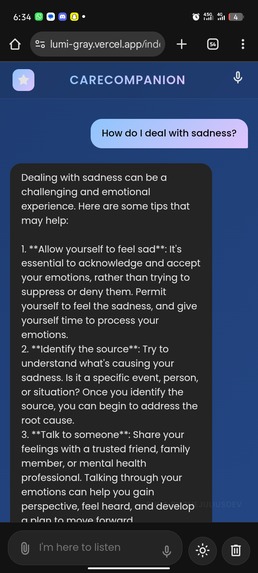
Chatting with Lumi: your AI health assistant providing instant, reliable guidance to help you make informed health decisions.
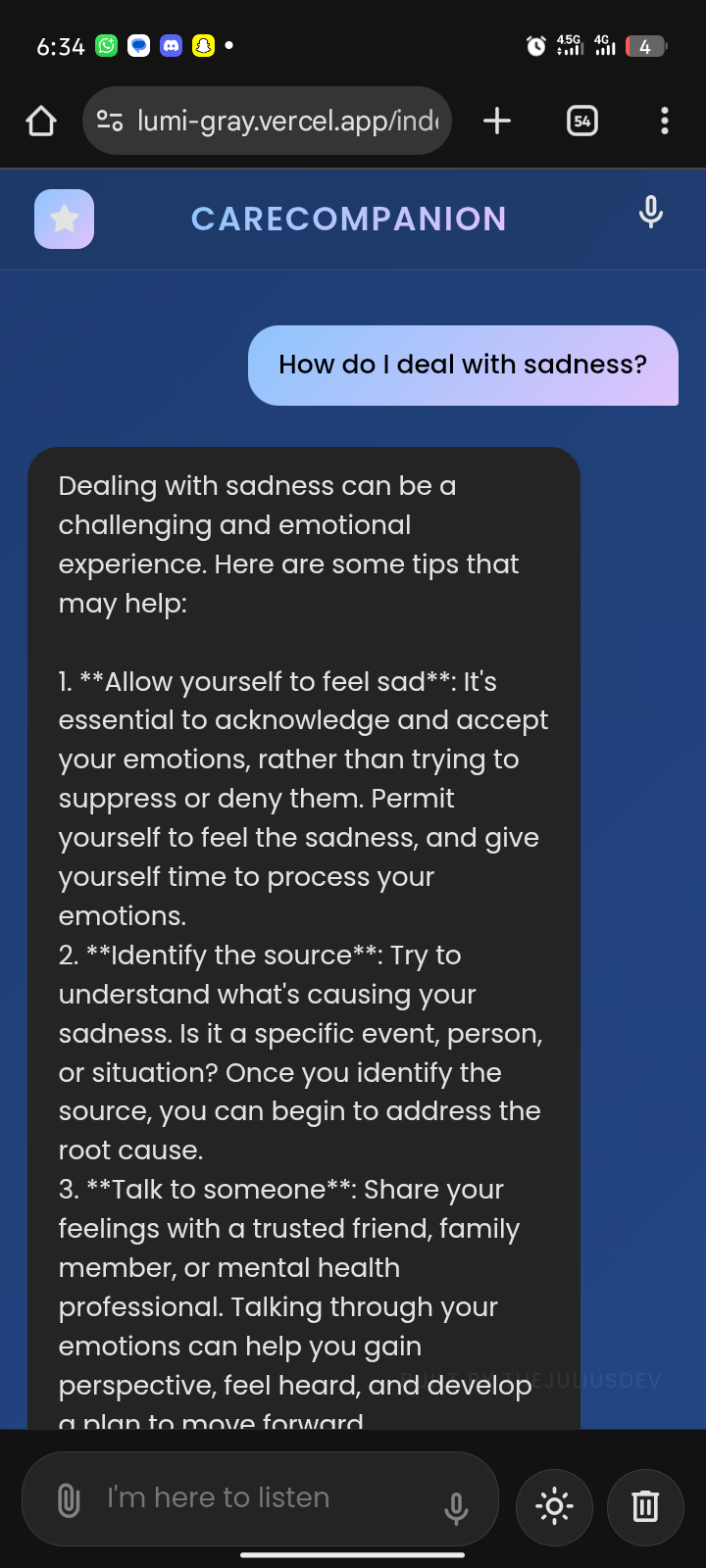
Inspiration
The inspiration behind Lumi came from seeing how many people, especially young people and underserved communities, struggle to access reliable health guidance. We wanted to leverage artificial intelligence to provide accurate, accessible, and timely health support, reducing misinformation and helping users make informed decisions.
What it does
Lumi is an AI-powered digital health assistant that interacts with users to understand their health concerns and provide clear, easy-to-understand guidance in real time. It helps users access personalized information, promotes early awareness, and empowers informed health decisions.
How we built it
Lumi was built using HTML, CSS, and JavaScript for a responsive web interface, integrated with AI for chat-based health guidance. We focused on creating a simple, scalable, and user-friendly platform that could reach as many users as possible.
Challenges we ran into
Ensuring AI responses were accurate and understandable for non-experts Designing a simple interface that works across devices Integrating AI functionality with a lightweight web platform
Accomplishments that we're proud of
Successfully creating a functional AI health assistant within the hackathon timeframe Building a scalable web platform that can reach underserved users Demonstrating how AI can be applied responsibly to support health accessibility
What we learned
How to combine AI technology with web development to solve real-world problems The importance of user-friendly design in healthcare technology Techniques for building scalable, accessible, and impactful solutions under time constraints
What's next for Lumi
Enhancing AI responses with more accurate health data and context-awareness Adding multi-language support to reach a wider audience Expanding to a mobile app version for increased accessibility Partnering with health organizations to validate and scale the platform


Log in or sign up for Devpost to join the conversation.