Inspiration
Access to healthcare is a basic human right, yet millions of people in underserved regions and low-connectivity environments struggle to access even the most basic medical advice. I was especially moved by stories of individuals with disabilities, limited literacy, or no internet access who are often left behind by modern health tech. This inspired me to build CareCompanion AI — a virtual health assistant that works offline and is accessible to everyone, regardless of ability, connectivity, or location.
What it does
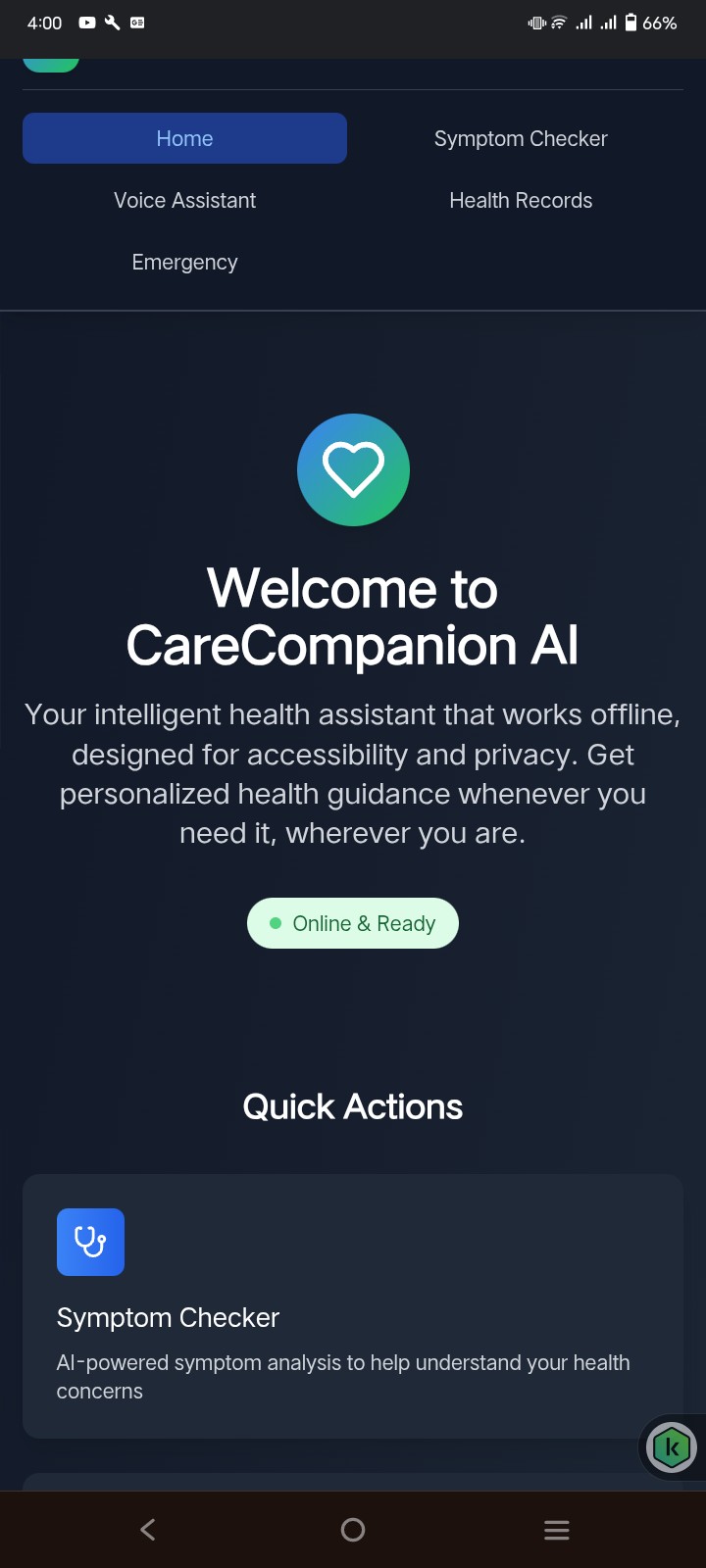
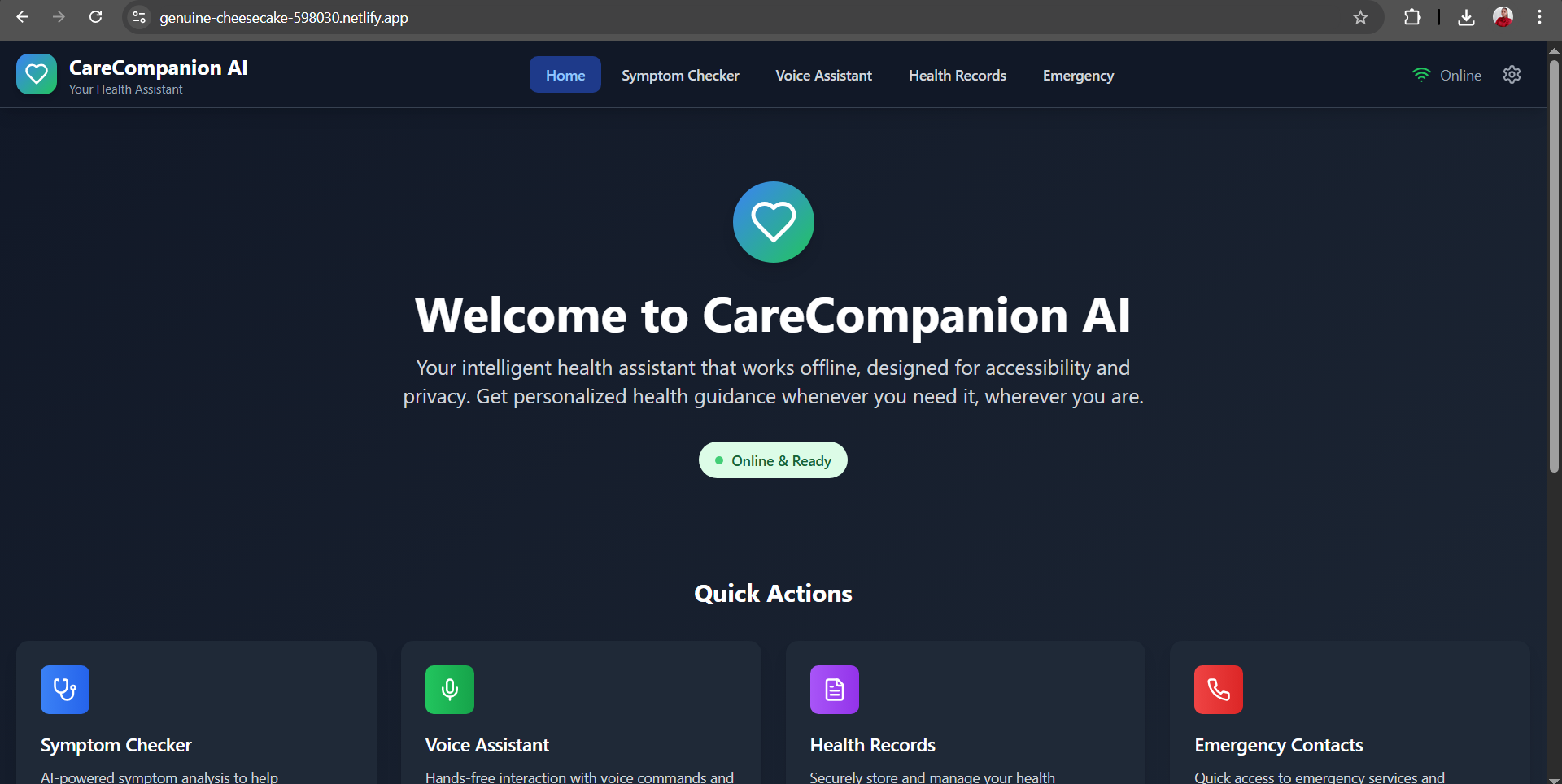
CareCompanion AI is an offline-first, AI-powered web app that provides essential health support. It allows users to interact via voice, text, or touch to receive:
Symptom checks and basic first-aid guidance
Health tracking (hydration, sleep, etc.)
Multilingual and accessible feedback
Visual and spoken outputs for users with disabilities
It is built with accessibility and inclusivity at its core, supporting users with visual, cognitive, or motor challenges and functioning fully without an internet connection.
How we built it
The app is built using:
React for the frontend UI, with accessibility features (keyboard navigation, screen reader compatibility)
Flask for the backend API and decision logic
Web Speech API for voice input/output
IndexedDB and localStorage for offline data storage
TensorFlow Lite (optional) for local AI inference
Custom multilingual support using cached audio and simplified translations
All features were carefully tested to ensure they work even in low-bandwidth or offline conditions.
Challenges we ran into
Designing an app that works completely offline while still providing smart health responses was a major challenge.
Implementing voice functionality that works offline and supports multiple languages required significant research.
Ensuring accessibility compliance across screen readers, keyboard input, and visual contrast took time and testing.
Balancing simplicity with meaningful functionality—especially for users with limited literacy—was a thoughtful process.
Accomplishments that we're proud of
Developed an AI-powered health assistant that runs fully offline
Built a WCAG-compliant interface that empowers users with disabilities
Integrated voice input/output for inclusive communication
Maintained performance without sacrificing usability, even without internet
What we learned
How to build effective offline-first web apps using IndexedDB and service workers
How to make digital products more accessible, inclusive, and resilient
How to integrate simple AI logic without relying on cloud APIs
The importance of human-centered design in health-focused solutions
What's next for CareCompanion AI
Add encrypted local health records with passcode protection
Sync logs with local clinics when internet is available
Add emergency contact features and real-time location sharing
Expand language support and integrate audio-based health education
Pilot the app in real-world environments like rural clinics and schools
Built With
- typescript
- wcag

Log in or sign up for Devpost to join the conversation.