-
-
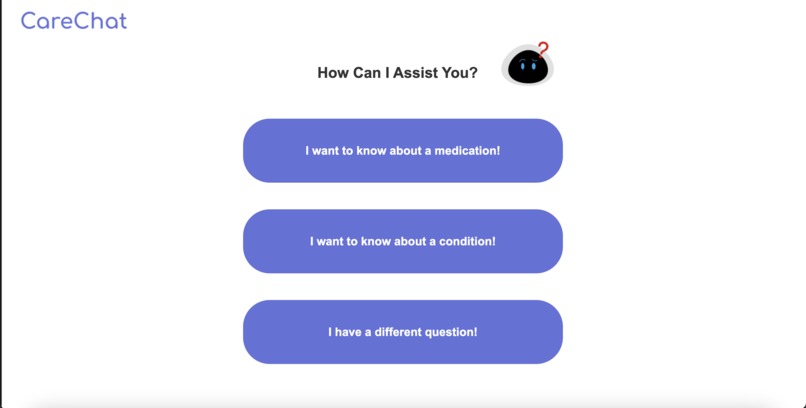
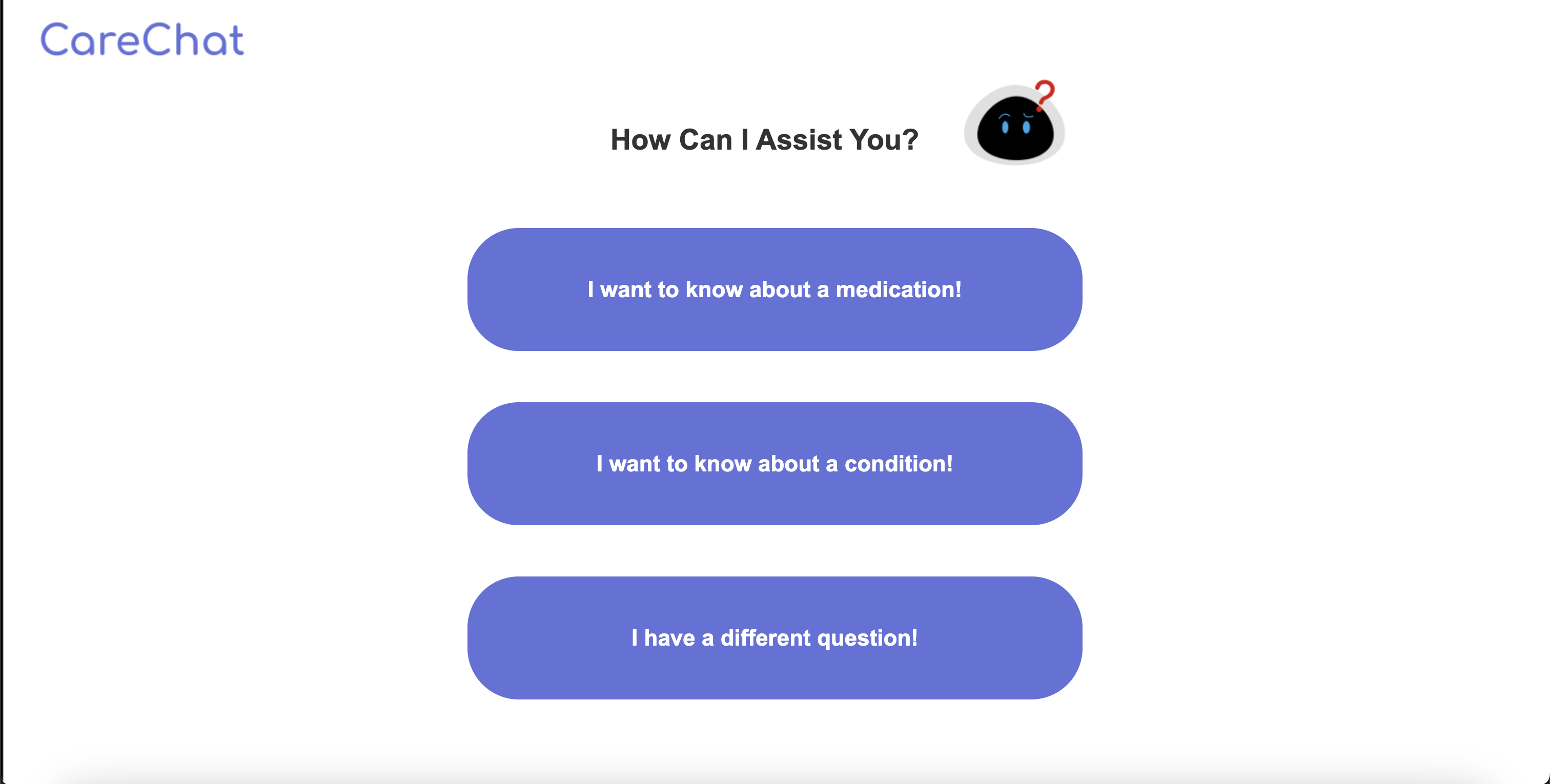
CareChat Home Page
-
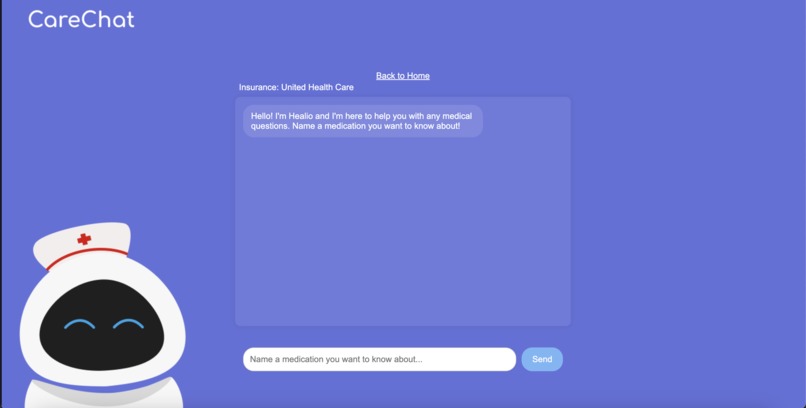
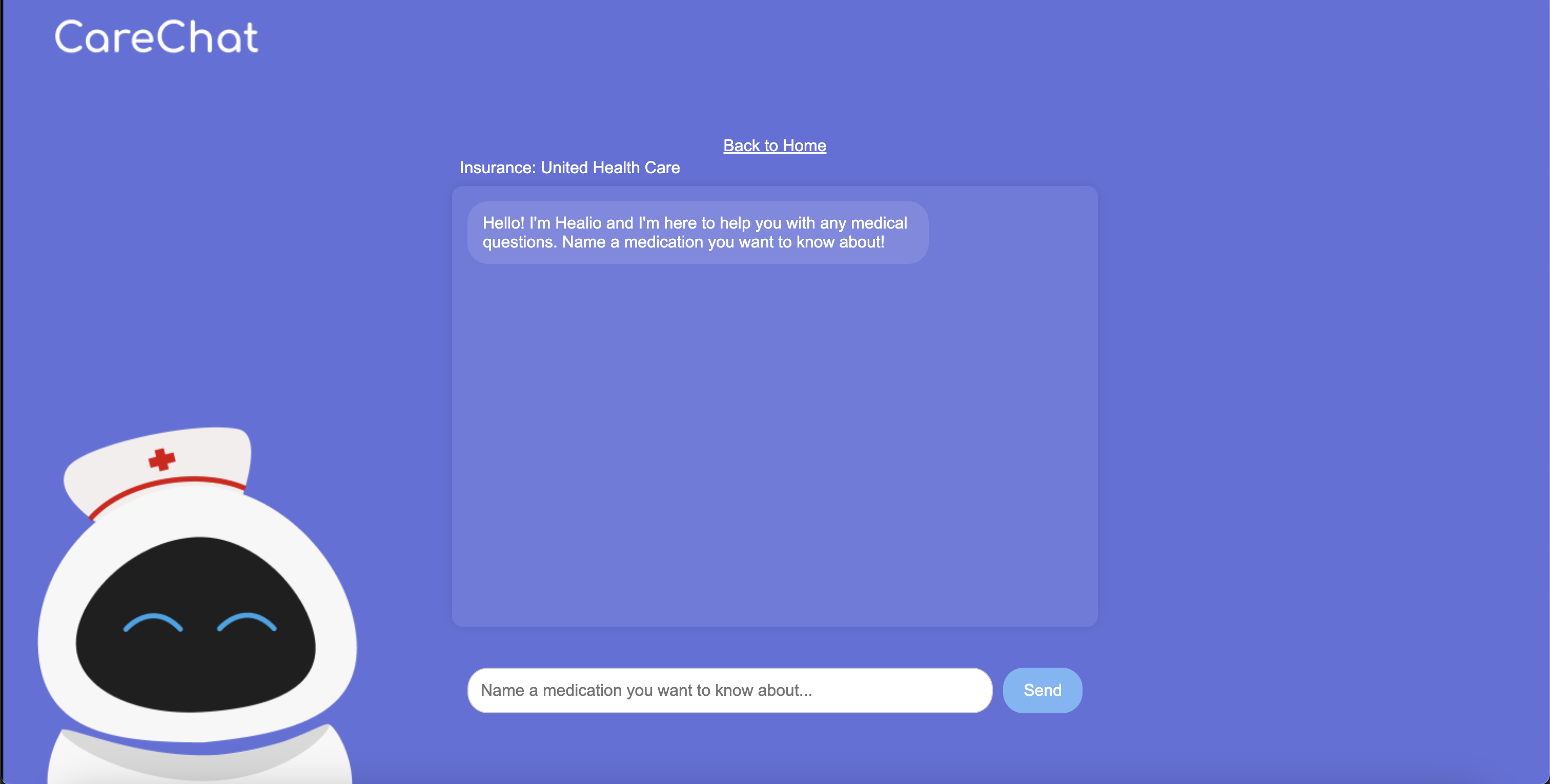
CareChat medication chat landing page
-
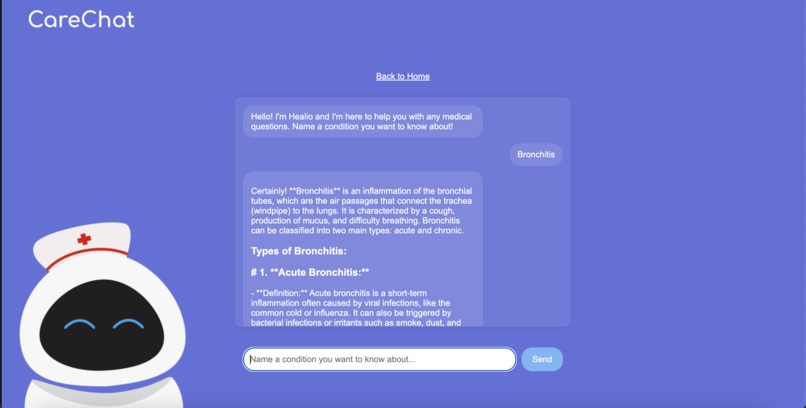
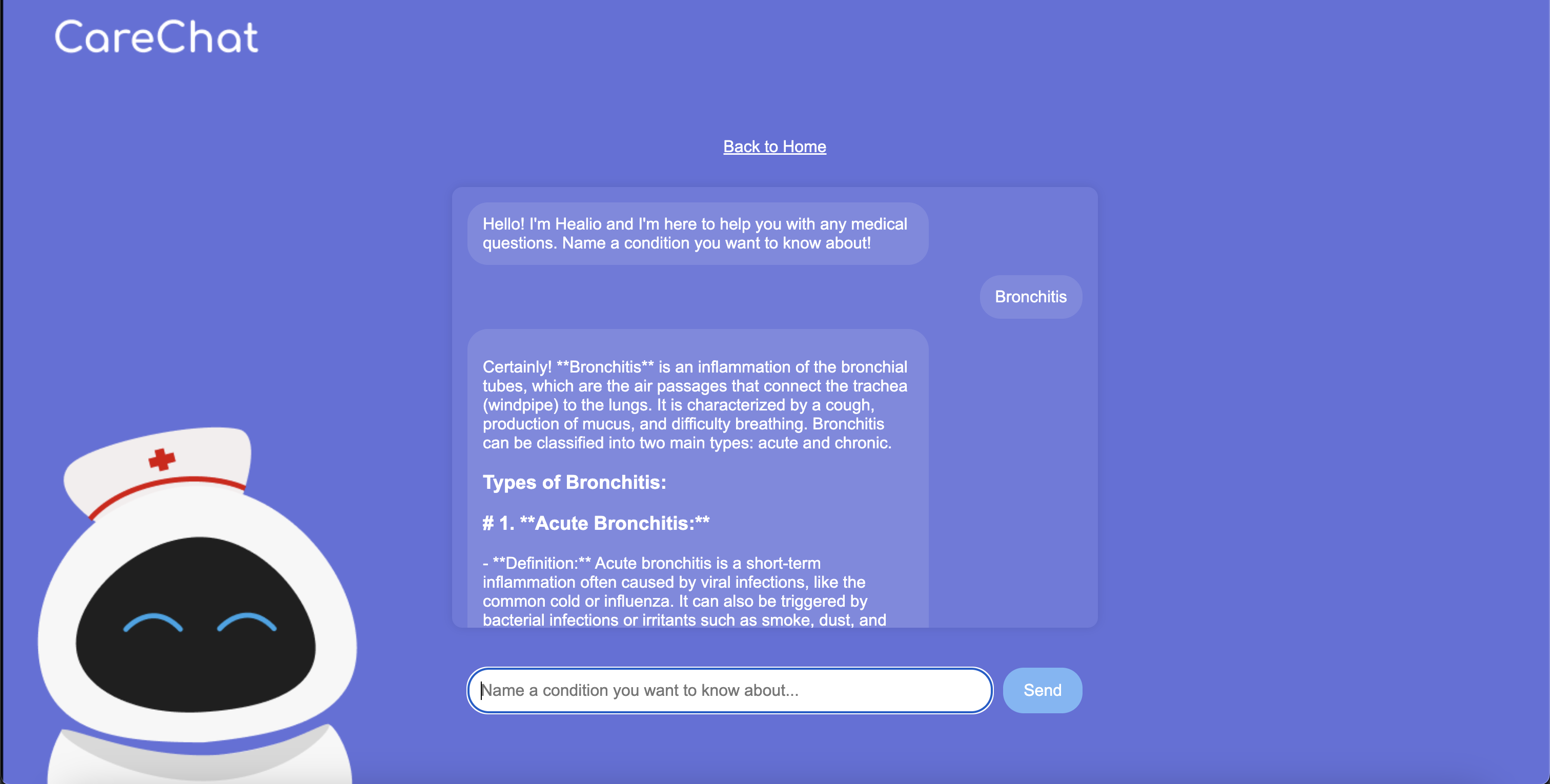
CareChat medical condition response about bronchitis
-
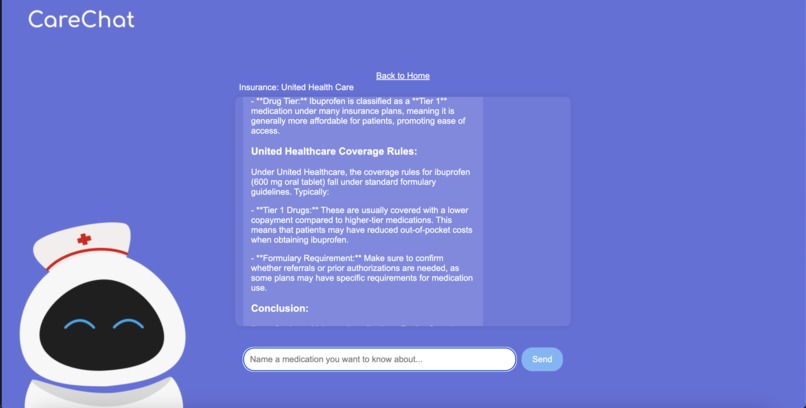
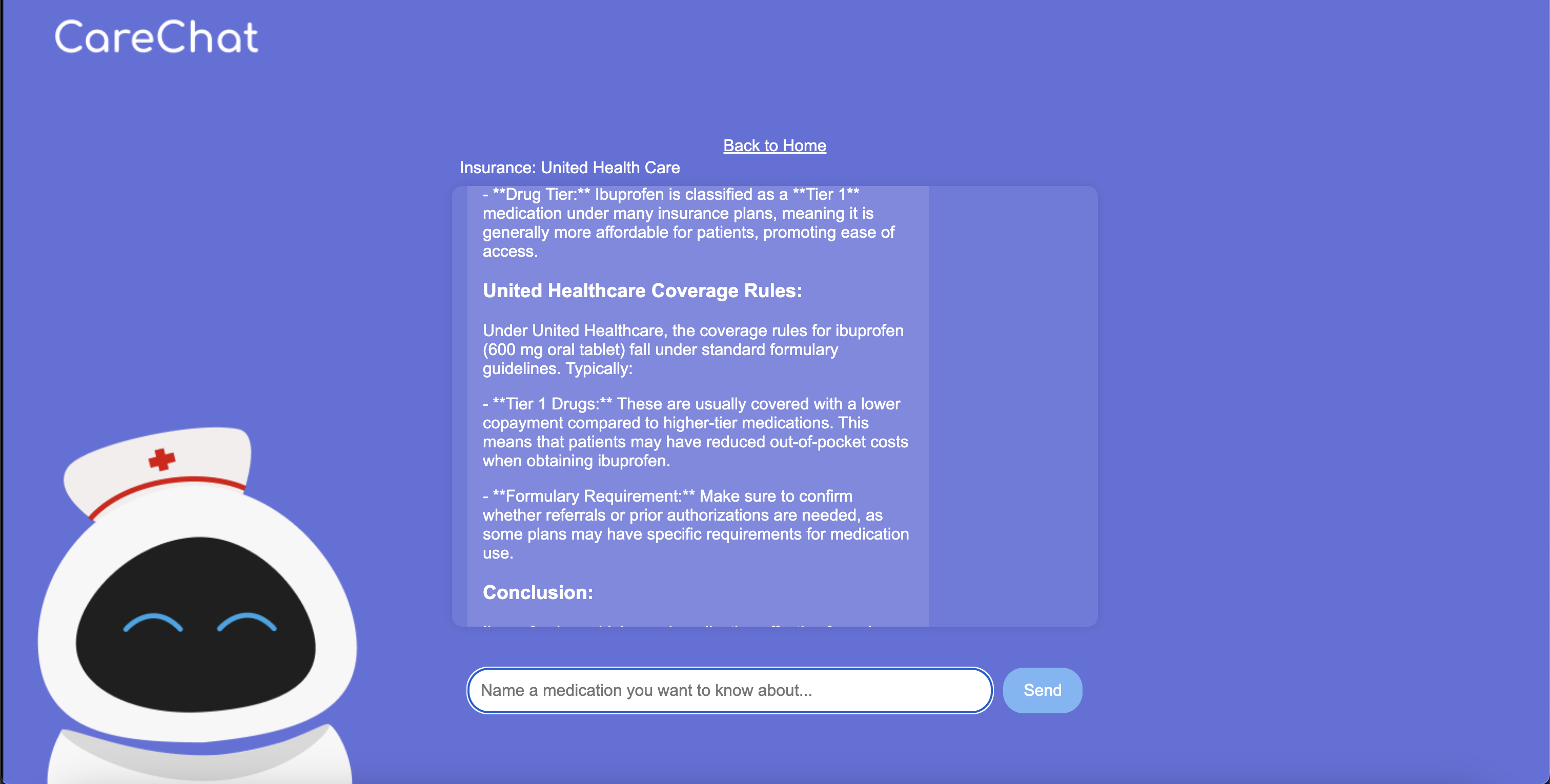
CareChat medication response about insurance coverage rules for ibuprofen
Inspiration
From personal experience, we’ve noticed that when you have simple questions about your health, medication, and what insurance can or will cover, it’s often incredibly tedious to get any sort of reasonable response. Whether it’s waiting weeks only for insurance to deny a medication and then having to figure out where in their pages and pages they say why or it’s having a simple question for your doctor that it might take them days to respond to, it’s hard to get answers to healthcare questions. You might not want to spend hours reading through insurance formularies to find what your insurance covers and what steps they require you to take. Especially as young adults navigating healthcare and a transition to independence, it can be really confusing figuring out how to deal with your own health so we wanted to make a solution that can incorporate that information in one space, leaves plenty of room to seek professional attention, and can be tailored to your specific healthcare concerns and realities.
What it does
CareChat is an app that helps answer all of our health-related questions on topics ranging from medication, to health conditions, to general inquiries. It’s a tool that companies can use on their websites as their chatbot assistant to answer patients’ questions. Professionals would have the ability to access these chats and ensure correct information is provided.
How we built it
- Used figma to create prototypes for the UI design.
- Used an API key from OpenAI to generate a AI chatting tool that can take inputs and output a response
- Compiled information on healthcare formularies to use for Retrieval Augmented Generation (RAG) tailored to an individual’s insurance
- Used Django to build a website that we integrated our chatbot into with pages tailored to the main aspects we wanted to address in our product: information on medication, medical conditions and screening, as well as general health questions.
- We tweaked the prompting of the chatbot on each page to be more reflective of the type of information a user on that page would be looking for without requiring our users to input incredibly detailed prompts.
Challenges we ran into
- How to create an application - a learning process for us both
- How to create a chat bot, input text from the user and generate responses on our application with OpenAI API keys
- Getting insurance information in a digestible format to use for RAG
- Balancing generalization with specificity in how each bot is prompted
- Formatting different components in the design
Accomplishments that we're proud of
We’re proud of Healio’s design, our little mascot for the app! We’re also proud of being able to start integrating the insurance formulary information through retrieval augmented generation, that was an integral part of our vision so seeing that information in Healio’s responses felt very validating. We’re in general really proud of the progress we were able to make in building a put-together product while learning so much along the way and being able to play to each other's strengths.
What we learned
From our lack of experience with creating an application, this project really helped us get our foot in the door towards web development. We learned a lot about how to create an application, the fundamentals that go into it, and the process for adding components to create a clean design. The process was quite tedious at times but the final product made the experience worthwhile. Additionally, while we had some experience with AI/ML models and training packages like tensorflow, this was our first time working with OpenAI’s platform and pulling from those models and tailoring them to our needs. We learned a lot about how hard it is to combine so many streams of input in a way that felt specialized but also didn’t limit the kinds of things Healio could respond to.
What's next for CareChat
We hope to improve upon obtaining data from Insurance Companies on medications. Formularies are documents with many types of generic and brand-name medications and their coverage plans specific to insurance companies. There’s up to 300 pages of data on these medications and it’s tricky trying to gather all that data for the tool to use efficiently. Sometimes insurance questions are better answered in-person but it’s good to have a general idea of which medications are covered by insurance, the amount of coverage, and the steps you have to take before getting approved for a certain medication. Additionally, we want to think about integrating into healthcare systems like MyChart (this of course would require us to focus on data privacy and protection) to keep health providers in the loop as well as allow Healio to tailor its responses based on your health information.
Built With
- django
- figma
- github
- google-spreadsheets
- html
- javascript
- openai
- pycharm
- python

Log in or sign up for Devpost to join the conversation.