-
-
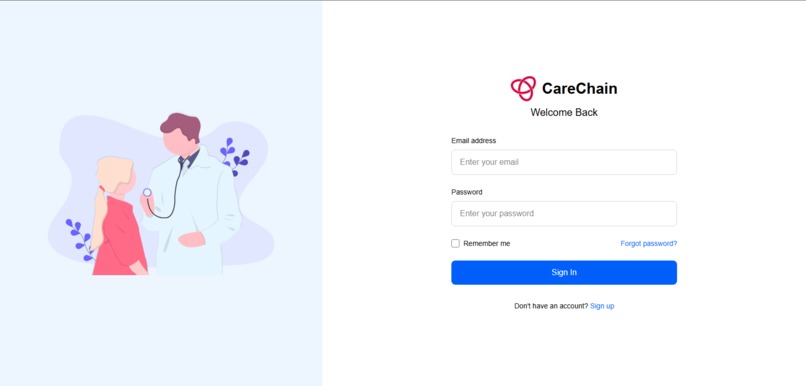
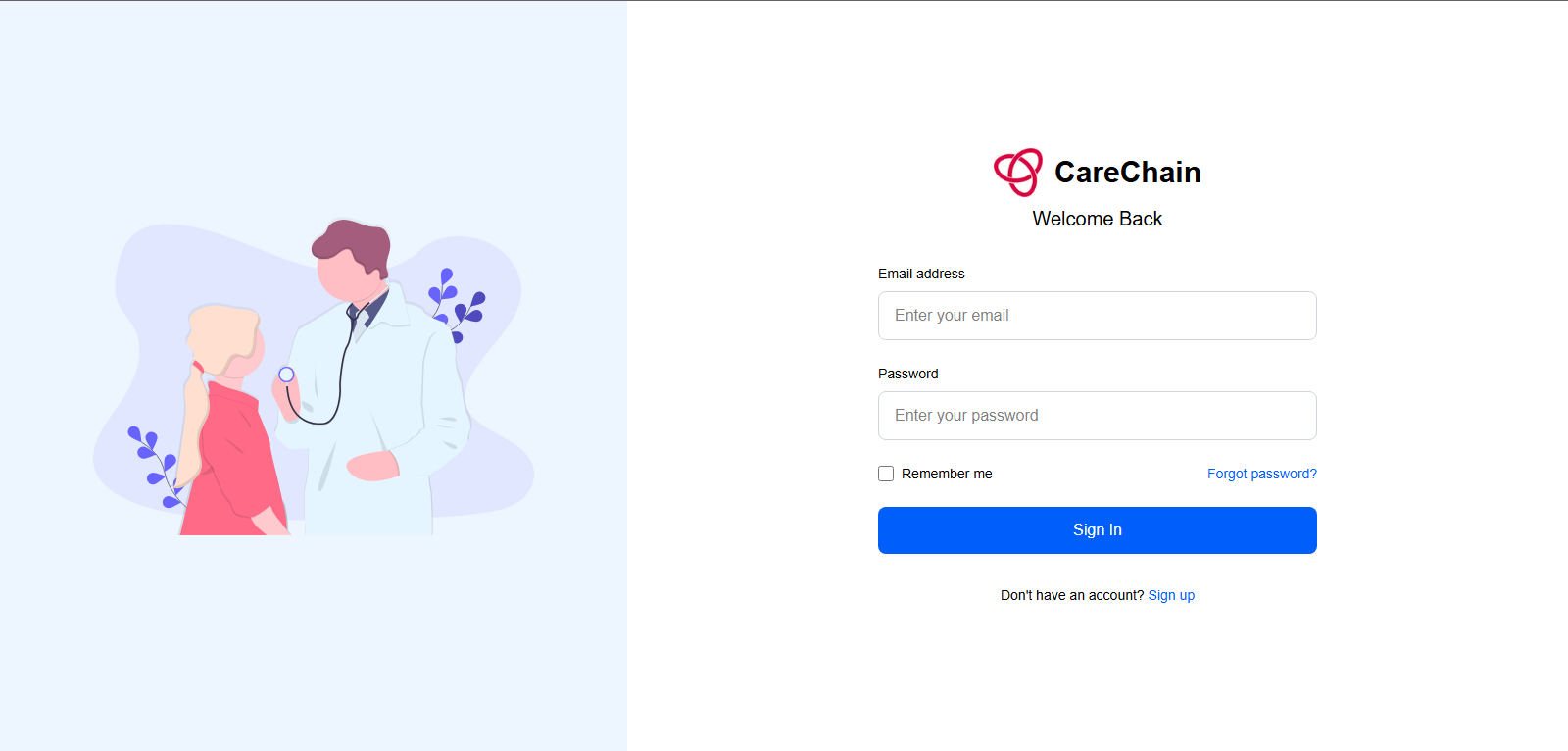
Login
-
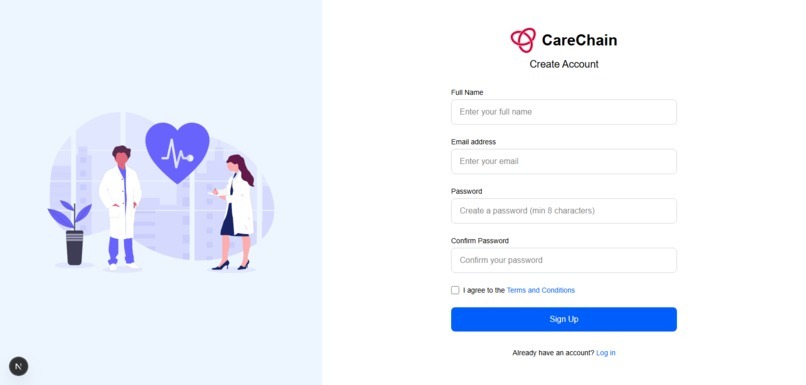
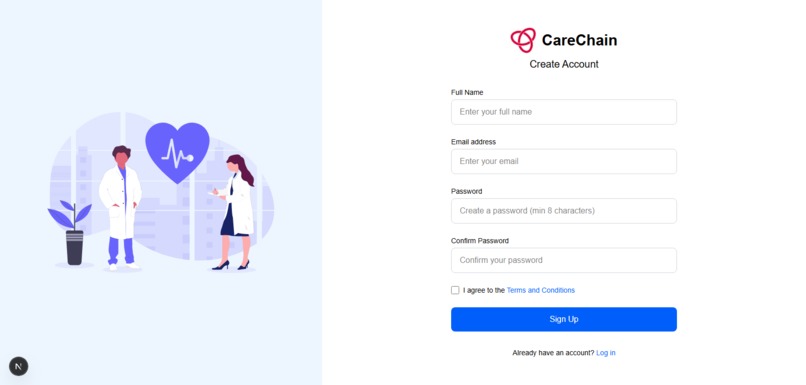
Signup
-
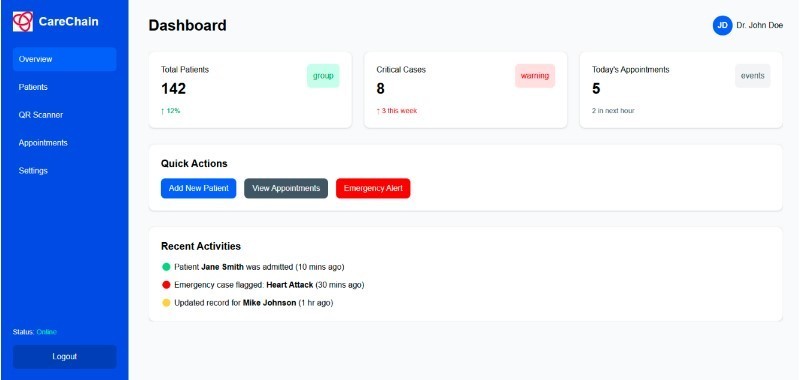
-
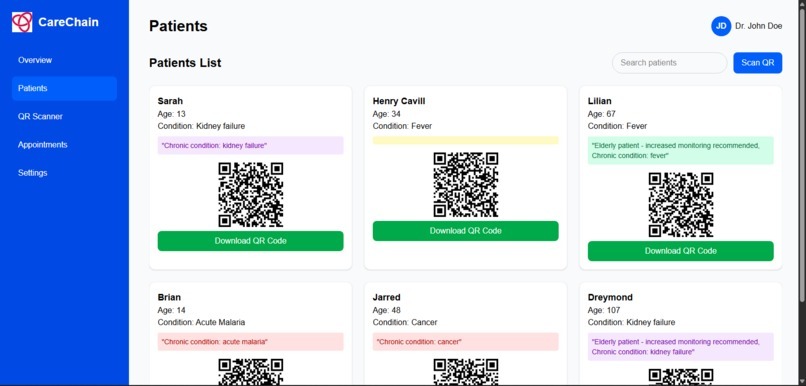
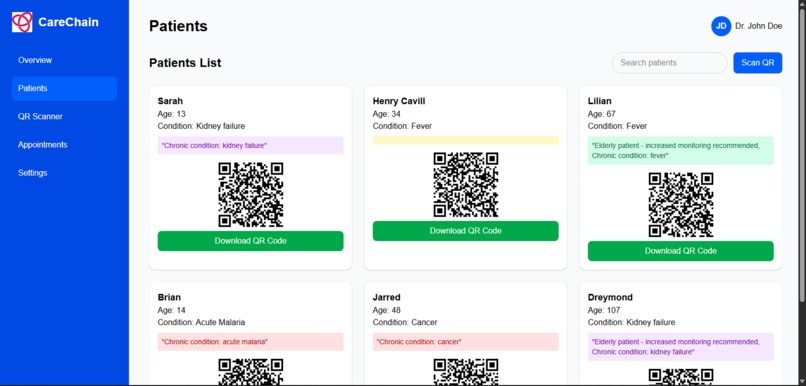
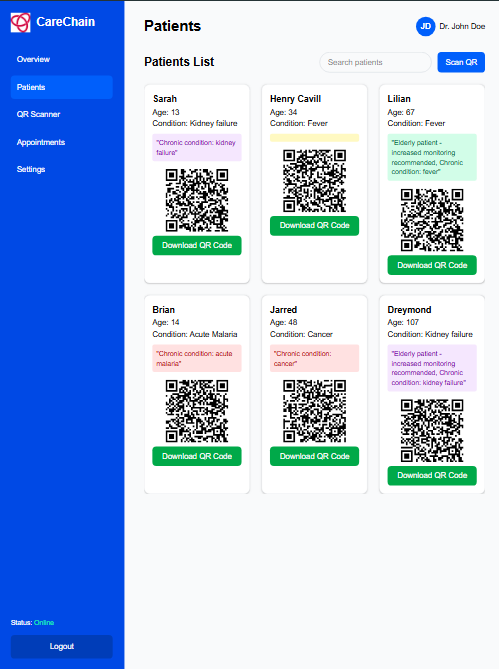
Patient list page
-
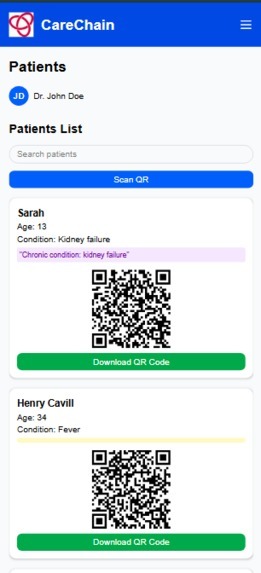
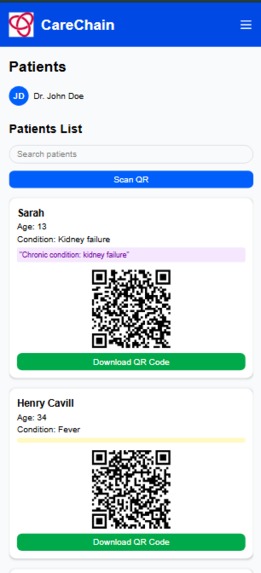
Patient list page (mobile view)
-
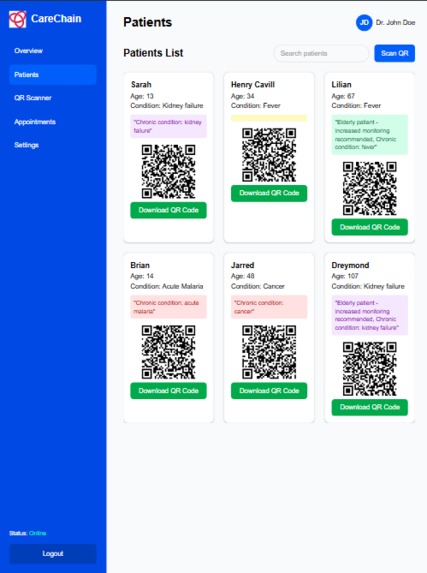
Patient list page (Tablet view)
-
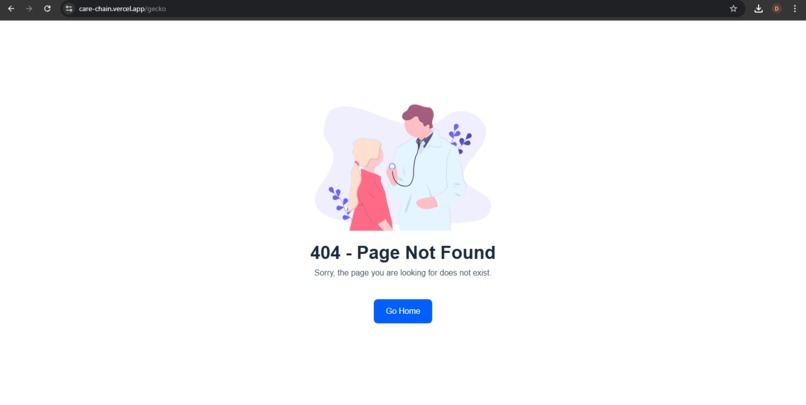
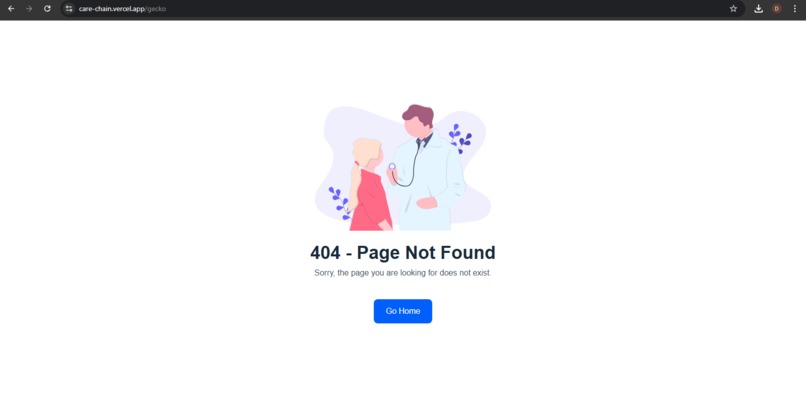
404
🚀 Inspiration Access to medical records shouldn’t depend on internet connectivity. In many underserved or rural areas, frontline health workers struggle to manage patient data reliably.
That gap sparked an idea: build something that works offline, feels instant and intuitive, and actually holds up in real-world conditions. That’s how CareChain was born — a tool designed for resilient healthcare delivery where it matters most.
🩺 What It Does CareChain empowers health workers to:
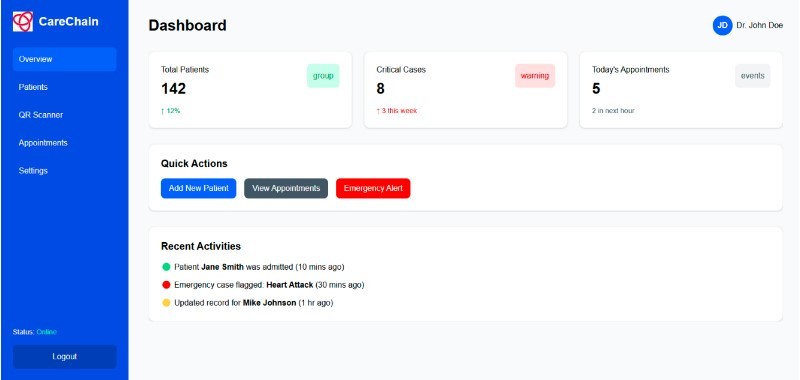
- Add, search, and categorize patient records by severity
- Generate QR codes linked to each patient’s profile (only for verified, online records)
- Access patient data offline with clear status indicators to prevent outdated usage
The platform runs on a clean, responsive interface with an offline-first, decentralized architecture — ensuring care continues regardless of connectivity.
🛠️ How I Built It
- Frontend: Next.js + Tailwind CSS for speed and responsiveness
- Backend: FastAPI + PostgreSQL for secure data handling and authentication
- QR Codes: Implemented with react-qr-code, with online/offline awareness
- State Management: React hooks + conditional rendering for severity and connectivity states
- UI Enhancements: Severity badges, patient status indicators, and intuitive empty states
- Deployment: Vercel (frontend) + Railway (backend)
🧗 Challenges
- Designing a QR system that only triggers for verified/online patients
- Creating a UI readable in low-light, low-resource environments
- Balancing responsiveness with clarity across device types
- Managing offline logic, syncing, and consistency across states
🏆 Accomplishments
- Built an offline-capable QR system that functions without internet
- Delivered a clean, intuitive UI usable with minimal training
- Implemented efficient filtering and condition-based rendering
- Seamlessly integrated FastAPI with Next.js into a resilient full-stack system
📚 What I Learned
- Managing complex UI states (loading, offline, empty) without confusing users
- Designing systems that degrade gracefully under real-world constraints
- Small UX details (badges, spinners, button states) can make or break usability
- Building for reality > building for perfect conditions
🔮 What’s Next for CareChain
- 📱 PWA Support: Installable app with offline QR scanning and patient entry
- 🔄 Smarter Sync: Conflict resolution, background updates, and sync feedback
- 📊 Health Trends Dashboard: Admin panel for patient flow and severity insights
💼 Business Model CareChain will operate on a B2B subscription model, targeting:
- Hospitals & Clinics: Tiered pricing based on scale
- NGOs & Health Programs: Custom deployments for outreach initiatives
- Government Agencies: Large-scale licensing and infrastructure support
Additional Revenue Streams:
- Premium analytics and reporting tools
- Paid onboarding, support, and training programs
CareChain isn’t just another health app — it’s infrastructure for healthcare in environments where systems are expected to fail… but can’t afford to.
Built With
- fastapi
- jwt
- neon
- postgresql
- react-qr-code
- render
- tailwindcss
- vercel

Log in or sign up for Devpost to join the conversation.