-
-
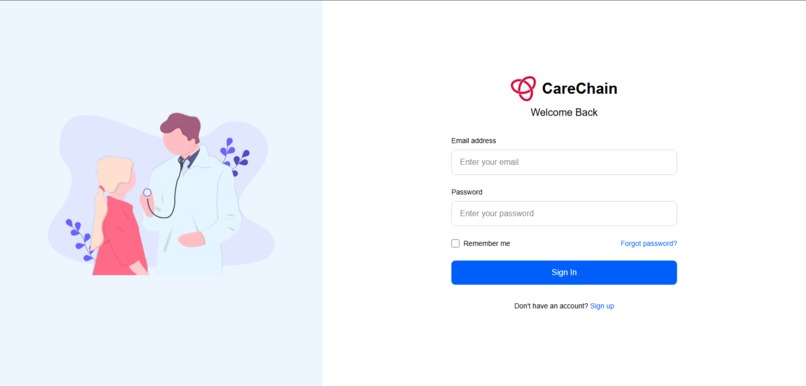
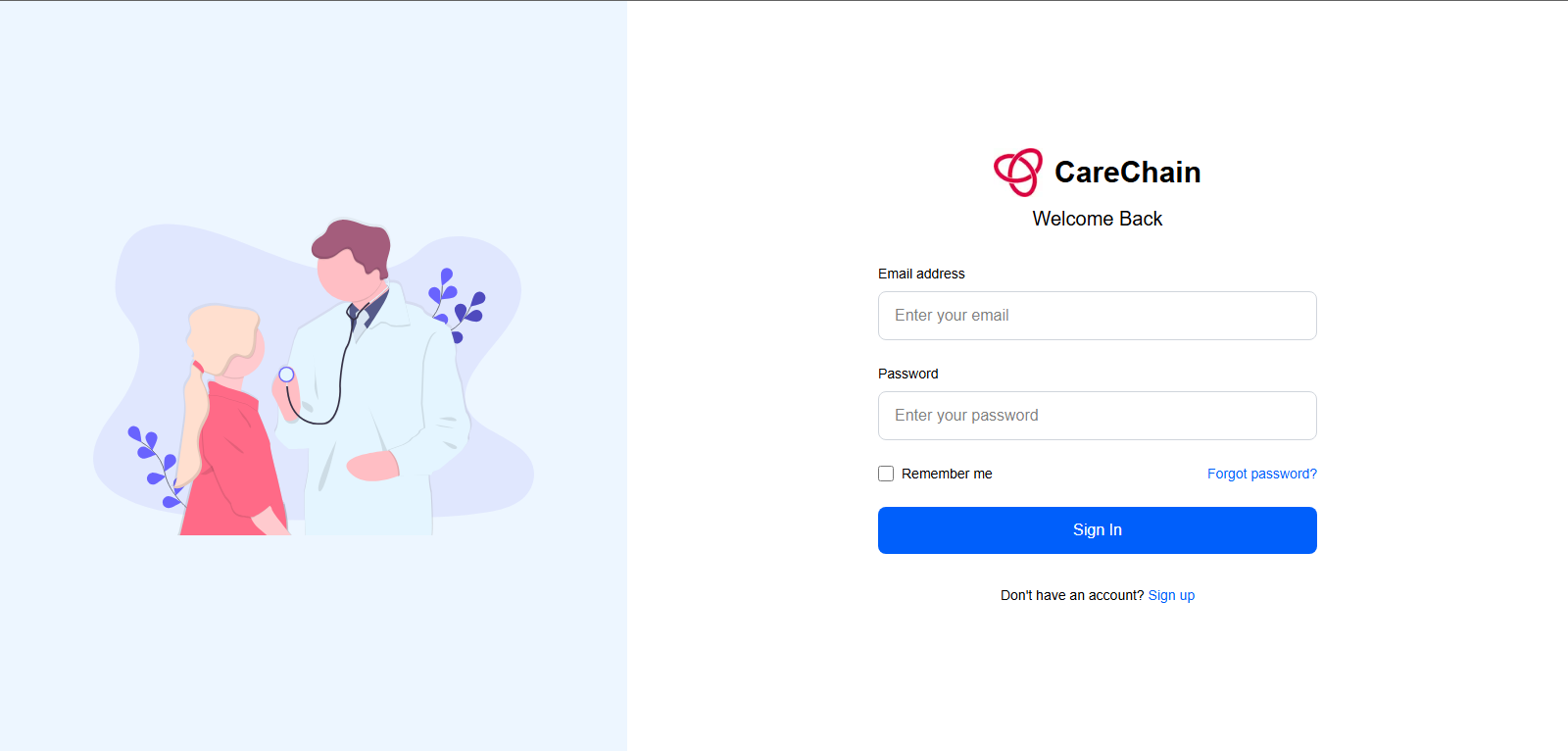
Login page
-
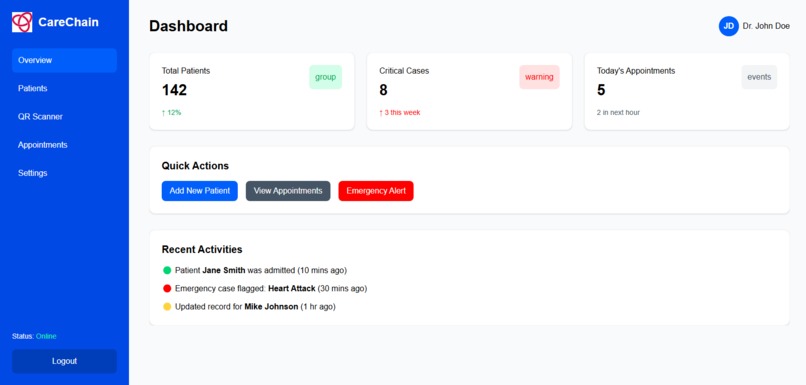
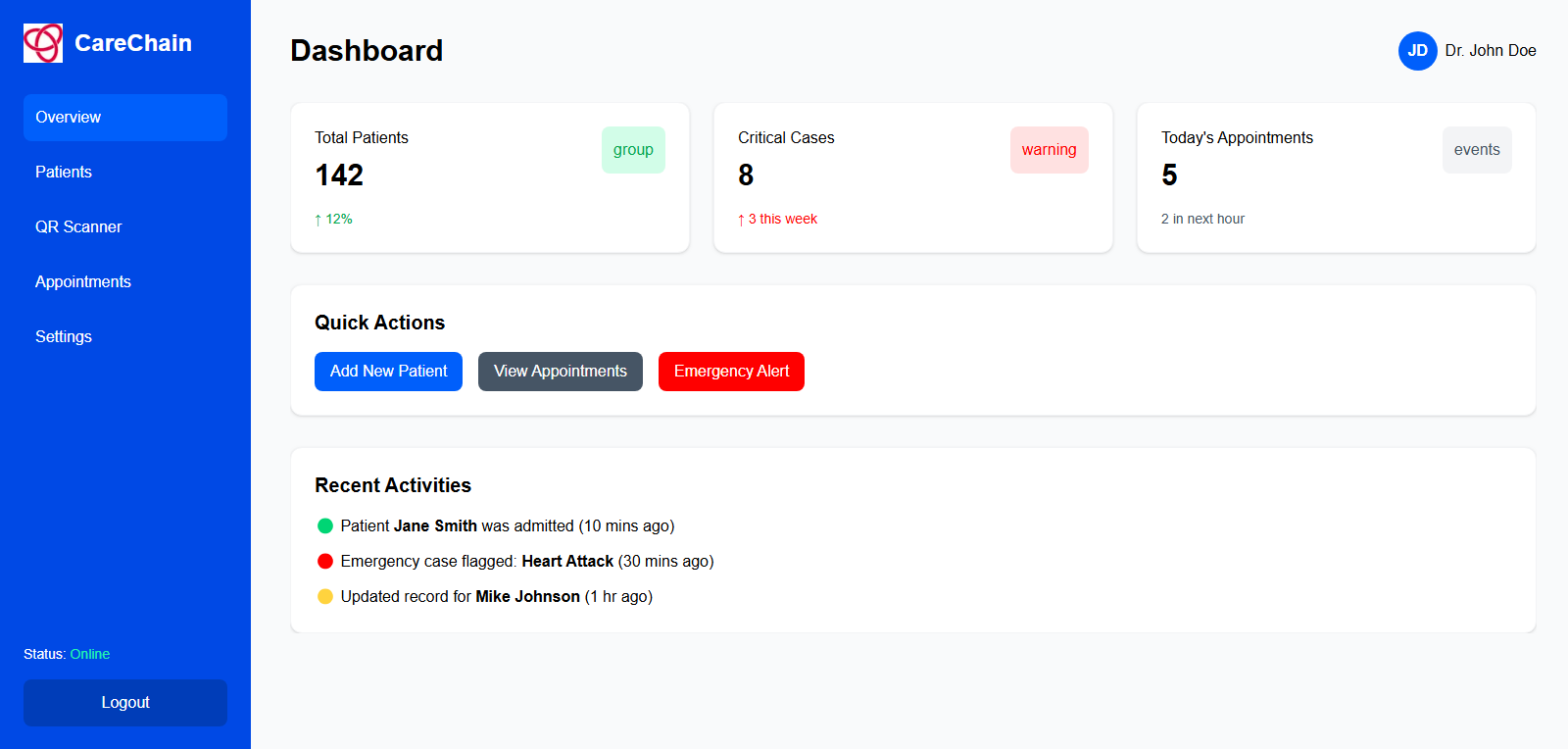
Dashboard
-
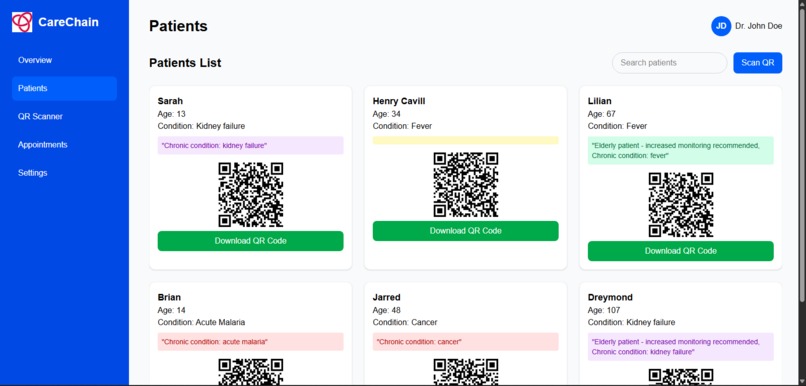
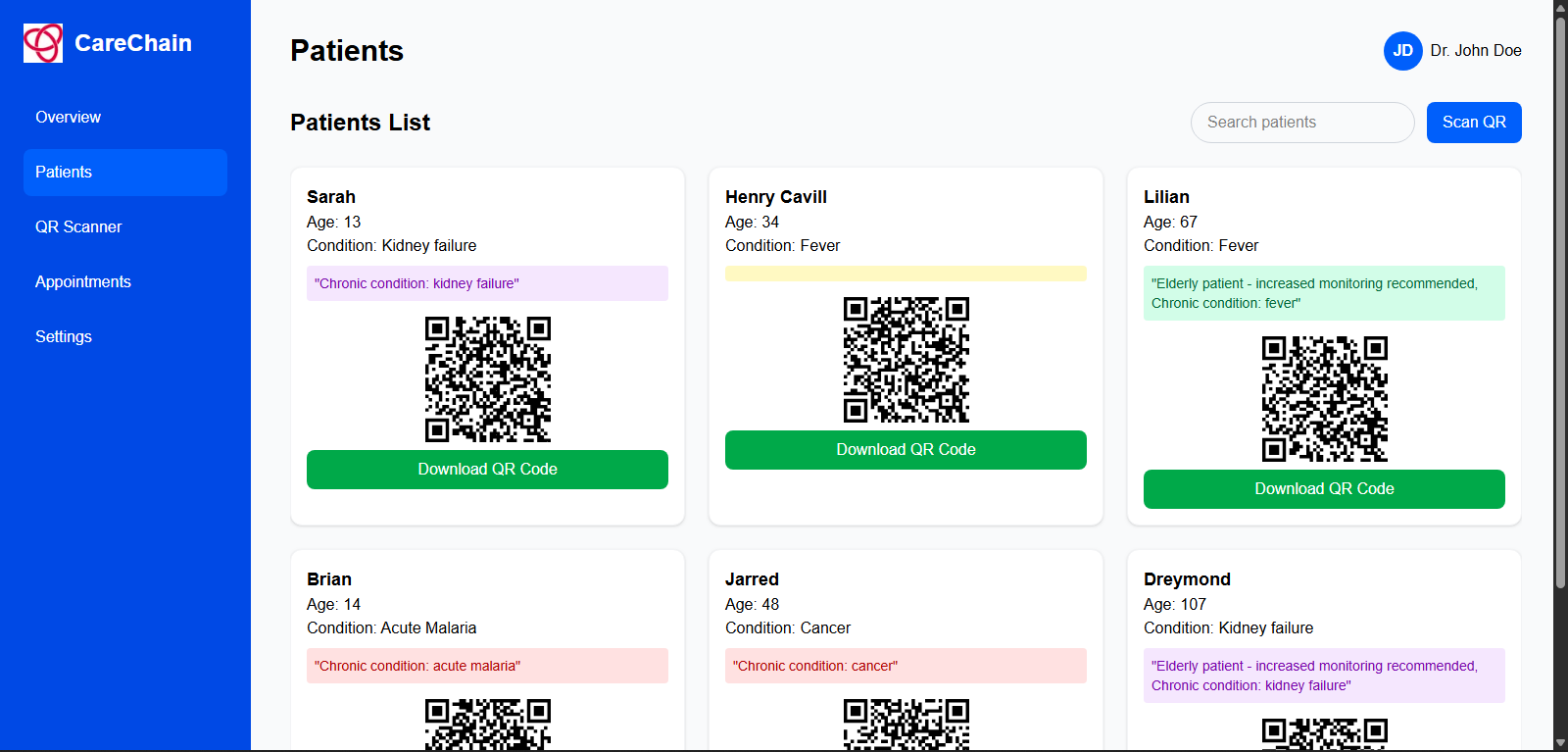
Patients page
-
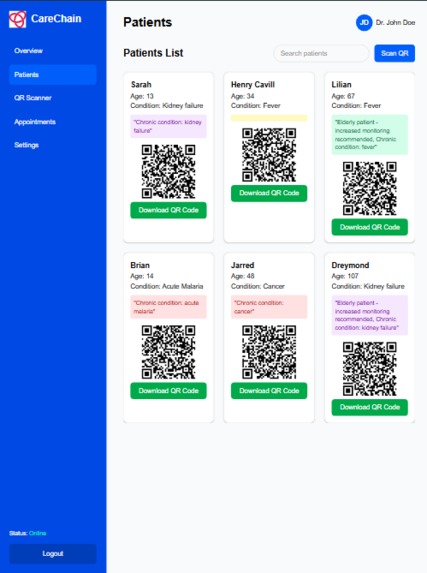
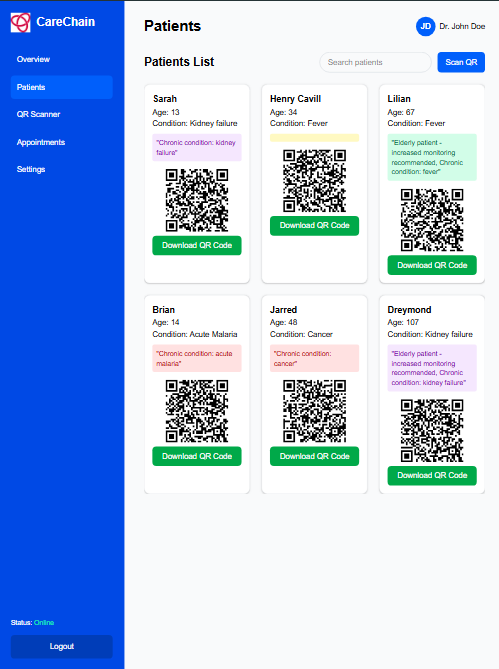
Patients page Tablet view
-
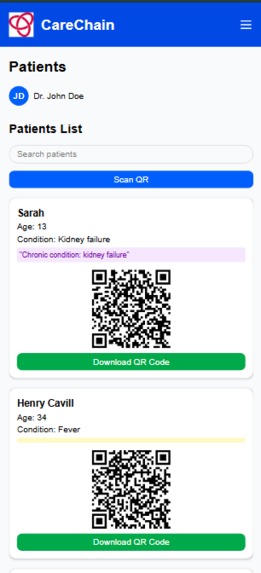
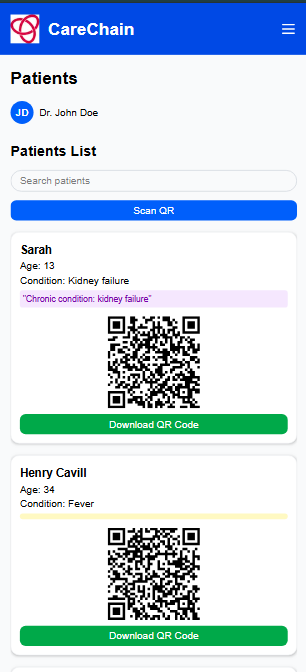
Patients page mobile view
-
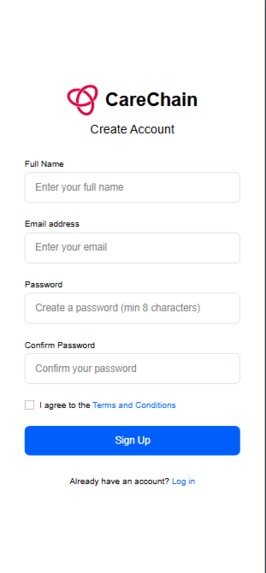
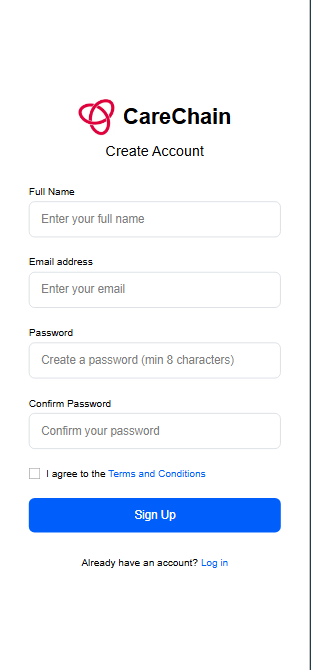
Signup mobile view
-
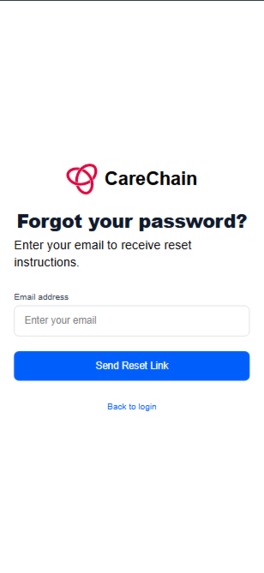
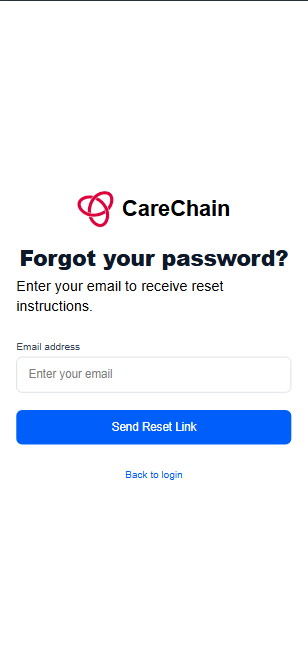
Forgot-password page mobile view
-
404 page Tablet view
🚀 Inspiration Access to medical records shouldn't rely on internet connectivity. In many underserved or rural areas, frontline health workers struggle to manage patient data reliably. I wanted to build a solution that works offline, feels instant and intuitive, and ultimately helps save lives. That’s how CareChain was born — a tool for resilient healthcare delivery where it's needed most.
🩺 What it does CareChain enables health workers to add, search, and categorize patient records by severity. It generates QR codes linked to each patient’s profile, while ensuring that only online-verified profiles trigger code generation. Patient data remains accessible offline, with status indicators that help prevent stale or outdated information from being used. The entire platform runs on a clean, responsive interface and follows an offline-first, decentralized architecture that ensures care delivery continues — regardless of connectivity.
🛠️ How I built it I used Next.js and Tailwind CSS to build a fast, responsive frontend experience. The backend is built with FastAPI and PostgreSQL to manage patient records and authentication. For QR generation, I used the react-qr-code library and designed logic to respect online/offline states. I handled application state using React hooks and conditional rendering, with visual cues that reflect patient severity and connectivity. Severity badges and patient status indicators were custom-built. The app is fully deployable on Vercel and Railway for real-world hosting.
🧗 Challenges I ran into One major challenge was building a QR system that only triggers for patients who are verified and currently online — this required careful coordination between frontend state and backend validation. I also had to design a UI that remained functional and readable in low-resource environments, such as dim lighting or low-end devices. Making sure the interface was responsive but still clear under various conditions took several iterations. Offline logic, syncing, and data consistency across states added additional technical complexity.
🏆 Accomplishments that I’m proud of I successfully built an offline-capable QR system that holds up even without internet access. The UI is clean, responsive, and intuitive enough to be used by health workers with minimal technical training. Filtering and condition-based rendering work efficiently, and the empty state guides help onboard users smoothly. I’m also proud of integrating FastAPI and Next.js seamlessly, creating a full-stack application that feels modern and resilient.
📚 What I learned This project taught me how to manage complex UI states — like loading, offline, and empty — in ways that keep users informed and confident. I learned how to build applications that degrade gracefully without connectivity, and how real-world conditions (poor screens, slow networks, etc.) shape good interface design. Even small features like spinners, badges, and button states dramatically improved the usability of the app in critical environments.
🔮 What’s next for CareChain: Decentralized, Offline-First Patient Management With core features like role-based access control, offline QR workflows, and severity tagging already in place, I'm now focused on expanding CareChain’s real-world usability:
📱 PWA Support – Allow health workers to install CareChain as a mobile/web app and access features like QR scanning and patient entry entirely offline.
🔄 Smarter Sync – Enhance offline sync with improved conflict resolution, background updates, and feedback when records successfully sync.
📊 Health Trends Dashboard – Build a secure admin dashboard that visualizes patient flow, severity patterns, and offline/online activity.
📤 WHO-Compatible Exports – Add CSV/PDF export functionality that complies with WHO data reporting standards.
🤝 Field Partnerships – Collaborate with NGOs, clinics, and emergency teams to pilot CareChain in real-world deployments.
Built With
- fastapi
- jwt
- neon
- next.js
- postgresql
- react-hook
- react-qr-code
- render
- tailwindcss
- vercel


Log in or sign up for Devpost to join the conversation.