Inspiration
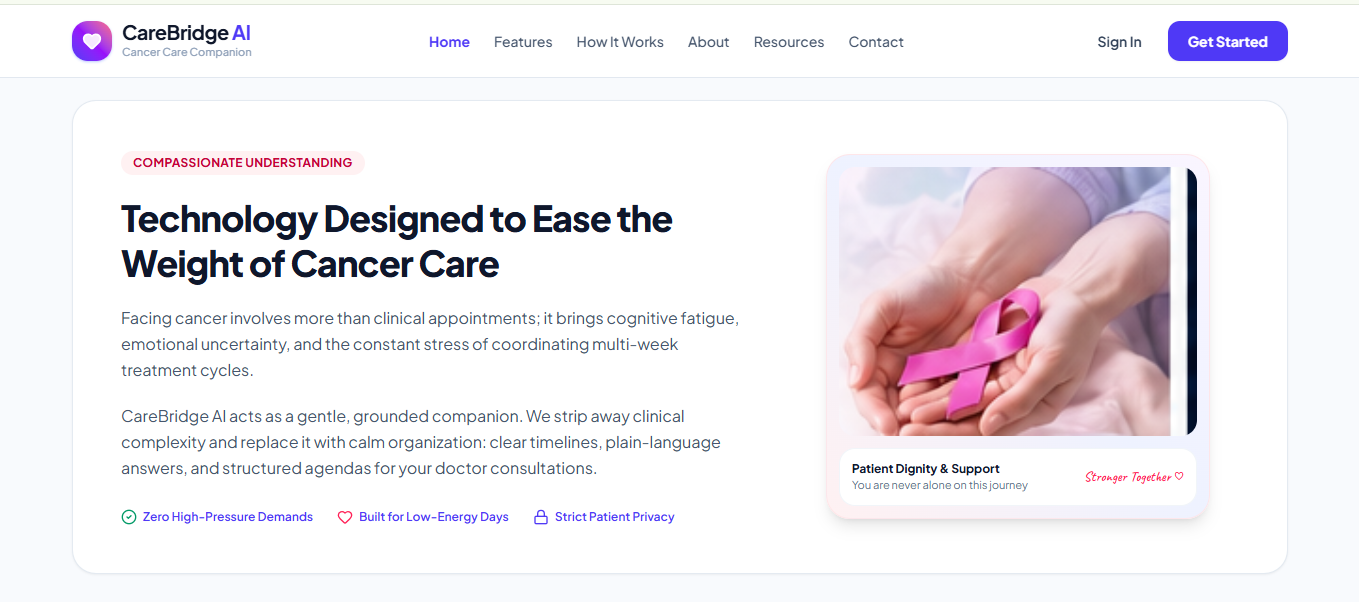
A cancer diagnosis turns life upside down. Between complex multi-week chemotherapy cycles, scattered appointments across multiple clinics, unpredictable side effects, and rushed 15-minute consultations, patients and their loved ones face crushing cognitive fatigue and anxiety. Searching the web late at night often surfaces speculative, alarmist advice that amplifies fear.
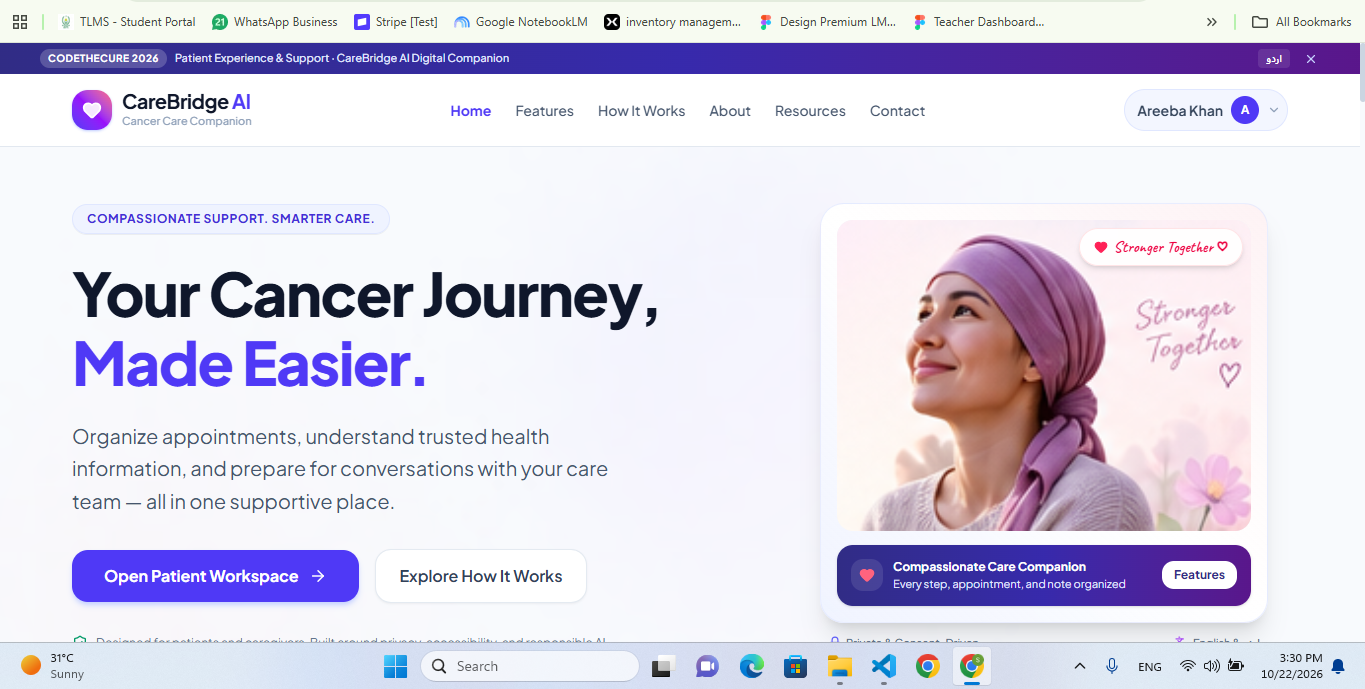
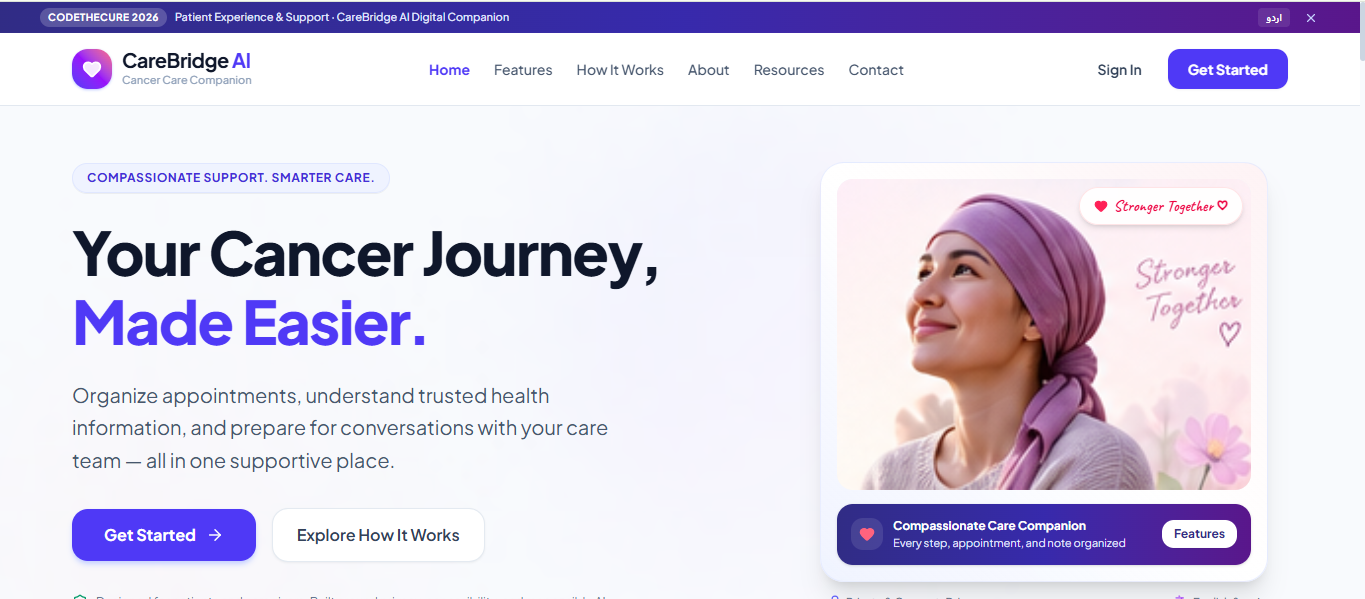
We built CareBridge AI to replace this overwhelm with calm organization, compassionate guidance, and clear evidence. Our goal is to ensure that no patient ever walks into a clinic room unprepared, and no family caregiver feels out of the loop.
What it does
CareBridge AI is a patient-centered digital oncology companion designed around low-energy days, privacy, and clinical evidence:
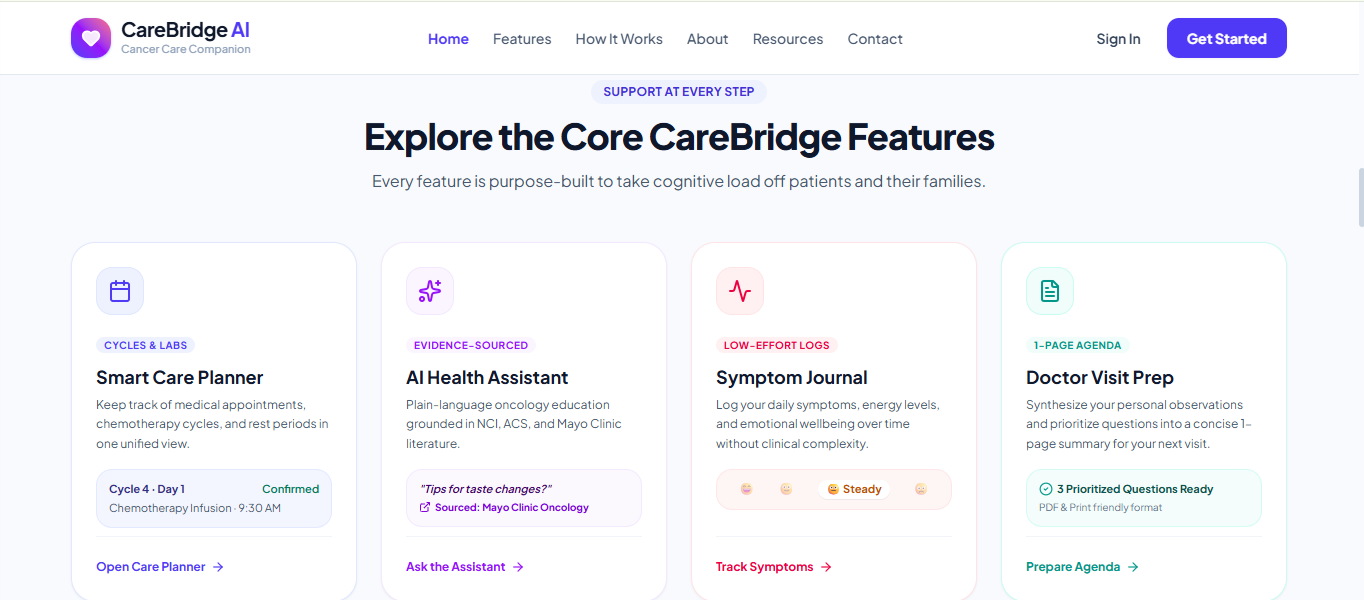
- Smart Care Planner & Treatment Cycles: Visualizes multi-cycle chemotherapy regimens (e.g., Cycle (2) of (6) Paclitaxel & Carboplatin), tracking appointments, diagnostic labs, and daily hydration or medication routines.
- Low-Effort Symptom & Mood Journal: Enables 30-second logging of fatigue, nausea, appetite, and discomfort on a 1–10 scale, plotting longitudinal trends so patients never have to rely on strained memory.
- Evidence-Grounded AI Assistant: Powered by Google Gemini, providing plain-language education on side-effect relief and terminology. Every response cites authoritative guidelines (National Cancer Institute, American Cancer Society, Mayo Clinic, and WHO).
- Urgent Triage Safeguards: Automatically detects acute emergencies—such as neutropenic fever (\ge 100.4^\circ\text{F}) ((38.0^\circ\text{C})), severe chills, or acute chest pain—and directs patients to immediate 24/7 clinical emergency hotlines.
- 1-Page Doctor Visit Preparation Agenda: Synthesizes weeks of symptom logs, active medications, and top patient questions into a clean, printable 1-page consultation agenda for oncologists.
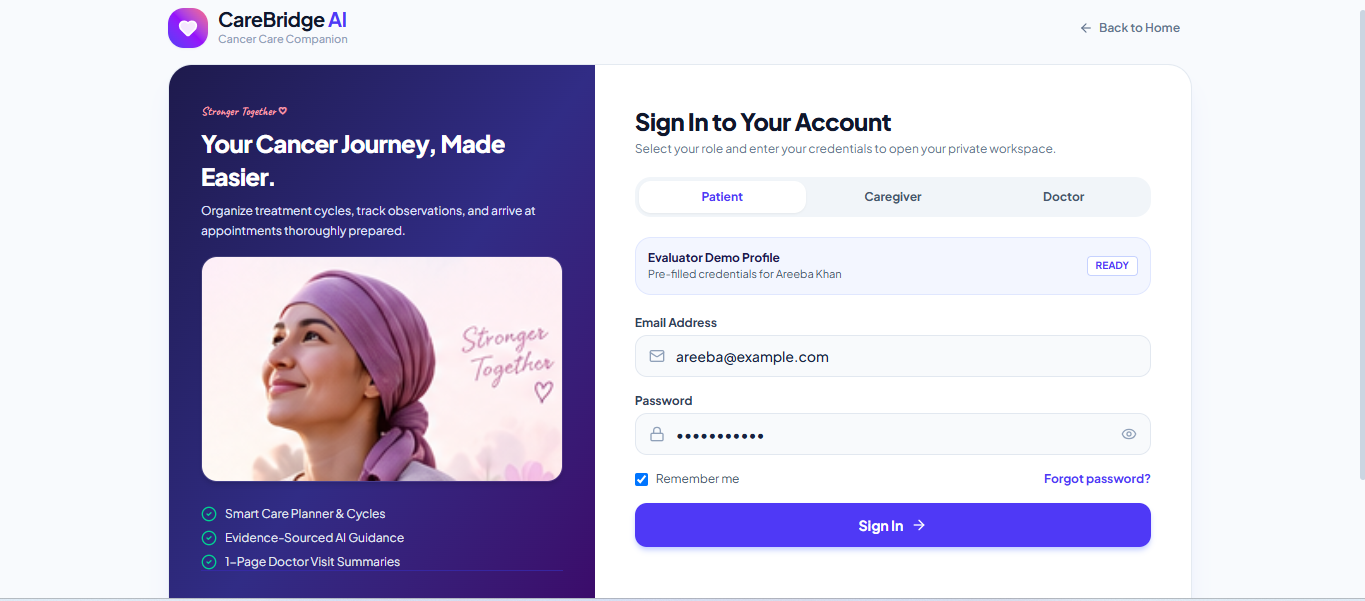
- Consent-Driven Caregiver Delegation: Patients can authorize family caregivers with granular, revocable permissions (e.g., viewing schedule vs. managing tasks).
- Bilingual & Accessible: Instant toggle between English and Urdu (اردو) with native right-to-left (RTL) typography, high contrast, and screen-reader support.
How we built it
- Frontend: Built with React 19, TypeScript, Vite, and Tailwind CSS. Designed with a calming healthcare aesthetic (lavender, soft blush, indigo, and slate) and responsive down to small mobile viewports (320px).
- Backend & APIs: Express.js REST API with cookie/bearer session authentication, PBKDF2 cryptographic password hashing, and clean role-based authorization for patients, caregivers, and doctors.
- Dual-Persistence Database: Supabase PostgreSQL for cloud persistence with an automated local JSON fallback engine ensuring zero downtime.
- AI Engine: Google Gen AI SDK (
@google/genai) with Gemini 2.5 Flash, temperature-controlled prompts, strict clinical boundaries, and fallback oncology knowledge bases. - Testing & Verification: Comprehensive automated test suite with 44 unit tests and 30 end-to-end live HTTP tests validating authentication, RLS, triage triggers, and data integrity.
Challenges we ran into
- Responsible Healthcare AI Boundaries: LLMs can sound authoritative even when speculative. We engineered strict prompt architectures ensuring the assistant never provides medical diagnoses, alters prescription dosages, or claims clinical certainty.
- Mobile Keyboard & Modal Layouts: Long clinical consultation agendas easily overflowed on small mobile devices. We re-engineered all modal dialogs with view-height limits, touch-friendly tap targets ((\ge 44\text{px})), and auto-scrolling containers.
- Bilingual RTL Support: Integrating Urdu alongside English required dynamic layout flipping and typography adjustments so terminology remains readable and culturally respectful.
- Dual Storage Architecture: Ensuring seamless transition between serverless cloud databases (Supabase) and local transactional storage without disrupting active user sessions.
Accomplishments that we're proud of
- 100% Test Passing Rate: 44/44 unit verification tests and 30/30 live HTTP e2e tests passing with zero errors.
- Authoritative Grounding: Every medical answer is linked directly to published clinical guidelines with clickable citations.
- True Mobile Responsiveness: Fully accessible and visually balanced from 320px small smartphones to 4K displays.
- Dignity & Privacy First: Zero third-party health data tracking, no API keys exposed to browsers, and 1-click caregiver permission revocation.
What we learned
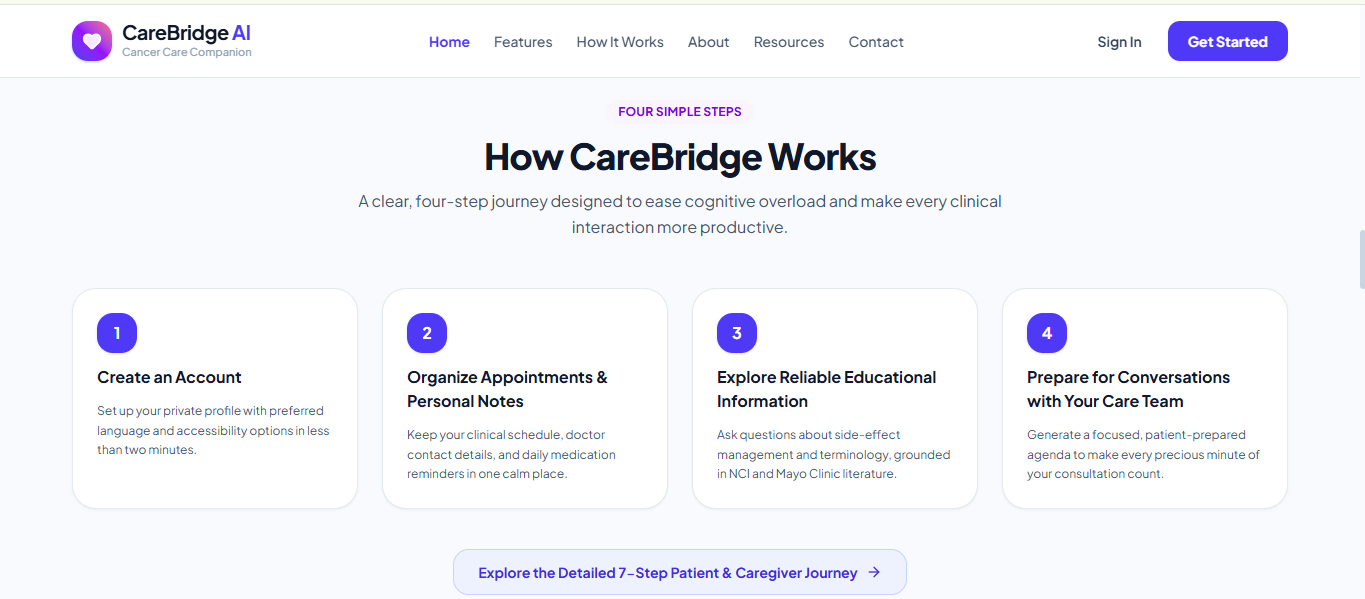
- Designing for patients experiencing chemotherapy fatigue requires radical simplicity: minimal clicks, large visual buttons, and zero high-pressure interfaces.
- Clear medical boundaries actually enhance trust—patients and clinicians appreciate an AI that acknowledges what it cannot do and prioritizes verified oncology literature.
- Structuring patient concerns into a 1-page consultation agenda bridges the communication gap during high-pressure 15-minute oncology visits.
What's next for CareBridge AI
- Direct EHR / FHIR Integration: Allowing patients to import blood panel results (CBC counts, liver enzymes) directly into their care calendar.
- Voice-First Journaling: Speech-to-text logging for patients experiencing neuropathy or acute physical fatigue.
- Additional Languages: Expanding bilingual support to Spanish, Arabic, and Hindi to assist diverse communities globally.
- Wearable Health Sync: Incorporating resting heart rate and sleep patterns from smartwatches to correlate physical exertion with recovery days.
Built With
- express.js
- google-gemini
- katex
- lucide-icons
- node.js
- postgresql
- react
- responsive-design
- supabase
- tailwindcss
- typescript
- vercel
- vite


Log in or sign up for Devpost to join the conversation.