-
-
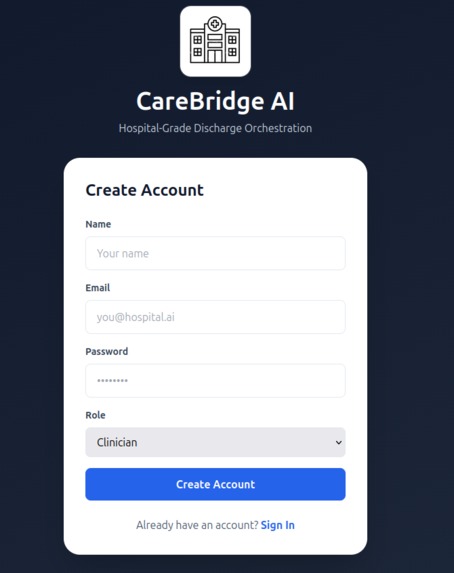
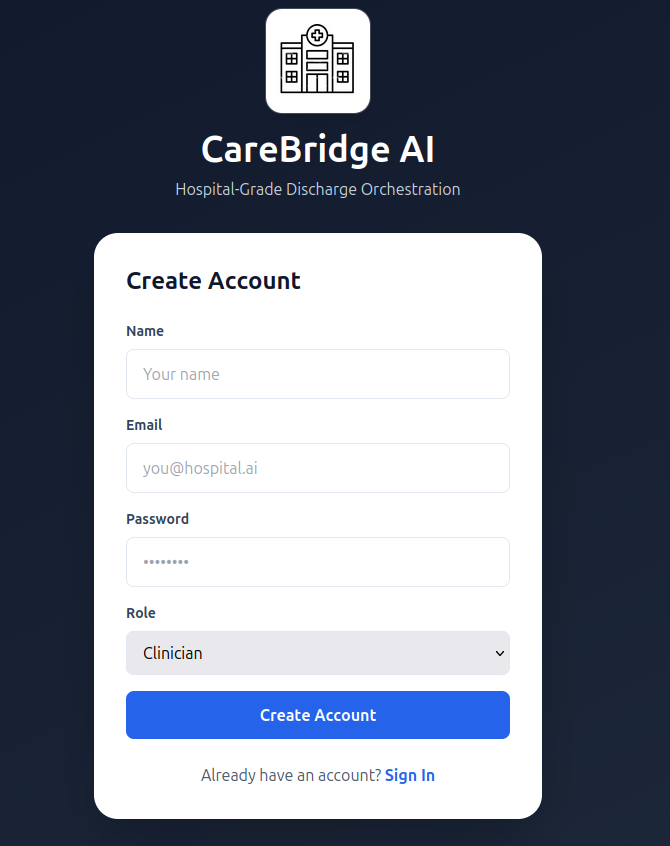
SignUp Form
-
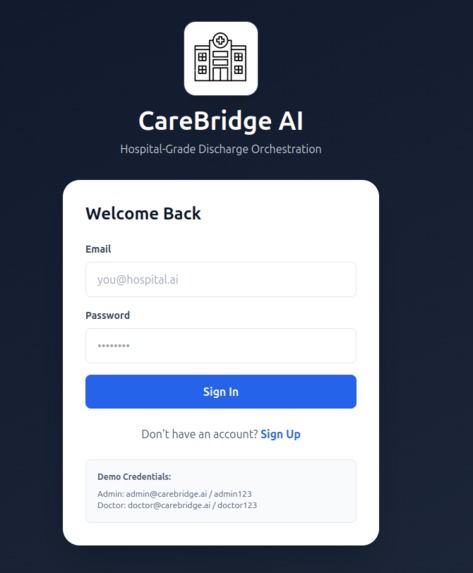
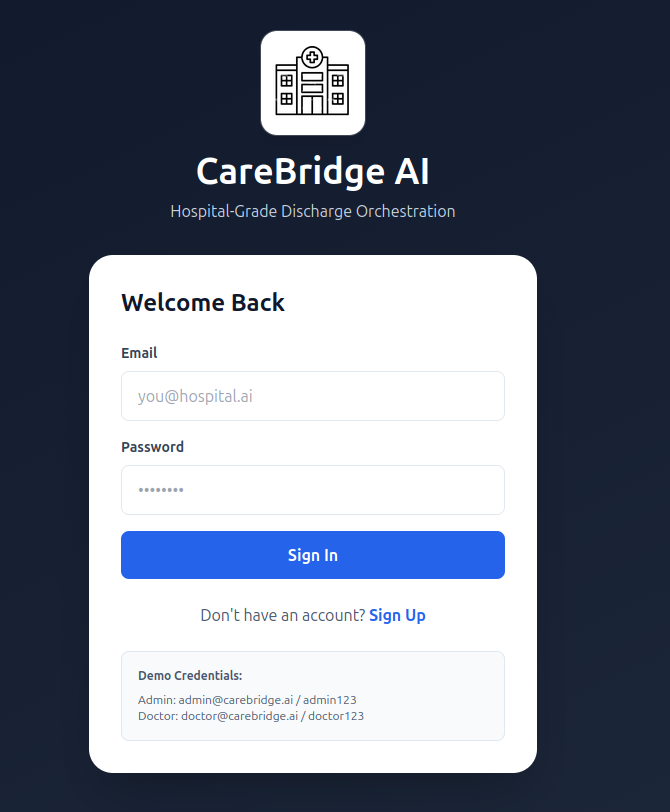
SignIn Form
-
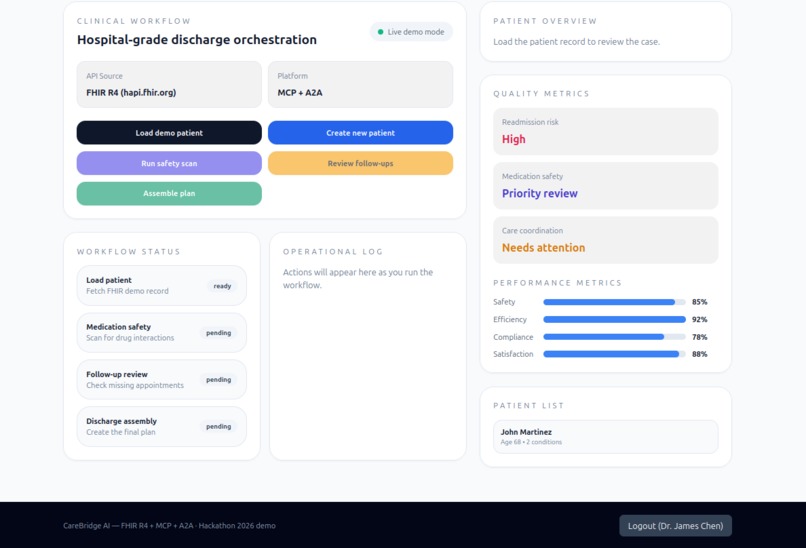
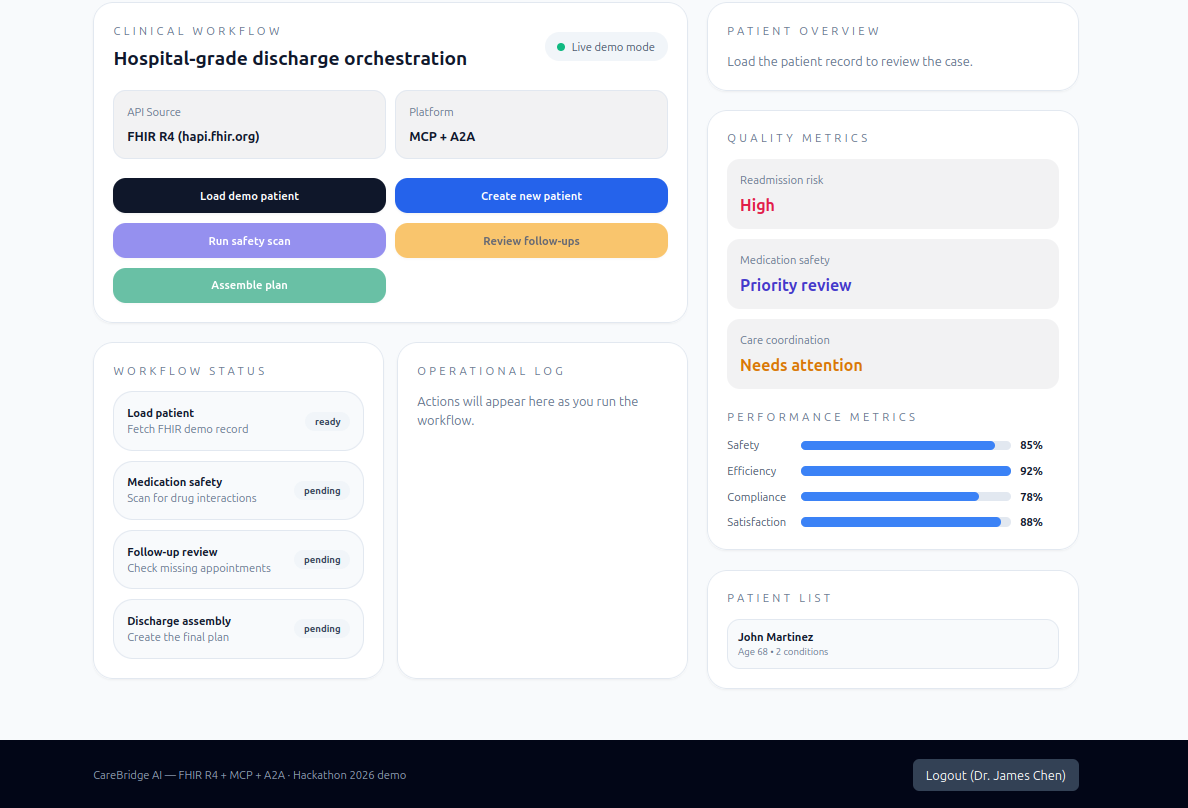
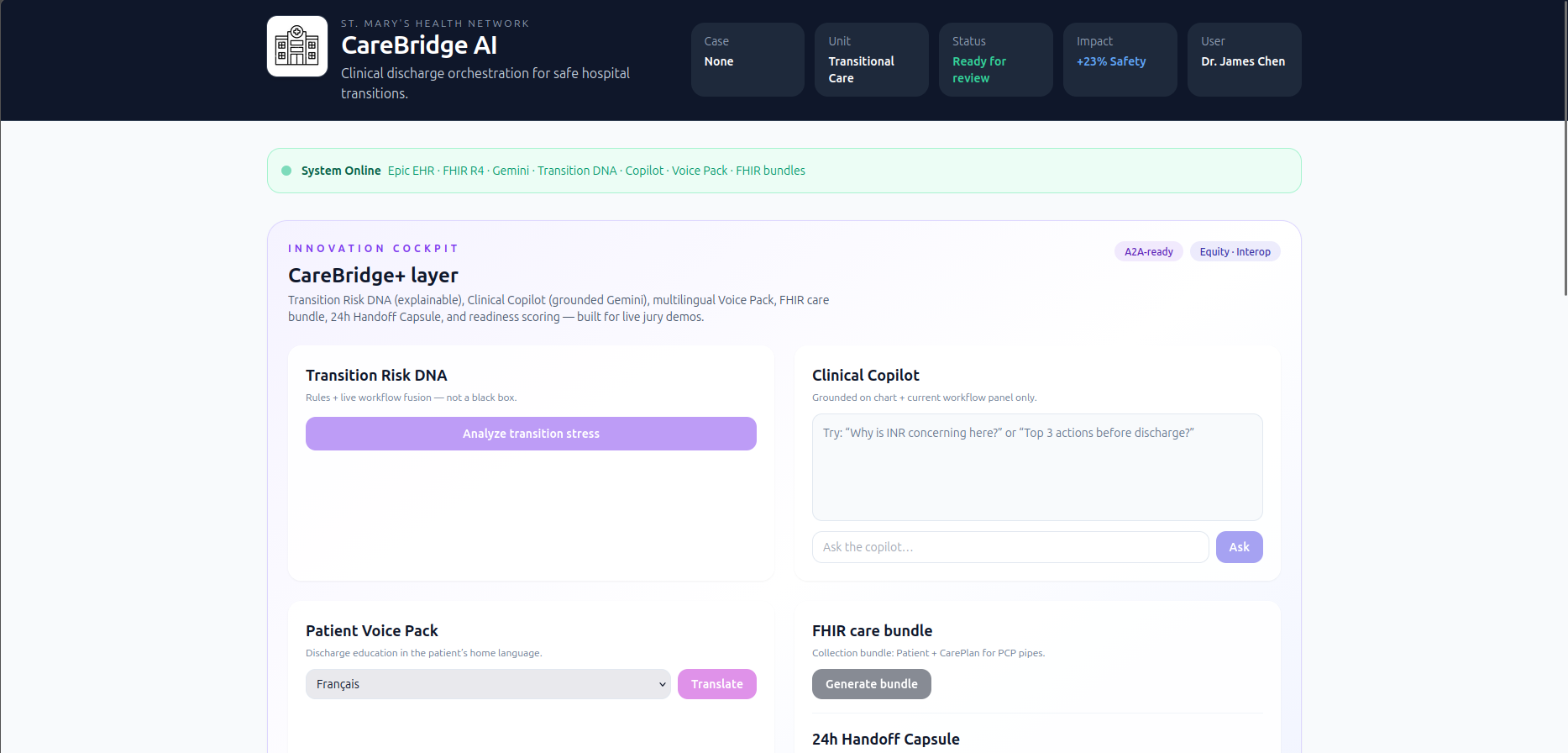
Doctor's dashboard
-
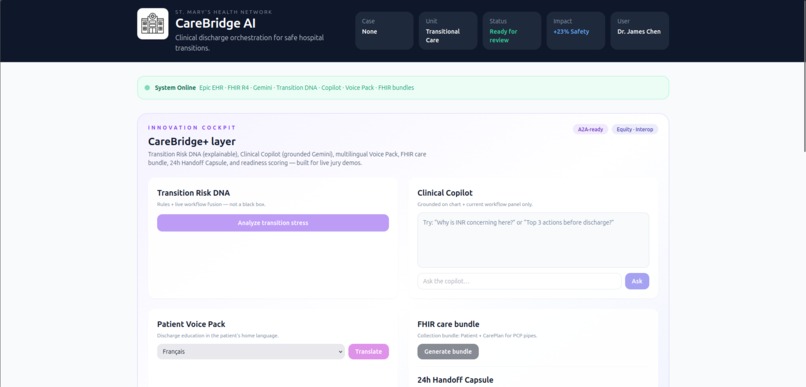
-
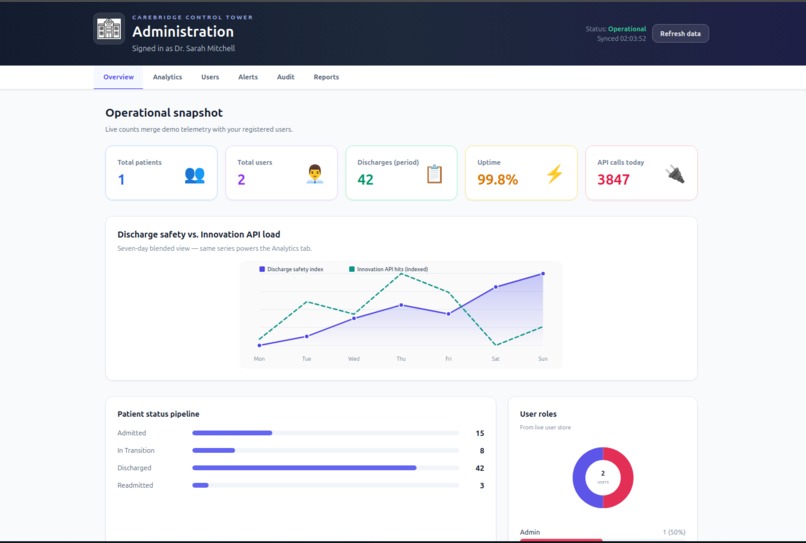
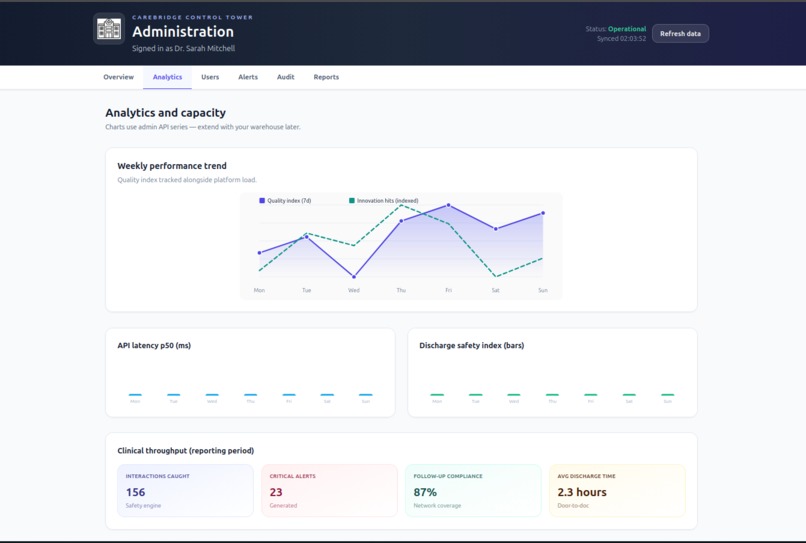
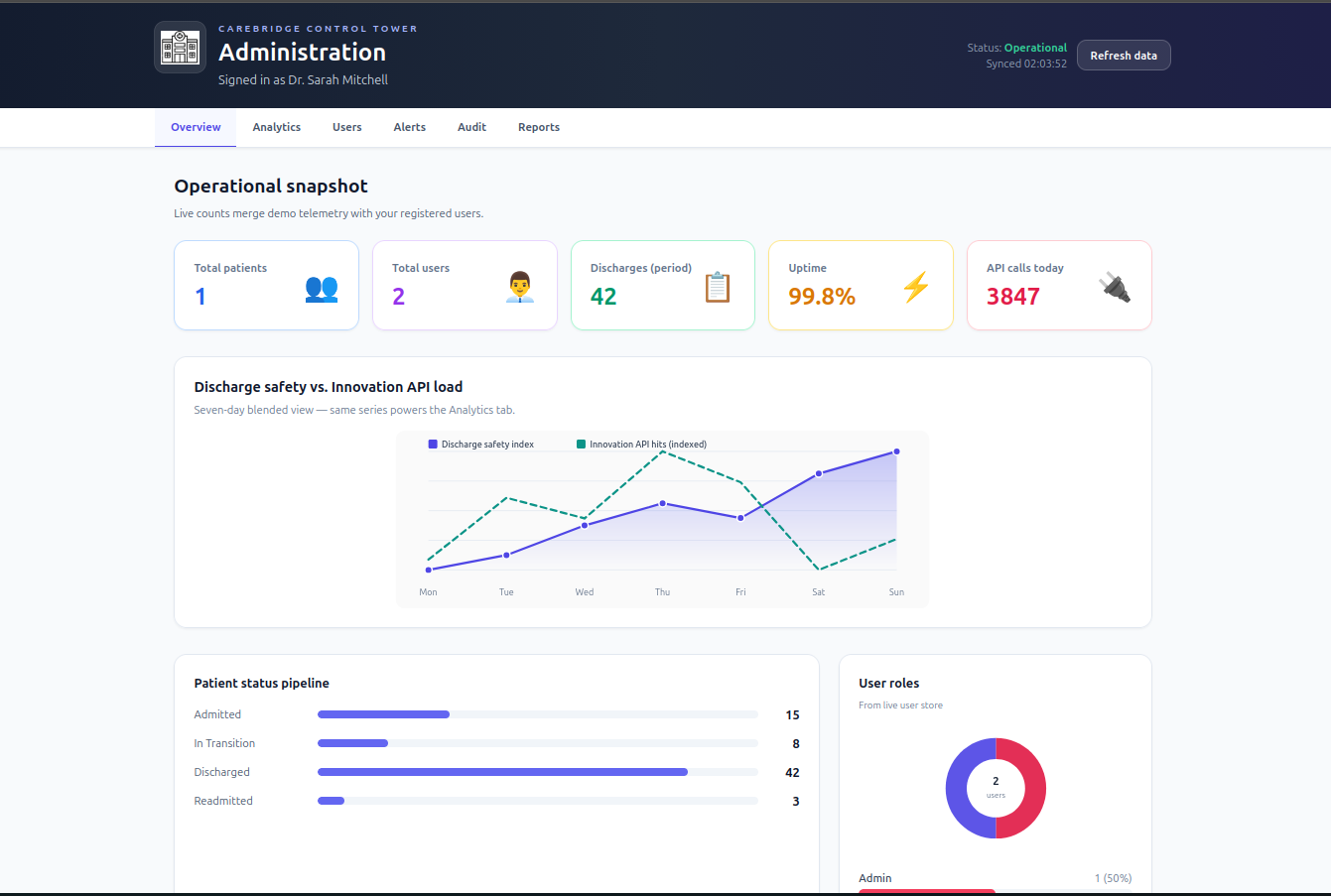
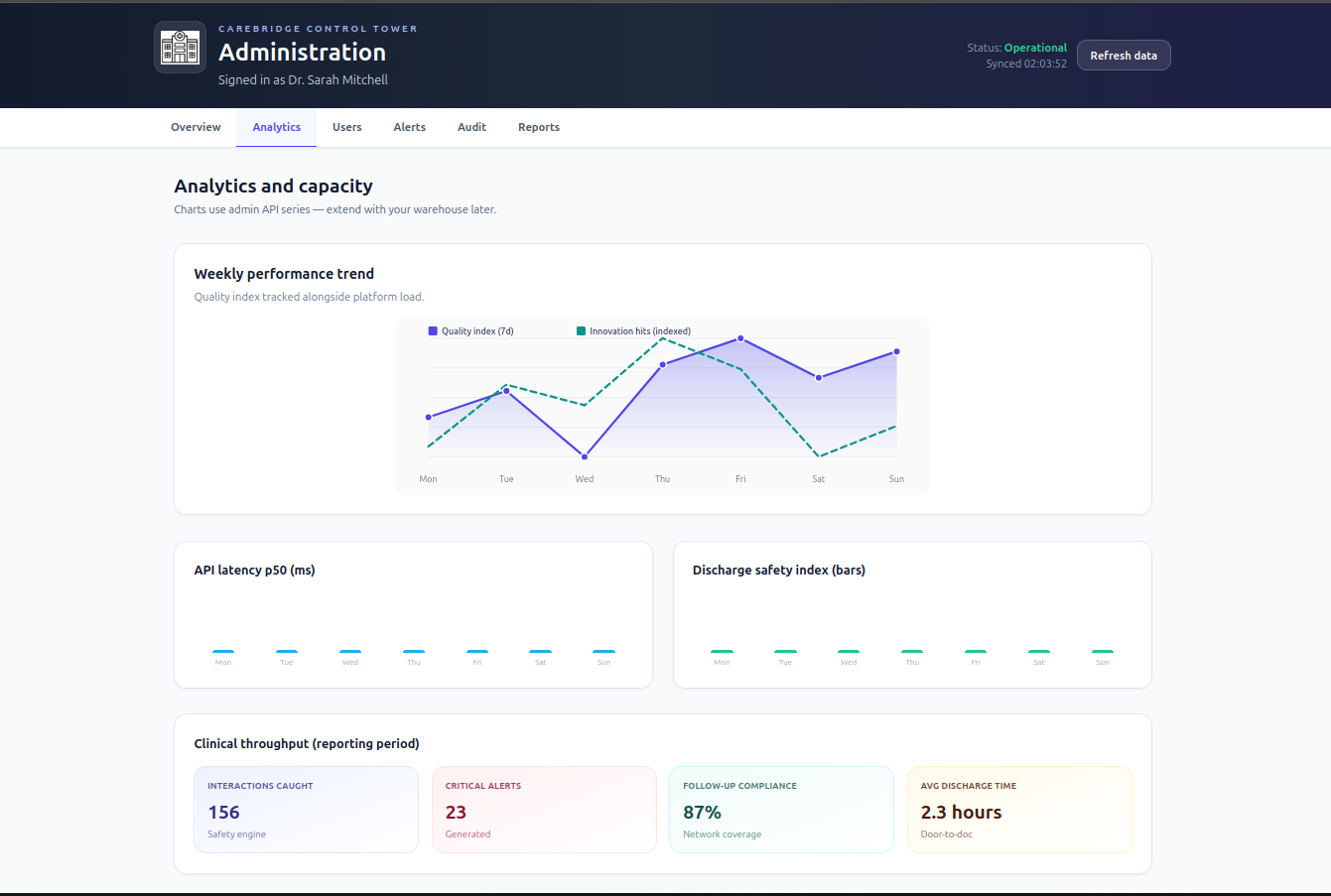
Admin's panel
-
-
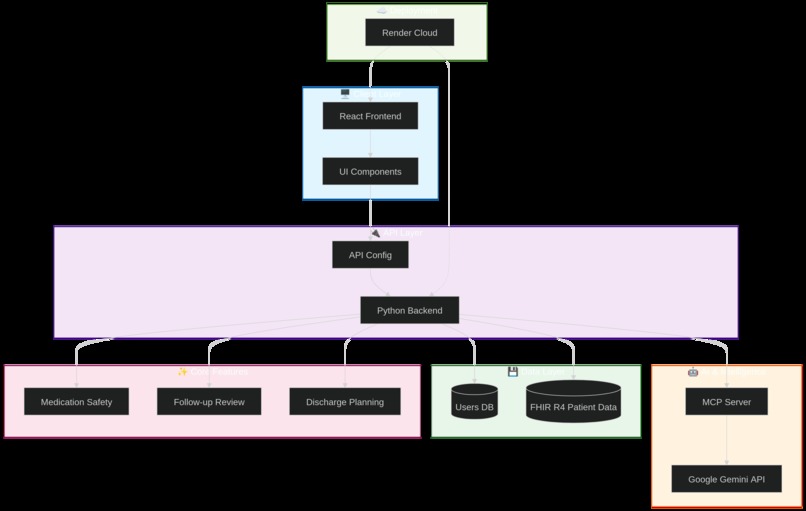
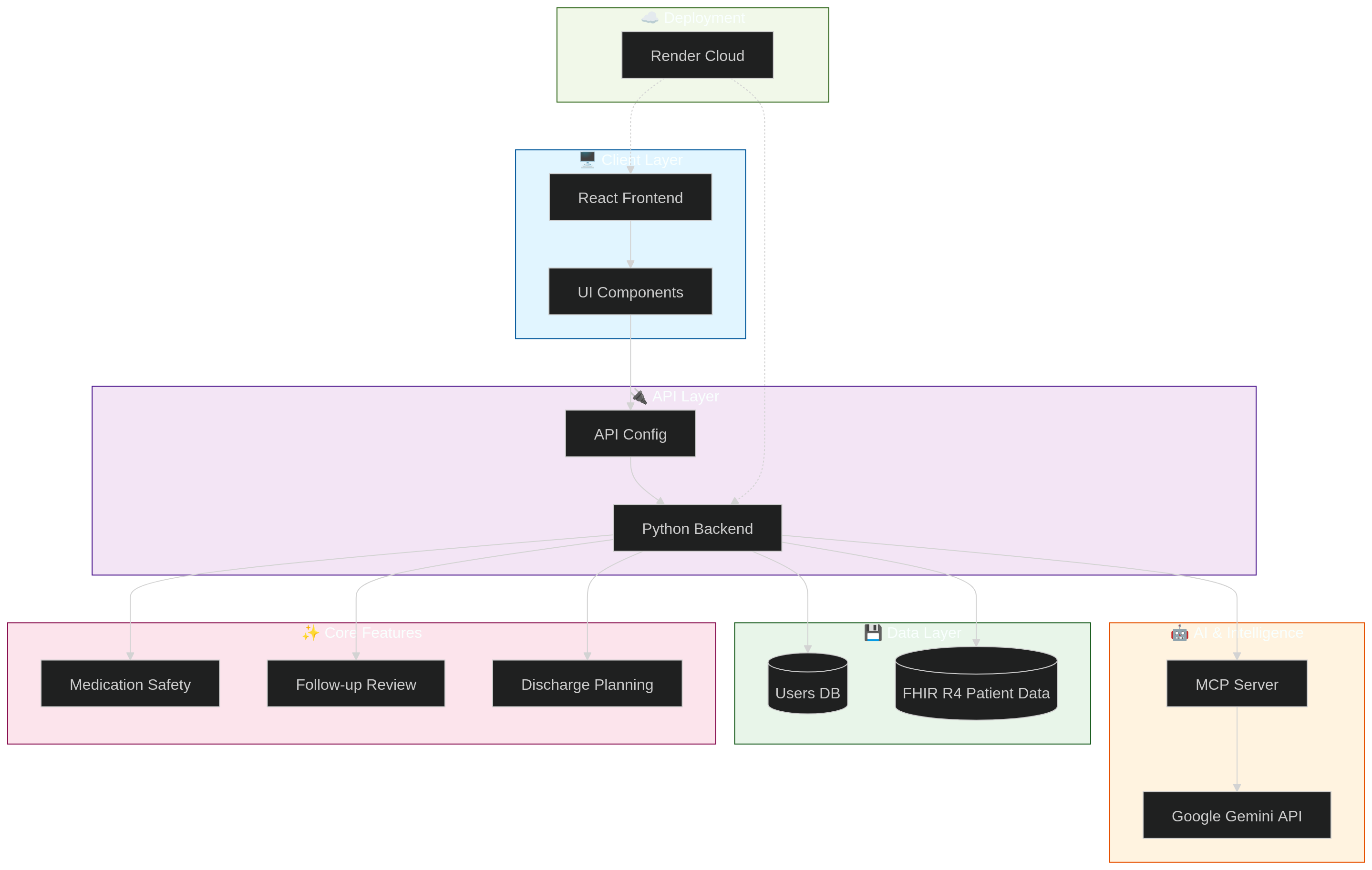
architectural diagram
Project Description (with Markdown + LaTeX support):
CareBridge AI is an intelligent clinical discharge orchestration system designed to enhance patient safety during hospital transitions. The platform addresses a critical gap in healthcare: discharge planning complexity and patient safety risks.
Inspiration & Problem
Hospital discharge is a high-risk transition point where medication errors, missed follow-ups, and poor care coordination lead to preventable readmissions and adverse events. Clinical teams often lack decision support for:
- Drug interaction detection across medication lists
- Coordination of specialist follow-ups
- Patient-friendly discharge instruction generation
Solution Architecture
CareBridge AI integrates three key technologies:
- MCP Server (Model Context Protocol) - Provides intelligent context management for clinical reasoning
- FastAPI Backend - Exposes FHIR R4 compliant APIs for patient data and discharge workflows
- React Frontend - User-friendly dashboard for clinicians to review and approve discharge plans
Technical Highlights
- FHIR R4 Standard Integration: Fetch patient records from FHIR-compliant servers (tested with HAPI FHIR)
- Google Gemini 2.0 Flash Integration: Single, unified AI model for:
- Medication safety analysis
- Follow-up care gap identification
- Patient-friendly instruction generation
- Double-Track Submission: Dual MCP + A2A (Agent-to-Agent) architecture powered by Gemini
- No External AI Dependencies: Purely Gemini-based reasoning (no Claude, no multi-provider logic)
- JWT-Protected APIs: Secure clinician authentication and patient data access
- Demo Patient: Realistic John Martinez case (67M, Type 2 Diabetes, complex medication profile with known Warfarin-Ibuprofen interaction)
Key Features Demonstrated
- Load FHIR patient records
- Medication safety scanning
- Follow-up care review
- AI-generated discharge plans
- Clinician approval workflow
- Admin dashboard for user management
Challenges Overcome
- FHIR Complexity - Navigated R4 schema for medication/condition mapping
- AI Context Management - Designed MCP protocols for stateful clinical reasoning across service boundaries
- Safety-Critical System - Implemented multi-layer verification for medication interactions
- React Component Architecture - Built reusable components for real-world healthcare workflows
What We Learned
- Healthcare interoperability requires careful standard adherence (FHIR R4 conventions)
- MCP enables flexible AI context management without tight coupling
- Clinical AI systems demand transparent reasoning and multi-step verification
- User experience for hospital staff requires minimal cognitive load



Log in or sign up for Devpost to join the conversation.