Inspiration
I built CareBridge AI after recognizing how many people around the world still struggle to access basic healthcare guidance due to barriers like cost, distance, language, internet connectivity, and limited medical infrastructure. In many underserved and rural communities, delayed healthcare access can turn manageable health concerns into life-threatening situations. I wanted to create a platform that could make healthcare guidance more accessible using AI, while still being realistic, ethical, and inclusive. My goal was to design a system that could work even in low-bandwidth or offline environments and support multiple languages so that more people could benefit from it globally. The United Nations Sustainable Development Goal 3 (Good Health and Well-being) strongly inspired the direction of this project, especially the idea that healthcare access should not depend on geography or economic status.
What it does
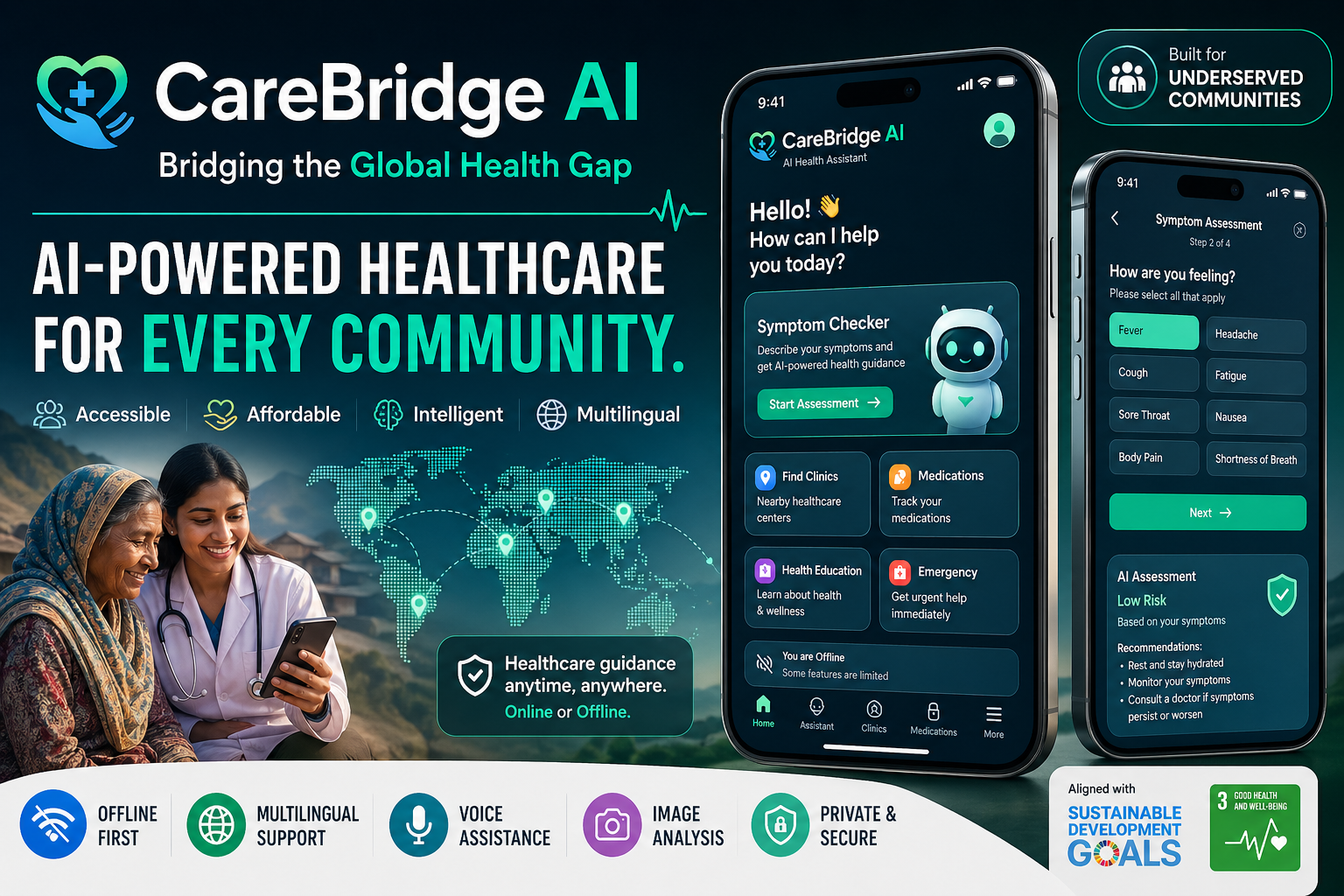
CareBridge AI is an AI-powered healthcare accessibility platform designed to support underserved communities through intelligent symptom guidance, emergency support tools, and offline-first healthcare access. The platform allows users to:
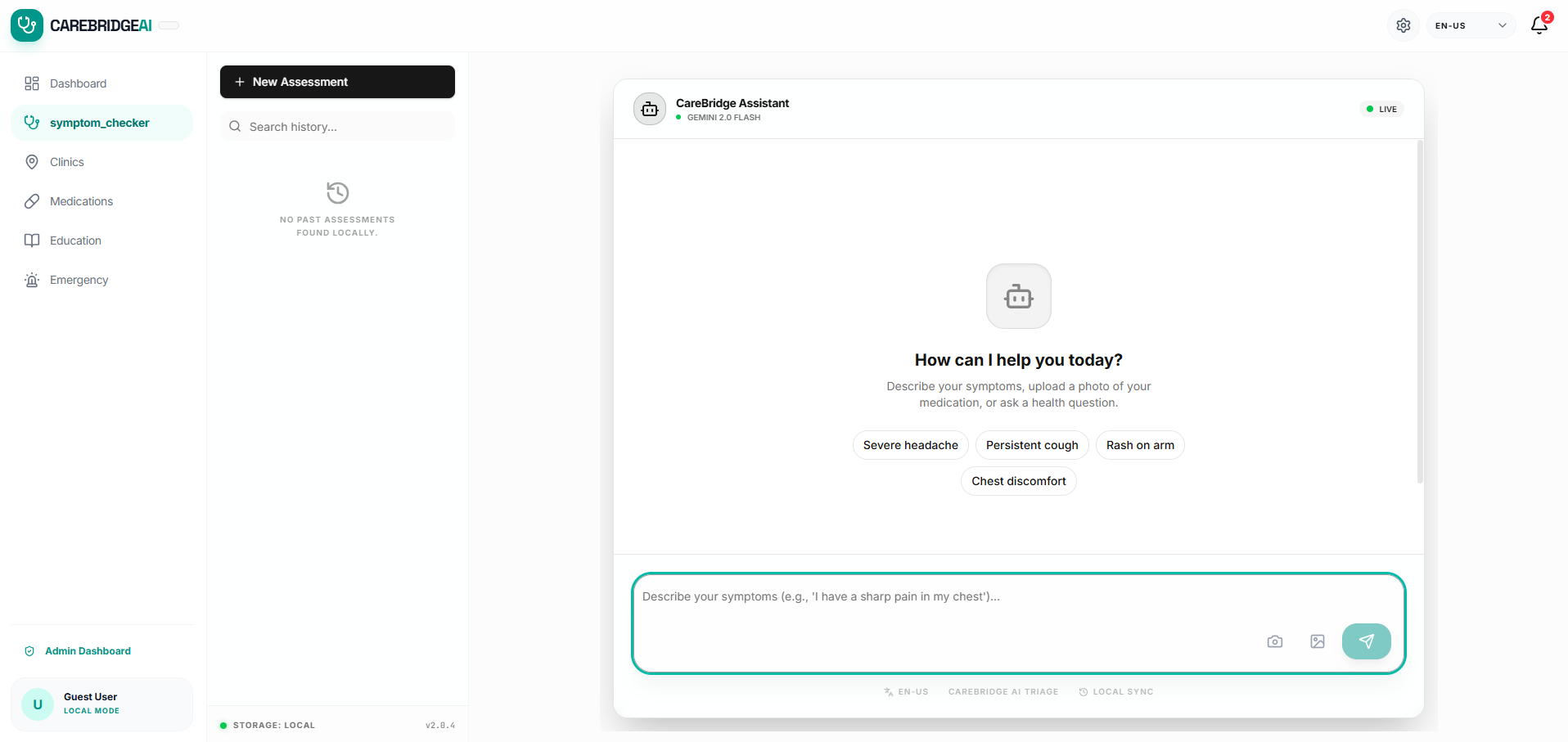
- describe symptoms and receive AI-generated healthcare guidance,
- estimate urgency levels for medical situations,
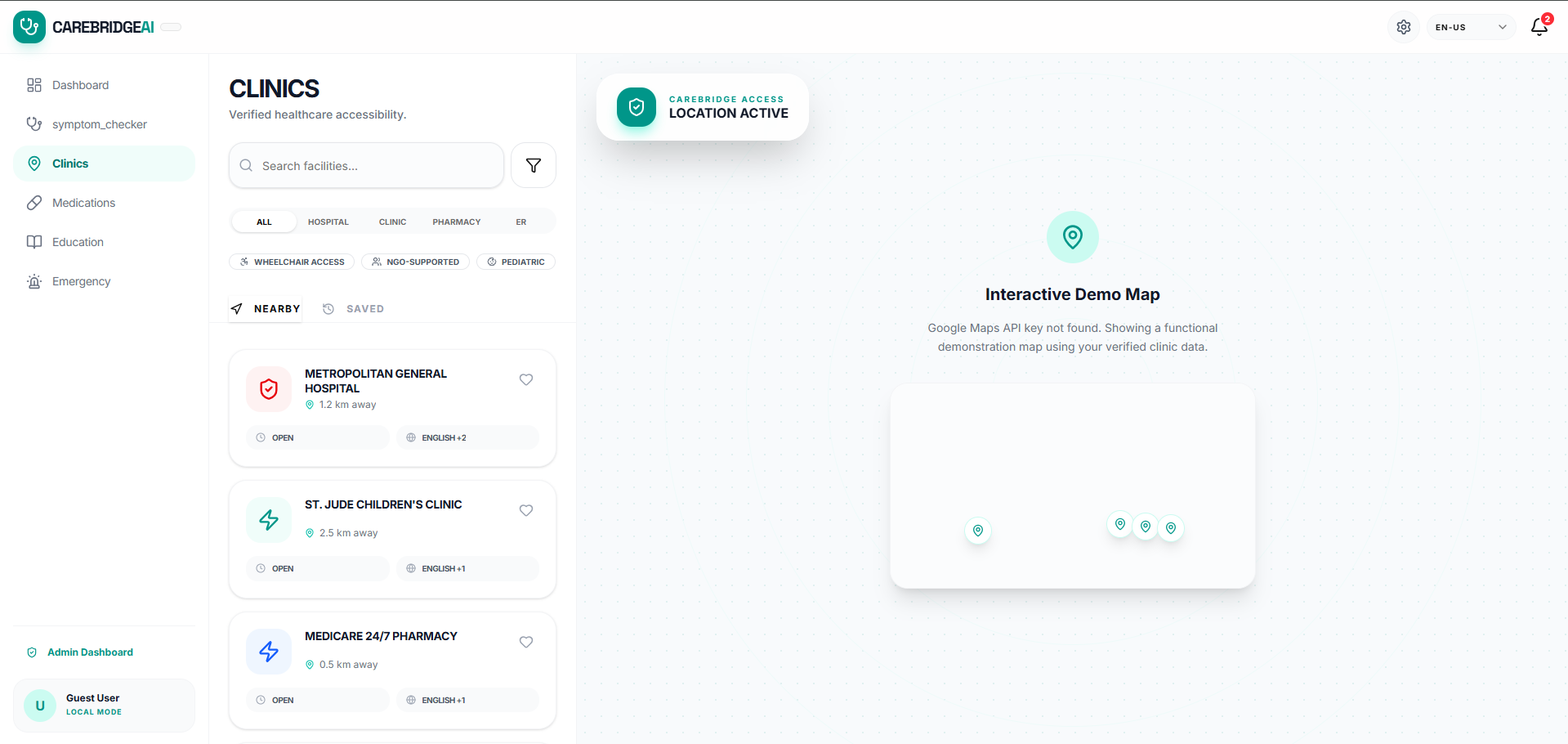
- find nearby clinics, pharmacies, and emergency healthcare centers,
- access healthcare resources in multiple languages,
- use the platform even with unstable or no internet connection,
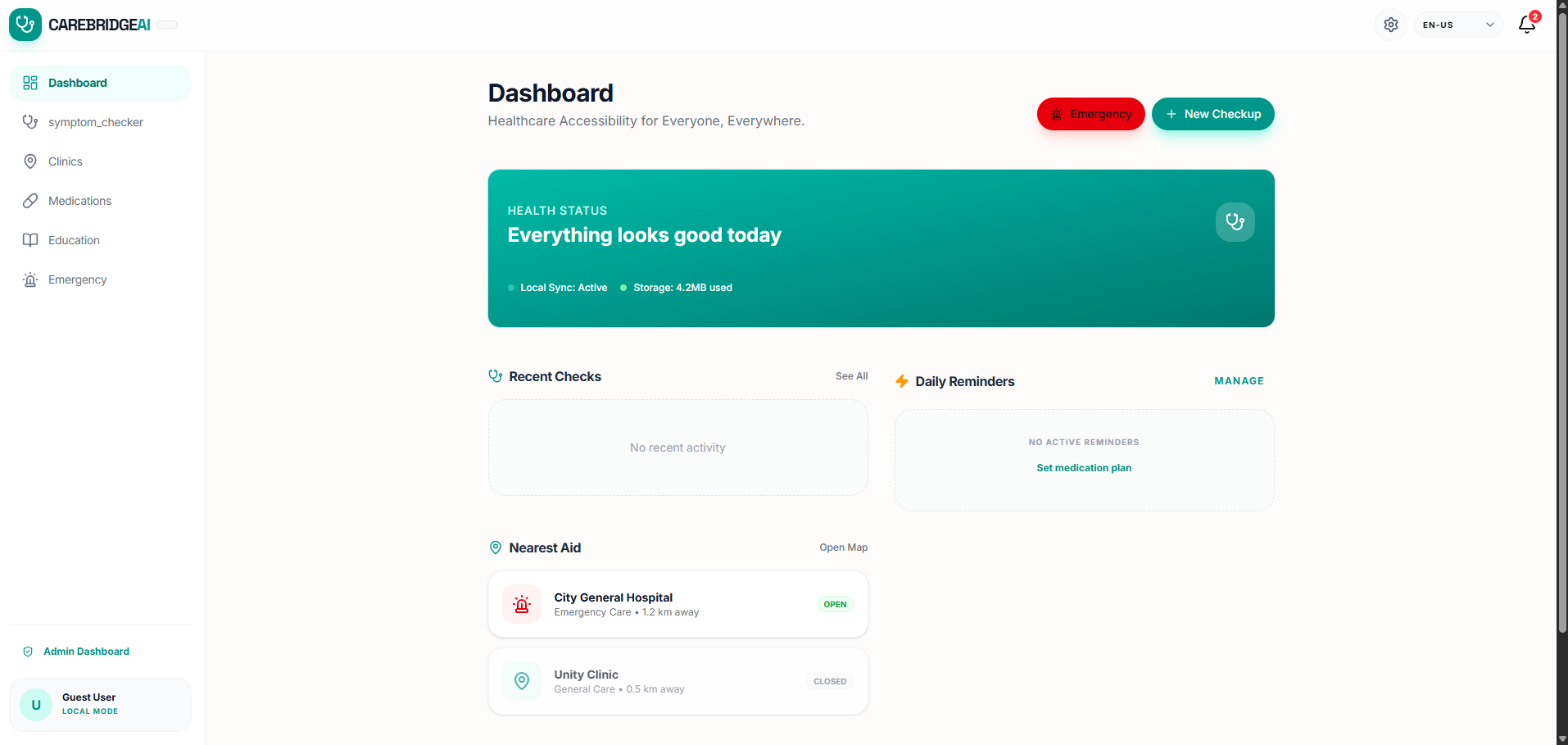
- manage medications and reminders,
- access emergency first-aid resources,
- and use voice and accessibility features for improved usability.
The platform also includes:
- offline caching
- multilingual AI support
- emergency healthcare workflows
- medication adherence tracking
- clinic analytics
- and a public-health-focused admin dashboard
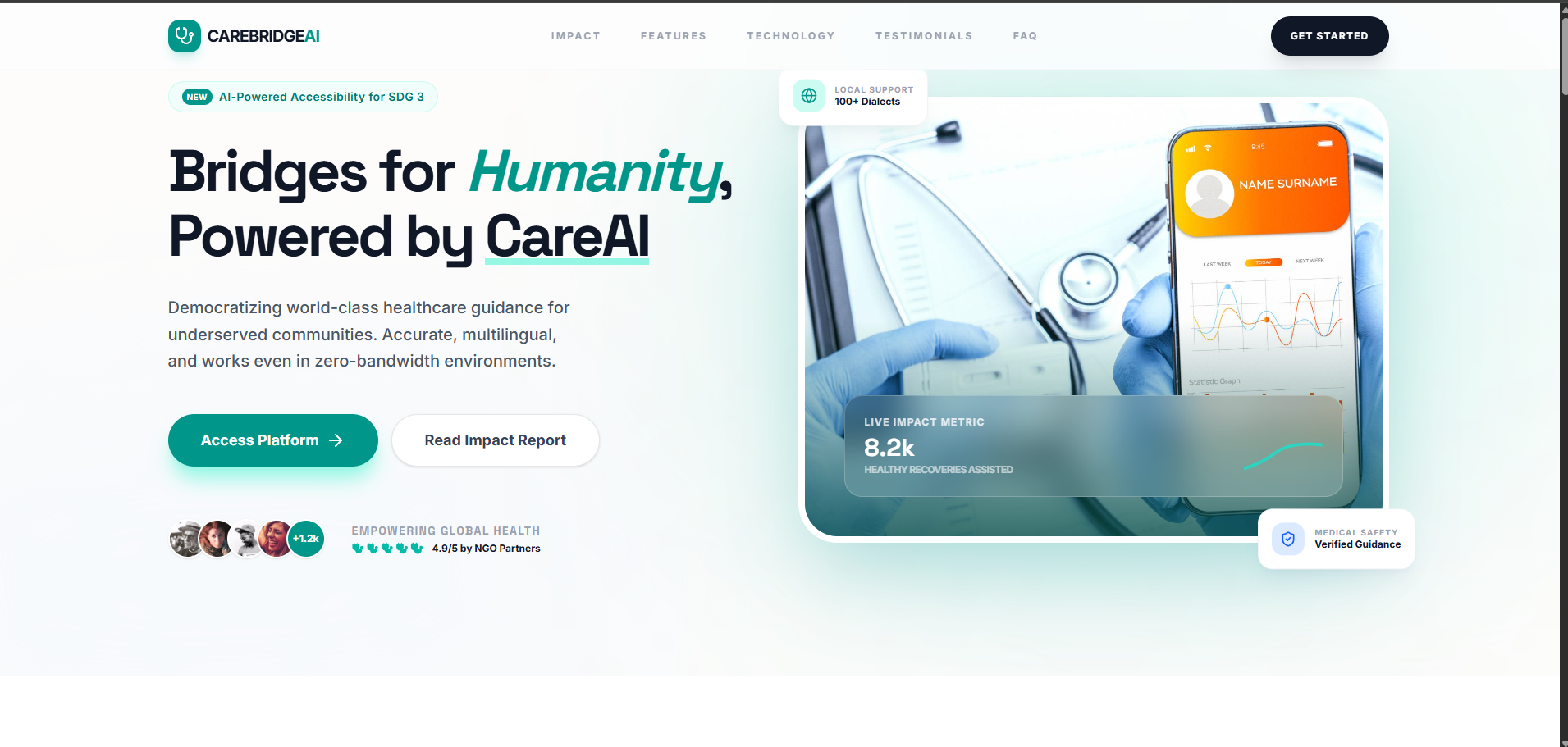
CareBridge AI was built to feel scalable for NGOs, healthcare organizations, and underserved communities worldwide.
How I built it
I built CareBridge AI as a full-stack healthcare platform using a modern AI-focused architecture optimized for accessibility and scalability.
For the frontend, I used:
- React 19
- TypeScript
- Tailwind CSS
- Shadcn/ui
- Framer Motion
- and React Router
For AI functionality, I integrated Google Gemini 2.0 to power:
- symptom assessment
- multilingual healthcare guidance
- image analysis
- and conversational triage workflows
I implemented:
- offline-first architecture using IndexedDB with Dexie
- Progressive Web App (PWA) support
- intelligent synchronization systems
- and low-bandwidth optimization for underserved environments
I also integrated:
- Google Maps API for clinic discovery
- multilingual support using i18next
- accessibility systems including voice support and RTL layouts
- medication tracking systems
- emergency healthcare tools
- analytics dashboards
- and mobile-responsive healthcare workflows
The platform was designed with a strong focus on:
- humanitarian impact
- accessibility
- ethical AI usage
- and real-world deployability
Challenges I ran into
One of the biggest challenges was designing a healthcare AI experience that felt useful and intelligent while still remaining ethically safe. I had to carefully structure the AI prompts and workflows to ensure the platform never presented itself as a replacement for professional medical care. Another major challenge was implementing a reliable offline-first architecture. Supporting synchronization, local caching, and offline persistence while maintaining a smooth user experience required significant planning and system design.
Balancing accessibility and advanced functionality was also difficult. I wanted the platform to support:
- multilingual users
- low-literacy accessibility
- voice interactions
- and low-bandwidth environments without making the interface feel overwhelming.
Integrating multiple systems together — including AI workflows, offline storage, emergency systems, maps, analytics, and accessibility layers — while working solo was one of the most technically demanding parts of the project.
Accomplishments that I am proud of
I am most proud of building a platform that feels realistic, scalable, and socially impactful rather than just a simple prototype. Some accomplishments I am especially proud of include:
- building a fully offline-capable healthcare accessibility system
- integrating multilingual AI-powered healthcare guidance
- designing an accessibility-first experience
- implementing emergency healthcare workflows
- creating a production-quality UI/UX
- and engineering a scalable architecture as a solo developer
I am also proud that CareBridge AI addresses a meaningful real-world issue aligned with global healthcare accessibility and the United Nations Sustainable Development Goals.
What I learned
Through building CareBridge AI, I learned a lot about:
- ethical AI design
- healthcare accessibility challenges
- offline-first system architecture
- synchronization systems
- accessibility engineering
- and designing technology for real-world humanitarian impact
I also improved my skills in:
- full-stack architecture
- AI integration
- scalable frontend development
- state management
- API optimization
- and building responsive user experiences
Most importantly, I learned how important thoughtful design is when building technology intended for vulnerable or underserved communities.
What's next for CareBridge AI
In the future, I want to continue expanding CareBridge AI into a more advanced global healthcare accessibility platform. Some next steps include:
- expanding support to more languages
- integrating telemedicine capabilities
- improving multimodal AI analysis
- adding wearable device integratio
- supporting community healthcare workers
- and building partnerships with NGOs and public-health organizations
I also want to improve:
- predictive healthcare analytics
- offline emergency response systems
- accessibility features
- and deployment support for low-resource regions
My long-term vision is to turn CareBridge AI into a scalable humanitarian technology platform that can help reduce healthcare accessibility gaps worldwide.
Built With
- dexie.js
- express.js
- framer-motion
- i18next
- indexeddb
- node.js
- react-i18next
- recharts
- shadcn/ui
- tailwindcss
- typescript
- vite

Log in or sign up for Devpost to join the conversation.