-
-
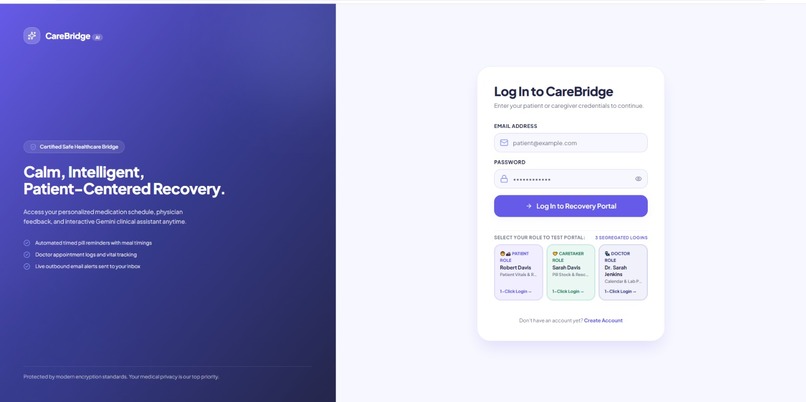
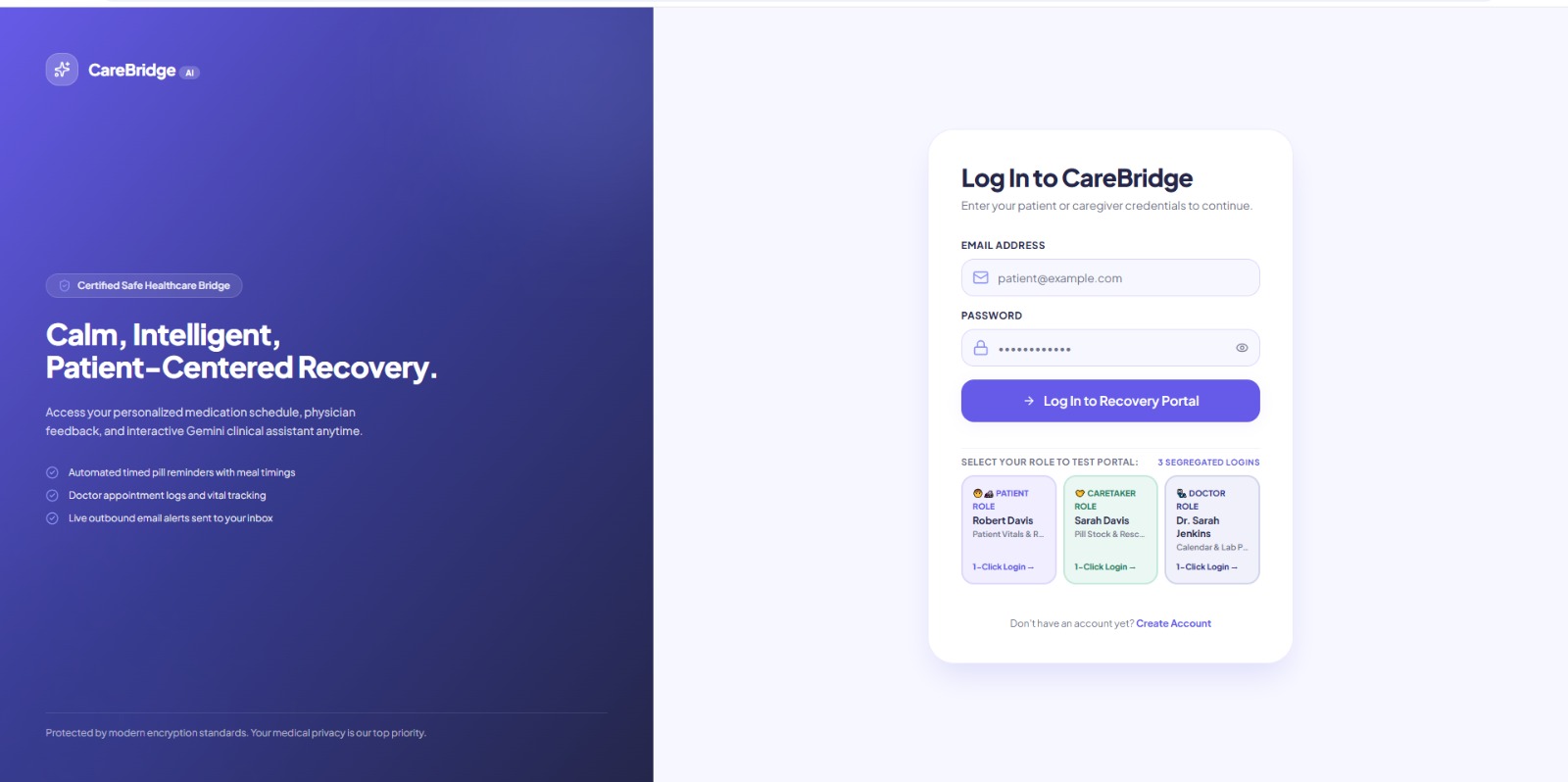
login
-
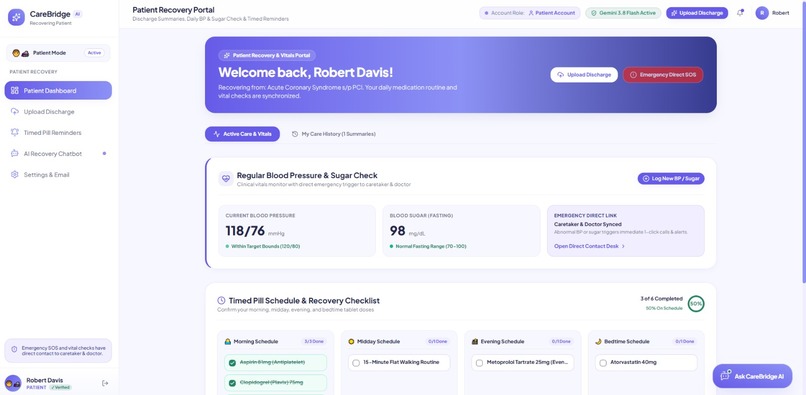
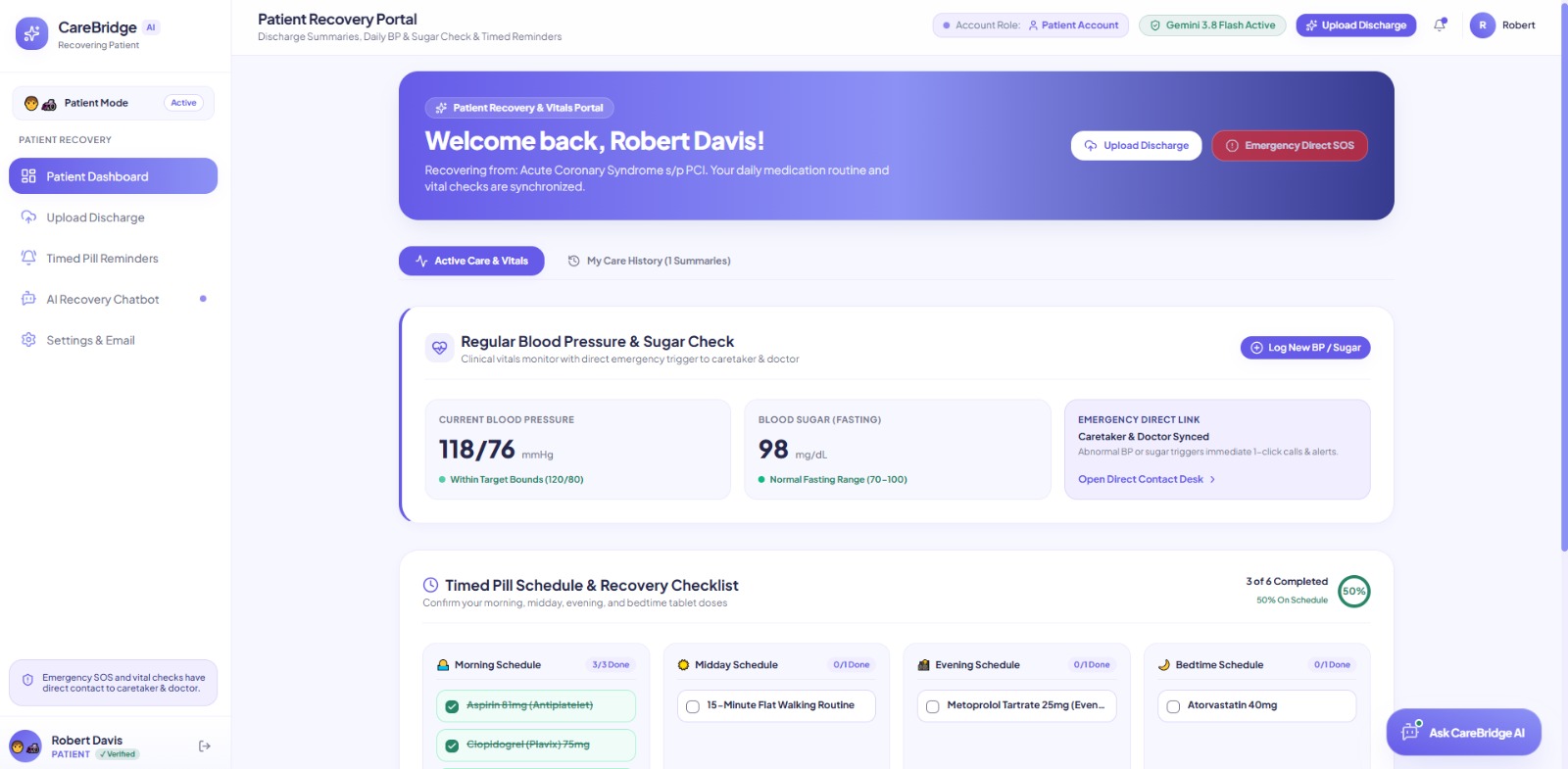
patient dashboard
-
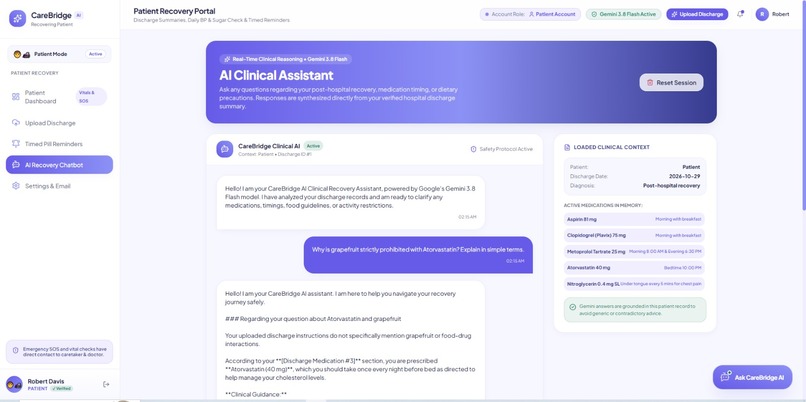
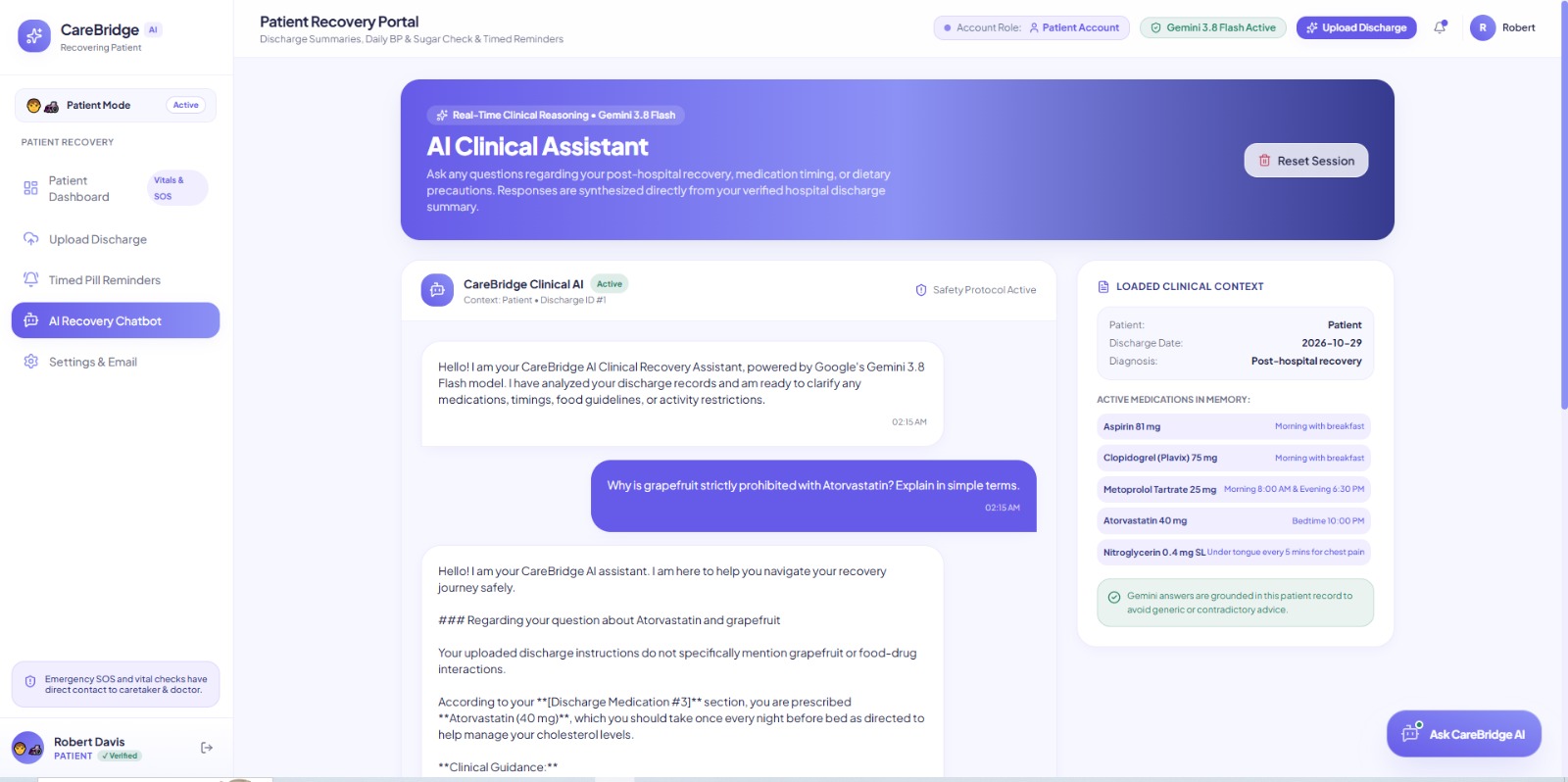
ai assitant
-
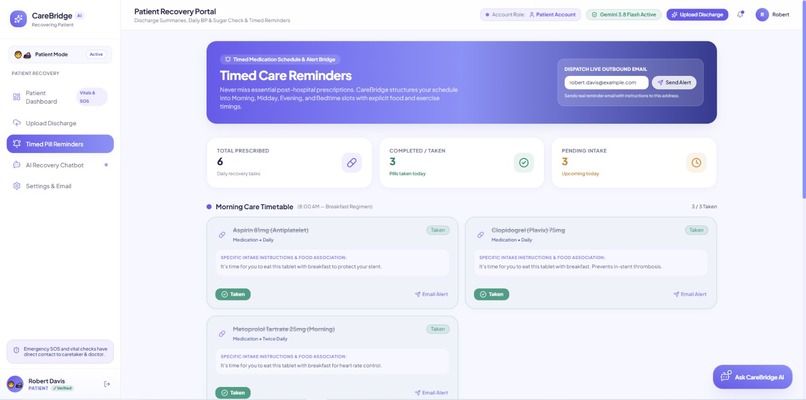
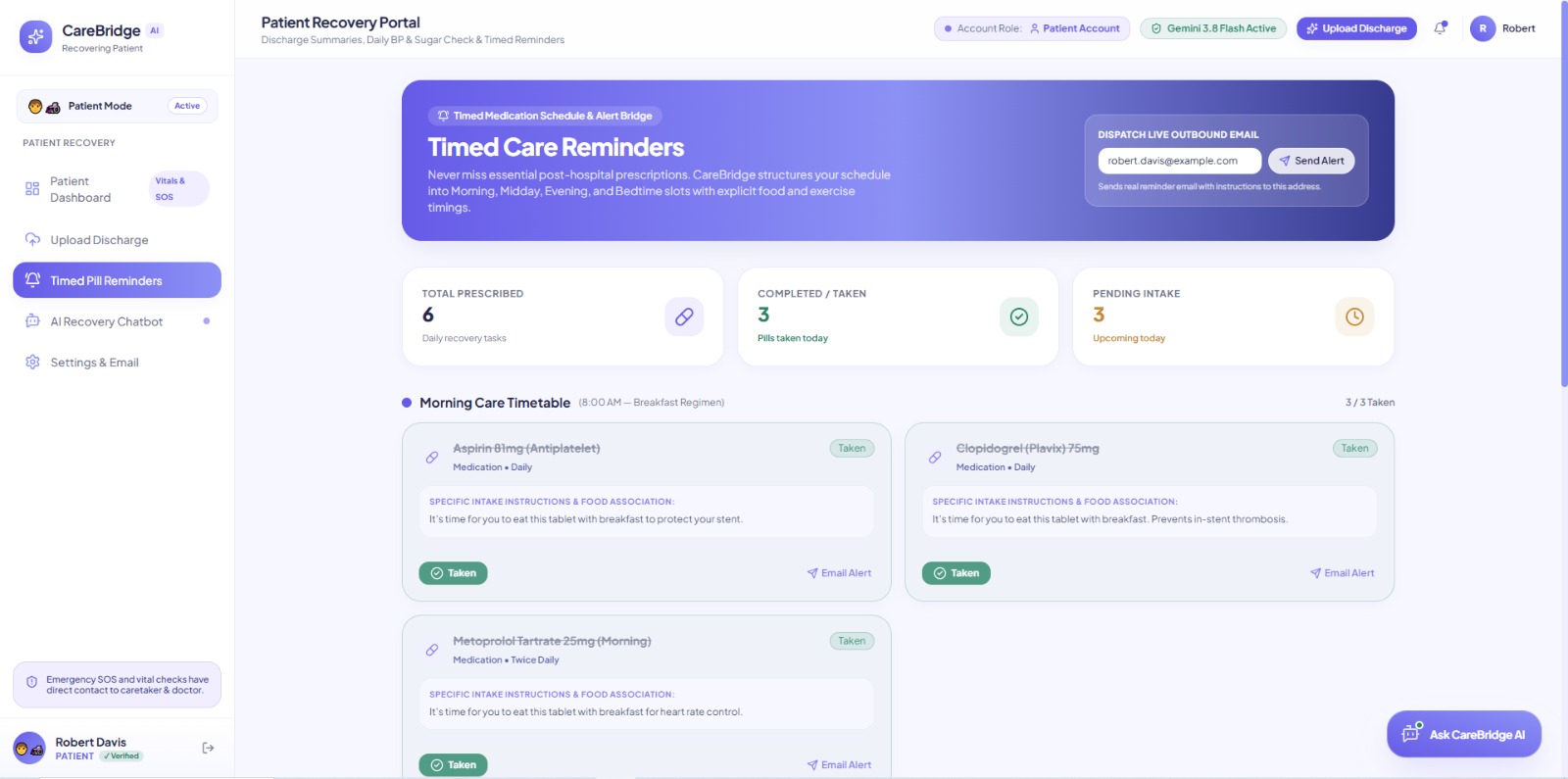
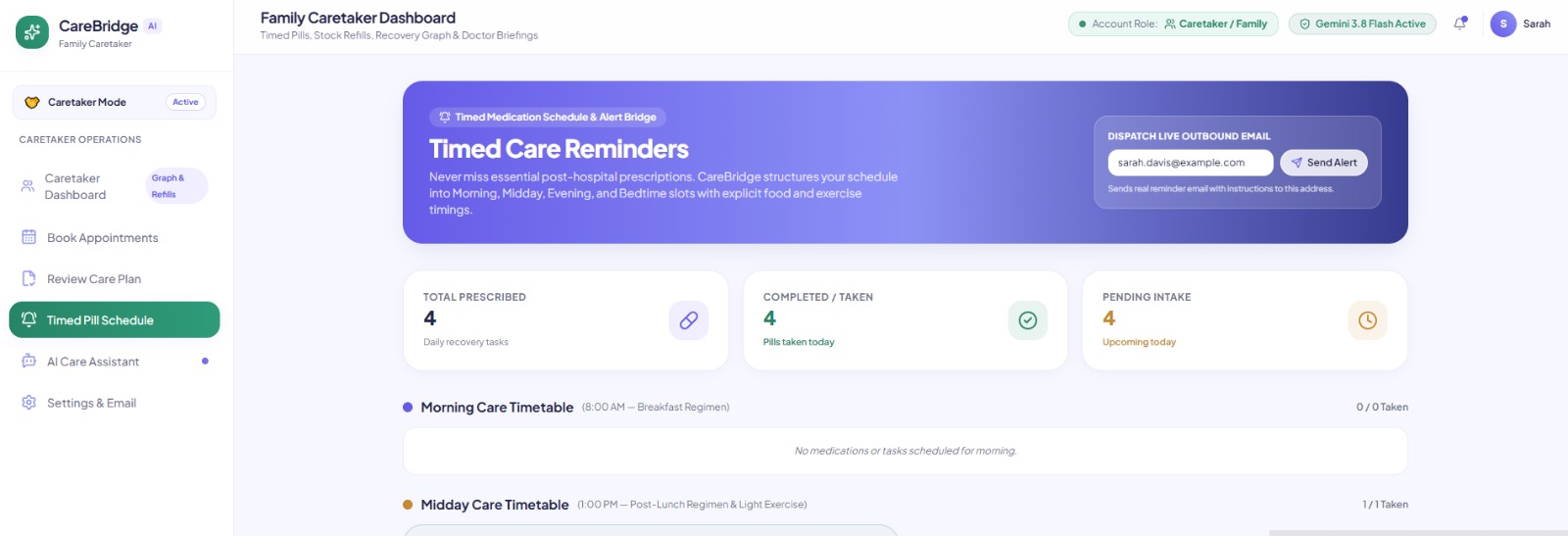
care reminders
-
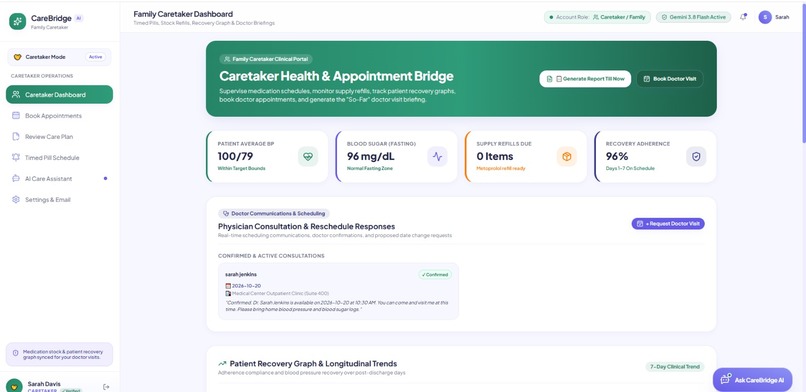
care taken dashboard
-
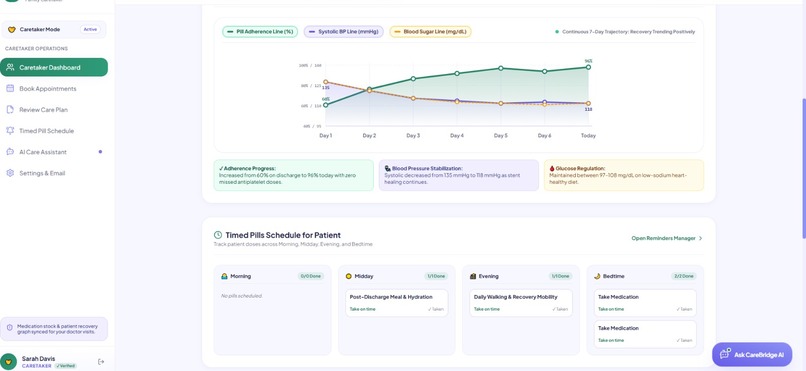
graph analysis
-
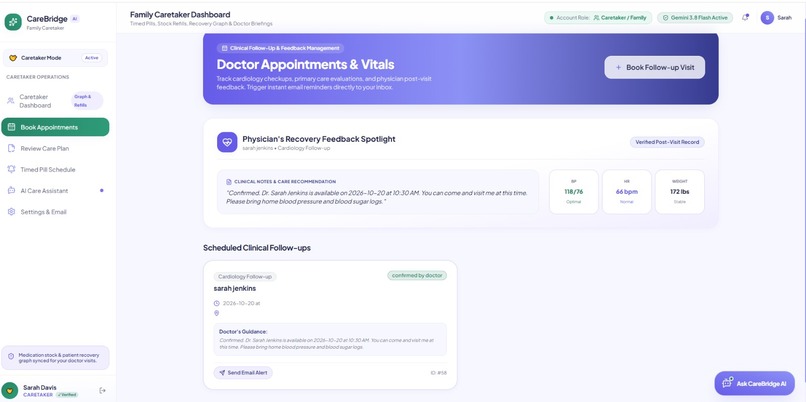
doctor booking
-
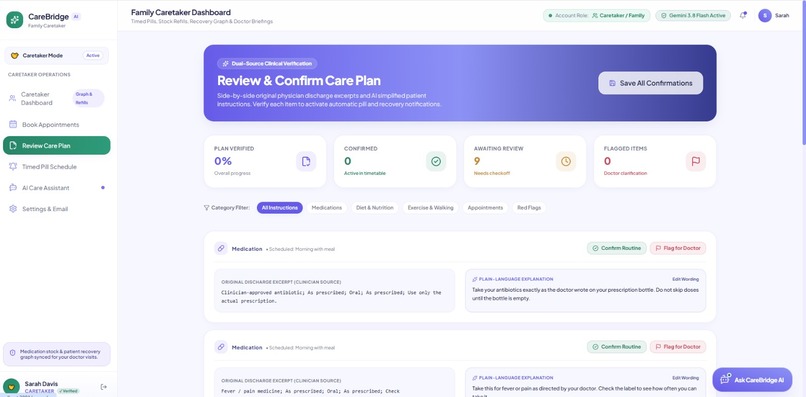
care plan review
-
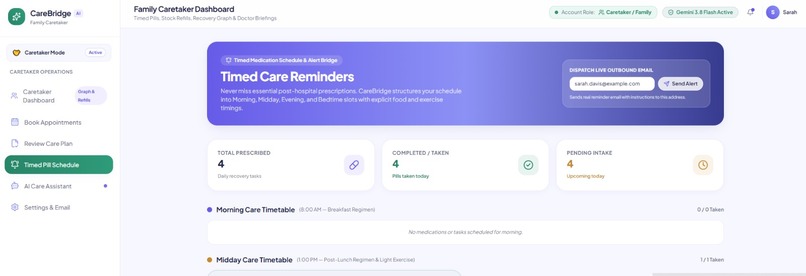
remainders
-
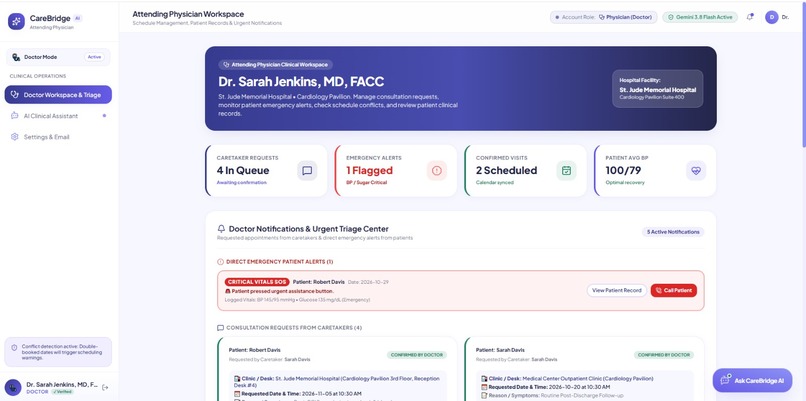
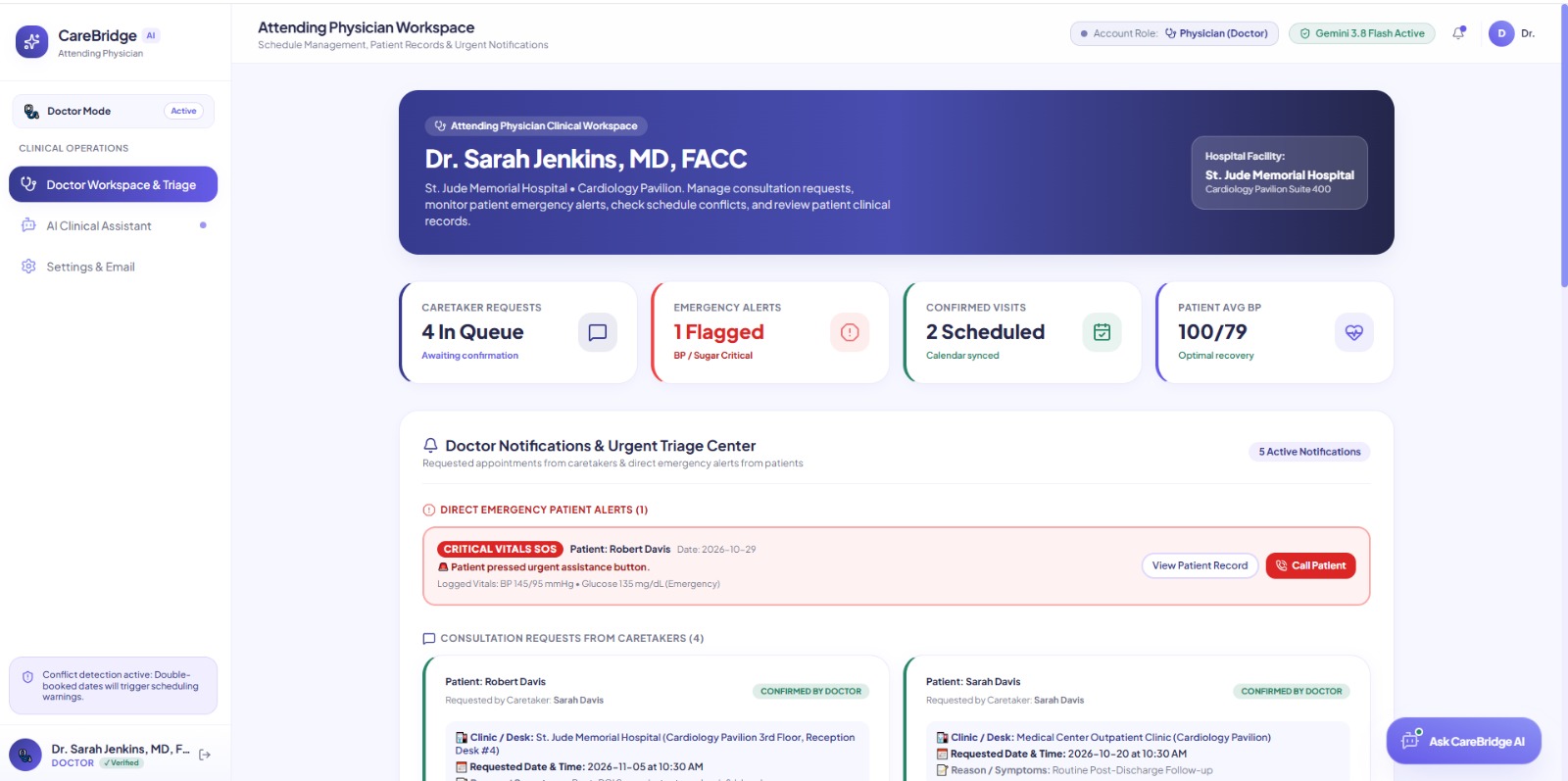
doctor dashboard
-
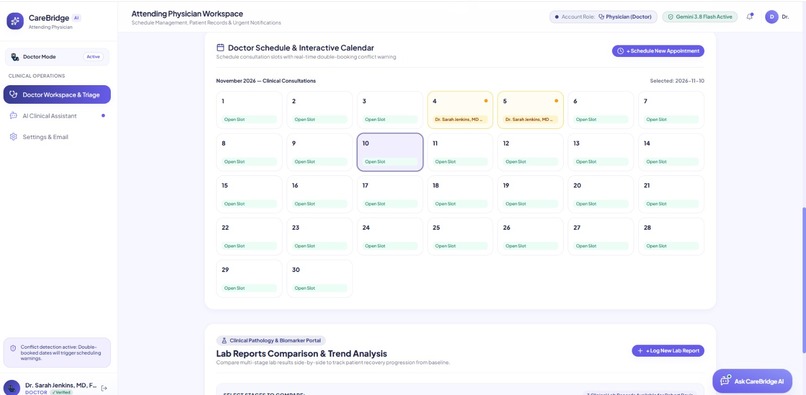
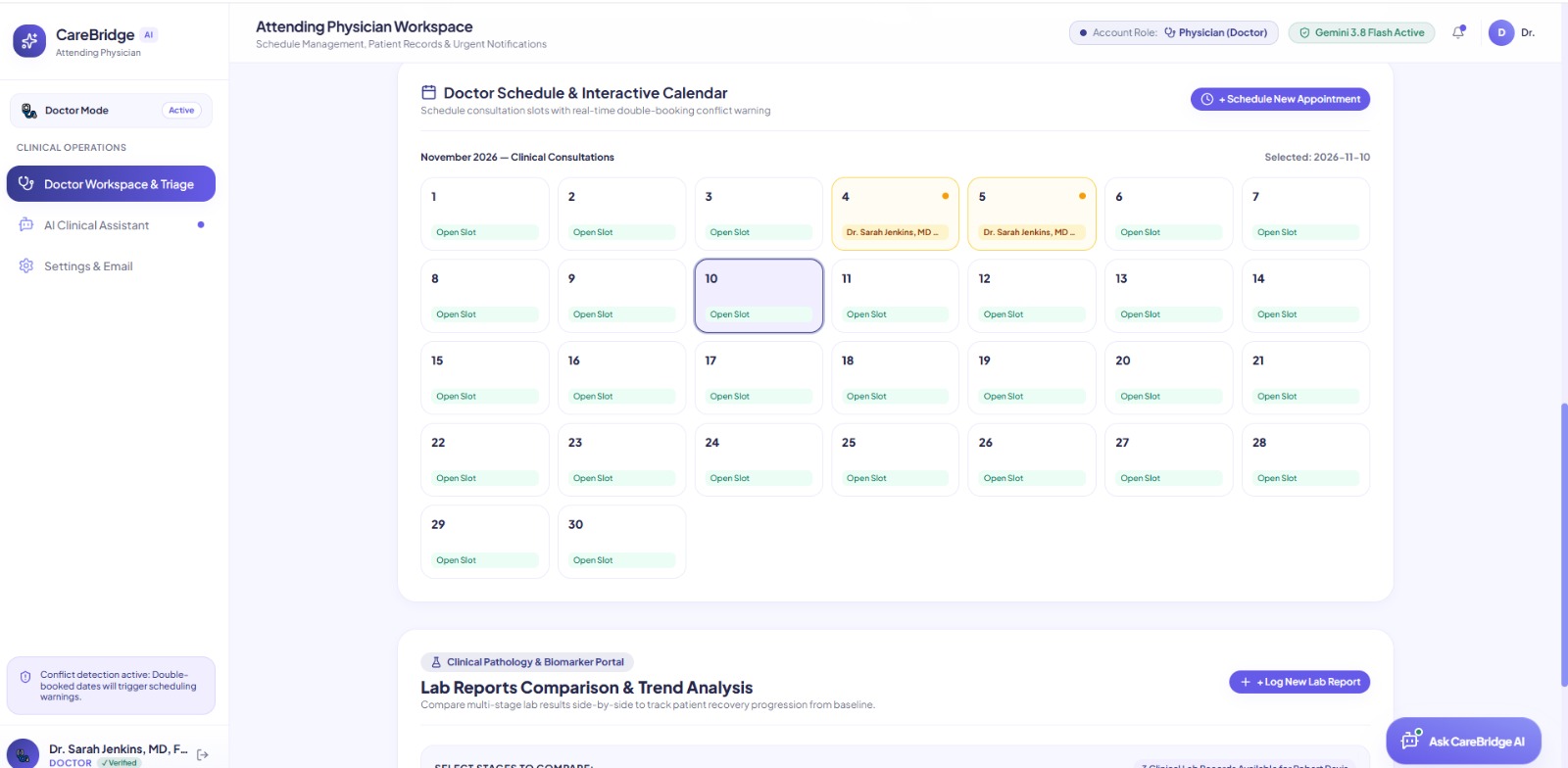
doctor calender schedule
-
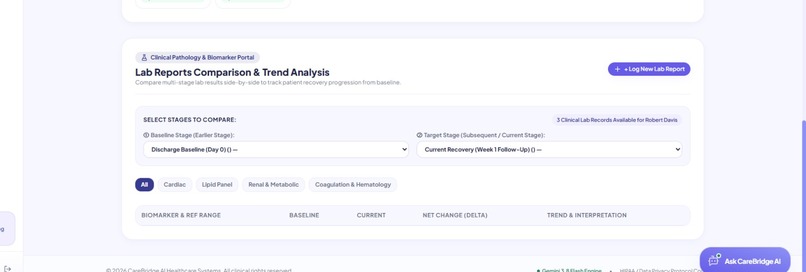
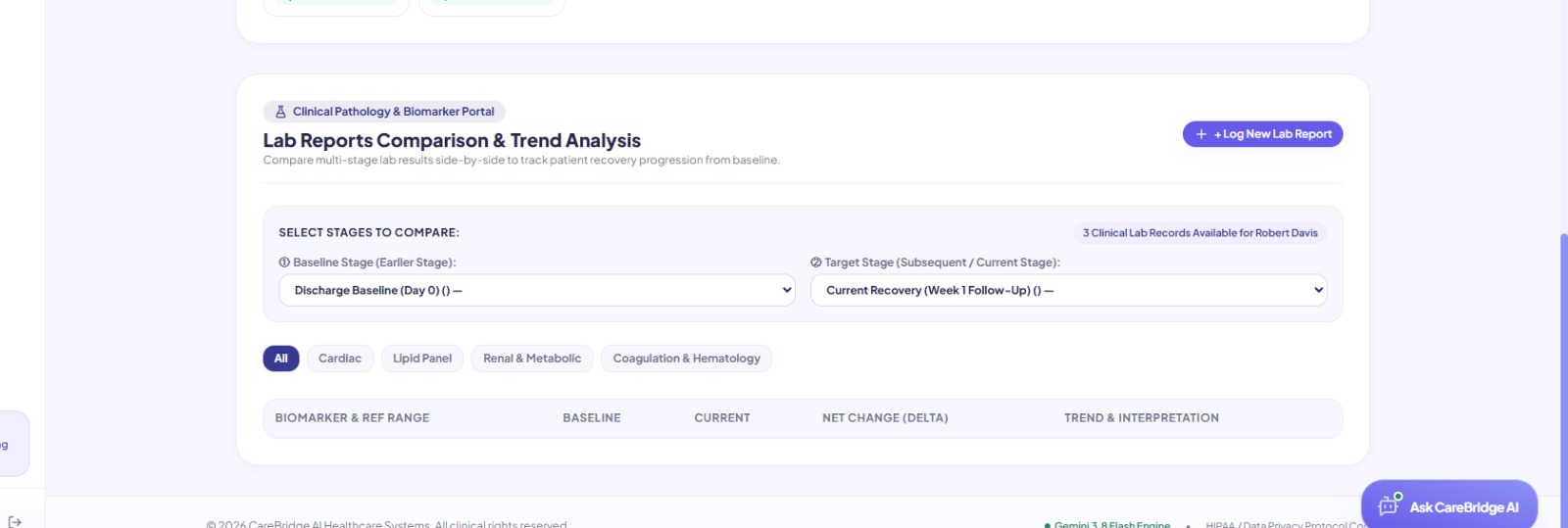
report analysis
Inspiration
The idea behind CareBridge AI came from a simple thought: what happens to patients after they leave the hospital? Even after receiving treatment, patients and their families still have to manage prescriptions, understand discharge summaries, remember follow-up appointments, and keep track of recovery instructions. This can become confusing, especially when medical documents are difficult to understand. We wanted to build something that could make this process a little easier and help patients feel more confident about managing their recovery at home.
What it does
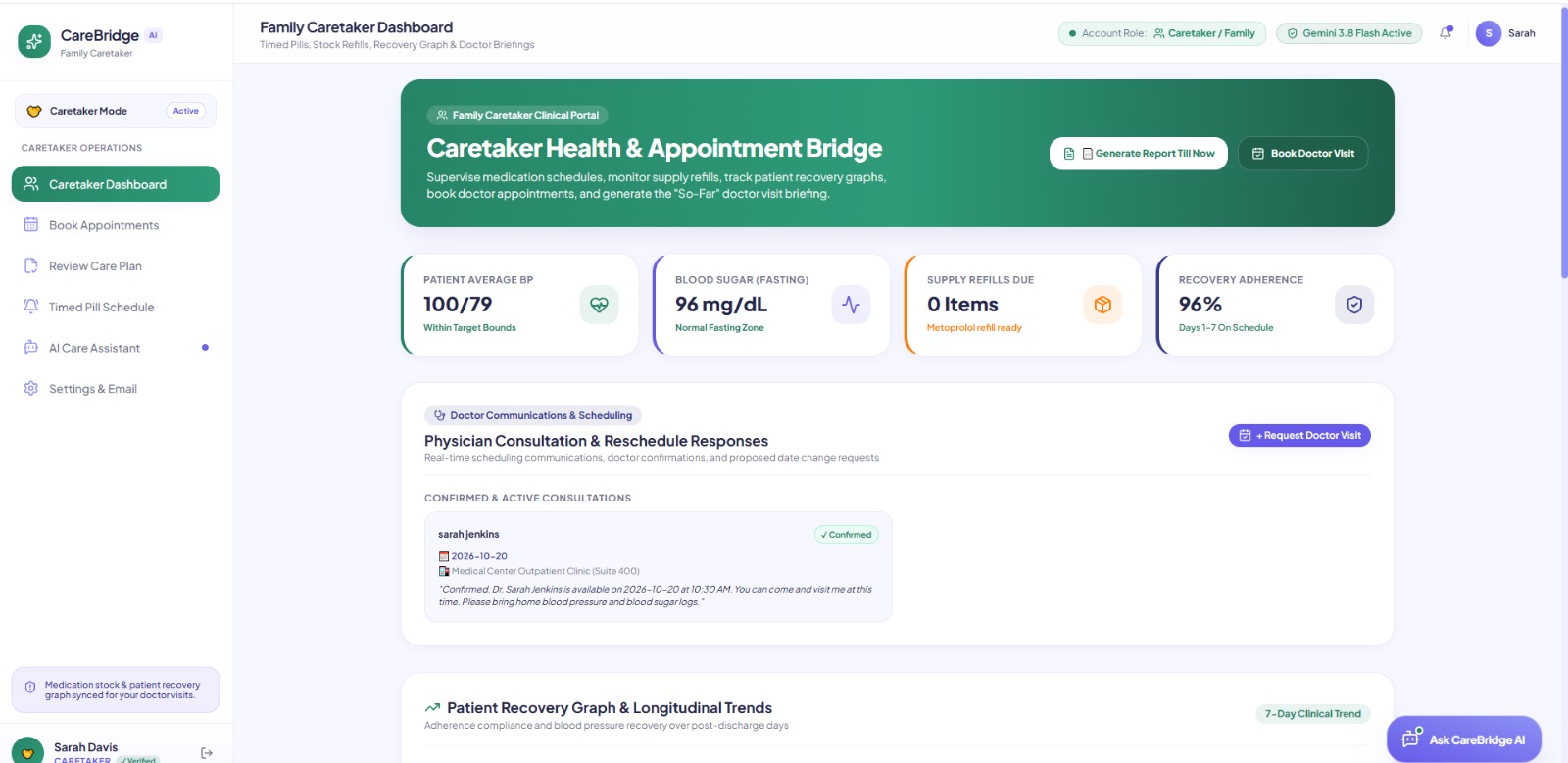
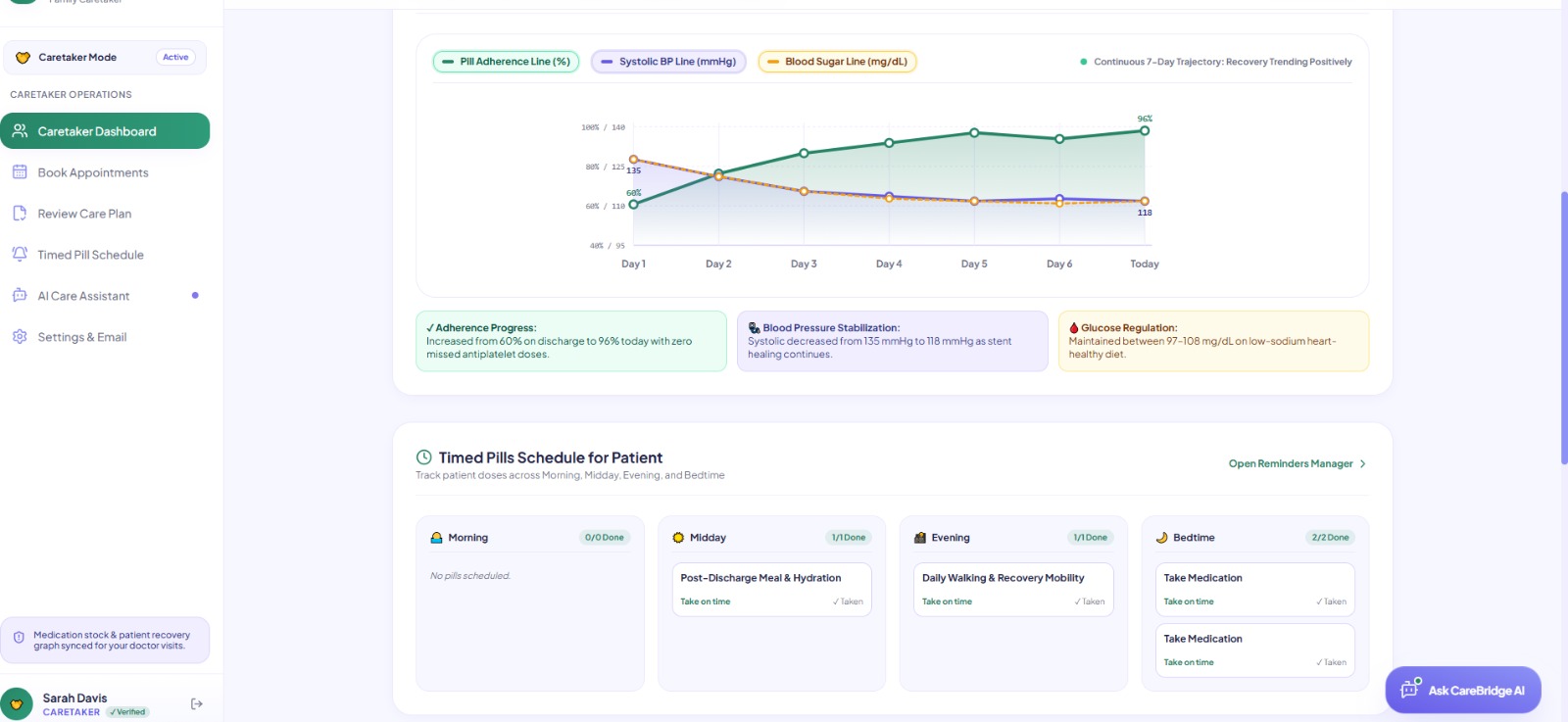
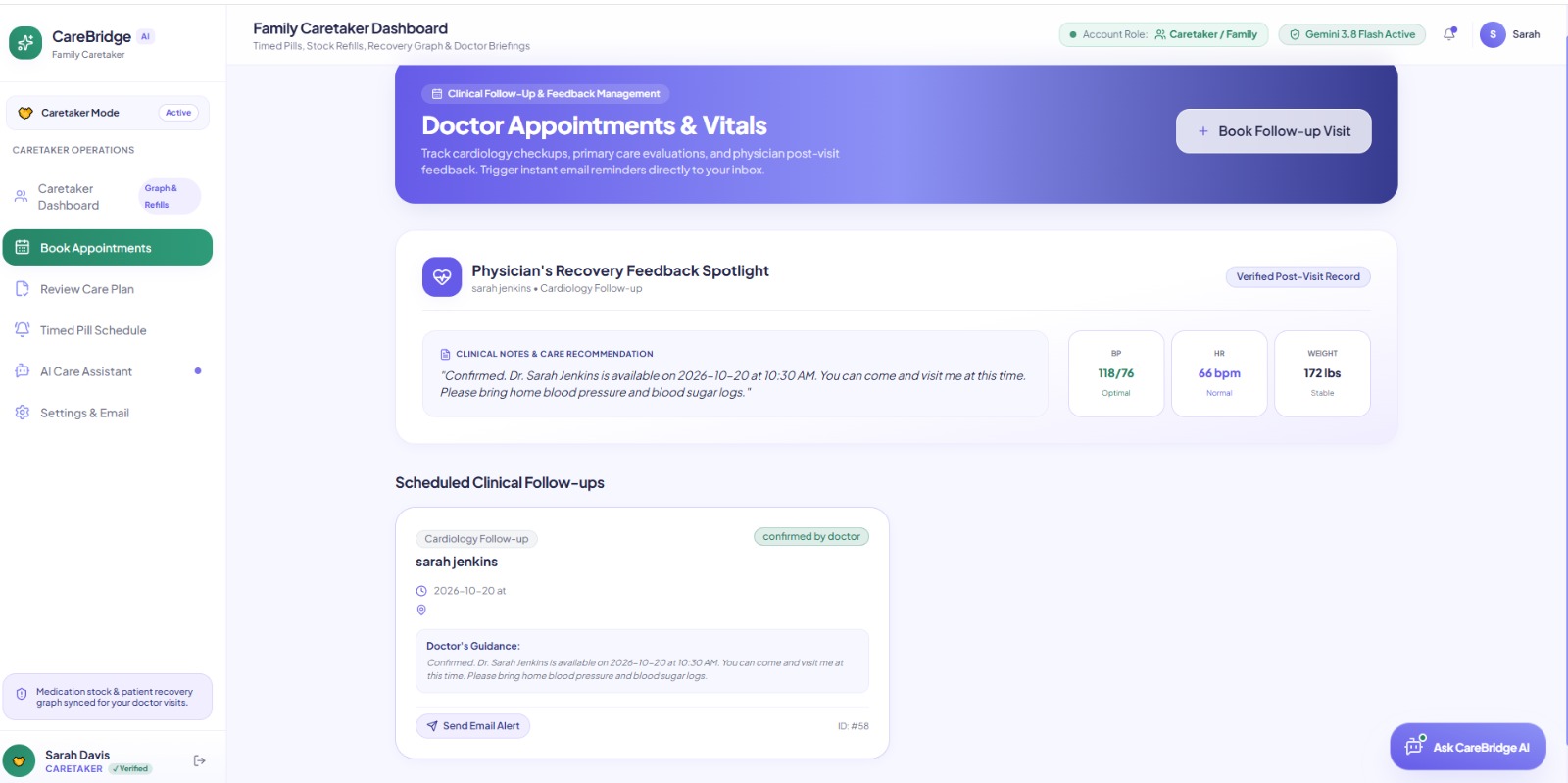
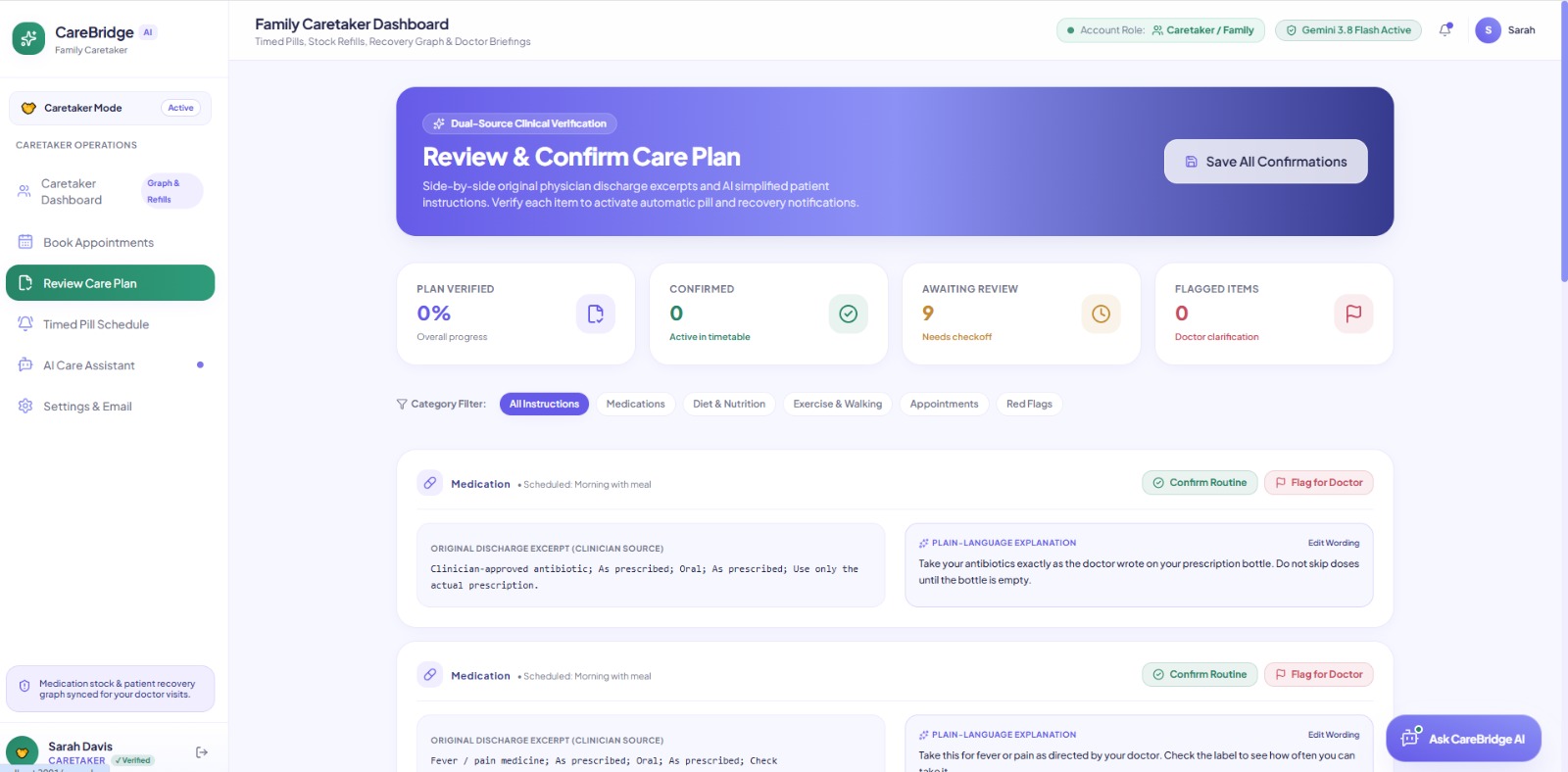
CareBridge AI brings important post-hospital recovery information together in one place. It helps users extract and understand information from discharge documents, ask questions related to their uploaded reports, and keep track of medication reminders and follow-up appointments. Instead of having to go through lengthy documents every time they need information, users can access relevant details in a simpler format. Our goal is to make the recovery process more organized and less overwhelming for patients and their families.
How we built it
We built CareBridge AI using React and TypeScript for the frontend and Node.js with Express.js for the backend. We use SQLite to store application data, along with PDF text extraction and Tesseract.js OCR to process medical documents, including scanned files. We integrated Google Gemini to power the AI assistant and worked on a retrieval-augmented generation (RAG) approach so that responses can be connected to relevant information from uploaded documents. We also brought together features such as medication reminders, appointment tracking, and email notifications to make the application more useful in everyday situations.
Challenges we ran into
One of the biggest challenges was figuring out how to turn medical documents into information that people can actually understand and use. Every document may look different, and scanned files can be difficult to process accurately. Integrating document extraction with the AI assistant also required us to think about how relevant and reliable the responses would be. Since this is a healthcare-related project, we had to consider the risks of incorrect information and the importance of not presenting AI-generated responses as a replacement for a doctor's advice. Working through these challenges helped us understand the effort needed to build AI applications responsibly.
Accomplishments that we're proud of
What makes us proud is that we were able to bring document processing, AI-powered question answering, and recovery-management features together in one application. Rather than building just another chatbot, we wanted to address a specific problem that patients and caregivers may face after hospital discharge. Each part of CareBridge AI contributes to that goal, and building the project gave us an opportunity to apply our software development and AI knowledge to a problem that matters in people's everyday lives.
What we learned
This project taught us that building a useful AI application involves much more than simply integrating a language model. The information extracted from a document needs to be accurate, the answers need to be relevant, and the application needs to handle situations where the AI may not have enough information. We also learned a lot about connecting frontend and backend components, working with document-processing tools, integrating AI services, and thinking about privacy and reliability. Most importantly, we learned that in healthcare, making information easier to understand must go hand in hand with using AI responsibly.
What's next for CareBridge AI
We want to make CareBridge AI more reliable and capable of handling complex medical documents, especially scanned reports with tables and difficult layouts. We plan to improve how the system retrieves information from documents, strengthen safeguards against misleading answers, and explore NVIDIA AI technologies for more efficient model inference and document understanding. We also want to improve privacy protections and make it easier for patients and caregivers to use the platform. Our long-term vision is to help bridge the gap between leaving the hospital and managing recovery at home, making that journey clearer and easier to navigate.
Built With
- axios
- bcryptjs
- express.js
- google-gemini-api
- javascript
- jwt-authentication
- node.js
- ocr
- pdf-parsing
- react
- rest-api
- retrieval-augmented-generation-(rag)
- sqlite
- tailwind-css
- tesseract.js
- typescript
- vite

Log in or sign up for Devpost to join the conversation.