-
-
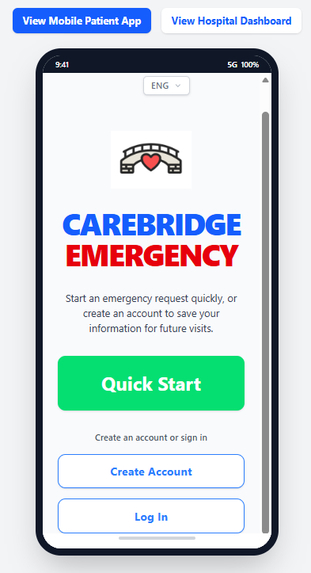
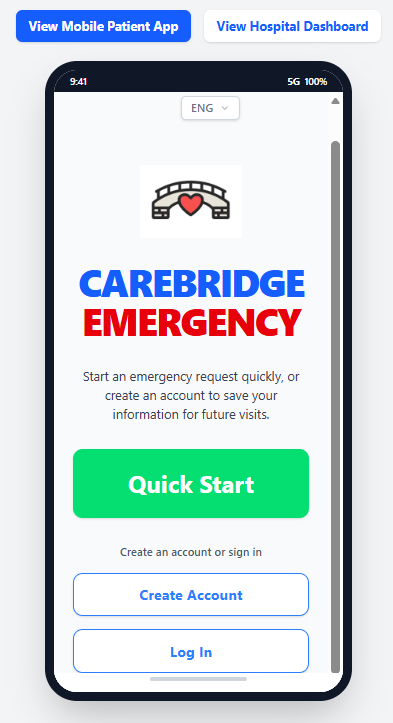
Homepage
-
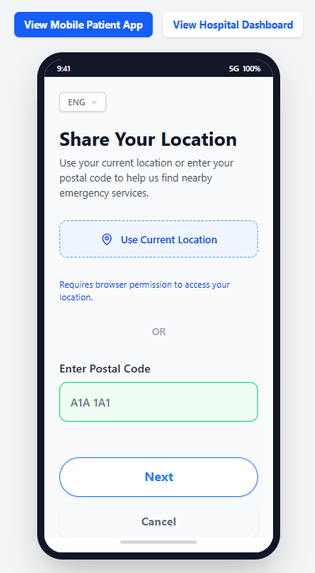
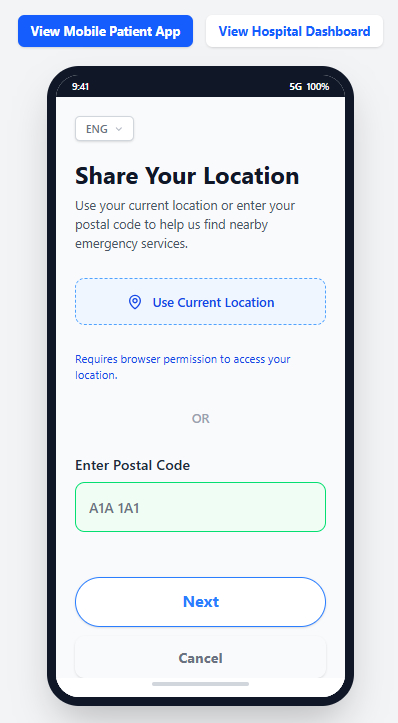
Location intake
-
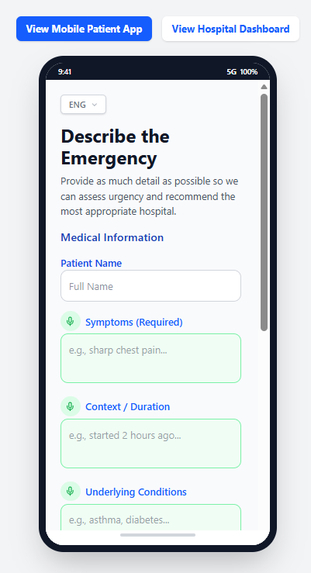
Patient intake
-
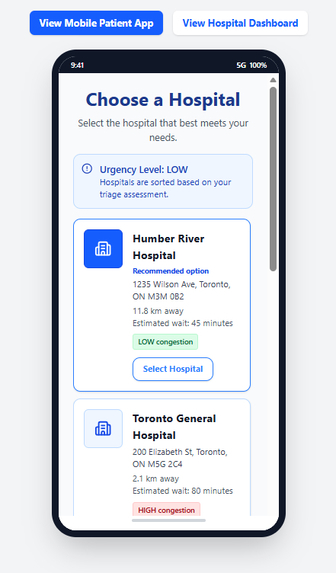
Choose Hospital
-
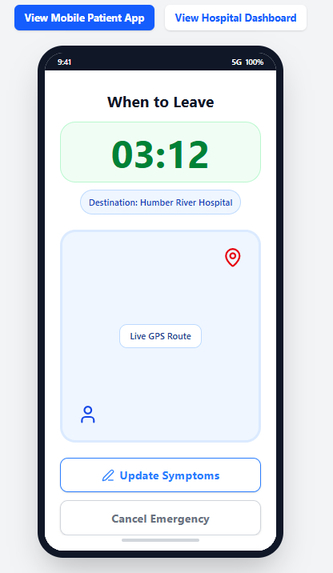
Update page
-
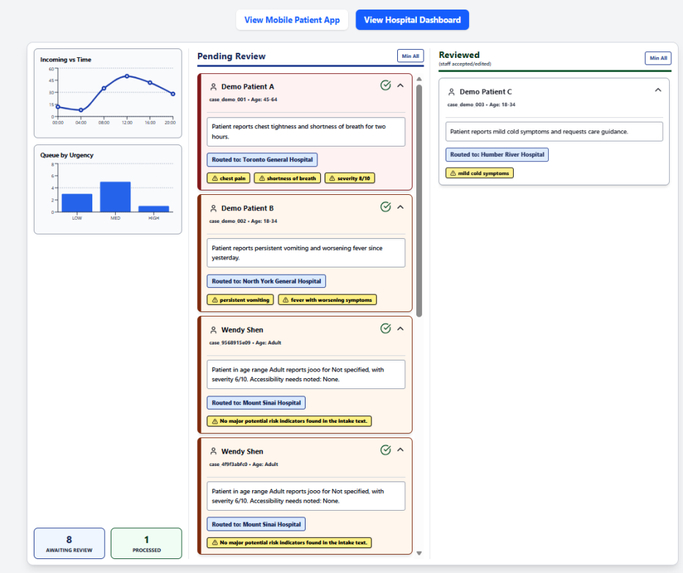
Hospital dashboard
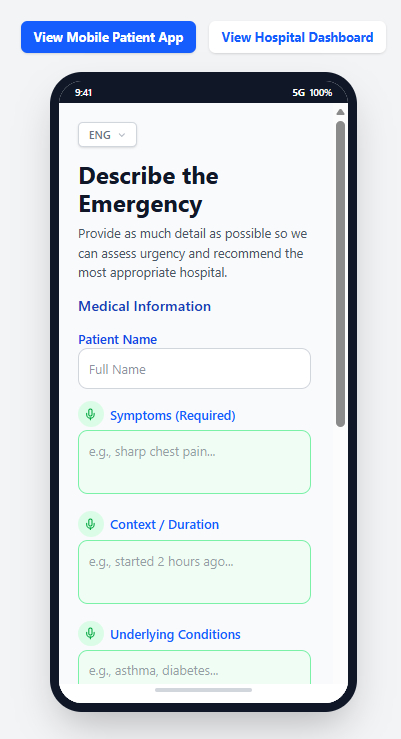
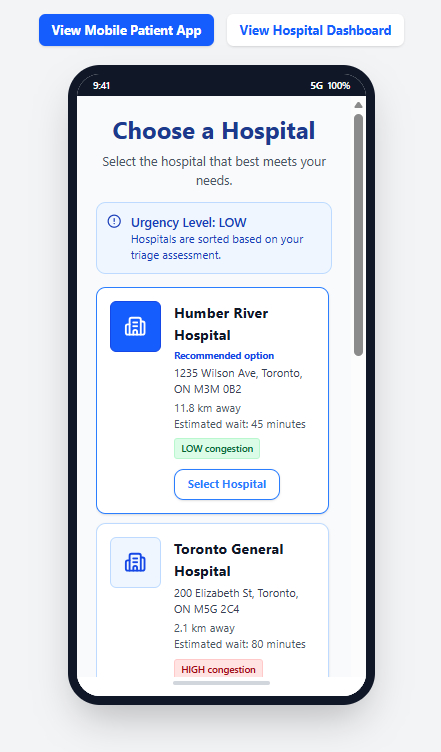
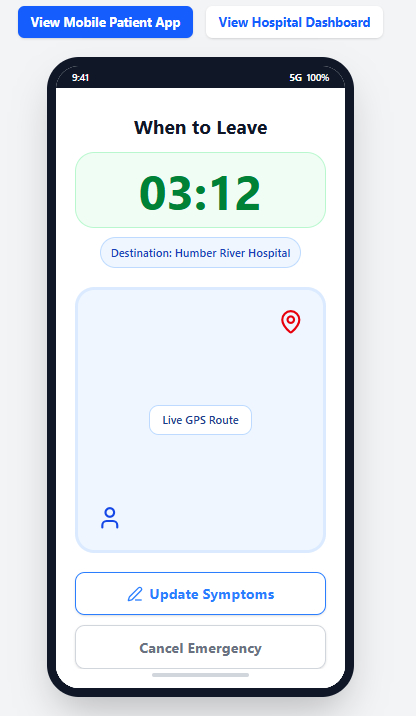
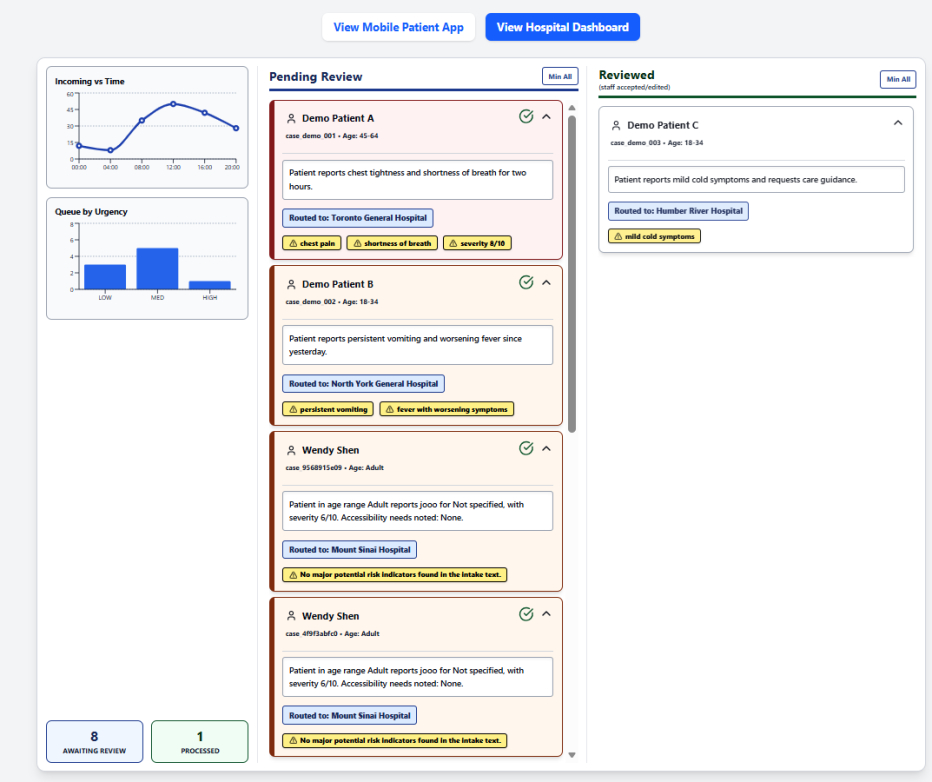
CareBridge was inspired by a feeling our team members knew personally: sitting in overcrowded emergency rooms for hours, surrounded by noise, discomfort, uncertainty, and constantly wondering when help would finally arrive. In stressful medical situations, patients are often left without clear updates, hospitals struggle with unpredictable incoming demand, and healthcare staff must make fast decisions under pressure. Those firsthand experiences pushed us to think about how technology could improve communication, visibility, and patient flow before a patient even arrives at the hospital.
Our goal was not to create an AI doctor or diagnostic system. Instead, we focused on building an AI-assisted intake and hospital routing platform that helps structure patient information, estimate urgency, and improve coordination between patients and hospitals while keeping healthcare professionals fully in control of final decisions.
CareBridge allows patients to submit symptoms, severity, accessibility needs, and caregiver information through a mobile-first interface. The backend then uses IBM watsonx.ai Granite to generate a structured urgency summary and urgency flag. From there, the system applies additional safety layers, including sanitization logic and rule-based overrides for critical symptoms such as chest pain or breathing difficulty. The platform then recommends hospitals using urgency, congestion, estimated wait times, and routing logic. Hospital staff can review, accept, edit, or override AI-generated urgency flags through a dashboard interface.
We built the backend using FastAPI and integrated IBM watsonx.ai through direct REST API calls instead of relying on the SDK. We used Supabase for persistence and hospital/queue data management, and designed the frontend as a mobile-first patient experience alongside a separate hospital dashboard. We also implemented queue tracking, caregiver updates, travel estimates, and review workflows to make the system feel operationally realistic rather than just functioning as an AI chatbot.
One of the biggest challenges we faced was making AI output safe and reliable. Early testing exposed issues such as hallucinated medical assumptions, inconsistent urgency explanations, and JSON parsing instability. We addressed this by heavily constraining prompts, forcing structured JSON-only responses, sanitizing unsupported inferences, and aligning explanations after rule-based overrides. We also faced deployment and database permission challenges while integrating Supabase and IBM Cloud services, which required debugging environment variables, service roles, and backend routing behavior.
Through this project, we learned a great deal about building reliable AI-assisted systems in high-stakes environments. Beyond the technical implementation, we learned the importance of safety layers, human oversight, structured workflows, and operational realism when designing healthcare-related technology.
CareBridge is still an MVP, but we see strong future potential in areas such as live hospital integrations, GPS-based routing, EMS coordination, patient accounts, symptom image processing, and native mobile support. Most importantly, this project reinforced our belief that AI should support healthcare professionals, not replace them.
Built With
- fastapi
- github
- ibm-cloud
- ibm-granite
- ibm-watson
- javascript
- postgresql
- pydantic
- python
- react
- supabase
- tailwind
- typescript
- uvicorn
- vite


Log in or sign up for Devpost to join the conversation.