-
-
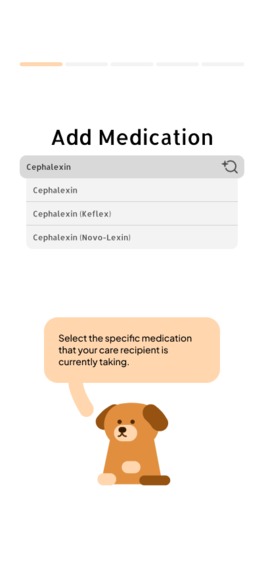
Add Medication with AI-powered Smart Search
-
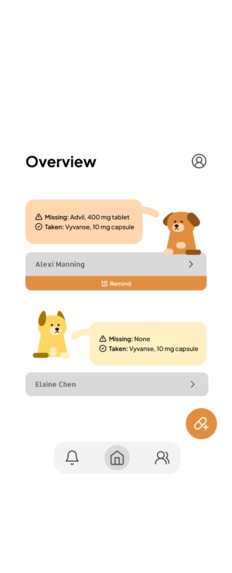
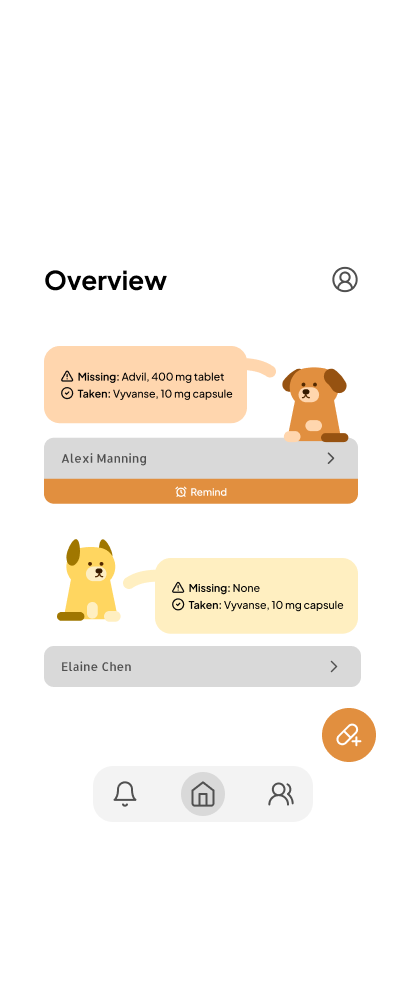
Home Page with Care Recipient Overview
-
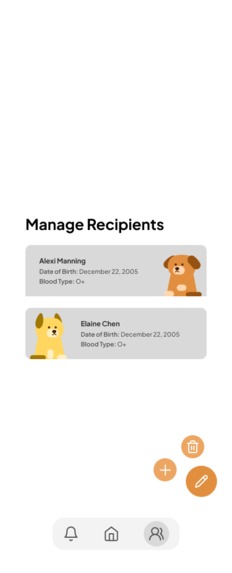
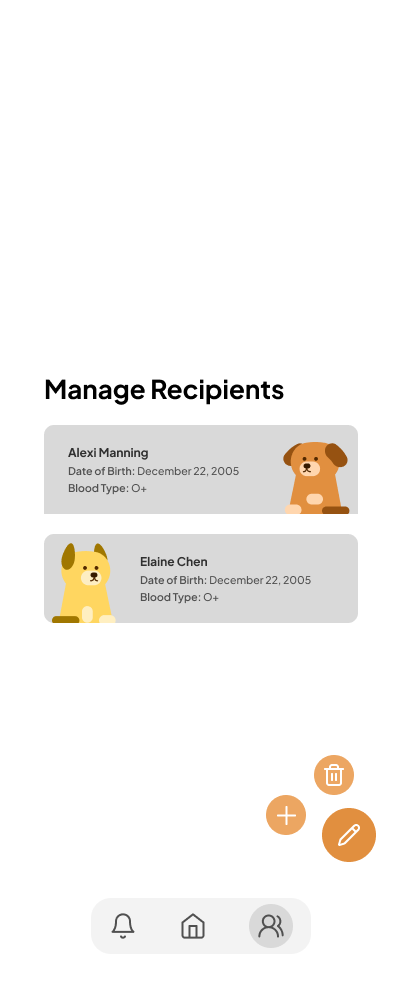
Manage Care Recipients with Overview for First Responders
Inspiration
Many seniors take a lot of medications every day. In Canada, 1 in 4 seniors were prescribed 10 or more different types of medications in 2021, and that rises to 36.4% for those 85 and older. Taking multiple drugs is linked to a higher risk of emergency visits and hospitalization. With that many pills, mistakes happen. When poison centres looked at medication errors in older adults, the most common were taking a medication twice, taking the wrong medication, and taking the wrong dose. These aren't small slip-ups: medication nonadherence accounts for more than 10% of older adult hospital admissions and nearly 25% of nursing home admissions, and in older adults the consequences can be more serious and harder to notice.
Behind every senior is often a family member asking the same question every day: "Did Mom take her pills?" We wanted to build something that helps seniors take the right pill at the right time, without screens or complicated apps, and gives the people who care about them peace of mind.
For the seniors, existing medication reminder apps simply do not work. Seniors often struggle with digital literacy, and apps are often overwhelming. That's why we built WeCare, on the senior's there is almost no interface, keeping it as easy to use as possible. We also 3D-printed a fun form factor to make the experience more fun!
What it does
WeCare makes sure seniors take the right pill at the right time and lets their family know they did.
It reminds. At each scheduled time, WeCare speaks a friendly reminder with the senior's name and the caregiver's instructions, like "Good morning, Em! Time for your Lisinopril. Take it with a glass of water."
It confirms. After taking their medication, the senior simply taps the touch sensor. WeCare plays a cheerful jingle and logs the dose as taken. If there's no tap, it reminds again, and if the dose still isn't confirmed, it's marked as missed.
It double-checks. Not sure which bottle is which? Show the bottle to the camera. WeCare reads the label and tells you whether it's due now, scheduled for later, or already taken today, catching the most common mistakes: the wrong pill and a double dose. If the medication isn't on the senior's schedule at all, or the label can't be read clearly, WeCare doesn't guess. It says "I'm not sure about that one" so the senior knows not to take it until they check with their caregiver.
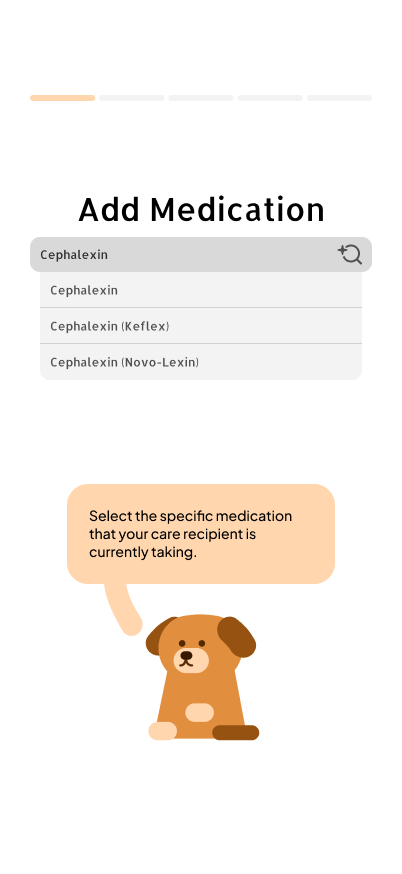
It keeps the family in the loop. Every reminder, confirmation, missed dose, and scan is logged to the cloud. The WeCare caregiver app lets family members set up medications and schedules and see what was taken, what's coming up, and what was missed.
How we built it together!
Hardware: a Raspberry Pi runs the device software in Python. A capacitive touch sensor on the Pi's GPIO pins handles confirmation. WeCare's voice is generated with ElevenLabs for a warm, natural-sounding voice that's easy for seniors to understand, and it plays through a JBL Bluetooth speaker. A scheduler (APScheduler) loads the senior's medications and fires reminders, repeats them, and marks doses as missed. We designed and 3D-printed a cute low-poly puppy sitting on a table that houses the electronics.
AI bottle scanning: a Logitech USB webcam captures the bottle with OpenCV, and Google Gemini's vision model reads the label and matches it against the senior's medication list, returning structured results with a confidence level. Safety rules make sure WeCare never calls a medication "safe," only whether it matches the caregiver's schedule. Automatic retries and a fallback model keep it working when the AI service is busy.
Caregiver app: designed in Figma and built with Expo (React Native) for a mobile-first caregiver experience.
Challenges we ran into
Designing hardware around real parts. Fitting a Raspberry Pi, webcam, and wiring into something friendly-looking took several redesigns while working around the time our one 3D printer had.
Accomplishments that we're proud of
We're proud of the full device loop working end to end: a spoken reminder, a tap to confirm, and the dose updating live in the cloud. Our AI bottle scan reads real labels and catches "wrong time" and "already taken" mistakes, and it says "I'm not sure" rather than guessing. We're also proud of how we came together as a team: merging hardware, AI, and app work built in parallel onto one shared design under real time pressure, and turning it into something that feels friendly enough to sit in someone's home.
What we learned
We learned that designing for seniors means keeping things simple. Every feature had to work with a voice and a single tap, with no screens, menus, or passwords to remember. We also learned how much real-world details matter: a medication mistake isn't just forgetting; it's taking a pill twice, at the wrong time, or grabbing the wrong bottle, so WeCare had to handle all of those, not just send reminders.
As a team, we learned the importance of agreeing on a shared plan early. We built the hardware, AI, and app in parallel, and bringing them together taught us to communicate constantly and settle on one design before building too far. We also learned that AI is powerful but needs guardrails: WeCare should never guess when someone's health is involved, so knowing when to say "I'm not sure" was just as important as getting the answer right.
Finally, we learned that hardware makes ideas feel real. Hearing a friendly reminder and confirming it with a tap felt completely different from clicking through an app, and it showed us how technology can feel caring instead of complicated.
What's next for WeCare
Next, we want to fully connect the caregiver app to live data from the device so families see every dose update in real time and add phone alerts when a dose is missed. We'd love to add refill reminders and weekly summaries for caregivers and pharmacists.
We also want to make WeCare work for more people by supporting multiple languages, improving recognition of real pharmacy labels, and expanding beyond seniors to anyone who has trouble keeping track of medications, such as people with memory, attention, or vision challenges. Most importantly, we want to test WeCare with real seniors and caregivers and keep making it simpler and more helpful based on what they tell us.
Built With
- elevenlabs
- expo.io
- figma
- firebase
- gemini-api
- next.js
- python
- raspberry-pi
- react-native
- typescript



Log in or sign up for Devpost to join the conversation.