-
-
Logo carebnb
-
Provider Dashboard
-
Audio/Text Input
-
Patient Dashboard
-
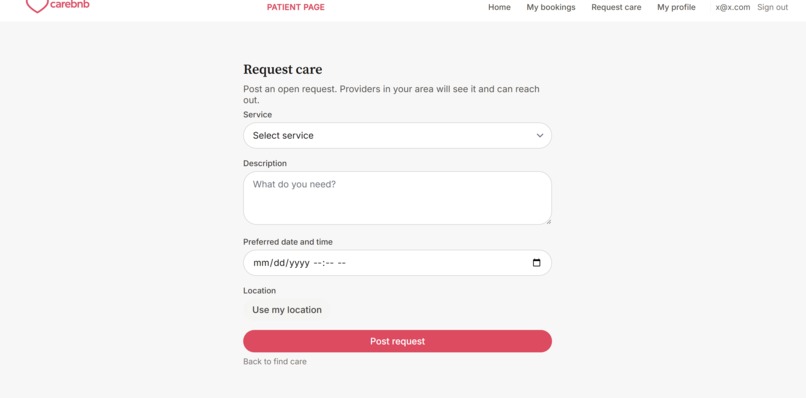
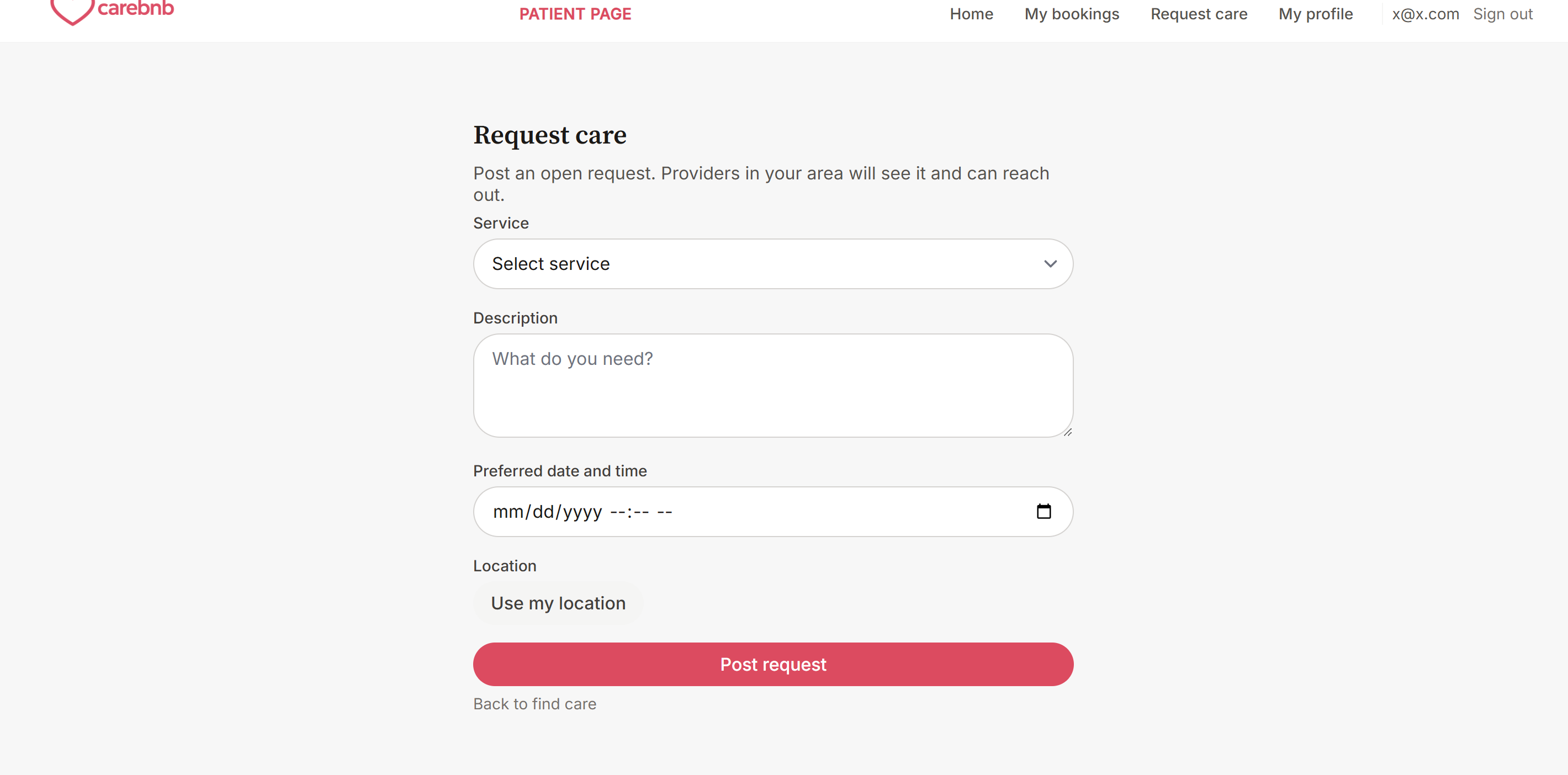
Patient Open Request for Care
-
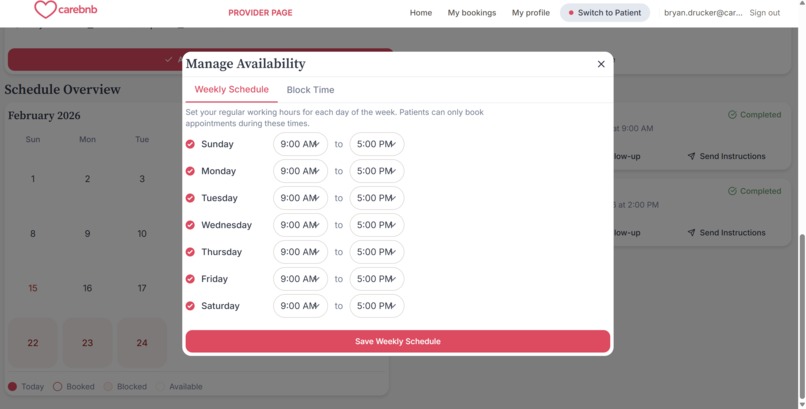
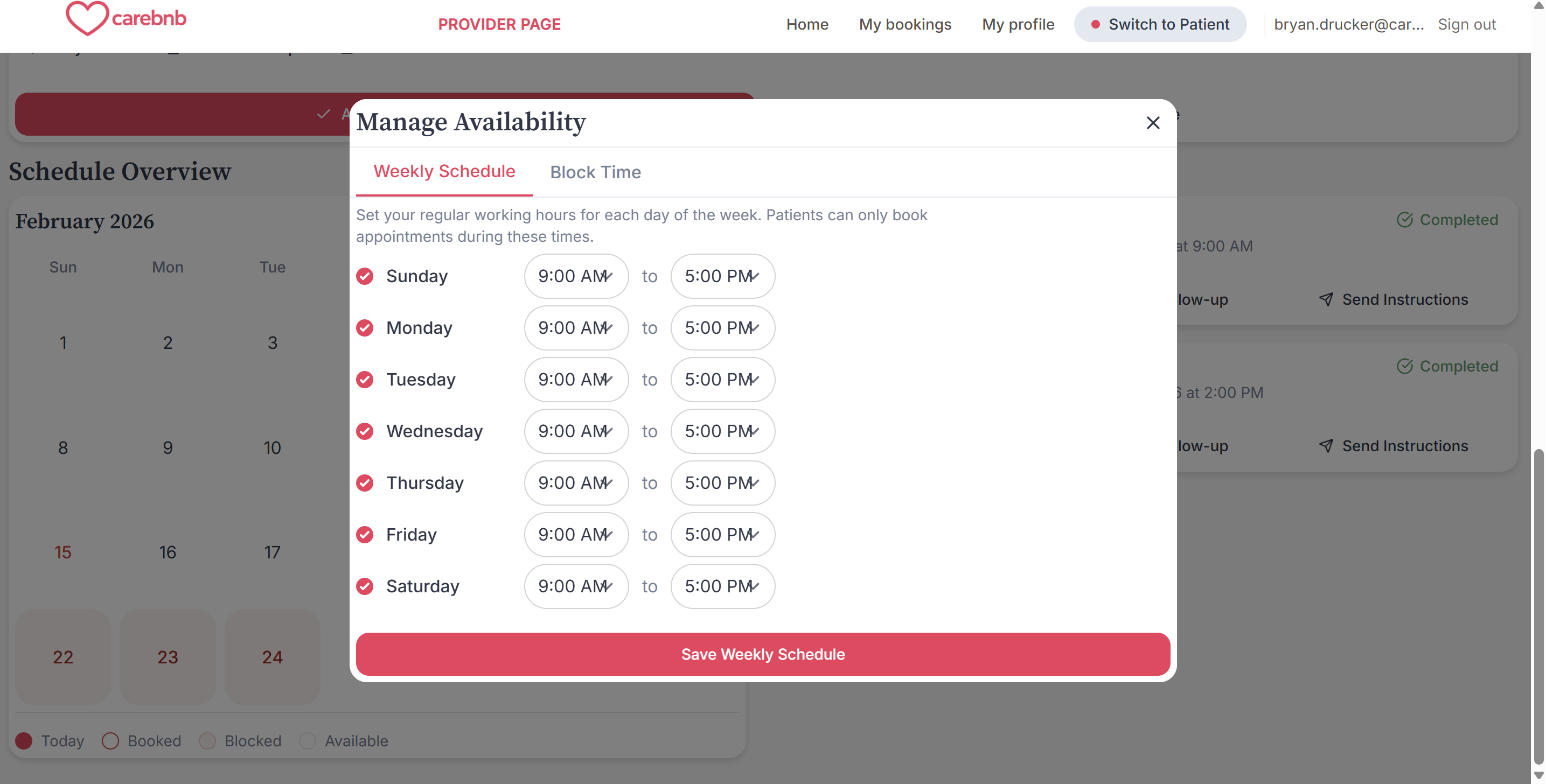
Provider Time Availability
-
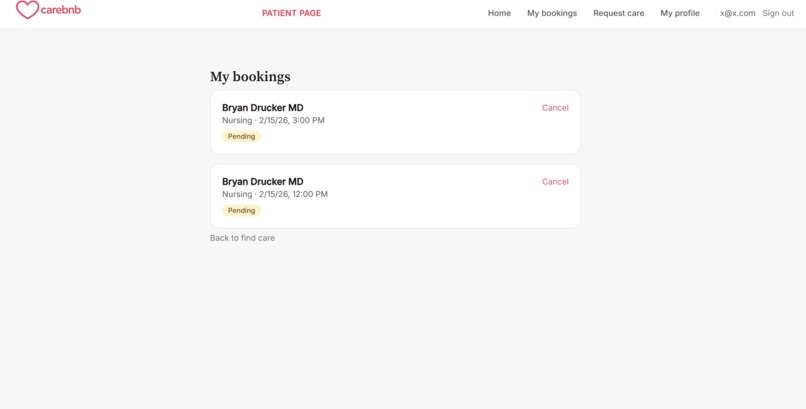
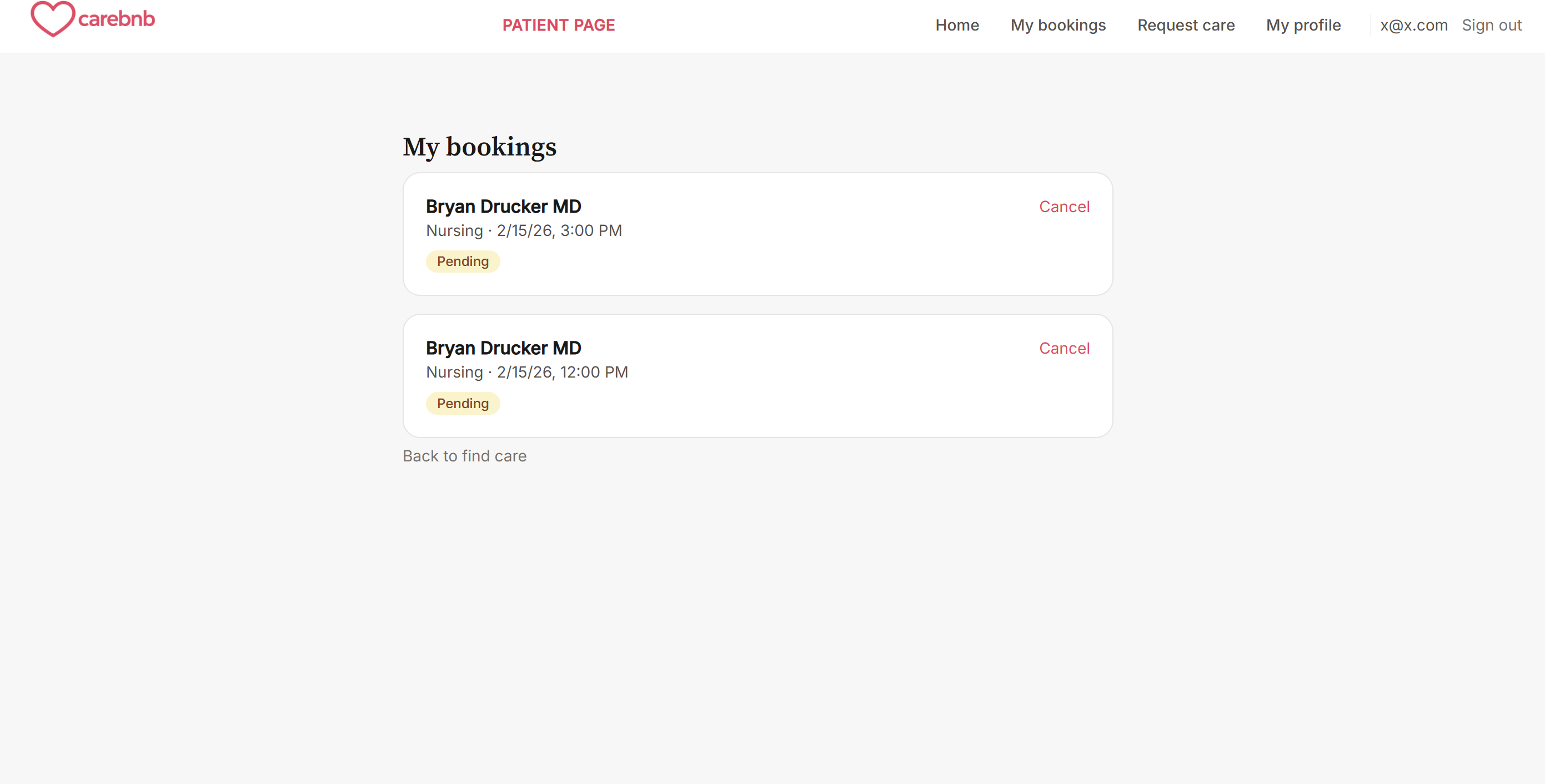
Patient Bookings
-
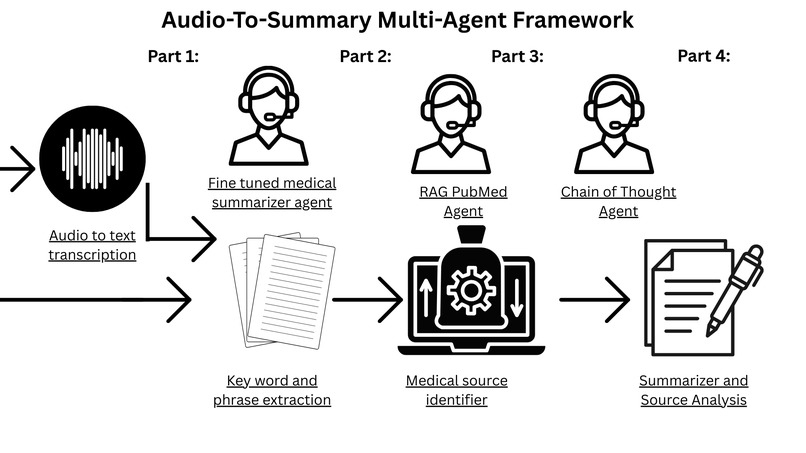
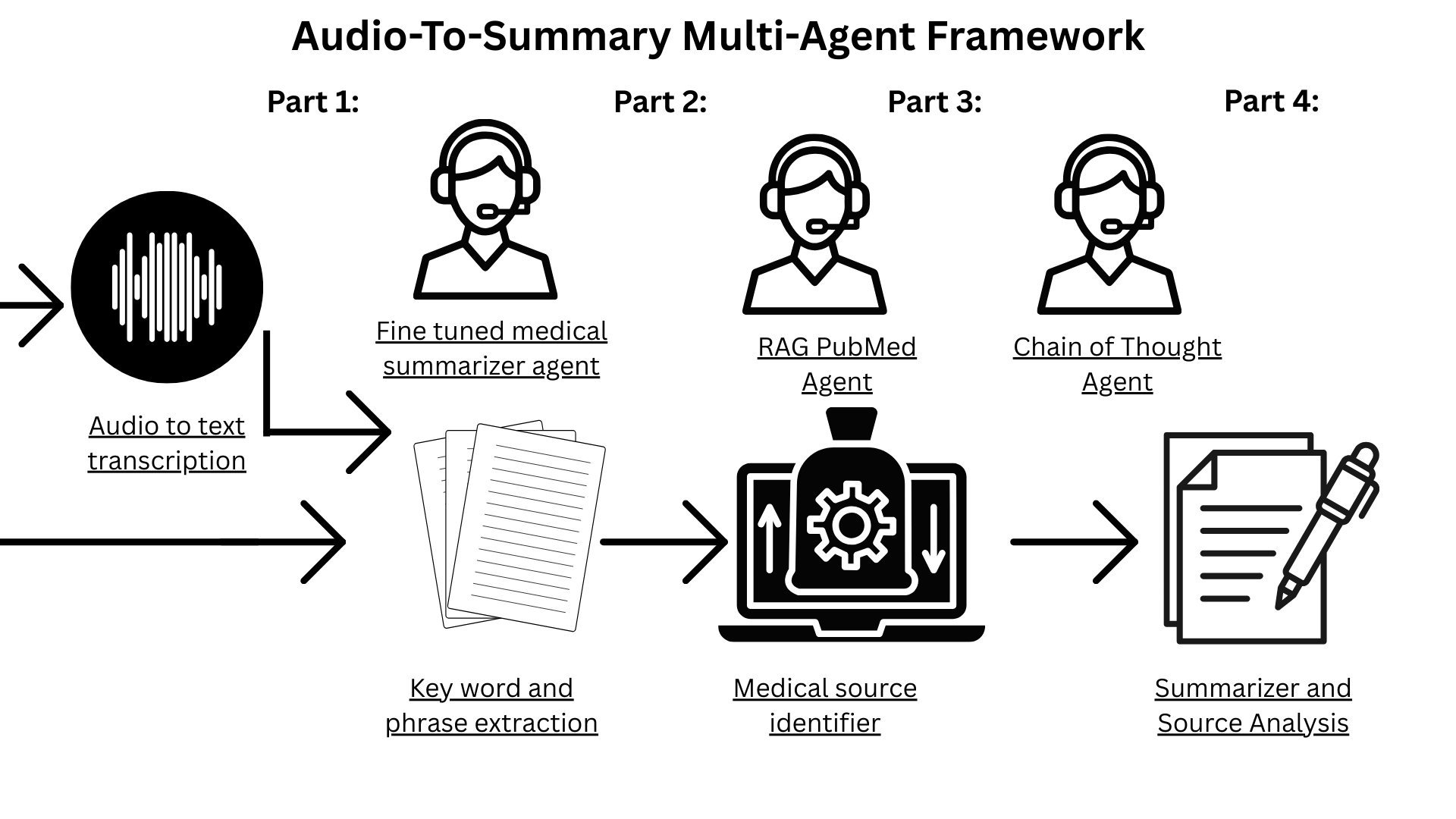
Audio-to-Summary Model Framework
Inspiration
Healthcare is one of the biggest financial and logistical burdens in the United States. One of our teammates had a mother battling cancer and a complex blood clotting condition. The total cost of her hospital-based care, including chemotherapy, accumulated to $1.7 million, causing the family to lose their home at a young age. This is an unfortunate reality for many families in the US. Through hospital-at-home care, she was able to receive the same treatments at home safely and effectively, reducing costs to $200,000 even without insurance by eliminating unnecessary hospital stays and administrative fees, while reserving hospital resources for the most invasive and emergency cases.
This experience showed us that hospital-level care does not always require a hospital. We were inspired by the growing "hospital-at-home" movement and real-world examples showing that treatments such as IV therapy, chronic disease management, and chemotherapy can be safely delivered at home at a fraction of the cost. tIt inspired us to create CareBnb, a platform that makes home-based care safe, affordable, and accessible, with the potential to change the future of healthcare. Healthcare in the United States is expensive, fragmented, and often inaccessible. Many patients delay or avoid care due to cost, transportation barriers, or fear of hospitals. For families dealing with chronic illness or cancer, repeated hospital visits can be financially, physically, and emotionally exhausting.
The problems CareBnb solves
Astronomical Healthcare Costs: Facility fees, fragmented billing, and administrative overhead inflate costs. CareBnb reduces costs by eliminating unnecessary hospital stays, middleman fees, and administrative complexity, saving patients hundreds of thousands of dollars. Rural and Underserved Inequity: Patients far from hospitals struggle to access care. CareBnb delivers home visits to bridge geographic inequities.
Hospital Overload and Burnout: By shifting non-acute cases to the home, we free up hospital resources for ICU, emergency surgery, and neonatology while reducing provider fatigue. Patient Comfort and Independence: We replace stressful hospital environments with the safety of home, preventing the functional and cognitive decline often seen in hospitalized elderly patients.
What it does
CareBnb makes hospital-level care available in the comfort of your home. Patients can book nurses, caregivers, or specialists for home visits, while clinicians use the platform to manage and deliver care efficiently. Our AI-powered voice copilot records intake calls, extracts symptoms, medications, allergies, and vitals, and generates structured clinical notes, care timelines, and safety alerts, reducing administrative burden. CareBnb supports preventive care, chronic disease management, chemotherapy, post-operative care, and more… all delivered at home. By combining patient-centered design, AI, and home-based care, CareBnb makes healthcare more affordable, accessible, and dignified. We envision a future where the hospital isn’t a building… It's your home.
How we built it
CareBnb is a full-stack, location-aware healthcare platform built for speed, scalability, and real-world clinical workflows. The frontend is a React single-page application served through Next.js, providing booking with dynamic routing and real-time data. The backend uses Next.js API routes for authentication, provider matching, booking creation, and care request management. We use Supabase (PostgreSQL) for secure relational data and built-in authentication via Supabase Auth. Geographic matching is powered by PostGIS, enabling radius-based and distance-ranked queries. Custom SQL functions such as match_providers and match_requests calculate proximity and sort results by distance, provider rating, and completed visits.
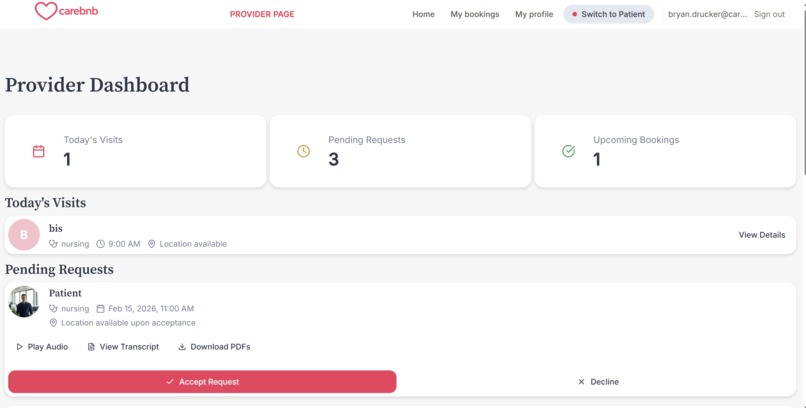
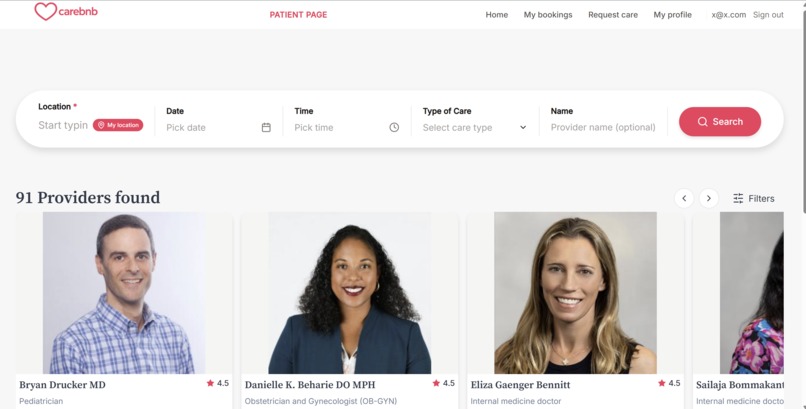
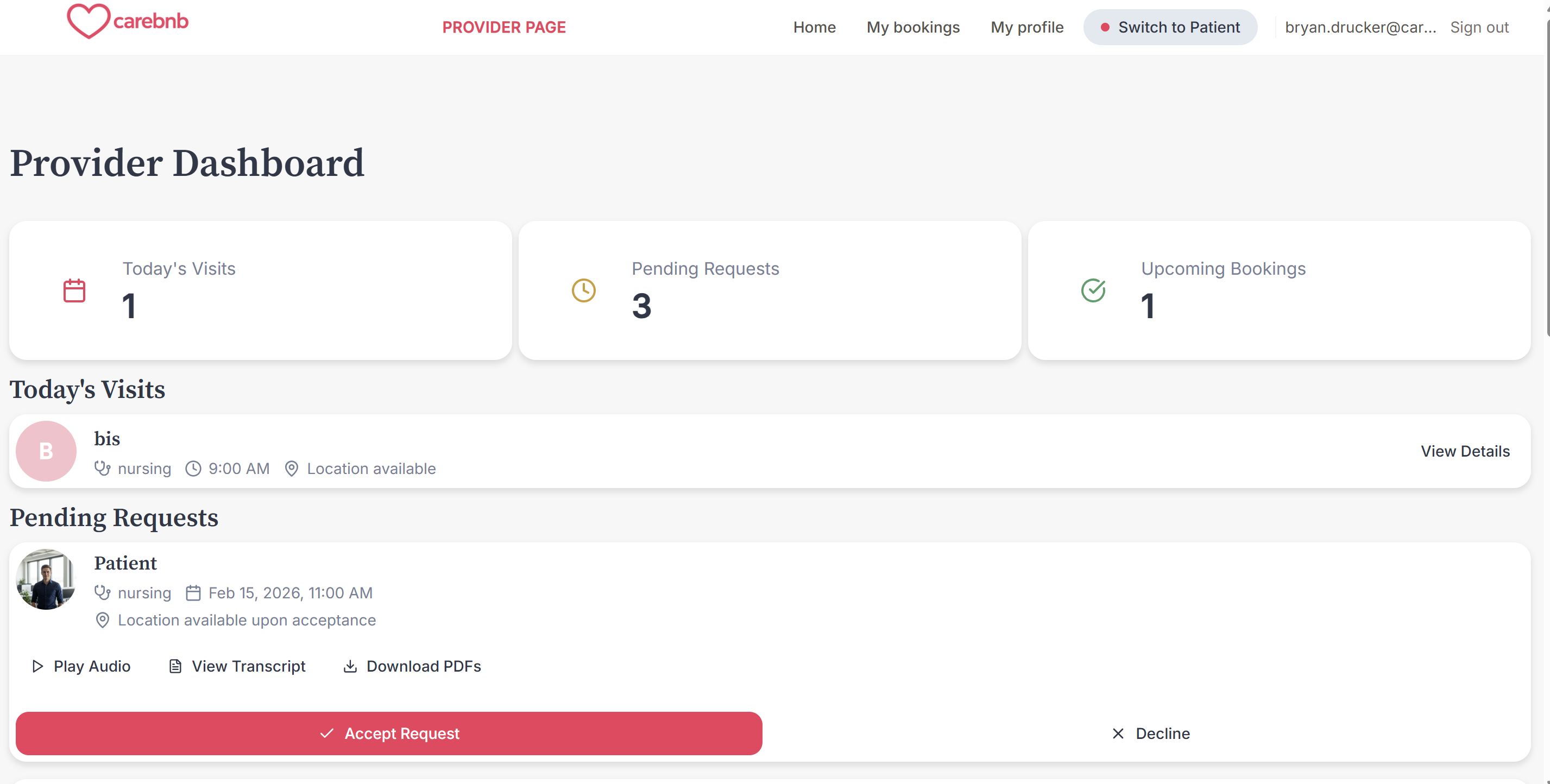
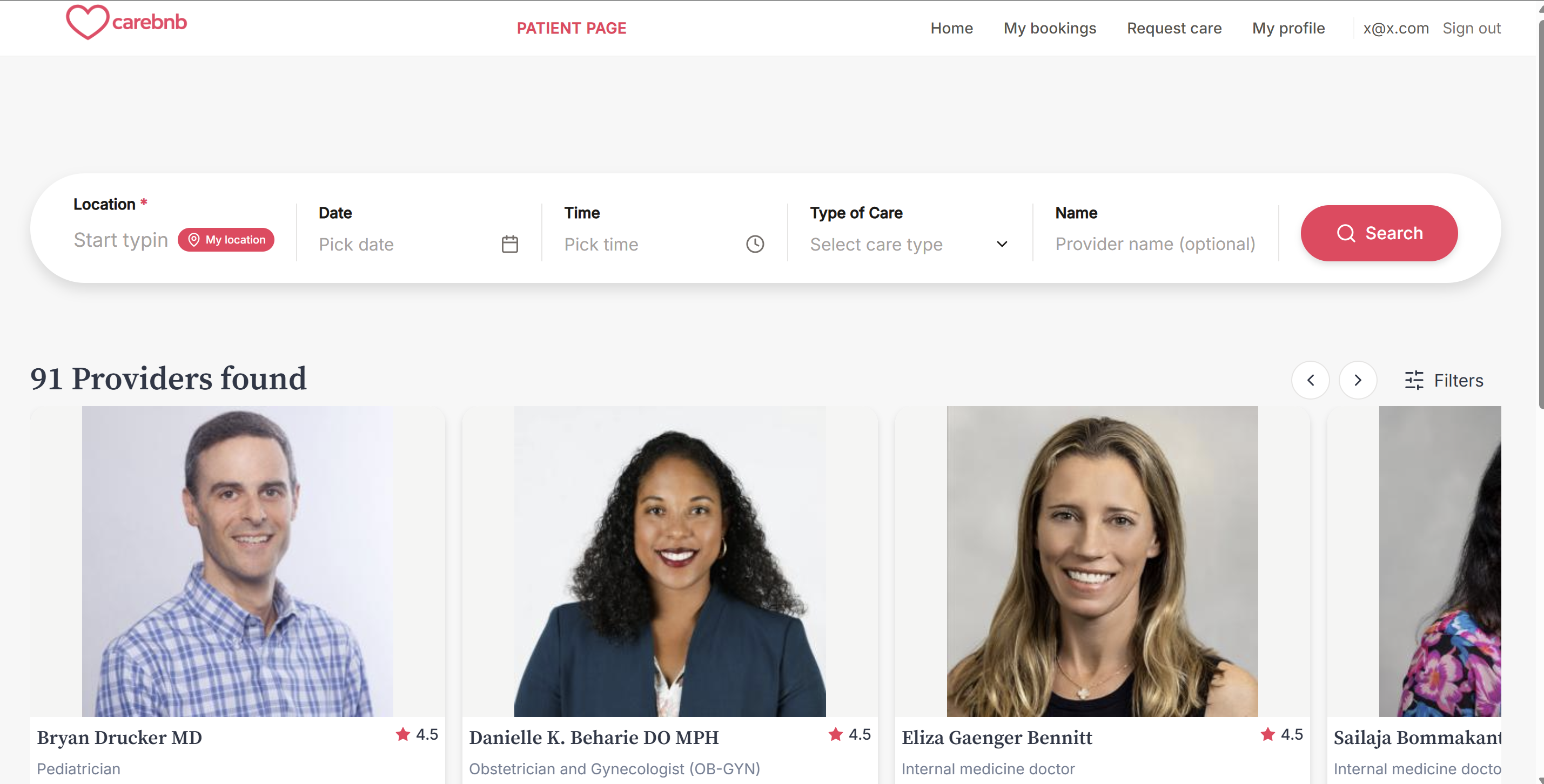
Patients can search for care by service, time, and location, then complete a structured booking flow that confirms service details, collects intake data, and generates a booking tied to both patient and provider accounts. Providers have a dashboard to register their role, list services, set locations, confirm bookings, mark visits complete, and browse nearby open requests.
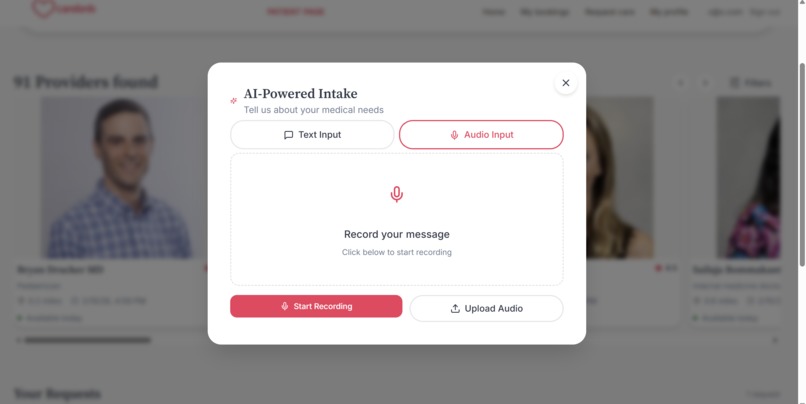
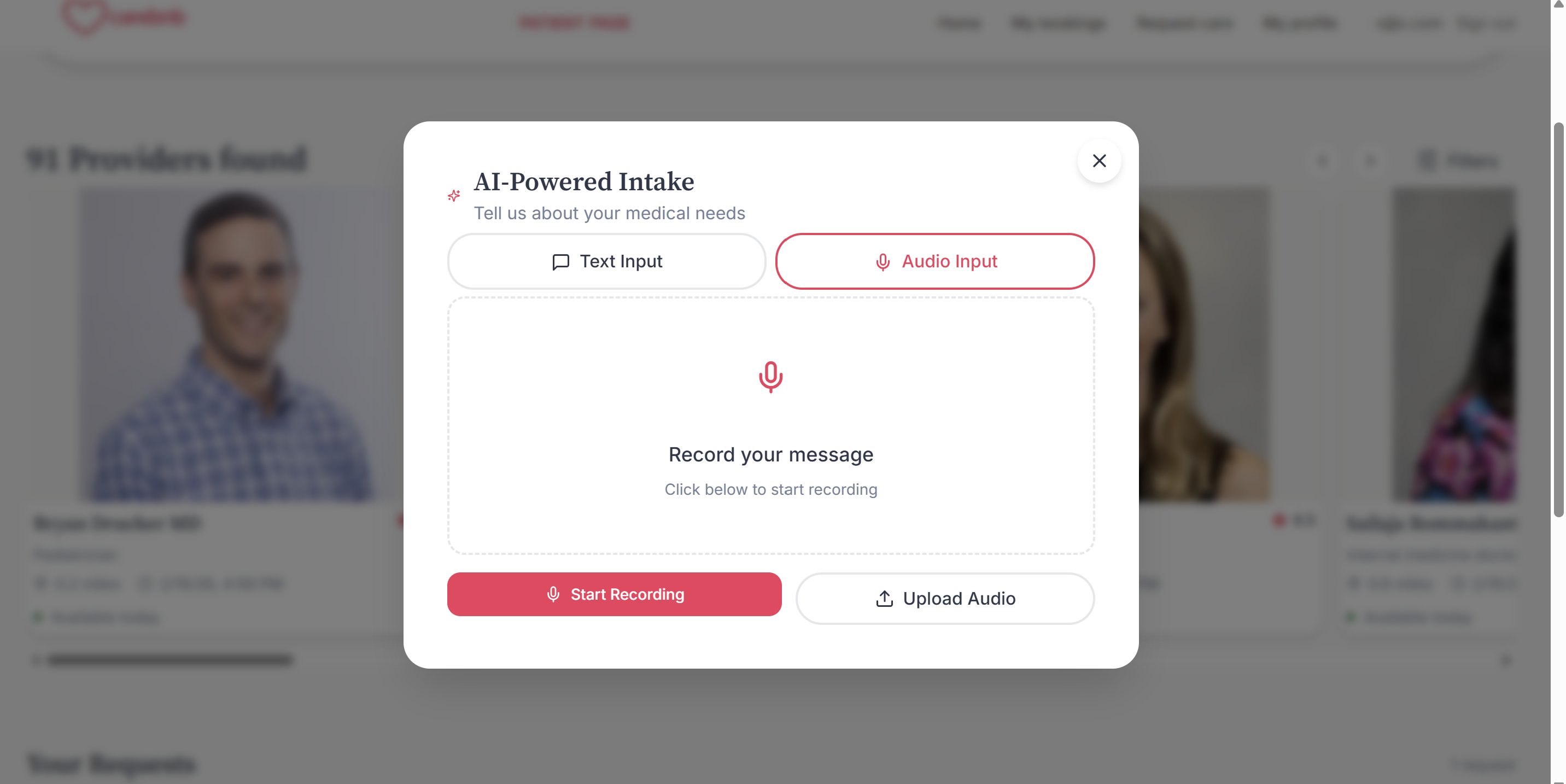
Our AI-powered intake pipeline supports clinical documentation. Voice or audio input is converted to text, and key medical entities, symptoms, medications, allergies, and duration, are extracted into structured fields. The system generates organized notes and flags potential safety concerns to help providers prepare.
The database core includes tables for providers, patients, bookings, and care requests, connected via foreign keys and managed with Supabase migrations. For testing, we seeded the system with multiple providers and open requests in San Francisco, enabling full end-to-end workflows: discovery, matching, booking, intake processing, provider confirmation, and completion.
Challenges we ran into
The most complex challenge was integrating all parts of the system into one seamless workflow. We had a React frontend, Next.js API backend, a Supabase database, and multiple AI intake components. Ensuring that patient searches, bookings, intake data, and provider actions all communicated correctly across these layers required significant debugging and coordination.
Another major challenge was setting up the AI intake pipeline itself. We combined speech-to-text, symptom extraction, and structured note generation into a single process. Getting these models to work reliably together, and then connecting their outputs to the booking and provider systems, took careful testing within the hackathon timeframe.
Scope control was also important. It was tempting to build a full healthcare platform with insurance billing, credentialing, and complex scheduling. Instead, we focused on a clear MVP that demonstrated the core value: matching patients with at-home providers and automating intake. Finally, healthcare is inherently complex, with licensing, regulation, insurance, and highly variable pricing depending on location and provider. Since this was an MVP, we designed features that felt medically credible and easy to understand, while leaving deeper regulatory and billing integrations for future development.
Accomplishments that we're proud of
Our greatest accomplishment was the team itself. In just one weekend, two Cornell undergraduates, a Cornell Tech student in New York City, and a Stanford student studying computer science, biomedical engineering, and medicine came together to build a technically ambitious solution. Despite our different backgrounds and locations, we were united by a shared entrepreneurial mindset and a focus on one of healthcare’s most pressing challenges: cost.
We designed a system aimed at reducing healthcare expenses while improving the patient experience, demonstrating that care can be delivered more efficiently without sacrificing human-centered design. We are especially proud of how far we pushed ourselves outside our comfort zones. We deliberately chose a complex problem at the intersection of healthcare, AI, and full-stack development. Over the course of the weekend, we stayed late troubleshooting integration issues, debugging AI pipelines, and learning firsthand how challenging it is to properly implement and orchestrate AI systems. At the same time, we experienced how powerful AI can be when used thoughtfully to accelerate development. Beyond the product itself, we’re proud of the growth that came from the process. We learned how to ship quickly, divide responsibilities strategically, communicate clearly, and build something meaningful under pressure. We also valued connecting with other builders working on similar technologies and contributing to a broader innovation community.
More than just a prototype, we built momentum, technical confidence, and a shared vision for what healthcare technology can become.
Last but not least, we shared plenty of jokes along the way. We set out to reduce hospital visits, and by the end of the weekend, we all agreed we might need one ourselves: four young, caffeine-powered builders pushing the limits.
What we learned
Many hospital visits are preventable or could be safely managed at home. Despite this, only about 3% of healthcare spending goes toward preventive care. We realized that hospitals are essential for invasive procedures, but for many acute conditions, at-home care can be a better, more patient-centered option. We also learned that the biggest cost drivers in healthcare are infrastructure and complications, not just treatments themselves. AI can play a transformative role by reducing administrative burdens and improving patient safety, but it must be implemented thoughtfully.
Finally and importantly, connecting AI tools, coordinating care, and building a system that is both usable and reliable requires careful planning, collaboration, and focus on the core problems.
What's next for CareBnb
We are launching a pilot program in a focused region, starting with oncology and chemotherapy. This will let us work closely with clinicians, refine the platform, and ensure care is safe, personal, and effective.
We are enhancing our technology with AI chatbots, helpful agents, and a friendly avatar to guide patients, while expanding our network of clinicians and adding telehealth options for virtual consultations.
We will integrate real pricing and insurance support to make care transparent and practical, allowing providers to focus on patients and patients to feel confident in their care. Our vision is for CareBnb to become the operating system for at-home healthcare, bringing high-quality, accessible, and compassionate care directly to patients' homes.
Built With
- ai-agent
- anthropic
- chain-of-thought
- claudesdk
- css
- html
- javascript
- next.js
- node.js
- openai
- plpgsql
- postgis
- postgresql
- python
- rag
- react
- shell
- supabase
- typescript

Log in or sign up for Devpost to join the conversation.