-
-
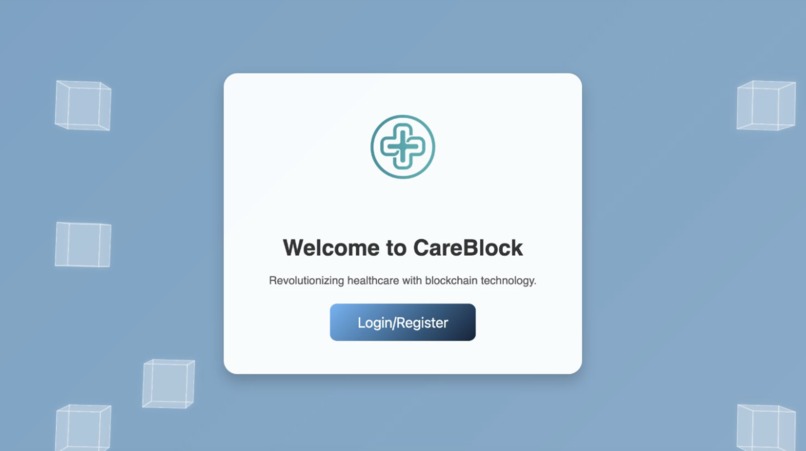
Login/ sign-up page
-
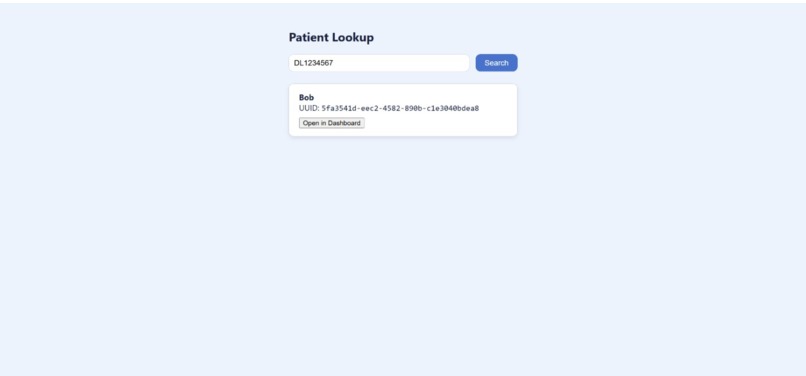
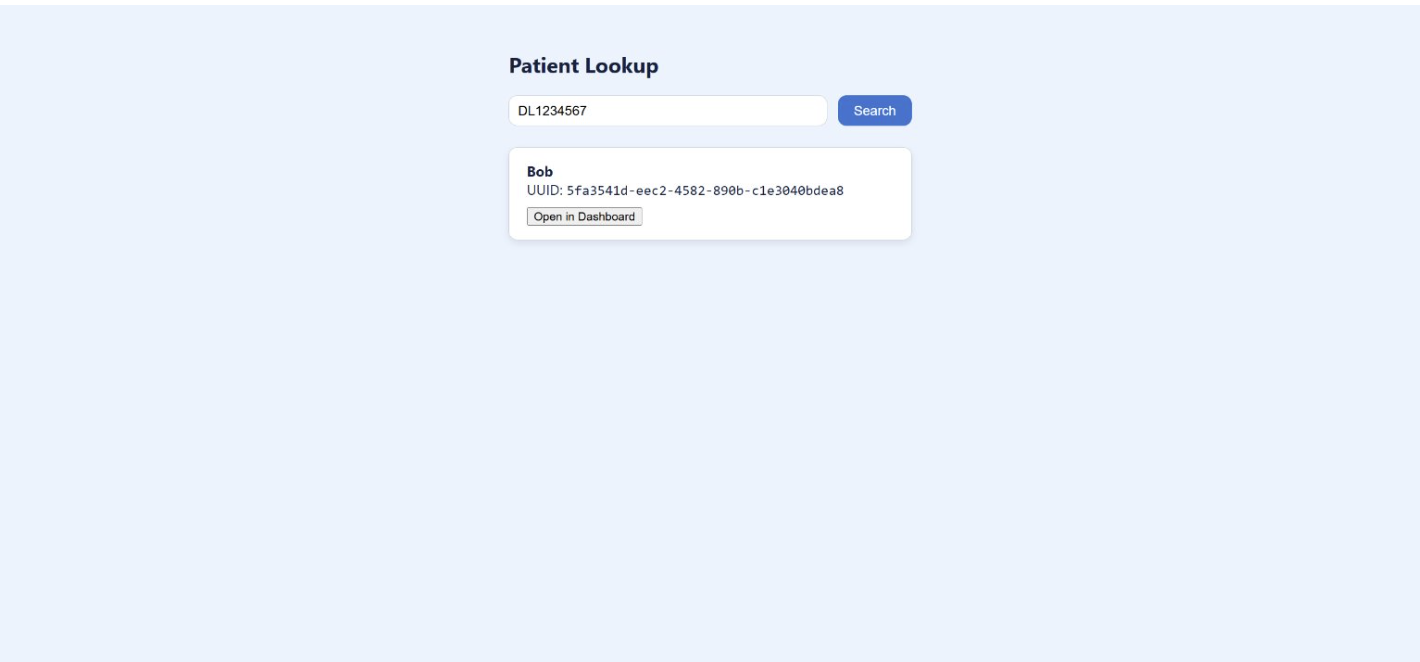
Look-up patient page
-
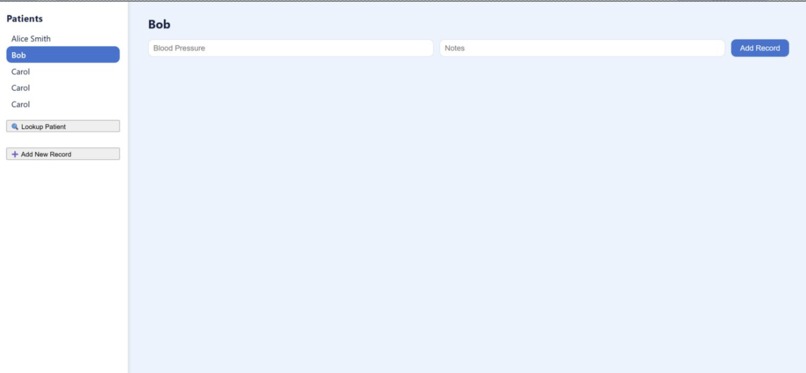
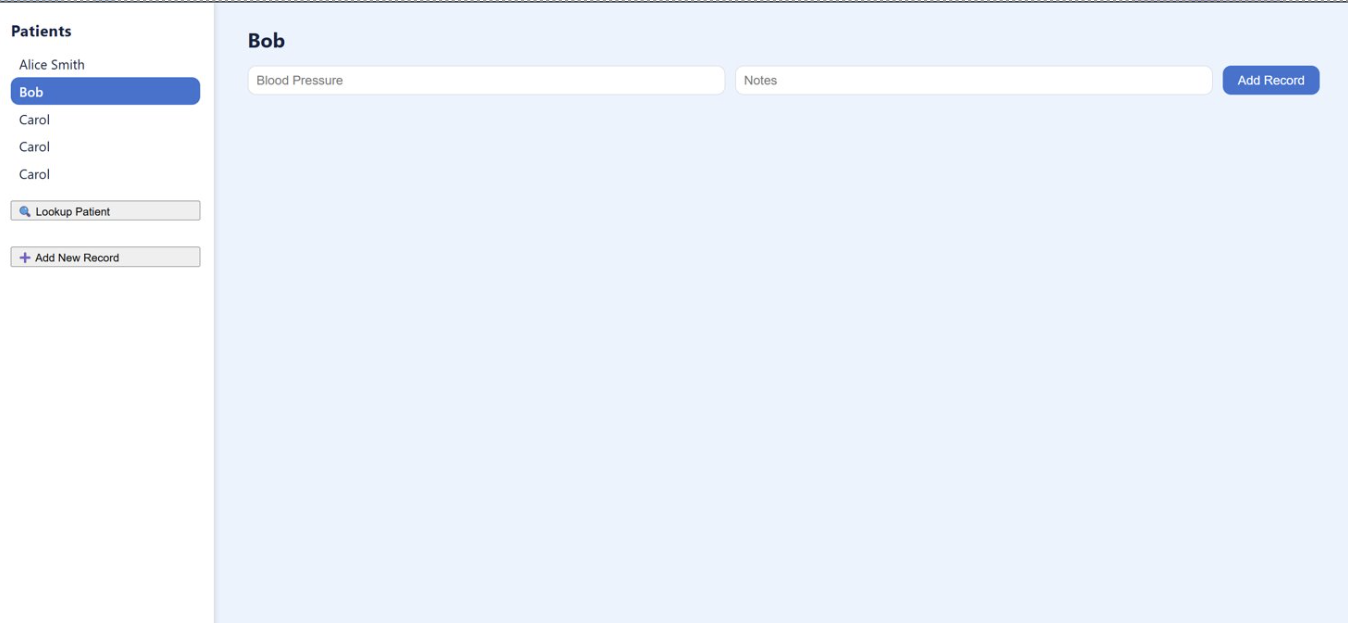
Add record page
CareBlock
Inspiration
Small community clinics handle the same sensitive data as large hospitals but rarely have the budget or staff for enterprise-grade security. One breach can bankrupt a practice and destroy patient trust. We asked ourselves: “What if a clinic could get tamper-proof, HIPAA-level record security as easily as signing up for Netflix?” That question sparked CareBlock.
What it does
- End-to-end encryption – Every record is encrypted in the browser with AES-256.
- Private blockchain ledger – Only a 64-byte hash plus access metadata is written on-chain, creating an immutable audit trail of every view, edit, or share.
- Low server maintenance – Runs on a blockchain and MongoDB Atlas.
How we built it
| Layer | Tech | Purpose |
|---|---|---|
| Smart Contracts | Solidity, Hardhat | Store record hashes + per-record keys |
| API/Auth | Node.js, Express | Issue and sign blockchain txs |
| Data Store | MongoDB Atlas | Encrypted patient data and keys |
| Frontend | React | Add record, lookup patients, login using Auth0 |
| CI/CD | GitHub Actions | Tests & reproducible dev chain |
Challenges we ran into
- Key management – Our first design reused one IPFS key; we pivoted to per-record envelope encryption and a lightweight KMS contract.
- Gas vs. data size – Storing blobs on-chain was impossible, so we hashed, stored off-chain, and kept writes under \$0.001.
- Cross-OS artifact errors – Hardhat artifacts clashed between macOS and Windows; containerizing the dev chain fixed the 3 a.m. “artifact not found” panic.
- Scope creep – We cut FHIR adapters and mobile views to finish a stable MVP within 24 h.
Accomplishments that we're proud of
- Full demo from registration to secure record sharing in < 5 min.
- Low write latency on our block chain—fast enough for real-time clinic workflows.
- Using New Technology Using Auth0 and MongoDB.
What we learned
- Security is pointless if the UX slows clinicians down—usability drove every tech choice.
- Healthcare compliance imposes constraints unfamiliar to typical web apps.
- Private block chains beat public L2 rollups for low-cost, high-throughput B2B scenarios.
What's next for CareBlock
- Moving fully to a decentralized network to empower users with full control over their data.
- Integrating all medical units into a single, secure platform to provide a complete, real-time view of a patient’s health.
- Leveraging AI to monitor, detect, and prevent security threats in real-time, keeping healthcare data safe from evolving cyber threats.
- Enabling biometric authentication (fingerprint, face recognition) for ultra-secure and seamless login."
CareBlock turns “data breach” headlines into peace of mind—so clinicians focus on care, not cybersecurity.
Built With
- auth0
- blockchain
- ethers
- javascript
- mongodb
- node.js
- react


Log in or sign up for Devpost to join the conversation.