-
Logo
-
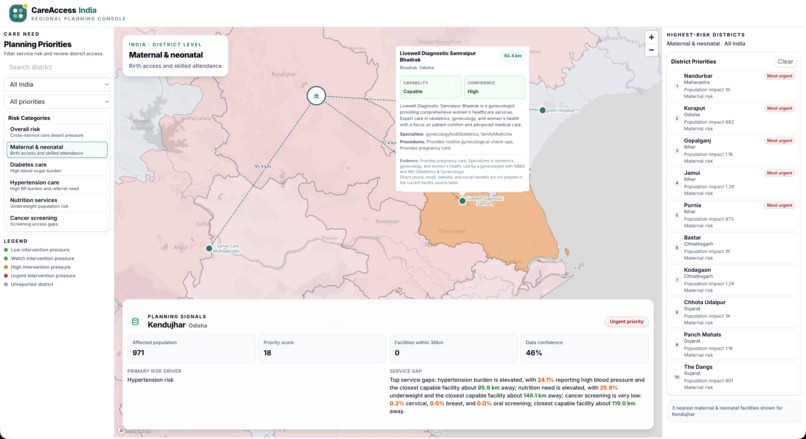
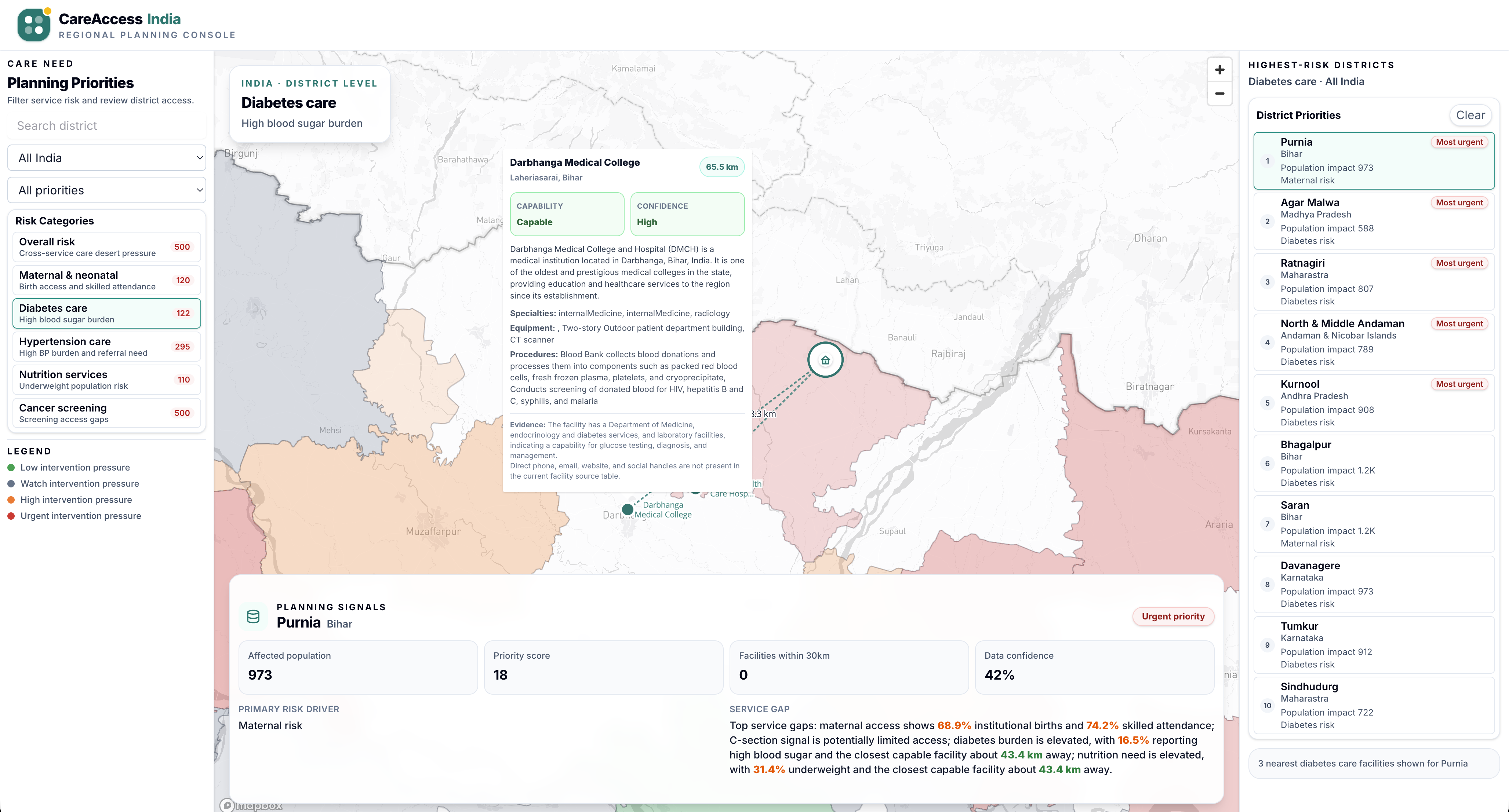
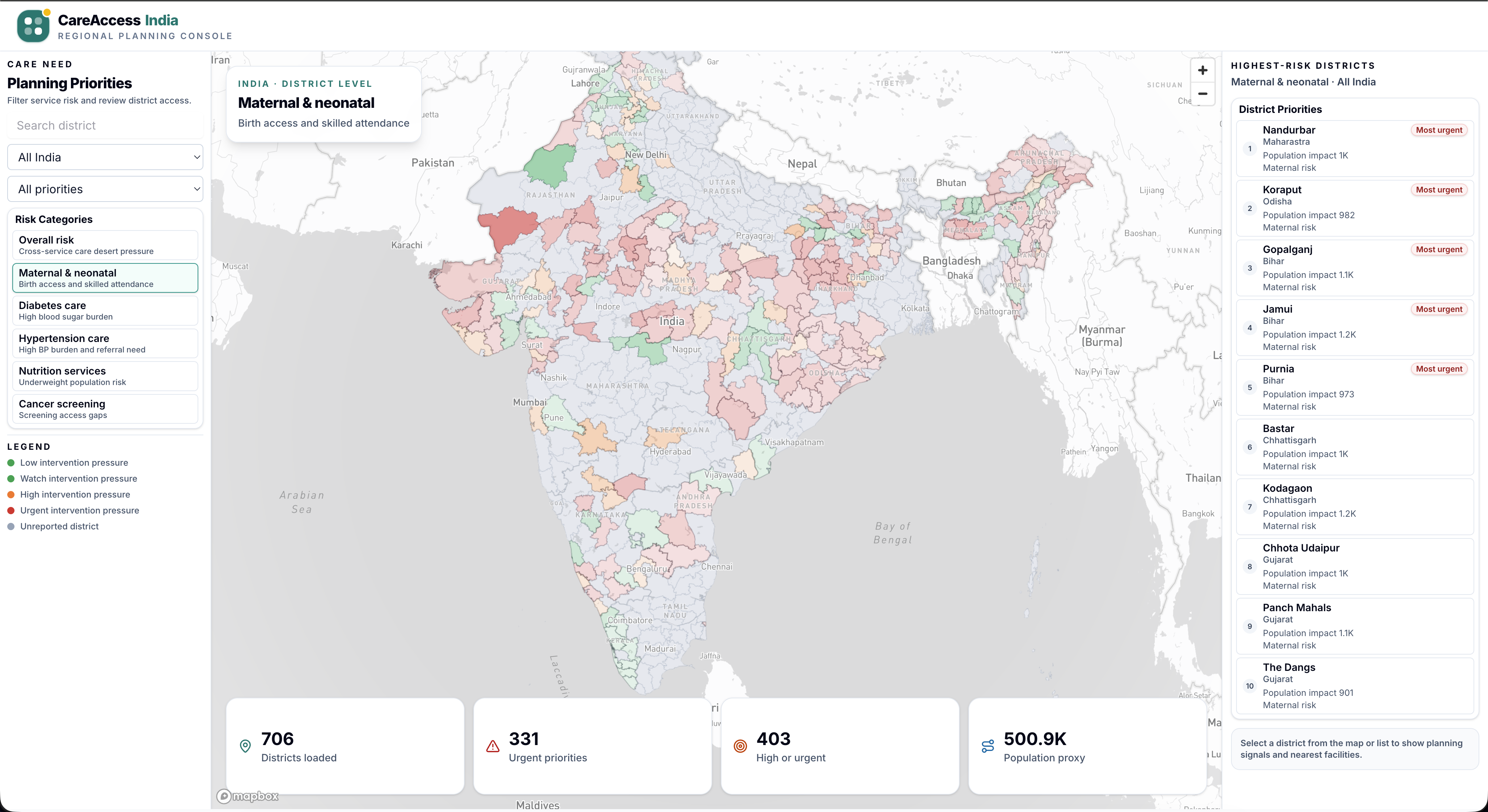
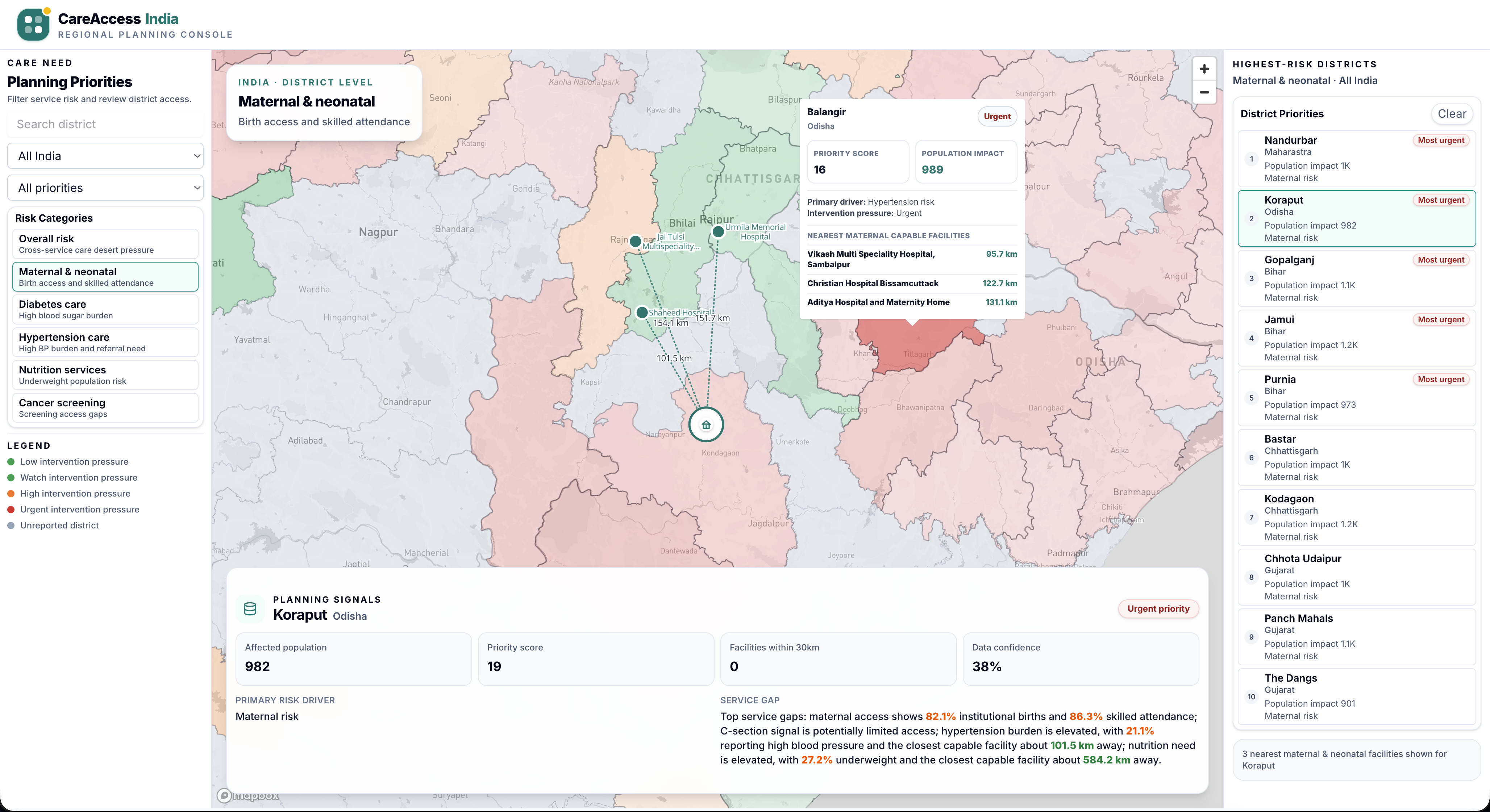
Facility Insights
-
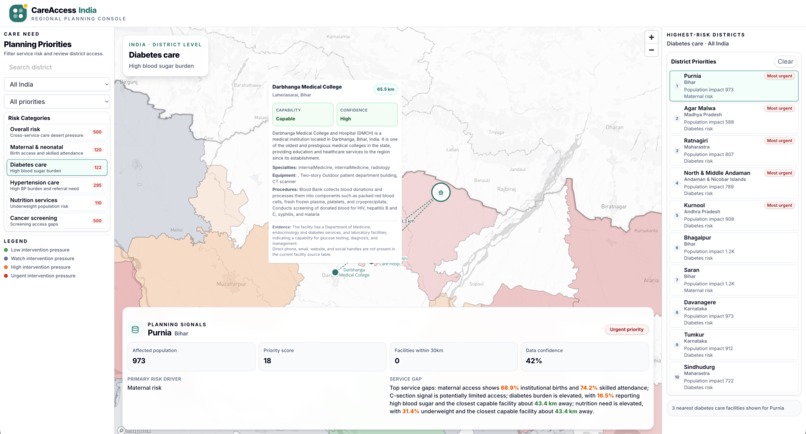
Facility Insights
-
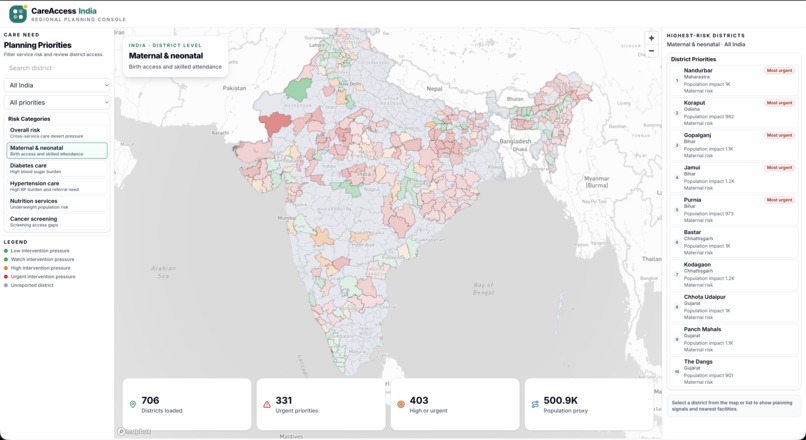
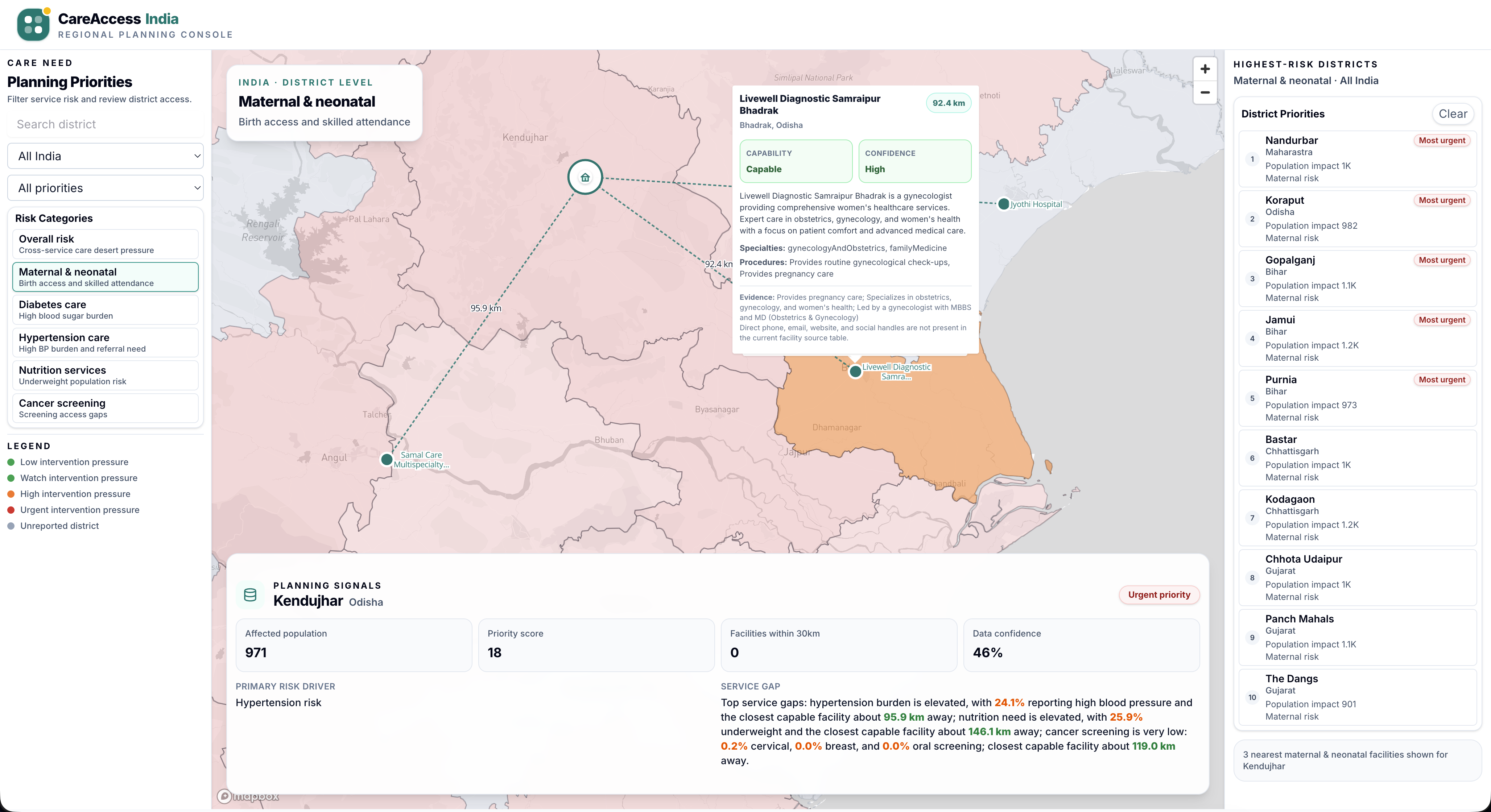
National View
-
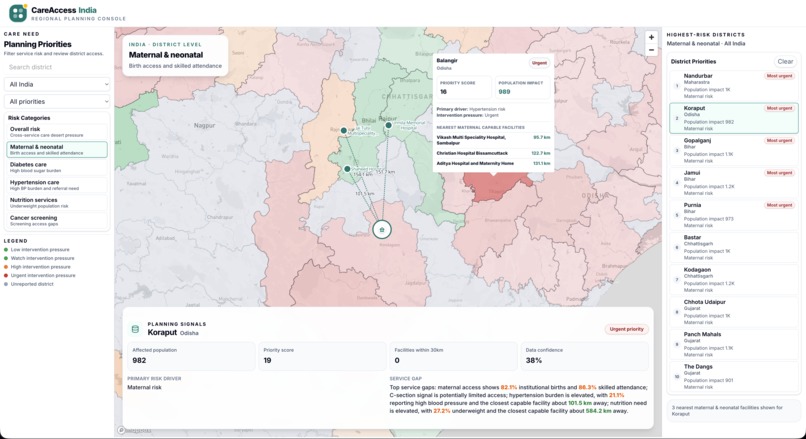
District Insights
-
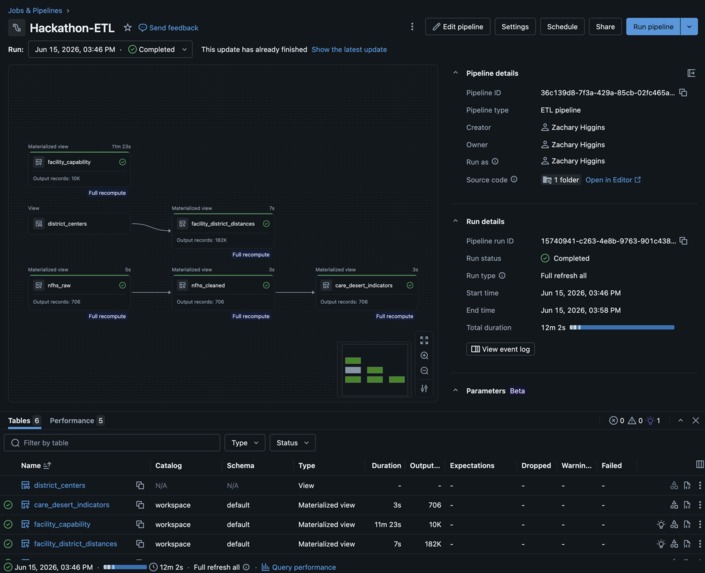
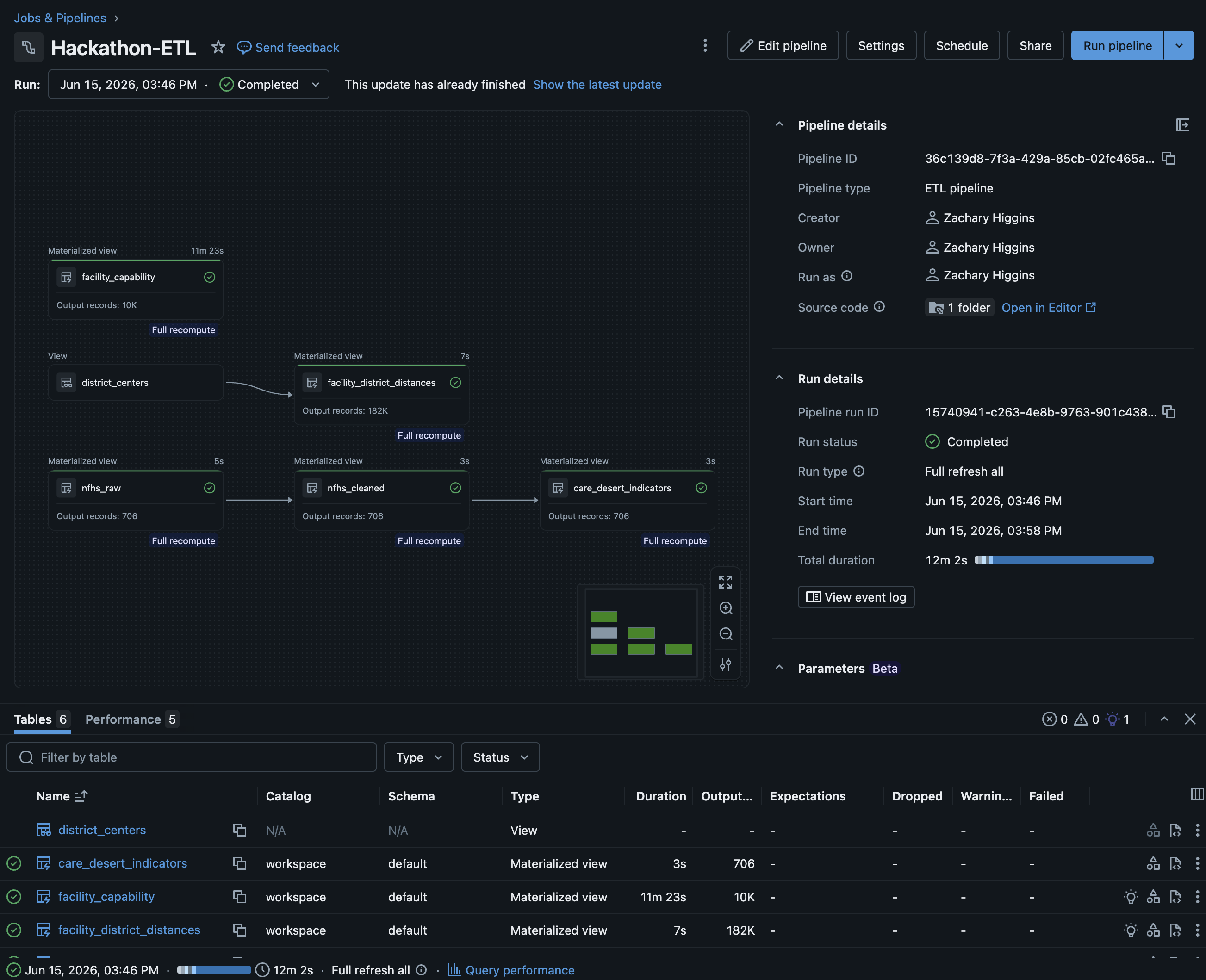
SDP Pipeline with ai_query
-
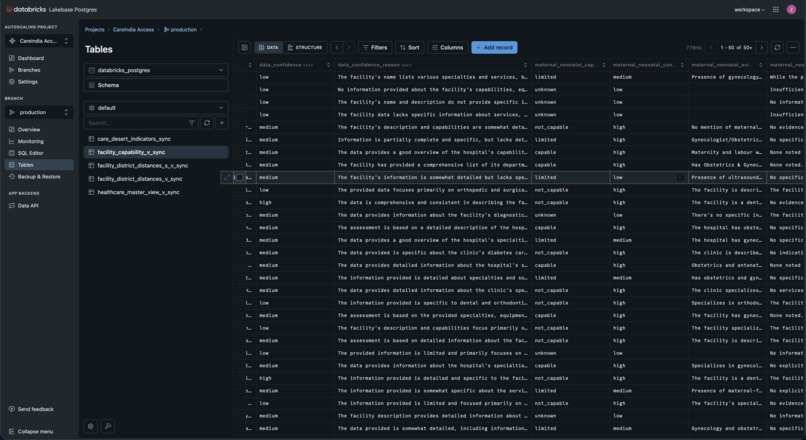
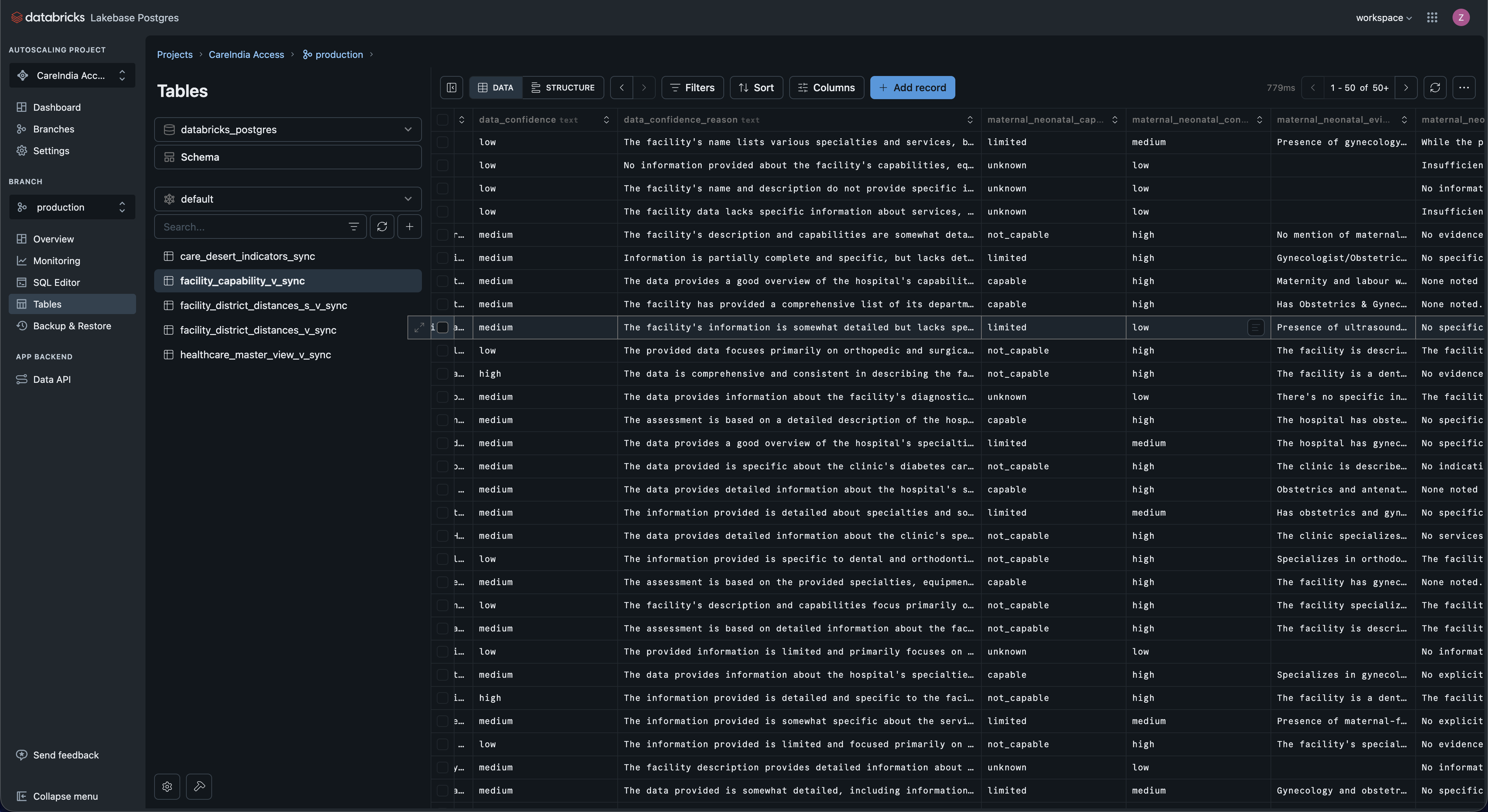
AI Inferences in Lakebase
-
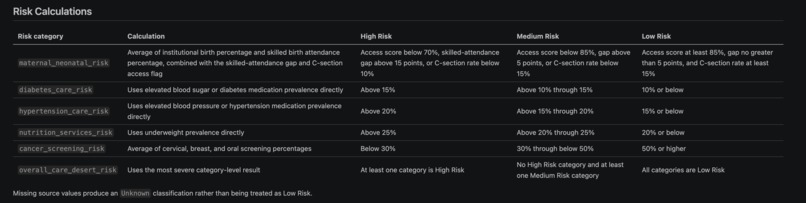
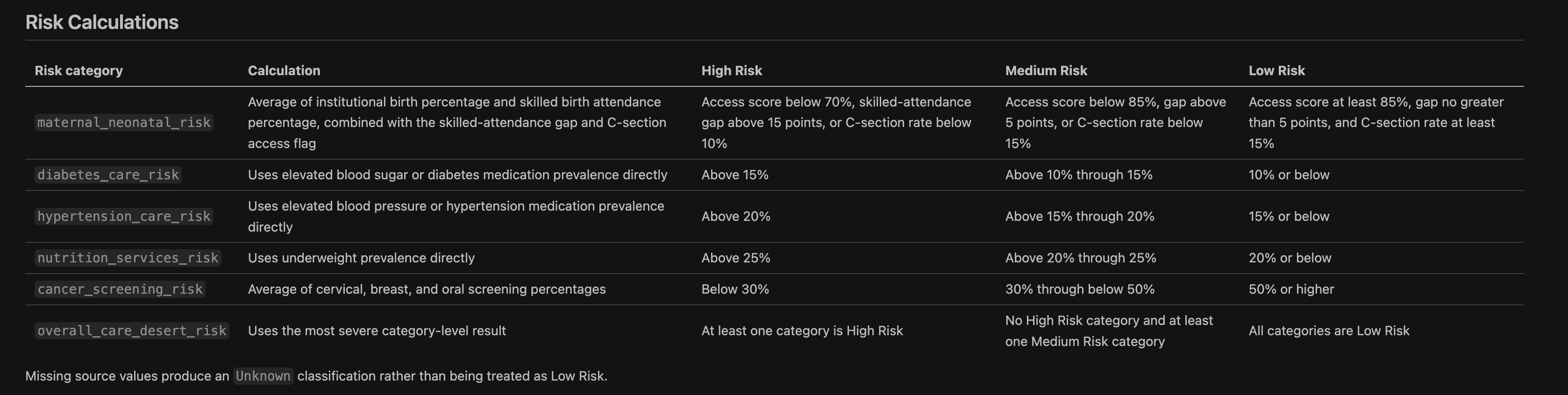
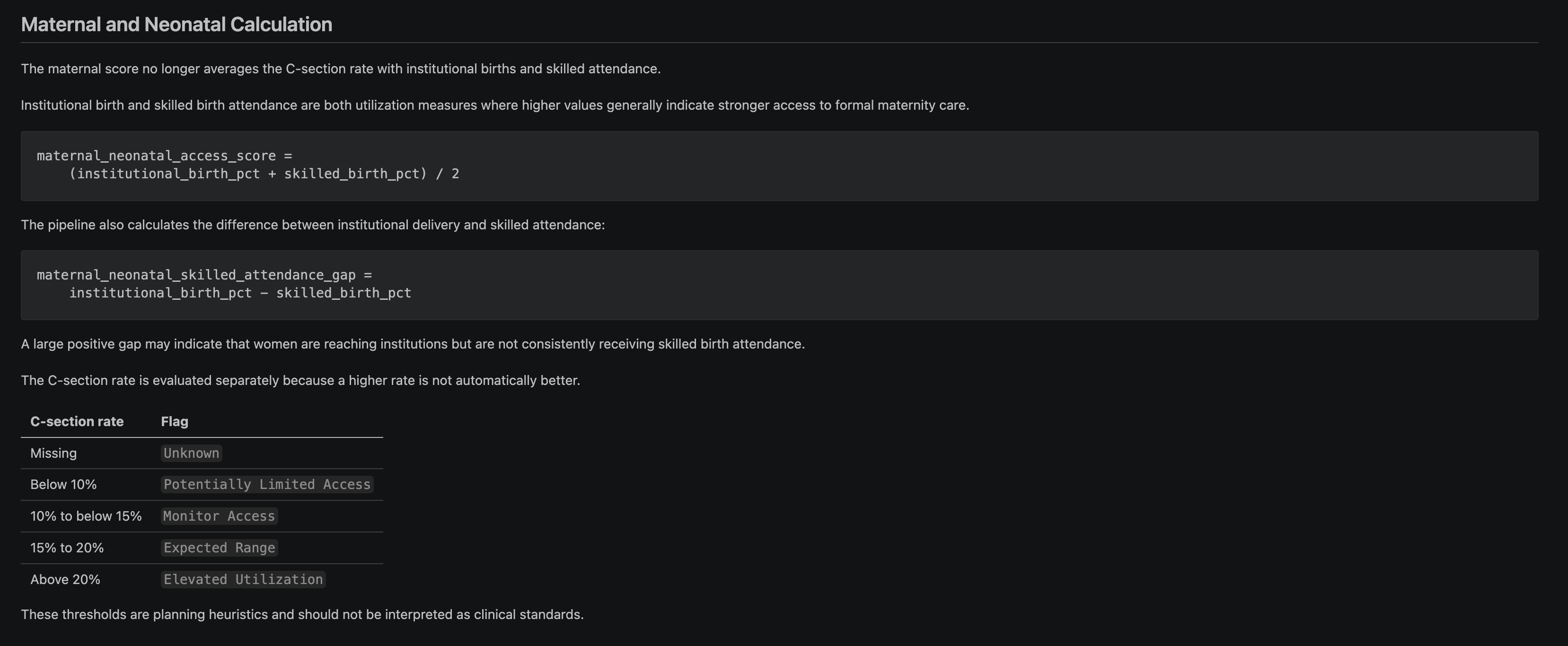
Population Comorbidity/Risk Formula
-
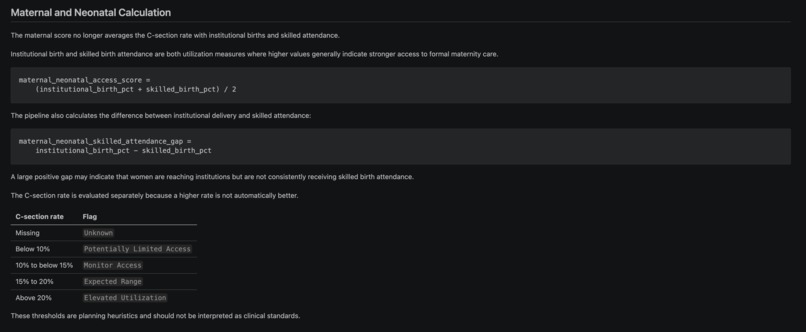
Population Serviceability Formula (example)
Inspiration
CareAccess India was inspired by a simple question: where are people facing the highest health risks, but nearby facilities are least able to respond? India has rich district health, facility, and geographic data, but those datasets are often analyzed separately. We built CareAccess India to connect them and reveal gaps between population need and available care.
What it does
The platform focuses on five priority areas: maternal and neonatal care, diabetes, hypertension, nutrition, and cancer screening. It combines NFHS-5 district risk indicators with facility locations, distance, and AI-derived capability assessments to identify potentially underserved districts.
How we built it
We used Databricks Lakeflow pipelines, Databricks SQL AI functions, Lakebase, React, TypeScript, and Databricks AppKit. AI evaluates each facility’s descriptions, specialties, equipment, procedures, and stated capabilities, then classifies each care area as capable, limited, not_capable, or unknown, with confidence and supporting evidence.
Challenges we ran into
The biggest challenge was separating population risk from facility capability. High disease burden does not automatically prove poor access, and missing facility data does not prove a service is unavailable. We also had to account for distance, inconsistent facility records, and the difference between simply counting facilities and understanding what care they can actually provide.
Accomplishments that we're proud of
We built a working decision-support dashboard that combines district risk, distance-weighted facility access, and AI-assisted capability assessment across all five care areas. The result goes beyond showing where facilities are and helps identify whether nearby facilities appear able to serve the population’s most urgent needs.
What we learned
Healthcare access is multi-dimensional. Population risk, facility capability, and geography must be evaluated together. We also learned that AI is most useful when its outputs are structured, evidence-based, and able to return unknown when the source data is incomplete.
What's next for CareAccess India
Next, we plan to add richer facility data, road-network travel times, staffing and capacity measures, referral pathways, and simulation tools. The goal is to help healthcare planners move from identifying gaps to choosing the most effective action for each underserved district.
Built With
- ai-query
- databricks
- etl
- lakebase
- lakeflow
- mapbox
- node.js
- python
- react
- typescript

Log in or sign up for Devpost to join the conversation.