-
-
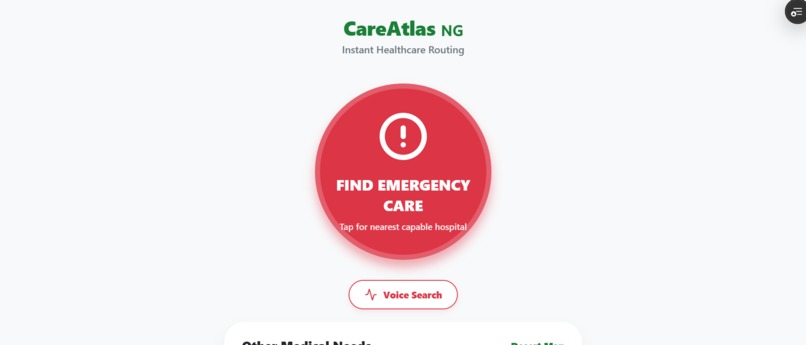
Main Page
-
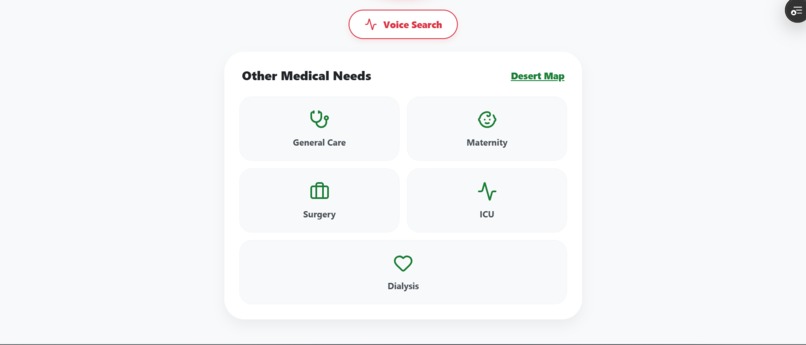
Main page
Inspiration
Nigeria faces a critical "Medical Desert" problem. While thousands of health facilities exist, data is fragmented, and many are non-functional or lack critical capabilities like ICU beds or Dialysis units. During emergencies, families lose precious minutes—or lives—searching for care. We were inspired to build a platform that doesn't just list hospitals, but validates their capabilities and routes citizens to the nearest functional care in seconds.
What it does
CareAtlas Nigeria is an AI-powered intelligence layer for Nigerian healthcare.
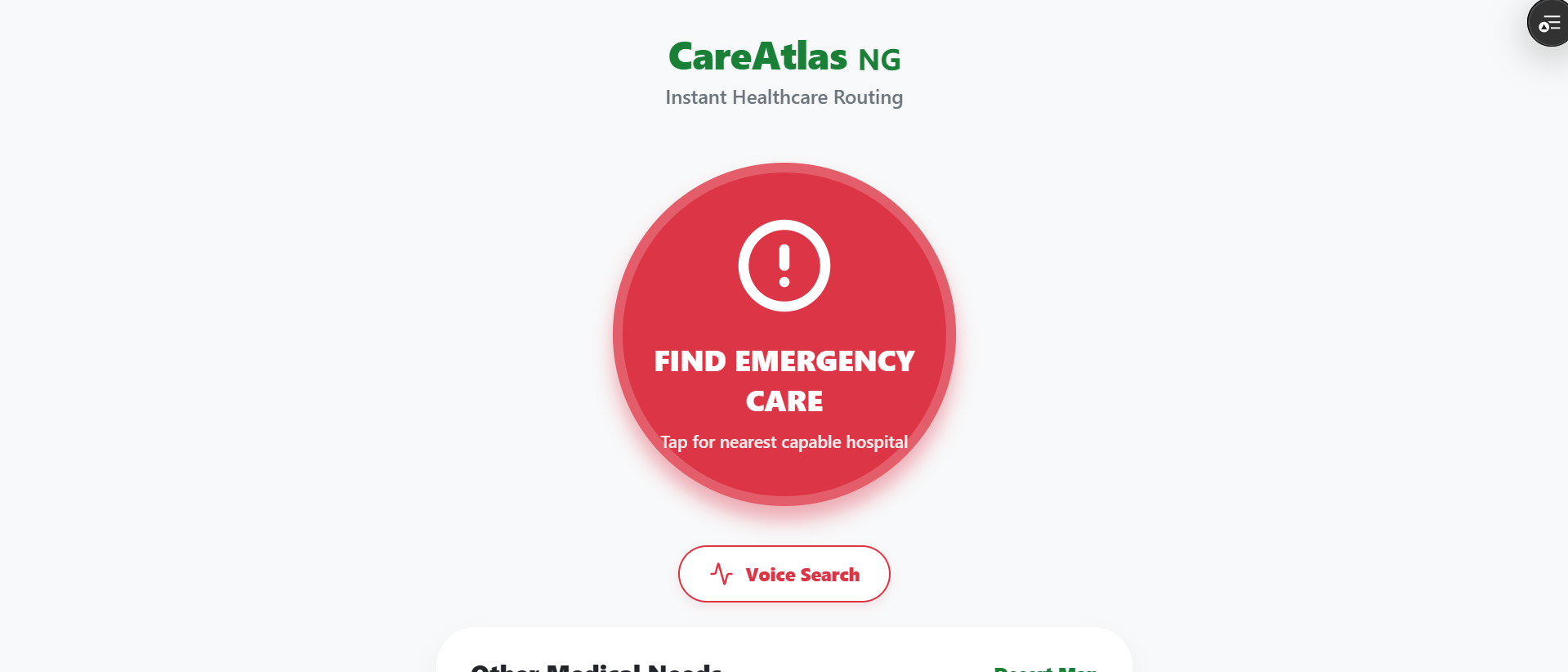
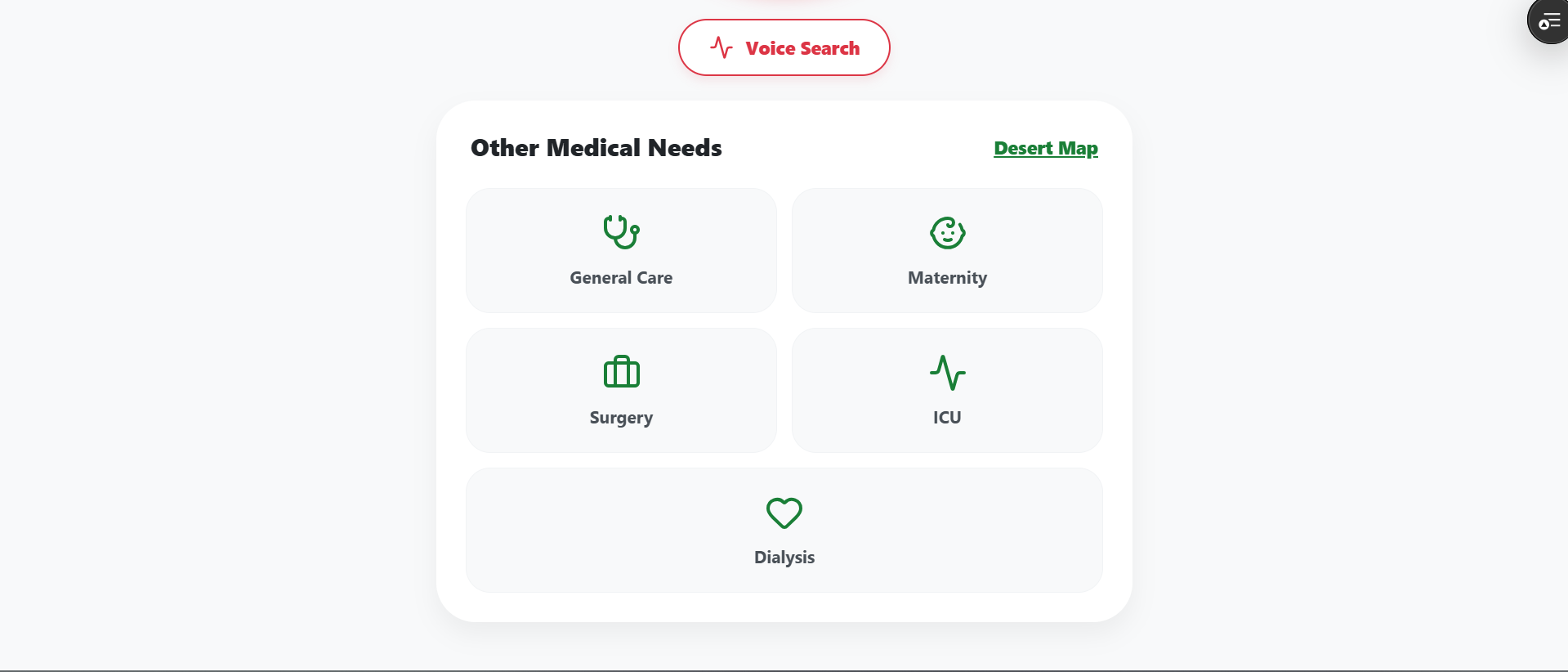
Emergency Routing: Instantly finds the nearest validated facility for ICU, Maternity, Surgery, or Dialysis. Trust Scoring: Uses a custom heuristic engine to grade facilities from A to F based on data consistency and reported status. Desert Intelligence: A high-level dashboard for policymakers that visualizes "Medical Deserts"—regions where specific medical needs are completely unserved. Voice-First Accessibility: Integrated voice search allows users in distress to find care hands-free.
How we built it
Intelligence Layer: We built a Python-based data pipeline that ingests the National Health Facility Registry (NHFR) and uses LLMs to extract and verify specific capabilities from raw descriptive text. Trust Engine: We implemented a multi-stage validation logic that cross-references facility levels against reported equipment to assign a reliable "Trust Grade." Geospatial Engine: Powered by FAISS for ultra-fast vector-based proximity searches and custom Haversine math for precise distance calculations in Nigerian LGAs. Mobile Experience: Built with React Native (Expo) to ensure a unified experience across low-end Android devices, iPhones, and web browsers.
Challenges we ran into
The primary challenge was data "noise." Many entries in the registry were missing coordinates or had conflicting functional statuses. We overcame this by building an LLM-driven self-correction loop that flags inconsistencies. On the frontend, ensuring the app worked perfectly on local university networks required building a custom Public Tunneling infrastructure to bypass firewall restrictions during live testing.
Accomplishments that we're proud of
End-to-End Integration: From raw Parquet data to a live, responsive mobile app in just 72 hours. Voice Intelligence: A working Web-Speech-API implementation that can understand medical intent. Scalability: The backend is optimized to handle over 46,000 facilities with sub-millisecond query times.
What we learned
We dove deep into the world of Geospatial Intelligence and Vector Databases. We also learned the intricacies of cross-platform development with Expo, specifically how to handle safe-area insets and responsive layouts for a "Native-first" feel on the web.
What's next for Care_Atlas
We want to integrate Real-time Bed Availability (via a SMS-based reporter system for local clinics) and expand the "Medical Desert" visualization to help the Nigerian Ministry of Health allocate resources where they are needed most.
Built With
- css3-(glassmorphism)
- expo.io
- faiss-(vector-search)
- huggingface
- huggingface-spaces
- javascript-frameworks:-fastapi
- localtunnel-design:-lucide-react
- native
- openai/llama-3-cloud-&-infrastructure:-docker
- python
- react
- react-native
- typer-data-&-ai:-pandas
- typescript
- vanilla
- vercel


Log in or sign up for Devpost to join the conversation.