-
-
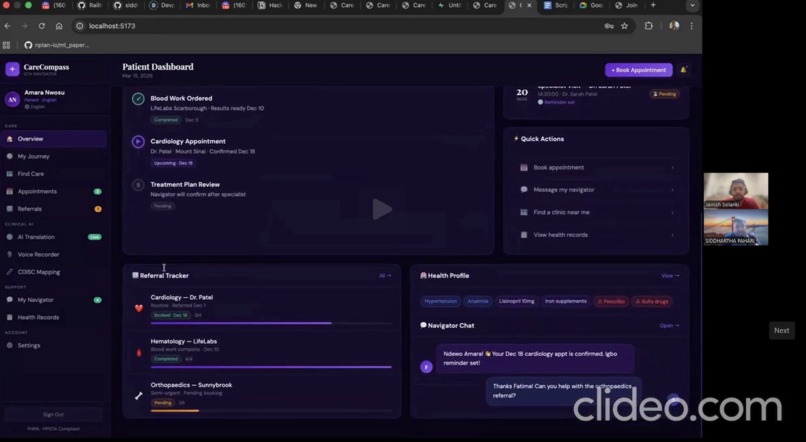
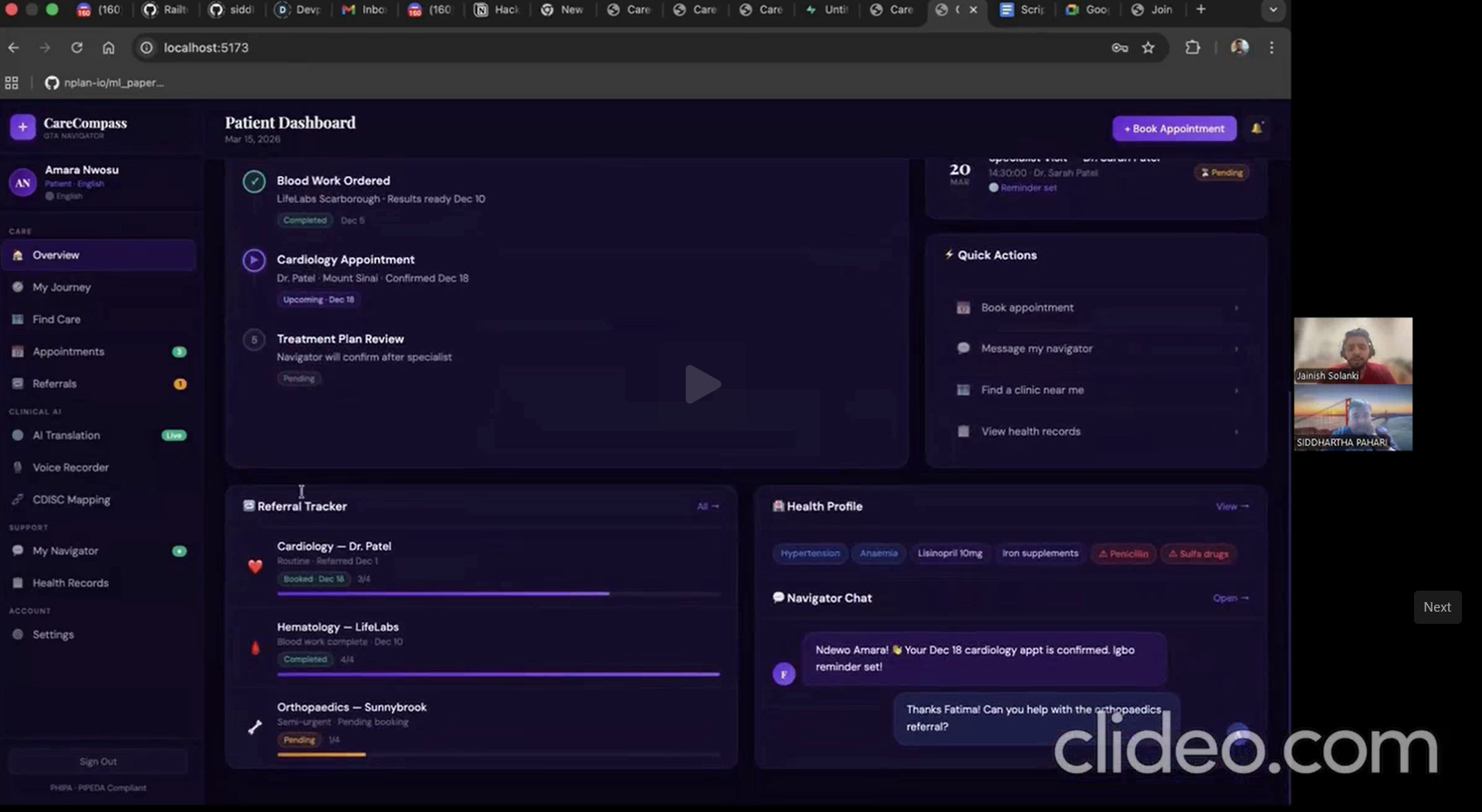
Care Compass Dashboard
Inspiration
Care Compass was inspired by a major gap in healthcare: the system is still poorly digitized from the patient navigation side. For many newcomers, international students, and multicultural families in the GTA, healthcare is fragmented, repetitive, and difficult to navigate. Patients often have to explain their situation multiple times, manage referrals manually, face language barriers, and figure out the system on their own. We wanted to build something that improves patient experience while also reducing inefficiencies for clinics and “Uber for navigating healthcare.”
What it does
Care Compass is a personalized healthcare navigation platform for the GTA. It helps patients find the right care, book appointments, prepare for visits, manage referrals, and actually follow through across the care journey. At the same time, it helps digitize clinic workflows by reducing redundancies, improving referral completion, organizing intake information, and giving providers a lightweight CRM-like layer to track patient progression and drop-offs more effectively.
How we built it
We built Care Compass by combining patient journey design with a practical technical stack. We first mapped key pain points in healthcare navigation, including language barriers, repeated intake, referrals, and follow-up gaps, then designed the platform to improve patient experience, reduce redundancies, and support clinics with a lightweight CRM-like workflow layer.
Technically, we built the frontend using React 18, JSX, Vite, JavaScript, vanilla CSS, and the Web Speech API for voice recording and translation input. On the backend, we used Node.js 2.0, Express 4, the Supabase JS SDK, Axios, Helmet, and Jest + Supertest. Our database is PostgreSQL via Supabase, and we also integrated the Twilio SDK for multilingual SMS reminders.
Challenges we ran into
One of the biggest challenges was that this is not just a software problem, but a workflow problem. Healthcare navigation is fragmented, high-trust, and operationally complex. We had to think not only about the patient-facing experience, but also about referrals, follow-up, clinic workflows, and multilingual support. Another challenge was deciding what to automate and what should remain human-supported, especially in high-trust and high-stakes situations.
Accomplishments that we're proud of
We are proud that Care Compass is more than just a patient app idea. We built it as a broader healthcare digitization concept that improves patient experience while also helping clinics reduce administrative inefficiencies and repeated manual work. We are also proud that the platform creates value on both sides: better navigation and follow-through for patients, and better visibility, coordination, and workflow support for providers.
What we learned
We learned that many healthcare access problems are really coordination problems. Even when care exists, patients can still get lost because the journey is confusing, repetitive, and hard to follow. We also learned that trust is central, especially in multicultural communities, and that effective healthcare digitization must support both patients and providers. Technology can improve speed and efficiency, but human-centered design is still essential.
What's next for Care Compass
Next, we want to validate Care Compass with a focused user group in the GTA while continuing to build out both the patient and provider sides of the platform. That includes improving navigation, booking, referral tracking, multilingual support, and clinic workflow tools such as intake standardization, no-show reduction, and follow-up dashboards. Long term, our goal is to make Care Compass a trusted digital layer that improves patient access, reduces redundancies, and helps clinics manage care journeys more efficiently.
Built With
- css
- express.js
- jest+supertest
- node.js
- postgresql
- react
- sql
- supabase
- twilio

Log in or sign up for Devpost to join the conversation.