-
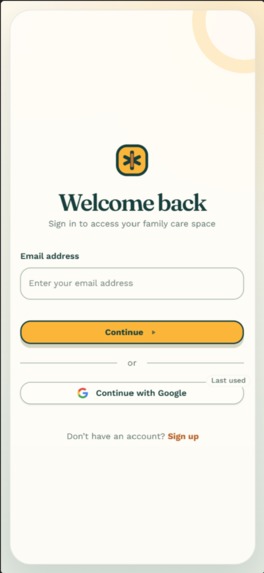
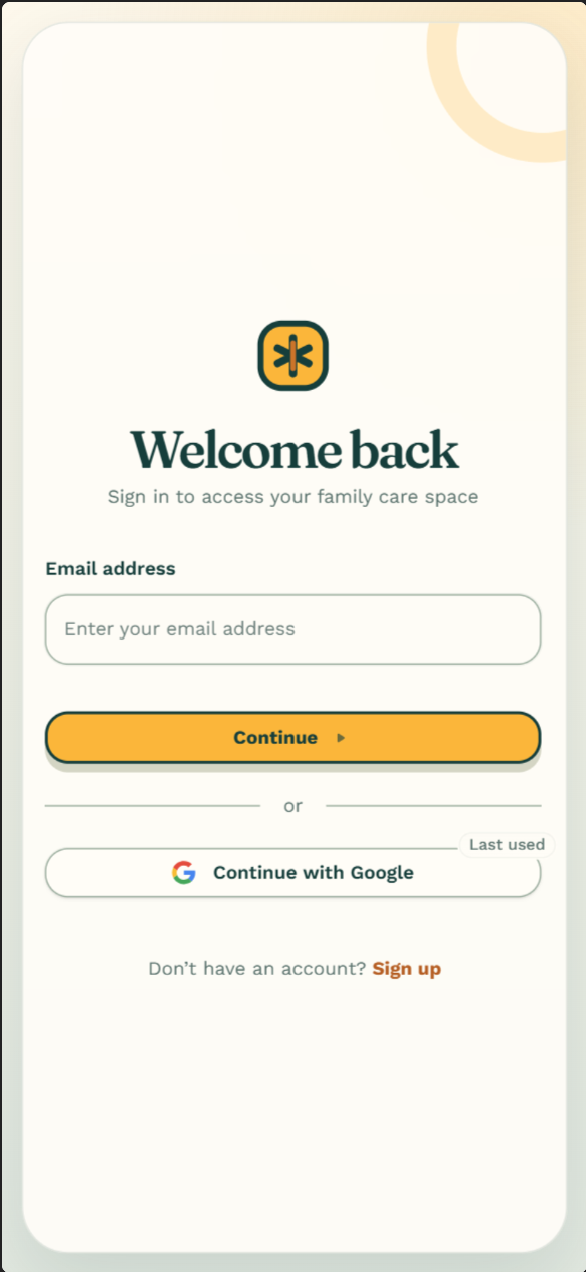
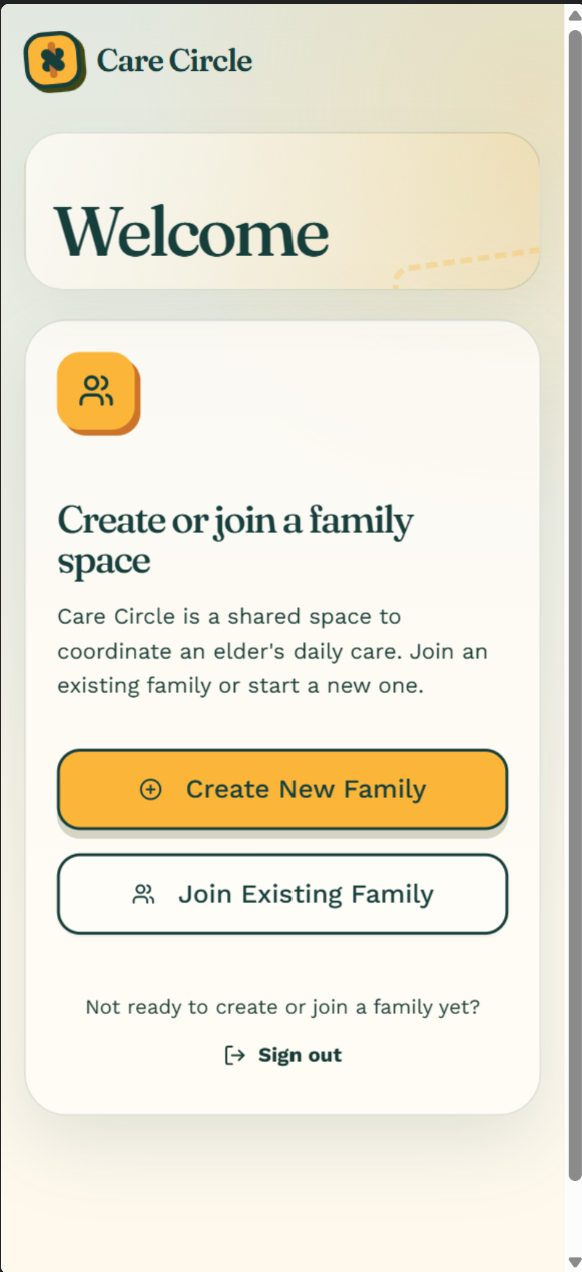
Auth screen
-
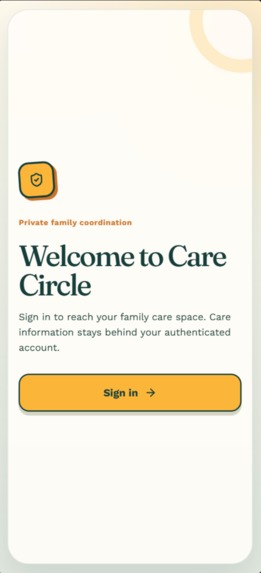
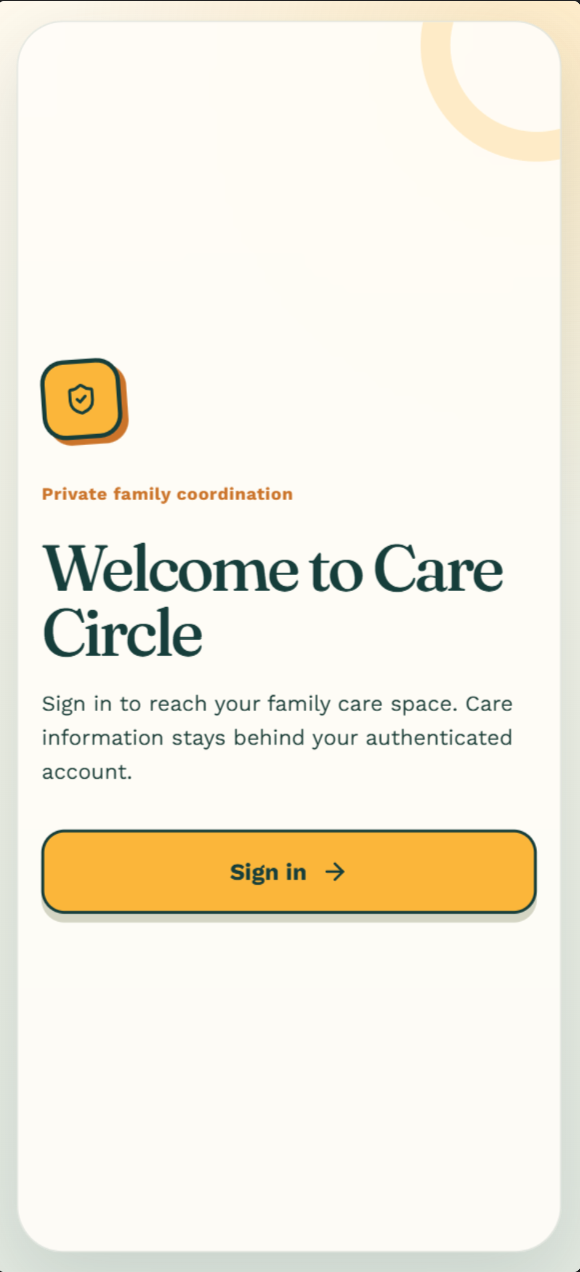
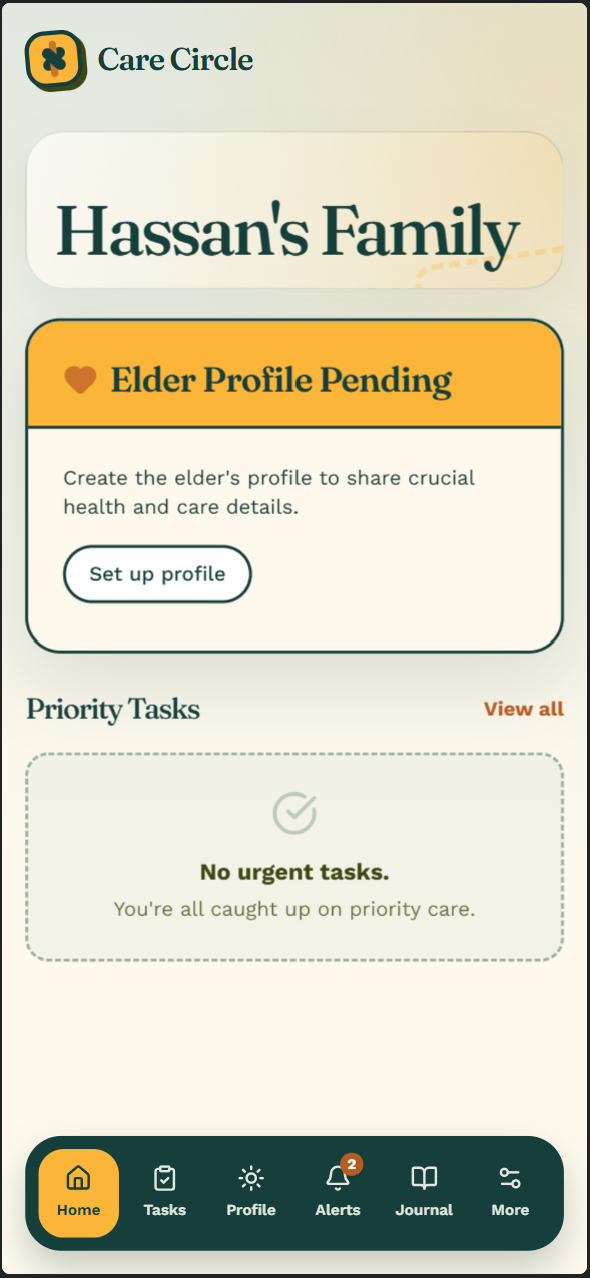
First page after opening the app
-
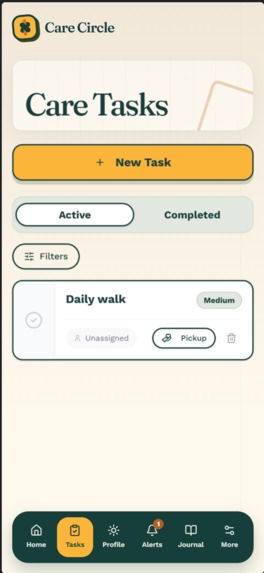
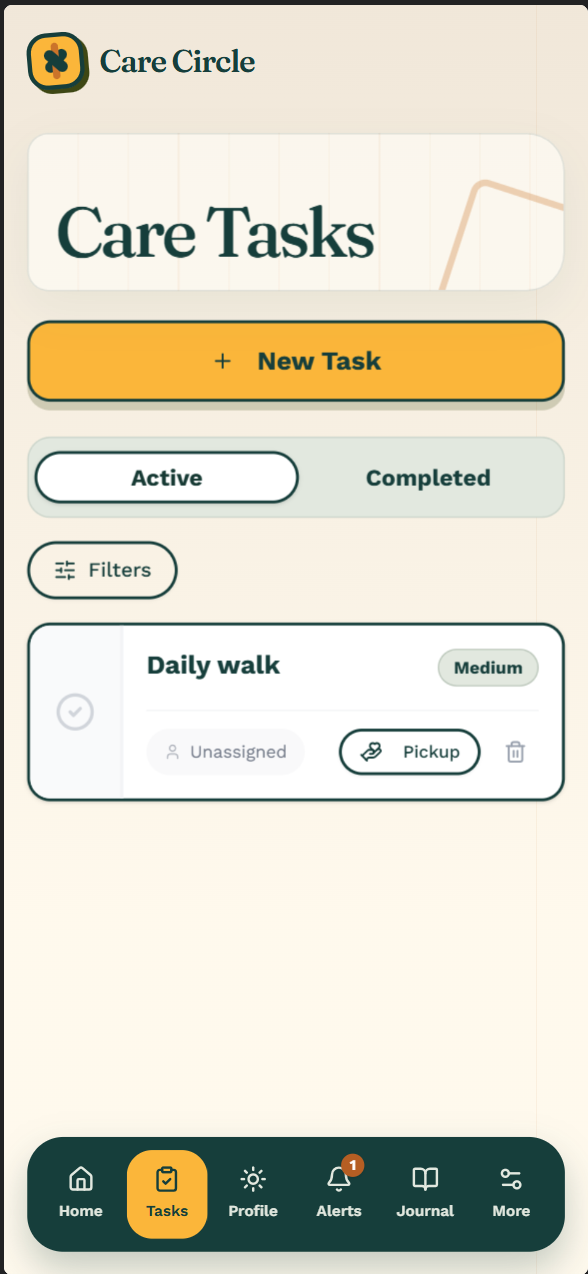
Tasks page
-
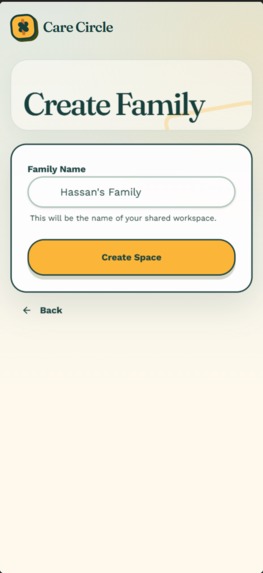
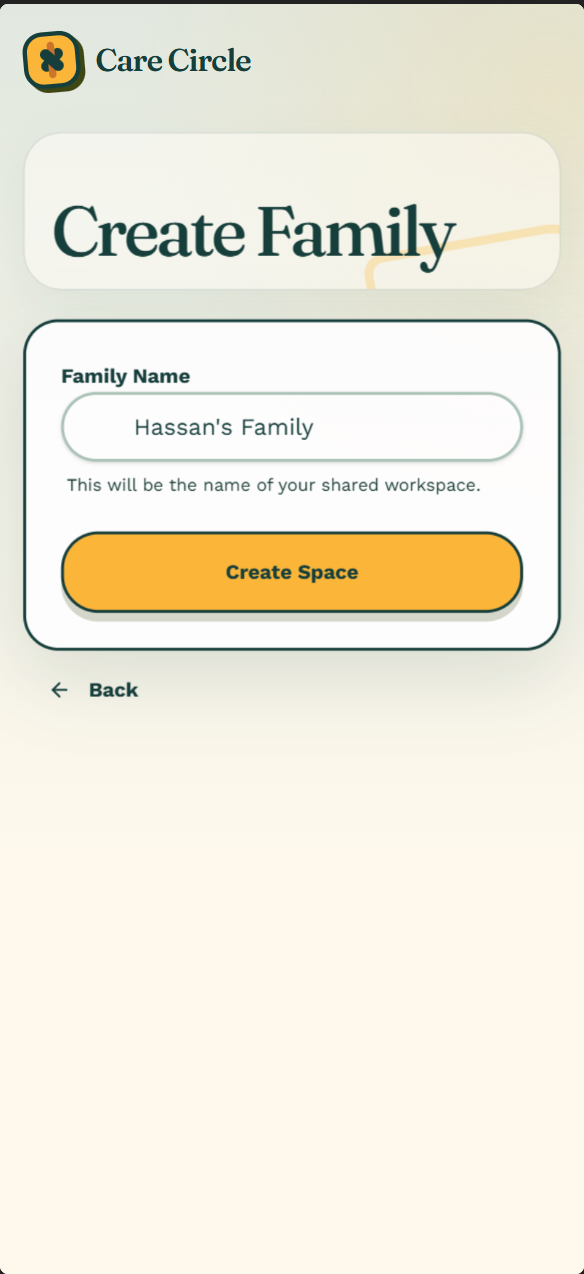
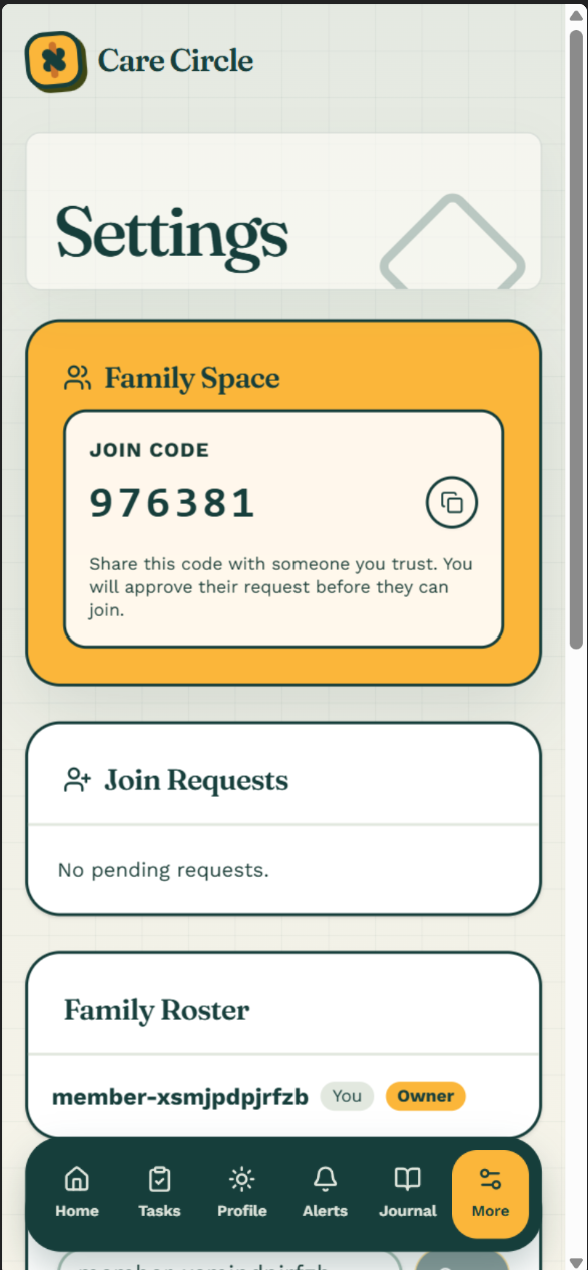
Creating a family
-
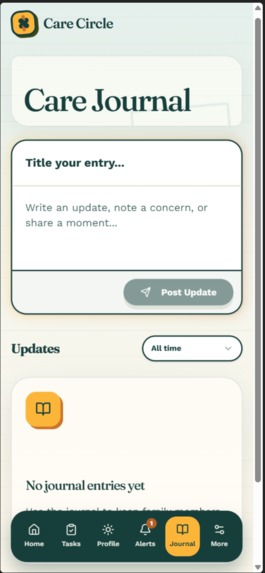
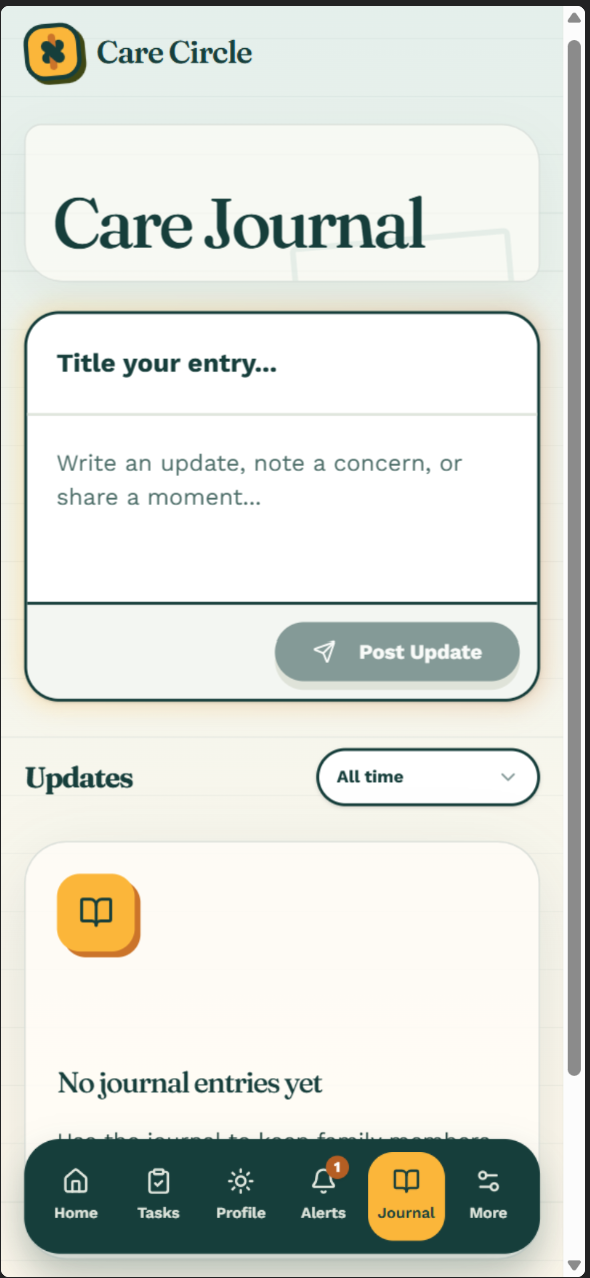
Journaling (for additional context)
-
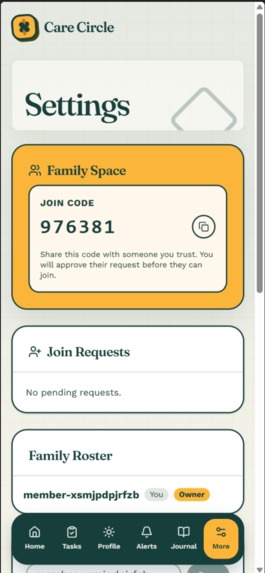
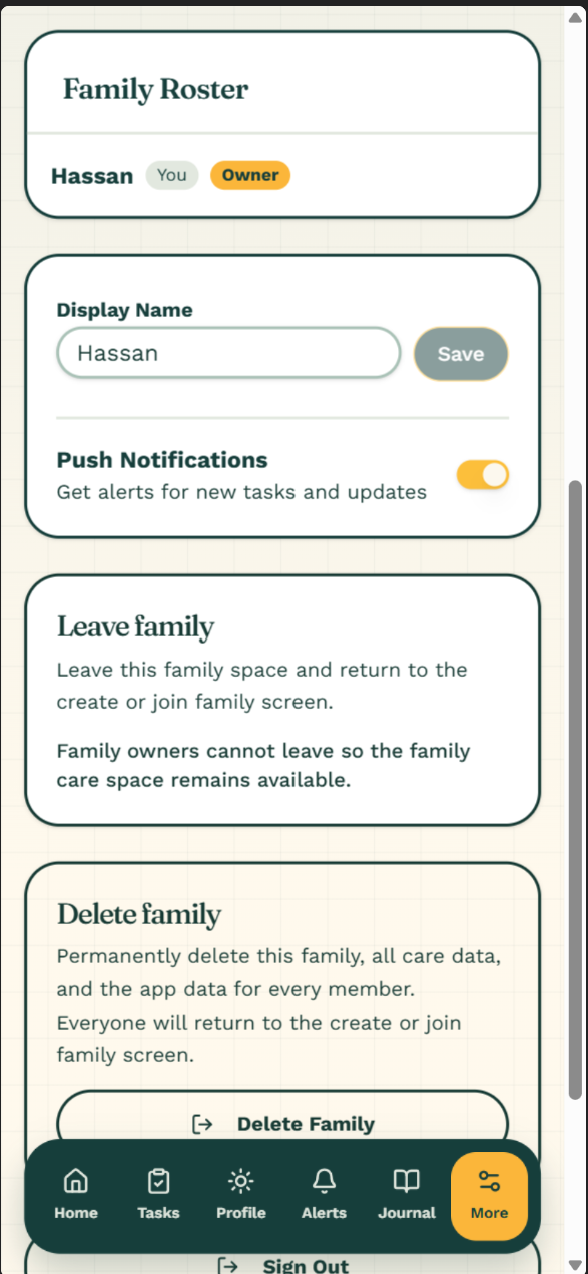
Settings page
-
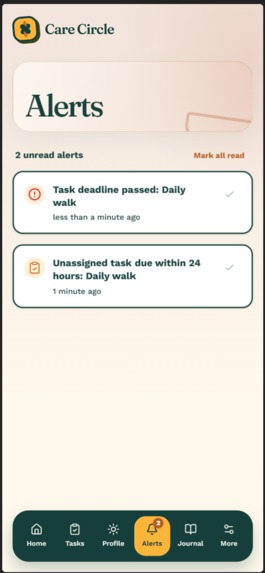
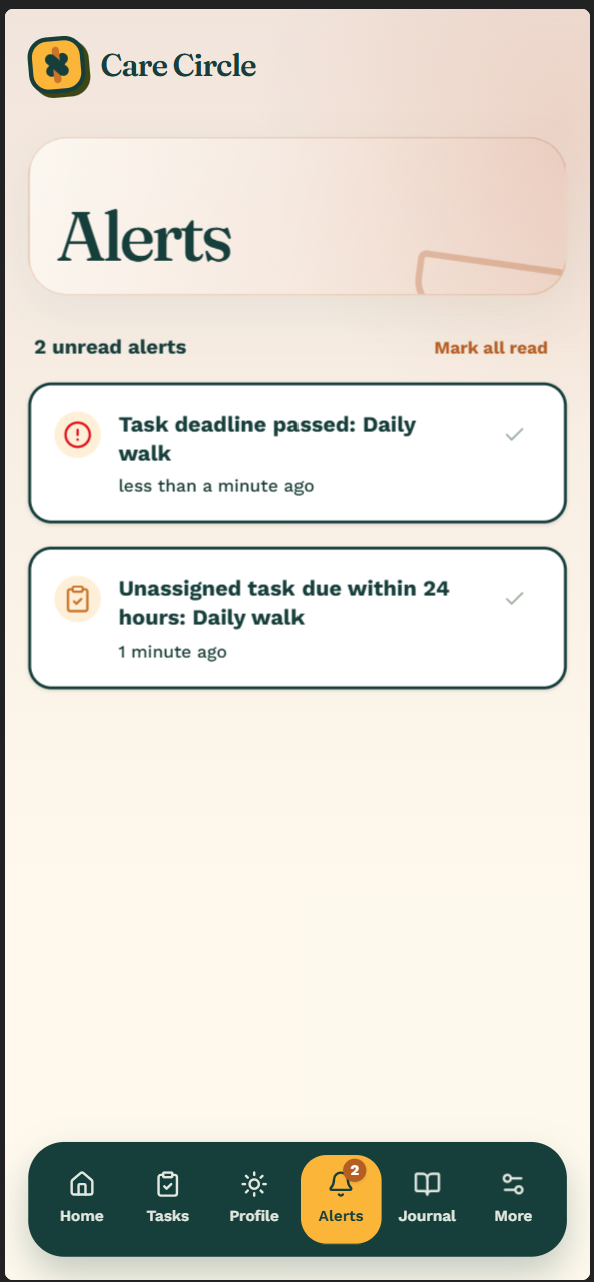
Alert notifications
-
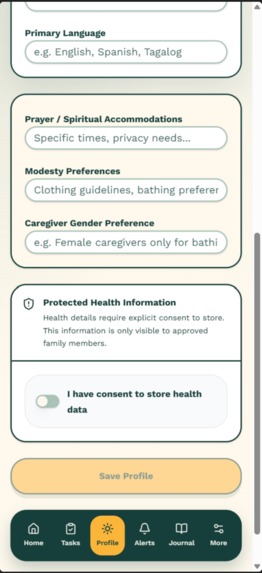
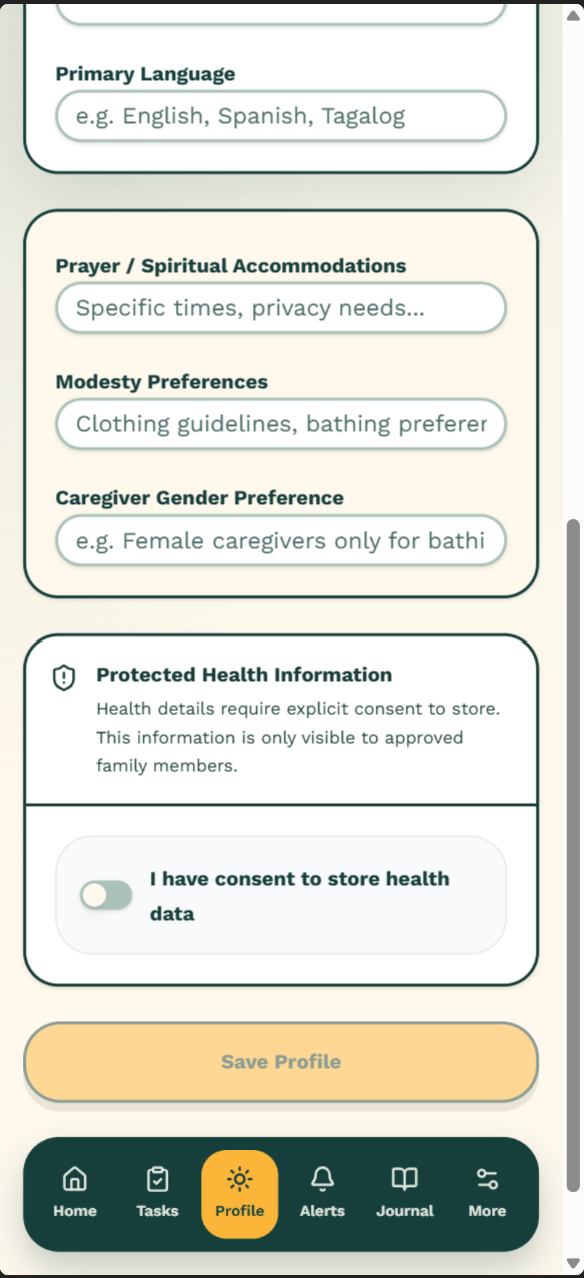
Eldery profile page contaning all important infos 2
-
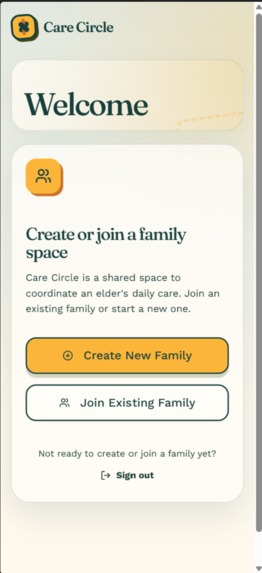
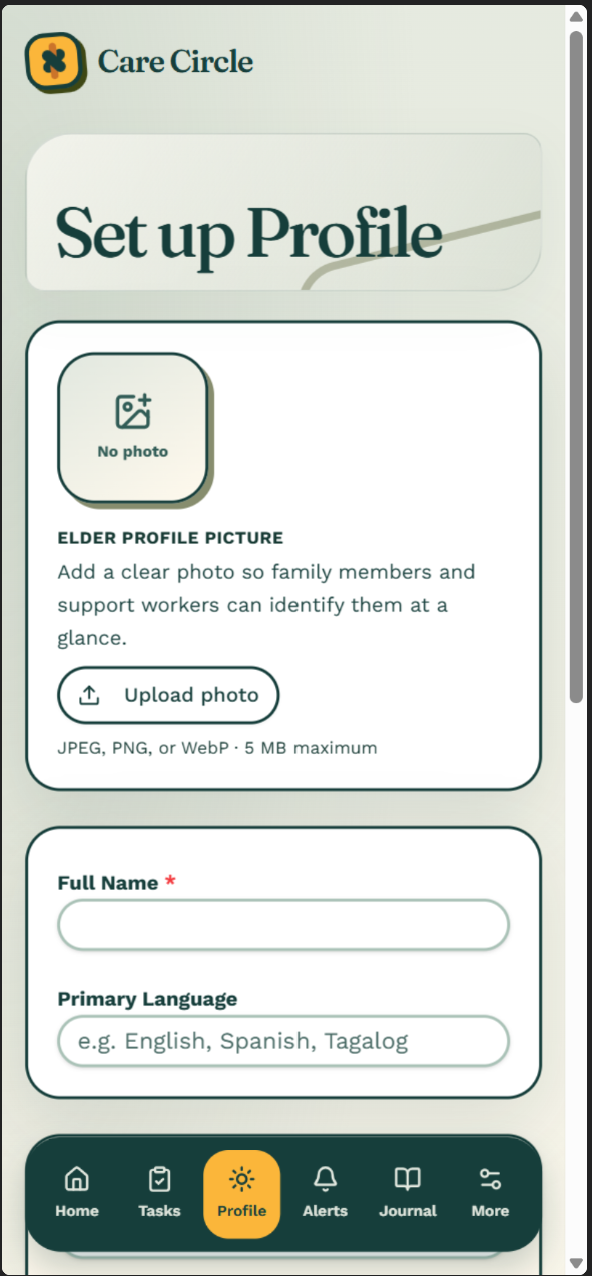
Set up
-
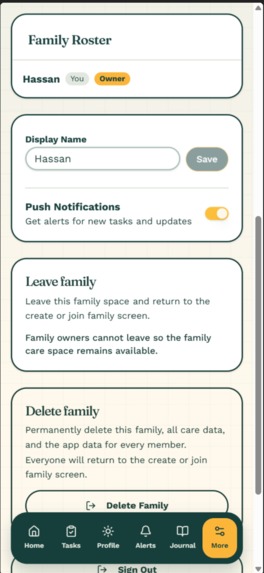
Settings page 2
-
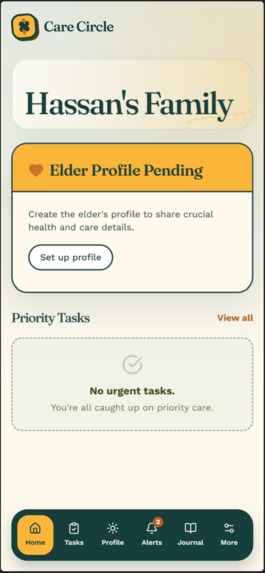
Home page showing only urgent tasks
-
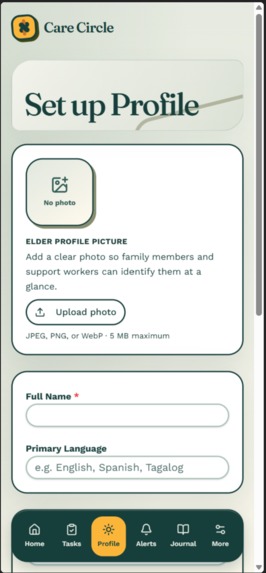
Eldery profile page contaning all important infos
Inspiration
-Coordinating care for an aging relative usually isn't one big decision: it's a hundred small ones, scattered across group texts, half-remembered phone calls, and whoever happened to visit last. Who gave Mom her afternoon medication? Did anyone tell the new aide that Dad prays sitting down now? Is the Tuesday ride to the doctor still unassigned?
-We wanted to build something that gave families one shared, calm space for that coordination instead of five disconnected ones :and that took seriously the parts of care that aren't medical at all: language, diet, faith, modesty, who someone feels comfortable being helped by. Those preferences matter as much as the task list, and they're usually the first things lost when care gets handed off to an outside worker.
What it does
FamiLink is a mobile-first web app that gives a family one shared space to coordinate an elderly relative's care:
-Accounts & families : sign up with email or phone, create a family with a unique 6-digit passcode or join one that already exists. -Task assignment : tasks have a description, priority (P1–P4), optional assignee, and due date. Family members can create, edit, delete, pick up, and drop tasks; support workers can only act on tasks a family member assigns to them directly. A history tab tracks completed tasks by week, month, or all time. -Notification center :surfaces hand-offs and unassigned tasks, and nudges the whole family if something sits unclaimed for more than 12 hours. -Caregiver journal : a free-form, timestamped log for the small but important moments task lists don't capture ("fell in the bathroom this morning, no injury, extra caution advised"). -Elder profile : dietary needs, health issues, medications and their schedule (no dosage logic), and preferences like language, prayer accommodation, and caregiver-gender comfort . All set per elder, never as an app-wide default. -Access control :families decide, section by section, what outside support workers can see. Health information sits behind explicit consent, visibly separated from the rest.
How we built it
FamiLink is a mobile-first web app built with React, TypeScript, and Vite. Wouter handles navigation, and TanStack Query manages API data.
The backend uses Express, PostgreSQL, and Drizzle ORM. Clerk handles sign-in. Family roles and permissions are enforced in the API. OpenAPI generates typed API clients and Zod validators. Replit App Storage stores elder profile photos.
Challenges we ran into
We had issues communicating our design idea to Replit since it was not replicating properly what we wanted. We needed to refine the app/Frontend multiple times. We needed to discuss a lot of features for hours before even writing one line of code.
Accomplishments that we're proud of
Completing a fuuly fonctioning app that solves a real problem in a pretty short amount of time, without having a real app developping experience.
What we learned
We learned pretty much stuff about the nature on app developping, we also realized how much its easy to solve big challenging problems using AI and technology in these times.
What's next for FamiLink
We may continue working on this project, refine, improve it and publish it one day for the world!
Built With
- clerk
- open
- react
- replit
- typescript
- zod


Log in or sign up for Devpost to join the conversation.