-
-
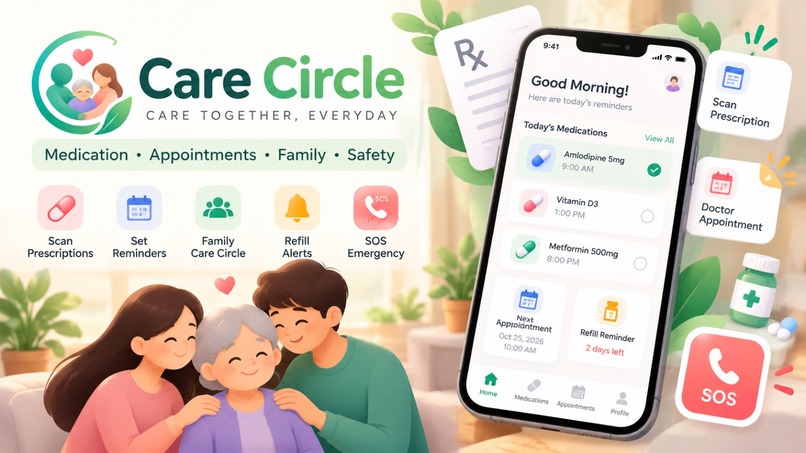
thumbnail
-
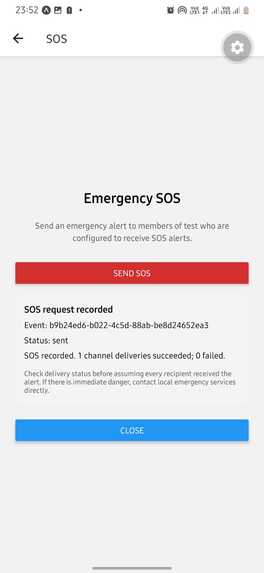
SOS Triggerr
-
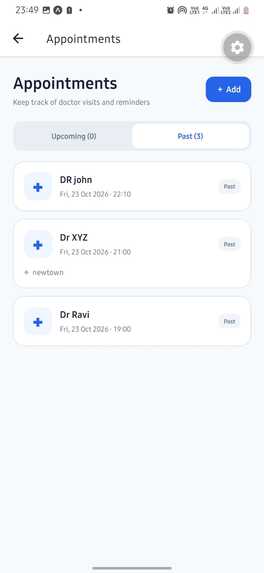
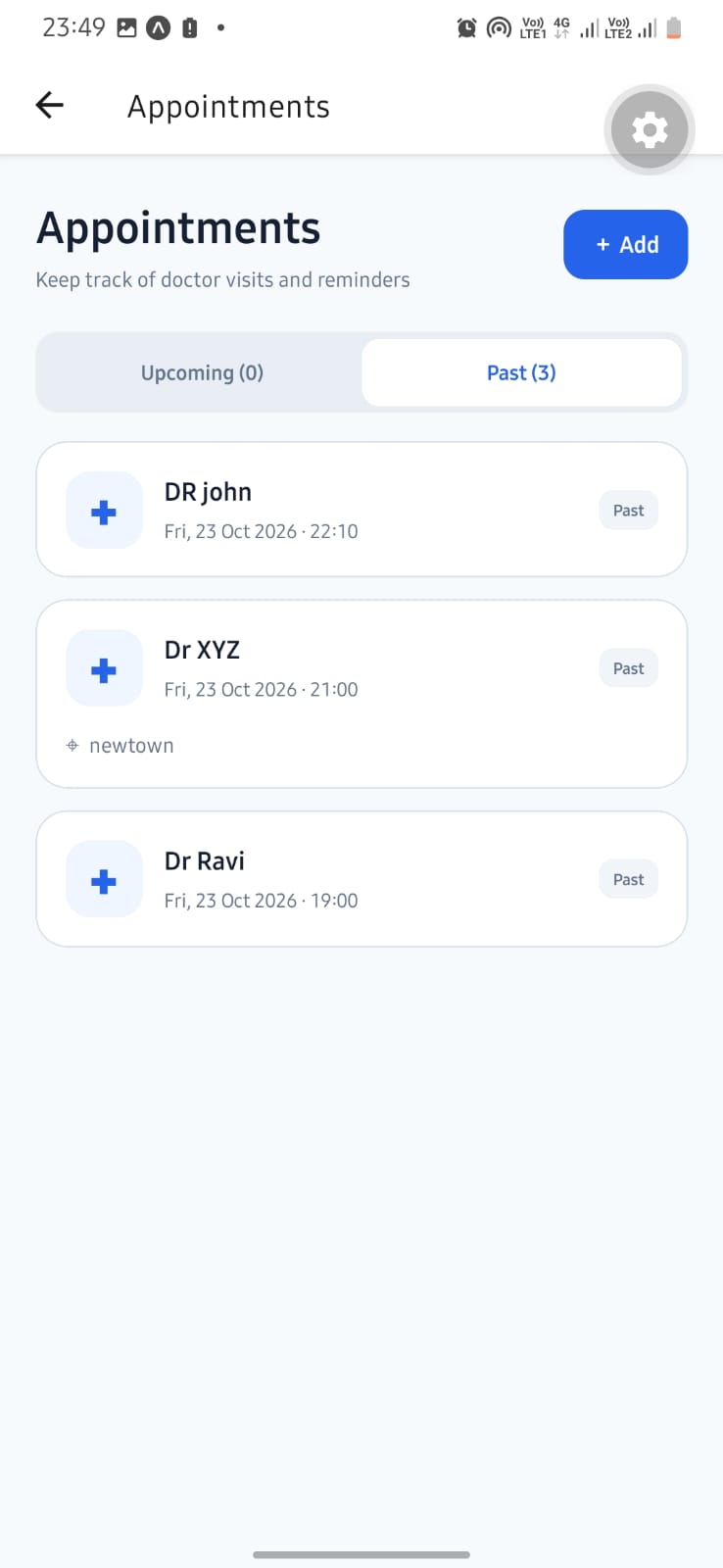
Past Appointment
-
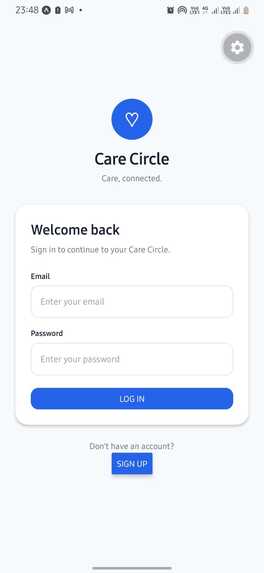
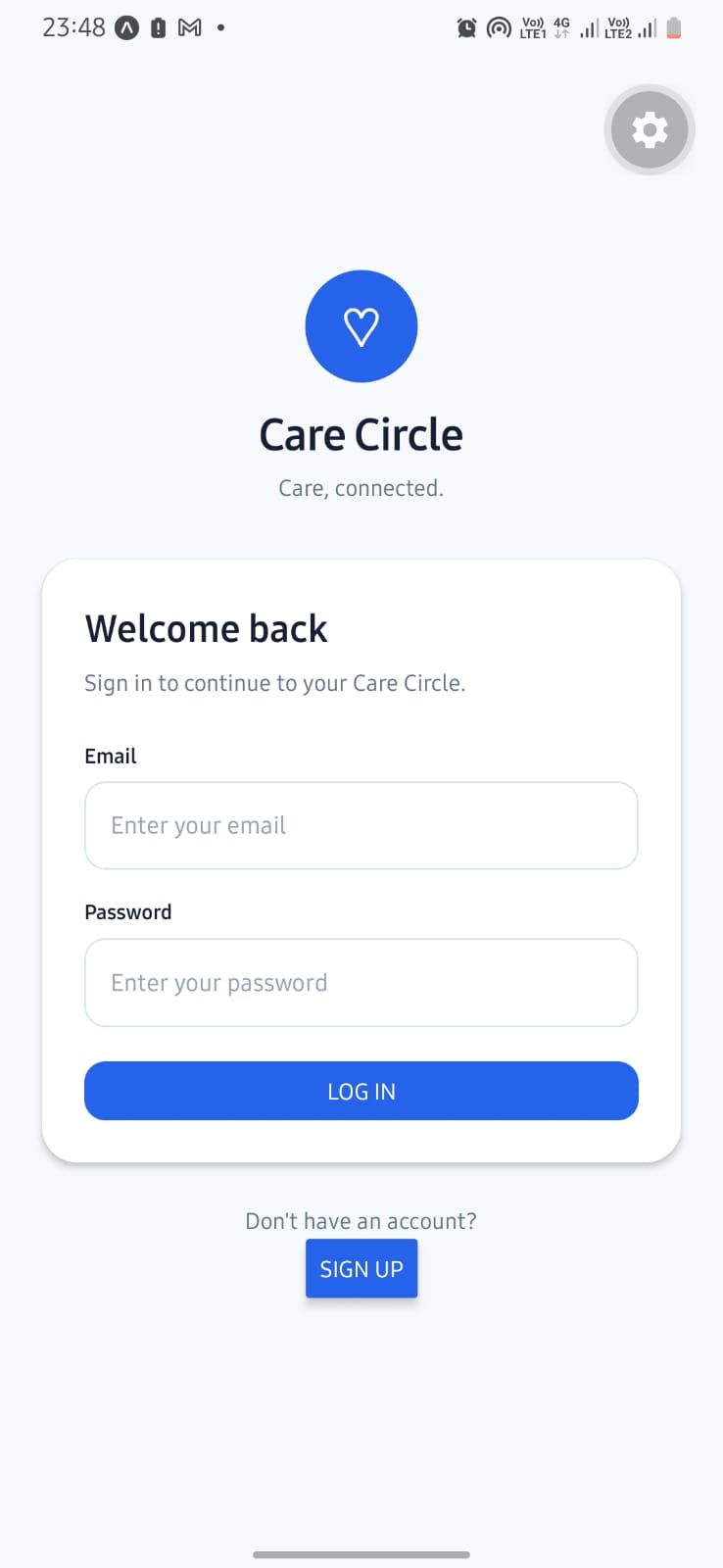
Login
-
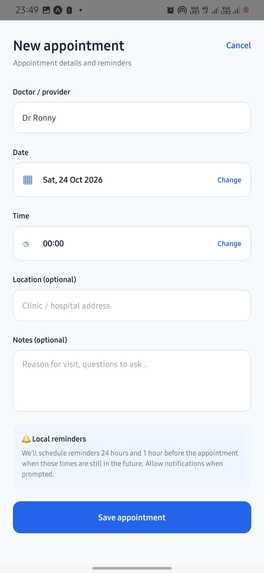
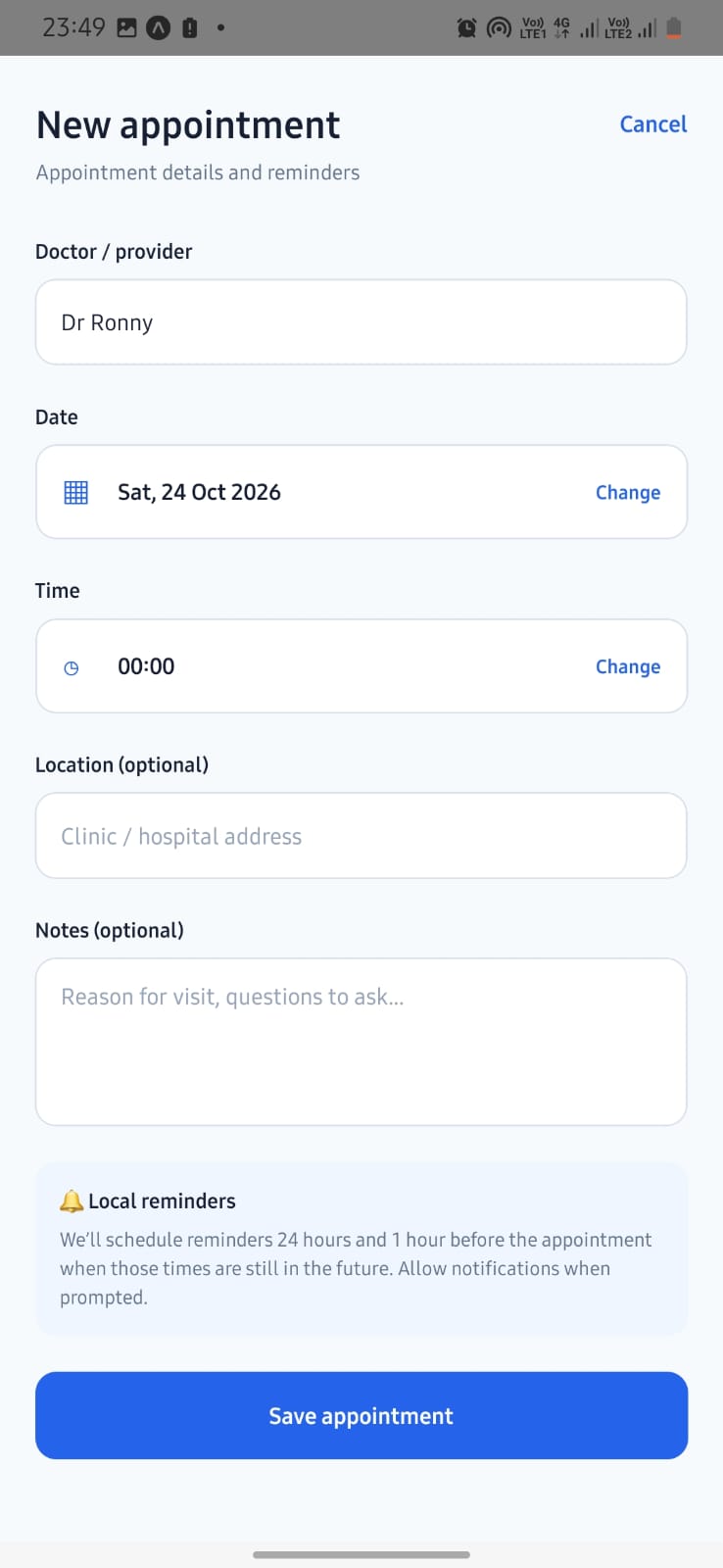
Add Appointment
-
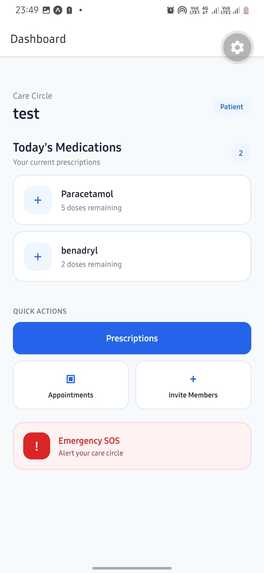
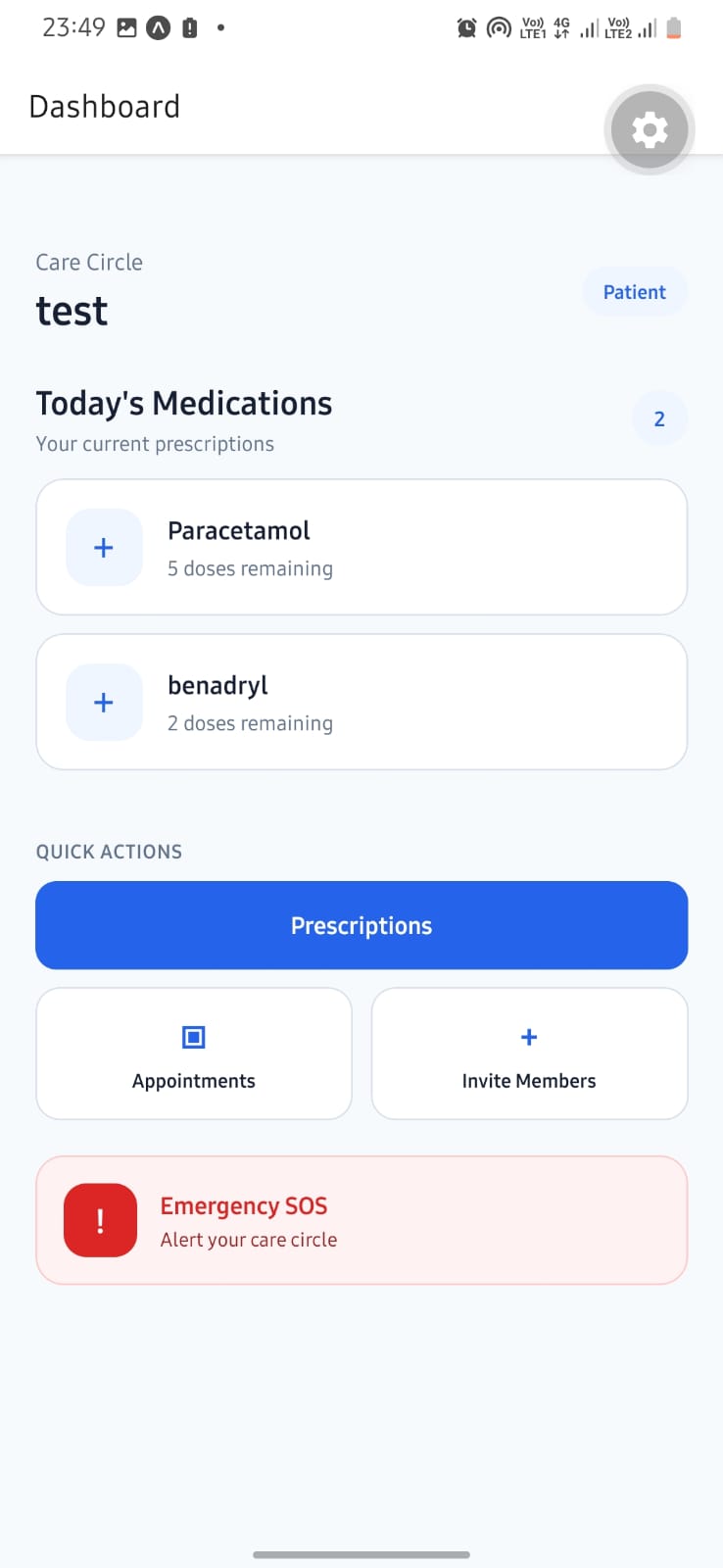
Dashboard
-
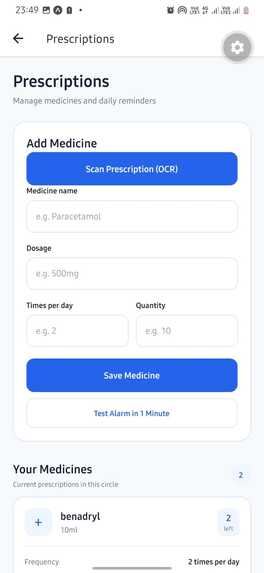
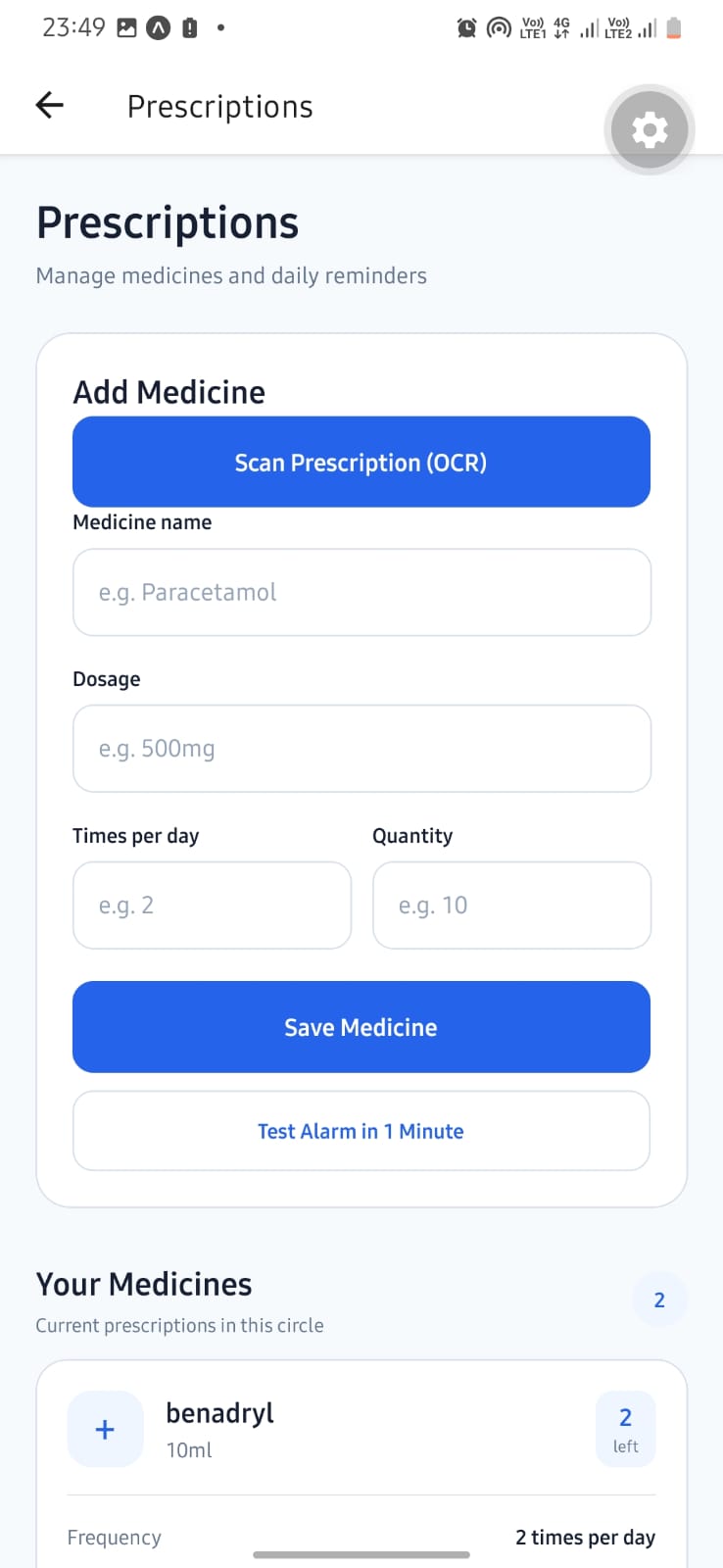
Add Prescription
-
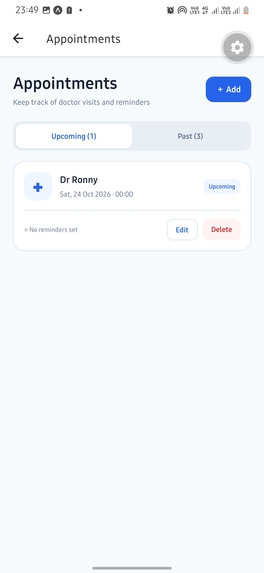
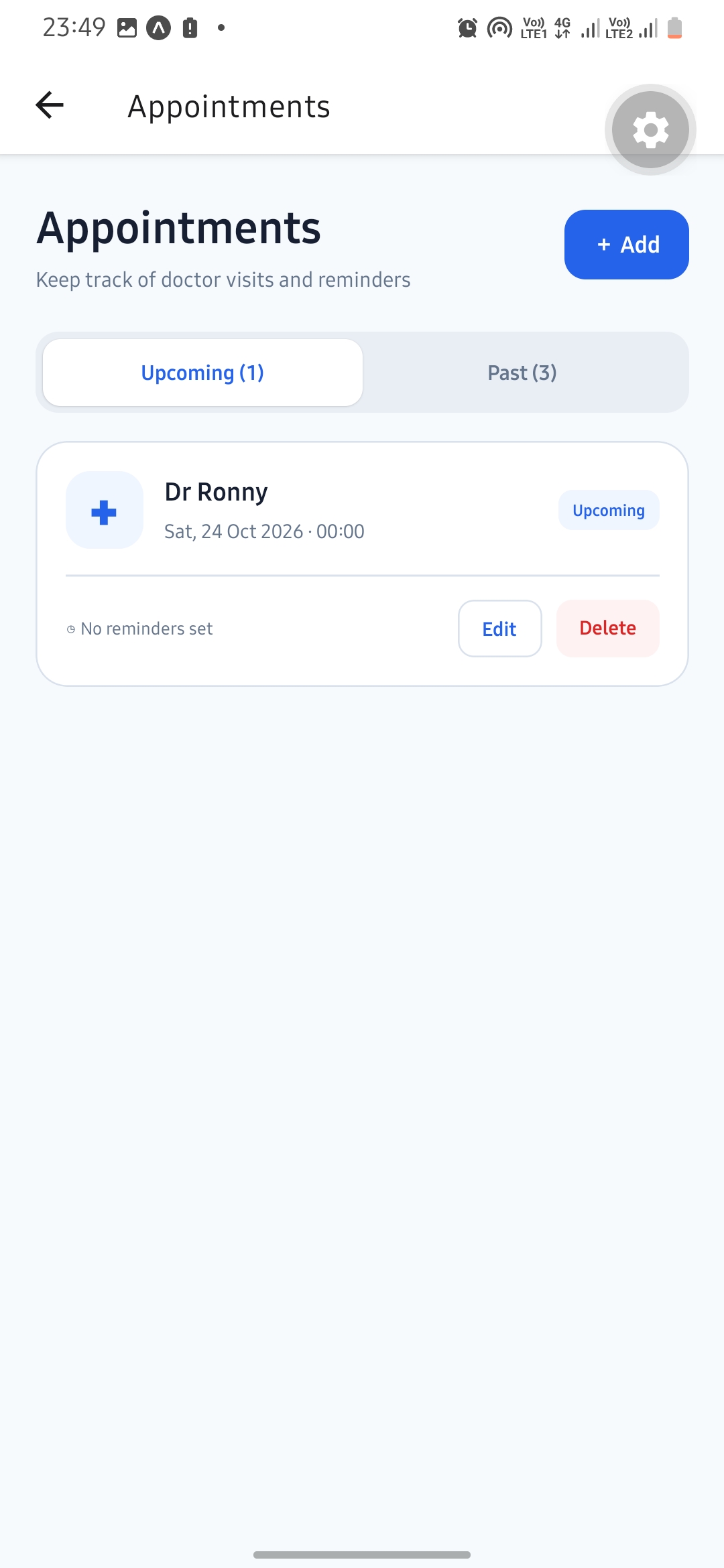
Appointments
-
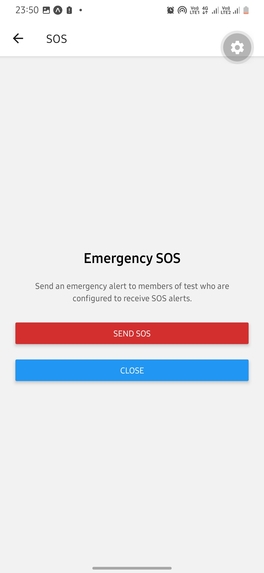
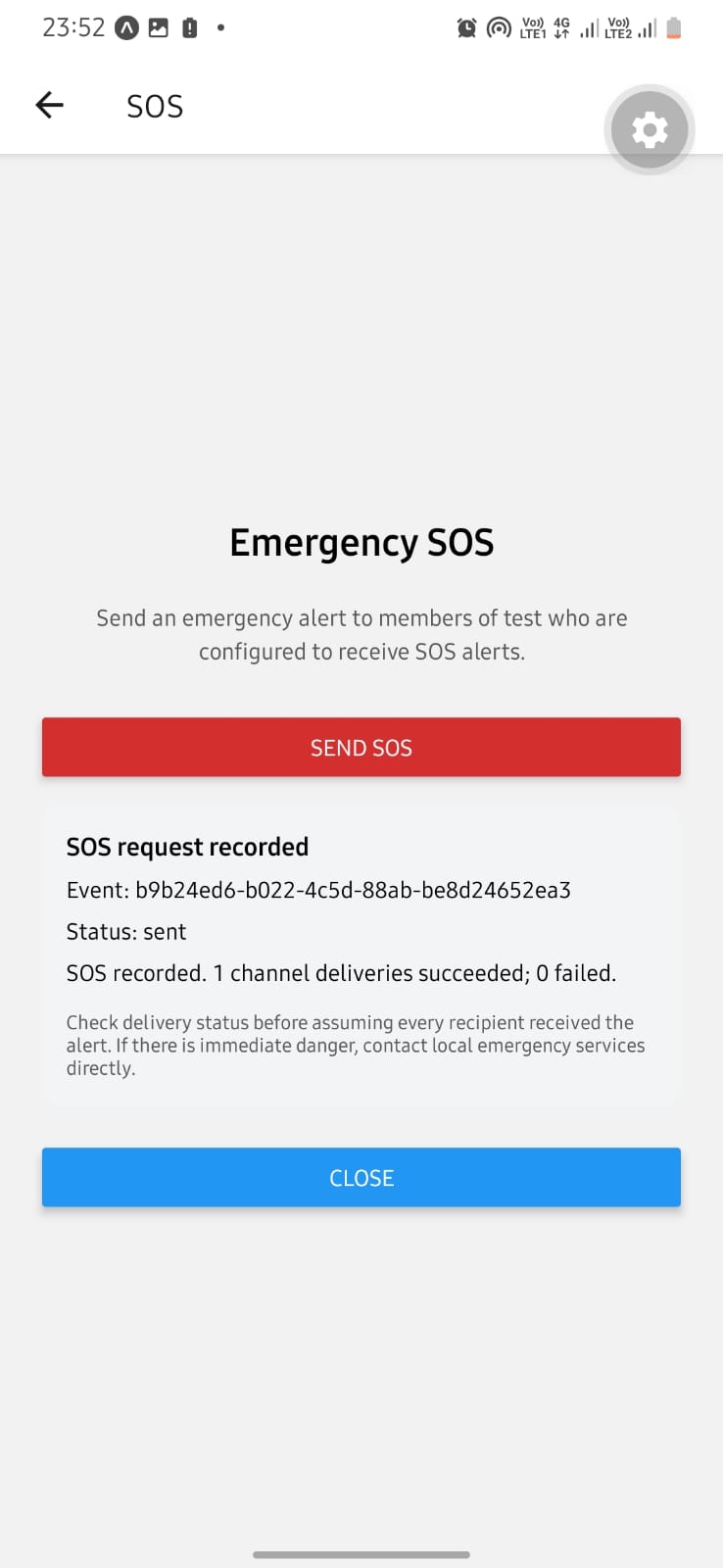
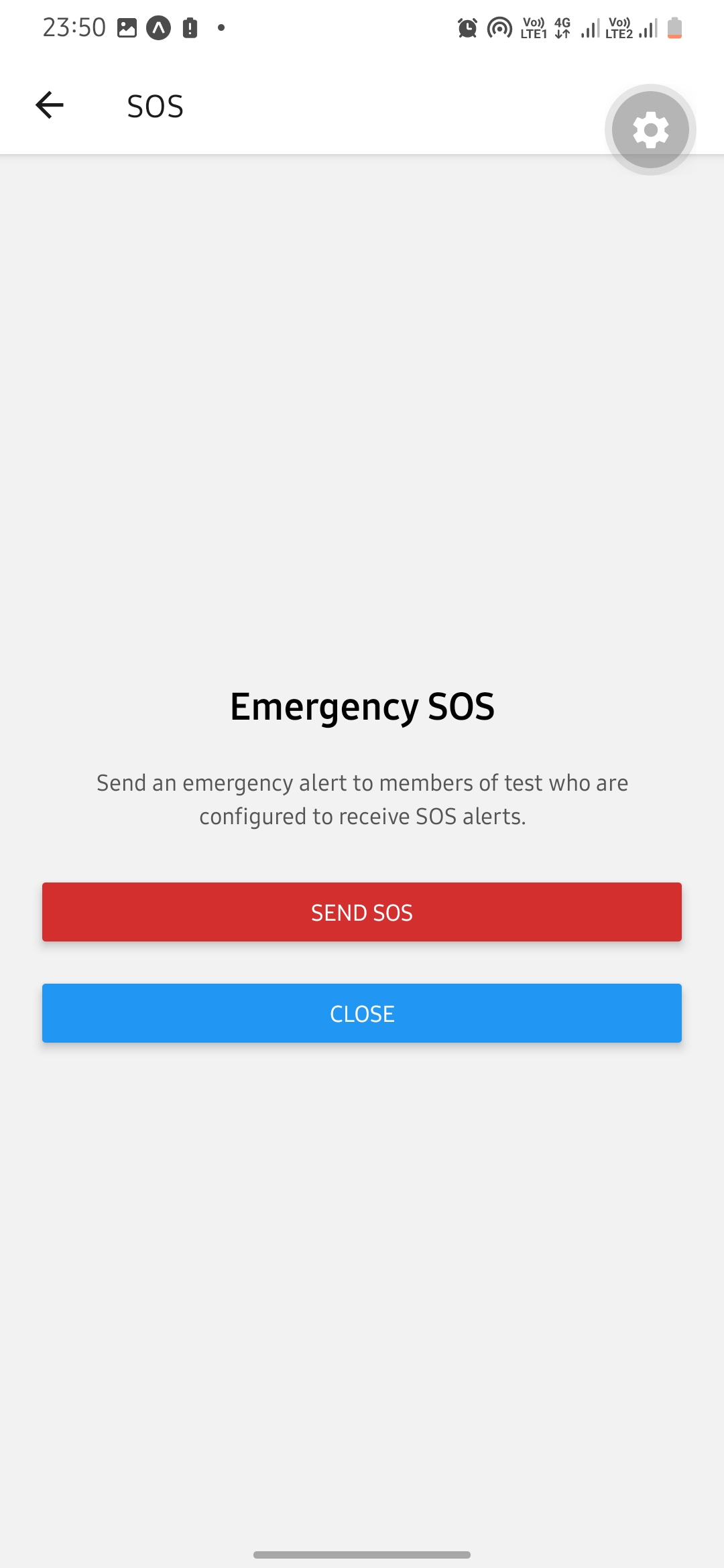
SOS Screen
-
💚 Inspiration
Managing medications sounds simple until you're juggling multiple prescriptions, remembering different dosages, keeping track of refills, and making sure a loved one hasn't missed an important dose. For families caring for elderly parents or relatives with ongoing medical needs, these little responsibilities can quickly become overwhelming.
We wanted to make that easier.
Care Circle was born from the idea that healthcare shouldn't be something families have to manage alone. We envisioned a shared space where people could coordinate medication schedules, stay on top of doctor appointments, and look out for one another, even when they weren't physically together. Our goal was to bring technology and family care closer together, turning everyday health management into a more organized, connected, and reassuring experience.
💡 What It Does
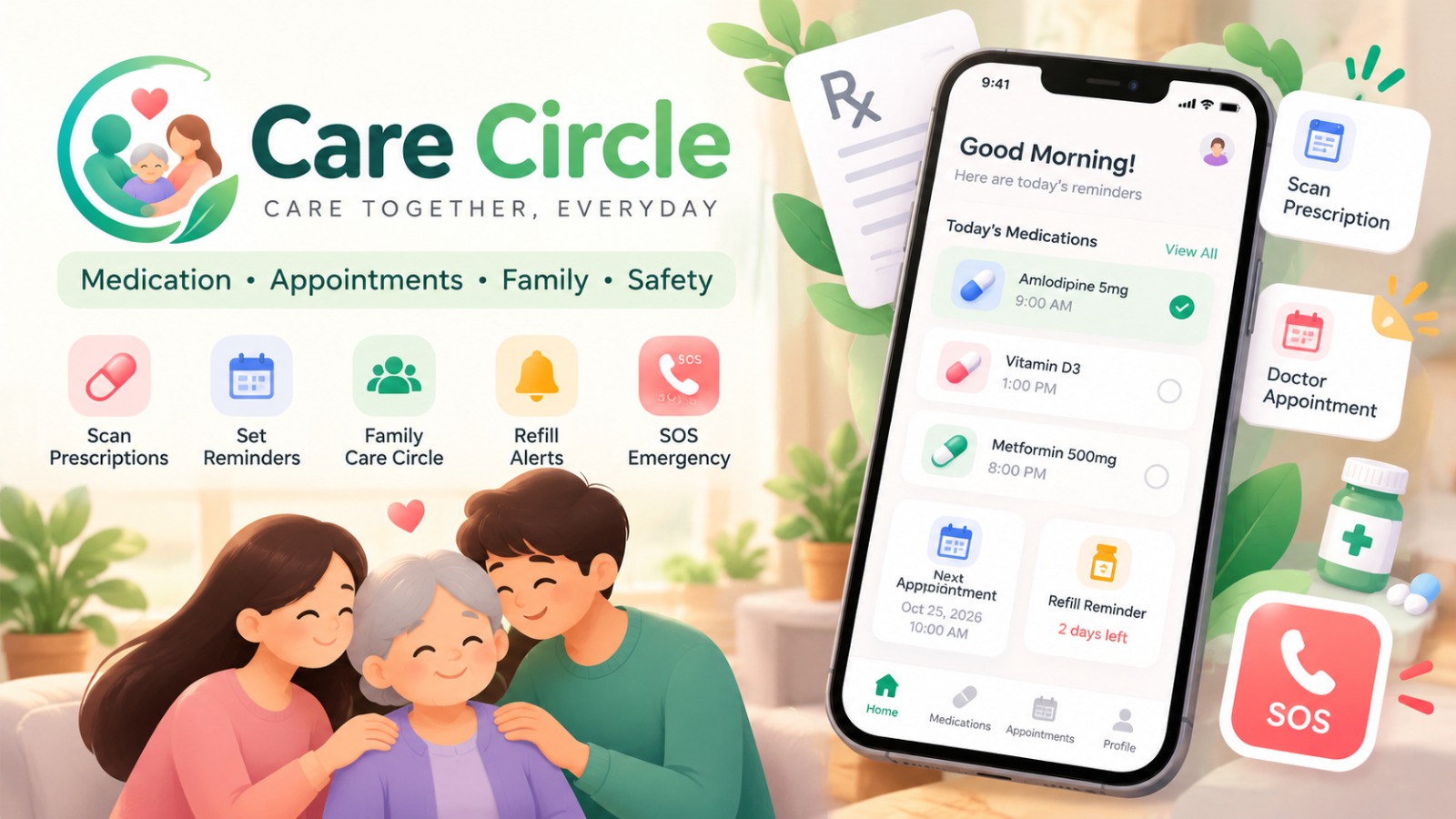
Care Circle is a family-focused medication and care management app that helps users coordinate everyday healthcare tasks in one place.
- 📸 Prescription OCR: Upload a prescription image and extract its text to make entering medication information easier.
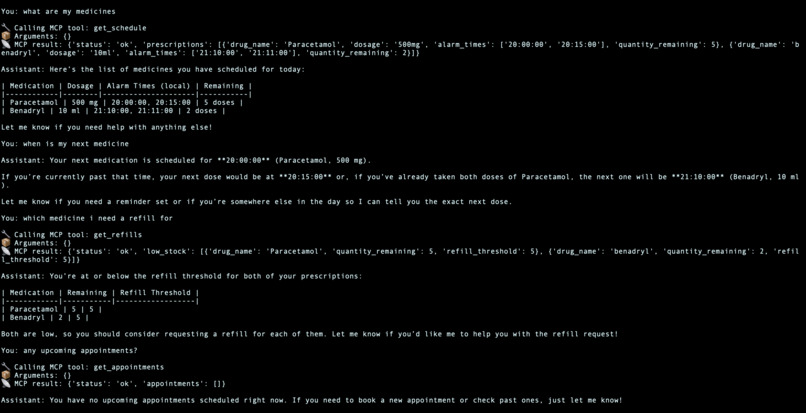
- 💊 Medication Management: Organize prescriptions, dosage information, and medication schedules.
- ⏰ Smart Reminders: Schedule reminders for medications and doctor appointments to help users stay on track.
- 👨👩👧👦 Shared Family Care: Connect family members so they can coordinate care and stay informed across devices.
- 📋 Medication Tracking: Record whether doses have been taken or skipped, helping caregivers keep track of medication routines.
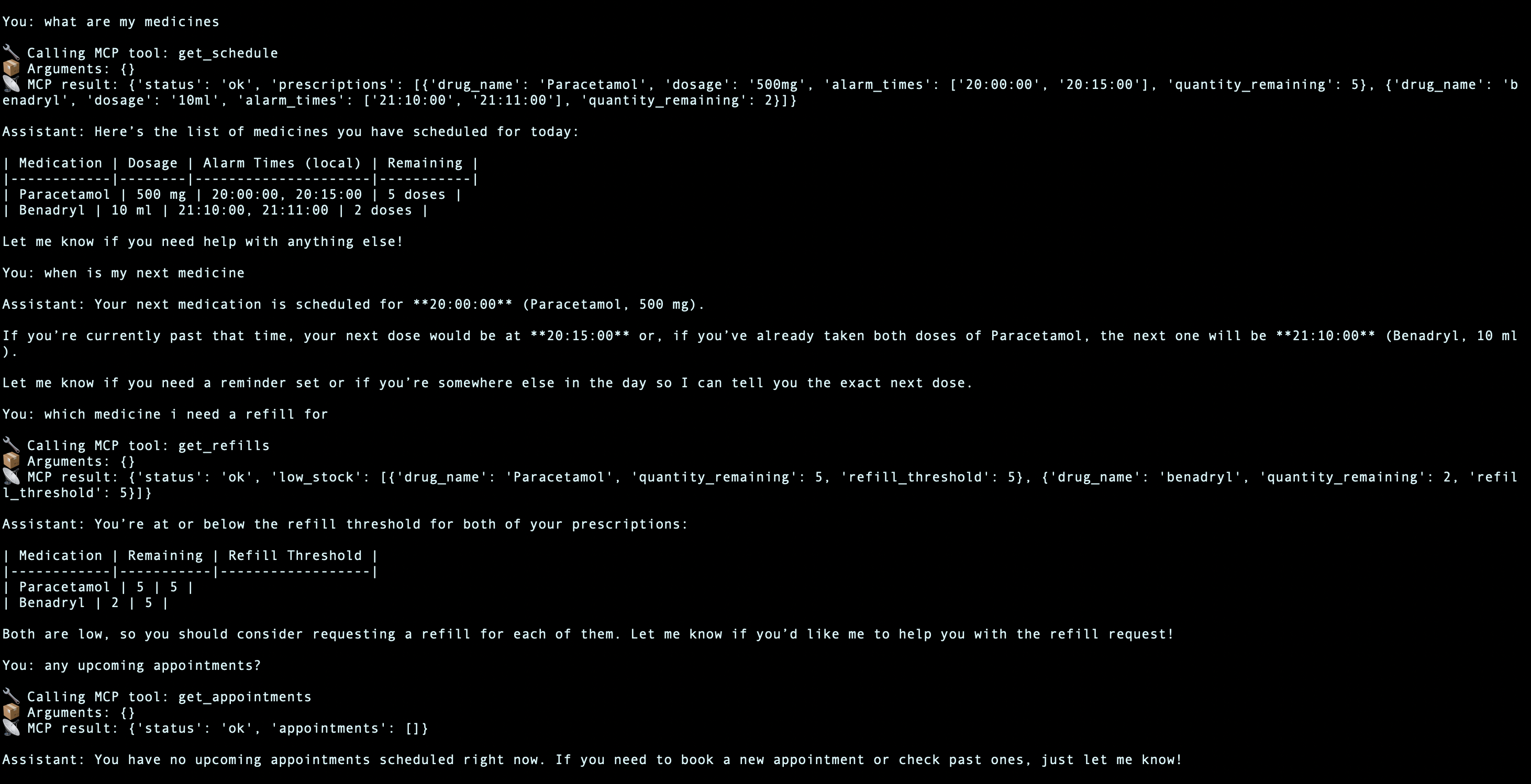
- 🔔 Refill Awareness: Track remaining medication quantities and help users identify when a refill may be needed.
- 🚨 SOS Support: Provide a way to alert family members when urgent assistance is needed.
Rather than treating medication reminders, appointments, and family coordination as separate problems, Care Circle brings them together around one central idea: care works better when everyone can stay connected.
🛠️ How We Built It
We built Care Circle with a focus on practical functionality, a modular architecture, and a smooth mobile experience.
Mobile App
We used React Native with Expo and TypeScript to build the mobile application. This gave us a foundation for developing a cross-platform experience while keeping the codebase maintainable as we added new features.
Backend and Data Management
We integrated Supabase for backend services, authentication, and persistent data storage. This supports the shared-care model, allowing authorized family members to access relevant information rather than keeping medication schedules isolated on individual devices.
Prescription OCR
Manually entering every medication detail can be tedious, especially when prescriptions contain multiple medicines. To reduce this friction, we developed a prescription OCR workflow.
Users can upload a prescription image, which is sent to a backend endpoint for text extraction. We designed the backend to validate the user's session and check their care-circle permissions before processing the request.
Medication Scheduling and Reminders
We designed the scheduling workflow around prescription data. After a prescription is processed, users can review medication details and configure or edit their schedules. The application can then use those schedules to support reminders and medication tracking.
We also worked on appointment management, including scheduling and reminders, so that everyday healthcare tasks could be managed alongside medication routines.
Emergency Support
We developed an SOS backend using AWS Lambda and Amazon API Gateway, with Supabase integration for application data and authorization. The backend also includes an Amazon SNS integration for SMS alerts, controlled by configuration so that messaging can be enabled when the required AWS setup is available.
This modular approach lets us develop and deploy individual backend capabilities without having to rebuild the entire application.
🧩 Challenges We Faced
One of our biggest challenges was bringing together several technologies that each have different requirements.
1. Making OCR work in a serverless environment
OCR isn't just a matter of installing a Python package. Tesseract requires a system-level executable, which complicates deployment to a standard ZIP-based Lambda. We addressed this by moving the OCR function to a container-based Lambda deployment, giving us control over the runtime environment and its dependencies.
2. Handling authentication and permissions
A family-care application needs more than basic login functionality. Different members may have different responsibilities, so backend endpoints must validate authentication and verify access before allowing sensitive actions. We incorporated Supabase authentication and care-circle permission checks into the OCR workflow.
3. Coordinating multiple backend services
The application brings together Supabase, AWS Lambda, API Gateway, and notification-related services. Connecting these components required careful attention to environment variables, API configuration, deployment settings, and service permissions.
4. Working through mobile development and deployment issues
Developing with React Native and Expo introduced challenges involving package compatibility, Android tooling, and native dependencies. We learned to diagnose problems systematically, distinguish application-code issues from build-environment issues, and verify that the development and deployment configurations matched the requirements of each component.
These challenges taught us that building a useful application involves much more than implementing individual features. The pieces must work together reliably.
🏆 Accomplishments We're Proud Of
We're proud to have developed Care Circle around a problem that matters in everyday life: helping families look after the people they care about.
Some of the work we're especially proud of includes:
- Bringing medication management, appointments, reminders, and family coordination into one application.
- Building a prescription OCR workflow to reduce repetitive manual data entry.
- Designing permission-aware backend processing for sensitive healthcare information.
- Integrating serverless AWS services for features such as SOS support.
- Creating a modular foundation that can grow as the needs of families and caregivers evolve.
Most importantly, we approached the project with a human need in mind. The technology is there to make caring for someone a little less stressful and a little more manageable.
📚 What We Learned
Building Care Circle strengthened our understanding of full-stack development, mobile application architecture, cloud infrastructure, and the practical challenges of integrating AI-adjacent capabilities into real products.
We learned how to connect a React Native frontend to a backend service, manage data and authentication with Supabase, design serverless APIs with AWS Lambda and API Gateway, and package software that depends on native system binaries.
We also learned an important lesson about healthcare technology: automation should make care easier, not remove human judgment. OCR can extract text, but prescription details still need to be reviewed. Reminders can support routines, but they shouldn't replace professional medical advice or a caregiver's judgment.
That perspective shaped how we approached the project: automate repetitive tasks where possible, keep users involved in important decisions, and make coordination easier for the people providing care.
🚀 What's Next?
We see Care Circle as a foundation for a more connected family-care experience.
Next, we'd like to improve prescription extraction and validation, make medication scheduling more intuitive, expand caregiver notifications, and strengthen the shared view of medication and appointment activity. We'd also like to make the experience more accessible for older adults and explore ways to give caregivers a clearer picture of what needs attention.
Our long-term vision is simple: less time worrying about the logistics of care, and more time focusing on the people who matter.

Log in or sign up for Devpost to join the conversation.