-
-
-
-
-
Planning for the initial idea
Inspiration
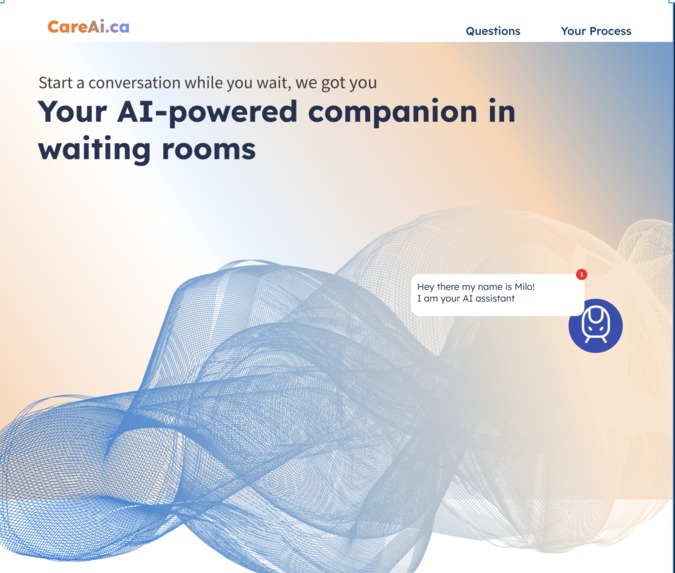
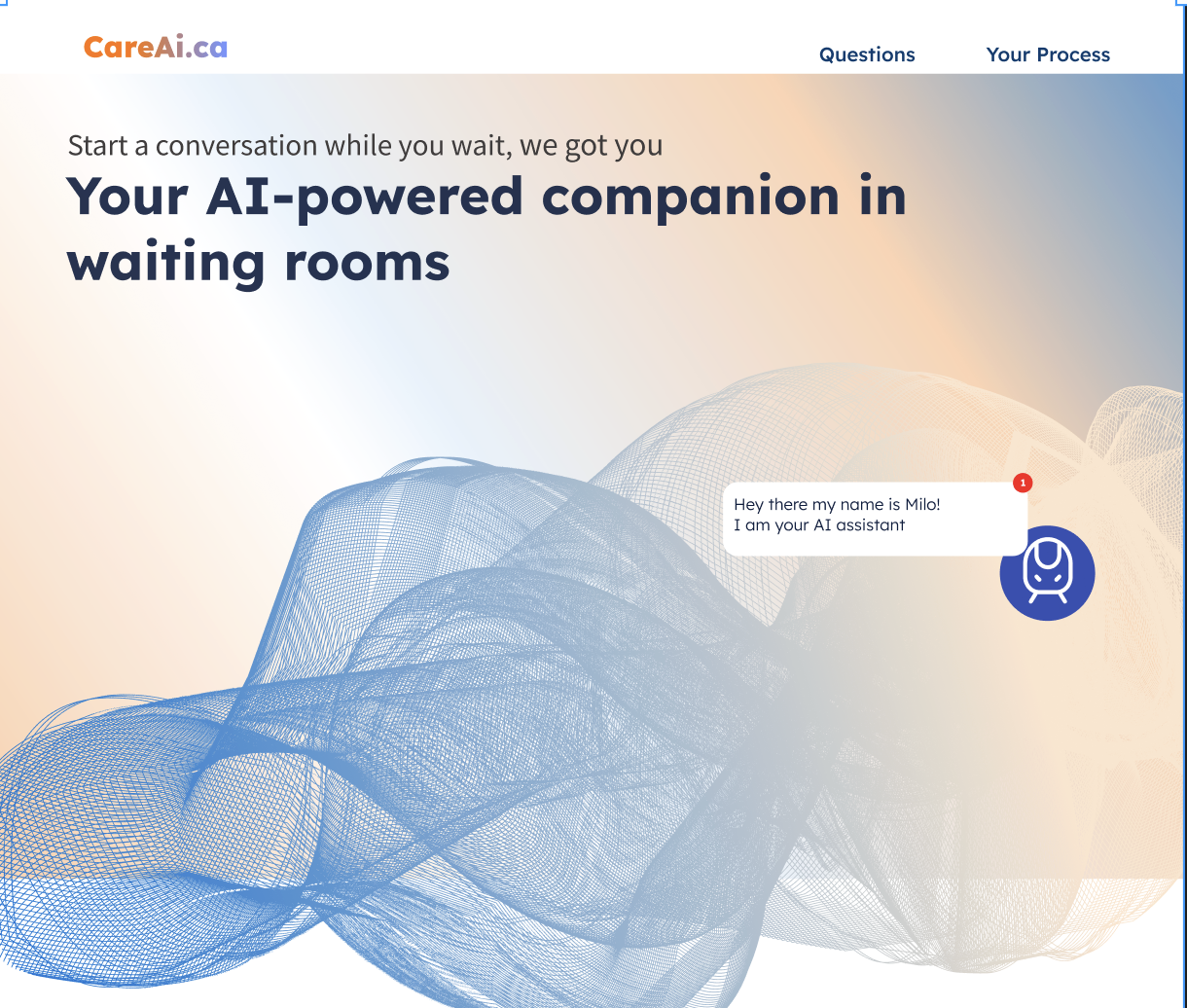
Since 2018, 74,000 Canadians have died while on healthcare waitlists. Despite the critical nature of emergency room wait times, little attention has been given to alleviating the anxiety and uncertainty patients experience during the emergency room waiting and visitation process. To address this issue, we developed a two-part solution: an advanced AI-powered chatbot designed to provide engagement and ease anxiety, and a real-time visitation status tracker that offers clarity on the process and wait times. Both components are seamlessly integrated into an interactive, user-friendly website featuring an inviting design and intuitive navigation.
The structure
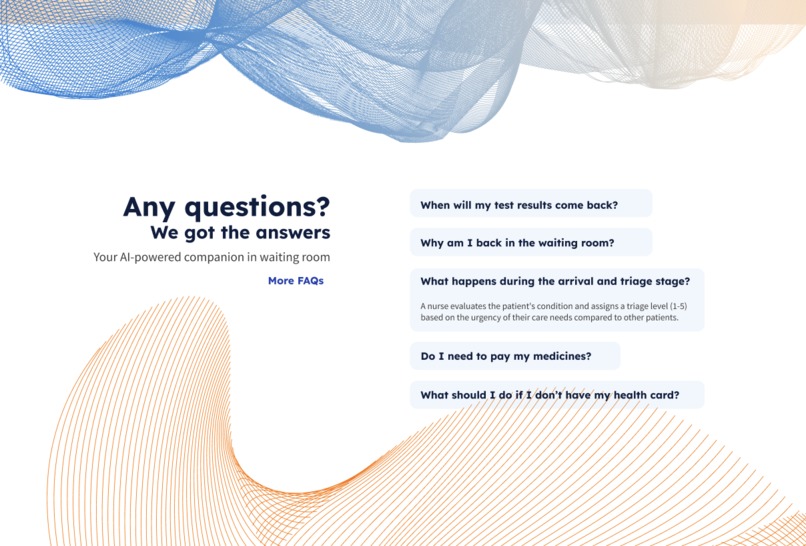
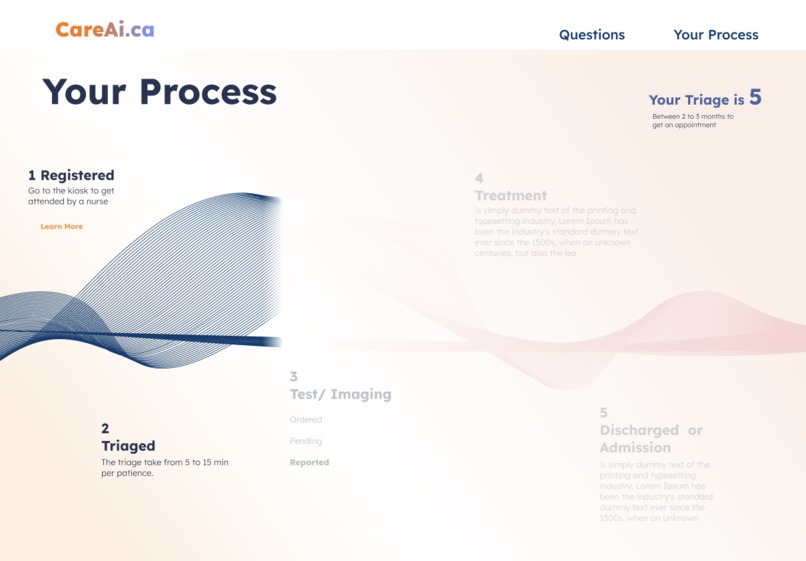
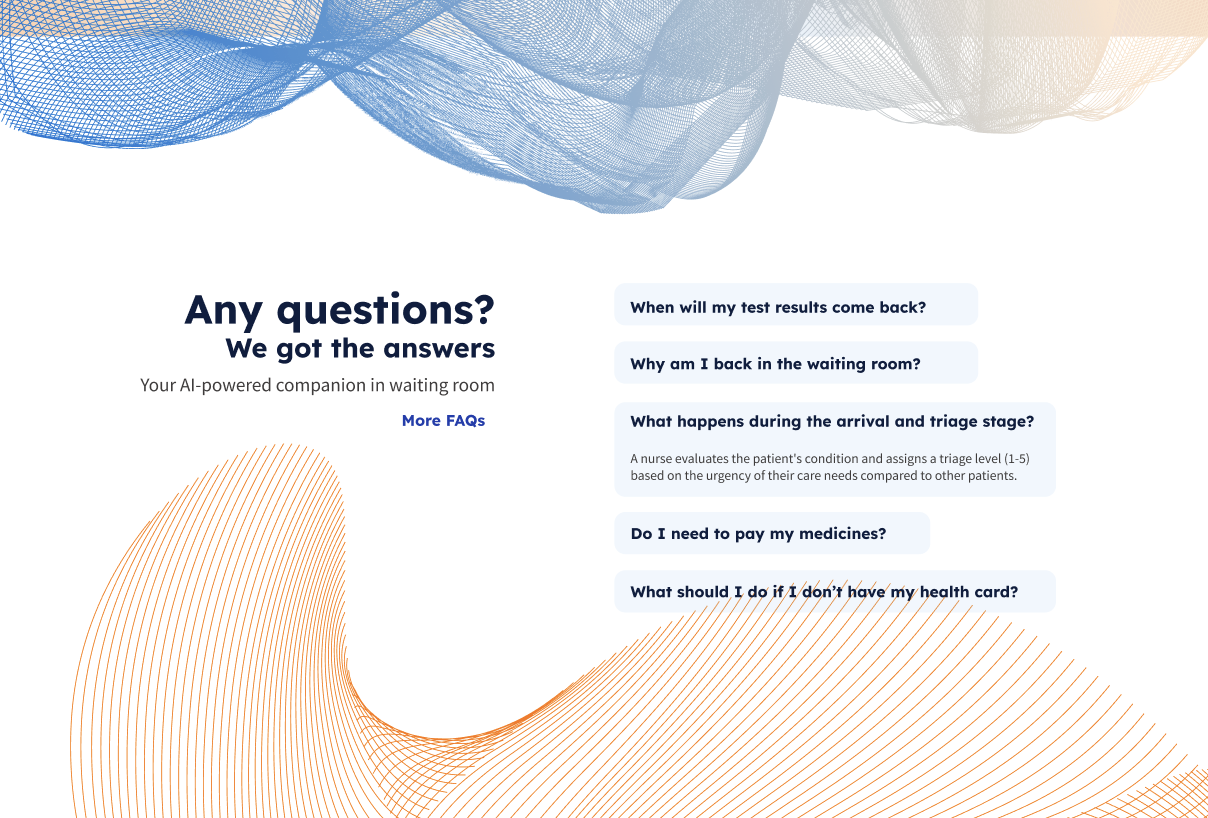
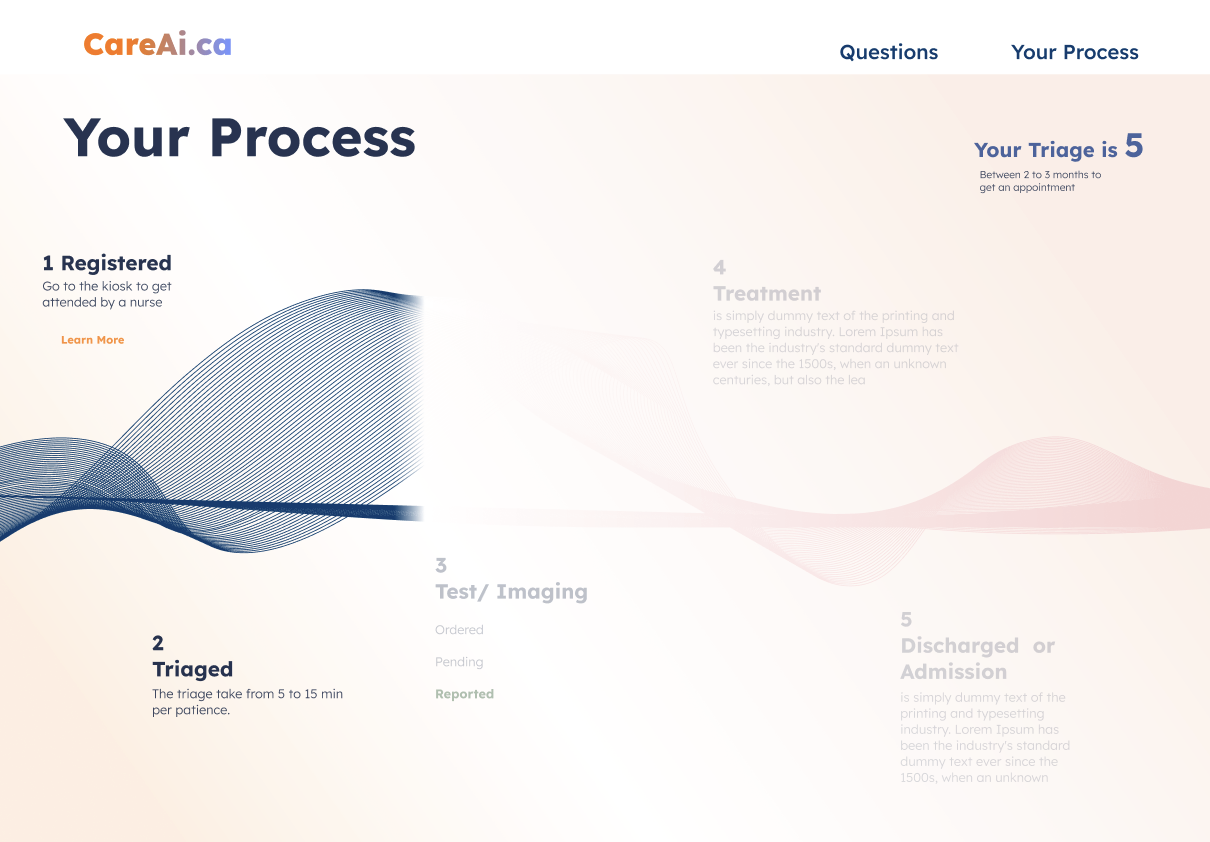
On initialization, the website (frontend) fetches the live data of all patients in the clinic through the API provided by IFEM that has been processed by backend. The API contains each patient’s ID, arrival time, queue position, status, time elapsed, and trial status at that given time in the clinic. The website itself opens to the login screen where the patient first enters their ID to access their personalized chatbot and status tracker. If the ID doesn’t exist in the API, then the patient is requested to re-enter a valid ID. Once the patient’s data has been found in the back-end, the user can view their current status in the ER process, starting from registration, triaging, test/imaging, treatment, to either being discharged or being admitted to the hospital. The website also includes a section for frequently asked questions and an explanation of triage levels. For the provided information, we took extra precautions to not reveal any medical information, such as test results or possibly conditions, to the patient during the ER visitation process through the website so as to not cause further speculation and anxiety. This was especially true for the chatbot, for which we did extensive prompt engineering to ensure safety and appropriateness.
How we built it
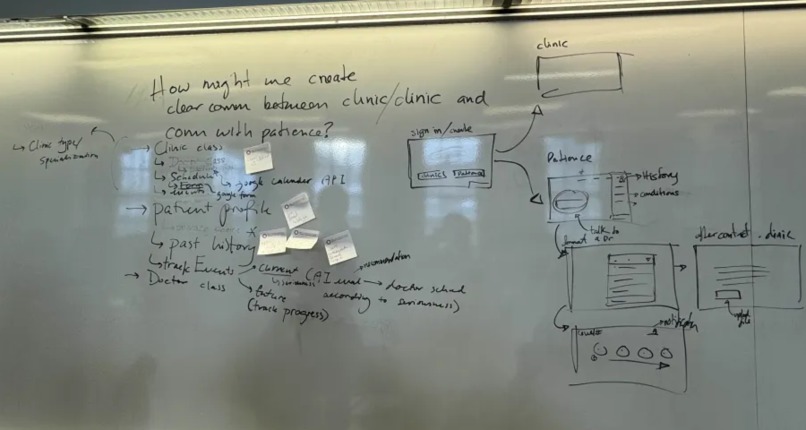
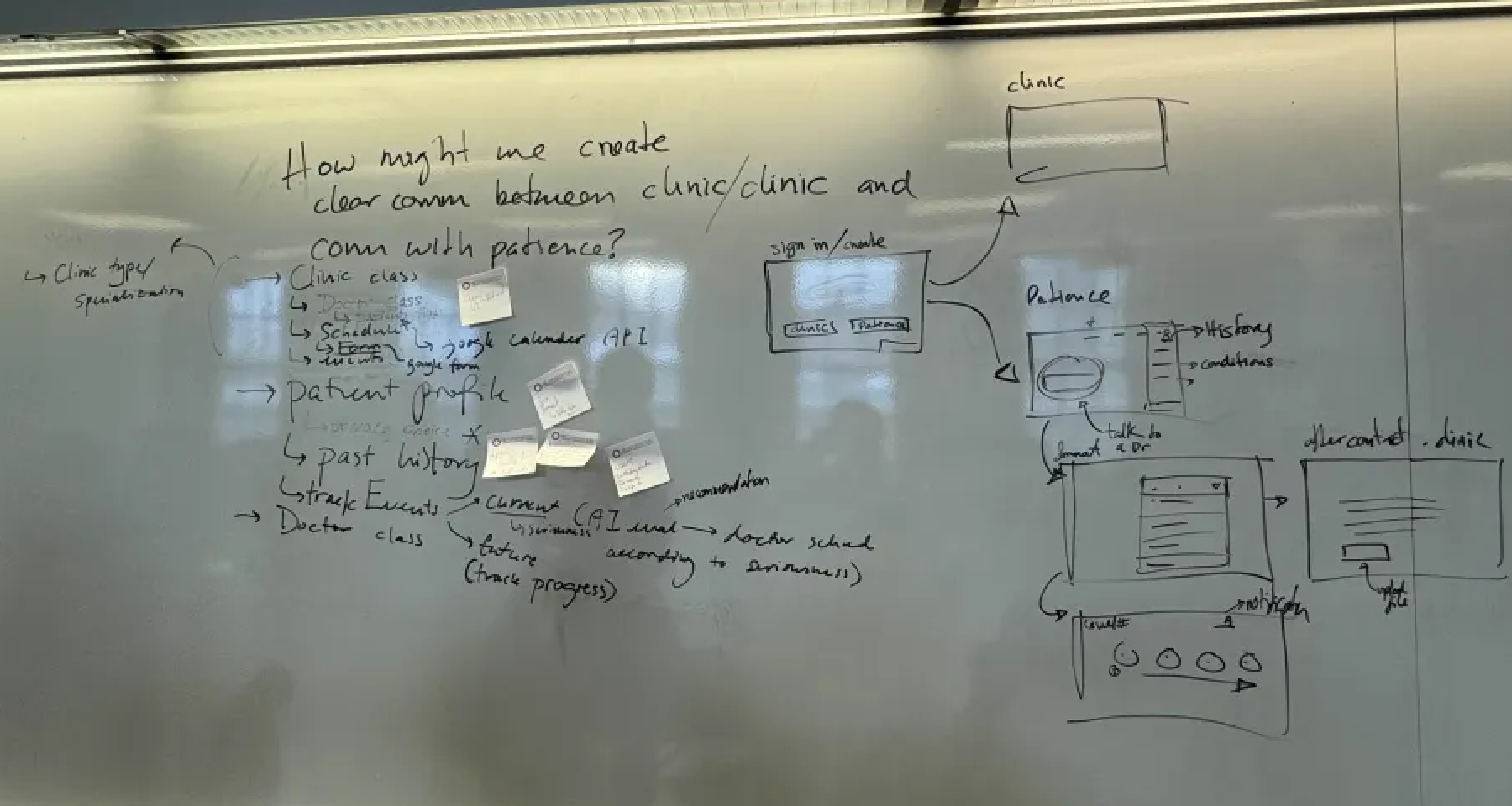
To develop the frontend, we sketched out a few visuals on paper and then sought to recreate them through Figma. We created some graphics on Photoshop and Illustrator to be used throughout our app. We then exported the Figma screens through native HTML and CSS files, to be integrated without our backend. Our backend python files ran an API call to collect patient data in the queue, which was intended to be integrated with our frontend with Flask for use upon request. We also called the Gemini API to be used as a chatbot in our app.
Challenges we ran into
Due to our lack of frontend knowledge and not knowing frameworks such as Flask for backend python, we were unable to learn how to and fully integrate the backend in time. In the future, we hope to have better knowledge on how to integrate the two ends. We also initially misunderstood the task and planned a lot of architecture for the clinic side, including queuing and dividing the patient and clinic side of the patient information for privacy.
Accomplishments that we're proud of
We are proud of the solution we came up with for the problem since it effectively addresses the most critical stress factors such as lack of transparency and anxiety from long wait times, while also not exposing the patient to any medical side information. We also achieved a high level of front end website and graphic design that is very user-friendly and interactive. Furthermore, we managed to implement and call APIs correctly for our chatbot and to collect the patient data. Another proud accomplishment is how we were able to apply the concept of Object Oriented Programming as learned in class to our code.
What we learned
API, HTML, CSS, AI code generation, Gemini AI, and how to use git, photoshop/illustrator/procreate/anima
We learned how to call APIs by using an API key for Gemini where we learned how to tailor form a model for our specifications. Our model requires that the patient is not exposed to any medical side information and is focused on maintaining their well-being.
What's next for CARE.AI
To accommodate younger children we plan to implement a game feature to help them pass the time and to fix their boredom. This game would be a text-based role-playing response, so that the game may be paused at any time in case of an emergency. This would also not be intensive on the operating memory of the app and website. We tested out riddle games but figured it unsuitable for emergency waiting room


Log in or sign up for Devpost to join the conversation.