Inspiration
Our inspiration began with a TikTok video featuring a futuristic Tesla jet-powered car. It sparked a question: What really drives the evolution of automobiles?
We started exploring how technological innovation, market demand, cultural trends, and environmental conditions shape the vehicles we drive. This led us to think about urban transportation: How many electric and gasoline-powered cars should a city support? How should charging stations and gas stations be distributed to meet people's needs?
But as we explored these questions, we realized that transportation is ultimately about people. Everyone has different lifestyles, budgets, priorities, and environments, yet choosing the right car can still be overwhelming.
This realization shifted our focus from city-wide transportation planning to individual mobility in modern life.
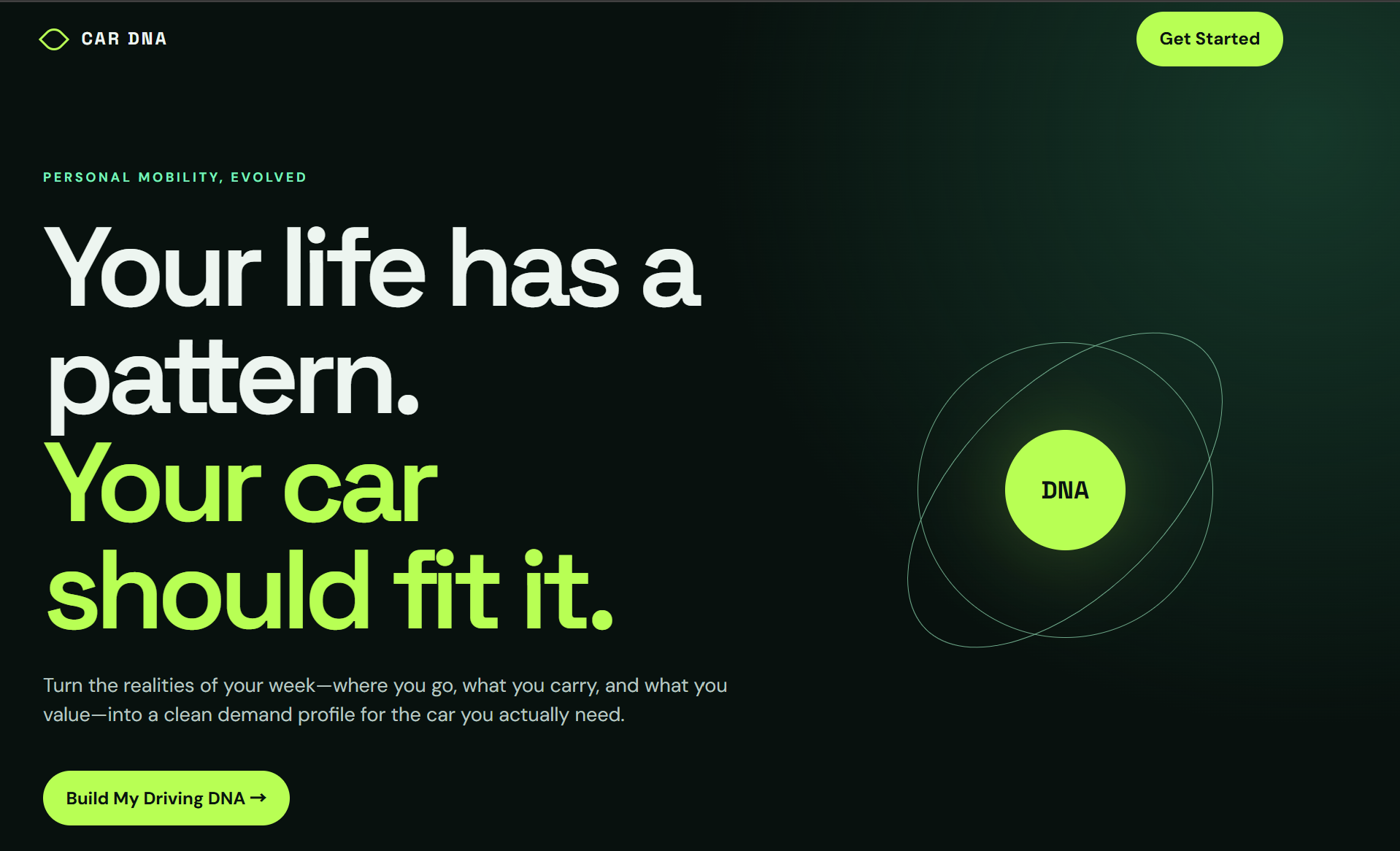
Inspired by the idea of evolution, we created Car DNA, a genetic algorithm-based vehicle recommendation system designed to match cars with people's unique needs.
If cars evolve with society, shouldn't they evolve around us, too?
What it does
How we built it
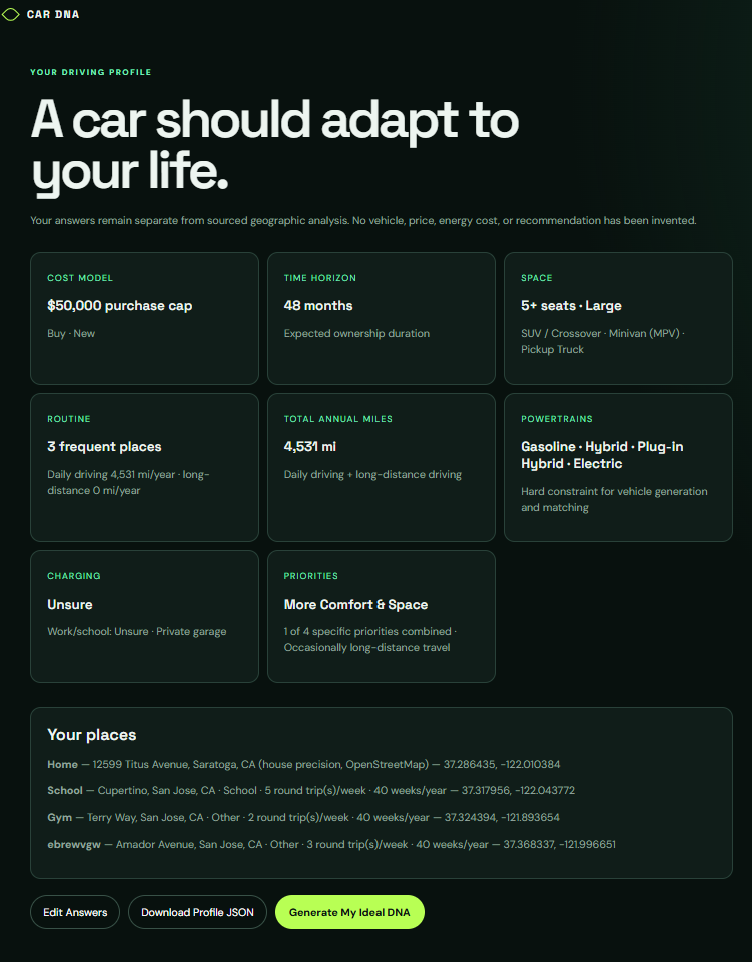
We started by figuring out what actually matters when someone chooses a car, from budget and fuel efficiency to driving habits and everyday needs.
Next, we worked on a genetic algorithm inspired by natural selection. Each car is evaluated based on how well it matches the user's preferences. The algorithm uses a fitness score to compare different options and search for better matches over multiple generations.
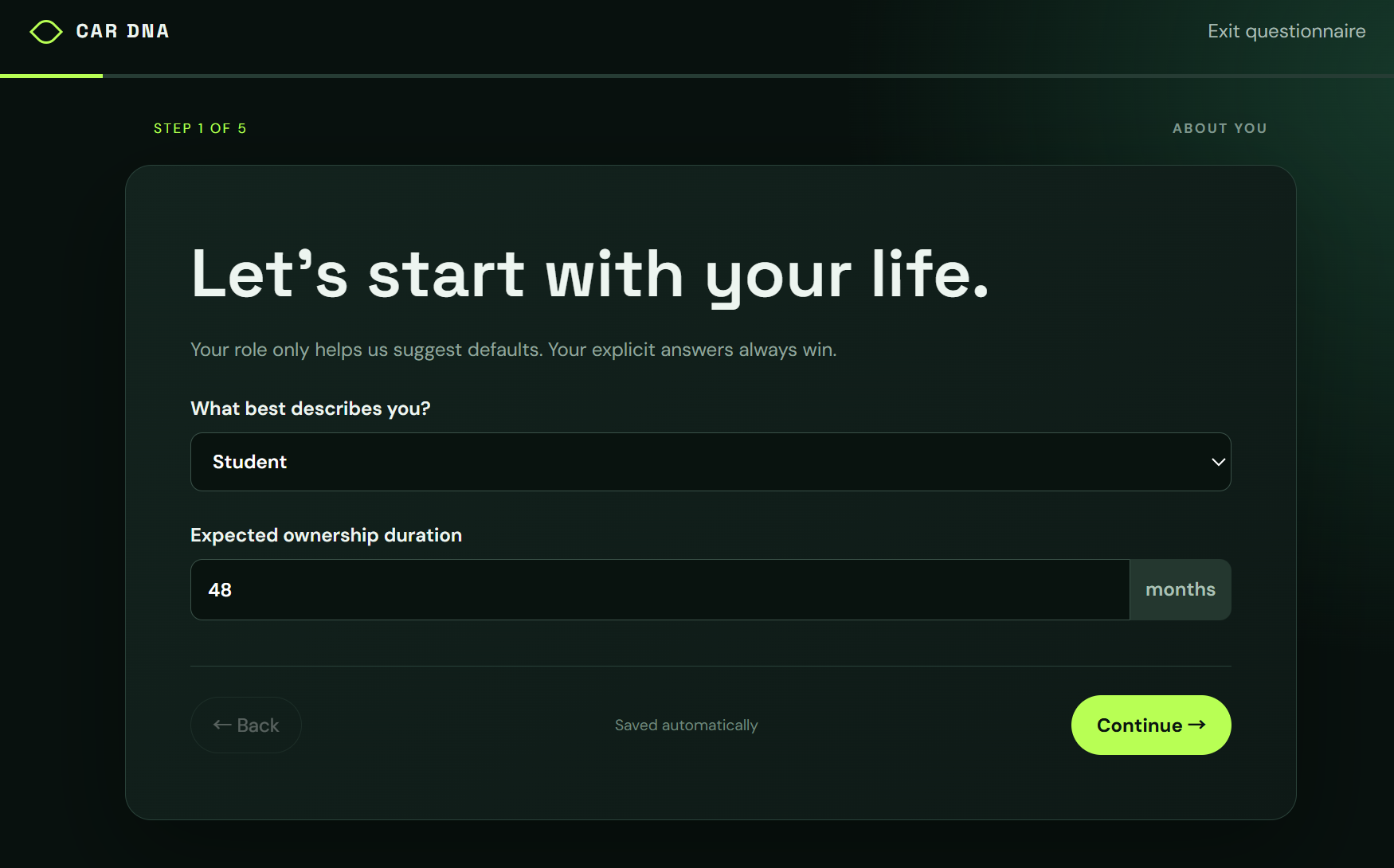
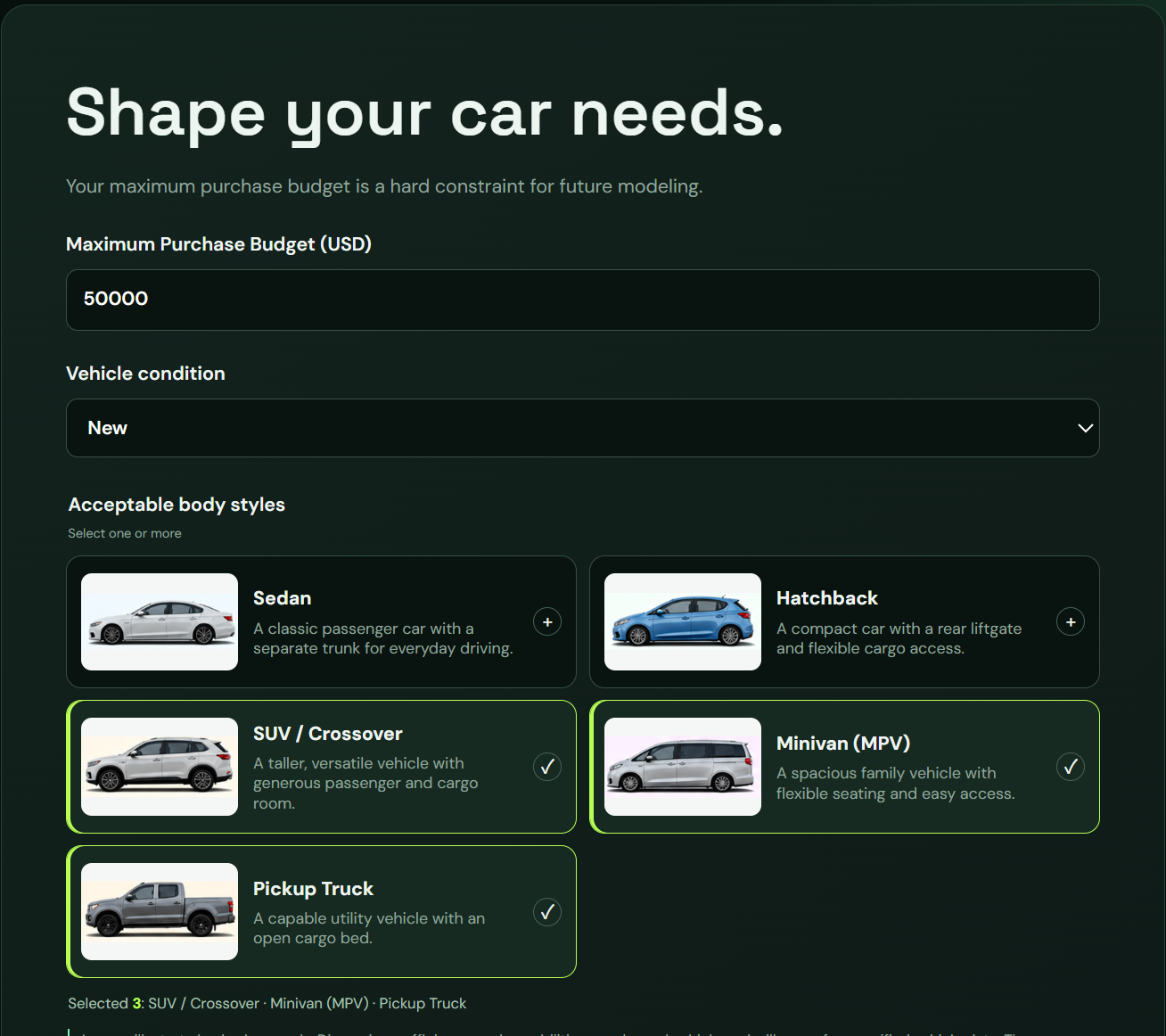
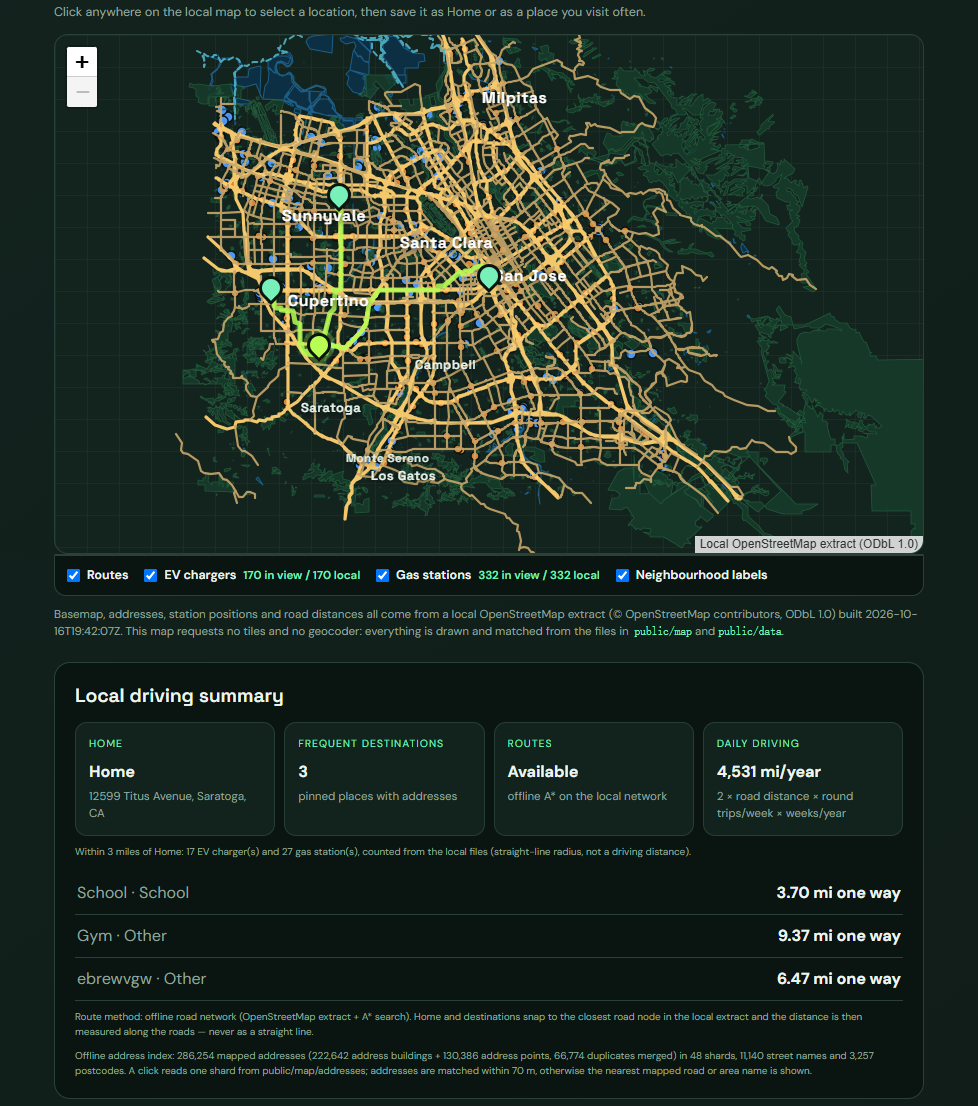
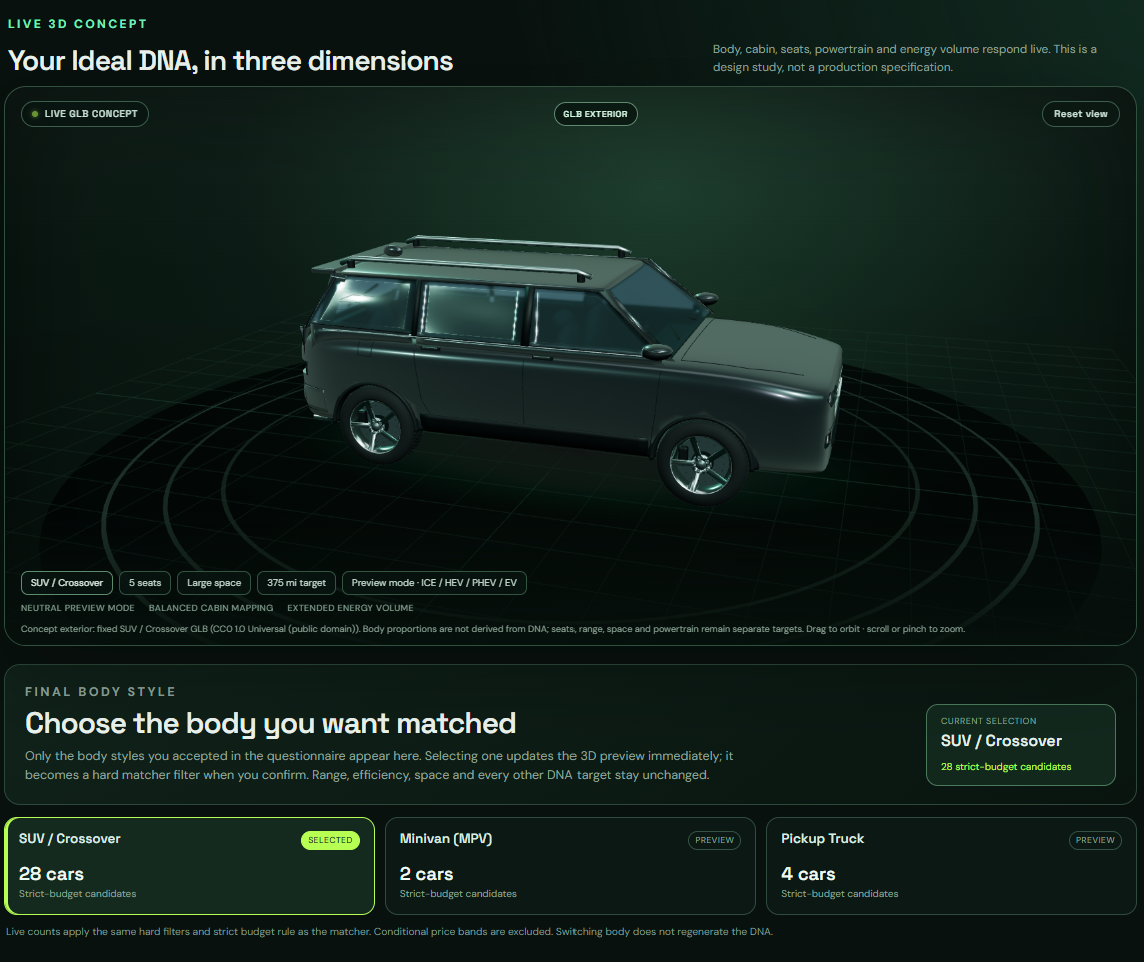
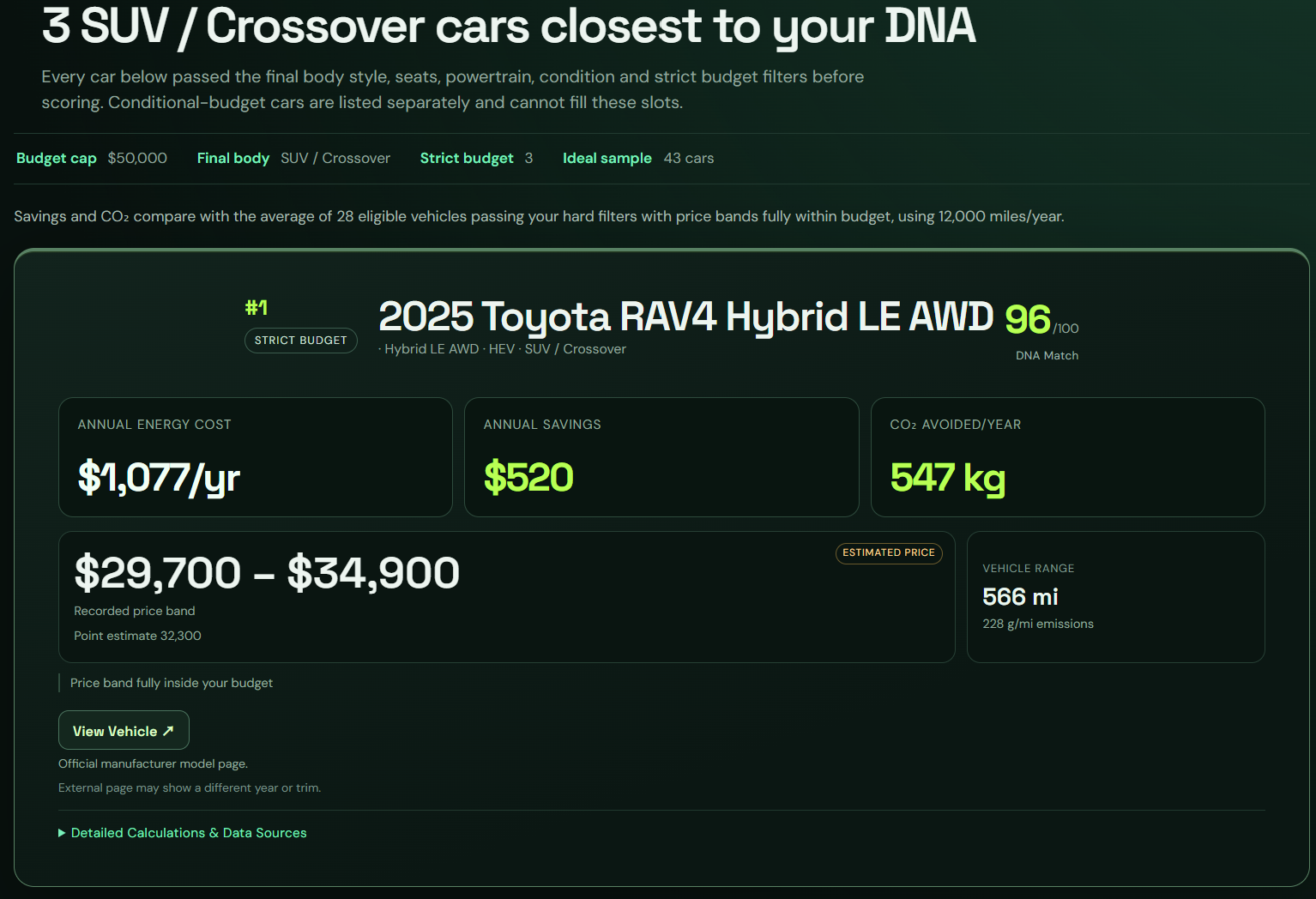
We then built a web interface where users can enter their preferences and explore their personalized recommendations.
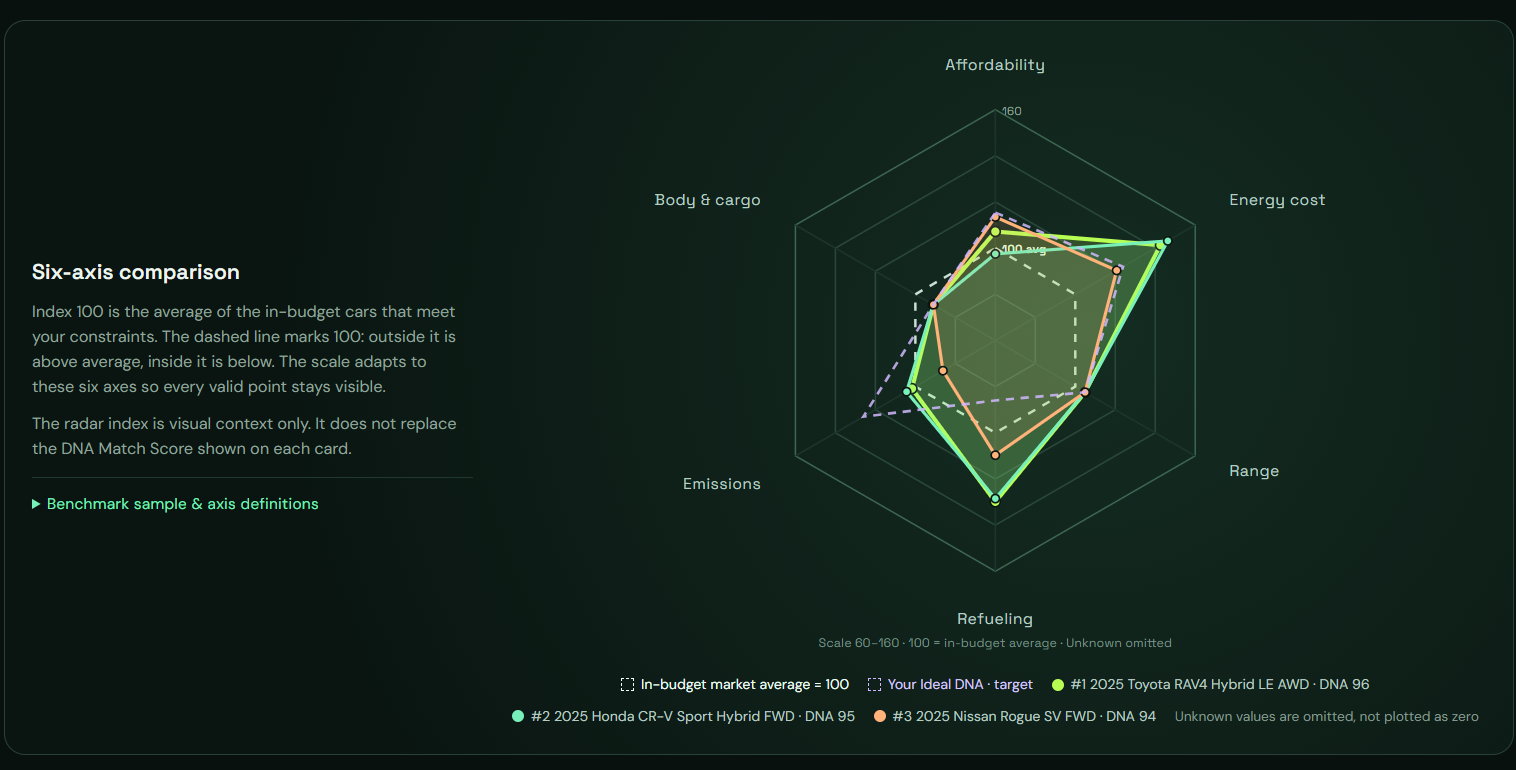
One of our main goals was to make the algorithm easy to understand, so users could see not just the recommended cars, but also why they were selected.
By bringing together car data, evolutionary algorithms, and web development, we turned our idea into a working prototype.
Challenges we ran into
One of our biggest challenges was finding reliable car data. At first, we struggled to collect enough information about different vehicles, and we weren't very familiar with web scraping.
Because of this, our dataset was limited, which made it harder for our algorithm to accurately match cars with users' preferences. Some of the early recommendations didn't really fit what users were looking for.
We also realized that building a recommendation algorithm wasn't just about writing code. The quality of the data mattered just as much, and even small issues with the dataset could affect the results.
This was a big learning experience for our team.
Accomplishments that we're proud of
We're really proud that we managed to turn an idea into a working project in such a short amount of time.
What started as a conversation about how cars evolve eventually became Car DNA, a website that connects real-life needs with vehicle recommendations.
We're especially proud that we were able to bring the idea of natural selection into a real-world recommendation system using a genetic algorithm.
Another thing we're proud of is that we didn't just focus on personal preferences. We also considered clean energy, energy efficiency, and carbon emissions, hoping to make our recommendations not only practical for users but also better for the environment.
Even though we faced challenges with data collection and algorithm accuracy, we kept improving our approach.
Most importantly, we're proud of how we worked together as a team to bring this idea to life.
What we learned
Throughout this project, we learned that building an algorithm is much more than just writing code.
One of our biggest lessons was realizing how important data quality is. Even a well-designed algorithm can struggle if the data isn't accurate or complete.
We also gained a better understanding of genetic algorithms and how ideas from natural evolution can be applied to real-world problems.
Beyond the technical side, we learned how to work better as a team, solve problems under time pressure, and think about how technology can balance personal needs with environmental sustainability.
Overall, this experience taught us a lot, both as developers and as a team.
What's next for Car DNA — Genetic Algorithms for Smarter Car ChoicesWe see Car DNA as just the beginning, and there's still a lot we'd love to improve.
First, we want to expand our car database and improve our genetic algorithm to make recommendations more accurate and personalized.
We also hope to bring in real-time data, such as gas prices, charging station availability, and local driving conditions, to help people make better decisions.
In the future, we'd love to explore how Car DNA could support greener transportation choices by considering energy efficiency, carbon emissions, and environmental impact.
Ultimately, we hope Car DNA can grow into something that helps people choose cars that are better for both their lives and the planet.


Log in or sign up for Devpost to join the conversation.