-
-
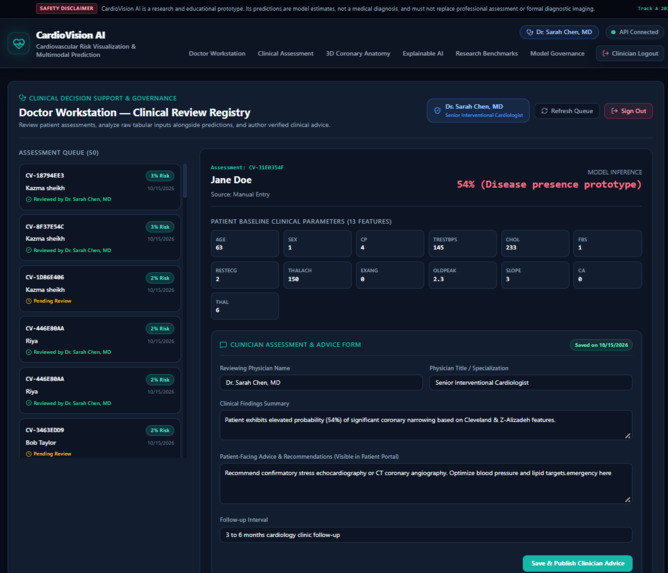
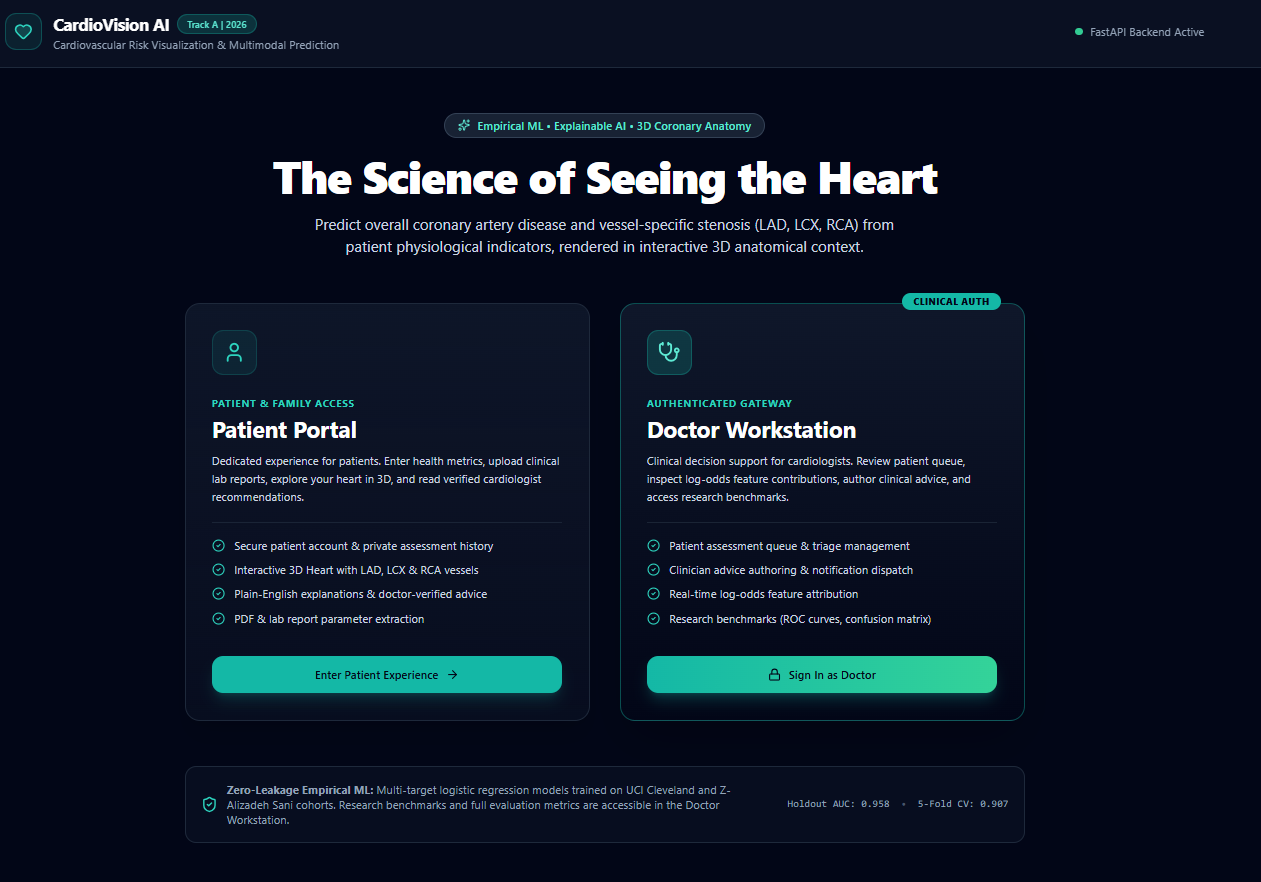
Doctors portal
-
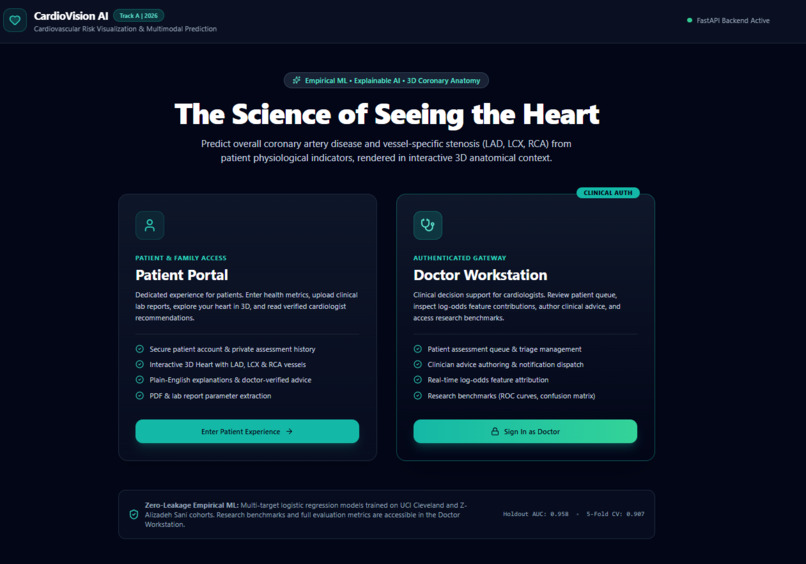
Main dashboard
-
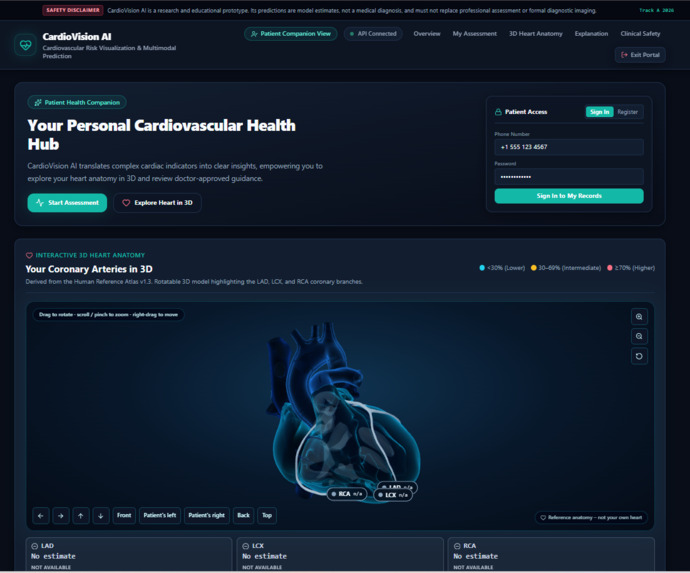
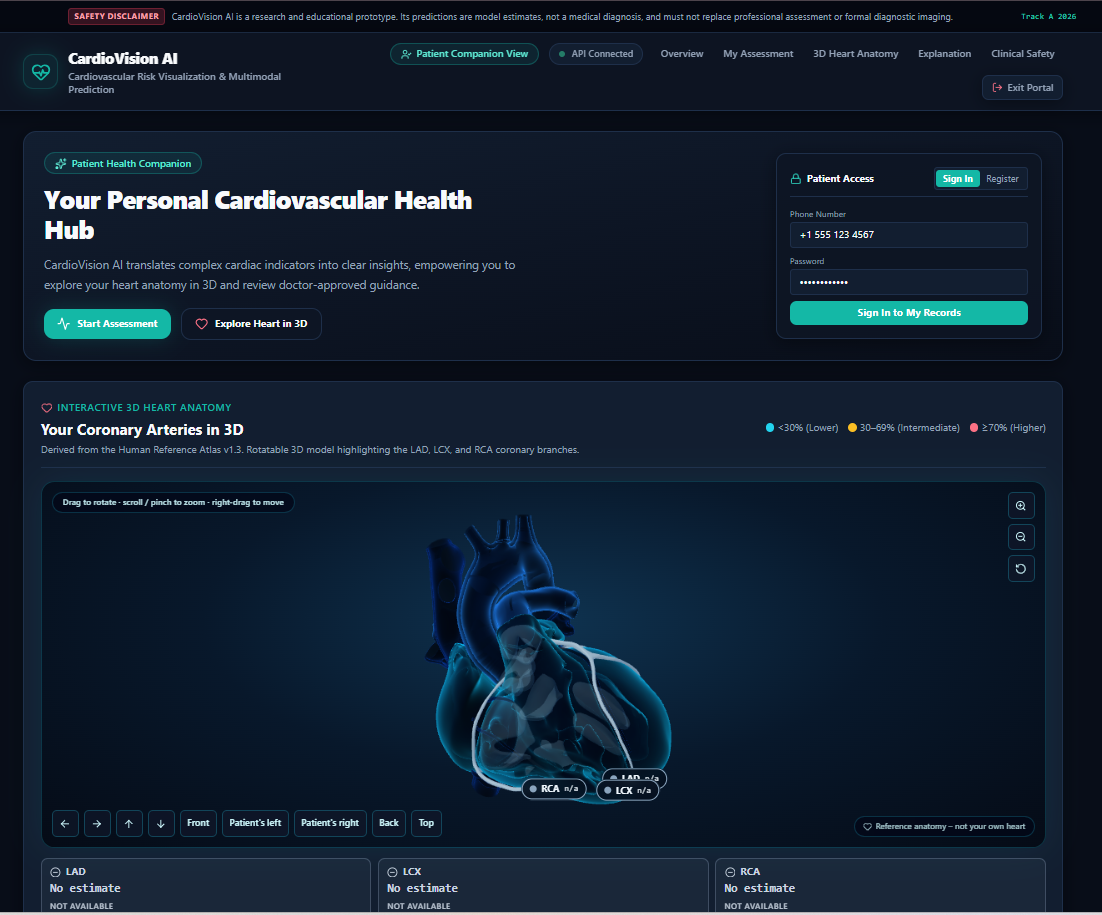
Patient Portal
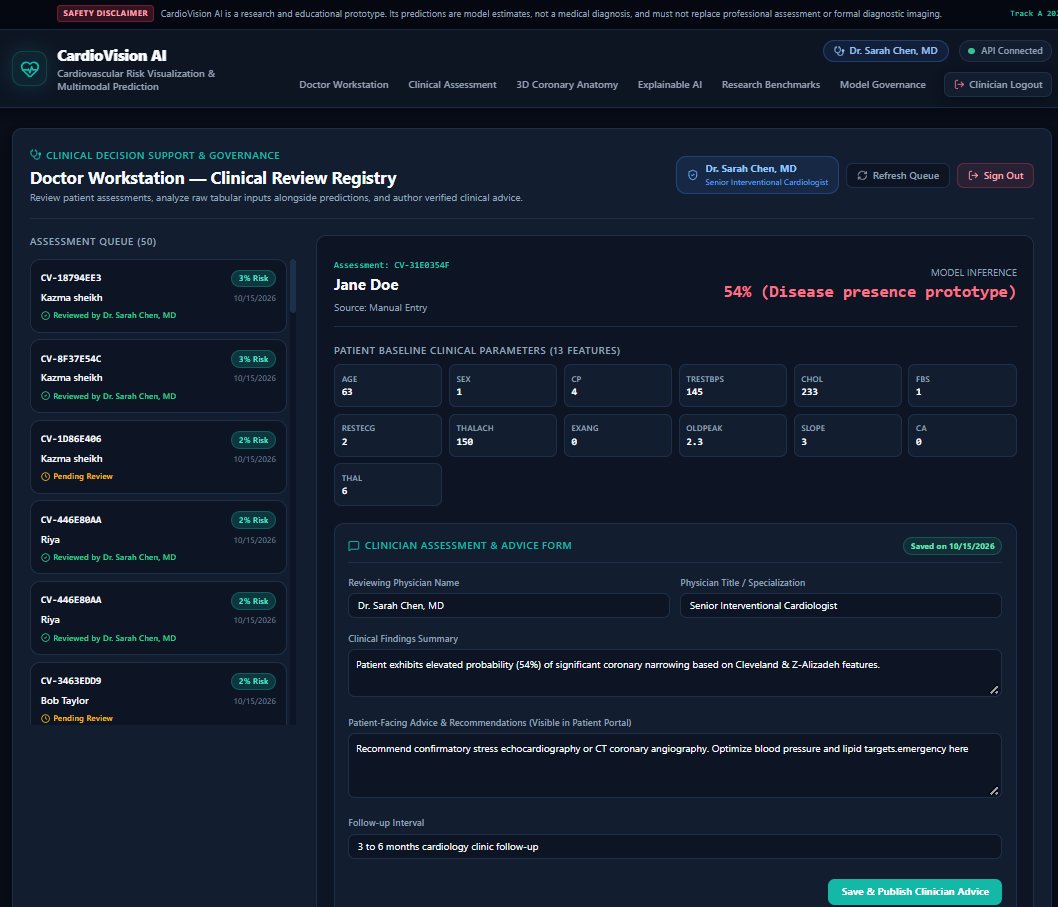
CardioVision AI — Making Heart Health Easier to Understand
Inspiration
Cardiovascular diseases are a major health concern, and understanding heart-related risks can be difficult without clear and accessible tools. We wanted to build a platform that helps patients understand their health information and enables doctors to review patient assessments more conveniently.
This inspired us to create CardioVision AI, a cardiovascular risk visualization and prediction platform that combines AI-based risk assessment, interactive 3D heart models, and patient–doctor communication in one place.
What We Built
CardioVision AI provides separate portals for patients and doctors, with features designed to support the cardiovascular assessment process.
- Patient Portal: Users can register, sign in, and start a cardiovascular risk assessment.
- AI-Based Risk Prediction: The platform processes health-related input to generate cardiovascular risk predictions.
- Interactive 3D Heart Visualization: Users can explore three heart visualizations to better understand the heart and its structures.
- Medical Report Upload: Patients can upload their medical reports for review.
- Manual Data Entry: Users can enter health information directly when they do not have a report to upload.
- Detailed Assessment Results: The platform presents available patient information and assessment results in an organized interface.
- Doctor Portal: Doctors can access patient assessments and review submitted information.
- Medical Advice and Email Notifications: When a doctor's advice is not yet available, the patient can check again later. Once the doctor provides the advice, the platform can notify the patient by email.
Our goal is to make cardiovascular information easier to explore while supporting communication between patients and healthcare professionals.
How We Built It
We developed CardioVision AI as a web-based application with a frontend, backend, and AI-related components. The frontend provides the user interface for patient and doctor workflows, while the backend handles application logic and communication between the different components.
We used web development technologies for the interface and API integration, Python-based tools for backend functionality and machine-learning workflows, and interactive 3D visualization to make heart structures easier to explore. We also worked on data processing, assessment workflows, report handling, and automated email notifications.
Throughout development, we tested the application's components and workflows to identify errors and improve reliability.
Challenges We Faced
One of our main challenges was bringing several different features together into a single, connected platform. Patient registration, assessments, report uploads, risk prediction, 3D visualization, and doctor communication each required separate workflows that needed to work together correctly.
We also had to consider how to present technical health information in a way that users could understand. Integrating the frontend with backend services, handling patient information consistently, and testing the complete workflow required careful debugging and coordination.
Another important challenge was maintaining appropriate expectations for an AI-based healthcare application. Risk predictions should be treated as decision-support information rather than a confirmed medical diagnosis.
What We Learned
Building CardioVision AI helped us strengthen our understanding of full-stack development, API integration, machine-learning workflows, data handling, interactive visualization, and application testing. We also learned that developing a useful healthcare technology solution requires more than a prediction model: usability, privacy, reliability, and communication are equally important.
The project taught us how to connect different technologies into one application and how to approach complex problems through testing, debugging, and continuous improvement.
What's Next
We aim to improve the platform's assessment capabilities, refine the visualization experience, strengthen data privacy and security, and make the patient–doctor workflow more reliable. We also want to evaluate the prediction system carefully using appropriate validation methods before considering real-world clinical use.
CardioVision AI represents our effort to make cardiovascular risk information more understandable through AI, visualization, and connected healthcare workflows.
Built With
- 3d
- api
- css
- data
- fastapi
- git
- github
- html
- javascript
- learning
- numpy
- pandas
- python
- react
- rest
- scikit-learn
- sql
- sqlite
- tailwind
- three.js
- typescript
- visualization
- vite

Log in or sign up for Devpost to join the conversation.